Schemes

Schemes

Fellowship For Superannuated Faculty Members

Details
The “Fellowship for Superannuated Faculty Members” scheme is a fellowship scheme by the University Grants Commission (UGC), Department of Higher Education to provide opportunities to superannuated faculty members of Universities/Institutes/Colleges, hereinafter “Institutions” to pursue research in their area(s).


Benefits
Tenure and Slots
Tenure: 3 years or upto 70 years whichever is earlier.
Slots: 100 per annum or as may be decided by the Commission


Financial Assistance
Fellowship: Rs. 50,000/- per month
Contingency: Rs.50,000/- per annum


Eligibility
(i) Faculty members at the level of Professors/Associate professors (who are going to superannuate within six months or already superannuated) from the following institutions are eligible to apply under the schemes:
Universities (including constituent and affiliated colleges/institutions) are included under Section 2(f) of the UGC Act, 1956, and have valid accreditation from NAAC.
Deemed to be Universities under Section 3 of the UGC Act 1956 and having valid accreditation from NAAC.
Institutions fully funded by Central or State Governments and empowered to award Degrees.
Institutions of National Importance.


(ii) Age: up to 67 years
(iii) The applicant must have successfully supervised the Ph.D. dissertations of 10 full-time candidates, 3 of whom have received their degrees during the preceding 10 years.
(iv) The applicant must have handled, as Principal Investigator, at least 3 sponsored research projects funded by national/international agencies.
(v) The applicant shall not hold any administrative responsibility during the tenure of the fellowship which would be from the date of superannuation.
(vi) The applicant and Institutions shall have to provide an undertaking in the application as per Annexure-I.


Application Process
https://www.ugc.gov.in/ResearchAwards/Fac_ra3
Online


Applications are invited through online mode once in a year through advertisements in leading newspapers & employment news. Short notification is also uploaded in the UGC website i.e. www.ugc.ac.in


Step 1: Read the Guidelines
This is the home page of the website: https://frg.ugc.ac.in/
● 5 schemes are displayed on the Homepage.
● Under each scheme, UGC guidelines are available. Before applying, kindly read the guidelines carefully and ensure your eligibility.


Step 2: Registration
● On the homepage, for registration, click on “New User” for the scheme you need to apply.
● Here, you need to fill in all the details for registration and provide an email address that will be used for all future correspondence.
● Please keep ready a scanned copy of your passport-size photograph and signature (size upto 1MB, format: jpg), before registration.
● The details provided at the registration stage will not be modified, after submission. It will be reflected in the Profile.
● Click on the ‘Submit’ button, after filling in all details.


Step 3: Login
● After registration, you will receive an email from ugchelp@mail.inflibnet.ac.in with the Scheme Login Credentials to fill out the application form.
● You need to fill in the received login credentials
● Please change the password while logging in for the first time. Remember the new password, thereafter.


Step 4: Dashboard
● The details provided by you during Registration are now available in Profile.
● Various icons displayed here will be shown in red color before complete details are entered. Once all details are filled in and submitted, the color of the icons will change to green.
● Here, you need to click on the “Eligibility Criteria” button.


Step 5: Eligibility alert
● Read all the criteria and click on the check box next to UGC guidelines.


Step 6: Eligibility
● Please provide all the required details here.
● Proof of being a single girl child has to be submitted from the parents on an affidavit of ₹ 100/-
stamp paper duly attested by SDM/First Class Magistrate/Tahsildar as per the prescribed proforma.
In case, the parents are not alive, the affidavit can be submitted by the guardian of the Candidate. (Size: less than 1 MB)
● Kindly note that, once submitted, the eligibility form will not be modified.
● And Click on the ‘Submit’ button.


Step 7: Data Capturing Format
After that, you click on the “Apply Now” box (see on rectangle)
Here, Data Capturing Dashboard will display where you need to fill in PG and Ph.D. details
Click on the PG Educational Qualification box


Step 8: PG details
● Provide PG details
● And Click on the ‘Submit’ button


Step 9: Ph.D. Details
● Provide Ph.D.-related details and upload the required documents
● And Click on the ‘Submit’ button


Step 10: Declaration
● Please read the declaration carefully.
● If you agree with the declaration, click on the check box next to “I Agree with above”
● And Click on the ‘Submit’ button.


Please save your application for future use.


Note: No hard copies of the application form will be accepted or entertained at any point of time


Documents Required
Scanned copy of your passport-size photograph and signature (size upto 1MB , format: jpg).
Complete Research proposal (size upto 5 MB) and an abstract (size upto 1MB)
After filling out the application form, an auto-generated form will be displayed on your screen. Please take the printout of the same, get it signed by the
HoD/Registrar and upload the same before the submission of the application form.
Proof of being a single girl child has to be submitted from the parents on an affidavit of Rs. 100/- stamp paper duly attested by SDM/First Class Magistrate/Tahsildar as per the prescribed proforma. In case, the parents are not alive, the affidavit can be submitted by the guardian of the Candidate (Size: less than 1MB)

Financial Support Scheme

Details
“Financial Support Scheme” implemented by the Delhi University aims to provide equity and access to quality education to the economically weak students. This scheme also provides financial support for such students which will include fee waiver of all components of fee paid by students (except examination fee & hostel fee).


Benefits

Family income (in ₹) per annum
Fee waiver (percentage)
Remarks


Category 1
Less than or equal to ₹ 4,00,000/
Up to 100%
Actual fee or up to a maximum of ₹ 10,000/-

Category 2
Between ₹ 4,00,000/- and ₹ 8,00,000/-
Up to 50%
Actual fee or up to a maximum of ₹ 8,000/-


Eligibility
Should be a bonafide student.
The student should be studying in any UG/ PG Degree program at a Department/ Institution/Centre of University of Delhi.
Family income of the student’s should be less than ₹ 8,00,000/-.


Exclusion
Students with Essential Repeat papers are not eligible for the fee waiver.
Students who have availed fee waiver during admission 2023-24 (B.Tech/Five-Year Integrated Law Programs) will not be eligible for this scheme.


Application Process
https://www.myscheme.gov.in/schemes/fssdu
Online


Step 1: Eligible students can fill in the online Application Form available on the website of the Dean Students’ Welfare Office.
Step 2: Students must submit a copy of their Application Form and all documents after due attestation and recommendation from the Head/ Director of the concerned Department/ Centre/ Institute at DSW office.
Step 3: The Schedule for the submission of the hard/ printed copy of the application form will be declared in the DSW website.


Helpdesk:
For any queries kindly contact: fss@dsw.du.ac.in


Office Address:
Dean Students’ Welfare,
Conference Centre (Gate No. 4),
Opposite Botany Department,
University of Delhi,
Delhi – 110007


Documents Required
Copy of EWS/OBC-NCL Certificate or Annual Family Income Certificate issued by competent authority. (Income Certificate signed by a notary will not be accepted).
Self-attested copies of latest income Tax Returns (2022-23) of the following family members:

Father,
Mother,
Sister(s)(Unmarried),
Brother(s) (Unmarried and below 25 years of age),
Copy of PAN card(s) of all the above.

Signed copy of the Undertaking Form.
Copy of Bonafide Certificate signed by the Head/Director of the Centre/Department/ Institute.
Copy of the mark sheet of the last exam passed.
Copy of the latest Fee Receipt.
Copy of Bank Pass Book showing the student’s name, Account number and IFSC code or a cancelled cheque.

Free Education For Sports Medal Winners / Participants Of National/ International Events

Details
The scheme “Free Education for Sports Medal Winners / Participants of National/ International Events”, introduced by the University Grants Commission, Ministry of Education, aims to assist medal-winning sportspersons pursuing higher education and motivate them to achieve excellence in sports and academics. Applicable to national medalists and international participants, it ensures their holistic development.


Benefits
Medals at Olympics, World Championship (more than 20 countries)

Tuition Fee and Other Funds: Bachelor’s degree: Actual; PG: Actual; Diploma: Actual; PG Degree: Actual; M. Phil: Rs. 7500/- per month + Actual; Ph.D.: As per with JRF scale (UGC); MBA or
other professional courses (*): Rs. 7500/- per month + Actual.
Hostel Facilities (Boarding and Lodging): Actual
Allowances for special courses abroad: As per Govt of India’s norms
Kit: Rs. 15000 per annum


Participations at Olympics, World Championship (more than 20 countries); Medal at Common Wealth, Asian, Afro-Asian Games

Tuition Fee and Other Funds: Bachelor’s degree: Actual; PG: Actual; Diploma: Actual; PG Degree: Actual; M. Phil: Rs. 7500/- per month + Actual; Ph.D.: As per with JRF scale (UGC); MBA or
other professional courses (*): Rs. 7500/- per month + Actual.
Hostel Facilities (Boarding and Lodging): Actual
Allowances for special courses abroad: As per Govt of India’s norms
Kit: Rs. 15000 per annum


Participation at World Championship (less than 20 countries), Commonwealth, Asian, and Afro-Asian, Games; Medal at Asian Championship (excluding Asian games)

Tuition Fee and Other Funds: Bachelor’s degree: Actual; PG: Actual; Diploma: Actual; PG Degree: Actual; M. Phil: Rs. 7500/- per month + Actual; Ph.D.: As per with JRF scale (UGC); MBA or
other professional courses (*): Rs. 7500/- per month + Actual.
Hostel Facilities (Boarding and Lodging): Actual
Allowances for special courses abroad: As per Govt of India’s norms
Kit: Rs. 10000 per annum


Participation at Asian Championship, World university games; Medal at SAF Games

Tuition Fee and Other Funds: Bachelor’s degree: Actual; PG: Actual; Diploma: Actual; PG Degree: Actual; M. Phil: Rs. 7500/- per month + Actual; Ph.D.: As per with JRF scale (UGC); MBA or
other professional courses (*): Rs. 7500/- per month + Actual.
Hostel Facilities (Boarding and Lodging): Actual
Allowances for special courses abroad: As per Govt of India’s norms
Kit: Rs. 7500 per annum


Participation at SAF Games; Medal at National level Competitions

Tuition Fee and Other Funds: Bachelor’s degree: 75% of Actual; PG: 75% of Actual; Diploma: 75% of Actual; PG Degree: 75% of Actual; M. Phil: Rs. 5000/- per month + Actual; Ph.D.: Rs. 7500/- per month + Actual; MBA or other professional courses (*): Rs. 5000/- per month + Actual.
Hostel Facilities (Boarding and Lodging): Actual
Allowances for special courses abroad: As per Govt of India’s norms
Kit: Rs. 6000 per annum


(i) The pattern of assistance will be as per the chart mentioned above depending upon the level of performance of the concerned sportsperson.
(ii) The financial assistance depending upon the eligibility will be reimbursed by the UGC to the university concerned. The university will be responsible for submitting all relevant documents as per the guidelines and the proformas of the scheme.
(iii) For the loss of the classes of the concerned sports persons because of their engagement in sporting activity, the university concerned will make special efforts in terms of completion of syllabus and attendance.


Eligibility
(i) The Scholarship will be provided to the Medal winners of National games and participants in recognized international sporting events recognized by the World University Service, International Olympic Committee, and Olympic Committee of Asia (OCA) who have taken admitted to the Universities/Colleges/Institutions as indicated below:

Universities/Institutions/Colleges included under sections 2(f) and 12(b) of the UGC Act, 1956.
Deemed to be Universities under section 3 of the UGC Act, 1956 which are eligible to receive grants
in aid from UGC.
Universities/Institutions/Colleges funded by Central/ State Govt.
Institutes of National Importance.
(ii) In the subsequent years this scholarship shall depend on their subsequent sports performance.


Exclusion
CANCELLATION OF SCHOLARSHIP

UGC may terminate the scholarship of any student in the case of the:
(i) Misconduct of the candidate, if any, reported by the University/College/Institution.
(ii) Unsatisfactory progress report i.e. if the candidate frequently fails in his/her examination will not be given further assistance.
(iii) The scholarship may be terminated by the Commission, on the recommendation of the University at
anytime during the tenure and the decision of the Commission will be final and binding.


Application Process
https://www.myscheme.gov.in/schemes/fesmwpnie
Online


Step 1: Download the prescribed application form (Refer Page No. 5 ).
Step 2: Fill in the application form with accurate details.
Step 3: Attach a certificate of participation or medal-winning as proof of eligibility, attested by the Registrar or Principal of your institution.
Step 4: Verify the form and attached documents for completeness and accuracy.
Step 5: Submit the completed application form and required documents to the designated authority.


Documents Required
To Be Submitted by the Candidate through University/College –
1. The candidate is required to submit an application in the prescribed format for availing of the scholarship.
2. A Certificate of the participation/medal winner as per the eligibility mentioned above as proof (Attested By Registrar/Principal).


To Be Submitted by the concerned University/College/Institution to the UGC –
Every year University/Institution will submit a complete statement of the following:

1. Statement giving the names of the students selected for the scholarship along with their receipt of the scholarship amount.
2. Progress Report to be submitted after the completion of the first year in terms of sports performance and academics.
3. Utilization certificate for the previous grant released.
4. A certificate giving justification for the continuance of the scholarship issued by the Director/Head of the Department duly forwarded by the Registrar/Principal.

Grant For Organizing Conference

Details
The scheme of “Grant for Organizing Conference (GOC)” is a grant scheme by the All India Council for Technical Education (AICTE), Department of Higher Education (DoHE). The scheme provides financial assistance to institutions for organizing conferences in various fields of technical education. Both Onsite Conferences and Online Conferences are supported. The objective is to promote high standards in technical education by way of extending opportunities to academicians and working professionals by providing a forum for sharing their knowledge, experiences, innovations, and inventions.


Expected Outcomes
(a) Dissemination of knowledge and sharing of new innovative ideas among participants
and delegates from across the globe which would further help them in developing new ideas relevant to their research work.
(b) Awareness of the recent developments in the field.
(c) Publication of the papers in a high-impact journal.
(d) Novel ideas for impact on the UG/ PG student projects.
(e) New research areas or improvement in ongoing research.
(f) Ideas to create a roadmap for upcoming projects and possibilities for opening new avenues for research.
(g) Collaborations between institutions and industry.
(h) Learning of best practices.


Benefits
Onsite Conference

National Level Conference: One-third of the total expenditure incurred on organizing the Conference is subject to a maximum of ₹ 3,00,000.
International Level Conference: One-third of the total expenditure incurred on organizing the Conference is subject to a maximum of ₹ 4,00,000.

Online Conference
(including e-Conference, Virtual Conference, web-conference, and Digital Conference)
National/ International Level Conference: One-third of the total expenditure incurred on organizing the online Conference is subject to a maximum of ₹ 50,000.

The disbursement of the Funds is on a reimbursement basis after the successful completion of the conference and submission of requisite documents by the institute.


Eligibility
(a) AICTE-approved institute with at least 8 years of existence.

(b) Coordinator must:
(i) Be a full-time regular Associate Professor or Professor or a senior faculty with at least 10-year experience in teaching and research with publications and have organized at least three conferences if applying for an international conference and one conference if applying for the national conference.                                          (ii) Institute should also identify a Co-coordinator who must be a faculty with at least 7 years of experience in teaching and research and have organized at least one conference if applying for an international conference.
(iii) The department organizing the conference should preferably be NBA accredited.

(c) Weightage will be given to conferences supported by organizations (working on the theme of the conference) like:
(i) leading professional bodies like IEEE/ ASME/ ASCE etc.
(ii) reputed organizations/ departments/ technical universities etc.
(iii) industry/ industry associations/ R&D labs etc.


Terms and Conditions –

For the Coordinator:

(a) The approved Onsite Conference is required to be conducted within twelve months and the Online Conference within six months, from the date of receipt of the sanction letter from AICTE.

(b) At least 15% and 25% participation from other states is a must for onsite conferences and online conferences respectively.

(c) Papers from the host institution should not be more than 10% of the total papers.

(d) Coordinator will maintain an electronic record of papers, participants, their institution & their location, to ensure that norms of Pan-India participation, overseas participants in International Conferences, and papers from local faculty, are adhered to and also shared with AICTE.

(e) Coordinator should maintain a web page for the Conference on the institute’s website.

(f) The academic background of the coordinator, co-coordinator, and paper presenters must be in conformity with the theme of the proposed conference.


For the institution:

(a) Institute will be eligible to receive the grant for Conference once in two years.
(b) Any change in the program for holding the Conference, change of Coordinator name, and Venue/ date would require prior approval of the council, failing which the offer for the grant already issued would be treated as automatically withdrawn.
(c) The institution is required to post the link of funding schemes of AICTE on its website and conference webpage.


Fund utilization:

(a) 10% of the funds sanctioned by AICTE should be utilized for a registration fee of participants belonging to the SC/ST category.
(b) Funds once released/ sanctioned for organizing the particular Conference cannot be utilized for any other program/ conference.
(c) In case the conference is canceled, it must be informed to AICTE immediately.

Use of Logo of AICTE:

(a) Wherever online information regarding a conference is displayed, the AICTE logo must be prominently displayed.
(b) All publicity materials/ advertisements/ brochures/ invitation cards/ any other collaterals/ event backdrop etc. related to the conference, must carry AICTE logo.
(c) The Conference venue in terms of stage backdrop/ podium must prominently display the AICTE logo.


Application Process
https://www.myscheme.gov.in/schemes/goc
Online


Application

(a) Applications are invited throughout the year.
(b) Institute must apply through its login ID at http://www.aicte-india.org and must apply at least:
(i) 6 months prior to the date of the National Conference.
(ii) 8 months prior to the date of the International Conference.


AICTE Portal Login

Step 1: Visit the AICTE website https://www.aicte-india.org
Step 2: Click on the “Web Portal Login” button.
Step 3: Log in to the AICTE portal with the credentials provided by the AICTE.
Step 4: After successful logging, the home page of the institute appears.


AQIS Application

Step 1: After login, navigate to the AQIS application screen please click on the “AICTE Quality Improvement Schemes (Financially Funded Scheme)” icon.
Step 2: The AQIS application page of the institute is open.
Step 3: Click on the “AQIS Application- Institute details”
Step 4: Institute and Bank Details will auto-populate in “AQIS Application – Institute Details” Please check and update according to changes.

Note:
1) Bank Account should be Saving Account.
2) Account Holder’s name should not be a personal name.


Step 5: Check the declaration flag, then click on the “Save Bank Details” button.
Step 6: To confirm the bank details entered, kindly click on the “Confirm Bank Details” button.
Step 7: If the bank details are incorrect, click on the Cancel button to edit the bank details again otherwise click on OK to confirm the details.

Note: Once the ‘OK’ button is clicked. The Institute details and Bank details will become read-only mode.


Step 8: Click on the “All AQIS Application Information”
Step 9: Click on the “Download Mandate Form” and “Download Declaration Certificate”
Step 10: Click on the “AQIS Document Attachment”
Step 11: Click on the new record ( ) button.
Step 12: After attaching the Mandate form, click on the save ( ) button.

Note: Please attach the Verified Bank Mandate Form in scanned PDF format (Maximum Size10 MB).


Application for ‘Grant for Organising Conference’
• Initiating New application


Step 1: After uploading the attachment of the mandate form, Click on the “All AQIS Application Information”
Step 2: Click on the new record ( ) button.
Step 3: Select the “GOC- Grant for Organising Conference” in AQIS Schemes dropdown.
Step 4: Click on AQIS Application ID
Step 5: AQIS Detail Application for GOC.


Section A: Coordinator/PI/Applicant Details
Step 1: Click on the Coordinator/PI/Applicant Details
Step 2: “Has the Institute been sanctioned any conference by AICTE in the last 2 financial years?”, Select the appropriate option.
Step 3: Click on the selection menu icon ( ) in the Faculty ID field to add details of the conference coordinator. Select the faculty ID from the Faculty ID list and click on the OK button.
Step 4: Fill in all the fields of the Details of the Coordinator section.
Step 5: Click on the selection menu icon ( ) in the Co-coordinator Faculty ID field to add details of the conference Co-coordinator. Select the faculty ID from the Faculty ID list and click on the OK button.
Step 6: Fill in all the fields of Details of the Co-coordinator section.
Step 7: AICTE has identified conferences of repute, organized/sponsored by leading Professional Bodies/institutions organized at a set frequency. Select the appropriate field.
Step 8: Confirm the declaration


Section B: AQIS Application Details
Step 1: Click on the AQIS Application Details
Step 2: Navigate to the AQIS Application Details, fill in all the fields
Step 3: After filling in all the required details in the fields, click on the Save ( ) button.


Section C: Academic Credentials of Coordinator /PI/Applicant
Step 1: Click on the Academic Credentials of Coordinator /PI/Applicant
Step 2: Click on the new record ( ) button to add the Record and select the parameter Criteria.
Step 3: Select “YES/NO” according to the parameter, fill in the Count/Number, and fill in the Area of Specialisation. Click on the save ( ) button.

Note: Further repeat the above Steps 2 and 3 for the following Parameters/Criteria
• Any state / National/International awards received?
• Membership of the Professional / Learned bodies/ Societies
• No. of National/International conferences organized
• Number of Patents Registered
• Number of Ph. D students Guided
• Papers published in International Journals in the last 3 years
• Papers published in national Journals in the last 3 years
• Relevant experience of conducting/coordinating similar programs from AICTE and other funding agencies in the past three years
• Research Experience in years
• Teaching/Industry Experience in years
• Whether the Coordinator has Ph.D.


Step 4: After filling in all the required details in the fields, click on the Save ( ) button.


Section D: Credentials of Co-coordinator
Step 1: Click on the Credentials of Co-coordinator
Step 2: Click on the new record ( ) button to add the Record and select the parameter Criteria.
Step 3: Select “YES/NO” according to the parameter, fill in the Count/Number, and fill in the Area of Specialisation/Details. Click on the save ( ) button.

Note: Further repeat the above Steps 2 and 3 for the following Parameters/Criteria
• No. of National/International conferences organized
• Number of Ph. D students Guided
• Membership of the Professional / Learned bodies/ Societies
• Papers published in International Journals in the last 3 years
• Papers published in national Journals in the last 3 years
• Whether the Coordinator has Ph.D.
• Teaching/Industry Experience in years
• Relevant experience in conducting/coordinating similar programs from AICTE and other funding agencies in the past three years
• Research Experience in years


Step 4: After filling in all the required details in the fields, click on the Save ( ) button.


Section E: Credentials of Institution / Department
Step 1: Click on the Credentials of Institution / Department
Step 2: Click on the new record ( ) button to add the Record and select the parameter Criteria.
Step 3: Select “YES/NO” according to the parameter, fill in the Count/Number, and fill in the Details. Click on the save ( ) button.

Note: Further repeat the above Steps 2 and 3 for the following Parameters/Criteria
• For organizing the conference institute is collaborating with Industry
• Is the institute collaborating with the technical Society for organizing a conference
• Number of conferences already conducted in the institute in the last 3 years
• Number of courses Accredited in the Institute
• Is the institute collaborating with any reputed Institute or Laboratory for organizing the conference
• Number of Years of Establishment of the Institute
• Whether the level of the course under which the conference is to be conducted PG?
• Whether the course under which the proposal is submitted, is accredited by NBA?

Step 4: After filling in all the required details in the fields, click on the Save ( ) button.


Section F: Justification of proposal
Step 1: Click on the Justification of proposal
Step 2: Click on the new record ( ) button to add the Record and select the parameter Criteria.
Step 3: Select the parameter/ Criteria, fill in the Details and Click on the save ( ) button.

Note: Further repeat the above Steps 2 and 3 for the following Parameters/Criteria
• Benefits to Faculty
• Benefits to Students
• Expected Outcome & Impact on Academic
• Expected Outcome & Impact on Research
• Name of Guest speakers with designation and organization
• Number of participants expected
• Objectives & Context
• Relevance

Step 4: After filling in all the required details in the fields, click on the Save ( ) button.


Section G: Foreign participants/invited speakers to the conference
Step 1: Click on the Foreign participants/invited speakers to the conference
Step 2: Click on the new record ( ) button to add the Record
Step 3: After filling in all the fields clicks on the ( ) Save button.


Section H: Financial commitment from other organizations/agencies
Step 1: Click on the Financial commitment from other organizations/agencies.
Step 2: Click on the new record ( ) button to add the Record
Step 3: After filling in all the fields click on the ( )Save button.


Section I: Budget Estimates GOC
Step 1: Click on the Budget Estimates GOC
Step 2: Click on the new record ( ) button to add the Record
Step 3: Select ‘Head of Expenditure’, and fill in the ‘Anticipated Expenditure’ and ‘Justification’ of that expenditure.

Note: Further repeat the above Steps 2 and 3 for the following ‘Head of Expenditure’
1) For Online Conferences
2) For Onsite Conferences


Step 4: After filling in all the fields click on the ( ) Save button.
• Certificate/Brochure and other documents designing.
• Conference website designing & updating.
• Honorarium to Experts/ Resource Persons.
• Publication of Proceedings.
• Miscellaneous.
• Pre-conference printing (announcements, abstracts, etc.)
• Banners/Folders, Pen, and other stationery material for registration and Certificate printing and brochure printing
• Hospitality to participants /resource persons (Tea, Snacks & Lunch)
• Boarding and lodging charges for out-stationed participants/ Experts/ resource persons
• TA/DA & Honorarium to Experts/ resource persons
• Misc. expenditure including Photography, LCD projector, screen, bouquets, mementos, short visit (if any), etc.
• Publication of Proceedings (Online/printed/CD)
• Any other required expenditure


Section J: AQIS Application Attachment
Step 1: Click on the AQIS Application Attachment
Step 2: Click on the new record ( ) button to add the Record
Step 3: Click on the ( ) button in ‘Attachment Name’ to attach the Declaration certificate of GOC.
Step 4: After attaching the Declaration Certificate, click on the save ( ) button.
Note: Please attach a verified Declaration Certificate scanned copy in PDF format (Maximum Size10 MB).


Section K: Keywords related to the conference
Step 1: Click on the Keywords related to the conference
Step 2: Click on the new record ( ) button to add the Record
Step 3: After filling in all the fields click on the ( )Save button.

Note: Minimum 5 Keywords related to conference themes are required to submit the application.


• Validate and submit the application
Step 1: Click on the Coordinator/PI/Applicant Details
Step 2: Click on the Validate application button.
Step 3: After clicking on the Validation button the message will be populated and stated as “Validation for Scheme: ‘GOC- Grant for Organizing Conference’ is completed Successfully”
Click on the OK button.
Step 4: Click on the Submit button.


Processing Methodology
(a) Online submission of application by the institution.
(b) Applications received every two months will be processed in a single lot.
(c) Screening/ scrutiny of applications at Council.
(d) Evaluation of applications by the expert committee.
(e) The final decision will be taken by the Council, keeping in view the recommendations made by the experts and the availability of funds for the scheme.
(f) After the Council’s approval, the Offer Letter for the conference will be sent to the institution.
(g) Offer Letters can be used by the institute to raise funds from other sponsors.


For more information contact us
Scheme-related Information:
e-mail address: gocidc@aicte-india.org Phone Number: (011) 29581334
Technical Information:
e-mail address: it2idc@aicte-india.org Phone Number: (011) 29581340
Documents Required
Documents to be uploaded on AICTE Portal


On receipt of Sanction Letter:
The Acceptance Letter with dates of the Conference, within 15 days from the date of receipt of the Offer Letter duly signed and seal affixed by the Coordinator and Head of the Institutions along with proforma for permission/ clearance of the Government of India for organizing International Conference.


After the conduct of the Conference:
Institute has to fill up the Report on the AICTE portal and upload the following documents:
(a) Copy of proceedings of the conference.
(b) Feedback from the participants.
(c) Geotagged photographs (maximum 15) of the conference.


Documents to be submitted after the conduct of the conference
(a) Statement of Accounts and Expenditure in prescribed format duly audited by the Chartered Accountant in the case of a private institution and by the Finance Officer/Account Officer in respect of government/government-aided institution.
(b) Supporting bills/documents on account of expenses incurred for the purpose duly attested by the Head of the Institute.
(c) Soft copy of the final report submitted on the portal as mentioned above (in section 10).

Note: AICTE may withhold fund release to the Institute in its other schemes if the
project is not closed by submitting the documents after 30 days of the conference.

ICSSR Doctoral Fellowship

Details
The Fellowship is aimed at promoting original, socially relevant, and policy-focused research in the social sciences. The fellowship provides financial support through a monthly grant of ₹20,000 and an annual contingency grant of ₹20,000 for up to two years, with an initial award period of one year, which is renewed for the second year subject to fulfilment of requisite criteria. It also offers institutional and short-term fellowships including a six-month short term fellowship for scholars nearing Ph.D. submission (minimum three years of completed PhD research) and a standalone contingency grant of ₹62,500 for specific research needs. Applications are invited through ICSSR’s website and social media platforms. Fellows are expected to pursue full-time research, submit regular progress reports, and provide a final submission that includes published work, a book-length thesis, and audited financial records. Given India’s social science ecosystem, it seeks to promote research excellence, evidence-based research, and scholarship that is also relevant to policymakers.


Benefits
1) Monthly Fellowship amount @ Rs.20,000 per month
2) Contingency Grant @ Rs.20,000 per annum


Eligibility
1) Applicant must be an Indian citizen.
2) Must be a full-time bonafide Ph.D. scholar in a social science discipline in a UGC-recognized university, deemed-to-be university, institute of national importance, ICSSR Research Institute, or college with approved Ph.D. programme.
3) The Ph.D. topic must have been confirmed by the DRC/authorised statutory body of the institution on or before the last date of call for applications.
4) Age must be below 40 years as on the last date of application.
5) Age relaxation of 5 years allowed for SC/ST/OBC-(NCL) candidates and Persons with Benchmark Disabilities (PwD).
6) Must have secured a minimum of 55% marks in post-graduation, with 5% relaxation for reserved categories (SC/ST/OBC-(NCL)/PwD).


Exclusion
1) Those who are not fulfilling the eligibility criteria.


Application Process
https://www.myscheme.gov.in/schemes/doctoral-fellowship
Online


Step 01: Visit ICSSR website – www.icssr.org – and navigate to Fellowships section.
Step 02: Click on Doctoral Fellowship Scheme.
Step 03: Register/Login to the ICSSR portal.
Step 04: Fill the online application form.
Step 05: Upload documents and submit.


Documents Required
The list of documents required will be given in the Application Form when the Call is announced.

Details
Through this programme, it promotes academic links amongst the social scientists in India and abroad, provides opportunity to develop new insights and to enlarge their research perspective and contribute to the advancement and dissemination of knowledge in social science subjects. Under this scheme, the financial assistance is provided to Indian scholars, who have been invited to contribute and present papers at International Conference abroad. Invitation received from global subject associations/reputed international organisations/universities are given preference. Applications are invited in all broad disciplines within the domain of social sciences. Faculties with regular service in public funded Universities / Deemed-to-be-Universities/Colleges, Institutes of National Importance as defined by MoE / UGC, and ICSSR Research Institutes/Recognized Institutes having a PhD degree are eligible to apply. PhD/PDF scholars in the advanced stage of their research are also eligible. The applications shall be accepted at least three months before the due date of the Seminar/Conference. Faculties will be eligible for financial assistance up to 50% of the total cost of visit under this scheme. However, the faculties belonging to SC/ST, Persons with Benchmark Disability and Doctoral/Post-Doctoral scholars (without pay protection) will be considered for full financial assistance. The expenditure are reimbursed on submission of the original boarding pass, attendance certificate, statement of expenditure and a brief report on the Seminar/Conference/ Workshop/Proceedings.


Benefits
1) Airfare – As per actuals
2) Visa fee – As per actuals
3) Travel Insurance – As per actuals
4) Registration Fee – up to US$200
5) Maintenance – As per the Ministry of External Affairs notifications


Eligibility
1) The applicant must be an Indian citizen.
2) Faculties with regular service having a PhD degree are eligible to apply.
3) PhD/PDF scholars in the advanced stage of their research are eligible.
4) If the paper is co-authored, priority will be given to the first author. But a No Objection Certificate (s) from the second author(s) is must.
5) Must be affiliated public funded Universities / Deemed-to-be-Universities/Colleges, Institutes of National Importance as defined by MoE / UGC, and ICSSR Research Institutes/Recognized Institutes


Exclusion
1) Those who are not fulfilling the edibility criteria.
2) Scholars, who have been invited for poster presentation or chair a session or chosen as conveners/rapporteurs or invited to attend a workshop/training/refresher/summer/winter course are not eligible.


Application Process
https://www.myscheme.gov.in/schemes/icssr-international-collaboration
Online


Step 01: Visit ICSSR website – www.icssr.org – and navigate to International Collaboration section.
Step 02: Click on Paticipation in International Conference Abroad Scheme.
Step 03: Register/Login to the ICSSR portal.
Step 04: Fill the online application form.
Step 05: Upload documents and submit.


Documents Required
1) The list of documents required are given in the guidelines of the call


Sources And References
ICSSR International Collaboration

Details
This scheme is open to Indian citizens under the age of 45 who hold a Ph.D. and have demonstrated research ability through earlier publications. All candidates must be affiliated with a Ministry of Education or UGC-recognized public-funded Indian university, and a senior faculty member (not less than an Associate Professor) from the same institution must supervise their study. The fellowship offers a ₹31,000 monthly grant and ₹20,000 annual contingency grant for a period of two years. The applications for the fellowship are invited through advertising on the ICSSR website and social media platforms. The scheme covers a wide range of disciplines under the discipline of social sciences, with 26 major areas including priority research topics. In addition to conducting full-time research, fellows are expected to provide progress updates on a regular basis and publish at least two research publications in reputable journals. The final submission includes published articles, audited financial data, summaries, and a book-length report. Given India’s social science ecosystem, it seeks to promote research excellence, evidence-based research, and scholarship that is also relevant to policymakers.


Benefits
1) Monthly Fellowship amount @ Rs.31,000 per month
2) Contingency Grant @ Rs.20,000 per annum
3) API points as per the UGC Guidelines in force at the point of time
4) Institutional overhead (7.5%) – supports the hosting institution.


Eligibility
1) The applicant must be an Indian citizen.
2) Must be under 45 years of age (5-year relaxation for SC/ST/PwD).
3) Must possess a Ph.D. in a social science discipline.
4) Must have demonstrable research competence via publications.
5) Must affiliate with a public-funded Indian institution approved for Ph.D.
6) Must have a supervisor who is a serving faculty (Associate Professor or above).
7) Applicant must not be a defaulter of any ICSSR grant/project/fellowship.


Exclusion
1) Those who are not fulfilling the edibility criteria.


Application Process
https://www.myscheme.gov.in/schemes/post-doctoral-fellowship
Online


Step 01: Visit ICSSR website – www.icssr.org – and navigate to Fellowships section.
Step 02: Click on Post-Doctoral Fellowship Scheme.
Step 03: Register/Login to the ICSSR portal.
Step 04: Fill the online application form.
Step 05: Upload documents and submit.


Documents Required
The list of documents required will be given in the Application Form when the Call is announced.

Details
The Senior Fellowship Scheme is specifically designed for senior researchers who are between the ages of 45 and 70, affiliated with a UGC-recognized university, deemed university, institute of national importance, or ICSSR-recognized research institute, have a PhD and has made significant academic contributions in their fields through books, journal articles, or research initiatives. The fellowship is for two years with progress reports to be submitted every six months. An annual contingency grant of ₹40,000 and a monthly stipend of ₹45,000 are included in the fellowship to help with research-related costs. The applications for the fellowship are invited through advertising on the ICSSR website and social media platforms. The scheme covers a wide range of disciplines under the discipline of social sciences, with 26 major areas including priority research topics. All the scholars must submit a book-length final report, and at least two published research papers at the end of two years. The fellowship program supports dedicated academics to generate noteworthy research with national priorities and international academic standards with precise guidance on grant disbursement, monitoring, reporting, and the responsibilities of both the fellow and the affiliated institution. Given India’s social science ecosystem, it seeks to promote research excellence, evidence-based research, and scholarship that is also relevant to policymakers.


Benefits
1) Monthly Fellowship amount @ Rs.45,000 per month
2) Contingency Grant @ Rs.40,000 per annum
3) API points as per the UGC Guidelines in force at the point of time


Eligibility
1) The applicant must be an Indian citizen.
2) Must have a Ph.D. in any Social Science discipline.
3) Age: Between 45 to 70 years as on the last application date.
4) Must have an established publication record in reputed journals or books.
5) Must be affiliated with a UGC-recognized or ICSSR research institute.
6) Should not be availing any other fellowship concurrently.
7) Must not be a defaulter of ICSSR funds.


Exclusion
1) Those who are not fulfilling the edibility criteria.


Application Process
https://www.myscheme.gov.in/schemes/senior-fellowship
Online


Step 01: Visit ICSSR website – www.icssr.org – and navigate to Fellowships section.
Step 02: Click on Senior Fellowship Scheme.
Step 03: Register/Login to the ICSSR portal.
Step 04: Fill the online application form.
Step 05: Upload documents and submit.


Documents Required
1) The list of documents required will be given in the Application Form when the Call is announced.

Institutions of Eminence scheme

Details
The scheme Institutions of Eminence has been launched by the University Grants Commision in 2017 to empower Higher Educational lnstitutions to help them become world class teaching and research institutions. The objective of the scheme is to provide an enabling regulatory architecture to ten public and ten private Higher Educational institutions to emerge as world-class Teaching and Research institutions. This will enhance affordable access to high quality education for ordinary Indians.


The present guidelines shall apply to Government institutions viz. Central Universities, Government owned and controlled Deemed to be Universities, institutions of National importance such as lndian lnstitutes of Technology, Indian lnstitutes of lnformation Technology, National lnstitutes of Technology and Indian lnstitutes of Science Education and Research, Government owned standalone lnstitutions working under individual MoAs, such as lndian institutes of Management and State Universities set up under a law made by Legislative Assembly of a State (Collectively referred as Government institutions of Eminence).


Benefits
Financial Assistance would be provided to Government institutions up to ₹ 1000 crore additional funding from the government.
The Institution would have the full freedom to mobilize resources from the industry or alumni or other donors and utilize it in accordance with its implementation plan without having to seek any permission from any authority.
The lnstitutions of Eminence would be free to admit maximum 30% foreign students of the total admitted students.
lnstitutions would be free to fix and charge fees from foreign students without restriction.
The lnstitutions of Eminence would have the freedom to determine the domestic student fees,subject to the condition that credible programmes of scholarships and loans to ensure that the needy are able to pursue higher studies without any financial problems.
The lnstitutions of Eminence shall have complete flexibility in fixing of cuniculum and syllabus, with no University Grant Commission(UGC) mandated curriculum structure.
Academic collaborations with foreign higher educational institutions ranked in top 500 in global rankings would be exempt from government approvals.


Eligibility
10 institutions chosen as Institutions of Eminence.
Mix of technical, management/arts, and central universities.
Top 50 in category on latest National Ranking Framework.
OR top 500 in Times Higher Education, QS, or Shanghai Ranking.


Application Process
https://www.myscheme.gov.in/schemes/ies
Offline


Who can applies:
Central Govt. controlled institutions: through controlling Ministry/Department.
State Public Universities: through state government.


Application Components:
The application comprises two parts: a fifteen-year strategic vision plan and a five-year implementation plan.
The strategic plan outlines long-term objectives and characteristics, including quantified milestones and timelines for achieving world-class status.
A SWOT analysis is required, focusing on the institution’s current quality status and proposed measures to address shortcomings.
The implementation plan details tangible annual action plans aligned with the strategic objectives.


Documents Required
1. Organization Details:
Provide information about the organization’s structure.
2. Financial Strength:
Detail existing and expected revenue sources, expenditures, and corpus funds.
3. Land Details:
Specify the available land for the institution.
4. Governance Structure:
Outline the governance structure, including the apex board.
5. Five-Year Implementation Plan:
Present a comprehensive plan consisting of Academic plan with proposed courses and schedule.
Faculty recruitment policy meeting a 1:10 faculty-student ratio. Student admissions policy with scholarship details. Research plan for laboratories, facilities, and interdisciplinary research. Networking plan for collaborations with private sector and foreign institutions. Infrastructure development plan aligned with academic and admissions goals. Financing plan detailing sources and amounts for all plans. Administrative plan for accreditation, marketing, and promotion. Governance plan adhering to global transparency and efficiency standards. Clear commitment to Guideline 4 objectives with quantified milestones.
Objective: Stabilization and credibility within five years, moving towards global repute in fifteen years.
6. Recasting the Implementation Plan:
The five-year plan will be revised for each cycle to align with the 15-year strategic plan.
7. Alumni Engagement:
Include a plan for involving alumni in institution management and leveraging their financial resources.
8. Sustainability Plan:
Develop a sustainability plan for the post-public funding period.
9. Affiliation Plan:
If provisions exist, provide a plan for affiliating other higher education institutions in the 15-year perspective plan. Deviations require EEC approval.
10. Additional Information:
Include any other information or documents specified in the application format.

Details
INTRODUCTION

The scheme was initiated keeping in view the political and cultural bilateral relations of India with other developing countries of Asia, Africa, and Latin America. The scheme has opened new vistas for foreign students and teachers, enabling them to come to India and undertake advanced studies and research in sciences, humanities, and social sciences in Indian Universities.


OBJECTIVE
The objective of the scheme is to provide an opportunity for foreign students and teachers from
developing countries to undertake advanced study and research leading to M.Phil/Ph.D. and postdoctoral research in sciences, humanities, and social sciences at Indian Universities.


Benefits
NATURE OF ASSISTANCE

The number of slots available under the scheme is 20 for Junior Research Fellowship (JRF) and 7 for Research Associateship (RA).
The tenure of these awards is four years (Non-extendable) for both JRF and RA.


Financial Assistance for JRF –
Fellowship
@ Rs. 12,000/-p.m. for an initial period of two years.
@ Rs. 14,000/-p.m. for the remaining period subject to the recommendation for enhancement/extension by a three-member committee and the Commission’s approval for Sciences for initial two years.


Contingency –
@ Rs.12,000/-p.a. for Science
@ Rs.10,000/-p.a. for Humanities and Social Sciences
@ Rs.25,000/-p.a. for the remaining period for Sciences
@ Rs.20,500/-p.a. for the remaining period for Humanities
Department @ Rs. 3,000/-p.a. — per JRF Assistance
Escort @ Rs. 2,000/-p.a. — per JRF


Handicapped Allowance


HRA as per the rule of the concerned institution

Financial Assistance for RA –

Fellowship @ Rs. 16,000/-p.m. (Fixed) for 4 years
Contingency @ Rs. 30,000/-p.a.
Departmental @ 10% of Associateship to the host institution for providing Assistant infrastructural facilities.
HRA as per the rule of the concerned institution.

*****


HRA
(i) Suitable single-seated hostel accommodation in the institutions may be provided to the JRF, failing which HRA as per rules of the university/institution will be paid to the Fellow subject to the submission of the HRA certificate through Registrar/Principal.
(ii) JRF/RA provided with accommodation in a hostel recognized/maintained by the institutions may be reimbursed the hostel fee, excluding mess, electricity, water charges, etc.
(iii) A certificate to this effect is to be furnished through the Registrar/Principal (Annexure I).
(iv) If JRF/RA makes his/her own arrangements of accommodation, he/she may be entitled to draw HRA as per the categorization of cities by the Government of India.
(v) The Fellow will submit a certificate for this purpose to UGC for claiming HRA through the concerned university/institution/college.


Medical
No separate/fixed medical assistance is provided. However, the JRF/RA may avail of the medical facilities available in the institutions/university.


Leave
(i) Leave for a maximum period of 30 days in a year in addition to public holidays may be taken by a fellow with the approval of the supervisor. However, they are not entitled to any other vacations, for example, summer, winter, and pooja vacations. Women awardees are eligible for maternity leave at full rates of the fellowships for 135 days as per Government of India rules once during the tenure of their award.
(ii) The awardee may in special cases be allowed by the Commission leave without fellowship/associateship and contingency for a period not exceeding three months during the tenure of the award on the recommendation of the supervisor/Head of the department of the institution concerned. The period of leave without fellowship/associateship will be counted towards the tenure.


Eligibility
Target Group: Students and teachers from developing countries of Asia/Africa and Latin America.

For Junior Research Fellowship (JRF): 35 years for male candidates as of 1st July of the year of application and 40 years for female candidates. The candidates must have at least a high-class master’s degree with a second-class bachelor’s degree or a second-class master’s degree with a first-class bachelor’s degree.

For Research Associateship (RA): In the case of male applicants the age should be 40 years as of 1st July of the year of application, and 45 years in the case of female candidates. The candidates must have a doctorate degree, published research work to their credit, and evidence of independent research work.


Exclusion
CANCELLATION OF AWARD

The fellowship is liable to cancellation in the case of :
• Misconduct
• Unsatisfactory progress of research work
• Failure in any of the examinations related to M.Phil/Ph.D.
• Candidate found ineligible later.

If the JRF/RA is discontinued before the period of two years, the entire amount of the fellowship
will be refunded to the UGC.


Application Process
https://www.myscheme.gov.in/schemes/jrfrafn
Online


PROCEDURE FOR APPLYING FOR THE SCHEME:
The applications are invited through the circulation to Indian embassies/Indian missions abroad. They will receive applications from eligible candidates and after due screening locally, will send them to the UGC for consideration. Foreign students from Asia, Africa, and Latin America studying in India who have completed their master’s degrees or doctoral degrees and desire to pursue research may send their applications through the university they propose to work with. The application will have to be endorsed by their respective embassies for consideration by the Commission.


PROCEDURE FOR APPROVAL BY THE UGC
The applications received are placed before a short listing/screening committee constituted for this purpose. The short-listed proposals are placed before the selection committee to finalize the proposals for the award of JRF and RA. The decision of the Commission is final and binding. The UGC conveys the provisional intimation of selection to the candidate. However, this intimation does not bestow the award to the candidate. The formal award letter will be issued only on receipt of political clearance from the Ministry of Home Affairs and the Ministry of External Affairs, Government of India. The Commission also reserves the right to withdraw/cancel the award without assigning any reason.


Documents Required
1. Proof of Nationality
2. Proof of Identity
3. Proof of Age
4. Proof of Address
5. Proof reg. the Educational Qualifications

Junior Research Fellowship In Engineering & Technology

Details
INTRODUCTION

The scheme “Junior Research Fellowship in Engineering & Technology” by the University Grants Commission (UGC), Department of Higher Education is meant for candidates who wish to pursue research leading to a Ph.D. degree in engineering and technology. As of date, the University Grants Commission (UGC) or the Council of Scientific and Industrial Research (CSIR) are not conducting National Education Testing (NET) examinations in these fields. Therefore, M.Pharma and M.E., M.Tech. students are given this opportunity, through direct interviews conducted by the Commission. There are 50 slots under this scheme per year.


OBJECTIVES
The objective of this scheme is to provide an opportunity to research scholars to undertake advanced study and research in engineering and technology, and agricultural engineering, leading to Ph.D. Subjects like geology and geo-physics are not considered under this scheme.


Benefits

NATURE OF ASSISTANCE
The tenure of the fellowship is initially for a period of two years as a Junior Research Fellowship (JRF).
After the expiry of two years the work of the fellow will be evaluated by experts and if found satisfactory, his/her tenure will be extended for a further period of three years with enhanced emoluments as a Senior Research Fellowship (SRF).
In case the work of the fellow for the first two years is not found satisfactory, one more year will be given to him/her for improvement, but during this period he/she will be designated as a Junior Research Fellow. In such cases work will again be evaluated after three years, and if the improvement is found, the fellow will get two more years under the SRF.
Thus, the total period of fellowship (JRF and SRF) is five years, which is non-extendable. The awardee can avail research fellowship for the full tenure of the fellowship or up to the date of award of the Ph.D. degree, whichever is earlier.


The assistance available under the scheme is:
Fellowship @ Rs. 14,000/- p.m. for the initial two years, @ Rs.15,000/- for the remaining period
Contingency @ Rs.12,000/- p.a. for the initial two years, @Rs.25,000/- p.a. for the remaining period
Departmental Assistance @ Rs. 3,000/- p.a. per student to the host institute for providing, infrastructure to the researcher

Escorts/Reader Assistance @Rs.2,000/- p.m. in cases of physically handicapped and blind candidates
HRA As per the rule of the concerned institution


House Rent Allowance:
Suitable single-seated hostel accommodation in the institutions may be provided to the Fellow, failing which HRA as per rules of the university/institution
will be paid, subject to the submission of the HRA certificate through the registrar/principal. Research Fellows provided with accommodation in hostels recognized/maintained by the institutions may be reimbursed the hostel fee, excluding mess, electricity and water charges, etc. A certificate to this effect is to be furnished through the registrar/principal (Annexure I). If the Fellow makes his/her own arrangements of accommodation, he/she may be entitled to draw HRA as per the categorization of cities by the Government of India. The Fellow will submit a certificate to UGC for claiming HRA through the concerned university/institution/college.


Medical:
No separate/fixed medical assistance is provided. However, the fellow may avail the medical facilities available in the institution/university.


Leave:
Research Fellows are entitled to a maximum period of 30 days leave in a year in addition to public holidays. They are not entitled to any other leave, for example, summer, winter, pooja vacations, etc. Women candidates are eligible for maternity leave of 135 days at full rates of fellowship once during the tenure of their award.


Note-1: The Research Fellow, in special cases, may be allowed by the Commission, to leave without fellowship for up to one academic year during the entire tenure of the award for accepting teaching assignments on a temporary basis, provided the assignment is in the same city/town.
Note-2: In other cases, leave without fellowship will be restricted to a period not exceeding three months during the tenure of the award on the recommendations of the supervisor and the head of the institution.
Note-3: The period of leave without fellowship will be counted towards the total tenure of the fellowship.
Note-4: Fellows are advised to apply for leave through their university/institution/college well in advance for the approval of the Commission.


Eligibility
All Minimum qualifications are a master’s degree in engineering/technology/pharmacy, with 55 percent marks.
GATE is not a mandatory condition for getting a research fellowship to pursue Ph.D.
Candidates need to hold an M.E./M.Tech. degree.
The age limit is 40 years as on 1 July of the year of the award, extendable by five years for women and SC/ST candidates.
A total of 22.5 percent of the fellowships are reserved for candidates belonging to SC/ST who fulfill the requisite qualifications laid down for the award. In case of the non-availability of SC/ST candidates, these slots will be made available to general candidates.


Exclusion
CANCELLATION OF AWARD

The fellowship is liable to cancellation, in the case of:
• Misconduct
• Unsatisfactory progress of research work Failure in any of the examinations related to Ph.D.
• Candidate found ineligible later.


Application Process
https://www.myscheme.gov.in/schemes/jrfst
Online


PROCEDURE FOR APPLYING FOR THE SCHEME
Applications are invited in the prescribed format (Annexure II) once in a year through advertisements in leading newspapers and the AIU Newsletter for the award of a research fellowship in engineering and technology for pursuing research leading to a Ph.D. Selection will be made on the basis of merit, and candidates will be interviewed by an expert committee appointed by the Commission.


PROCEDURE FOR APPROVAL OF THE UGC
Received applications will be scrutinized, and short-listed candidates will be called to appear
before the selection committee, constituted by the Commission. No TA/DA will be paid for attending the interview. The decision of the Commission will be final and binding. The Commission reserves the right to withdraw/cancel the award without assigning any reason. On completion of the above formalities, the Joining Report of the candidate, duly signed by the supervisor/head of department is to be sent to the UGC through the registrar/principal. On receipt of the Joining Report and other required documents (Annexure III), the admissible grant for the first year will be released or the concerned university will be informed to release the grant from the funds already sanctioned.


Documents Required
1. Duly Filled Application Form
2. Aadhaar Number
3. Proof of DOB (Birth Certificate or Class 10th Marksheet)
4. Proof of Address
5. Proof of educational qualifications (mark sheets, certificates, diplomas, etc.)
6. Certificate from the head of the department/institution
7. A brief abstract not exceeding 500 words on the proposed research work methods of approach, etc. must be sent along with the application.
8. Proof reg. Employment Status (if currently employed)
9. Declaration
10. Basic Data Sheet
11. Caste certificate (if applicable)
12. Minority certificate (if applicable)
13. Physical disability certificate (if applicable)
14. Bank Details
15. proof provided by the government

RMEWF-Financial Assistance To 100% Disabled Child Of Ex-Servicemen

Details
A scheme to provide financial assistance to Ex-Servicemen or their widows for their 100% disabled child. Ex-Servicemen or their widows, up to the ranks of Junior Commissioned Officer(JCO)/equivalent of the Navy/Air Force and below, who are not in receipt of such benefit from any official agency can apply under this scheme.


Benefits
A financial assistance of Rs.3000/- per month (paid annually) per child is provided to eligible Ex-Servicemen or their widows.
The financial assistance is non-transferable and will cease automatically upon death of the child.


Eligibility
The following criteria must be fulfilled:-

Child must be a legitimate offspring of ESM/Widow.
ESM should be of the rank of JCO/equivalent of the Navy/Air Force and below.
The child should be 100% disabled.
Should not be in receipt of any disability benefit from any official agency.
Should be recommended by respective Zila Sainik Board (ZSB).


Application Process
https://www.myscheme.gov.in/schemes/rmewf-disabled-child
Online


Eligible Ex-servicemen / their widows can visit the official website of Kendriya Sainik Board Secretariat (KSBS) https://ksb.gov.in/
Click on “Register” which is available on the homepage of the portal.
Now, the registration form will be displayed, fill the form with necessary details.
Upload the Photo


Save the application by clicking on the “Save” button and the saved details and password will be forwarded to the registered mail id.


Click the activation link which is sent to the mail id to login into the KSB portal.
Provide user name, password and verification code and click on the “Login “ button.
Select the scheme name and start filling the new application form by entering the required details.


Copies of the supporting documents duly attested by the respective Zila Sainik Welfare Officer (ZSWO) must be uploaded with the online application.
Once the online application is submitted, ZSWO will scrutinize the online applications and give appointment to the applicant for verification, After successful verification, ZWSO will recommend the online application and forward the harp copy as well soft copy to Kendriya Sainik Board (KSB) through Rajya Sainik Boards (RSBs) for further processing.


Processing at KSB Secretariat
Once the application reaches the Kendriya Sainik Board, the Section-in-charge verify the same and upload the printed list for the approval of JD (Welfare).
Such applications of approval is then moved for sanction of the competent authority in one lot, preferably every quarter


Payment Procedure
After the submitted application has been approved, the same is processed for payment of the grant in batches of 200 applications by the Welfare department.

After verifying the service number, name, bankers, IFS Code and account number, the Welfare department forward the batch list to Accounts Section for payment, which make the payment directly via Electronic Clearing System (ECS) or by an account payee cheque.


Subsequent Grant
For the continuation of grant in the next financial year, Life Certificate and “Disability Certificate” in the Government prescribed format need to be submitted every year through the respective ZSB on or before 15th January.


In the cases of renewal Application is automatically forwarded to the Welfare department by 1st March. And then, the welfare department ask for sanction of a grant from the Kendriya Sainik Board for the continuation of the financial assistance during the next fiscal year.


Track Application Status
Applicant has to revisit the same portal https://ksb.gov.in/index.htm
Click on “Status of application” link on the homepage of the portal.
Now enter your DAK ID and verification code. Click on the “Search” button.


Documents Required
Copies of the following documents duly attested by Zila Sainik Welfare Officer (ZSWO) must accompany the application:-
Photocopy of Discharge Book (must have entry regarding child).
Ex-Servicemen and Dependent Identity Card issued by ZSB.
100% disability certificate issued by Military / Govt hospital.
Details of Bank A/c No (in PNB/SBI only) and IFS Code.

RMEWF-Financial Assistance For Vocational Training Of Widows Of Ex-Servicemen

Details
A scheme to provide financial assistance to a widow od Ex-Servicemen to settle in life through vocational training.

Depending on their educational level and aptitude, they may opt to undergo the requisite vocational training. Such a course may be pursued at any recognized vocational training institution run by Rajya Sainik Board/Zonal Sainik Board, state like ITI or private training institutions of repute like NIIT etc.


Benefits
A financial assistance of Rs.20,000/- (max- one time aid ) is provided to widows of Ex-Servicemen on successful completion of said vocational training.


Eligibility
The following criteria must be fulfilled:-
Applicant must be widow of an ESM of rank up to Havildar/equiv.
Should have successfully completed said training.
Should be recommended by respective Zila Sainik Board (ZSB).


Application Process
https://www.myscheme.gov.in/schemes/rmewf-vocational-training
Online


Eligible Ex-servicemen / their widows can visit the official website of Kendriya Sainik Board Secretariat (KSBS) https://ksb.gov.in/
Click on “Register” which is available on the homepage of the portal.
Now, the registration form will be displayed, fill the form with necessary details.
Upload the Photo
Save the application by clicking on the “Save” button and the saved details and password will be forwarded to the registered mail id.
Click the activation link which is sent to the mail id to login into the KSB portal.
Provide user name, password and verification code and click on the “Login “ button.
Select the scheme name and start filling the new application form by entering the required details.
Copies of the supporting documents duly attested by the respective Zila Sainik Welfare Officer (ZSWO) must be uploaded with the online application.
Once the online application is submitted, ZSWO will scrutinize the online applications and give appointment to the applicant for verification,
After successful verification, ZWSO will recommend the online application and forward the harp copy as well soft copy to Kendriya Sainik Board (KSB) through Rajya Sainik Boards (RSBs) for further processing.


Processing at KSB Secretariat
Once the application reaches the Kendriya Sainik Board, the Section-in-charge verify the same and upload the printed list for the approval of JD (Welfare).
Such applications of approval is then moved for sanction of the competent authority in one lot, preferably every quarter.


Payment Procedure
After the submitted application has been approved, the same is processed for payment by the Welfare department.
After verifying the service number, name, bankers, IFS Code and account number, the Welfare department forward the batch list to Accounts Section for payment, which make the payment directly via Electronic Clearing System (ECS).


Track Application Status
Applicant has to revisit the same portal https://ksb.gov.in/index.htm
Click on “Status of application” link on the homepage of the portal.
Now enter your DAK ID and verification code. Click on the “Search” button


Documents Required
Copies of following documents duly attested by ZSWO must accompany the application:-
Complete Service Discharge Certificate/Book.
Copy of Widow I-Card.
Certificate from institute after completion of training.
Certificate from ZSWO that widow after vocational training is gainfully employed.
Details of Bank A/c No (in PNB/SBI only) and IFS Code.

RMEWF-Financial Assistance For Medical Treatment Of Ex-Servicemen

Details
A scheme to provide financial assistance to a non-pensioner Ex-Servicemen/widows of ranks up to Havildar/equivalent to meet routine medical expenses.

With ever increasing costs of health care, it becomes extremely difficult for non-pensioner ESM to combat diseases especially in old age. At such age, medical expenses push such ESM into a state of poverty and loss of dignity. The scheme to provide financial assistance to non-pensioners, who are without any other sources of income and in state of penury,


Treatment of Serious Diseases
The expenditure incurred on treatment of various serious ailments is covered under a separate scheme


Benefits
A Financial assistance up to a maximum of Rs.30,000/- per year per eligible Ex-Servicemen/widow is provided in a financial year.


Eligibility
The following criteria must be fulfilled:-
Applicant must be a non-pensioner ESM or his widow.
Should be of rank Havildar/equivalent and below.
Should be recommended by respective Zila Sainik Board (ZSB).
Expenditure must be incurred at recognized government hospitals at rates approved under CGHS/ ECHS.


Application Process
https://nspapply2026.in/rmewf-financial-assistance-for-medical-treatment/
Online


Eligible Ex-servicemen / their widows can visit the official website of Kendriya Sainik Board Secretariat https://ksb.gov.in/
Click on “Register” which is available on the homepage of the portal.
Now, the registration form will be displayed, fill the form with necessary details.
Upload the Photo
Save the application by clicking on the “Save” button and the saved details and password will be forwarded to the registered mail id.
Click the activation link which is sent to the mail id to login into the KSB portal.
Provide user name, password and verification code and click on the “Login “ button.
Select the scheme name and start filling the new application form by entering the required details.


Copies of the supporting documents duly attested by the respective Zila Sainik Welfare Officer (ZSWO) must be uploaded with the online application.
Once the online application is submitted, ZSWO will scrutinize the online applications and give appointment to the applicant for verification,
After successful verification, ZWSO will recommend the online application and forward the harp copy as well soft copy to Kendriya Sainik Board (KSB) through Rajya Sainik Boards (RSBs) on a monthly basis for further processing.
Processing at KSB Secretariat


Once the application reaches the Kendriya Sainik Board, the Section-in-charge verify the same and upload the printed list for the approval of JD (Welfare).
Such applications of approval is then moved for sanction of the competent authority in one lot, preferably every quarter.


Payment Procedure
After approval of Secretary KSB, the application is processed for payment by Welfare Section.
The welfare section verifies the Ex-servicemen’s service number, name, banker’s IFS Code and bank account number & forward the list of approved cases to Accounts Section for payment.
The Accounts Section then processes the list for payment directly to beneficiaries via ECS to the beneficiaries as applicable.


Track Application Status
Applicant has to revisit the same portal https: https://ksb.gov.in/index.htm
Click on “Status of application” link on the homepage of the portal.
Now enter your DAK ID and verification code. Click on the “Search” button.


Documents Required
Copies of following documents duly attested by ZSWO must accompany the application:-
Discharge book/documents.
I-Card issued by ZSB is must both for ESM & widows.
Original medical bills countersigned by the attending doctor.
Hospital discharge summary countersigned by attending doctor.
A certificate from the applicant stating that he/she has not taken any money/grant from the State or present employer in the form of reimbursement or medical allowance.
Details of Bank A/c No (in PNB/SBI only) and IFS Code.

Junior Research Fellowship In Sciences, Humanities, And Social Sciences

Details
The Junior Research Fellowship (JRF) scheme of the University Grants Commission (UGC) is open to candidates who qualify for the National Eligibility Test-Junior Research Fellowship(NET-JRF) of the UGC and the UGC-Council of Scientific and Industrial Research (UGC-CSIR) joint test. However, please note that these are qualifying tests only and do not bestow a fellowship upon the candidate.


OBJECTIVES
The objective of the JRF scheme is to provide opportunities to NET-JRF qualified candidates to undertake advanced studies and research leading to M.Phil/Ph.D. Degrees in Humanities and Social Sciences including Languages and Sciences.


Benefits
Fellowship Amount:
Junior Research Fellowship (JRF): ₹37,000 per month for 2 years
Senior Research Fellowship (SRF): ₹42,000 per month for the remaining period

Contingency A (for Humanities & Social Sciences):
₹10,000 per annum for JRF
₹20,500 per annum for SRF

Contingency B (for Science Scholars):
₹12,000 per annum for JRF
₹25,000 per annum for SRF


Housing Rent Allowance (HRA)

(HRA is provided as per the categorization of cities by the Government of India.)
Hostel Accommodation:
If suitable single-seated hostel accommodation is provided by the institution, the fellow is eligible to receive only hostel fees (excluding mess, electricity, water charges, etc.).
A certificate confirming this must be furnished through the Registrar/Director/Principal.
HRA is not permissible for fellows staying in hostel accommodation.
Alternative Accommodation:
If hostel accommodation is not available, the fellow may be provided with single accommodation by the host institution.
In such cases, rent paid by the fellow may be reimbursed on an actual basis, subject to the HRA ceiling set by the Government of India.


Self-Arranged Accommodation:
If the fellow arranges her own accommodation, she is entitled to HRA as per the Government of India’s city categorization norms.


Medical Facilities
No separate or fixed medical assistance is provided under the fellowship.
However, the fellow may avail of the medical facilities available at the institution, university, or college.


Leave Policy

General Leave:
Fellows are entitled to a maximum of 30 days of leave per year, in addition to public holidays.
They are not entitled to any additional vacations.


Maternity/Paternity Leave:
Maternity/Paternity leave is granted as per Government of India norms, at full fellowship rates, once during the tenure of the fellowship.


Intermittent Break (For Women Candidates Only):
Women candidates may avail an intermittent break of up to one year (maximum three times during the fellowship).
The total break period must not exceed one year.
This period will not be counted toward the tenure of the fellowship, ensuring that the fellowship duration remains the same.


Academic Leave:
Academic leave without fellowship is permissible for one year during the fellowship tenure.
This leave can be availed for academic assignments, teaching, or foreign visits related to research work.
The period of leave without fellowship will be counted towards the tenure.
Expenditure for foreign visits related to research work cannot be claimed from UGC.


Tenure of Fellowship:
These are integrated five-year fellowships for M.Phil. and Ph.D. subject academic criteria in force for selection of Ph.D. program. The duration of the fellowship is as under:

M.Phil. + Ph.D.
Maximum duration (Years): 5
Admissibility of JRF (Years): 2
Admissibility of SRF (Years): 3

Ph.D.
Maximum duration (Years): 5
Admissibility of JRF (Years): 2
Admissibility of SRF (Years): 3


Eligibility
The candidates must have qualified NET-JRF or the UGC-CSIR Joint Test.
The candidates must register for M.Phil/Ph.D. in a recognized University/Institution/College within two years from:
The date of declaration of the result, or
The date of issue of the award letter, or
The date of joining the fellowship.


Application Process
https://www.myscheme.gov.in/schemes/jrfshss
Offline


Step 1: The interested applicant should visit (during office hours) the universities/institutions/colleges recognized u, and request the hard copy of the prescribed format of the application form from the concerned authority.
Step 2: In the application form, fill in all the mandatory fields, paste the passport-sized photograph (signed across, if required), and attach copies of all the mandatory documents (self-attest, if required).
Step 3: Submit the duly filled and signed application form along with the documents, within the prescribed period (if any), to the authority.
Step 4: Request a receipt or acknowledgement from the concerned authority to whom the application has been submitted. Ensure that the receipt contains essential details such as the date and time of submission, and a unique identification number (if applicable).

NOTE: Ensure that the application is submitted within the prescribed period, if any.


Documents Required
Aadhaar Number
Duly Filled Application Form
Score Card of NET-JRF or the UGC-CSIR Joint Test
Proof of Address
Proof of educational qualifications (mark sheets, certificates, diplomas, etc.)
Physical disability certificate (if applicable)
Bank Details
After receiving the Award letter student has to verify the document from the Dept. office and then submit it to the Academic office which will be further uploaded on the UGC Canara bank portal:
Joining report, HRA form, UGC award letter, Last qualifying degree certificate.
The student has to submit half yearly progress report after every six months to the Academic office,
for sending it to the UGC for release of fellowship in continuation.
After completion of two years of the program, the student has to submit Three member
Assessment committee report for upgradation from JRF to SRF to Academic office for
uploading on the UGC portal.
Contingency and HRA form: Students have to get it signed personally by the Academic office and
Directly deposit it to the Accounts section. No softcopy will be accepted.

Modernisation And Removal Of Obsolescence

Details

Introduction

(a) MODROB scheme, one of the AICTE Quality Improvement Scheme (AQIS), intends to support the development of laboratories with appropriate equipment/ technology/ tools/ software and encourages financial contribution from the industry. This is to ensure that the practical work and project work to be carried out by students is contemporary and suits the needs of the industry.

(b) In order to promote a problem-solving approach among the students and staff, the institutes are encouraged to procure the equipment as per the revisions/modifications in the AICTE Model Curriculum

(c) The funds under this Scheme could ideally be used to create technical infrastructure for a revised curriculum. for up-gradation of equipment in existing laboratories, enhancement of performance of existing equipment, or replacement of depreciated equipment with modern equipment.

(d)The equipment installed can also be used to benefit the faculty/students through Continuing Education programs and also local industry through consultancy work and in training their workers.

(e) This scheme has three variants addressing the needs of:
(i) MODROB- Aspiring Institutes
(ii) MODROB- Polytechnic
(iii) MODROB- Regular


Objective
MODROB Scheme aims to modernize and remove obsolescence in the Laboratories/ Workshops/Computing facilities so as to maintain the quality of the practical components of technical education and promote experimental research and hands-on training.


Benefits

Duration of Project
The duration of the project will be two years from the date of receipt of funds in the institute’s account.


Limit of Funding from AICTE
Funding for the sanctioned project will not exceed Rs.20 lakhs (covering recurring and non-recurring expenditures) per the proposal.


Disbursement of the Funds
80% of the sanctioned amount as advance to the institutions will be disbursed followed by 20% as reimbursement on submission of the Utilization Certificate and other supporting documents as specified in the terms and conditions of MODROB.


Eligibility
MODROBS – Aspiring Institutions
a) AICTE-approved technical institutions / University Departments with at least 10 years of existence (at least 5 years if the institute is located in a rural area).
b) The Institute shall have more than 50% admission for the past 3 years.
c) The Institute had not been sanctioned any MODROB Project earlier.
d) Maximum 3 proposals per institute per year (Not more than one proposal is accepted from the same department)


MODROBS – Regular
a) AICTE-approved technical institutions / University Departments with at least 10 years of existence (at least 5 years if the institute is located in a rural area) having live NBA accreditation
b) The Institute shall have more than 60% admission for the past 3 years.
c) The department applying should not have received the MODROB project in the last two years i.e. the department who have received a grant in the last two years are not eligible.
d) Maximum 3 proposals per institute per year (Including sanctioned earlier but not completed) would be considered.
e) Preference will be given to the institution having the involvement of industry in the modernization of the laboratory.


MODROBS – Polytechnic
a) The Polytechnic Institute is approved by AICTE with at least 10 years of existence (at least 5 years if the institute is located in a rural area)
b) The Institute shall have more than 60 % admission for the past 3 years
c) Maximum 3 proposals per institute per year (Not more than one proposal is accepted from the same department)


Application Process
https://www.myscheme.gov.in/schemes/modrob
Online


a) Online submission of application by the institution.
b) Applications received will be processed in a single lot.
c) Screening/ scrutiny of applications at Council.
d) The proposal shall be assessed by a three-member committee comprising of members, not below the rank of Associate Professor/Scientist “E”. At least two members among them shall be the domain experts.
e) The final decision will be taken by the Council, keeping in view the recommendations made by the expert and the availability of funds for the scheme.
f) After the Council’s approval, the Sanction Letter for the proposal will be sent to the institution.


Documents Required
Application Form
Utilization Certificate
Project Completion Report

National Awards To Teachers (Higher Education)

Details
The purpose of the National Award to Teachers under the Department of Higher Educational Institutions is to recognize the distinctive contributions of some of the finest faculty members in the country and honor them for their dedication and hard work, which have not only improved the quality of higher education but also enriched the lives of their students. The Award seeks to recognize and honor faculty members’ unique and path-breaking achievements in teaching, research, institutional service, community outreach, and novelty of work in higher education.


No. of Awardees
Fifty Awards (25 in Category II and 25 in Category III) shall be conferred annually.


Selection Process : The selection procedure for NTA-2023 will follow a two-step process.
Preliminary Search cum Screening Committee for initial shortlisting of candidates.
Committee of ‘Jury’ for the final section of awardees from the shortlisted candidates.


Ceremony Details
The ceremony is held on 5th September every year.


Nominations for the award can be made by any of the following:
Vice-Chancellor/Director/Principal of the institution.
A colleague or former faculty member of the same institution.
Self-nomination is not allowed.
Former Vice-Chancellor/Director/Principal may apply if currently teaching full-time.
Search committee members can nominate outstanding faculty.
Award Jury members cannot nominate.


Benefits
A medal.
A certificate.
Cash Prize of ₹ 50,000/-


Eligibility
The award is open to all the faculty members of colleges/universities/higher educational institutions in India, satisfying the following conditions:
Should be a regular faculty member.
Should have at least five years of full-time teaching experience at the Undergraduate and/or Post-graduate level.
Should not be above 55 years of age as of the last date of receiving an application for the awards.
Vice-Chancellor/ Director/Principal (regular or officiating) are NOT eligible to apply.


Exclusion
Self-nomination is NOT allowed.
Award Jury are NOT eligible to make a nomination for this award.
Nominations received after the due date shall not be considered.


Application Process
https://www.myscheme.gov.in/schemes/natthe
Online


Registration:
Step-1: Visit the official website.
Step-2: Click on the Registration button.
Step-3: Choose type Individual or Organization.
Step-4.1: Under Individual category provide the following details.
– Name as per Aadhaar/Valid Identity Proof.
– Date of Birth.
– Nominator/Applicant Type.
– Mobile No.
– Email ID.
– Aadhaar Number.
Step-4.2: Under Organization category provide the following details.
– Type of Organization.
– Name of the Authorized Person as per Aadhaar/Valid Identity Proof
– Date of Birth.
– Brief Description about the Organization (100 Words)
– Designation
– Mobile No.
– Email ID.
– Aadhaar Number.
Step-5: Submit.


Apply:
Step-1: Visit the official website.
Step-2: Click on login button on portal and login using the credentials.
Step-3: From the list of awards, select scheme name, then click “Nominate / Apply Now”.
Step-4: On the next page, fill in all the mandatory fields in the online application form, and then click “Submit”.


Documents Required
Nomination Form.
Curriculum Vitae (CV) of the nominee.
Detailed description of the nominee’s contribution.
Supporting documents (research papers, patents, awards certificates, testimonials, letters of recommendation, etc., depending on the specific nomination).
Aadhaar Card.
Photograph

National Awards to Teachers

Details
Launched in 1958, the scheme “National Awards to Teachers” by the Ministry of Education aims to honour and celebrate the unique contribution of some of the finest teachers in the country who, through their commitment, have enriched the lives of their students and improved the quality of school education. Two significant benefits of this scheme are to give public recognition to meritorious teachers and to honour those teachers who have not only improved the quality of school education but also enriched the lives of their students. Two significant eligibility criteria include being a school teacher or Head of School working in a recognised primary, middle, or secondary school and being a regular teacher or Head of School with a minimum of ten years of service. The scheme is implemented under the overall supervision of the Ministry of Education (MOE).


Benefits
Public recognition is given away by The President of India (or) The Vice President of India on 5th September (Teacher’s Day) every year. This recognition is for meritorious primary, middle and secondary school teachers.

The purpose of National Awards to Teachers is to celebrate the unique contribution of some of the finest teachers in the country and to honor those teachers who, through their commitment and industry, have not only improved the quality of school education but also enriched the lives of their students.


Eligibility
1. School teachers and Heads of Schools working in recognised primary/middle/high/higher secondary schools under the following categories are eligible:
Schools run by the State Govt./Union Territories Administration, schools run by local bodies, schools aided by the State Govt. and Union Territories Administration, and Private schools affiliated to the State/Union Territories Board.
Central Govt. Schools, i.e. Kendriya Vidyalayas (KVs), Jawahar Navodaya Vidyalayas (JNVs), Sainik Schools run by the Ministry of Defence (MoD), Schools run by Atomic Energy Education Society (AEES) and Eklavya Model Residential Schools (EMRS) run by the Ministry of Tribal Affairs.
Schools affiliated to the Central Board of Secondary Education (CBSE) (other than those at (a) and (b) above).
Schools affiliated to the Council for Indian Schools Certificate Examination (CISCE) (Other than those at (a), (b) and (c) above).

2. Normally, retired teachers are not eligible for the award, but those teachers who have served a part of the calendar year (at least for four months, i.e. up to 30th April in the year to which National Awards relate) may be considered if they fulfil all other conditions.

3. Only regular Teachers and Heads of Schools with a minimum of ten years of service are eligible.


Exclusion
Retired teachers who have not served at least a part of the calendar year – at least for four months i.e. up to 30th April in the year to which the National Award relates.
Educational Administrators, Inspectors of Education, and the staff of training Institutes are not eligible.
The Teachers/Headmasters who have indulged in tuitions are not eligible.
Contractual Teachers and Shiksha Mitras are not eligible.


Application Process
https://www.myscheme.gov.in/schemes/nat
Online


For Registration

Step 1: Visit the Official Web Portal of “National Awards to Teachers”, and click “New Registration”.
Step 2: You will be taken to the “Registration Form”. In the form, provide all the mandatory details, including Organisation Type, Applicant Name, Mobile Number, E-mail, etc. Select the Organisation Type from the dropdown based on the school type. Fill in the captcha code and click “Next”.
Step 3: An account activation link will be sent to the registered Email ID. Click on the activation link received in the email from helpdesk-nat@gov.in (check your Inbox or Spam Folder). This will redirect to the Mobile Number verification screen. Enter the Captcha Code and click “Send OTP”. Complete Mobile Number verification with the OTP received on the registered Mobile Number.
Step 4: Set a new Password for Login into the National Awards to Teachers Portal. Create a password with a minimum length of 8 characters, including at least one uppercase letter, one lowercase letter, one number, and one special character. Enter the password and confirm it, then click “Set Password”. The applicant registration process is now complete.


For Application

Step 1: Log in to the portal using the Registered Mobile Number as User Name, the Registered Password, and the Captcha.
Step 2: After logging in, a list of forms to be filled out will be displayed. Click “View” to navigate to each section. Carefully read all the instructions before filling out the form. The application form includes sections for Personal Details, School Details, Service Record, Objective Criteria, Performance against criteria, and Supporting Documents. Fill in the required information in each section and save it.
Step 3: Ensure that the applicant’s image size is not greater than 100 KB and in JPEG/JPG/PNG format. Uploaded PDF files should not have a maximum size of 5 MB, and special characters/spaces should be removed from the PDF file name. For the Hindi language, use Unicode to paste Hindi content. YouTube video URLs can be provided, and supporting documents can be uploaded. If facing issues with PDF uploads, a Google Drive link containing all documents can be provided.
Step 4: After saving details in all sections, click on “Preview Application” to review the filled form. After previewing, download a copy for printout if needed. Accept the declaration and click on “Final Submission”.


*Ensure all details are correct before final submission as no further changes are permitted once submitted.
*For any technical issues, contact the helpdesk via email at helpdesk-nat@gov.in.
*Teachers can change their password by clicking on “Change Password”, entering the old password, new password, and confirming the new password, ensuring it follows the password policy.


Documents Required
Applicant Image (Maximum 100KB, jpeg/jpg/png only).
Biography / Achievements Document (PDF file).
Service Record Document (PDF file).
Schoolwise Record (PDF file).
Experience Record (PDF file).
Supporting Documents for Objective Criteria (PDF file).
Supporting YouTube Video Universal Resource Locator for Objective Criteria (if any).
Supporting Documents for Performance Against Criteria (PDF file).
Supporting YouTube Video Universal Resource Locator for Performance Against Criteria (if any).
Google Drive Link for all supporting documents (in case facing issues uploading PDF).
Certificate from the controlling officer (required for objective criteria related to regular attendance, in-service training, work done to increase enrollment and reduce dropouts).


*Shortlisted teachers must prepare an application letter (to be uploaded) and details of a maximum of five students with positive outcomes due to the teacher’s interaction (to be filled in the portal) for presentation before the Independent National Jury.

National Fellowship For OBC Students

Details

Background
The scheme “National Fellowship for OBC Students” was launched by the University Grants Commission (UGC), Department of Higher Education (DoHE) during the financial year 2014-15 to increase the opportunities for the students of Other Backward Classes (OBCs) to pursue higher education leading to acquiring degrees such as M.Phil. and Ph.D.


The scheme aims at providing financial assistance to OBC students in obtaining quality higher education leading to degrees such as M.Phil. and Ph.D. in universities, research institutions, and scientific institutions. This will not only enable them to be eligible for employment to the posts of Lecturers lying vacant in various colleges and universities but will also equip them to effectively take advantage of the growing opportunities at the national and international level in the context of the new economic order.


Scope of the Scheme

The scheme is designed to provide a total number of 300 Junior Research Fellowships per year from the year 2014-15 and 300 Senior Research Fellowships from 2016-17 to Other Backward Class (OBC) students. The number of intake of JRF has been enhanced from 300 to 1000 per year onwards to undertake advanced studies and research leading to M.Phil./Ph.D. Degrees, who have qualified in the following tests:


i. National Eligibility Test ) – Junior Research Fellowship (NET-JRF) of UGC (for Humanities/Social Sciences) or
ii. UGC-Council of Scientific and Industrial Research (UGC-CSIR) NET-JRF Joint Test (for Science)

The scheme covers all universities/institutions recognized by the University Grants Commission (UGC) and is implemented by the UGC itself on the pattern of the scheme of UGC Fellowship being awarded to research students pursuing M.Phil. and Ph.D. These 1000 slots will be over and above the number of OBC students selected under the normal reservation policy of the Government for UGC Fellowship.


Benefits

Number of Slots for Fellowship –

1. The total number of slots for NFOBC under the scheme is 1000 per year. Out of 1000 slots available under this scheme, 750 will be allocated for the subjects under National Eligibility Test – Junior Research Fellowship (NET-JRF) of UGC and the remaining 250 UGC-Council of Scientific and Industrial Research (UGC-CSIR) NET-JRF joint test (for Science streams).
2. These 1000 slots will be over and above the OBC Students selected under the normal reservation policy of the Government.


Duration of Fellowship –

Name of the Course: M.Phil.
Maximum Duration (Years): 2
Admissibility of JRF (Years): 2
Admissibility of SRF (Years): Nil


Name of the Course: Ph.D.
Maximum Duration (Years): 5
Admissibility of JRF (Years): 2
Admissibility of SRF (Years): Remaining 3 years


Name of the Course: M.Phil. + Ph.D.
Maximum Duration (Years): 5
Admissibility of JRF (Years): 2
Admissibility of SRF (Years): Remaining 3 years


Rate of Fellowship –

The rates of fellowship for JRF and SRF will be at par with the UGC Fellowship (w.e.f 01.01.2019).
Presently these rates are as follows:

Fellowship in Science, Humanities, and Social Science
@ ₹ 31,000/- p.m. for initial two years (JRF)
@ ₹ 35,000/- pm. for remaining tenure (SRF)

Fellowship in Engineering & Technology
@ ₹ 31,000/- p.m. for initial two years (JRF)
@ ₹ 35,000/- pm. for remaining tenure (SRF)

Contingency for Humanities & Social Sciences
@ ₹ 10,000/- p.a. for initial two years
@ ₹ 20,500/- p.a. for remaining tenure

Contingency for Sciences, Engineering & Technology
@ ₹ 12,000/- p.a. for initial two years
@ ₹ 25,000/- p.a. for remaining tenure

Escorts/Reader assistance (All subjects)
@ ₹ 2,000/- p.m. in cases of physically and visually handicapped candidates


House Rent Allowance
HRA will be on the UGC pattern and will be payable to those students who are not provided with hostel accommodation. In case hostel accommodation offered by the University/institution is refused, the student will forfeit his claim of HRA, and other facilities such as medical facilities, and leave including maternity leave will be governed as per the guidelines of the UGC in case of their fellowship program.


Eligibility
The eligibility conditions are as per notification for UGC-NET and CSIR-UGC-NET examinations.

1. The other Backward Class (OBC) candidates qualifying for the award of NFOBC will be eligible to receive a fellowship subject to finding placement in the University/IITs/Institutions.
2. The validity period of the offer is 3 years with effect from the date of issue of the JRF Award letter. However, in the case of candidates who have already joined M/Phil. /Ph.D. the date of commencement of fellowship shall be from the date of declaration of result of NFOBC or date of their joining, whichever is later.
3. Students belonging to the Other Backward Class (OBC) category once considered eligible for the fellowship shall not be entitled to any other benefits from the Central or State Government or any other body like UGC offering similar benefits to avoid duplication and increase coverage. Only those, doing regular and full-time M./Phil. /Ph.D. course of a University/Research Institution shall be eligible for the fellowship.
4. After two years, if the progress in the research work of the awardee is found satisfactory, his/her tenure will be extended for a further period of three years as Senior Research Fellow (SRF). The research work will be assessed as per the UGC norms. The total period of award of JRF and SRF shall not exceed a period of 5 years.
5. At least 4% of the total seats should be reserved for students with disabilities while making a selection of candidates for the award of fellowships by the UGC.
6. Employees of any University/College/Educational institution/Central/State/UT Government shall be excluded from availing the fellowship, even if they are on study leave or Extra Ordinary Leave (EOL) to pursue M.Phil./Ph.D.


Selection Procedure

1. The selection of students will be made on the basis of merit in each UGC-NET-JRF and CSIR-NET-JRF examination and will be made twice a year.
2. However, preference will be given to such students who have secured admission. In case sufficient such candidates are not available, candidates who have not secured admission will also be selected in the order of merit in the NET examination. A separate merit list would be drawn up for such candidates if required.
3. The qualified candidates have to enroll in universities/institutions/colleges recognized under:

* Under Sections 2 (f) of the UGC Act, 1956, i.e., Universities established under Central, Provincial, or State Acts or any other institution recognized by UGC.
* Grant-in-Aid Deemed Universities under Section 3 of the UGC Act, i.e., institutions for higher education notified by the Central Government to be deemed Universities, in consultation with UGC.
* Universities/Institutions funded by State/ Central Government.
* Institutions of National Important as notified by the Ministry of Human Resource Development. (mhrd.gov.in/institutions-national-importance)
* The decision of the UGC regarding to awarding the fellowship shall be final and no appeal could be filed against it.


Exclusion

Cancellation of Award –

The fellowship is liable to cancellation, in the case of:
1. If the scholar is found to be ineligible to receive the fellowship, at any point in time during the entire duration of the fellowship.
2. If it is found that the fellowship has been availed/is claimed by furnishing false/wrong/misleading information.
3. If any adverse report is received from the institution.
4. Misconduct/misbehavior/corrupt practices.
5. Unsatisfactory progress of research work.
6. Violation of terms and conditions of these guidelines.
7. Plagiarism or unethical practices, in any form.
8. Candidate is already availing of scholarship/fellowship from any other source.
9. Candidate is found employed during the M.Phil.Ph.D. research.


Application Process
https://www.myscheme.gov.in/schemes/nfos
Online


PROCEDURE FOR APPLYING FOR THE SCHEME
Applications are invited online once a year through advertisements in leading newspapers and Employment News. The same is also uploaded on the UGC website. The selection is made based on merit and as per the procedure of the Commission.

Step 1: Go to the official website of UGC.
Step 2: On the homepage, locate the “e-SARTS Scholarships-Fellowships” link. (Normally placed on the right side of the homepage)
Step 3: A new page will open, wherein the candidate has to select “National Fellowship for OBC Candidate”
Step 4: Click on the “Apply Now” option which is available at the top of the page.
Step 5: Fill out all the required information with personal and academic details.
Step 6: Attach all the required documents in the prescribed format.
Step 7: Lastly, click on Submit to submit the form successfully.

In order to get your application considered, submit it before the deadline.


Documents Required
1. Aadhaar Number
2. Caste Certificate
3. Parent’s Annual Income Certificate (issued by the competent authority)
4. Passport-size Photograph and Signature
5. Mark-sheet of Masters Degree
6. Declaration/Certificate from Head of Department/Institution or University/College
7. Proof of Physical Disability (if required)
8. Bank Details

National Scheme Of Incentive To Girls For Secondary Education

Details
The National Scheme of Incentive to Girls for Secondary Education promotes the girl child’s enrolment of 14-18 years age group at secondary stage, who passes class 8th and subsequently drops out for various socio-economic reasons. The proposed scheme is further intended to retain such girl children up to class 12th. In the year 2004-05, the dropout rate of girls from classes 1st to 8th was about 50.8%. For classes 1st to 10th the dropout rate of girls was about 64% in the same year. Hence, only 36% of the country’s girl students could be retained up to class 10th. This is the combined result of several socio-economic factors, but a major contributor is no doubt the inability of the parents to afford the cost of education of the girl child.


Benefits
A sum of ₹3000/- (Rupees three thousand only) would be deposited under term deposit/ fixed deposit in a public sector bank or in a post office in the name of every eligible girl child. The term/ period of the deposit may be counted from the date of deposit to the date on which the girl child attains the age of 18 years. No premature withdrawal will be allowed.


Eligibility
1. The applicant should be a girl child.
2. The applicant should be from Scheduled Caste / Scheduled Tribe SC/ST
3. The applicant should have passed class 8th from Kasturba Gandhi Balika Vidhalayas (irrespective of whether they belong to Scheduled Castes or Tribes)
4. The applicant should have enrolled for class 9th in State/UT Government, Government-aided, or local body schools in the academic year 2008-09 onwards.


Exclusion
1. Married girls will be excluded from the scheme.
2. Girl children studying in private unaided schools are proposed to be excluded since a majority of such schools charge high fees and therefore, parents of such girl students may not require the financial assistance that is being offered under this scheme.
3. Students enrolled in schools run by Central Government are also being excluded from the scheme, as these children are either fully provided for already, or are those of Central Government employees, who can afford the education of their children, without further support.


Application Process
https://www.myscheme.gov.in/schemes/nsigse
Online


New Registration:
Step 1: Visit the Registration page of the National Scholarships Portal.
Step 2: Guidelines for Registration will appear. Scroll to the bottom. Read carefully the undertaking. Accept the Terms. Click “Continue”.
Step 3: A Registration Form will appear. (The fields marked as * are compulsory). Fill in the details and click “Register”. Your Application ID and password will be displayed. The same will also be sent as an SMS to your registered mobile number.


Fresh Application:
Step 1: Visit the applicant Login page of the National Scholarships Portal Enter your Application ID and password.
Step 2: Type the Captcha and click “Login”.
Step 3: On the next screen, provide the OTP received on your registered mobile number. You will be directed to the Password Reset screen. Create a new password and confirm.
Step 4: Click “Submit”. You will be directed to the “Applicant’s Dashboard”.
Step 5: On the left pane, click “Application Form”. The fields marked as * are compulsory. Fill in the details and upload the documents. The verification of credentials of the students (caste, educational qualifications etc.) will be done through the DIGILOCKER facility of the MeitY, Govt. of India.
Step 6: You can either click on “Save as Draft” to complete the application later. Else, click “Final Submit” to apply.


Track Payment Status:
The student can track their payment status from the template “Know Your Payment” in the Public Financial Management System (PFMS) Portal either by indicating their Aadhaar Number, Bank Account number or NSP Application ID.


Documents Required
1. Scanned copy of the applicant’s Aadhaar card
2. Domicile Certificate
3. Income certificate of the parents or the legal guardian (issued by the respective state government or UT administration authorities)
4. Class 10th scorecard of the applicant
5. Certificate from the school head or the principal mentioning two-year continuation after her enrolment to Class 9th
6. Fees receipts of the current class
7. Bank account proof of the applicant’s existing account or joint account with any one of her parents
8. Disability certificate (if applicable)

National Scheme of Apprenticeship Training

Details
National Scheme of Apprenticeship Training” of the Department of Higher Education, Ministry of Education is overseen by four Regional Boards of Apprenticeship/Practical (BOATs/BOPT) in Mumbai, Kanpur, Chennai, and Kolkata. The scheme offers practical training to graduate engineers, diploma holders (Technicians), and 10+2 Vocational pass-outs in approximately 10,000 industrial establishments. This program operates in compliance with guidelines established by the Central Apprenticeship Council (CAC), a statutory body created under the Apprentices Act, 1961. The primary goal is to bridge the gap in practical experience for fresh Graduate Engineers, Diploma holders, and 10+2 Vocational pass-outs. The apprentices undergo a one-year training period, receiving a monthly stipend shared equally between the Central Government and the Employer.


Benefits
1. The apprentices undergo a one-year Apprenticeship Training period.
2. Apprentices receive a monthly stipend during their training.
*  Engineering Graduate: ₹4,984 per month
* Technicians: ₹3,542 per month
* 10+2 Vocational pass-outs: ₹2,758 per month
3. The stipend is shared equally between the Central Government and the employer, with the employer initially paying the full stipend and later claiming 50% reimbursement from the Central Government through the respective Boards of Apprenticeship/Practical (BOATs/BOPT).


Eligibility
The applicant should be one of the following –
* Graduate Engineers
* Diploma Holders (Technicians)
* 10+2 Vocational Passouts


Application Process
https://www.myscheme.gov.in/schemes/nsat
Online


Step 1: Registration
Visit the Official Portal of the National Apprenticeship Training Scheme. In the top ribbon, click “Student”. On the next page, click “Student Register”. You will be redirected to the Registration Page.

Step 2: Basic Profile
In the registration page, fill in the following mandatory fields: Basic Details (Name, Father/mother’s Name, Aadhar Number), Educational Details (Course/Institute Details), Communication Information (Address, Mobile Number), Bank Details For Stipend Reception, Training Preferences (Field and Location for Apprenticeship).

Step 3: Review and Submit
After filling in all the mandatory fields, scroll to the bottom of the page, review the details, and click “SUBMIT”.

Step 4: Contract Management
You can find apprenticeship advertisements on the dashboard. The details like title, description, duration, location, skills required, and qualifications needed to apply are visible to the student. Apply for a suitable apprenticeship opportunity.

Step 5: Track the Application Status
Application status can be checked in the application management section.

Step 6: Contract Acceptance
Students must accept the contract request from the establishment before sending a request to BOAT for final confirmation. Once accepted, the contract request is sent to BOAT for approval. Students can download and engage in the apprenticeship program.

Step 6: Profile Locking
Once a student’s contract is created, their profile is locked, preventing further applications. Profile changes require a request to BOAT.


Documents Required
1. Aadhaar card
2. Valid Personal Email ID
3. Mobile number
4. Passport size photograph (Format: JPEG, Size: Less than 1 MB)
5. Aadhaar seeded/mapped Bank account details
6. Qualifying Degree / Provisional Certificate (Format: PDF, Size: Less than 1 MB)
7. First page of Bank passbook / Bank account statement (Format: PDF, Size: Less than 1 MB)

National Scholarship For Post Graduate Studies

Details:
The National Scholarship for Post-Graduate Studies (NSPG) scheme was established by the Ministry of Education, Government of India. The scheme was initially launched with the aim of providing financial assistance to meritorious students from economically weaker sections of society to pursue postgraduate studies in India.


Benefits:
Scholarships of Rs.15,000/- per month for 10 months in a year.


Eligibility:
1. Applicant must be pursuing first postgraduate degree.
2. Applicant who have already completed a postgraduate degree are not eligible to apply.
3. Applicant must be enrolled in first year of postgraduate program.
4. Applicant must be under 30 years old.
5. Applicant must be enrolled in full-time program.
6. Applicant must be pursuing recognized postgraduate degree program.


Application Process
https://www.myscheme.gov.in/hi/schemes/nsfpgs
Online


New Registration:
Step 1: Visit the New Registration page of the National Scholarships Portal.

Step 2: Guidelines for Registration will appear. Scroll to the bottom. Read the undertaking carefully and Accept the Terms. Click “Next”.

Step 3: In the next window, enter your mobile number and OTP. Then click “Verify”.

Step 4: After successful verification, continue with e-KYC process (as applicable).

Step 5: Once completed, your reference number will be generated and the same will be sent to your registered phone number.


Process for OTR ID Number Generation:

Step 1: Download and install AadhaarFaceRD services in the android device.

Step 2: Download and install the NSP OTR App from the Google Play Store.

Step 3: After opening the mobile app Select the option “eKYC with FaceAuth” highlighted in red.

Step 4: Enter the allotted reference number and click on “Send OTP” to receive OTP on your mobile no.

Step 5: Enter the received OTP and captcha in the screen and click Next.

Step 6: Click on “Proceed for Face Authentication” button highlighted in red.

Step 7: UIDAI AadhaarFaceRD services will be invoked for face authentication. Ensure AadhaarFaceRD services are preinstalled on your device.

Step 8: On Successful completion of face-authentication OTR no. will be generated and will also be sent on your registered mobile no.


Fresh Application:
Step 1: Visit the applicant Login page of the National Scholarships Portal Enter your One Time Registration (OTR) number and password.
Step 2: Type the Captcha and click “Login”.
Step 3: On the next screen, provide the OTP received on your registered mobile number. You will be directed to the Password Reset screen. Create a new password and confirm.
Step 4: Click “Submit”. You will be directed to the “Applicant’s Dashboard”.
Step 5: On the left pane, click “Application Form”. The fields marked as * are compulsory. Fill in the details and upload the documents.
Step 6: You can either click on “Save as Draft” to complete the application later. Else, click “Final Submit” to submit the application.


Track Payment Status:
The student can track their payment status from the template “Know Your Payment” in the Public Financial Management System (PFMS) Portal either by indicating their Aadhaar Number, Bank Account number or NSP Application ID.


NOTE 1: The National Scholarships Portal will provide the timelines for opening & closing of the portal.
NOTE 2: Online applications will be verified at two levels i.e. by the Institute, where the student is studying and thereafter by the concerned State Higher Education Department or any other Agency/ Official nominated by the State as State Nodal Agency (both for fresh and renewal applicants).
NOTE 3: Students will not be permanently debarred for scholarships due to delay in renewal or verification. However, students will have to submit renewal applications within a cut-off date. Renewal for that year will not be allowed if an applicant misses this deadline.


Documents Required
1. Attested copies of mark sheets and certificates from class IX onwards.
2. Attested copy of the provisional or final admission letter to the PG course.
3. Proof of identity (Aadhaar card, Voter ID card, Passport, PAN Card, Driving License).
4. Bank details.
5. Two recent passport size photographs.

PM POSHAN – Prime Minister’s Overarching Scheme For Holistic Nourishment

Details:
PM POSHAN is a centrally sponsored scheme by the Department of School Education & Literacy, Ministry of Education. Under this scheme, one hot cooked meal will be provided to the children studying in Government and Government – aided schools. The Scheme is implemented across the country covering all the eligible children without any discrimination of gender and social class.


The main objectives of the PM POSHAN Abhiyaan are to address two of the pressing problems for the majority of children in India, viz. hunger and education by improving the nutritional status of eligible children in Government and Government-aided schools as well as encouraging poor children, belonging to disadvantaged sections, to attend school more regularly and help them concentrate on classroom activities.


POSHAN Abhiyaan is one of the many schemes under the umbrella scheme “Integrated Child Development Services Scheme (ICDS)”. ICDS also includes Anganwadi Services Scheme, Pradhan Mantri Matru Vandana Yojana, and Scheme for Adolescent Girls.


Benefits:

Nutrition norm per child per day:
Primary: Calorie – 450; Protein – 12 gms
Upper Primary: Calorie – 700; Protein – 20 gms


Food norms per child per day:
Primary: Food grains – 100 gms; Pulses – 20 gms; Vegetables – 50 gms; Oil & fat – 5 gms, Salt & condiments – As per need.
Upper Primary: Food grains – 150 gms; Pulses – 30 gms; Vegetables – 75 gms; Oil & fat – 7.5 gms, Salt & condiments – As per need.

Under the Scheme, there is the provision of hot cooked meals to children of pre-schools or Bal Vatika (before class I) in primary schools also in addition to the 11.80 crore children of classes I to VIII studying in 11.20 lakh schools.


Eligibility:
1. The applicant must be a citizen of India.
2. The applicant must be studying in a Primary or Upper Primary class (Class 1st to Class 8th) in a Government or a Government-aided school.


Application Process:
https://www.myscheme.gov.in/schemes/pm-poshan
Offline


There is no application process for this scheme. PM POSHAN is equally applicable to all children who are studying in Government and Government – aided schools.


Documents Required:
No documents are required for availing the benefits of this scheme.

Post Doctoral Fellowship To Women Candidates

Details:
The UGC has initiated a scheme of “Post Doctoral Fellowship for Women” to those candidates, who are unemployed holding Ph.D. degrees in their respective subject areas with an aim to accelerate the talented instincts of the women candidates to carry out the advanced studies and research. The total duration of the fellowship is five years with no provision for further extension. The number of slots available under the scheme is 100 per year.


Objective:
The objective of this award is to provide an opportunity to carry out advanced studies and research in Science, Engineering and Technology, Humanities, and Social Sciences in Indian Universities/Colleges/Institutions as indicated below:


Universities/Institutions/Colleges included under section 2(f) and 12(b) of UGC Act, 1956.
Deemed to be Universities under section 3 of the UGC Act, 1956 which are eligible to receive grant in aid from UGC.

Universities/Institutions/Colleges funded by Central/ State Govt.
Institutes of National Importance.


Benefits:
The financial assistance available under the scheme is as follows:
The fellowship under the scheme is @ ₹38,800/- per month for fresh candidates.
The fellowship under the scheme is @ ₹46,500/- per month after two years.
An annual contingency of ₹50,000/- will be given to the eligible student for five years.
Escorts/Reader assistance will be paid @ ₹2000/- per month (fixed) in cases of PWD (Person with disability).


House Rent Allowance:
Suitable single-seated hostel accommodation may be provided to the candidates in the institutions. In such cases, the fellow is eligible to draw only hostel fees excluding mess, electricity, water charges, etc. A certificate to this effect is to be furnished through the Registrar/Director/Principal. HRA is not permissible for those candidates who are staying in Hostel accommodation. In case of non-availability of hostel accommodation, the fellow may be provided with single accommodation by the host institution. In such cases, the rent paid by the fellow on an actual basis may be reimbursed subject to the ceiling of HRA as per Govt. of India norms.
If the fellow makes her own arrangements of accommodation, she may be entitled to draw HRA as per the categorization of cities by the Govt. of India.


Medical:
No separate/fixed medical assistance is provided. However, the Post Doctoral Fellow may avail of the medical facilities available in the University/Institution/ College.


Leave:
Leave for a maximum period of 30 days in a year in addition to public holidays may be taken by the Post Doctoral Fellow with the approval of the Head of Department. However, they are not entitled to any other vacations, such as summer, winter, and pooja vacations. Women candidates are eligible for maternity leave at full rates of the fellowship for 6th pay, 180 days as per the Government of India rules once during the tenure of their award. The fellow in special cases may be allowed by the Commission leave without fellowship and contingency for a period not exceeding three months during the tenure of the award on the recommendation of the Head of department of the institution concerned. The period of leave without fellowship will be counted towards the tenure.


Duration of Fellowship:
• The tenure of the award is five years with no provision for further extension.


Eligibility:
The candidate should be unemployed.
The candidates must have been awarded the Ph.D. degree to be eligible to apply (Provisional Certificate may be accepted in case the degree is not awarded).
The candidate should be 55 years of age as of the last date of submission of the online application. There shall be age relaxation for SC/ST/OBC/PWD (Persons with Disabilities for 5 years.
In the case of the general category minimum of 55% of marks at the UG level and a minimum of 60% of marks at the PG level. For reserved categories (SC/ST/OBC/PWD), a minimum of 50% of marks at the UG level and a minimum of 55% of marks at the PG level.
Candidates applying for PDF must upload the No Objection Certificate from the proposed research centre duly signed by the HOD and Registrar/Principal/Director of the University/College/Institute.
Transgender candidates are eligible to apply under the scheme. The reservation shall be followed as per the Govt. of India norms.


Application Process:
https://www.myscheme.gov.in/schemes/pdfwc
Online


Application Process:
Applications are invited through online mode once in a year through advertisement in leading newspapers & employment news. Short notification is also uploaded in the UGC website.


Selection Process:
The online applications received will be scrutinized by the screening committee. Later, the short-listed candidates will be called to appear before the selection committee, constituted by the Commission.


Note 01: No TA/DA will be paid for appearing in the interview with the candidates.
Note 02: The decision of the Commission will be final.
Note 03: The award is subject to UGC guidelines and will be effective from the actual date of joining in the University/Institution.
Note 04: The last date for joining the award is one month from the date of issue of this letter, failing which the award will be treated as cancelled.
Note 05: The Commission reserves the right to withdraw/cancel the award without assigning any reason.


Procedure for release of the grant by the UGC:
It may be noted that the fellowship amount shall be disbursed through Canara Bank to the bank account of the awardee, (any bank) directly.The list of designated branches of Canara Bank is available on the UGC portal www.ugc.ac.in. The awardee is required to approach the designated branch along with a copy of the Award Letter and Joining Report with a photograph, address and contact number in the prescribed proforma Annexure-II. The awardee is also required to submit the following documents to the designated branch of the Canara Bank at the stipulated period interval: At the end of every three months a ‘Continuation Certificate’ in the prescribed proforma Annexure-III. This will make the awardee eligible to draw the fellowship for the next three months. After completion of one year of the award of fellowship, the concerned fellow/awardee shall submit and present its Progress Report in the proforma prescribed by the UGC as given in Annexure-IV. The Fellow/awardee shall also submit and present accounts of contingency grants in the proforma prescribed by the UGC as given in Annexure-V. Fellow/awardee shall submit and present its HRA Certificate in the prescribed proforma Annexure-VI. Escorts & Reader’s Assistance, Departmental Assistance is given in Annexure-VII.


Documents Required:
1. Copy of Aadhaar Card
2. Passport-size Photograph
3. Proof of age
4. Mark Sheets/Grade Cards & Degrees
5. Caste certificate, if applicable
6. Disability certificate, if applicable
7. Income Certificate, if applicable
8. Bank account details.
9. NOC/Undertaking
10. Any other document, if required.

Post Doctoral Fellowship to Scheduled Caste/Scheduled Tribe Candidates

Details
This scheme has been initiated keeping in view the social background of the candidates from the deprived section of society and to provide them an opportunity to undertake advanced studies and research in Science, Engineering & Technology, Humanities and Social Sciences in Indian Universities/Institutions/Colleges.


Objective:
The objective of the scheme is to provide an opportunity to SC/ST candidates to undertake postdoctoral research in Sciences, Engineering & Technology, Humanities and Social Sciences at Indian Universities/Institutions/Colleges as indicated below:
Universities/Institutions/Colleges included under Section 2(f) and 12 (B) of UGC Act. Deemed to be Universities included under Section 3 of the UGC Act, 1956 and eligible to receive grants-in-aid from UGC.
Universities/Institutions/Colleges funded by Central/State Government Institutes of National Importance.


Benefits
The financial assistance available under the scheme is as follows:
Sl. No.
Item
Rate of Fellowship (Pre-revised)
Rate of Fellowship (Revised w. e. f. 01.12.2014)

1. Fellowship
@ ₹16,000/- per month
@ ₹38,800/- per month for first 2 years & ₹46,500/- per month from third years onwards.

2. Contingency
@₹30,000/- per annum
@₹50,000/- per annum

3. Departmental Assistance
10% of the Post Doctoral Fellowship to the host Institution
Not applicable

4. Escorts/Reader/Assistance
@ ₹2,000/- per month (fixed) in cases of physically disabled & blind Candidate.

5. HRA
As per University /Institution rules.


House Rent Allowance:
Suitable single-seated hostel accommodation may be provided to the candidates in the institutions. In such cases, the fellow is eligible to draw only hostel fees excluding mess, electricity, water charges, etc. A certificate to this effect is to be furnished through the Registrar/Director/Principal. HRA is not permissible for those candidates who are staying in Hostel accommodation.
In case of non-availability of hostel accommodation, the fellow may be provided with single accommodation by the host institution. In such cases, the rent paid by the fellow on an actual basis may be reimbursed subject to the ceiling of HRA as per Govt. of India norms.
If the fellow makes her own arrangements of accommodation, he/she may be entitled to draw HRA as per the categorization of cities by the Govt. of India.


Medical:
No separate/fixed medical assistance is provided. However, the Post-Doctoral Fellow may avail of the medical facilities available in the University/Institution/College.


Leave:
Leave for a maximum period of 30 days in a year in addition to public holidays may be taken by the Post-Doctoral Fellow with the approval of the Head of the Department. However, they are not entitled to any other vacations, such as summer, winter, and pooja vacations.
Candidates are eligible for maternity/ paternity leave at full rates of the fellowship as per Government of India rules once during the tenure of the award.
Academic leave: The fellow may be allowed to avail academic leave without fellowship and contingency for a period not exceeding one year during the tenure of the award for academic/teaching assignment/ foreign visit in connection with research work. The expenditure on travel cannot be claimed from UGC. The period of leave without fellowship will be counted towards the tenure.


Note: All kinds of leaves shall be approved by the University/Institute/College.


Duration of Fellowship:
The tenure of the award is five years with no provision for further extension.


Eligibility
Target Group: Unemployed candidates from the deprived section of the society with Ph.D. Degree awarded and aptitude for research.
The candidate must have a doctorate degree in the relevant subject preferably with published research work to their credit. (Provisional degree certificate may be accepted if degree is not awarded)
The candidates should belong to the Scheduled Caste/Scheduled Tribe category.
Only Ph.D. awarded unemployed candidates will be eligible for the award of Post Doctoral Fellowship.
The upper age limit for male applicants is 50 years as of the last date of receipt of online applications and 55 years in the case of female candidates.
The candidates of SC/ST categories having 50% marks at the UG level and 55% marks at the PG level are eligible to apply under the Scheme.
The candidate must upload the No Objection Certificate from the proposed research place duly forwarded by the Head of Department and Registrar/Director/Principal in the online application.
Transgender candidates are eligible to apply under the scheme. The reservation shall be followed as per government of India norms.


Note: There shall be reservations for SC/ST/Persons with disability candidates as per provision of the Constitution and instructions issued by the Govt. of India from time to time.


Application Process
https://www.myscheme.gov.in/schemes/pdfscstc
Online


Procedure for applying for the scheme:
The applications are invited through online mode once in a year through advertisements in leading newspapers and Employment News from the candidates belonging to the SC/ST category fulfilling the eligibility conditions under the scheme. A short notification will also be uploaded on the UGC Website.
Note: Incomplete applications will not be placed before the Expert Committee. Candidates have to apply strictly as per instructions given in the online application portal.


Selection Procedure:
The applications received will be scrutinized by a screening committee. Later, the short-listed candidates will be called to appear before an Expert Committee, constituted by the Commission.
No TA/DA will be paid for appearing in the interview.
The decision of the Commission will be final.
The Commission reserves the right to withdraw/cancel the award without assigning any reason.
Result shall be published on the UGC website Award letters can be downloaded from the UGC online application portal.
The effective date of release of the fellowship shall be 1st April of the selection year or the actual date of joining the PDF whichever is later.


Joining:
The candidate should join the fellowship within 3 months from the date of issue of the Award letter, failing which the award will be treated as cancelled.


Procedure for release of the grant by the UGC:
The fellowship amount shall be disbursed through UGC designated Bank into the bank account of the awardee directly. The list of designated branches of UGC-identified banks is available on the UGC portal i.e. www.ugc.ac.in.


The awardee is required to approach the designated branch along with a copy of the Award Letter and Joining Report with a photograph, address, and contact number in the prescribed proforma Annexure-II. The awardee is also required to submit the following documents to the designated branch of the UGC designated Bank at the stipulated period interval. The approved Agency may verify the genuineness of records before disbursal of funds. At the end of every three months the fellow shall submit a ‘Continuation Certificate’ in the prescribed proforma. Annexure-III. This will make the awardee eligible to draw the fellowship for the next three months. After completion of one year of the award of fellowship, the concerned fellow/awardee shall submit and present its Progress Report in the proforma prescribed by the UGC as given in Annexure-IV.
The Fellow/awardee shall also submit and present accounts of contingency grants in the proforma prescribed by the UGC as given in Annexure-V. Fellow/awardee shall submit and present its HRA Certificate in the prescribed proforma Annexure-VI.


Disbursement of fellowship (old cases/legacy cases):
UGC has developed a dedicated web portal (https://scholarship.canarabank.in/AdminLogin.aspx) for capturing data for eligible scholars through which the legacy cases (Non-DBT) shall be transferred on the DBT platform.

The Universities/ Colleges/ Institutions will submit the master data of the eligible beneficiaries on the portal with a unique user profile (user name and password).

The bank account numbers of the beneficiaries will be validated through PFMS for the creation of beneficiary ID. The Universities/Institutions/Colleges shall update the information in the master data (regarding continuation, HRA, up-gradation, resignation, etc.) of the beneficiaries on a monthly basis. Based on the master data received from the concerned Universities/Institutions/Colleges the payment of the fellowship will be made to the beneficiaries through the DBT platform only.


Resignation:
If the fellow wishes to leave the fellowship before the end of the tenure, the information regarding relinquishment may be informed to the identified Agency under intimation to UGC. Grant will be released upto the date of relinquishment.


Transfer:
Transfer of the Research Place should be done by the University/Institution/College concerned under the intimation to UGC. Transfer of Research place will be allowed only once during the entire tenure.


Cancellation of Award: The fellowship is liable to cancellation, in the case of Misconduct.
Unsatisfactory progress of research work.
Candidate is later found ineligible.
Candidate is already availing scholarship/fellowship from any other sources.
Candidate if found employed during the PDF research.
Any false information furnished by the applicant or any fraudulent activity by the Scholar/Fellow/Research Awardees


Documents Required
1. Copy of Aadhaar Card
2. Passport-size Photograph
3. Proof of age
4. Mark Sheets/Grade Cards & Degrees
5. Caste certificate
6. Disability certificate, if applicable
7. Income Certificate, if applicable
8. Bank account details
9. NOC/Undertaking
10. Any other document, if required.

Post Graduate Indira Gandhi Scholarship For Single Girl Child

Details
A scholarship scheme by the University Grants Commission for Girl students who are admitted in the first year of PG courses in any designated university or a postgraduate college, and happen to be the only girl child in the family. The amount of fellowship is ₹ 36,200/- p.a. for the full duration of a PG course. The scheme has been introduced with an aim to compensate direct costs of girl education at all levels, especially for such girls who happen to be the only girl child in their families.


The objectives of the proposed scheme are:
a) To support the postgraduate education of single girl children in postgraduate courses only.
b) To recognize the value of observance of the small family norms.

The candidates are required to apply online on National Scholarship Portal after initiation of the application process and notice to be published on the UGC website. 3,000 fresh scholarships will be awarded every year and will be paid on DBT mode on annual basis.


Benefits
Nature of Assistance Available Under the Scheme
Amount of fellowship: ₹36,200/- per annum for a period of two years only i.e. full duration of a PG course.
3,000 fresh scholarships will be awarded every year and will be paid on DBT mode on annual basis.


Note:
No other additional grant will be payable in lieu of hostel charges and medical charges, etc.


Eligibility
1. The applicant must be a citizen of India.
2. The applicant must be the only girl child in the family.
3. Girl students without having any brothers or the girl student who are twin daughters/ fraternal daughters    may also apply
4. The age of the applicant should not be more than 30 years at the time of admission in the first year of PG
course.
5. The applicant must have taken admission to regular, full-time first-year master’s degree courses in any designated university or a post-graduate college.
6. The candidate should be pursuing a non-professional course and be taking regular classes from a    recognized institution.
7. The applicant must not be pursuing education through Distance education mode.


Exclusion
1. Admission to PG Course in Distance education mode is not covered under the scheme.
2. Those Deemed Universities which do not receive funds from the Central/ State Government are not eligible institutions under the scheme.
3. In a family if one son and one daughter are available then the girl child will not be considered for scholarship under the scheme.


Application Process
https://www.myscheme.gov.in/schemes/pg-igssgc
Online


Procedure for Applying
Step-1: The candidates fulfilling the eligibility conditions are required to apply online on the National Scholarship Portal after initiation of the application process and notice to be published on the UGC website.
Step-2: The host institution where the candidate is studying is required to verify the online
application.
Step-3: It is expected from the institutions where students have taken admitted in the first year of PG course, that no tuition fees will be charged by the institute to girl students to pursue PG degree courses in Universities/Colleges/Institutions


Notes:
1. Applications will be invited once a year on the National e-Scholarship Portal of the Government of India.      2. Short notifications will also be uploaded on the UGC website.
3. Incomplete applications will be summarily rejected. Only verified online applications will be considered for the award of scholarship.
4. Affidavit regarding Single girl child status may be uploaded as per format given in Annexure-II.
5. Joining report as per Annexure-I has to be uploaded.


Documents Required
To be submitted by the Student
1. Aadhaar Card
2. Proof of admission into a recognized Master’s degree course in an institute located in India and recognized by the UGC.
3. Joining report (as per format given in Annexure-I)
4. Affidavit regarding Single girl child status (as per format given in Annexure-II)
5. Copy of the Bank Passbook
6. Birth Certificate or Class 10th Marksheet


To be submitted by the Institution
1. A progress Report after the completion of the first year along with the percentage of marks obtained by the candidates needs to be submitted by the institution.
2. Funds Utilization Certificate also needs to be submitted by the Institution Authorities after completion of the First Year.

Post Graduate Merit Scholarship Scheme For University Rank Holders At Under-Graduate Level Applicable

Details
University Grants Commission (UGC), Department of Higher Education (DoHE) introduced a Post-Graduate Merit Scholarship Scheme for University rank holders both in General and Honours Courses at the Undergraduate level. The scholarship may be tenable for a period of two years to enable the rank holders of each university at the undergraduate level to pursue their master’s degree. All universities/degree awarding institutions would be required to issue rank certificates to the toppers of the university (not at the college level) both in General and Honours Courses namely B.A., B.Sc., and B.Com. The purpose of this scheme is to attract talent for pursuing postgraduate studies besides strengthening the basic subjects – General as well as Honours, at the Undergraduate level. The awardees, under this scheme, can pursue their Postgraduate program in any area of specialization in any institution of higher learning in the country.


OBJECTIVES
a) to promote and nurture talent.
b) to reward meritorious students with outstanding performance at the Undergraduate level for pursuing postgraduate studies.
c) to Promote study in basic subjects both General as well as Honours at the undergraduate level. Professional courses are not covered under the scheme.
d) to build up academic excellence at the postgraduate level across the colleges and universities in the country.


Benefits
FINANCIAL ASSISTANCE UNDER THE SCHEME

The financial assistance for the scheme will be provided by the UGC to all the eligible universities/institutions which are under Sections 2(f) and 12(B) of the UGC Act.

Each awardee, under the scheme, will be provided a scholarship of ₹ 2,000/- p.m. for a period of two years (i.e. 10 months in a year). The second-year grant will be released after receiving the Utilization Certificate and statement of expenditure along with the progress report of the first year.
No other additional grants will be payable in lieu of hostel charges and medical charges etc.


NUMBER OF SCHOLARSHIPS AND TENURE OF SCHOLARSHIP

The total number of scholarships in the first academic year would be 1800 per year for General Courses and 575 for Honours Courses. The duration of the scholarship will be two years only. The tenure of the scholarship will not be extendable beyond two years, under any circumstances. The rank holders would be considered only from those universities (including affiliated colleges) wherein at least 1000 students have appeared in the examination in the General courses and 100 in Honours courses at the undergraduate level in the aforesaid programs. Degrees awarded by the autonomous college are not covered, but these are to be included in the affiliating university and a common ranking is to be indicated.


Eligibility
In General Courses the First and Second Rank holders at UG level and admitted in any Postgraduate Course would be awarded the scholarship. In Honours Courses (Main or Major) the scholarship would be awarded only to the First Rank holders. The awardees will have to submit proof of their merit position at the undergraduate level as well as their admission to postgraduate courses. The scholarship would be subjected to securing a minimum of 60% marks at the undergraduate level. The scheme is applicable to such students who have taken admitted to a regular, full-time Master’s Degree course in any recognized university or a postgraduate college. The scholarship is available to the student for the first PG Degree only. The age limit for the students is 30 years at the time of admission to the PG course. Distance mode of education is not covered under the scheme.


The following subjects have been identified for the award of scholarships who have passed at the Undergraduate level:


B.Sc.(General) (Common for all subjects)
B.A.(General) (Common for all subjects)
B.Com.(General)
B.Com (Hons.)
B.Sc.(Botany) (Hons.)
B.Sc.(Chemistry) (Hons.)
B.Sc (Mathematics) (Hons.)
B.Sc (Physics) (Hons.)
B.Sc (Statistics) (Hons.)
B.Sc (Zoology) (Hons.)
B.A. (Economics) (Hons.)
B.A. (English) (Hons.)
B.A. (Geography) (Hons.)
B.A. (Hindi) (Hons.)
B.A. (History) (Hons.)
B.A. (Philosophy) (Hons.)
B.A. (Political Science) (Hons.)
B.A. (Psychology) (Hons.)
B.A. (Sanskrit) (Hons.)
B.A. (Sociology) (Hons.)
B.A (Urdu) (Hons.)


Note: Other combinations of subjects are not covered. Before forwarding applications, students/Universities may kindly ensure that applications satisfy all norms as per guidelines. Applications received for other than the above-mentioned subjects will be summarily rejected.


Exclusion
CANCELLATION OF SCHOLARSHIP
The UGC may terminate the scholarship of any student in case of –
a) Misconduct of the awardee, if any, reported by the University/Institution.
b) Unsatisfactory progress report (i.e. if the candidate scores less than 60% marks in the first year of the Master’s program)
c) Candidates being found ineligible at a later date shall face penal action and will also be liable to refund the entire Scholarship amount paid.


Application Process
https://www.myscheme.gov.in/schemes/pgmssurhula
Online


Applications are invited through online mode once a year through advertisements in leading newspapers and Employment News. The same is also uploaded on the UGC Website www.ugc.ac.in The selection is made on the basis of merit and as per the procedure of the Commission.

Step 1: Go to the official website of UGC: https://www.ugc.ac.in/
Step 2: On the homepage, locate the “e-SARTS Scholarships-Fellowships” link. (Normally placed on the right side of the homepage)
Step 3: A new page will open, wherein the candidate has to select the desired scheme.
Step 4: Click on the “Apply Now” option which is available at the top of the page.
Step 5: Fill out all the required information with personal and academic details.
Step 6: Attach all the required documents in the prescribed format.
Step 7: Lastly, click on Submit to submit the form successfully.

In order to get your application considered, submit it before the deadline.


Documents Required
The candidate is required to submit an application in the prescribed format.
Attested copy of university undergraduate degree.
Matriculation certificate.
A verification certificate by the institute where students have taken admitted to Ist Year P.G. Course.
Prescribed format of a provisional certificate from the university (not for autonomous college).

CERTIFICATE TO BE SUBMITTED BY THE CONCERNED UNIVERSITY/ INSTITUTION
Every year University/Institution will submit a compiled statement for the following:
Statement giving the names of the students selected for the scholarship along with their receipt of the scholarship amount.
Progress Report to be submitted after the first year of the award giving the percentage of marks obtained by the candidates.
Utilization certificate.

Details
A scheme to provide financial assistance to non-pensioner Ex-Servicemen up to rank of Havildar /equivalent and their widows who are living in extreme poverty.

The aim of this aid-gratis Penury grant was to provide a measure of relief to destitute non-pensioner Ex-Servicemen up to rank of Havildar/equivalent and their widows.


Benefits
A financial assistance of Rs.4000/- per month is paid Annually to the eligible Ex-Servicemen or their widows .


Note
The financial assistance is non-transferable and will cease automatically upon death of the ESM or widow. After expiry of ESM, his widow will have to apply afresh for financial assistance under penury.


Eligibility
The eligibility criteria for availing financial assistance under this scheme are as follows:-


Must be a non-pensioner ESM or his widow.
Should be of rank Havildar/equivalent from the Navy/AF and below.
The ESM/widow should be 65 years of age on 01 Apr of the Financial Year in which applying.
After demise of ESM who was already availing the Penury Grant, his widow is eligible for Penury grant irrespective of her age at the time of the death of ESM. Therefore, in such cases, the condition of Widow to have attained the age of 65 years in not applicable .


Exclusion
Ex-Servicemen receiving Pension are not covered under this scheme.


Application Process
https://www.desw.gov.in/welfareschemes/penuary
Online


Fresh Application
Eligible Ex-Servicemen / widow can apply online between 01 Apr to 01 Mar (every year) Link – https://164.100.158.73/registration.htm
Scanned Copies of the supporting documents must be uploaded with the online application.
Once the online application is submitted successfully, individual will be given a system generated application number, which he/she should note down for future reference.
Thereafter, all the uploaded documents and certificates shall be verified By ZSWO. During verification, ZSWO shall certify that the Penury certificate uploaded by the applicant
Does not have income/ pension form any other source.
He has not been provided any financial assistance from the State Govt or any other source.
Confirm that the information furnished by the applicant online is correct as per the original documents uploaded with the application.
Once this verification process is over, Submitted Online Application is recommended by ZWSO.


Processing at KSB Secretariat
Once the application reaches the Kendriya Sainik Board, the Section-in-charge verify the same and upload the printed list for the approval of JD (Welfare).
Such applications of approval is then moved for sanction of the competent authority in one lot, preferably every quarter.


Payment Procedure
After approval of Secretary KSB, the application is processed for payment by Welfare Section.
The welfare section verifies the Ex-servicemen’s service number, name, banker’s IFS Code and bank account number & forward the list of approved cases to Accounts Section for payment.
The Accounts Section then processes the list for payment directly to beneficiaries via ECS to the beneficiaries as applicable.


Track Application Status
Applicant has to revisit the same portal https://ksb.gov.in/index.htm
Click on “Status of application” link on the homepage of the portal.
Now enter your DAK ID and verification code. Click on the “Search” button.


For Subsequent Grant
For subsequent years, after initial penury grant has been awarded, the beneficiary must submit a life certificate online, duly countersigned by respective ZSWO between 01 Dec and 31 Mar of current financial year.
Life certificate signed by any other person/ authority other than concerned ZSWO and Digital Life Certificate will not be accepted.
Submission of Life Certificate will be accepted online on KSB website only and not by any other means.
Online application for renewal of Penury grant will not be accepted by website after 01 Mar of the financial year. Beneficiary will not be paid the grant for the year for which he/ she fails to upload the life certificate within the period specified above.


Documents Required
Scanned copies of following documents need to be uploaded while filling online application:-

Service Document/Discharge Book of ESM (Mandatory to upload all pages of Discharge Book in a sequential manner without missing any pages and without any alterations). The pages uploaded must be in legible condition. Any cutting/overwriting in discharge book must be authenticated by the DSWO. Signatures and Stamp marks of any other authority except DSWO will render the entry null and void.
Age proof, if date of birth not given in the Service Document / Discharge Book.
Identity Card of ESM / Widows issued by Zonal Sainik Board.
First page of Bank Pass book and a cancelled cheque in case details of Bank A/c Number, IFS Code and account holder’s personal particulars are not given in first page of Bank Pass book.
Copy of Aadhar Card.
Certificate of penury to state that the applicant does not have any source of income signed by Sarpanch/ Patwari/ BDO (revenue officials) affixed with his rubber stamp & round seal. A specimen of “Certificate of Penury” is available on https://ksb.gov.in/writereaddata/DownLoad/Penury_Certificate.pdf

RMEWF-Financial Assistance For Education Of Children & Widows Of Ex-Servicemen

Details
A scheme to provide financial assistance to Ex-Servicemen and their widows for helping them in educating their child (for maximum two children) up to graduation and also for widows to pursue Post Graduation degree.


Aim of this scheme is to provide financial assistance to up to a maximum of two dependent children of those ESM or their widows, up to the ranks of Havildar in the Army and equivalent in the Navy and Air Force, who are not in receipt of such benefit from from the State or his Employer. It is also applicable to widows for post-graduation degree course.


Benefits
A financial assistance of Rs.1000/- per month per head (up to max two children) of eligible Ex-Servicemen and their widows is provided for the previous academic year, payable in one installment in a financial year.

Financial assistance of Rs. 1000 is also provided to widow of Ex-servicemen for pursuing 2 year post graduation course.


Eligibility
The eligibility criteria for availing financial assistance under this scheme are as follows:-
Applicant must be an ESM/ widow/Orphan dependent.
Should be of rank Havildar/equivalent and below.
The scheme is applicable for classes 1 to 12 of school and undergraduate classes of a degree college. This grant is also admissible to widows who wish to pursue 2-year post graduate degree. The ward/widow shall complete the course successfully.
The applicant should not be drawing education allowance or similar benefit from the State or is employer.
The scheme is eligible for only first two children. However, in case of twin children, below mentioned condition shall be applicable:-
In case the 1st and 2nd children are twins only twins will be eligible as maximum two children are permitted.
In case 2nd and 3rd children are twins both will be eligible for education financial assistance alongwith 1st. Thus the ESM can avail for three children subject to fulfilment of above mentioned criteria.

In case of unfortunate demise of 1st or 2nd child. In case of unfortunate demise of 1st child, 2nd and 3rd children as mentioned in discharge book will be eligible. Similarly in case of demise of 2nd child, the 3rd child will be eligible as mentioned in discharge book. The death certificate will be uploaded as supporting document with online application for scrutiny.


Exclusion
This grant is not applicable for any of the professional or technical courses/degrees.


Application Process
https://www.myscheme.gov.in/schemes/rmewf-education
Online


Eligible Ex-servicemen / their widows can visit the official website of Kendriya Sainik Board Secretariat https://ksb.gov.in/
Click on “Register” which is available on the homepage of the portal.
Now, the registration form will be displayed, fill the form with necessary details.
Upload the Photo
Save the application by clicking on the “Save” button and the saved details and password will be forwarded to the registered mail id.
Click the activation link which is sent to the mail id to login into the KSB portal.
Provide user name, password and verification code and click on the “Login “ button.
Select the scheme name and start filling the new application form by entering the required details.
Copies of the supporting documents duly attested by the respective Zila Sainik Welfare Officer (ZSWO) must be uploaded with the online application.
Once the online application is submitted, ZSWO will scrutinize the online applications and give appointment to the applicant for verification,
After successful verification, ZWSO will recommend the online application and forward the harp copy as well soft copy to Kendriya Sainik Board (KSB) through Rajya Sainik Boards (RSBs) for further processing.


Processing at KSB Secretariat
Once the application reaches the Kendriya Sainik Board, the Section-in-charge verify the same and upload the printed list for the approval of JD (Welfare).
Such applications of approval is then moved for sanction of the competent authority in one lot, preferably every quarter


Payment Procedure
After the submitted application has been approved, the same is processed for payment of the grant in batches of 200 applications by the Welfare department.
After verifying the service number, name, bankers, IFS Code and account number, the Welfare department forward the batch list to Accounts Section for payment, which make the payment directly via Electronic Clearing System (ECS).


Subsequent Grant
Fresh application is required to be made for all the subsequent academic years provided the child(ren) has/have satisfactorily advanced to the next class.
Subsequent application should also be submitted through ZSB in the month of May.
ZSB will forward all the applications online to KSB Sectt by each year for consideration in the current financial year.


Track Application Status
Applicant has to revisit the same portal https://ksb.gov.in/index.htm
Click on “Status of application” link on the homepage of the portal.
Now enter your DAK ID and verification code. Click on the “Search” button.


Documents Required
Copies of the following documents duly attested by the respective Zila Sainik Welfare Officer (ZSWO) must accompany the application:-

Service Document/Discharge Book of ESM (Page that contains ESM/Personal Particulars, Service Particulars and Family Particulars )
ESM or Widow I-Card issued by respective ZSB.
Mark-sheet / School Progress Card of child/children.
Part –II Order mentioning names of the child(ren) for which grant is sought or there should be a proper entry to this effect in the Discharge Book/Documents.
A certificate from applicant saying that he/she has not taken any money/grant from the state or present employer in the form of education allowance or scholarship.
Details of Bank A/c No (in PNB/SBI only) and IFS Code.
Aadhaar Card copy.

RMEWF- Financial Assistance to Orphan Children of ESM

Details
The “RMEWF- Financial Assistance to Orphan Children of ESM” scheme was launched by the Kendriya Sainik Board (KSB), Department of Ex-Servicemen Welfare, Ministry of Defence, Government of India. Under this scheme, a monthly assistance paid annually is provided to support the orphan’s education and settlement. The scheme is implemented by the Kendriya Sainik Board Secretariat in coordination with Zila Sainik Boards (ZSB) and Rajya Sainik Boards (RSB).


Scheme Aim:
The aim of this aid gratis is to provide a small measure of relief from total penury to an orphaned child of an ESM.

Benefits
Financial assistance of ₹3,000/- per month disbursed annually to each orphan child.


NOTE: Direct credit to the beneficiary’s bank account via Electronic Clearing Service (ECS).


Eligibility
The applicant must be a legitimate offspring of an Ex-Serviceman, with details recorded in the Service Book.
The applicant must be a son below 21 years of age or an unmarried daughter.
The applicant must have lost both parents (ESM and spouse).
The application must be recommended by the respective Zila Sainik Board (ZSB).


Application Process
https://www.myscheme.gov.in/schemes/rmewf-faocesm
Online


Interested and eligible students need to apply online at the Kendriya Sainik Board Secretariat.
New User Registration
Select the “Register” option.
Complete the registration form with the requisite details, including your name, Aadhaar card number, email ID, mobile number, and bank details.
Establish a password for your account.
Upon successful registration, the applicant will receive a User ID and password.


Login & Application Process:
Log in using the provided User ID and password to access the application form.
Click “New Application” and select the scheme name.
Fill in the complete application form.
Upload the required documents, including a photograph, caste certificate, residential certificate, and bank passbook etc.
Click on the “Save & Forward” and take the printout of the application form.
The applicant submits the printed application along with all the required documents to the District Sainik Board.”


NOTE:
Once the application reaches KSB Sectt., the staff and officers at KSB carry out vetting and approval of the application. Final payment is made online in due course based on the availability of funds in AFFD.


Documents Required
Service Discharge Book/Document (must have entry regarding child).
Death certificate of both parents.
Dependent I Card issued by concerned ZSB.
Birth Certificate of each orphan.
Certificate from competent authority (for girl) certifying that the girl is not married.
Details of Bank A/c No and IFS Code.


Innovations for Defence Excellence

Details
Scheme for iDEX-Innovations for Defence Excellence was launched in May’ 2021 by Defence Innovation Organization (DIO) under the aegis of the Department of Defence Production (DDP), Ministry of Defence (MoD). iDEX provides grants up to Rs. 1.50 Cr (up to Rs. 10 Cr in case of iDEX Prime) to the Start-ups/MSMEs to fund the projects in many technological areas under Defence India Start-up Challenges (DISC) and Open Challenge through the Support for Prototype and Research Kick start (SPARK Framework). The iDEX scheme, besides fostering innovation and technology development, is also a path to procurement for the Armed Forces as per the Defence Acquisition Procedure 2020 which states that procurement through Innovative solutions could be undertaken under following programmes: –
(a) Innovations for Defence Excellence (iDEX).: Projects of Start-ups, MSMEs etc. with low capital investments and high innovation would be pursued under the iDEX category.
(b) Technology Development Fund (TDF) Scheme. Projects supported through TDF of DRDO for leveraging the domestic capabilities available with Indian Industries especially MSMEs including Start-ups.


iDEX is being funded and managed by a ‘Defence Innovation Organization (DIO)’ which has been formed under the aegis of Department of Defence Production, Ministry of Defence, Government of India, as a ‘not for profit’ company as per Section 8 of the Companies Act 2013 for this purpose, by the two founder members i.e. Defence Public Sector Undertakings (DPSUs) – Hindustan Aeronautics Limited (HAL) & Bharat Electronics Limited (BEL). IDEX is functioning as the executive arm of DIO, carrying out all the required activities while DIO will provide high level policy guidance to iDEX.


iDEX aims at creating an ecosystem to foster innovation and technology development in Defence and Aerospace by engaging Industries including MSMEs, start-ups, individual innovators, R&D institutes & academia. It will provide them with grants/fundings and other necessary support to carry out R&D which has potential for future adoption for Indian Defence and aerospace needs.


Achieving the goal of self – sufficiency for the Indian military will require a means to incorporate innovation rapidly in the weapons procurement process. iDEX will function as the executive arm of DIO, carrying out all the required activities while DIO will provide high level policy guidance to iDEX.


Objectives:-
a) Facilitate rapid development of new, indigenised, and innovative technologies for the Indian Defence and Aerospace sector, to meet their needs in a shorter time span.


b) Create a culture of engagement with innovative startups, to encourage co-creation for Defence and Aerospace sectors.


c) Empower a culture of technology co-creation and co-innovation within the Defence and Aerospace sectors.


DIO supports tech-driven firms to create, deploy and commercialize technologies for the Indian Armed Forces, Defence Public Sector Undertakings (DPSUs) & other Govt. Establishments through Defence India Startup Challenges (DISC) and Open Challenges (OC) by providing a SPARK (Support for Prototype and Research Kickstart) grant upto Rs. 1.5 Crore (The grant amount is upto Rs. 10 Crore under iDEX Prime cases)


Benefits
1) SPARK (Support for Prototype and Research Kickstart) Grant: iDEX provides grants up to Rs. 1.50 Cr (up to Rs. 10 Cr in case of iDEX Prime) to the start-ups/MSMEs to fund the projects in many technological areas under Defence India Start-up Challenges (DISC) and Open Challenge through the Support for Prototype and Research Kick start (SPARK Framework)


2) Partner Incubators Support to iDEX winners:-
(a) Partner Incubator will provide mentorship to startups/MSMEs selected by iDEX-DIO.
(b) Partner Incubator will run programs like accelerators, incubation, etc. to strengthen selected startups/MSMEs beneficial for the India defence sector.
(c) Partner Incubator will undertake initiatives to reach out, spread awareness and promote innovations for defence among students/ researchers at all levels in academia


3) The major benefits from iDEX Scheme to Indian Defence Innovation Ecosystem are:-
(a) Facilitate rapid development of new, indigenized, and innovative technologies for the Indian defence and aerospace sector, to meet needs for these sectors in shorter timelines
(b) Create a culture of engagement with innovative startups, to encourage co-creation for defence and aerospace sectors
(c) Empower a culture of technology co-creation and co-innovation within the defence and aerospace sectors.


Eligibility
Eligible Organisations/ Beneficiaries to avail the grants under Support for Prototype and Research Kickstart (SPARK), the eligibility is as follows:
i. Startups, as defined and recognized by Department of Industrial Policy Promotion (DIPP), Ministry of Commerce and Industry, Government of India.
ii. Any Indian company incorporated under the Companies Act 1956/2013,primarily a Micro, Small and Medium Enterprises (MSME) as defined in the MSME Act, 2006.
iii. Individual innovators are also encouraged to apply (research & academic institutions can use this category to apply), however they are supposed to form a Start-up before signing the SPARK Grant Agreement.


Application Process
https://www.myscheme.gov.in/schemes/idex
Online


Application Link: https://idex.gov.in/challenge-categories

Application Process: Please follow the website https://idex.gov.in for application process stepwise)


Documents Required
1) Company Incorporation Certificate, AoA and MoA(in case of Pvt. Ltd./ Public limited company)
2) DPIIT registration/valid MSME certificate
3) Latest Audited Balance Sheet, ITR, P&L statements of the Company, if applicable
4) Govt. Issued ID Card of applicant

Financial Assistance for Marriage of Daughters of ESM/Remarriage of Widows

Details
The scheme “Financial Assistance for Daughter’s Marriage/Widow’s Remarriage” was launched by the Department of Ex-Servicemen Welfare, Government of India. The scheme aims to provide financial assistance to ESM or widows or Orphan daughters up to the rank of Havildar for the marriage of their daughters and the remarriage of widows of ESM. Through this scheme, a grant amount per daughter/widow is provided (maximum up to two daughters) whose marriages are solemnised after 01 April 2016. The scheme is implemented by the Kendriya Sainik Board Secretariat (KSB Sectt) and funded from the Armed Forces Flag Day Fund (AFFDF).


Benefits
Paid out of AFFDF is provided for the marriage of daughters of an eligible ESM or widow, at a rate of ₹50,000/- per daughter/widow whose marriage is solemnised after 01 Apr 2016.
Payment is made online via National Electronic Funds Transfer (NEFT) by the Accounts section of the Kendriya Sainik Board (KSB) Secretariat.


Eligibility
The applicant must be an Ex-Serviceman (ESM), or a widow or orphan daughter.
The applicant must be of rank Havildar or equivalent and below in the Army/Navy/Air Force.
The daughter must be above 18 years of age.
The application must be submitted online within 180 days of the date of marriage.
The application must be recommended by the respective Zila Sainik Board (ZSB) and Rajya Sainik Board (RSB).


Application Process
https://www.myscheme.gov.in/schemes/famdrw
Online


Interested and eligible students need to apply online at the Kendriya Sainik Board Secretariat.


Registration
Select the “Register” option.
Complete the registration form with the requisite details, including your name, Aadhaar card number, email ID, mobile number, and bank details.
Establish a password for your account.
Upon successful registration, the applicant will receive a User ID and password.


Application
Step 1: Visit the official Website of the Kendriya Sainik Board Secretariat.
Step 2: Click on the link “Register”. A new window will appear.
Step 3: Read the instructions carefully and proceed with filling the Part 1, Part 2 and Part 3.
Step 4: Fill in all the required details in “Part 1” of the form. This includes:
Enter your Name, Provide your Service Number, Date of Enrollment, and Date of Discharge, Fill in your Aadhar Card Number and Date of Birth, Select your Rank, State the reasons for your discharge and your character at the time of discharge, and Mention your basic monthly pension if you are a pensioner.
If re-employed, state your income from that employment. Select your Rajya Sainik Board and Zila Sainik Board, and enter your present correspondence address. Also, provide your contact details, including Telephone Number, Mobile Number, and Email ID.
Step 5: Fill in all the required details in “Part 2” of the form. This includes:
Indicate whether your bank account is linked to your Aadhar Card number. Enter the Name of the Bank Account Holder, Bank Name, Account Number, and IFSC Code.
The account number should be linked with your Aadhar card to ensure correct payment, and add details of any earlier grants received
Step 6: Fill in all the required details in “Part 3” of the form. This includes:
Select the Applicant Type, such as ‘Orphan daughter’, enter the Date of Solemnization of the marriage, provide the names of your dependent daughters, fill in any additional information, such as the monthly income for non-pensioners from other sources.
Step 7: Upload all the scanned documents, which must be in jpg, jpeg, or png format and have a maximum size of 1MB.
Step 8: Read and agree to the declaration that you understand this is financial assistance and you have no legal right to the amount requested.
Step 9: Acknowledge that you are entitled to a marriage grant only once for the marriage of two daughters.
Step 10: Finally, click “Save and Forward” to apply.

NOTE: Once the application reaches KSB Sectt., the staff and officers at KSB carry out vetting and approval of the application. Final payment is made online in due course based on the availability of funds in AFFD.


Documents Required
Complete colored scan copy of Discharge Book/Document (must have entry regarding daughter)
Proof of Age of the daughter
Proof of Marriage – Certificate from the Marriage Registrar
A Certificate from the Applicant that he/she has not taken any money/assistance/grant from the respective State Govt / Services towards the daughter’s marriage
Details of Bank A/c No, i.e first page of Bank Passbook or cancelled cheque, duly printed name of account holder, IFSC Code, Account no. and Name of Bank
Pension Payment Order (PPO)

Financial Assistance as Interest Subsidy on Home Loan

Details
The “Financial Assistance as Interest Subsidy on Home Loan” scheme was launched by the Kendriya Sainik Board (KSB), Department of Ex-Servicemen Welfare, Ministry of Defence, Government of India. The scheme aims to provide a small measure of relief to war bereaved, war disabled and attributable peace time casualties(all ranks). Under this scheme, reimbursement of 50% of the interest on a home loan up to ₹1,00,000 is provided for a maximum of five years.


Benefits
Interest Subsidy Amount: 50% of the interest charged on the home loan.
Loan Limit for Subsidy: Up to ₹1,00,000 (even if the loan amount is higher).
Duration: Maximum of 5 years or until loan repayment is completed, whichever is earlier.
Applicable Loan Sources: Banks, Government/Public Sector undertakings, Life Insurance Corporation (LIC), General Insurance Corporation (GIC), and Housing and Urban Development Corporation (HUDCO).


Eligibility
The applicant must be a war widow, war bereaved family member, war disabled personnel, or attributable peacetime casualty (all ranks).
The applicant must have taken a home loan from a bank, government/public sector undertaking, LIC, GIC, or HUDCO.
The loan amount considered for subsidy must not exceed ₹1,00,000, regardless of the actual loan amount.


Application Process
https://www.desw.gov.in/Welfareschemes/affdf-financial-assistance-interest-subsidy-home-loan-esm
Online


Interested and eligible students need to apply online at the Kendriya Sainik Board Secretariat.
New User Registration
Select the “Register” option.
Complete the registration form with the requisite details, including your name, Aadhaar card number, email ID, mobile number, and bank details.
Establish a password for your account.
Upon successful registration, the applicant will receive a User ID and password.


Login & Application Process:
Log in using the provided User ID and password to access the application form.
Click “New Application” and select the scheme name.
Fill in the complete application form.
Upload the required documents, including a photograph, caste certificate, residential certificate, and bank passbook etc.
Click on the “Save & Forward” and take the printout of the application form.
The applicant submits the printed application along with all the required documents to the District Sainik Board.”


NOTE:
Once the application reaches KSB Sectt., the staff and officers at KSB carry out vetting and approval of the application. Final payment is made online in due course based on the availability of funds in AFFD.


Documents Required
Certificates from the concerned banker or reputed organizations in Govt/PSUs including LIC,GIC and HUDCO are as follows:-
A certificate to the effect that there would be no change in the schedule of repayment.
A statement showing the amount of interest actually paid for the period covered under the claim.
A certificate to the effect that repayment of loan along with interest was regular.
Applicant’s Document
A copy of Ex-Servicemen Identity Card duly attested.
A copy of Discharge Book duly attested.

Financial Assistance For Procuring Mobility Equipment To Disabled Ex-Servicemen (All Ranks)

Details
The scheme “Financial Assistance For Procuring Mobility Equipment To Disabled Ex-Servicemen(All Ranks)” by the Department of Ex-Servicemen Welfare of the Ministry of Defence, provide financial assistance for the procurement of modified scooter for those Ex-Servicemen (ESM), who are disabled after their retirement from service with disability of 50% or more. After their retirement, most of the ESMs continue to be engaged in physically challenging activities/work. Some of them unfortunately become handicapped due to accidents etc after their retirement and need mobility equipment such as modified scooters, crutches and wheelchairs to carry on with their life. To procure mobility requirements, the Kendriya Sainik Board (KSB) provides financial assistance to disabled ESMs from the Armed Forces Flag Day Fund (AFFDF).


Benefits
A financial assistance of a maximum of ₹ 1,00,000.
The beneficiary can re-apply for new mobility equipment after the lapse of 10 years from the date of purchase of the previous equipment.


Eligibility
The applicant should be an Ex-Serviceman.
The applicant should be disabled after retirement from the service.
The percentage of the disability should be 50% or more.
The applicant should not be covered under a similar scheme of the Army/Navy/Air Force.
The application of the applicant should be recommended by the respective Zila Sainik Board (ZSB).
The applicant should be capable of personally utilizing the mobility equipment provided.


Application Process
https://www.myscheme.gov.in/schemes/affdf
Offline


Step 1: In the Registration Form, fill in all the mandatory fields and upload the required documents.
Step 2: Fill in the verification code, and click “Submit” to complete your registration.
Step 3: Take a print of the submitted registration form, attach the self-attested copies of the required documents, and submit the same at the respective ZSB.


Post-Application Processes
Step 1: The Zila Sainik Welfare Office (ZSWO) will scrutinize the application, and if found correct in all respects, will forward it directly to Kendriya Sainik Board (KSB) Secretariat for payment.
Step 2: On receipt at the KSB Secretariat, the Welfare Section-in-Charge will assign the application to a particular clerk who will enter desired data from the applications into the computer. Another clerk will be designated to check the correctness of the entries.
Step 3: The Section-in-Charge will verify the same and put up the case in the relevant file for processing to JD(Welfare) who will obtain the approval of the Secretary, KSB.
Step 4: After approval at KSB, the application will be processed for payment.


Track Application Status
Step 1: Visit the Official Website of the Kendriya Sainik Board (KSB) and click the “Status of Application”.
Step 2: Enter your DAK ID and the verification code. Click on the “Search” button to check the status of your application.


Documents Required
Copies of the following documents duly attested by concerned ZSWO
Complete Discharge Book/Document/Certificate.
ESM Identity Card.
Documentary evidence showing the nature of activity in which disabled.
Disability Certificate issued by Armed Forces Medical Authority, indicating nature of disability and recommended procurement of mobility equipment.
Financial estimate for a modified scooter from an authorized dealer indicating type, make and specifications of the mobility equipment.
Details of Bank A/c No (in PNB/SBI only) and IFS Code.


DESW Internship Scheme

Details
The scheme “DESW Internship Scheme” by the Department of Ex-Servicemen Welfare (DESW), Ministry of Defence, Government of India, aims to engage Indian youth as interns to gain firsthand experience and understanding of welfare, healthcare, resettlement, and administrative schemes meant for Ex-Servicemen. Through this scheme, the interns will undertake a structured study and submit a report that may contribute to policy or program improvements. The scheme is implemented by the Department of Ex-Servicemen Welfare (DESW).


Duration of Internship:
Minimum duration: 2 months
Maximum duration: 12 months
Internships are available throughout the year, based on DESW requirements.


Benefits
Opportunity to gain firsthand experience in welfare, healthcare, resettlement, and administrative schemes meant for Ex-Servicemen.
Structured research assignment on specific topics related to Ex-Servicemen welfare.
Issuance of a certificate of successful completion upon satisfactory performance.
Potential publication of selected reports or excerpts with due credit to the intern.


Scope of Work: Interns will be assigned specific topics related to:-
Welfare schemes for Ex-Servicemen and their families.
Resettlement and rehabilitation programs.
Healthcare policies for veterans.
Administrative processes and challenges in veteran affairs.


Note: For Completion & Certification Interns shall submit their final report to the designated officer.


Eligibility
The applicant must be a citizen of India.
The applicant should be a graduate or postgraduate student from any recognised university or institution in any academic stream.
A No Objection Certificate (NOC) from the parent institution must be submitted along with the application.


Application Process
https://www.myscheme.gov.in/schemes/deswinternship
Online


Step 1: Visit the official website of the Department of Ex-servicemen Welfare.
Step 2: Click on “Scheme” from the menu and select “DESW Internship Scheme”.
Step 3: A new tab will appear. In the scheme guidelines, click on the highlighted “Click Here” link for the application form.
Step 4: A Google Form will open as the Proforma of Application for the DESW Internship Scheme.
Step 5: Enter the Name of the Applicant, Father’s/Mother’s Name, Date of Birth, and select Nationality.
Step 6: Provide Address for Correspondence and Mobile Number.
Step 7: Fill 10th, 12th, Graduation and Post-Graduation Class Details: Board/Course Name, Year of Passing, Percentage Obtained and University Name (where required)
Step 8: Mention Current Course Pursuing (if any), Select Internship Duration (2 months to 1 year).
Choose Area(s) of Interest from the given options.
Step 9: State whether you have previously interned with any Government body and provide details if applicable.
Step 10: Write a Statement of Purpose (Why do you want to join this internship?) (maximum 200 words).
Step 11: Agree to the Undertaking by the Applicant, select NOC Option (Not Applicable / Will Submit Before Joining) and review all entered information and click Submit to complete the application.
*Once approved for the interview, they are required to submit the hard copy of Resume, Statement of purpose (max 200 words), No Objection Certificate from institution.


Documents Required
Resume (Hard Copy).
Statement of Purpose (Maximum 200 words).
No Objection Certificate (NOC) from Parent Institution (only for students currently enrolled in a university/college).
Educational Qualification Proofs:
Marksheet and Certificate of 10th or Equivalent Class.
Marksheet and Certificate of 12th or Equivalent Class.
Marksheet and Certificate of Graduation or Equivalent Class.
Marksheet and Certificate of Post-Graduation or Equivalent Class (if applicable).
Proof of Nationality (e.g., Aadhaar Card, Passport, or other government-issued ID showing Indian nationality).
Special Case: NOC is not applicable for applicants who are not currently studying in any institution.

Agnipath Yojana

Details
The Union Cabinet on 14th June 2022 approved an attractive recruitment scheme for Indian youth to serve in the Armed Forces called AGNIPATH and the youth selected under this scheme will be known as Agniveers. AGNIPATH allows patriotic and motivated youth to serve in the Armed Forces for a period of four years. The AGNIPATH scheme has been designed to enable a youthful profile of the Armed Forces.


“Agnipath Yojana” is a new HR Management scheme for the Armed Forces. Candidates inducted through this scheme will be called Agniveers. These Agniveers once enrolled into the Indian Air Force, will be governed under the Air Force Act 1950, for a period of four years. Endeavour will be made to enroll candidates as Agniveers from all parts of the nation, utilising contemporary technology (online STAR exam and associated testing methods), specialized rallies, and campus interviews at recognized technical institutes such as Industrial Training Institutes, NSQF, etc. Agniveers would form a distinct rank in the IAF, different from any other existing rank.


As part of the enrolment process, each ‘Agniveer’ will be required to formally accept all terms and conditions of the AGNIPATH Scheme. For personnel below the age of 18 years, the enrolment form will need to be signed by the parents/guardians, in accordance with extant provisions.


Post the period of four years, all Agniveers will go back to society. However, based on organizational requirements and policies promulgated by the IAF, Agniveers who have exited will be offered an opportunity to apply for enrolment in the IAF in the regular cadre. The skills gained by each Agniveer will be captured in a certificate to form part of his resume. These applications will be considered by a centralized board in a transparent manner and not more than 25% of the strength of the specific batch of original Agniveers will be enrolled in the IAF based on performance during their four-year engagement period as Agniveers.


Agniveers will not have any right to be selected for further enrolment into the Armed Forces. Selection will be the exclusive jurisdiction of the Government. The enrolment as airmen into the regular cadre of Indian Air Force except for Medical tradesmen, will be available only to those personnel who have completed their engagement period as Agniveers.


Benefits
Agniveers will be given an attractive customized monthly package along with Risk and Hardship allowances as applicable in the three services. On completion of the engagement period of four years, Agniveers will be paid a one-time ‘SevaNidhi’ package which shall comprise their contribution including accrued interest thereon and a matching contribution from the Government equal to the accumulated amount of their contribution including interest as indicated below:
Year
Customized Package (Monthly) [All figures in ₹ (Monthly Contribution)]
In-Hand (70%) [All figures in ₹ (Monthly Contribution)]
Contribution to Agniveer Corpus Fund (30%) [All figures in ₹ (Monthly Contribution)]
Contribution to corpus fund by GoI [All figures in ₹ (Monthly Contribution)]
1st Year
30000
21000
9000
9000
2nd Year
33000
23100
9900
9900
3rd Year
36500
25580
10950
10950
4th Year
40000
28000
12000
12000
Total contribution in Agniveer Corpus Fund after four years

₹ 5.02 Lakh
₹ 5.02 Lakh
Exit After 4 Year
₹11.71 Lakh as SevaNidhi Package (Including, interest accumulated on the above amount as per the applicable interest rates would also be paid)

Note 01: The ‘Seva Nidhi’ will be exempt from Income Tax.
Note 02: There shall be no entitlement to gratuity and pensionary benefits.
Note 03: Agniveers will be provided non-contributory Life Insurance Cover of ₹48 lakh for the duration of their engagement period in the Indian Armed Forces.


Eligibility
The applicant must be a citizen of India.
For the 2022 intake, the age of the applicant should be between 17.5 to 23 years. For the subsequent intakes, the age of the applicant should be between 17.5 to 21 years.
The applicant must fulfill the educational qualifications and physical and medical standards set by the Indian Army / Indian Navy / Indian Air Force.


Note 01: The Agniveers will be enrolled in the Forces under respective Service Acts for a period of four years. They would form a distinct rank in the Armed Forces, different from any other existing ranks.
Note 02: Upon the completion of four years of service, based on organizational requirements and policies promulgated by the Armed Forces from time to time, Agniveers will be offered an opportunity to apply for permanent enrolment in the Armed Forces.
Note 03: The applications for permanent enrolment will be considered in a centralized manner based on objective criteria including performance during their four-year engagement period and up to 25% of each specific batch of Agniveers will be enrolled in the regular cadre of the Armed Forces. The selection will be the exclusive jurisdiction of the Armed Forces.
Note 04: Agniveers will meet the medical eligibility conditions laid down for enrolment in the armed forces as applicable to respective categories/trades.
Note 05: The educational qualification for Agniveers will remain as in vogue for enrollment in various categories.


Exclusion
The scheme is applicable at the soldier (jawan) level, and not the officer level.


Application Process
https://www.myscheme.gov.in/schemes/ay
Online


Enrolment will be undertaken through an online centralized system for all three services with specialized rallies and campus interviews from recognized technical institutes such as Industrial Training Institutes and National Skills Qualifications Framework, among others.
Enrolment will be based on an ‘All India All Class’ basis.


The candidates will be recruited as per the existing pattern of selection into the Armed Forces.
Indian Army: Official Website
Indian Navy: Official Website
Indian Air Force: Official Website


Documents Required
Proof of Identity i.e. Aadhaar Card
Proof of Address
Proof of Highest Educational Qualifications
Proof of Medical Category
Passport-size photograph
Domicile Certificate
The applicants will have to submit a written pledge that they were not involved in the violent protests against the Agnipath scheme.


Note: The list of documents required is tentative, the ministry shall release the complete list of the required documents in the public domain in the future.

AFFDF-Financial Assistance For Treatment Of Serious Diseases To Non Pensioner Ex-Servicemen (All Ranks)/Widows

Details
A scheme to provide financial assistance to a non-pensioner Ex-Servicemen of all ranks and widows to meet medical expenses related to treatment of approved serious diseases like cancer, renal failure, knee replacement and heart surgery.

Expenditure must be incurred at a approved govt hospital at the rates applicable under CGHS / ECHS.


List of the serious diseases are covered under this scheme

Angiography & Angioplasty
CABG. (l) Dialysis
Open heart surgery
Valve replacement
Pacemaker Implant
Cerebral stroke
Prostrate surgery
Joint replacement
Renal failure
Cancer


Treatment of other Diseases
In case the treatment of a serious disease which is not listed , such application will be referred to Director General Armed Forces Medical Services (DGAFMS) for comment/recommendation to consider it for financial assistance for treatment of that disease, to ESM under this scheme.


Benefits
Financial assistance for treatment of the approved serious diseases to non-pensioner Ex-Servicemen of all ranks and widows subject to a maximum of Rs 1,25,000/- (One Time) and for treatment of cancer/dialysis subject to a maximum of Rs 75,000/- per annum as follows:-
For Non-Pensioner Officers/Widows. 75% of total expenditure incurred on medical treatment, hospitalization, medicines etc.
For Non-Pensioner other Ranks/Widows. 90% of total expenditure incurred per annum on medical treatment, hospitalization, medicine etc.


Note: 
Expenditure must be incurred at a approved govt hospital at the rates applicable under CGHS / ECHS.


Eligibility
The following criteria must be fulfilled:-

Applicant must be a non-pensioner ESM or his widow.
Should not be member of ECHS or availing AFMS facilities.
Should be recommended by respective Zila Sainik Board (ZSB).
Expenditure must be incurred at a approved govt hospital at the rates applicable under CGHS / ECHS.


Application Process
https://www.myscheme.gov.in/schemes/affdf-serious-disease-treatment
Online


Eligible Ex-servicemen / their widows can visit the official website of Kendriya Sainik Board Secretariat (KSBS) https://ksb.gov.in/
Click on “Register” which is available on the homepage of the portal.
Now, the registration form will be displayed, fill the form with necessary details.
Upload the Photo
Save the application by clicking on the “Save” button and the saved details and password will be forwarded to the registered mail id.
Click the activation link which is sent to the mail id to login into the KSB portal.
Provide user name, password and verification code and click on the “Login “ button.
Select the scheme name and start filling the new application form by entering the required details.
Copies of the supporting documents duly attested by the respective Zila Sainik Welfare Officer (ZSWO) must be uploaded with the online application.
Once the online application is submitted, ZSWO will scrutinize the online applications and give appointment to the applicant for verification,
After successful verification, ZWSO will recommend the online application and forward the harp copy as well soft copy to Kendriya Sainik Board (KSB) through Rajya Sainik Boards (RSBs) for further processing.


Processing at KSB Secretariat
Once the application reaches the Kendriya Sainik Board, the Section-in-charge verify the same and upload the printed list for the approval of JD (Welfare).


Payment Procedure
After approval of Secretary KSB, the application is processed for payment by Welfare Section.
The welfare section verifies the Ex-servicemen’s service number, name, banker’s IFS Code and bank account number & forward the list of approved cases to Accounts Section for payment.
The Accounts Section then processes the list for payment directly to beneficiaries via ECS to the beneficiaries as applicable.


Track Application Status
Applicant has to revisit the same portal https://ksb.gov.in/index.htm
Click on “Status of application” link on the homepage of the portal.
Now enter your DAK ID and verification code. Click on the “Search” button.


Documents Required
Copies of the following documents duly attested by ZSWO must accompany the application:-
Complete Service Discharge Book/Documents.
Photocopy of ESM / widow I Card.
Original medical bills duly countersigned by attending doctor.
Hospital admission and discharge report duly countersigned by hospital authority.
A certificate from applicant that he/she has not taken any money/grant from the State Govt or present employer in the form of reimbursement or medical allowance.
Details of Bank A/c No (in PNB/SBI only) and IFS Code.

Tagore National Scholarship for Cultural Research

Details
The Scheme “Tagore National Scholarship for Cultural Research” has been introduced to invigorate and revitalize the various institutions under the Ministry of Culture (MoC) and other identified cultural institutions in the country, by encouraging scholars/academicians to affiliate themselves with these institutions to work on projects of mutual interest.


With a view to infusing fresh knowledge capital into the institutions, the scheme expects these scholars/academicians to select specific resources of the institutions to use in their projects and take up research works that are related to the main objectives of these institutions. It is also expected that the research work would enrich the institution with a new creative edge and academic excellence.


Nodal Institutions (Participating Institutions):
The Scheme shall cover the institutions under the Ministry of Culture (MoC), as listed in the Guidelines, and may cover other such institutions in the future. The scheme will also cover Non-MoC institutions with cultural resources like manuscripts, artifacts, antiquities, books, publications, records, etc., and seek to take advantage of the scheme by engaging distinguished Scholars to work on its resources and also known for its rich publications. The nodal institutions (both MoC and non-MoC) are classified into four groups broadly based on their different areas of specialization, focus, and resources. The classification is as follows:
1. Group-A: Archaeology, Antiquities, Museums & Galleries
2. Group-B: Archives, Libraries and General Scholarship
3. Group-C: Anthropology & Sociology
4. Group D: Crafts, Performing/Visual/Literary Arts


Scope of the Scheme:
The scope of the Scheme is to enable the identified cultural institutions to engage Scholars of outstanding merit, to work on research projects in order to unravel their unexplored resources. For purposes of convenience, monitoring, accounting, and responsibility, one of the institutions listed above would be the ‘Nodal Institution’ for each project, and the Scholars will be attached/anchored to that institution.


Duration of the Scholarship:
The duration of the Tagore Scholarship is up to 2 years.
In exceptional cases, the institution may recommend to the NSC an extension for a period of up to one more year, or a reduction to somewhat less than two years, if it is supported by its assessment of the quality of the work undertaken. However, in the case of extension, the Scholar won’t be eligible for any remuneration including contingency.

The award of the Scholarship will commence from the date of joining and the ‘months’ and ‘years’ will be reckoned accordingly.


Number of Scholarships:
The scheme envisages the granting of up to 25 Scholarships in a year.
Each nodal institution can be awarded 1 Scholarship or a maximum of 2 scholarships in a year. However, the MoC has the discretionary power to relax these numbers.


Administration of the Scheme:
The total number of Scholarships administered by the institutions may be decided by the Ministry of Culture from time to time, in consultation with the participating institutions. This will be based on certain criteria such as the size of its untapped holdings, physical facilities already existing in the institution, the capacity of the institution to guide and inspire the Scholars to get the best out of them, its past record in publication and research, need for research/study in a particular area, etc. An amount of up to 2% of the total allocation may be set aside for meeting expenses related to the administration of the scheme including monitoring, implementation, inspection, review, etc. of the research work carried out by the Scholars, through outsourcing or Consultants.


Benefits
Honorarium:
The scholarship honorarium will be ₹50,000/- per month. However, if the scholar is from a University, College, Research Institute, or Government set-up in India, he/she would be entitled to the same pay, including grade pay, etc., which he/she would have drawn had he/she continued in his/her parent organization.
Note: Essential or mandatory contribution of the employer to Provident Fund etc. would be paid by the parent organizations had he/she continued in his/her parent organization.


Contingency Grant:
In case of scholars selected as Tagore Scholars under Non-MoC institutions, will also be paid a contingency grant by the Ministry on an ‘actuals basis’ up to a maximum ceiling of ₹10,000 per month and such other allowances/benefits provided in this scheme, and to the extent, as may be specifically decided in each case by the ILSCC/NSC (within the limits applicable in the case of Tagore National Fellows), depending on the nature and the duration of the project subject to the verification of the bills by the Nodal Institutions.
Note: For scholars selected under MoC Institutions, the expenditure in this regard will be borne by the concerned MoC Institution from the grant-in-aid received by them from their administrative Division of the Ministry.


Accommodation:
A Scholar who is not a bona-fide resident of the place of the Participating Institution to which he has proposed to be affiliated and who intends to take up rented accommodation in the city of the desired Institution will be required to indicate this fact at the time of applying for Scholarship.
The selected Scholar will be entitled to receive a House Rent Allowance of up to 30% of the honorarium. However, with respect to Scholars from University, College, Research Institute or Government set up, HRA will be paid by the Parent Organization as per entitlement.
MoC Institutions will bear the expenditure in this regard from the grant-in-aid received by them from their administrative Division of the Ministry.
In respect of Non-MoC Institutions, the Ministry of Culture will reimburse the House Rent Allowance directly to Scholars on submission of rent receipts (in original) to the Participating Institutions who will verify and forward the same to the Ministry for reimbursement.


Settling Allowance:
A Scholar from outstation will be given, if required, a lump sum grant of ₹1.00 lakh as settling allowance for packing/transportation, etc., of his personal belongings from the old station to the new station of his stay during the tenure of the Scholarship, if he moves station or otherwise transports books and academic effects.
Allowance of an equal amount will also be given at the conclusion of the Scholarship for moving out of station. On a case-to-case basis, economy airfare from his/her place/country of residence will be provided/reimbursed upon joining and on the conclusion of the Scholarship.
In this regard, Non-MoC Institutions will bear the expenditure and thereafter seek reimbursement from the Ministry after submission of certified copies of Bills along with justification.
Intimation in advance is also required to be given to the Ministry by the Non-MoC Institutions. MoC Institutions will bear the expenditure in this regard from the grant-in-aid received by them from their administrative Division of the Ministry.


Support to Scholars:
Infrastructural support will be provided by the Nodal Institution to the Scholars to enable them to conduct their research. This may include the provision of a computer with peripherals and connectivity, working space in the institution’s premises, providing a congenial atmosphere to carry out research, etc. Other facilities, like appropriate seating arrangements, library facilities, etc., will also be made available.
One important advantage of this scheme will be the access of the Scholars to national institutions for study and avail original and rare research material. In respect of foreign Scholars engaged under this scheme, necessary political/security clearances from the concerned Ministries/Departments shall be obtained by the Ministry of Culture.
Encouragement and financial support may also be given to enable the Scholars to present papers at conferences hosted by the concerned institution or other related organizations and institutions, which will be met out/reimbursed, on an ‘actuals’ basis, with a ceiling of ₹1.00 lakh per annum, provided adequate academic interaction is arranged.


Eligibility
A scholar with good academic credentials at least one publication, either a book or a research paper in reputed journals, and 2 years of research/teaching experience will be eligible to apply for the Tagore National Scholarships.
This scheme also gives opportunities to young artists/performers to apply for the scholarship.
The scholars also need to identify a nodal institution from the list given in Appendix B according to their preferences/expertise to conduct original research preferably by using the sources of the same institution. The research work may also include the identification and cataloging of sources available with the institution or the archiving and creation of new sources that the institution should have. (Guidelines for preparing research proposal are given in Appendix A)


Areas of Research and Eligible Projects:
The selected Scholars will normally work on a project that benefits the Nodal Institution in terms of unraveling its resources. The subject of research should be one that can be usefully pursued with the resources and facilities of the Nodal Institution awarding the Scholarship, though he/she will be free to draw on the resources and facilities of other institutions, as well.
If the subject of research extends to more than one institution or the Scholar otherwise needs to draw upon the resources and facilities of other institution(s), the Nodal Institution awarding the Scholarship would recommend the Scholars to such other institution(s). In rare cases, where two institutions appear to be of almost equal importance to the Scholars, the second institution may be deemed to be the ‘Co-institution’ and the two may sign a Tripartite MoU regarding Intellectual Property, Publication, Credit sharing, facilities, etc. but accounting shall be with the Nodal Institution.
Since the Scheme is focused on unraveling the cultural resources of the Nodal Institution, the project must be driven in that direction, that is, to use substantially the resources of the Nodal Institution. The inputs required for the project should have a very strong linkage with the resources available with the Nodal Institution and (in rare cases) the Co-institution.
At the end of it, the project outcome must be beneficial for the Nodal Institution or co-institution, if any, and must add to the existing knowledge of the institution/subject.


Application Process
https://www.myscheme.gov.in/schemes/tnscr#:~:text=The%20Scheme%20%E2%80%9CTagore%20National%20Scholarship,themselves%20with%20these%20institutions%20to
Offline


Application Process:
Step 01: The Ministry of Culture and/or the concerned institution will widely advertise the Scholarship in the leading national/regional newspapers and on its website (which should give all details) and also disseminate the scheme through professional associations/forums in the relevant fields, so that maximum publicity is accorded to the Scheme.
Step 02: Eligible Scholars who can spare time of about two years to do a project based on the resources of any of the participating institutions can only apply during the prescribed timeline mentioned in the advertisement.
Step 03: The candidates may submit their application form, prepared according to the prescribed guidelines of the Scheme, to any one of the Nodal Institutions of his/her choice depending upon the area of research proposed to be undertaken.
Step 04: Candidates may submit their application form along with a biocatalyst of publications and other relevant documents including a write-up on the proposed work (guidelines are in Appendix A), the applicant should enclose a declaration stating that if selected for the Scholarship, he/she will complete the tenure of the Scholarship.


Note: The list of nodal institutions along with the other relevant details of the Scheme and application form is available on the website of the Ministry of Culture and Prime Ministers Museum and Library (PMML) (erstwhile Nehru Memorial Museum and Library (NMML) under the Scheme Head of the website.


Process of Selection:
Step 01: The received applications will be examined by the Institution Level Search-cum-Screening Committee (ILSSC) constituted by each participating institution for the purposes of this scheme.
Step 02: The applications found worthy of consideration will be shortlisted by the ILSSC.
Step 03: The selection will be based on the relevance of the study, the benefits of the nodal institution from that particular study, and the credentials and reputation of the scholar. Only such proposals may be selected
that seek to (a) engage Scholars who have achieved national or international recognition and proven acceptance of their work in national/ international circles; (b) bring out resources that are not yet fully out in the public domain; and (c) publish the work for the benefit of the concerned institution. The selection will be done in two stages.
Step 04: The first stage will be of shortlisting of projects and candidates by the ILSSC, according to the criteria broadly specified as part of the Search-cum-Screening process. Apart from considering the applications received, the ILSSC is also expected to adopt a proactive approach to identify relevant projects and search for reputed Scholars in that field, contact such Scholars, and encourage them to submit their proposals. If the received proposals are not worthy of consideration, the ILSSC need not feel compelled to recommend any proposals for consideration by the NSC.
Step 05: At the second stage, applications/names of short-listed candidates will be considered by the NSC for each institution.


Contact Details:
(i) Director, Nehru Memorial Museum & Library, Teen Murti Bhawan, New Delhi-1100011.
@ Ph. No.011-23013152 or through E-mail: aroresearch.nmml@gov.in
(ii) Section Officer (S & F, Ministry of Culture), Puratatava Bhawan, 2nd Floor, D-Block, GPO Complex, INA, New Delhi-110023, Ph. No. 011-24642133 Between 3:00 PM to 4:00 PM or through e-mail @scholar-culture@nic.in

Note: Correspondences (In relation to queries/submission of six monthly progress reports only) through e-mail to the Ministry of Culture and Nehru Memorial Museum and Library would be considered as an approved mode of communication regarding the scheme.


Documents Required
Identity proof i.e. Aadhaar Card
Passport-size Photograph
Qualifications certificates
Caste certificate, if applicable
Disability certificate, if applicable
Details of Publications, if any (including publication presentation of papers, performances, awards, recognitions, etc., if separately)
A write-up/synopsis of proposed research work
A short write-up along with application – How the proposed research project is going to be beneficial to the Nodal Institution.
NoC, if a regular Central/State Government Employee
Any other document, as required

Tagore National Fellowship for Cultural Research

Details
The Scheme “Tagore National Fellowship for Cultural Research” has been introduced to invigorate and revitalize the various institutions under the Ministry of Culture (MoC) and other identified cultural institutions in the country, by encouraging Fellows/academicians to affiliate themselves with these institutions to work on projects of mutual interest.
With a view to infuse fresh knowledge capital into the institutions, the scheme expects these Fellows/academicians to select specific resources of the institutions to use in their projects and take up research works that are related to the main objectives of these institutions. It is also expected that the research work would enrich the institution with a new creative edge and academic excellence.


Nodal Institutions (Participating Institutions):
The Scheme shall cover the institutions under the Ministry of Culture (MoC), as listed in the Guidelines, and may cover other such institutions in the future. The scheme will also cover Non-MoC institutions with cultural resources like manuscripts, artifacts, antiquities, books, publications, records, etc., and seek to take advantage of the scheme by engaging distinguished Fellows to work on its resources and also known for its rich publications. The nodal institutions (both MoC and non-MoC) are classified into four groups broadly based on their different areas of specialization, focus, and resources.


The classification is as follows:
1. Group-A: Archaeology, Antiquities, Museums & Galleries
2. Group-B: Archives, Libraries and General Fellowship
3. Group-C: Anthropology & Sociology
4. Group D: Crafts, Performing/Visual/Literary Arts


Scope of the Scheme:
The scope of the Scheme is to enable the identified cultural institutions to engage Fellows of outstanding merit, to work on research projects in order to unravel their unexplored resources. For purposes of convenience, monitoring, accounting, and responsibility, one of the institutions listed above would be the ‘Nodal Institution’ for each project, and the Fellows will be attached/anchored to that institution.


Duration of the Fellowship:
The duration of the Fellowship will be for a maximum period of two years.
In exceptional cases, the institution may recommend to the NSC an extension for a period of up to one more year, or a reduction to somewhat less than two years, if it is supported by its assessment of the quality of the work undertaken. However, in the case of extension, the fellow won’t be eligible for any remuneration including contingency.
The award of the Fellowship will commence from the date of joining and the ‘months’ and ‘years’ will be reckoned accordingly.


Number of Fellowships:
The scheme envisages the granting of up to 15 Fellowships in a year.
Each nodal institution can be awarded 1 Fellowship in a year. However, the MoC has the discretionary power to relax these numbers.


Administration of the Scheme:
The total number of Fellowships administered by the institutions may be decided by the Ministry of Culture from time to time, in consultation with the participating institutions. This will be based on certain criteria such as the size of its untapped holdings, physical facilities already existing in the institution, the capacity of the institution to guide and inspire the Fellows to get the best out of them, its past record in publication and research, need for research/study in a particular area, etc. An amount of up to 2% of the total allocation may be set aside for meeting expenses related to the administration of the scheme including monitoring, implementation, inspection, review, etc. of the research work carried out by the Fellows, through outsourcing or Consultants.


Benefits
Honorarium:
A Tagore National Fellow who is from a University, College, Research Institute, or Government setup in India would be entitled to the same pay, including grade pay, etc., which he/she would have drawn had he/she continued in his/her parent organization. Essential or mandatory contributions of the employer to Provident Fund etc. would be paid by the parent organizations as would have been paid by them had he/she continued in his/her parent organization.
A Fellow from abroad or from a set-up other than University, College, Research Institute or Government service, or who has retired from active service and/or is on pension, would be entitled to a fixed honorarium of ₹80,000/- per month.
No payment of honorarium would normally be made to a Fellow receiving full funding from other sources up to the level of the honorarium, but such Fellow will, however, receive a Contingency Grant, other allowances, and facilities, as decided by the NSC.


Contingency Grant:
In case of foreign and Indian research fellows residing or serving abroad and having been selected as Tagore Fellows under Non-MoC institutions, to and fro economy class airfare from their country of residence will be provided/reimbursed by the Ministry once during the course of the Fellowship.
Similarly, all fellows under Non-MoC institutions who take up the Fellowship under the Scheme will be reimbursed, on an ‘actual’ basis, contingent expenses for making academic trips, engaging research assistants, etc. up to a maximum ceiling of ₹2.50 lakhs per annum, during the tenure of Fellowship subject to verification of requisite bills by the Nodal Institutions.

Note: For Fellows selected under MoC Institutions, the expenditure in this regard will be borne by the concerned MoC Institution from the grant-in-aid received by them from their administrative Division of the Ministry.


Accommodation:
A Fellow who is not a bona-fide resident of the place of the Participating Institution to which he has proposed to be affiliated and who intends to take up rented accommodation in the city of the desired Institution will be required to indicate this fact at the time of applying for Fellowship.
The selected Fellow will be entitled to receive a House Rent Allowance of up to 30% of the honorarium. However, with respect to Fellows from Universities, colleges, Research institutes, or Government setups HRA will be paid by the Parent Organization as per entitlement.
The MoC Institutions will bear the expenditure in this regard from the grant-in-aid received by them from their administrative Division of the Ministry.
In respect of Non-MoC Institutions, the Ministry of Culture will reimburse the House Rent Allowance directly to Fellows on submission of rent receipts (in original) to the Participating Institutions who will verify and forward the same to the Ministry for reimbursement.


Settling Allowance:
A Fellow from outstation will be given, if required, a lump sum grant of ₹1.00 lakh as settling allowance for packing/transportation, etc., of his personal belongings from the old station to the new station of his stay during the tenure of Fellowship, if he moves station or otherwise transports books and academic effects.


Allowance of an equal amount will also be given at the conclusion of the Fellowship for moving out of station. On a case-to-case basis, economy airfare from his/her place/country of residence will be provided/reimbursed upon joining and at the conclusion of the Fellowship. In this regard, Non-MoC Institutions will bear the expenditure and thereafter seek reimbursement from the Ministry after submission of certified copies of Bills along with justification.


Support to Fellows:
Infrastructural support will be provided by the Nodal Institution to the Fellows to enable them to conduct their research. This may include the provision of a computer with peripherals and connectivity, working space in the institution’s premises, providing a congenial atmosphere to carry out research, etc. Other facilities, like appropriate seating arrangements, library facilities, etc., will also be made available.
One important advantage of this scheme will be the access of the Fellows to national institutions for study and avail original and rare research material. In respect of foreign fellows engaged under this scheme, necessary political/security clearances from the concerned Ministries/Departments shall be obtained by the Ministry of Culture.
Encouragement and financial support may also be given to enable the Fellows to present papers at conferences hosted by the concerned institution or other related organizations and institutions, which will be met out/reimbursed, on an ‘actuals’ basis, with a ceiling of ₹1.00 lakh per annum, provided adequate academic interaction is arranged


Eligibility
Fellows who have sound academic or professional credentials and have made significant contributions to knowledge in their respective fields will be eligible to apply for Tagore National Fellowship.
Preferably the Fellows who have 5 years of experience in conducting/guiding research or the same experience in performing/any other arts can apply for Tagore National Fellowship.
The applicants must have an impressive list of publications into their credit, at least two monographs (single-authored).
Fellows to be engaged must have both the credentials as laid down in the preceding paragraph, as well as a strong reputation in the field covered by the Nodal Institution.
Those who have in the past directly engaged with major projects at the Nodal Institution and fulfilled the above-mentioned eligibility criteria for a Tagore Fellow are encouraged to apply for the Tagore National Fellowship.
Once awarded a Tagore National Fellowship, a candidate cannot apply again for a Fellowship under this scheme, either at the same or any other institution covered under the Scheme.
The Scheme will be open to both Indian and foreign nationals. However, the proportion of foreigners will not normally exceed one–third of the total fellowships awarded in a year.


Note 01: Interested Fellows are required to enclose a research proposal prepared on the guidelines provided in Appendix A.
Note 02: Fellows are also required to prepare a short write-up on how the proposed research would be beneficial for the respective nodal institution.
Note 03: The honour and the honorarium are both of a very high order; the Institution Level Search-cum-Screening Committee (ILSSC) of the sponsoring institution and the National Selection Committee may keep these in mind while recommending/ selecting the Tagore National Fellows.

n short, a person selected for the Tagore National Fellowship should be one who has already become a ‘legend’ in his area of work or is regarded very highly. It is appropriate that those who do not come near this description may not apply or be considered for the highest honour and honorarium accorded to a Fellow in India under this Fellowship.


Areas of Research and Eligible Projects:
The selected Fellows will normally work on a project that benefits the Nodal Institution in terms of unraveling its resources. The subject of research should be one that can be usefully pursued with the resources and facilities of the Nodal Institution awarding the Fellowship, though he/she will be free to draw on the resources and facilities of other institutions, as well.
If the subject of research extends to more than one institution or the Fellow otherwise needs to draw upon the resources and facilities of other institution(s), the Nodal Institution awarding the Fellowship would recommend the Fellow to such other institution(s). In rare cases, where two institutions appear to be of almost equal importance to the Fellows, the second institution may be deemed to be the ‘Co-institution’ and the two may sign a Tripartite MoU regarding Intellectual Property, Publication, Credit sharing, facilities, etc. but accounting shall be with the Nodal Institution.


Since the Scheme is focused on unraveling the cultural resources of the Nodal Institution, the project must be driven in that direction, that is, to use substantially the resources of the Nodal Institution. The inputs required for the project should have a very strong linkage with the resources available with the Nodal Institution and (in rare cases) the Co-institution.
At the end of it, the project outcome must be beneficial for the Nodal Institution or co-institution, if any, and must add to the existing knowledge of the institution/subject.


Application Process
https://www.myscheme.gov.in/schemes/tnfcr
Offline


Application Process:
Step 01: The Ministry of Culture and/or the concerned institution will widely advertise the Fellowship in the leading national/regional newspapers and on its website (which should give all details) and also disseminate the scheme through professional associations/forums in the relevant fields, so that maximum publicity is accorded to the Scheme.
Step 02: The eligible fellows who can spare time of about two years to do a project based on the resources of any of the participating institutions can only apply during the prescribed timeline mentioned in the advertisement.
Step 03: The candidates may submit their application form, prepared according to the prescribed guidelines of the Scheme, to any one of the Nodal Institutions of his/her choice depending upon the area of research proposed to be undertaken.
Step 04: The candidates may submit their application form along with a biocatalyst of publications and other relevant documents including a write-up on the proposed work (guidelines are in Appendix A), the applicant should enclose a declaration stating that if selected for the Fellowship, he/she will complete the tenure of the Fellowship.


Note: The list of nodal institutions along with the other relevant details of the Scheme and application form is available on the website of the Ministry of Culture
and Prime Ministers Museum and Library (PMML) (erstwhile Nehru Memorial Museum and Library (NMML) under the Scheme Head of the website.


Process of Selection:
Step 01: The received applications will be examined by the Institution Level Search-cum-Screening Committee (ILSSC) constituted by each participating institution for the purposes of this scheme.
Step 02: The applications found worthy of consideration will be shortlisted by the ILSSC.
Step 03: The selection will be based on the relevance of the study, the benefits of the nodal institution from that particular study, and the credentials and reputation of the scholar. Only such proposals may be selected
that seek to (a) engage fellows who have achieved national or international recognition and proven acceptance of their work in national/ international circles; (b) bring out resources that are not yet fully out in the public domain; and (c) publish the work for the benefit of the concerned institution. The selection will be done in two stages.
Step 04: The first stage will be of shortlisting of projects and candidates by the ILSSC, according to the criteria broadly specified as part of the Search-cum-Screening process. Apart from considering the applications received, the ILSSC is also expected to adopt a proactive approach to identify relevant projects and search for reputed fellows in that field, contact such fellows, and encourage them to submit their proposals. If the received proposals are not worthy of consideration, the ILSSC need not feel compelled to recommend any proposals for consideration by the NSC.
Step 05: At the second stage, applications/names of short-listed candidates will be considered by the NSC for each institution.


Contact Details:
Director, Nehru Memorial Museum & Library, Teen Murti Bhawan, New Delhi-1100011.

@ Ph. No.011-23013152 or through E-mail: aroresearch.nmml@gov.in
Section Officer (S & F, Ministry of Culture), Puratatava Bhawan, 2nd Floor, D-Block, GPO Complex, INA, New Delhi-110023, Ph. No. 011-24642133 Between 3:00 PM to 4:00 PM or through e-mail @scholar-culture@nic.in


Note: Correspondences (In relation to queries/submission of six monthly progress reports only) through e-mail to the Ministry of Culture and Nehru Memorial Museum and Library would be considered as an approved mode of communication regarding the scheme.


Documents Required
Identity proof i.e. Aadhaar Card
Passport-size Photograph
Academic Qualifications certificates
Caste certificate, if applicable
Disability certificate, if applicable
Details of Publications, if any (including publication presentation of papers, performances, awards, recognitions etc. if any, separately)
A write-up/synopsis of proposed research work
A short write-up along with application – How the proposed research project is going to be beneficial to the Nodal Institution.
NoC, if a regular Central/State Govt. Employee
Any other document, as required


Seva Bhoj Yojna

Details
The scheme “Seva Bhoj Yojna” was launched by the Ministry of Culture, Government of India and it has been made operational with effect from the 1st of August, 2018. The Scheme shall be applicable within the territorial jurisdiction of India. The Scheme will remain open from the 1st to the 15th of every month. Thereafter, the scrutiny of the applications received will be carried out by a duly constituted committee on a monthly basis.


Objective: Under the Scheme of ‘Seva Bhoj Yojna’ Central Goods and Services Tax (CGST) and Central Government’s share of Integrated Goods and Services Tax (IGST) paid on purchase of specific raw food items by Charitable/Religious Institutions like Gurudwaras, Temples, Dharmik Ashrams, Mosques, Dargahs, Churches, Math, Monasteries, etc. for distributing free food to public shall be reimbursed as Financial Assistance by the Government of India.


Scope:
This is a Central Sector Scheme for providing reimbursement of CGST and the Central Government’s share of IGST paid by charitable/religious institutions on the purchase of specific raw food items for serving free food to the public/devotees. The scheme shall be applicable only to such institutions which are eligible under the Scheme.


Type of Activities Supported Under the Scheme:
Free ‘Prasad’ or free food or free ‘Langar’/‘Bhandara’ (community kitchen) offered by charitable/religious institutions like Gurudwara, Temples, Dharmik Ashram, Mosques, Dargah, Church, Math, Monasteries, etc. Financial assistance will be provided on First-cum-First Serve basis of registration linked to funds available for the purpose in a financial year.


Outcome of the Scheme:
A Performance-cum-Achievement Report on the activity undertaken will be submitted in triplicate by the beneficiary institutions, at the beginning of the next financial year, to the Ministry as per the following format:


Location of Free Food Services:
Cost of the Food items excluding GST:
GST levied: Total GST paid (CGST, SGST/UTGST, IGST, and amount of Financial Assistance


released by the ministry:
No. of days Free food was provided in a calendar month (month-wise)
No. of persons who were provided Free Food in a calendar month (month-wise)
At least 12 photographs (taken on a monthly basis) of Free Food Services:


Release of Funds Under the Scheme:
The funds will be released to the institutions as per the claims verified and passed by the GST authorities. The Refund Sanction Order will be issued by the GST Authority.


Inspection And Monitoring:
The inspection would be carried out by Ministry officials or its authorized representatives every year at least in 5% of the cases. The concerned State Govt./UTs Administration, District Collector/Dy. Commissioner and State GST authorities will also monitor the scheme. The Institutions /Organizations shall maintain separate accounts for the assistance received from the Ministry of Culture and these will be subject to inspection/audit by the officers of the Ministry or any other agency designated by the Ministry


Penalties in Case of Misuse of Assistance/Grant:
The members of the executive body of the entity /institution would be liable for the recovery of misused grants. The organization /institution will also be blacklisted for misuse of funds, fake registration certificate, fake documents, etc. All immovable and movable assets created from the Government grants would be taken over by local administration prescribed by the Ministry. The assistance provided by the Ministry of Culture shall be recovered with penal interest, apart from taking criminal action as per law.


Benefits
Financial assistance in the form of reimbursement shall be provided where the institution has already paid GST on all or any of the raw food items listed below:
Ghee
Edible oil
Sugar / Burra / Jaggery
Rice
Atta / Maida / Rava /Flour
Pulses


Eligibility
A Public Trust or society or body corporate or organization, or institution covered under the provisions of section 10 (23BBA) of the Income Tax Act, 1961 (as amended from time to time) or registered under the provisions of section 12AA of the Income Tax Act, 1961, for charitable/religious purposes, or a company formed and registered under the provisions of section 8 of the Companies Act, 2013 or section 25 of the Companies Act, 1956, as the case may be, for charitable/ religious purposes or a Public Trust registered as such for charitable/religious purposes under any Law for the time being in force, or a society registered under the Societies Registration Act, 1860, for charitable/religious purposes.
The applicant Public Trust or society or body corporate, or organization or institution, as the case may be, must be involved in charitable/religious activities by way of free and philanthropic distribution of food/prasad/langar (Community Kitchen)/ bhandara free of cost and without discrimination through the modus of public, charitable/religious trusts or endowments including maths, Temples, Gurdwaras, Wakfs, Churches, Synagogues, Agiaries or other places of public religious worship.
The institutions/organizations should have been in existence for the preceding three years before applying for assistance.
Only those institutions would be eligible for financial assistance which has been distributing free food, Langar, and Prasad to the public for at least the past three years on the day of application. For this purpose, entities shall furnish a self-certificate.
Financial assistance under the scheme shall be given only to those institutions which are not in receipt of any financial assistance from the Central/State Government for the purpose of distributing free food.
The institutions shall serve free food to at least 5000 people in a calendar month.


Exclusion
The Institution/Organization blacklisted under the provisions of the Foreign Contribution Regulation Act (FCRA) or the provisions of any Act/Rules of the Central/State Government shall not be eligible for financial assistance under the Scheme.


Application Process
https://www.myscheme.gov.in/schemes/sby
Online


Step 01: The Scheme will remain open from the 1st to the 15th of every month.
Step 02: The institutions opting to avail of the Scheme must first register with the Darpan Portal of NITI Aayog to obtain a Unique ID from the portal (if not already obtained).
Step 03: Thereafter, the institution shall enroll itself in the CSMS Portal on the Ministry of Culture’s Website in a prescribed format and upload the requisite documents.
Step 04: After enrolling with the Ministry of Culture, only the eligible institutions shall be provided with a unique enrolment number by the Ministry of Culture for filing claims for the reimbursement of the said taxes.
Step 05: Thereafter, the Charitable/Religious Institution shall apply in the prescribed application form and upload the required documents as listed below in the CSMS Portal of the Ministry of Culture’s website.


Procedure for Claiming Reimbursement of CGST:
Step 01: Single Authority: There will be one (nodal) Central Tax officer in every State / Union Territory (UT) for all purposes of the scheme.
Step 02: Registration with the Central Tax Officer: After enrolling with the Ministry of Culture, the applicant shall submit an application in a specified form along with a copy of the registration certificate issued by the Ministry of Culture to the nodal Central Tax officer in the State/UT. The nodal Central Tax officer on receipt of the application and registration certificate shall generate a Unique Identity Number (UIN) and communicate the same to the applicant.
Step 03: Timelines for refunds: All applications for reimbursements shall be submitted on a quarterly basis in a specified form and manner before the expiry of six months from the last day of the quarter in which the purchases have been made.


Note: Incomplete applications not supported by the required documents and applications received without the recommendation of the prescribed authority will be summarily rejected.


Documents Required
Copy of the valid Registration Certificate
Copy of Memorandum of Association/Article of Association/Charter of Activities of the organization.
Copies of Audited Accounts for the last three years.
Copies of the Annual Report, if any, for the last three years.
List of Office Bearers/Governing Body of the Institution.
Name of the authorized signatory who will sign all documents with contact details and E-mail ID.
Self-certificate indicating that the institution is distributing free food for at least the past three years on the day of application and providing free food to at least 5000 people in a month.
Certificate from District Magistrate indicating that the institution is involved in charitable/religious activities and is distributing free food to the public/devotees etc. for the last three years at least on a daily/monthly basis.
PAN/ TAN Number of the institution/ organization.
List of locations where free food is being distributed by the institution.
Number of persons being served free food by the Institution in the previous year – self-declaration.
Bank Authorization Letter as per prescribed format.
Invoices issued by the suppliers for the purchases of specified items

Scheme Of Financial Assistance For The Preservation And Development Of Cultural Heritage Of The Himalayas

Details
The scheme “Scheme of Financial Assistance for the Preservation and Development of Cultural Heritage of the Himalayas” was launched by the Ministry of Culture, Government of India. The objective of the scheme is to promote, protect and preserve the cultural heritage of the Himalayan region spreading in UT of Jammu & Kashmir, UT of Ladakh, Himachal Pradesh, Uttrakhand, Sikkim, and Arunachal Pradesh through research, documentation, dissemination, etc.


Mode of and Conditions for Release of Grants:
The grant shall be given based on the appraisal of applications and recommendations by the Expert Advisory Committee and thereafter administrative approval and financial concurrence of competent authorities in the Ministry of Culture.


The grants will be paid in two equal installments, the first being normally released with the approval of the project. The second installment will be released on completion of the project and on receipt of duly audited statement of accounts showing the utilization of the entire amount of grant plus the share of the grantee/concerned State/U.T. Government and other documents. The release of the balance of the grant will be decided on the basis of the actual expenditure incurred on the project subject to the maximum limit.


An organization in receipt of financial assistance under the scheme shall be open to inspection by an officer of the Ministry of Culture, Government of India, or the State Government concerned.


The accounts of the project shall be maintained properly and separately and submitted to the Government of India as and when required and will be subject to check by an officer of the Central Government or the State Government or by the Comptroller and Auditor General of India at his discretion.


The organization shall maintain a record of all assets acquired wholly or substantially out of the Central Government grant and shall not dispose of or encumber or utilize for purposes other than those for which the grant was given without prior approval of the Government of India.
If at any time, the Government of India has reason to believe that the sanctioned money is not being utilized for approved purposes, the payment of the grant may be stopped and the earlier grants recovered.


The organization must exercise reasonable economy in the working of the approved project.
The grantee organization shall furnish to the Ministry of Culture a quarterly progress report of the project indicating in detail both the physical achievements and the expenditure incurred on each of the approved items separately.


The grantee shall submit three copies of the Project Report duly bound/Audio-Video CDs/Photographs to the Ministry of Culture and one copy to the State Government where the project has been undertaken.


Applications of the organizations against which the previous grant/ Utilisation certificate is pending will not be considered.


Mode of Payment: All payments will be made through electronic transfers.


Special Provision:
The Expert Advisory Committee (EAC) on the scheme is empowered to recommend or reject any proposal received without or with the recommendation of State Government/U.T. administration/ Local Administration and also to recommend the amount beyond the maximum limit but not exceeding ₹30.00 lacs from this scheme, in respect of any proposal which is of outstanding merit for which the EAC feels that the maximum limit would not be sufficient for undertaking the said project, with the approval of Minister (Culture) and concurrence of AS & FA, Ministry of Culture.


Inspection & Monitoring:
Inspection would be carried out by Ministry officials every year at least in 5% of the cases. The concerned State Govt., District Collector/Dy. Commissioner will also monitor.


Penalties in case of Misutilisation of grants:
The members of the executive body of the organization would be liable for the recovery of misused grants. The organization will also be blacklisted for misuse of funds, fake registration certificate, etc. All immovable assets created from the Government grants would be taken over by local administration prescribed by the Ministry of Culture.


Benefits
The financial assistance is given for any of the items listed below up to a maximum of ₹10.00 lakhs to any single organization:
Sl. No.                          Items                                                    Maximum amount per annum
1  Study and research on cultural heritage  ₹10.00 lakhs
2  Preservation of old manuscripts, literature, art & crafts, and documentation of cultural activities/ events like music, dance, etc.  ₹10.00 lakhs
3  Dissemination through audio-visual programmes of art and culture   ₹10.00 lakhs
4  Training in Traditional and Folk Art  ₹10.00 lakhs


Note 01: The maximum grant admissible to an organization would be 75% of the total expenditure to be incurred on any item subject to the maximum ceiling fixed. The remaining 25% expenditure or more should be met by the State Govt./U.T.
Note 02: Administration failing which the grantee organization could contribute the amount from their own resources. However, in the case of Arunachal Pradesh and Sikkim, funding will be shared between the Government of India and the organization in the ratio of 90:10 respectively.


Eligibility
The voluntary organization should be registered as a society under the Societies Registration Act 1860 or as a public trust under Indian Trust Act, 1882, and shall have been functioning for a period of three years.
Colleges and Universities are also eligible to apply.
The organization should have the capacity to undertake and promote research projects. It should have facilities, resources, and personnel to implement the scheme for which the grant is required.
A college applying for the grant should be affiliated with the University.
Grants from this scheme will be given only to those organizations which are not in receipt of grants from any other source for similar purposes.


Note 01: The Colleges and Universities should introduce in their curriculum or research course aspects of studies relating to the preservation of Himalayan art and culture, in case not already done.
Note 02: The grants will be ad-hoc and of non-recurring nature.
Note 03: Organizations that are doing good work in the field and have resources for meeting matching funds will be given preference.


Application Process
https://www.myscheme.gov.in/schemes/sfapdchh
Offline


Step 01: Ministry of Culture invites applications in the prescribed format from Voluntary Organizations registered under the Societies Registration Act (XXI of 1860) or similar Acts. The application form may be downloaded from the Ministry of Culture website www.indiaculture.nic.in
Step 02: The organization/individual shall submit a complete application along with all the necessary documents /information through the State Government, where the project is proposed to be implemented, to the Ministry of Culture.
Step 03: The organizations located in Sikkim, Arunachal Pradesh & Leh and Kargil districts of the Union Territory of Ladakh are exempted to submit their applications direct to the Ministry of Culture only with the recommendation of the concerned District Collector/Dy. Commissioner.
Step 04: The application in the prescribed format complete in all respect, duly spiral bound and continuously page numbered, along with a check-list duly recommended should be sent to the Section Officer, BTI Section, Ministry of Culture, Zed Floor, Puratatav Bhawan, D Block, GPO Complex, INA, New Delhi-110023.


Note 01: The Organization against which the previous grant/Utilization Certificate under the scheme is pending will not be considered for the fresh grant.
Note 02: The organization shall also submit the requisite documents such as (i) Bond, (ii) Resolution, (iii) Bank Authorization letter, and (iv) Agency registration form along with the application form.
Note 03: The organization should register their society on the Website of NITI Ayog i.e. “https://ngodarpan.gov.in/” for obtaining a Unique ID, if not registered earlier. The organization should also link their bank account number with their PAN Card. The Unique ID of NITI Ayog and PFMS User ID are mandatory.
Note 04: Incomplete applications not supported by the required documents and applications received without the recommendation of the prescribed authority will not be considered and summarily rejected.


Documents Required
Copy of the valid Registration Certificate clearly showing the validity of the Registration. The copy of the Registration Certificate will be duly certified by a Gazetted Officer.
Copy of Memorandum of Association
Copies of Audited Accounts for the last three years.
Copies of the Annual Report for the last three years supported by documentary evidence of achievements.
Write-up on the activity to be undertaken along with a detailed breakup of the cost, time schedule of the Project, etc.
Brief profile of the research personnel in case of research activity.
PAN Card details
Bank details

Scheme For Financial Assistance For Veteran Artists

Details
The “Scheme for Financial Assistance for Veteran Artists”, earlier known as “Scheme for Pension and Medical Aid to Artists” was launched by the Ministry of Culture. The Scheme is meant for improving the financial and socio-economic status of the old artists and scholars who have contributed significantly in their specialized fields of arts, letters, etc. in their active age or are still contributing in the field of arts, letters, etc. but due to old age, they have to lead a miserable life or are in penury condition.
Under the scheme, financial assistance from the Government may be given in the form of a monthly allowance. Such allowance given to the artists recommended under the center-state Quota will be shared by the Centre and State Government/UT Administration concerned.


The following two types of cases/requests will be covered under the Scheme:
Existing beneficiaries getting monthly artistes pension under the 1961 Scheme of ‘Financial Assistance to Persons Distinguished in Letters, Arts and such other walks of life who may be in indigent circumstances’ as amended from time to time; and
Fresh cases of artists, writers, etc. who are eligible for a grant/monthly financial assistance under the extant guidelines of the Scheme.


Administration of the Scheme:
The Scheme will be implemented by the Ministry with the support of all Zonal Cultural Centres and SCZCC, Nagpur will be the main coordinator. The Ministry reserves the right to modify the provisions of the Scheme at any time. In order to implement the Scheme in a better perspective, the Scheme Guidelines will be circulated widely through State Governments/UT Administrations along with sharing the data of beneficiaries of the Central Government with them.


Benefits
Under the scheme, a total allowance of ₹6000/- per month will be given to an eligible beneficiary.
In case of the death of a beneficiary getting an artist pension, the financial assistance may be transferred, at the discretion of the Central Government, in the name of the spouse of the beneficiary till life.


Note 01: The monthly allowance contributed by the State Government/UT Administration concerned shall be at least ₹500/- per month per beneficiary.
Note 02: The monthly allowance contributed by the Central Government shall not exceed ₹5500/- per month per beneficiary.
Note 03: Out of ₹6000/-, the monthly contribution of allowance of the Central Government will be less than the extent of the monthly contribution of allowance being provided to the applicant by the State Government/UT Administration.
Note 04: If State Government is already providing ₹1000/- per month pension to an artiste recommended to get financial assistance from the Central Government under this Scheme, in that case, the contribution of the Central Government would be only ₹5000/- per month.
Note 05: In respect of State Govt./UT Administration where there is no provision for an Artist’s Pension, ₹6000/- per month will be paid as an Artist Pension by the Central Government.
Note 06: In case of the death of a beneficiary, a request application should be received in the Ministry of Culture from the spouse along with the relevant documents within the period of one year from the date of death of the beneficiary artist. After the period of one year, the claim for the transfer of pension in the name of the spouse will stand forfeited and no request in this regard shall be entertained.


Eligibility
To be eligible for assistance under the Scheme, a person’s contribution to art and letters, etc. must be of significance.
Traditional scholars who have made significant contributions in their fields would also be eligible notwithstanding the absence of any published works.
The personal income of the applicant (including the income of the spouse) must not exceed ₹4,000/- per month or an annual income of ₹48,000/-. [This excludes artiste pension assistance amount already getting by a beneficiary from the Government (i.e. concerned State Govt./UT Administration and/or Ministry of Culture)]
The applicant should not be less than 60 (sixty) years of age (This does not apply in the case of a spouse).
The applicant artiste is getting a pension of at least ₹500/- per month from the concerned State Government/UT Administration or is recommended by the Zonal Cultural Centres, Ministry of Culture, for the artists of their Members State where State Pension is not there.
The applicant artists should not be getting financial assistance under other Schemes of the Ministry viz. Repertory Grant etc.


Application Process
https://www.myscheme.gov.in/schemes/sfava
Online
Offline


Application Procedure:
The application may be made online through using the Registration/login Page of “Culture Scheme Monitoring System (CSMS)” on the website of the Ministry of Culture under the heading of “MOC Schemes Application”.
Selection of Applicants for Award of Artists Pension:
Step 01: The applications of eligible artists found to be complete in all respects will be placed before Expert Committee constituted by the Ministry of Culture under the Scheme after getting physical inspection/verification of the applicants done by officer(s) of the Ministry of Culture or one of the organizations of Ministry of Culture.
Step 02: The Expert Committee will consider the applications in terms of extant guidelines of the Scheme and recommend the names of deserving candidates for the award of Artists’ Pension solely on merit considering the financial position and eminence etc. of the applicant artist.
Step 03: The recommendations of the Expert Committee are to be examined by the Administration Division with reference to the Scheme guidelines and the rules of the Govt. as also the availability of funds under the Scheme to facilitate an appropriate decision by the Competent Authority.
Step 04: The cases of all the recommended candidates will be submitted finally for getting approval of the Competent Authority which will be one level above the Chairperson of the Expert Committee. Before the release of financial assistance to the approved candidates, the concurrence of the Internal Finance Division shall be obtained.


Disbursement of artist’s pension:
Monthly Artist Pension to the approved existing beneficiaries (i.e. pensioner) and new artists to be included in the beneficiaries list subsequent to the recommendation of the Expert Committee and thereafter approval of the Competent Authority, will be disbursed by the Ministry of Culture through Public Financial Management System (PFMS)/Direct Benefit Transfer(DBT) or through Service Provider (appointed by Ministry of Culture for disbursement of Artists Pension) directly into their bank account subject to receiving the following documents mandatorily online on the email of Artistes Pension Section of the Ministry i.e. documents.moc@gmail.com or artistspension.moc@gmail.com and after examination/scrutiny,


the same are found to be in order:
Every Year in November, the Digital Life Certificate (DLC) of the beneficiary is processed through the Jeevan Pramaan Portal (https://jeevanpramaan.gov.in) by using necessary information like Aadhaar number, Mobile number, and Pension Payment Order (PPO) displayed by the Ministry on its website [Till the time the Aadhaar Card is made mandatory by the Government for an individual residing in the State of Assam, Meghalaya, and Jammu & Kashmir, they may submit a colored scanned copy of their original Life Certificate]; and
Every Five (05) Years, a Coloured scanned copy of the original Income Certificate in the prescribed format is issued by the concerned Competent Authority of the States/UTs. The beneficiaries will have to furnish any other requisite information/document(s) as sought by the Ministry from time to time. In case the requisite documents sought by the Ministry are not received from a beneficiary, the pension will not be released to him/her. Further, if any discrepancy is found in the documents furnished by the beneficiary, the pension may not be released or stopped forthwith till such time the discrepancy is rectified.


Renewal of financial assistance to existing beneficiaries:
Subject to the above provisions the recurring monthly allowance sanctioned under the Scheme to the existing beneficiaries shall be for such period as may be determined by the Central Government and/or may be continued on a year-to-year basis on receipt of Digital Life Certificate (DLC) and Income Certificate from them.


Discontinuance of allowance:
If the financial means of a recipient improve beyond ₹4000/- (Rupees four thousand only) per month or annual income of ₹48,000/- (Rupees forty-eight thousand only) [This excludes artiste pension assistance amount already getting by a beneficiary from the Government (i.e. concerned State Govt./UT Administration and/or Ministry of Culture)], allowance under the Scheme will be discontinued forthwith without any notice to the recipient. The government may also at its discretion terminate the allowance after giving three months’ notice to the recipient.
Any recipient may also relinquish his/her right to receive allowance by giving written notice to the Government. In such cases, the allowance will be discontinued with effect from the date of his/ her letter of relinquish.


Contact Details:
Section Officer, 210, IInd, ‘D’Block, Puratatva Bhawan, G.P.O. Complex, I.N.A. New Delhi-110023. : (011)-24642165.
Manager (P & GS), Life Insurance Corporation of India (LIC), 6th & 7th Floor, Jeevan Parkash, 25, Kasturba Gandhi Marg, New Delhi- 110001.
Contact Nos. for Enquiries: 23708275, 23705953, Fax No. 23350832, Email: bo_g103[at]licindia[dot]com


Documents Required
A recent (not older than six months) clear & colored passport-size photograph of the applicant to be affixed on the specified place in the application form;
Self-attested copy of any one document from the following listed documents for address proof:- Aadhaar Card issued by Unique Identification Authority of India(UIDAI); Elector’s photo identity card; Passport; Driving License; Electricity Bill; Landline telephone or broadband connection bill; Water Bill; Consumer gas connection card or book or piped gas bill; Bank account statement, Domicile certificate issued by the Government; Passport of the spouse; Post office passbook having an address of the applicant; Property registration document
Self-attested copy of any one document from the following listed documents for proof of Date of Birth:- Aadhaar Card issued by UIDAI; PAN Card, Elector’s photo identity card; Passport; Driving License; Birth Certificate issued by the Municipal Authority or any office authorized to issue Birth and Death Certificate by the Registrar of Birth and Deaths; Marriage certificate issued by Registrar of Marriages; Matriculation/10th class certificate or mark sheet of recognized Board; Domicile certificate issued by the Government.
Self-attested copy of Aadhaar Card issued by UIDAI.
Original copy of Income Certificate in the prescribed format [Annexure-II(A)] issued by the Competent Authority of the State/UTs concerned.
Copies of relevant documents which support the applicant’s contributions made in the field of Art, Culture, etc., or awards, recognition, or distinction received by the applicant from Central/State Government/Union Territory or any prominent Literary or Arts Society.
Duly filled-in and signed prescribed Bank Authorization letter (Annexure-IV) which is verified & signed by the Manager of the concerned Bank (in original).
Recommendation letter obtained from the Culture Department of the concerned Stated Government/UT Administrations in the prescribed format [Part-II of the Application Form (Appendix)].


In case of pension to the spouse in case of death of beneficiary:
Copy of death certificate of the late beneficiary in original or self-attested;
Documentary proof to support that the late beneficiary was getting artistes pension;
Legal heir certificate in the prescribed proforma issued by the Competent Authority and an affidavit from SDM or 1st Class Magistrate in proforma;
Self-attested copy of the Digital Life Certificate (DLC) of the spouse processed through Jeevan Pramaan Portal https://jeevanpramaan.gov.in
Self-attested copy of the latest Income Certificate of the spouse in the prescribed format [Annexure-II(A)] issued by the concerned Competent Authority of the States/UTs[Annexure-II(B)];
Self-attested copy of Aadhaar Card of spouse issued by UIDAI;
Self-attested copy of any document in support of address proof of the spouse.
An undertaking that he/she is not getting financial assistance under other Schemes of the Ministry of Culture or other Ministry/Department of Central Government for the same purpose.
Bank Authorization Letter in the prescribed format (Annexure-IV)

Scheme For Award Of Senior/Junior Fellowships To Outstanding Persons In The Fields Of Culture

Details
The scheme “Scheme for Award of Senior/Junior Fellowships to Outstanding Persons in the Fields of Culture” was launched by the Ministry of Culture, Government of India. The objective of the scheme is to provide facilities and opportunities to the artists in the fields of creative arts or for the revival of some of our traditional forms of art. The scheme would also cover artistes in rural/tribal areas. The fellowships are awarded for undertaking research oriented projects.
Under this Scheme, a maximum of 200 Junior and Senior Fellows are selected every year. Awardees are paid grant money @ ₹10,000/- and ₹20,000/- per month respectively for a period of two years. The focus of this scheme is on “in-depth study/research” in various facets of culture. These include new emerging areas of Cultural Studies.


Fields/Area:
1. Senior/Junior Fellowships in the Field of Performing, Literary and Plastic Arts.
• Performing Arts ( Music/Dance/Theatre/Folk Traditional & Indigenous Arts including Puppetry)
• Literary Arts (Travelogue/History & Theory of Literature)
• Plastic Arts (Graphics/Sculpture/Painting including Folk Paintings and Research Work on Traditional Paintings/Creative Photography)


2. Senior/Junior Fellowships in the New Areas related to Culture: In the ‘New Areas related to culture’, projects are sought in the following fields :
• Indology
• Epigraphy
• Sociology of Culture
• Cultural Economics
• Structural and Engineering Aspects of Monuments
• Numismatics
• Scientific and Technical aspects of Conservation
• Management aspects of Art and Heritage
• Studies relating to application of Science and technology in areas related to culture and creativity.
The objective is to encourage analytical application of new research techniques, technological and management principles to contemporary issues in areas related to art and culture. General and theoretical macro-studies will not be considered. The proposal should be innovative and application-oriented and preferably interdisciplinary in nature.


Benefits
Under this Scheme 200 of each of the Junior and Senior Fellows are selected every year.
The stipend of ₹20,000/- per month will be given to each artist under the senior fellowships for a period of two years in the age group of above 40 years.
The stipend of ₹10,000/- per month will be given to each artist under the junior fellowships for a period of two years in the age group of 25-40 years.
In addition, there could be a one-time grant up to a maximum of ₹20,000/- or 50% of the cost of the publication, whichever is less, for the publication of selected Project documents. This will be restricted to 20% of the awardees.


Note: The fellowships are awarded for undertaking research-oriented projects. The applicant should provide evidence of his/her capabilities in undertaking the project.


Eligibility
The age of the applicant should be above 40 years for applying under senior fellowships.
The age of the applicant should be between 25-40 years for applying under junior fellowships.
Graduation is the minimum educational qualification for applicants in the fields/areas mentioned in the scheme guideline.

Applicants for senior fellowship should not be the recipient of pension from the Ministry of Culture under the scheme for grant of financial assistance to artists in indigent circumstances.
An applicant should not have availed of the same fellowship earlier. However, an applicant who had been awarded a Junior Fellowship can apply for a Senior Fellowship, provided 5 years have elapsed after the closure of the earlier project.


Note 01: The age of the applicant will be reckoned as of 1st April of the year.
Note 02: Under the Senior and Junior Fellowships, the awardees will submit a six-monthly progress report. In cases where such reports are not received timely, the Ministry may withhold further releases of the Fellowship amount.
Note 03: The selected candidates will have to undertake academic or application-oriented research work on projects for which they have been awarded the Fellowship. They will complete their Projects within two years and submit the same to the Ministry. Extension of time by a maximum of three months will be permissible without any additional financial liability to the Government.
Note 04: A mid-term review/assessment of performance in each case will be carried out after one year and further continuance of Fellowship will depend on such review/assessment.


Exclusion
The fellowships are not intended for providing training, conducting workshops, seminars, documenting memoirs/or writing autobiographies, fiction, etc.


Application Process

https://www.myscheme.gov.in/schemes/sasjfopfc


Application Process:
Step 01: Applications for the award for Fellowship will be invited every year. Advertisement is given in Employment news as well as leading newspapers of the States/UTs in English, Hindi, and Vernacular languages for the Fellowship Scheme as per the instructions of the S&F section, Ministry of Culture.
Step 02: Applicants are required to submit online applications on the Website of the Ministry of Culture or Centre for Cultural Resources and Training (CCRT).
Step 03: Visit the official website of the Ministry of Culture and click on “MOC Schemes Application”.
Step 04: Click on ‘Registration’ and Fill up the registration form.
Step 05: Get Username and Password for Login.
Step 06: Go to the current scheme status and click on the appropriate scheme.
Step 07: Fill up the form and submit it.


Post-Application Process:
Step 01: An Expert-Committee comprising experts in different fields will be constituted by the Ministry of Culture, Government of India, which would in the first stage examine all applications and shortlist the most meritorious among them for eventual selection of the required number of Fellows in different fields/areas.
Step 02: Short-listed Junior Fellowship candidates will be called for an interview/talk by the Expert Committee who will then select the most meritorious candidates up to the required number of Junior Fellowships in different fields/areas. No such interview/talk would be necessary in the case of Senior Fellowships.


Note 01: If the applicants are employed in Central/State Government Departments/ Institutions/ Undertaking/Universities etc., they will have to take leave for a period of 2 years for the period of the Fellowship. They should submit their fellowship applications through the head of the Department/Institution/ Undertaking/University etc. with the written assurance that in case the fellowship is sanctioned, the candidate will be granted leave for the duration of the Fellowship. The first installment of the Fellowship will be released on production of proof of leave sanctioned, in addition to other conditions as applicable.


Contact Details:
a) Section Officer, (S & F) Section at Ph. No. 011-24642133 or through e-mail: scholar-culture[at]nic[dot]in in the Ministry.
b) Director, Centre for Cultural Resources and Training, 15-A, Sector-7, Dwarka, New Delhi-110075 at Phone Number: 011- 25309300; 011-25074256, 011-25309394 or through e-mail: dir[dot]ccrt[at]nic[dot]in


Documents Required
Identity proof
Passport size photographs
Proof of age i.e. Birth Certificate etc.
Documents of educational qualifications
Bank account details
Caste certificate
NOC/consent letter of their employer (In case of employed applicants )
If the applicant is employed in the Central/State Government Departments/Institutions/University etc., a copy of written assurance from his/her Head of Department that in case the Fellowship is sanctioned, the candidate would be granted leave for the duration of the Fellowship.


An undertaking:
a. Whether you are employed in the Central/State Government Departments/Institutions/University etc or not employed by any organization.
b. Whether you have availed of Junior Fellowship earlier.

Financial Assistance To Cultural Organizations With National Presence

Details
The scheme “Financial Assistance to Cultural Organizations with National Presence” was launched by the Ministry of Culture, Government of India. The objective of the scheme component is to provide financial assistance to Cultural Organizations with National Presence to meet the expenditure to be incurred on conducting the cultural programmes/festivals.


Mode and Conditions for Release of Grant:
The grant shall be given based on the appraisal of applications/proposals received under the scheme by the Expert Advisory Committee and thereafter by the administrative authority in the Ministry of Culture.


The grant will be paid in two installments (i.e. 75% & 25%), the first being released at the time of approval of the project. The second installment will be released on receipt of the Utilization Certificate in the proper format [as per GFR-19(e), duly audited statement of accounts showing the utilization of the entire amount of grant plus the share of the grantee and other documents certified by a Chartered Accountant. The release of the balance of the grant will be decided on the basis of the actual expenditure incurred on the project subject to the maximum limit of the grant sanctioned.


An Organization in receipt of financial assistance under the Scheme shall be open to inspection by an officer/representative authorized by the Ministry of Culture, Government of India, or the State Government concerned.


The accounts of the project shall be maintained properly and separately and submitted to the Government of India as and when required and will be subject to check by an officer of the Central Government or the State Government or by the Comptroller and Auditor General of India at his discretion.


The Organization shall submit a detailed break-up of expenditures utilized for Maintenance (Salary of staff, Office Expenses, Miscellaneous Expensed) and Construction/ Repairs/ Extension/ Restoration/ Renovation of the Building of the Institute/ Organisation/ Culture focused on the promotion of Art & Culture.


The Organization shall maintain a record of all assets acquired wholly or substantially out of the Central Government grant and shall not dispose of or encumber or utilize for purposes other than those for which the grant was given without prior written approval of the Government of India.


If at any time, the Government of India has reason to believe that the sanctioned money is not being utilized for approved purposes, the payment of the grant may be stopped and the earlier grants recovered.


The Organization must exercise reasonable economy in the working of the approved project.
The grantee Organization shall furnish to the Ministry of Culture a quarterly progress report of the project indicating in detail both the physical achievements and the expenditure incurred on each of the approved items separately.


Applications against which a previous grant/Utilization Certificate is pending will not be considered.


The Organizations should mandatorily organize at least 02 activities (function, lecture, seminar, workshop, exhibition, etc.) in any of the schools in their vicinity. A certificate to this effect from the Principal of the school would be a mandatory requirement for the release of 2nd installment”.


The grantee shall maintain:
Subsidiary accounts of the grant-in-aid received from the Government
Cash book Register in hand-written bound book duly machine numbered.
Grant-in-aid Register for the grant received from the Government and other agencies.
Separate ledgers for each item of expenditure like construction of hostel building, etc.


Accounting Procedures:

Separate accounts shall be maintained in regard to the grants released by the Central Government
The Accounts of the grantee organization shall be open to audit at any time by the Comptroller and Auditor General of India or his nominee at his discretion.
The grantee Organization shall submit to the Government of India, a Statement of Accounts audited by a Chartered Accountant stating the expenditure incurred on the approved project and indicating the Utilization of the Government grant in the preceding years. If the Utilization Certificate is not submitted within the prescribed period, the grantee shall arrange to refund immediately the whole amount of the grant received together with interest thereon at the prevailing borrowing rate of the Government of India unless specially exempted by the Government.


The grantee Organization will be open to a review by the Government of India, Ministry of Culture by appointing a committee or in any other manner decided by the Government as and when deemed necessary by the Government.
The grantee Organization shall not invite foreign delegations (being invited in connection with the events financially supported by the scheme of the Ministry of Culture) without obtaining permission from the Ministry of External Affairs, the application for which shall be routed through the Ministry of Culture.
It will be subjected to such other conditions as may be imposed by the Government from time to time.


Benefits
An Organization would normally be given financial assistance amounting to ₹1.00 crore.
The financial assistance by the Ministry would be limited to ₹2.00 crores only. However, the amount may be enhanced up to ₹5.00 crores in exceptional/deserving cases, with the approval of HCM.
Assistance under the scheme to an Organization will be restricted to a maximum of 67% of the approved cost, subject to the ceilings given above. The balance 33% of the approved cost is to be incurred by the Organization as its ‘matching share’ (other than the contribution by State/UT Government/Union Ministries/PSUs/Universities etc.)


Eligibility
The applicant Organization should, in order to qualify for grant, have a properly constituted managing body or governing body or governing council with its powers, duties and responsibilities clearly defined and laid down in the form of a written constitution.
It should have facilities, resources, personnel and experience to take up the project for which grant is required.
The Applicant Organization should be registered in India having an all India Character with national presence and should have operational presence at national/international level.
The activities of the organization should be primarily or significantly cultural.
The Organization should have capacity to do at least 20 events/programmes in a year.
The Organization should have adequate working strength artistes/staff/volunteers.
The Organization should have spent ₹1 crore or more during 3 of the last 5 years on cultural activities.


Financial assistance will be given for all or any of the items listed below:

Normally up to 25% of total Govt. grant may be utilized for Maintenance (Salary of staff, Office Expenses, Miscellaneous Expenses) and Construction/Repairs/Extension/Restoration/Renovation of the Building of the Institute/Organization/Culture focused on promotion of Art & Culture.
Normally up to 75% of the total Govt. grant should in any case be utilized for Payment of Honorarium and other miscellaneous expenses on showcasing/production of events important to the preservation or promotion of cultural heritage and arts including Research Projects on promotion of Art & Culture.


Application Process

https://culture.gov.in/offering/schemes-services/financial-assistance-cultural-organizations-national-presence

Offline


Step 01: Advertisement to call applications from eligible organizations will be uploaded on the official website of the Ministry of Culture. https://indiaculture.gov.in
Step 02: The eligible applicant organizations should submit two copies of the applications, complete in all respect at the address mentioned below: Section Officer (P. Arts. I), Room No.205, 2nd Floor, ‘D’ – Block, Puratatva Bhawan, GPO Complex, INA, New Delhi-110023


Note 01: Each and every page of the application and enclosures must be signed by the authorized signatory & stamped with the seal of the organization.
Note 02: Cultural organizations must submit their two copies of applications/proposals in two separate file covers.
Note 03: All papers of the applications/proposals must be page numbered (on the top right-hand corner) in a back-to-back fashion.
Note 04: The applicant cultural organizations must attach an Index on top of the application/proposal clearly showing the page number at which various required documents, etc. are placed in the application/proposal.
Note 05: The applications duly filed in prescribed Pro forma should be recommended by the Cultural Department/Wing of the concerned Central Government/State Government/UT Administration or any of the Zonal Cultural Centers of the Ministry of Culture/National Academies including National School of Drama(NSD), Sangeet Natak Academy(SNA), Lalit Kala Akademy(LKA), CCRT, Indira Gandhi National Centre for Arts(IGCNA) and bodies of similar stature and should be routed through these Organizations only. However, the Ministry of Culture will have the discretion to entertain an application directly.
Note 06: Canvassing by the applicant organizations in any form will be a disqualification for financial assistance.


Documents Required
Constitution of the Organization
Constitution of the Board of Management of Governing Body and particulars of each member
Copy of the latest available Annual Report
A statement of income and expenditure of the applicant organization for the previous three years and a copy of the balance sheet for the previous.
An Indemnity Bond in the prescribed Performa on a stamp paper of appropriate denomination.
Details of the bank account in the prescribed Pro forma to enable electronic transfer of sanctioned grant.


A detailed project report including:
Description of the project for which assistance is required along with its duration.
The financial statement of the project gives item-wise details of recurring and non recurring expenditure separately.
The source(s) from which counterpart funds will be obtained.

Financial Assistance For Promotion Of Guru-Shishya Parampara (Repertory Grant)

Details
The Ministry of Culture, Government of India, launched the scheme “Financial Assistance for Promotion of Guru-Shishya Parampara (Repertory Grant).” Under this scheme, financial assistance will be provided to dramatic groups, theatre groups, music ensembles, children’s theatre, and all genres of performing arts activities.

The Ministry of Culture will evaluate the grantees through periodical inspections, field visits, etc., as may be necessary for the scheme on a periodical basis. As regards the fresh cases of this scheme, the approved grant in each case shall be released only after physical verification of the Organisations as decided by the Ministry. Further, a minimum of 5-10% of new recommended proposals/cases would be physically inspected/verified by the Officers concerned in the Ministry of Culture.


Benefits
Under the scheme, financial assistance of ₹15,000/- per month will be given to each Guru/Director.


Financial assistance to each Shisya/Artist will be given as under:
Sl. No.         Categories of Shisya/Artist                Age Group        Amount of Assistance/ Honorarium Per Month
1   Adult Shisya/Artist             (18 years age & above)     ₹10,000/- (Rupees Ten thousand only)
2   A category child Shisya/Artist (12 years age & above but less than18 years age) ₹7,500/- (Rupees seven thousand five hundred only)
3   B category child Shisya/Artist  (6 years age & above but less than 12 years age) ₹3,500/- (Rupees three thousand and five hundred only)
C category child Shisya/Artist   (3 years age & above but less than 6 years age)  ₹2,000/- (Rupees two thousand only)


Note 01: The expenditure under this Scheme should be limited to the allocated outlay under the Scheme.
Note 02: Payment to the applicant Organisations shall be invariably made through Electronic mode/RTGS, as per practice in vogue.


Eligibility
The arts activities performing organizations having dramatic groups, theatre groups, music ensembles, and children’s theatre are eligible to apply under the scheme.
The group ensembles to be assisted with the scheme will be expected to have a repertoire of adequate number and quality and should have given performances on an all-India basis.
Organizations will be eligible to obtain only one grant in a financial year.


Note 01: The Financial Assistance for Promotion of Guru-Shishya Parampara (Repertory Grant) will be reviewed annually by the Expert Committee set up for the purpose.
Note 02: Physical verification would be compulsory for the continuation of Financial Assistance for Promotion of Guru-Shishya Parampara (Repertory Grant) after every 4th (fourth) year.
Note 03: Those grantees that are getting financial assistance under the scheme, would be recommended for renewal of the scheme only when they stage at least two productions during the financial year. Out of these two, at least one production must be a new production i.e. which has not been staged earlier.
Note 04: Financial assistance under the scheme will be disbursed in one installment on fulfillment of the following conditions at the time of proposal for renewal of grant:
The Organisations granted financial assistance would mandatorily organize at least two cultural activities (function, lecture, seminar, workshop, exhibition, etc.) in any of the schools in their vicinity. A certificate to this effect from the Principal of the school would be a mandatory requirement for the renewal and release of the grant.
Organizations getting financial assistance under the scheme are required to upload videos of their Production/Function/Seminar etc. on YouTube and provide a link to the YouTube/Facebook/Twitter page of the Ministry of Culture and this will be a pre-requisite condition for renewal of the scheme and comments received from the general public on their uploaded videos/material will also be taken into account for renewal of the scheme.


Application Process
https://www.pib.gov.in/PressReleasePage.aspx?PRID=2099145&reg=3&lang=2
Offline


Application Process:
Step 01: An advertisement will be placed annually on the Website of the National School of Drama, New Delhi and Ministry of Culture. The application form and full details of the Scheme are available on the website of the Ministry of Culture.

Step 02: The Organizations may submit the applications for the coming financial year, before last date of advertisement, which will be evaluated periodically by the Expert Committee set up for the purpose.
Step 03: The hard copy of the application along with all the necessary enclosures as mentioned in the scheme and application form & check-list should be sent to “The Director, National School of Drama, Bahawalpur House, Plot No. 1, Bhagwan Das Road, New Delhi-110001”


Note 01: The application should be duly recommended by concerned State Governments /U.T. Administrations or any of the State Academies or National Academies including National School of Drama (NSD), Kalakshetra Foundation, Centre for Cultural Resources and Training (CCRT), Indira Gandhi National Centre for Arts (IGNCA), Zonal Cultural Centers (ZCCs) and bodies of similar stature.
Note 02: All registered organizations that want to apply under the Scheme are required to first sign up/register with NGO-PS Portal(NGO-DARPAN): https://ngodarpan.gov.in/ mandatorily to obtain a system generated Unique ID and must include ‘Art and Culture’ in their key working areas.
Note 03: The organisations already registered with NGODARPAN portal are requested to add/update their information in the said portal with Aadhaar & PAN Numbers of their Board members/Office bearers, if not done already.
Note 04: The application must be accompanied by all the relevant documents. Any application submitted without these documents is liable to be rejected.
Note 05: The envelope super scribed as “Application for renewal/enhancement/fresh category under the scheme of Financial Assistance for Promotion of Guru-Shishya Parampara (Repertory Grant) for the financial year ………” within the prescribed date (as mentioned in advertisement published by NSD) for submission of application under the Scheme.
Note 06: National School of Drama (NSD) under Ministry of Culture will notify the ‘Scheme’ annually through NSD’s/Ministry’s websites: https://nsd.gov.in/delhi/
Note 07: Separate application may be submitted for Renewal and Enhancement of Repertory Grant, but both the applications should be submitted together in a single envelope.
Note 08: The application for enhancement of artists will be considered only if sufficient justification with necessary supporting documents is furnished for this and the applications for renewal and enhancement are received together.


Mode of Selection:
1. Financial Assistance under the scheme will be considered and recommended by the Expert Committee constituted for the purpose. The constitution of the Expert Committee will be approved by the Ministry. The Expert Committee will give justification on case to case basis for its recommendations.
2. The scrutiny of applications by the Expert Committee will be done periodically subject to the availability of funds and applications for the grant.
3. Initially the scheme for new organizations may be for one Guru and two Artists which may be gradually increased up to one Guru and eighteen Artists. However, the increase should not be more than 100% of the existing strength at any point of time and for dance and music, it should not exceed one Guru and ten Artists.
4. Keeping in view the budgetary constraints and in order to give opportunity to new Artists group/organizations, 10% of the existing organizations getting financial assistance under the scheme may be phased out every year. Criteria of phasing out may be past performance, reputation, art of working (rare/ traditional / experimental /innovative/original/endangered art form etc.).
5. There will be personal interaction for renewal of scheme proposals.


Documents Required
Brief introduction of applicant organization along with press reviews, press advertisements, souvenir copies of tickets, etc. in respect of the previous year’s activities of the organization.
Photocopy of the Registration Certificate and Memorandum of Association/Deed, Bye-laws.
A copy of the Unique ID number of the organization was obtained from the NGO-PS (NGO-DARPAN) Portal.
A copy of the Permanent Account Number (PAN) issued by the Income Tax Department.
Duly filled-in Resolution in the prescribed format (in original).
Duly filled in indemnity Bond in the prescribed format (in original), signed on every page by the authorized signatory with the stamp of the organization along with the signature of two witnesses with their name and complete address at the given place.
Complete details of Guru/Director and Shisya/Artists enrolled with the organization for which financial assistance is sought along with their respective bank account details. In case there is any change in the existing Guru/Shishya due to resigning/joining the organization, the revised details of Guru/Shishya along with their respective bank account details must be intimated to the Ministry immediately after such changes in the prescribed format.
Justification for seeking financial assistance as Fresh Financial Assistance for Promotion of Guru-Shishya Parampara (Repertory Grant) or Renewal of Financial Assistance for Promotion of Guru-Shishya Parampara (Repertory Grant) or Enhancement of Financial Assistance for Promotion of Guru-Shishya Parampara (Repertory Grant).
Last three years’ audited statement of accounts along with sources and pattern of receipt & payment and income & expenditure etc., covering all the activities of the organization.
Last three years’ Income Tax Assessment orders.
Last three years’ balance sheet with auditor’s certificate.
Utilization Certificate (in original) in the prescribed format (i.e. FORM GFR 12-A) and receipts & payment statement (in original) issued by Chartered Accountant (CA) on his/her letterhead (membership number of the CA should be indicated on the letterhead) duly countersigned by the authorized signatory of the grantee organization with a stamp in respect of last grant received by the organization.
Press reviews, press advertisements, souvenir copies of tickets, etc. of the productions of the previous years.
Documentary proof to the effect that the grantee organization has transferred the cash component of the last year’s grant received electronically against the bank account of each and every individual beneficiary (i.e. Guru and Shishya/Artists) (viz. copy of bank statement of each and every individual beneficiary) [this is a mandatory condition for renewal of Financial Assistance for Promotion of Guru-Shishya Parampara (Repertory Grant)]
A duly filled-in and signed prescribed Bank Proforma/Authorization letter which is verified and signed by the Manager of the concerned Bank (in original).
Duly filled-in checklist accompanied with the application form.
The application should be duly recommended by concerned State Governments /U.T. Administrations or any of the State Academies or National Academies including the National School of Drama (NSD), Kalakshetra Foundation, Centre for Cultural Resources and Training (CCRT), Indira Gandhi National Centre for Arts (IGNCA), Zonal Cultural Centres (ZCCs) and bodies of similar stature. In this regard, a recommendation letter obtained in the prescribed format (in original) should be enclosed with the application form.
Annual action plan of the organization (along with proof), indicating, inter-alia, the following-

Details of at least two cultural activities (function, lecture, seminar, workshop, exhibition, etc.) organized by the organization in any of the schools in their vicinity. A certificate to this effect from the Principal of the school should be enclosed mandatorily for renewal and release of the grant.
details regarding the annual programme of at least two productions to be staged [in not more than 150 typed-written words (out of these two, at least one production must be a new production i.e. which has not been staged earlier)] with their estimated cost indicating item-wise details viz. cost of rehearsals, costumes, transportation, research, scripting, staging, etc.; and Proof of uploading videos of their Production/Function/Seminar etc. on YouTube & providing a link to the YouTube/Facebook/Twitter page of the Ministry of Culture [this will be a pre-requisite condition for renewal of the scheme] along with a hard copy of the comments received from the general public on their uploaded videos/material [this will also be taken into account for renewal of grant].


Note: Exemption would be given to the Padma awardees from getting the recommendation from concerned State Governments/UT Administrations or any of the State Academies or National Academies including the National School of Drama, Kalakshetra Foundation, Centre for Cultural Resources and Training, Indira Gandhi National Centre for the Arts (IGNCA), Zonal Cultural Centres and bodies of similar nature.

Financial Assistance For Development Of Buddhist/Tibetan Arts And Culture

Details
The scheme “Financial Assistance for Development of Buddhist/Tibetan Arts and Culture” was launched by the Ministry of Culture, Government of India to provide financial assistance to voluntary Buddhist/Tibetan organizations including Monasteries engaged in the propagation and scientific development of Buddhist/Tibetan culture, tradition and research in related fields.


The grant shall be given based on the appraisal of applications and recommendations by the Expert Advisory Committee and thereafter administrative approval and financial concurrence of competent authorities in the Ministry of Culture.


The Joint Secretary In-Charge would be the competent authority for the release of funds up to ₹30.00 lakhs based on the recommendation of the Expert Advisory Committee and in consultation with IFD in each Case.


The grants will be paid in two equal installments, the first being normally released with the approval of the project.
The second installment will be released on receipt of a duly audited statement of accounts showing the utilization of the entire amount of the grant plus the share of the grantee/concerned State/U.T. Government and other documents on behalf of the Chartered Accountant.
The release of the balance of the grant will be decided on the basis of the actual expenditure incurred on the project subject to the maximum limit.


The grant for repairs, restoration, and renovation of Heritage Buildings associated with Buddhism is subject to a certificate from the Archaeological Survey of India. An officer of the appropriate level from the ASI office/Circle concerned will be associated with the organization for this activity. Applications against which a previous grant/Utilisation certificate is pending will not be considered.


Mode of Payment:
All payments will be made through electronic transfers.


Special Provision:
The Expert Advisory Committee (EAC) on the scheme is empowered to recommend or reject any proposal received without or with the recommendation of State Government/U.T. administration/ Local Administration and also to recommend the amount beyond the maximum limit but not exceeding ₹1.00 crore from this scheme. In respect of any proposal which is of outstanding merit for which the EAC feels that the maximum limit would not be sufficient for undertaking the said project, with the approval of the Minister (Culture) and concurrence of AS&FA, Ministry of Culture. However, in each such case, detailed justification would be given by EAC for exceeding the limit of ₹ 30.00 lakhs.


Inspection & Monitoring:
The inspection would be carried out by Ministry officials every year at least in 5% of the cases and also the services of autonomous institutions like Central University of Tibetan Studies, Sarnath, Nava Nalanda Mahavihara, Nalanda, Central Institute of Buddhist Studies, Leh, ZCCs would be utilized. The concerned State Government/UTs Administration, District Collector/Dy. Commissioner will also monitor.


Penalties in case of misutilization of grant:
The members of the executive body of the organization would be liable for the recovery of misused grants. The organization will also be blacklisted for misuse of funds, fake registration certificate, etc. All immovable assets created from the Government grants would be taken over by local administration prescribed by the Ministry.


Benefits
Financial assistance is given for all or any of the items listed below up to a maximum of ₹30.00 lakhs per year for any single organization:
Sl. No.                                         Items                                                   Maximum amount per annum
1 Maintenance (Salary of staff, Off. Exp/Misc. exp)                                            ₹5,00,000/-
2 Research Project on the Promotion of Buddhist/Tibetan Art and Culture   ₹2,00,000/-
3 Purchase of books, documentation, and cataloging relating to Buddhism ₹5,00,000/-
4 Award of scholarships to monk/nunnery students                                          ₹5,00,000/-
5 Holding special courses on the promotion of Buddhist/Tibetan Art and Culture ₹2,00,000/-
6 Audio- Visual Recording/ Documentation/ Archiving of the traditional materials for the preservation and dissemination of Buddhist Art & Culture  ₹5,00,000/-
7 IT upgradation and IT-enabled Teaching/ Training aids for monastic/nunnery schools ₹5,00,000/-
8 Transport facilities for monastic/nunnery schools and monasteries located in remote areas ₹5,00,000/-
9 Salary of teachers where the organization is running a school imparting monastic/ nunnery education ₹5,00,000/-
10 Repairs, restoration, and renovation of ancient monasteries and Heritage Buildings associated with Buddhism ₹30,00,000/-
11 Construction/Repairs/Extension with toilet and drinking water for Class Rooms, School Buildings, Hostels, and Training Centres which are focused on Buddhist/ Tibetan Art and Culture as well as skill development of traditional crafts for monastic/nunnery school         ₹30,00,000/-


Note 01: In case of the organizations of all-India character and running a school for imparting monastic education, financial assistance may be given beyond the ceiling, on the recommendation of the Expert Advisory Committee, and approved by the Minister (Culture) in consultation with the FA, Ministry of Culture.
Note 02: The maximum grant admissible to an organization would be 75% of the total expenditure to be incurred on any item subject to the maximum ceiling fixed. The remaining 25% expenditure or more should be met by the State Govt./U.T. Administration failing which the grantee organization could contribute the amount from their resources.
Note 03: In the case of North-Eastern States and Sikkim, funding will be shared between the Government of India and the State Government in the ratio of 90:10 respectively failing which the grantee organization could contribute from their own resources.


Eligibility
The voluntary Institutions/Organizations and Societies should be registered as a Society under the Societies Registration Act (XXI of 1860) or similar Acts.
Only those organizations which are mainly devoted to Buddhist/Tibetan studies and have been functioning at least for the last three years will qualify for applying for a grant.
The organization should be of the regional or all-India character.
Grants from this scheme will be given only to those organizations which are not in receipt of grants from any other source for similar purposes.
Financial assistance may also be given for the construction of hostel buildings, classrooms, school buildings, and training centers.


Note 01: The grants will be ad-hoc and of a non-recurring nature.
Note 02: Organizations that are doing good work in the field and have resources for meeting matching funds will be given preference.


Application Process
https://www.myscheme.gov.in/schemes/fadbtac
Offline


Step 01: The organization shall submit a
complete application along with all the necessary documents/ information through the concerned State Government/UTs. The application form may be downloaded from the Ministry of Culture website www.indiaculture.nic.in.
Step 02: The organization located in North Eastern States, Sikkim, Leh and Kargil districts of the Union Territory of Ladakh are exempted to submit their applications direct to the Ministry of Culture only with the recommendation of the concerned District Collector/Dy. Commissioner.
Step 03: The application in the prescribed format complete in all respect, duly spiral bound and continuously page numbered, along with a check-list duly recommended by the State Government will be sent to the Section Officer, BTI Section, Ministry of Culture, ‘D’ Block, 2nd Floor, Puratatav Bhawan, INA, New Delhi-110023.


Note 01: The Organization against which the previous grant/ Utilization Certificate under this scheme is pending will not be considered for a fresh grant.
Note 02: The organization shall also submit the requisite documents such as (i) Bond (ii) Resolution (iii) Bank Authorization letter and (iv) Agency registration form along with the application form.
Note 03: The organization should register its Society on the Website of NITI Ayog i.e. “https://ngodarpan.gov.in/” for obtaining a Unique ID, if not registered earlier. The organization should also link their bank account number with their PAN Card. The Unique ID of NITI Aayog and the PFMS user ID is mandatory.
Note 04: The organization shall submit a detailed break-up of expenditure under the head “Maintenance” in a separate annexure forming part of accounts.


Documents Required
Copy of the valid Registration Certificate clearly showing the validity of the Registration. The copy of the Registration Certificate will be duly certified by a Gazetted Officer.
Copy of Memorandum of Association
Copies of Audited Accounts for the last three years.
Copies of the Annual Report for the last three years.
Item-wise write-up on each activity to be undertaken to incorporate detailed break-up of funds sought, no. of target beneficiary, time schedule of the Project, etc.
List of books to be purchased and their cost, if applicable.
Copy of registration certificate & other documents in proof of ownership of the land/building in case of civil construction, if applicable.
Detailed Project Report for civil works incorporating information, inter alia, total land availability, estimated cost item wise, phasing of expenditure, completion schedule, approved estimates from State PWD for each item, details of Architect, details of classrooms – whether primary or secondary, Number of classrooms, Number of students per classrooms, what are the courses to be offered and up to which class, etc., if applicable.
Details of teachers – name, age, qualifications and salary paid, etc.
The proposal relating to the Award of Scholarship
PAN Card details
Bank details

Financial Assistance For Cultural Activities In Performing Arts For Building Grants Including Studio Theatres

Details
The scheme “Financial Assistance for Cultural Activities in Performing Arts for Building Grants Including Studio Theatres” was launched by the Ministry of Culture, Government of India. The objective of the Scheme is to support voluntary cultural organizations and government-aided cultural organizations in their efforts to create appropriately equipped training, rehearsal, and performance spaces for artists.


Sanction and Release of Grant:
1. On approval of the project proposal, the Ministry will communicate the decision to the organization through the publication of Minutes on the Website of the Ministry under the Scheme, indicating the approved total cost of the project, the quantum of assistance sanctioned, the quantum of matching share of the organization and other terms and conditions for release of the sanctioned amount of assistance. Thereafter, the grant will be released to WZCC, Udaipur, the designated Central Nodal Agency (CNA) under the scheme, for further disbursal of the grant installment to these organizations.


2. The sanction letter will also specify the building/equipment for which the assistance has been sanctioned.
3. The financial assistance will be released in two equal installments of 50% each of the sanctioned amount of Central assistance in the following manner:
a) First Installment: The first installment equal to 50% of the sanctioned assistance will be released on approval of the project proposal/sanction by the Ministry without any further correspondence.
b) Second & Final Installment: The second & final installment equal to 50% of the sanctioned grant will be released on submission of:
Physical and financial progress report on the project from a Registered Architect (in case of building grants) and from a Chartered Accountant (in case of equipment grants), giving details of the work already carried out/ completed, along with the photographs of site/equipment.
A certificate from a Registered Architect (for construction of the Auditorium/Studio Theatre) and from Chartered Accountant (in case of grants sanctioned for purchase of equipment) to the effect that: The project has been completed/ is in progress as per the approved plan; That there has been no violation of the local laws or the approved plan of construction/development; The work done is of satisfactory quality; and indicating Valuation of the cost of the work done and the further amount required to complete the project and equipment have been purchased in accordance with the approval given by the Ministry.
The audited statement of accounts of the project, duly signed by a Chartered Accountant.
A Utilization Certificate from a Chartered Accountant, certifying that the first installment of assistance has been fully utilized for the project.
A certificate from a Chartered Accountant certifying that the organization has spent a minimum of 50% of its matching share.
Before releasing the second installment, the Ministry will get the project physically inspected through its representative(s) or a team of Experts.


Conditions of Grant:
1. Separate accounts shall be maintained in respect of the grants released by the Government of India.
2. The accounts and the site of the project shall be open for inspection by the representatives of the Ministry of Culture at any time for verification.
3. If the project is not completed within a period of three years from the date of release of the 1st installment, no further grant shall be released to the organization and the claim will become time-barred.
4. The accounts of the organization will be open to audit at any time by the Comptroller and Auditor General of India or his nominees at his discretion.
5. After the project has been completed, the organization shall submit, for closure of the case, the following documents within 6 months of the completion of the project;
a) In cases of projects involving new construction, a copy of the Completion certificate issued by the appropriate civic authority; and in cases of projects involving the purchase of ready-built space, a copy of the receipts of all the payments made to the builder/ seller, possession letter, and the registration/ ownership deed.
b) Project completion report from the Architect/CA in case of equipment grants.
c) Certificate from the Chartered Accountant that the organization has spent the full amount of its matching share.
6. A register of the permanent and semi-permanent assets acquired wholly or mainly out of the Government of India grant should be maintained in the prescribed form (FORM GFR 24 [See Rule 211 (ii) (d)). Every year, a copy of this register should be maintained by the grantee organization.
7. The grantee shall execute a bond in the prescribed form with two sureties, in favour of the President of India, providing therein that it will abide by the conditions of the grant. In the event of it failing to comply with the conditions of the grant or committing a breach of the bond, the grantee and the sureties shall individually or jointly refund to the President of India the entire amount of the grant, along with the interest thereon at the prevailing borrowing rate of the Government of India.
8. The first lien on the buildings and other assets acquired with Central assistance will vest with the President of India and neither the building nor the equipment shall be leased or mortgaged to other parties without the prior approval of the Government of India. Provided, however, that the lease of the studio theatre or other facilities, so acquired, to other parties for temporary use shall be excluded from this rule.
9. If at any stage, the Government is not satisfied with the proper utilization of the Government grant, or of the facilities created out of it, the Government may ask for the refund of the entire amount of the grant along with interest thereon at the prevailing lending rates of the Government of India.
10. The grantee organization will acknowledge the financial support of the Government of India, Ministry of Culture by appropriately displaying the name of the Ministry at the studio theatre/ cultural space developed with assistance under the Scheme.
11. The grantee organization will be solely responsible for any violation of the laws governing the construction of buildings or the use of land and buildings as may be applicable in the local area.
12. Such other conditions as may be imposed by the Government of India from time to time.
13. The Organizations shall mandatorily organize at least 02 activities (function, lecture, seminar, workshop, exhibition, etc.) in any of the schools/ educational institutions in their vicinity. A certificate to this effect from the Principal/Head of the Institution would be a mandatory requirement for the release of the 2nd installment.


Benefits
1. Maximum assistance under the scheme will be as under:
CITIES
TYPE OF PROJECT
LIMIT OF ASSISTANCE
Bangalore, Chennai, Delhi, Hyderabad, Kolkata, Mumbai
Projects involving new construction or the purchase of built-up space
₹50 lakhs
Bangalore, Chennai, Delhi, Hyderabad, Kolkata, Mumbai
All other projects
₹25 lakhs
All non-Metro cities, towns, or places
All projects
₹25 lakhs
2. All grants under the Scheme will be of a non-recurring nature. Recurring expenditures, if any, will be the responsibility of the grantee organization.
3. Assistance under the scheme to an organization will be restricted to a maximum of 60% of the approved estimated project cost, subject to the ceilings given above. In the case of projects in the North Eastern Region (NER) [comprises States of Arunachal Pradesh, Assam, Manipur, Meghalaya, Mizoram, Nagaland, Sikkim, and Tripura] the maximum amount of Central financial assistance would be 90% of the total approved project cost subject to the maximum financial ceilings as mentioned above. The balance of the approved estimated project cost is to be incurred by the organization as its ‘matching share’.
Illustrations:- For projects involving new construction/ purchase of built-up space in metro cities.
Case 1: If the approved cost of the project is ₹100.00 lakhs (in metro cities), the maximum grant which may be sanctioned would be ₹50.00 lakhs, the matching share of the grantee organization being ₹50.00 lakhs.
Case 2: If the approved cost of the project is ₹70.00 lakhs (in metro cities), the maximum grant which may be sanctioned would be ₹42.00 lakhs, the matching share of the grantee organization being ₹28.00 lakhs. In the case of NER projects, the maximum grant which may be sanctioned would be ₹25.00 lakhs, the matching share of the grantee organization being ₹45.00 lakhs.
For projects involving new construction/ purchase of built-up space in non-metro cities and all projects under:
Case 3: If the approved cost of the project is ₹60.00 lakhs (in non-metro cities), the maximum grant which may be sanctioned would be ₹25.00 lakhs, the matching share of the grantee organization being ₹35.00 lakhs.
Case 4: If the approved cost of the project is ₹40.00 lakhs (in non-metro cities), the maximum grant which may be sanctioned would be ₹24.00 lakhs, the matching share of the grantee organization being ₹16.00 lakhs. However, in the case of NER, the maximum grant which may be sanctioned would be ₹25.00 lakhs, the matching share of the grantee organization being ₹15.00 lakhs.
4. Cost of the land (actual consideration paid by the recipient organization and not market value) and development charges borne by the organization shall be accounted as matching shares.
5. Expenditure already incurred by the organization on construction/ purchase/ development of land & building and purchase of fixtures and fittings within a period of one year from the date of application, shall also be accounted as matching share. The organization will submit accounts of expenditure incurred in this regard duly certified by a Chartered Accountant.
6. In case the cost of the project is enhanced subsequently, the liability of the Government of India will be restricted to the original sanctioned amount, and all the extra expenditure will be met by the grantee organization from its own resources.
7. Once the project proposal has been considered and approved for a certain amount, no subsequent requests for review and enhancement of project cost will usually be entertained.
8. An Undertaking is required to be submitted at the time of submission of the application by the applicant organization to the effect that the project will be completed within a period of three years from the date of release of 1st Installment.


Eligibility
Eligible Project: Grants will be given to projects for creating cultural spaces, which will include:
1. Conventional Cultural Spaces for Performing Arts:
Performance venues like Auditoria, Open-air Theatres, and Concert Halls.
Rehearsal halls for Theatre/ Music/ Dance.
Training Centres/ Schools for Theatre/ Music/ Dance etc.

2. Flexible Spaces, i.e., Studio Theatres, etc.: Non-proscenium rehearsal-cum-performance spaces, referred to as Studio Theatre or Experimental Theatre, that are characterized by the


following special features:
A small theatre, with all the essential equipment for the performance of live music, dance, or theatre or combination of these arts;
An unconventional space that cannot qualify as an auditorium in the traditional sense; therefore, the stage or performance area is not normally placed within a proscenium arch nor raised too high or separated from the audience by a clearly demarcated division.
A seating arrangement for spectators that is totally flexible and can be moved fluidly from one part of the space to another depending on the artistic aim of a particular performance; therefore, the seats/chairs must not be fixed in position.
A capacity that usually does not go over 100 to 200; therefore, such a space is often called a “little theatre” or “intimate theatre” because it allows for close-up and intimate viewing by spectators.
One or two adjoining green room(s)/dressing room(s) /makeup room(s) with toilet(s) for the performers, and a storage area; therefore, the entire unit, though minimal, functions as a theatre in every sense.

3. A project proposal to create an auditorium, a studio theatre, or other cultural space(s) may include an appropriate combination of any of the following components:
New construction or purchase of built-up space.
Renovation/ upgradation/ modernization/ extension/ alteration of an existing building/ space/ facility.
Remodeling of the interiors of an existing built-up space/cultural center.
Provision of facilities like electricals, air conditioning, acoustics, light and sound systems, and other items of equipment, such as musical instruments, costumes, audio/ video equipment, furniture, and stage material that may be required for a studio theatre, auditorium, rehearsal hall, classroom, etc.


Eligible Organizations:
1. The scheme covers all not-for-profit organizations that fulfill the following criteria:
The organization has a predominantly cultural profile, working primarily for the promotion of arts and culture in fields such as dance, drama, theatre, music, fine arts, Indology, and literature at least for a period of three years.
The organization is registered as a society under the Registration of Societies Act (XXI of 1860) or similar Acts, or as a Trust or as a Not-for-Profit Company, at least for a period of three years.
The organization is well-established and known to be doing meaningful work in the field of its activity and has gained a local, regional, or national identity.
Its charter is devoted to the preservation, propagation, and promotion of Indian arts and culture.
Government-sponsored bodies for promoting the performing arts.
University Departments or Centres dedicated to the performing arts.
Colleges are set up to promote the performing arts.
2. An organization that has been receiving salary grants for the last 3 years under the Ministry’s Scheme of “Financial Assistance to Professional Groups and Individuals Engaged for Specified Performing Arts Projects” will be deemed to have fulfilled all the above conditions.
3. A Government-sponsored body, University Department/Centre, or College dedicated to the performing arts may also be automatically eligible, provided its record over the preceding three years is satisfactory.


Note: An organization that has availed of a grant for its building project grant under the erstwhile Scheme of Building Grants to Cultural Organizations or under this scheme will not be eligible for a second grant under the Scheme before the completion of the project sanctioned earlier, except where such second grant is sought for a Studio Theatre (or Experimental Theatre) and the applicant organization has not defaulted on the ongoing sanctioned project.


Exclusion
Religious institutions, public libraries, museums, schools, colleges, or University Departments/Centres that are not specifically dedicated to the performing arts and allied cultural activities, departments or offices of the Central Government/ State Governments/ U.T. Administrations/ Local Bodies will not be eligible.


Application Process

https://culture.gov.in/financial-assistance-cultural-activities-performing-arts-building-grants-including-studio-0

Offline


Application Process:
Step 01: Applications are invited from voluntary cultural organizations and government-aided cultural organizations for assistance under Financial Assistance for Cultural Activities in Performing Arts for Building Grants including Studio Theatres. The application form may be downloaded from the Ministry of Culture website www.indiaculture.nic.in
Step 02: All applications should be addressed to The Director, West Zone Cultural Centre, (WZCC), Bagore Ki Haweli, Gaugaur Ghat, Udaipur, Rajasthan – 313001, and should be sent along with complete enclosures only by Speed Post or Registered Post.


Note 01: “Application under the Scheme of Building Grants, including Studio Theatres” should be clearly superscribed on the envelope. For any clarifications, Shri Sanjay Kumar, Deputy Secretary (P.Arts) may be contacted at Telephone No. 011-24642148 or email ID: sanjay.k65@nic.in
Note 02: Please read the scheme carefully before filling up the application form.
Note 03: The application should be recommended by any of the National Akademies or any other culture-related organization under the Government of India or by the concerned State Government /UT Administration, State Akademies.
Note 04: Any deficiency in the Application Form(s) intimated by the West Zone Cultural Centre to the applicant organization (s), may be furnished directly to WZCC itself.
Note 05: The Scheme is open throughout the year.
Note 06: A cut-off date for submission of application before convening the Expert Committee meeting will be notified through WZCC’s/Ministry’s websites: https://wzccindia.com and https://indiaculture.gov.in.
Note 07: All documents must accompany the application. Applications received without mandatory documents will not be considered and will be returned to the sender.


Evaluation Process:
1. All applications received by the West Zone Cultural Centre (WZCC), Udaipur will be scrutinized for completeness as per the requirements of the Scheme. Applications that are found incomplete will not be processed further for evaluation by the Expert Committee.
2. Before evaluation by the Expert Committee, wherever the Committee so desires, the applications may also be subjected to a physical verification by an organization under the Ministry of Culture or a group of experts or officer(s)of the Ministry of Culture.
3. Applications complete in all respects will be placed for consideration by the Expert Committee, which will be appointed by the Ministry of Culture and will meet from time to time during the year, depending on the number of applications received for the grant.
4. The Expert Committee will evaluate each project proposal on its merit, with specific reference to the following:
Whether the applicant organization is well established in the field and has got an identity of its own.
Whether the proposal is well-conceived
Whether the cost estimates are reasonable; and
Whether the organization has the capacity or has made arrangements to bring in their matching share to complete the project. (Where the applicant organization has already spent the full amount of the matching share, this requirement will be deemed to have been fulfilled).
5. The Expert Committee will include artists, representing different fields of performing arts and culture, and may also include an Architect, a Civil Engineer, and a Technical Expert in light/sound/stagecraft, as also concerned officials of the Ministry of Culture.
6. The recommendations of the Expert Committee will be placed before Hon’ble Culture Minister for consideration/approval.


Documents Required
The application should be accompanied by the following documents:
1. Project Report/Proposal which will include–
Organization’s profile containing a description of the organization, its strengths, achievements and year-wise details of its activities over the last 3 years.
Description of the project/proposal including its rationale/ justification.
Summary of the cost estimates (building/equipment/facilities).
Sources of finance/funds.
Time schedule for completion of project, and
Post completion- how the organization will manage the operation & maintenance of the facility created through the project and meet the recurring maintenance/ operational costs.
2. Copy of the Certificate of Registration under the Societies Registration Act, 1860, or other relevant Acts.
3. Copy of the Memorandum of Association (or Trust Deed) of the organization including Rules & Regulations, if any.
4. List of present members of the Board of Management/ Office Bearers/Trustees with the name & address of each member.
5. Copies of Annual Accounts for the last 3 financial years (duly certified/audited by a Chartered Accountant or Government Auditor).
6. Copy of the Title Deed (registered conveyance deed, gift deed, lease deed, etc.) in case of a proposal seeking financial assistance for new construction/purchase of built-up space/renovation/extension of the existing auditorium, showing:
Ownership of the land/building for the project in the name of the applicant organization and confirming that the property can be used for commercial, institutional, or educational purposes. In the case of a proposal to purchase built-up space, a copy of the Allotment letter/Agreement to Sale is submitted.
Cost of land/building. In case the cost of land/ building is not indicated in the title deed, relevant documents in support of the cost be submitted.
7. Copy of Building / Development Plans duly approved by the appropriate civic body/ local authority (Municipality, Panchayat, Development Authority, Improvement Trust, etc.).In case of a proposal to purchase built-up space, a copy of the layout plan and completion certificate duly approved/issued by a competent civic body/local authority is to be submitted.
8. Cost estimates (Building/Equipment), duly approved by a registered Architect who will also certify that:
The quantities are in conformity with the structural requirements of the project.
The rates are in conformity with the prevailing market rates, and
The cost estimates are reasonable.
9. Documentary evidence in support of the claim that the organization has secured or made arrangements to secure its matching share e.g. a bank statement, certificate of expenditure already incurred on the project (with a break-up, duly certified by a Chartered Accountant), loan sanction letter, letter of the State Government / Union Territory Administration/ Local Body, etc. sanctioning funds for the project.
10. Resolution (in the prescribed format) of the Board of Management/ Executive Board/ Governing Body of the organization authorizing a person to sign the application for grant, bond, etc. on behalf of the organization.

11. A Bond (in the prescribed format) for the assistance sought, on a stamp paper of prescribed denomination.
12. A Bank Authorization letter (in the prescribed format) showing ECS details of the Bank Account of the organization.


Notes:
The applicant organizations are free to attach any other document they may wish to submit in support of their proposal (e.g. certificate or recommendation letters from a national or state level Government body or Akademi, annual reports, press clippings/ reviews, award letters, affiliation letters, etc.).
Wherever the documents are in a regional language, an English or Hindi version must also be made available
Wherever copies of certain documents are being submitted, the same should be duly attested by a Gazetted Officer or Notary Public.
For proposals from Government-sponsored bodies, University Departments or Centers, and Colleges that are dedicated to the Performing Arts, the following documents are required to be submitted: –

i. List of present members of the Board of Management/Office Bearers/Trustees with the name & address of each member.
ii. Copies of Annual Accounts for the last 3 financial years (duly certified/audited by a Chartered Accountant or Government Auditor).
iii. Copy of the Title Deed (registered conveyance deed, gift deed, lease deed, etc.) in case of a proposal seeking financial assistance for new construction/purchase of built-up space/renovation/extension of the existing auditorium, showing:
Ownership of the land/building for the project in the name of the applicant organization and confirming that the property can be used for commercial, institutional, or educational purposes. In the case of a proposal to purchase built-up space, a copy of the Allotment letter/Agreement to Sale is submitted.
Cost of land/building. In case the cost of land/ building is not indicated in the title deed, relevant documents in support of the cost be submitted.
iv. Copy of Building / Development Plans duly approved by the appropriate civic body/ local authority (Municipality, Panchayat, Development Authority, Improvement Trust, etc.). In case of a proposal to purchase built-up space, a copy of the layout plan and completion certificate duly approved/issued by a competent civic body/local authority is to be submitted.
v. Cost estimates (Building/Equipment), duly approved by a registered Architect who will also certify that:
The quantities are in conformity with the structural requirements of the project.
The rates are in conformity with the prevailing market rates, and
The cost estimates are reasonable.
vi. Documentary evidence in support of the claim that the organization has secured or made arrangements to secure its matching share e.g. a bank statement, certificate of expenditure already incurred on the project (with a break-up, duly certified by Chartered Accountant), loan sanction letter, letter of the State Government / Union Territory Administration/ Local Body, etc. sanctioning funds for the project.
vii. Resolution (in the prescribed format) of the Board of Management/ Executive Board/ Governing Body of the organization authorizing a person to sign the application for grant, bond, etc. on behalf of the organization.


Financial Assistance For Allied Cultural Activities

Details
The scheme “Financial Assistance for Allied Cultural Activities” was launched by the Ministry of Culture, Government of India. This scheme is a sub-component of the scheme component “Financial Assistance for Building Grants Including Studio Theatres” under “Scheme of Financial Assistance for Creation of Cultural Infrastructure”. The objective of this scheme sub-component is to provide financial assistance for the creation of assets for enhancing the audio-visual spectacle for allied cultural activities to give first-hand experience of live performances on a regular basis and during festivals in open/closed areas/spaces where large numbers of tourists/visitors come regularly and during major events/festivals the number of visitors swells to lakhs.


Sanction and Release of Grant:
1. On approval of the project proposal, the Ministry will communicate the decision to the organization, indicating the approved total cost of the project, the quantum of assistance sanctioned the quantum of matching share of the organization, and other terms and conditions for release of the sanctioned amount of assistance.
2. The sanction letter issued by the Ministry for the release of the grant should clearly specify the equipment for which the grant has been sanctioned. The sanction should also specify the purchase of the same make/brand of equipment as contained in the original proposal and as approved by the Competent Authority.
3. The sanctioned amount of assistance will be released in two installments in the following manner:
(1) First Installment: The first installment equal to 60% of the sanctioned assistance will be released upon approval of the project proposal/sanction by the Ministry without any further correspondence with the grantee organization.
(2) Second and final Installment: The second installment equal to 40% of the sanctioned grant will be released after:
(i) The grantee organization has submitted the following documents:
(a) Physical and financial progress report on the equipment project from a Chartered Accountant, giving details of equipment purchased, along with a self-attested copy of the invoice bill and coloured photographs.
(b) A certificate from Chartered Accountant to the effect that: Some/All equipment as listed hereunder have been purchased out of the cultural equipment approved under the instant project; Remaining equipment shall be procured after receiving the next installment of the grant; and indicating the Valuation of the cost of the equipment purchased and the further amount required to complete the project.
(c) The audited statement of accounts of the project, duly signed by a Chartered Accountant.
(d) A Utilization Certificate in GFR12-A/GFR12-C from Chartered Accountant, certifying that the first installment of assistance has been fully utilized for the project.
(e) A certificate from a Chartered Accountant certifying that the organization has spent 60% of its matching share.
(ii) The project has been got physically inspected by officials of the National Council of Science Museums (NCSM)/National Science Centre(NSC)/Ministry of Culture and found an affirmative report for the release of further installments of the grant.


Note:
(i) If the final requirement of funds arrived at, falls short of the approved project cost or the amount of matching share spent by the organization is less than 60% of the approved project cost, the amount of the last installment of the grant will be reduced correspondingly.
(ii) The physical inspection report containing before and after photographs of the projects will be uploaded on the social media sites of the Ministry for public feedback.
4. On the recommendations of the Expert Committee, minutes of the meeting would be approved at the level of the Hon’ble Culture Minister (HCM).


Conditions of Grant:
1. Separate accounts shall be maintained by the grantee organization in respect of the grants released by the Government of India.
2. The accounts and the site of the project shall be open for inspection by the representatives of the Ministry of Culture at any time for verification.
3. All equipment projects must be completed within a period of one year from the date of release of the 1st installment. If the project is not completed within a period of one year from the date of release of the 1st installment [this excludes the time taken in physical inspection after receiving complete requisite documents from the grantee organization], no further grant shall be released to the organization and the claim will become time-barred.
4. The accounts of the organization will be open to audit at any time by the Comptroller and Auditor General of India or his nominees at his discretion.
5. Within twelve months of the closure of the financial year of the release of the grant or any installment thereof, the grantee should submit to the Government of India a Statement of Accounts audited and certified by a Chartered Accountant setting out the expenditure incurred on the approved project and a Utilization Certificate indicating the utilization of the Government of India grant in the preceding year. If the utilization certificate is not submitted within the said prescribed period, the grantee may be asked to refund immediately the whole amount of the grant received together with interest thereon at the prevailing borrowing rate of the Government of India, failing which the organization may be blacklisted from any future grant/financial support from the Government of India.
6. The grantee shall execute a bond in a prescribed format with two sureties (mentioning therein their complete postal addresses and signature), in favour of the President of India, providing therein that (i) he/she will abide by the conditions of the grant-in-aid by the target dates; and (ii) not to divert the Grants or entrust the execution of the Scheme or work concerned to another institution (s) or Organization(s), and (iii) abide by any other conditions specified in the agreement governing the Grants-in-aid. In the event of his/her failing to comply with the conditions of the grant or committing a breach of the conditions of the Bond, the grantee and the signatories/sureties to the Bond shall be jointly and severally liable to refund to the President of India, the whole or a partial amount of the Grant with interest at ten percent per annum thereon or the sum specified under the Bond.
7. Execution of Bond will not apply to Quasi- Government Institutions, Central Autonomous Organizations, and Institutions whose budget is approved by the Government.
8. The first lien on the assets acquired with Central assistance will vest in the President of India and the equipment shall not be leased or mortgaged to other parties without the prior approval of the Government of India.
9. Assets acquired wholly or substantially out of Government Grants, except those declared as obsolete and unserviceable or condemned in accordance with the procedure laid down in the General Financial Rules, shall not be disposed of without obtaining the prior approval of the authority sanctioned by the Grants-aid.
10. If at any stage the Government is not satisfied with the proper utilization of the Government grant, or of the facilities created out of it, the Government may ask for the refund of the entire amount of the grant together with interest thereon at the prevailing lending rates of the Government of India.
11. The grantee organization will be solely responsible for any violation of the laws governing equipment as may be applicable in the local area.
12. The grantee organizations shall promote/propagate the message of cleaning, conserving, and rejuvenating of River Ganga through audio-visual means among visitors who will come to watch the cultural spectacle. They shall also spread the message of other social sector programmes of the Government of India viz. ‘Swachh Bharat Abhiyan’; ‘Beti Bachao-Beti Padhao’ etc.
13. NCSM will provide an e-platform for Live Streaming of the audio-visual spectacle for which financial assistance will be provided under the scheme.
14. Such other conditions may be imposed by the Government of India from time to time.
15. For closure of the case, the applicant should submit the following documents within 6 months of the closure of the financial year in which the final installment is released:
a) Self-attested copy of invoice bills showing the cost of each item with applicable taxes paid thereon.
b) Project completion report from Chartered Accountant.
c) Certificate from the Chartered Accountant that the organization has spent the full amount of its matching share.


Benefits
1. Maximum assistance under the scheme component, including applicable duties & taxes and also Operation & Maintenance (O&M) costing for five years, will be as under:
(i) Audio: ₹100 Lakh; (ii) Audio+Video: ₹150 Lakh
2. All grants under the scheme will be of a non-recurring nature. Recurring expenditures, if any, will be the responsibility of the grantee organization.
3. Assistance under this component to an organization will be restricted to a maximum of 90% (including taxes and duties) of the approved estimated project cost along with five years of O&M costs, within the prescribed monetary ceiling. The balance of the approved estimated project cost is to be incurred by the organization as its ‘matching share’.


Note: While indicating the cost estimate of the equipment, the applicant organization will have to separately specify the duties & taxes and O&M costs for five years.


Eligibility
Eligible Projects:
Grants will be given to projects for procurement of audio-video equipment, which will include: Microphone, Transmitter, Power conditioner, Audio Mixer, Live Encoder, Router, Streaming Transceiver, Broadcast quality video cameras, Hyper Cardioid Microphones, Digital Mixer, Audio Delay Device, Amplifiers, Line Array Speakers, Network Switch, LED Display Controller, Audio De-Embedder, etc.


Eligible Organisations:
All not-for-profit organizations who are engaged for at least for past three years in presenting the spectacle for allied cultural activities to give first-hand experience of live performances on a regular basis and during festivals in open/closed areas/spaces where large numbers of tourists/visitors come regularly and during major events/festivals the number of visitors swells to lakhs and shall also fulfill the following criteria will be eligible:

The organization is registered as a society under the Registration of Societies Act (XXI of 1860) or similar Acts, or as a Trust or as a Not-for-Profit Company, at least for a period of three years; and The applicant organization will submit a recommendation letter in the prescribed format (Annexure-I) from the District Authority (District Magistrate/District Collector/Deputy Commissioner) in this regard Or State Governments/Union Territories/District Authorities.


Application Process
https://www.myscheme.gov.in/schemes/faaca
Offline


Application Process:
Step 01: Applications are invited for Central financial assistance from not-for-profit organizations who are engaged at least for the past three years in the desired allied cultural activities/State Governments/Union Territories/District Authorities under the scheme who fulfills the eligibility criteria prescribed in the guidelines of the scheme sub-component.
Step 02: National Science Centre (NSC) under the Ministry of Culture will notify the scheme sub-component through its website/Ministry’s website: http://nscd.gov.in & https://indiaculture.nic.in
Step 03: Duly filled applications in the prescribed proforma along with the checklist and all the requisite enclosures would have to be sent by email to director@nscd.gov.in/ nscdl01@gmail.com or any valid medium of communication to “The Director, National Science Centre, Near Gate No. 1, Bhairon Road, Pragati Maidan, New Delh-110001.”


Note 01: All relevant documents must accompany the application.
Note 02: All registered not-for-profit organizations that want to apply under the scheme component are required to first sign up/register with NGO Darpan Portal: https://ngodarpan.gov.in/ and obtain Unique ID No.
Note 03: All entries in the application form should be legible and filled in clearly.
Note 04: Each page of the application and enclosures should be serially numbered and signed by the authorized signatory of the organization. Further, the page number of the relevant document should clearly be indicated on the checklist.
Note 05: It may be noted that incomplete applications and applications without the necessary enclosures as mentioned in the application form will not be entertained, in any respect. Applications, duly filled in and supported by all the required documents, would be taken up for consideration by the Expert Committee.


Evaluation Process:
Step 01: All applications received by the National Science Centre (NSC), New Delhi will be scrutinized for completeness as per the requirements of the Scheme sub-component as mentioned in the Checklist of the application form. Applications that are incomplete (without requisite documents) will not be processed further for evaluation by the Expert Committee. Deficiencies in the application will be intimated by NSC, New Delhi to the applicant organizations under intimation to the Performing Arts Section, Ministry of Culture.
Step 02: Technical appraisal of the equipment for which financial assistance is sought shall be done by National Science Centre (NSC), New Delhi.
Step 03: There will be an Expert Committee constituted under the Chairpersonship of Joint Secretary (P.Arts), Ministry of Culture to evaluate the applications received under the scheme subcomponent. Director, NSC, New Delhi, and Director General, NCSM, Kolkata, or his representative/nominee will be Members whereas Director/Deputy Secretary (P.Arts) will be the Member Secretary of the Committee.
Step 04: Applications complete in all respects will be taken up for consideration by the Expert Committee, which will meet from time to time during the year, depending on the number of applications received for the grant.
Step 05: The Expert Committee will evaluate each project proposal on its merit, with specific reference to the following:
(a) Whether the applicant organization is well established in the field and has got an identity of its own;
(b) Whether the proposal is well-conceived;
(c) Financial appraisal of the project whether the cost estimates are reasonable; and
(d) Whether the organization has the capacity or has made arrangements to bring in its matching share to complete the project.
Step 06: As far as possible the proposals will be considered and recommended keeping in view the geographical spread of the country.


Documents Required
The application should be accompanied by the following documents:
1. Project Report/Proposal which will include–
(a) Organization’s profile containing a description of the organization, its strengths, achievements, and year-wise details of its activities over the last 3 years.
(b) Description of the project/proposal including its rationale/ justification. (The grantee must submit a proposal with branded equipment.)
(c) Summary of the cost estimates. (The cost of the equipment should be arrived after calling for a sufficient number of quotations of the same brand of equipment from different suppliers and the same should be part of the proposal.)
(d) Sources of finance/funds for matching shares.
(e) Time schedule for completion of the project, and
(f) Indicate post-completion plan how the organization will manage the operation and maintenance of the facility created through the project and meet the recurring maintenance/ operational costs.
2. Copy of the Certificate of Registration under the Societies Registration Act, 1860, or other relevant Acts in respect of the applicant organization.
3. Copy of the Memorandum of Association (or Trust Deed) of the organization including Rules & Regulations, if any.
4. List of present members of the Board of Management/Office Bearers/Trustees with the name & address of each member.
5. Copies of Annual Accounts (Income & Expenditure Statement, Statement of Receipt & Payment, and Balance Sheet) for the last three financial years (duly certified/audited by a Chartered Accountant or Government Auditor).
6. Copies of the last three year’s Income Tax Assessment Orders, where applicable.
7. Documentary evidence in support of the claim that the organization has secured or made arrangements to secure its
matching share e.g. a bank statement, loan sanction letter, letter of the State Government/Union Territory Administration/ Local Body, etc. sanctioning funds for the project.
8. Resolution (in the prescribed format) of the Board of Management/Executive Board/ Governing Body of the organization authorizing a person to sign the application for the grant, bond, etc. on behalf of the organization.

9. A Bond (in the prescribed format) for the assistance sought, on a stamp paper of the prescribed denomination.
10. Copy of active Unique ID Number obtained from NGO Darpan Portal.
11. Copy of the PAN Card of the grantee organization, where applicable.
12. A Bank Authorization letter (in the prescribed format) showing ECS details of the Bank Account of the organization, which should be duly verified by the Bank Manager of the concerned Bank.
13. (i) The organization will submit a recommendation letter in the prescribed format (Annexure-I) from the District Authority (District Magistrate/District Collector/Deputy Commissioner) in respect of the proposal and also a certificate indicating that the applicant organization is involved in the activities in the field of objectives.
     (ii) An undertaking will also be required from the applicant (Annexure-II) to the effect that they will follow the norms prescribed under “The Noise Pollution (Regulation And Control) Rules, 2000” issued under the Environment (Protection) Act, 1986, and also the orders dated 18.7.2005 of Hon’ble Supreme Court of India in W.P. (C) No. 72 of 1998, with Civil Appeal No. 3735 of 2005 (arising out of SLP (C) No. 21851/2003). In case of violation of these provisions, the grantee organization will solely be held responsible.
14. An undertaking (Annexure-II) that the equipment project will be completed by the grantee organization within a period of one year from the date of release of the 1st installment. If the project is not completed within the prescribed period of one year, no further grant shall be released to the organization and the claim will become time-barred.


Note:
(a) The applicant organizations are free to attach any other document they may wish to submit in support of their proposal (e.g. Annual Reports, Press clippings/ reviews, award letters, affiliation letters, etc.).
(b) Wherever the documents are in a regional language, an English or Hindi version must also be made available. Wherever copies of certain documents are being submitted, the same should be duly attested by a Gazetted Officer or Notary Public.
(c) For proposals from State Governments/Union Territories or District Authorities that are dedicated to the allied cultural activities, out of the documents specified in clauses nos. 1 to 14 above, only such documents as are relevant to the applicant organization will need to be provided.

Cultural Function And Production Grant Scheme

Details
The scheme “Cultural Function and Production Grant Scheme” was launched by the Ministry of Culture, Government of India. The scheme covers all ‘not-for-profit’ organizations, NGOs, Societies, Trusts, and Universities for supporting Seminars, Conference, Research, Workshops, Festivals, Exhibitions, Symposia, Drama-Theatre, Music, etc., and small research projects on different aspects of Indian Culture.


Purpose of financial assistance:
Holding Conferences, Seminars, Workshops, Symposia, Festivals, Exhibitions, Production of Dance, Drama Theatre, Music, etc., and undertaking small research projects, etc. on any art forms/important cultural matters.
To meet expenditure on activities of a development nature like the conduct of surveys, pilot projects, etc. on cultural subjects including publications thereof.


Installments:
The Grant will be released in two installments of 75% (First Installment) and 25% (Second Installment).


Mode of Payment:
All payments will be made only through electronic transfers.


Accounting Procedures: 

Separate accounts shall be maintained in regard to the grants released by the Central Government:
The Accounts of the grantee organization shall be open to audit at any time by the Comptroller and Auditor General of India or his nominee at his discretion.
The grantee organization shall submit to the Government of India, a Statement of Accounts audited by a Chartered Accountant, stating out the expenditure incurred on the approved project and indicating the utilization of the Government grant in the preceding years. If the utilization certificate is not submitted within the prescribed period, the grantee shall arrange to refund immediately the whole amount of the grant received together with interest thereon at the prevailing borrowing rate of the Government of India unless specially exempted by the Government.
The grantee organization will be open to a review by the Government of India, Ministry of Culture by appointing a committee or in any other manner decided by the Government as and when deemed necessary by the Government.
The grantee organization shall not invite foreign delegations without obtaining permission from the Ministry of External Affairs, the application for which shall invariably be routed through the Ministry of Culture.
It will be subjected to such other conditions and rules as may be prescribed by the Government of India guidelines from time to time.


Output of the Scheme:
The grantee organizations are required to upload videos of their Production/Function/ Seminar etc. on Youtube and provide a link to the Youtube/Facebook/Twitter page of the Ministry of Culture.


Benefits
The grant for specific projects shall be restricted to 75% of the expenditure, subject to a maximum of ₹5.00 lakhs per project as recommended by the Expert Committee.
The Ministry may in exceptional circumstances, increase the assistance to any project of outstanding merit and relevance up to ₹20 Lakhs with the approval of Hon’ble Minister of Culture.


Eligibility
The applicant organizations that are voluntary organizations or NGOs, should, in order to qualify for the grant, have a properly constituted managing body with its powers, duties and responsibilities clearly defined and laid down in the form of a written constitution.
The Organization should have been functioning and registered under the Societies Registration Act (XXI of 1860), Trusts Act, Companies Act, or any Central or State Act for at least three years.
The applicant organizations that are voluntary organizations or NGOs must register themselves on the NGO Darpan Portal of NITI Aayog and obtain a Unique ID from the Portal. The organizations are required to intimate the Unique ID as obtained from the NGO Darpan Portal and PAN Number of the organization while applying under the Scheme.
The Organization must have tied up or planned the matching resources at least to the extent of 25 % of the project cost.
The Organization should have facilities, resources, personnel, and experience to take up the event/project for which a grant is required.


Note 01: Past experience of holding such functions, as applied for, would be given preference.


Exclusion
The scheme will, however, not be applicable to such organizations or institutions which are functioning as religious institutions, or as schools/colleges.
The Scheme is not meant for College/University Festivals.


Application Process
https://www.myscheme.gov.in/schemes/cfpgs
Offline


Application Process:
Step 01: Applications are invited for financial assistance under the scheme from Not-For-Profit Organizations including Societies, Trusts, Companies, and Universities for supporting the seminars, research, workshops, festivals, production and exhibitions, etc. organized by them on different aspects of Indian Culture.
Step 02: Applicant Organization may send the completely documented applications, in the prescribed proforma, along with the recommendation of any of the National Academies, any culture-related organization under the Government of India, or by State Government/UT Administration/ State Academies.
Step 03: The application should be addressed to The Director, North Central Zone Cultural Centre (NCZCC), 14, CSP Singh Marg, Allahabad-211001. Telephone No. 0532-2421855, 0532-2423698.


Note 01: For any clarification please contact Section Officer, (S&F) Section at Telephone No. 011-24642157 and Director, North Central Zone Cultural Centre (NCZCC) at Telephone No. 0532-2421855, 0532-2423698.
Note 02: Organizations may apply for financial assistance under the scheme throughout the year.


Mode of Selection:
The grant under the scheme will be considered and recommended by the Expert Committee constituted for the purpose.
The scrutiny of applications by the Expert Committee will be done in its meetings held from time to time throughout the year subject to the availability of funds and applications for the grant.
The same Expert may not be allowed to recommend the proposal of the organization of which he is the Office bearer or in any other way related to the organization.
All the Expert Committee Members are required to give an undertaking that he/she is neither an office-bearers nor in any other way related to any of the organizations being considered for a grant in that CFPG meeting.
If an Expert is found to have recommended the proposal of his/her organization, the Expert and his/her organization may be debarred from selection in that particular meeting.


Documents Required
Constitution of the Organization with appropriate details
Constitution of the Board of Management or Governing Body or particulars of each member (in the case of NGOs/VOs)
Copy of the latest available Annual Report or similar documents
A statement of income and expenditure of the applicant organization for the previous three years and a copy of the balance sheet for the previous year certified by a Chartered Accountant or a Government Auditor
An Indemnity Bond in the prescribed proforma on a stamp paper of appropriate denomination
Details of the bank account in the prescribed proforma to enable the electronic transfer of sanctioned funds


A detailed project report including:

Description of the project for which assistance is requested along with its duration and qualifications and experience of the staff to be employed for the project;
Item-wise details of recurring and non-recurring expenditures separately, and
the source(s) from which counterpart funds will be obtained

Award Of Scholarships To Young Artists In Different Cultural Fields

Details
The scheme “Award of Scholarships to Young Artists in Different Cultural Fields” was launched by the Ministry of Culture, Government of India. This scheme seeks to give assistance to young artists of outstanding promise for advanced training within India in the field of Indian Classical Music, Indian Classical Dance, Theatre, Mime, Visual art, Folk, Traditional and Indigenous Arts, and Light Classical Music.


Subjects/Fields in which Scholarships can be awarded:
Indian Classical Music – Classical Hindustani Music (Vocal and Instrumental), Classical Carnatic Music (Vocal & Instrumental, etc.)
Indian Classical Dance/ Dance Music – Bharatnatyam, Kathak, Kuchipudi, Kathakali, Mohiniattam, Odissi Dance/ Music, Manipuri Dance/ Music, Thangta, Gaudiya Nritya, Chhau Dance/ Music, Sattriya dance.


Theatre – Any specialized aspect of theatre art, including acting, direction, etc., but excluding playwriting and research. Mime.
Visual Arts – Graphics, Sculpture, Painting, Creative Photography, Pottery & Ceramics, etc.
Folk, Traditional, and Indigenous Arts – Puppetry, Folk Theatre, Folk dances, Folk Songs, Folk Music, etc.


Light Classical Music –

a) Thumri, Dadra, Tappa, Qawali, Ghazal,
b) Light Classical music based on Carnatic Style, etc.
c) Rabindra Sangeet, Nazrul Geeti, Atulprasad.


Terms of Scholarship:
The nature of training will be determined in each case after taking into consideration the previous training and background of the scholar. Normally, it will be in the nature of advanced training under a Guru/Master or in a recognized institution.
The Scholar will be required to undergo a rigorous training. Such training will include minimum of three hours a day for practice alone apart from the time spent for acquiring knowledge of the theory of the subject/field concerned and also an appreciation of the related disciplines.


Benefits
Under the scheme, total number of scholarships is 400.
Each scholar will be paid ₹5000/- per month for a period of two years to cover his/ her living expenses on travel, books, art material, or other equipment and tuition or training charges, if any.
The scholarships are provided in the field of Indian Classical Music, Classical Dances, Light Classical Music, Theatre, Visual Arts, and Folk/ Traditional and Indigenous Arts.


Eligibility
Candidates should be Indian Nationals.
Candidates should have adequate general education to pursue their training effectively.
Candidates must give evidence of their desire to make the pursuit of their training effectively.
As the scholarships are meant for advanced training and not for beginners, candidates must have already acquired a degree of proficiency in the chosen field.
The candidate should have undergone a minimum of 5 years of training with their Guru/Institutes. The Certificate duly signed by the present Guru / Institute and former Guru/ Institute (if any) should be submitted along with the application.
Candidates should have adequate knowledge of the connected arts/ disciplines.
The candidate’s age should not be less than 18 years and not more than 25 years as of 1st April of the year in which the application is being made. Age relaxation is not permissible.


Application Process
https://www.myscheme.gov.in/schemes/asyadcf
Online


Application Process:
Step 01: An advertisement inviting applications will be issued by the Centre for Cultural Resources and Training (CCRT), New Delhi.
Step 02: Applicants are required to submit online applications on the CSMS Portal which is made available on the website of the Ministry of Culture & CCRT.
Step 03: The applicant needs to visit the official website and click on “MOC Schemes Application”.
Step 04: Click on Registration and fill up the registration form.
Step 05: Get Username and Password for Login
Step 06: Go to the current scheme status and click on the appropriate scheme.
Step 07: Fill up the form and submit it.


Post-Application Process:
Step 01: The shortlisted applicants after the process of scrutiny which is done through the software made available by NIC on the CSMS portal, are called for an Interview/Test before the Expert Committee constituted by the Ministry of Culture.
Step 02: Candidates will be required to appear for an interview/ performance before the expert Committee. The date, time, and venue of the interview/performance will be intimated to the candidates through e-mail given by the candidates in their online application. The selection will be made purely on merit.
Step 03: The list of recommended candidates is sent to the Ministry of Culture for approval and after approval, the selected candidates are informed about the selection by sending an Award letter by post as well as by email, and the list of selected candidates is also uploaded on CCRT’s website and Ministry of Culture respectively.
Note 01: Any change in the address may be given to the Ministry in writing. While doing so subject/field of training, File No. (if any) should invariably be given.
Note 02: Separate online applications should be submitted for each field if the candidate wants to apply for more than one field.


Contact Details:
Section officer (S&F Section), Room No. 211, 2nd Floor, Puratatva Bhawan, D Block, GPO Complex, INA, New Delhi-110023 at Phone No. 011-24642157 or through E-Mail: scholar-culture[at]nic[dot]in
Director, Centre for Cultural Resources and Training, 15-A, Sector-7, Dwarka, New Delhi-110075 at Phone Numbers: 011- 25309300 extns. 319, 331, 337, and 338; 011-25074256, 25309395, 25309338 and 25088638. or through e-mail: dir[dot]ccrt[at]nic[dot]in


Documents Required
Identity Proof
One self-attested copy of Education Qualifications (Degrees, Diplomas, etc.), experiences, etc.
One self-attested copy of the Matriculation or equivalent certificate or other admissible evidence of age.
One Passport size recent photograph.
Bank account details
Caste certificate (If applicable)
Residence proof (If applicable)
In the case of candidates applying for scholarships in the field of Painting, Sculpture, and Applied Arts, they are required to come with self-attested copies of photographs of the Original works. The minimum qualification for Visual Arts is BFA or equivalent.
As the scholarships are awarded for advanced training, the candidates should have undergone a minimum of 5 years of training with their Gurus/Institutes. The certificates to this effect duly signed by the present Guru/ Institute and former Guru/ Institute (if any) should be submitted along with the application.


One Nation One Ration Card

Details
The “One Nation One Ration Card” (ONORC) Scheme was launched by the Department of Food & Supplies and Consumer Affairs, Ministry of Consumer Affairs, Food & Public Distribution in 2018. It is a national Ration Card portability scheme to ensure food security for all including internal migrants within India. It enables migrant workers and their family members to access PDS benefits from any Fair Price Shop anywhere in the country, thus ensuring the food security through the inter-state portability of ration cards under the National Food Security Act, 2013 (NFSA). A Fair Price Shop (FPS) is a public ration store licensed under Section 3 of the Essential Commodities Act of 1955. Ration card details and entitlements are available online on any ePoS device in the country. It includes both inter-State and intra-State (inter-district/intra-district) portability of ration cards.


Assam is the 36th State to implement the One Nation One Ration Card (ONORC) scheme. The ONORC plan has successfully been implemented in all 36 States/UTs making food security portable throughout the country. The government has launched a mobile app, namely ‘MERA RATION’ for acquiring the maximum benefit of the ONORC plan. The mobile app shall provide the user with real-time information. It is available in 13 languages. As per the official website of National Food Security Portal, there are more than 20 crores Ration Cards issued through more than 4.5 lakh POS enabled Fair Price Shops.


Benefits
It will benefit approximately 81 crores beneficiaries by digitizing Ration Cards.
This system allows all NFSA beneficiaries, particularly migrant beneficiaries, to claim either full or part food grains from any Fair Price Shop (FPS) in the country through an existing ration card with biometric/Aadhaar authentication in a seamless manner.
With the ONORC, all the beneficiaries in one state can get the same fair rations in other states where the ration card was issued.
The scheme will ensure food security of migrant laborers who move to other states to seek better job opportunities.
It will improve the mechanism to identify fake/duplicate ration cards. It seeks to provide universal access to PDS food grains for migrant workers.
Ration card portability will be achieved by implementing an IT-driven system that installs ePoS devices in each Fair Price Shop (FPS).
The ONORC will also help achieve the target set under SDG 2: Ending hunger by 2030.


Eligibility
The scheme is eligible to all ration cardholders or beneficiaries covered under the National Food Security Act (NFSA), 2013 with Aadhaar Card numbers seeded.


Application Process
https://www.myscheme.gov.in/schemes/onorc
Offline
Online


The interested person must provide their ration card details at the closest Fair Price Shop.
Recipients can visit any Fair Price Shop in the nation with their Aadhaar number or their ration card number.
Any family member who has seeded their Aadhaar number on their ration card is eligible for authentication and to have their ration lifted.
Beneficiary have the option to use their iris or fingerprints for Aadhaar authentication.


Documents Required
Ration Card
Aadhar Card

Telecom Technology Development Fund

Details
Telecommunication technology products require significantly large funding and long gestation periods for R&D and commercialization including the additional efforts and resources for the products to move from prototype to commercial grade. In the cases of high-impact deep-tech projects, elaborated in later sections, there is a need for higher funding to build such products at an affordable cost to enable state of the art services for rural areas in the country. Taking note of this strategic need in the telecom sector and to create a large pool of capital available for R&D in the country, different financing instruments are offered under various schemes of the Government of India to develop indigenous technologies and solutions.


Apart from the existing R&D funding mechanisms, annual collections under the Universal Service Obligation Fund (USOF) will also be utilized by the Department of Telecommunications (DoT) for funding research and development of technologies, products, and services for the purpose of providing telecom services in rural and remote areas. An allocation of 5% of annual collections from USOF will be available for funding R&D in the Telecom sector, starting with the funds collected in the financial year 2021-22. Commercialization and adoption of these telecom technologies and solutions developed shall be given priority including through USOF schemes. Induction of new technology developments in the telecom sector in rural and remote areas through pilots and trials.


Deliverables are in line with the objectives, scope, and activities envisaged above. The impact of the Scheme would be measured in terms of:
Number of products, solutions, Use cases developed, commercialized and its market value;
Number of entities received educational order, culminating in getting full-fledged orders; and
Number of IPs generated and commercialized.


Benefits
The scheme is envisaged to bridge the digital divide by developing and manufacturing the state-of-the-art technologies for rural and remote areas. The objectives are, inter alia, to promote:
Technology Ownership and indigenous Manufacturing (Atmanirbhar Bharat) & reduce import and open up export opportunities;
Proliferation of next-generation Telecom technologies in Rural and Remote areas;
Creating a culture of Technology co-creation and co-innovation;
Promote the ecosystem for research, design, prototyping, development, proof of concept testing, IPR creation, field testing, security, certification, and manufacturing of telecom products, end-to-end Solutions, Usecases, Pilots, inter alia; develop and establish relevant standards to meet national requirements and enable their standardization in international standardization bodies;
Promote rural-specific communication technology application/use case development that caters to the needs of rural masses and adds value to their day-to-day activities both economic and social;
Create synergies among the Academia, Research Institutes, Start-ups, and Industry for capacity building and development of the telecom ecosystem through outreach to build rural/remote areas relevant technologies and solutions;
Bridge the gap between R&D and commercialization of products and solutions;
Enable proliferation of affordable broadband and mobile services;
Enable technology demonstration, product integration, pilots, and field trials of the products and solutions;
Enable Technological/business model innovation in solutions and services by utilizing existing infrastructure of USOF/DoT/GoI funded projects; or
Commercialize developed technologies under the scheme. USOF schemes shall incorporate necessary provisions to ensure to enable the rollout of these indigenously developed and piloted technologies developed in all its models.


Eligibility

The following Indian entities are only eligible for support from this fund.
  1. Domestic Company(ies) with focus on telecom R&D, Use case development
  2. Startups / MSMEs
  3. Academic institutions
  4. R&D institutions, Section 8 companies / Societies, Central & State government entities / PSUs /Autonomous Bodies/SPVs / Limited liability partnerships- with a focus on telecom research and development
  5. Collaborative consortium of the above entities
  6. For Pilots: The above entities may partner, inter alia, with PSUs, TSPs, Central/State Government entities, government autonomous bodies, SPVs, etc.
  7. For Pilot application: Minimum TRL 7 is required.


Exclusion

Exclusions (if any):
  1. When an Indian Company receives a grant under the scheme, it is envisaged to retain its status as a ‘Domestic Company’ for a minimum period of two (2) years after completion of the project to enable the percolation of public funded R&D benefits into the ecosystem.
  2. If a foreign investor1 or foreign Successor-in-Interest wishes to acquire a majority stake, within the above two-year period, the company can do so, by paying twice the grant principal amount received directly or through a partnership with academia/research institution under the scheme.


Application Process
https://www.myscheme.gov.in/schemes/ttdf
Online


Application Process: (Stepwise):
Step 01: Online submission of Proposal (https://usof.gov.in/en/home)
Step 02: Screening of the applicant
Step 03: Review and due diligence by the Technical Evaluation Committee
Step 04: Review and examination by the Administrative Committee
Step 05: Final approval from Competent Authority
Step 06: Assignment to Implementation Agency
Step 07: Continuous monitoring by IA and fund disbursement


Documents Required
Applicant and collaborator Resume
Registration certificate of the organization/Institute
Approval Certificate from your organisation/Institute on their letterhead for submission of Open/Pilot/Chipset Proposal
Annual report of last 3 years
TAN/ PAN/ CIN of primary applicant/organization
Applicant team resume
GANTT/ PERT chart
Detailed Technical Architecture diagram
Presentation of proposal
Declaration document


TEC Internship Scheme

Details
The ‘TEC Internship Scheme’ by the Telecommunication Engineering Centre (TEC), Department of Telecommunications, New Delhi intends to engage 25 Interns in order to study/formulate/operationalize/assess various works/projects/policies etc. The internship Programme will allow young talent to be associated with the TEC work for mutual benefit. It will enable TEC to interact with young scholars and get fresh ideas and study/ research support from academics. At the same time, it will provide an opportunity for young scholars to contribute to the TEC work and have insight into the related technical work.


Number of Interns
The number of Interns will be 25.


NOTE: The number is provisional and may vary as per the actual requirements at the time of finalisation of the selection.


Duration
The period of engagement initially will be for 6 (six) months, extendable to 12 months, if required.


NOTE: An extension beyond six months shall be permitted, on the application of the intern duly recommended by the concerned Head of Division and with the approval of the Head of TEC.


Benefits
Token Amount
The interns will be paid a token amount of ₹ 15,000/- per month.


Certificate
The Interns will be issued a Certificate at the end of the internship.


Eligibility
1. The applicant should be a citizen of India.
2. The applicant should be studying at a recognized university in India or abroad.
3. The applicant should be studying in the 3rd/ 4th year (Final or pre-final year) in Bachelor’s Degree course in Electronics/ Communications/ Telecommunication/ Radio/ Information Technology/ Computers / Electrical Engineering or related discipline and secured a minimum of 60% marks.
OR
The applicant should have completed the Bachelor’s Degree course in Electronics/ Communications/ Telecommunication/ Radio/ Information Technology/ Computers/ Electrical Engineering or a related discipline course in the last year with a minimum of 60% marks.
OR
The applicant should have completed Post Graduate/Master’s Degree courses in Electronics/ Communications/ Telecommunication/ Radio/ Information Technology/ Computers/ Electrical Engineering or related discipline courses in the last year with minimum 60% marks.

Reservation/Preference/Priority/Relaxation
The qualifications may be relaxed in deserving cases based on the needs of the TEC, on the recommendations of the Selection Committee and approval of the Head of TEC.
Candidates having exposure in the area of intended internship with good academic background and having higher qualifications, based on need shall be given preference.


NOTE: Possessing the minimum qualifications above shall not guarantee an Internship in TEC.


Application Process
https://www.myscheme.gov.in/schemes/tecis
Online


Interested and eligible candidates must submit their applications, specifying their areas of work interest in the prescribed format through the online link available on the TEC website on or before 31st October (tentative) of the respective year.


NOTE 1: The scanned copy of the duly filled application Form (Annexure-II) along with supporting documents should be uploaded as a single file.
NOTE 2: The file format should be PDF.
NOTE 3: The file name should be the same as the applicant’s name.
NOTE 4: The file size should be less than or equal to 10 MB).


Documents Required
Curriculum Vitae (CV).
Letter of Recommendation by the Institution.
Documentary proof of the conversion norm of their institute/ university (only in the case of applicants with CGPA mentioned in their degrees instead of percentage marks).

Production Linked Incentive Scheme (PLI) For Promoting Telecom & Networking Products Manufacturing In India

Details
With the objective to boost domestic manufacturing, investments and export in the telecom and networking products Department of Telecommunications (DoT) notified the “Production Linked Incentive (PLI) Scheme” on 24th February 2021.The PLI Scheme will be implemented within the overall financial limits of ₹ 12,195 Crores only (Rupees Twelve Thousand One Hundred and Ninety-Five Crore only) for implementation of the Scheme over a period of 5 years. For MSME category, financial allocation will be ₹2500 Crores. Small Industries Development Bank of India (SIDBI) has been appointed as the Project Management Agency (PMA) for the PLI scheme.The scheme is effective from 1st April, 2021. Investment made by successful applicants in India from 1 st April, 2021 onwards and up to Financial Year (FY) 2024-2025 shall be eligible, subject to qualifying incremental annual thresholds. The support under the Scheme shall be provided for a period of five (5) years, i.e. between FY 2021-22 and FY 2026-27.


Support under the Scheme will be provided to companies who will manufacture specified telecom and networking products in following 4 product categories in India :
1. Core transmission Equipment
2. 4G/5G, Next Generation RAN and Wireless Equipment
3. Access & CPE, IoT Access Devices and Other Wireless Equipment
4. Enterprise Equipment: Switch and Router


Benefits
Incentive Outlay & Eligibility Threshold”


a) For MSMEs- Minimum Threshold of Investment Rs. 10 Crores
Year
Proposed Incentive Rate
Cumulative Investment
Minimum Eligible Incremental Net Sales# of Manufactured Goods over the Base Year
Maximum Eligible Incremental Net Sales of Manufactured Goods over the Base year
1
7%
Greater than or equal to 20% of X
3*(20% of X)
20*(20% of X)
2
7%
Greater than or equal to 40% of X
3*(40% of X)
20*(40% of X)
3
6%
Greater than or equal to 70% of X
3*(70% of X)
20*(70% of X)
4
5%
Greater than or equal to X
3*X
20*X
5
4%

3*X
20*X

b) Other than MSMEs- Minimum Threshold of Investment Rs. 100 Crores
Year
Proposed Incentive Rate
Cumulative Investment
Minimum Eligible Incremental Net Sales# of Manufactured Goods over the Base Year
Maximum Eligible Incremental Net Sales of Manufactured Goods over the Base year
1
6%
Greater than or equal to 20% of X
3*(20% of X)
20*(20% of X)
2
6%
Greater than or equal to 40% of X
3*(40% of X)
20*(40% of X)
3
5%
Greater than or equal to 70% of X
3*(70% of X)
20*(70% of X)
4
5%
Greater than or equal to X
3*X
20*X
5
4%

3*X
20*X

Where X = Committed Total Investment by the Company / entity over a period of four years
MSMEs = Micro, Small and Medium Enterprises as defined by the Government of India.
# As defined under Clause 2.20 of the Scheme Guidelines.
An additional incentive of 1% over and above the applicable rates of incentive for products qualified under Design-led Manufacturing, as defined at Clause 2.8A, in each year.


Eligibility
Qualification and Eligibility
1. Support under the Scheme shall be provided only to companies for manufacturing of goods in India as covered under Scheme Target Segments. Further any foreign (non-resident) investment in the Applicant company shall PLI Scheme Guidelines for Telecom and Networking Products be in compliance to the FDI Policy 2020, as amended and effective from time to time.
2. Eligibility shall be subject to qualification criteria for the Global Manufacturing Revenue as defined in Clause 2.15 of Scheme guidelines, as under:
Global companies: Global Manufacturing Revenue should be more than Rs. 10,000 Crore in the base year. In case of Group companies of Applicant, whose revenues for the base year have not been consolidated in INR, the revenue in the respective currency shall be converted to INR at an average of currency exchange rates as on April 01, 2019 and March 31, 2020.
Domestic companies: Global Manufacturing Revenue should be more than Rs. 250 Crore in the base year.
MSMEs: Global Manufacturing Revenue should be more than Rs. 10 Crore in the base year.

3. Eligibility shall be subject to thresholds of minimum cumulative Incremental Investment during the year and Incremental Sales of Manufactured Goods (covered under Scheme Target Segments) over the base year.
An Applicant must meet threshold criteria to be eligible for disbursement of incentive for the year under consideration. Eligibility threshold criteria are annexed in the Scheme and in Annexure 2 of these Guidelines.
In case an Applicant does not meet eligibility threshold criteria as per Annexure 2, for any given year, the Applicant shall not be eligible for incentive in that particular year. There will not be any carryover of incentive for such years. However, the Applicant will not be restricted from claiming incentive due in subsequent years during the tenure of the Scheme, provided eligibility criteria are met for such subsequent years.

4. For the purpose of determining eligibility of an Applicant with respect to Incremental Investment for any year, the cumulative value of investment done till such year (including the year under consideration) from 01.04.2021 shall be considered. Even if the entire committed investment is made by the Applicant in less than 4 years, the incentive will be disbursed annually to the eligible Applicants based on the annual threshold investment communicated in the letter of approval.
5. For the purpose of determining eligibility of an Applicant with respect to Net Incremental Sales of Manufactured Goods covered under Scheme Target Segments for any year, the Net Sales of Manufactured Goods covered under Scheme Target Segments for such year over the Base Year shall be considered.
6. An Applicant shall become ineligible for availing benefits under the DoT PLI Scheme, if it has applied/availed benefits under any other PLI Scheme of the Central Government for the same product. However, eligibility under PLI Scheme will not affect eligibility under any other Scheme being implemented by State/UT Governments and vice-versa. Further, for the purpose of determining eligibility of an Applicant with respect to incremental investment, the investment covered under the Scheme may not be considered for determining eligibility under any other PLI Scheme and vice-versa.
7. Maximum financial allocation over 5 years for MSME category will be limited to Rs. 1000 crores only.
8. The status of Applicants as MSMEs or Non-MSMEs will be determined at the time of selection only and it will remain so during the entire duration of the Scheme.


Application Process
https://www.myscheme.gov.in/schemes/dot-pli-scheme
Online

1. Applicants are required to visit the Scheme implementation portal and register then filling the application form.
2. On submission of the above information, a mail will be sent to the Nodal Officer’s e-mail id with a link for verification for mobile number.
3. The information and documents submitted will be checked by PMA and once this process is completed, Applicant will receive a mail towards successful registration on the Portal within 2 working days.
4. After the registration process, Nodal Officer will be able to Sign-in the Portal by using his registered mobile number and OTP and start the submission of application. The application format can also be accessed from Scheme Implementation Portal. The above format is provided only for understanding the information required to be submitted online. However, the application can only be submitted online at the portal.
5. The section – 3 (commitment section) of the application is to be password protected before submission. The section 3 will get unlocked at close of the application submission period and would then be available for scrutiny of the submitted application by PMA/DoT.
6. The applicant needs to pay non-refundable application fee of Rs.1 Lakh by RTGS / NEFT in the bank details as under:
Bank Name: Indian Overseas Bank
Beneficiary Name: PAOHQDOTNEWDELHI
Account No.: 256502000001000
Branch: Sanchar Bhawan Branch, 20 Ashoka Road, New Delhi
IFSC Code: IOBA0002565
7. On receipt of the application, an initial scrutiny shall be carried out by the PMA to ascertain that the information, documents, certificates, proof of deposit of application fees etc. as required under the Scheme have been submitted, within 15 working days from the last date of Application submission. Deficiencies, if any, found in the applications during the initial scrutiny shall be intimated to the Applicants.
8. The applicant shall rectify the deficiency within 15 working days from the date of intimation of the deficiency by PMA failing which the application may be marked ineligible for the Scheme. After completion of the scrutiny process, the list of shortlisted eligible application shall be recommended by PMA to DoT for approval of the Competent Authority.


Documents Required
Applicants are required to upload following 3 documents, namely –
1. PAN
2. Authority Letter for Nodal Officer
3. Certificate of Incorporation.

For more details, please refer to the Scheme Implementation Portal.


National Centre for Communication Security (NCCS) Research Associates Scheme

Details
Applications are invited based upon vacancy at NCCS ( usually twice a year). Currently, no applications are being invited. Please follow NCCS website for next Research Associate (RA) engagement notification. Click here for last RA notification.

National Centre for Communication Security (NCCS) responsible for the implementation of ComSeC Scheme part of MTCTE. This involves development of Indian Telecom Security Assurance Standards, Security Test labs recognition and Security certification of telecom equipment and associated processes. This mandate is of significant importance considering the looming telecom/network/cyber threats globally and the threat these vulnerabilities pose to National Security and Privacy to people of the Nation. NCCS work in security domain to strengthen the security standardization eco-system in India is highly specialized in nature and unique in its mandate. It also needs to interact with multilateral agencies like 3GPP, ITU, APT, IEEE, IETF, NIST and ETSI and other national/ international standardization bodies for active collaboration & development of country specific telecom security standards for India. It develops expertise to imbibe latest technologies and provides technical support/ policy inputs to DOT to advice other ministries in respects of Telecom Security Domain.


Positions
The number of positions available depends upon the vacancies. Please refer to the RA Notification for vacancy details.
The total number of RAs at NCCS at any point of time can not be more than 18.
NCCS reserves the right not to fill up all or any of the positions, if it so desires.


Period of engagement
Initially for a period of 2 years, extendable by one more year, on the recommendations of Performance Appraisal Committee.


Brief Description of Work and Responsibilities
The RAs will be primarily engaged for in-depth study, formulation, operationalization and assessment of various security standards ITSARs preparation, TSTPs preparation/programmes/ projects/ policies evaluation of test reports/DUTs etc. related to emerging ICT areas such as Telecom, Network and Cyber Security, 4G/5G Networks, Virtualisation Function & Operating Systems Expertise, Cloud Security, Source Code Analysis, Cryptography, Internet of Things, Smart Networks, Artificial Intelligence, Machine Learning, new developments in the fields of Mobile Technologies and any associated field deemed fit by NCCS. They will also be associated in preparation of contributions for various international standardization organizations such as International Telecommunication Union (ITU) Study Groups, APT, IEEE, IEC etc. Further, they will also be engaged in various works emerging from ComSec Scheme, new National Digital Communication Policy (NDCP) – 2018
The RAs would The RA would be attached with one of the Divisions of the NCCS and required to provide high quality work. Depending on the requirements of NCCS and candidate’s personal skills, RAs can be rotated to other divisions within NCCS.


Place of posting
The place of posting will be NCCS, City Telephone Exchange, Sampangirama Nagar, Bengaluru 560027.


Benefits
Remuneration
A consolidated amount of Rs. 75,000/- per month on pro rata basis, all-inclusive (including taxes), will be paid to every RA. There shall be an annual increase of Rs. 7,500/- subject to satisfactory performance.
RA shall submit execute bond as prescribed in the Advertisement.


Eligibility
Essential Qualification
Bachelor Degree in Electronics/ Communications/Telecommunications/ Information Technology/ Computers/ Electrical Engineering (with majors in electronics/communications/computers) or related discipline with minimum 60% marks or equivalent CGPA.


Desirable Qualification
(‘Annexure’ mentioned below may be seen in the latest RA notification published on NCCS website.)
Preference/weightage will be given to following qualifications as per details given in Annexure-II of the RA Notification.
Valid Gate Score in Electronics and Communication Engineering/ Computer Science and Information Technology Subjects or related discipline with minimum score as per Annexure II.
Post-Graduation/ Master Degree in Electronics/ Communications/Telecommunications/ Information Technology/ Computers or related discipline with minimum 60% marks (with valid Gate Score at the time of admission).
PhD Degree in relevant fields.
(a) Work experience of one year or more in the relevant field as defined in Annexure VII

or

(b) Successful Internship certificate of six month or more with NCCS/TEC.


Age Limit
Candidates age should be below 28 years for Graduates/BE/BTech, 30 Years Post Graduates/MTech/MS and 35 years for PhD as on as on date of Notification.


Note : A candidate who declines to join after the offer of appointment is issued by NCCS shall be debarred from appointment in 2 subsequent notifications issued by NCCS.


Exclusion
Only Indian Nationals may apply.

Candidate who declines to join after the offer of appointment is issued by NCCS shall be debarred from appointment in 2 subsequent notifications issued by NCCS.


Application Process

https://www.sarkarinaukris.com/schemes/national-centre-for-communication-security-research-associates-scheme

Offline

Online

Interested and eligible candidates may submit their applications along with their CVs, areas of work interest in the prescribed application form (Attached at Annexure-I) accompanied by the self-attested copies of the academic and experience
certificate/testimonials, to NCCS in response to advertisement/ notification from NCCS.

The willing and eligible applicant may send their duly filled application in the prescribed Proforma (Annexure-I of Scheme Enclosed) along with other required documents by post or submit personally to the address:
ADET (SC & HQ), Room 301, National Centre for Communications Security,2nd Floor, City Telephone Exchange, Sampangirama Nagar, Bangalore – 560027 on or before the last date as mentioned in the RA notification. Delayed/incomplete applications will be rejected summarily.

In case of any query, e-mail be dropped at adethq.nccs-dot@gov.in.


Documents Required
(Self-attested copies)
1. Mark-sheet of Class 10th / Date of Birth proof
2. Mark-sheet of Engineering Graduation
3. Mark-sheet of Engineering Post-Graduation (if applicable)
4. GATE Score card (if available)
5. Documentary proof of CGPA to Percentage conversion norm (if applicable)
6. Work experience/ Internship Certificate (if available)
7. PhD Certificate (if applicable)
8. Any other document to support candidate application

National Centre For Communication Security (NCCS) Internship Scheme

Details
Applications are invited on Quarterly basis. (Last date to apply for Oct-Dec, 2025 is 26-09-2025) The National Centre for Communication Security (NCCS) Internship Scheme allows young talent to be associated with the NCCS work for mutual benefit. It will enable NCCS to interact with young scholars and to get fresh ideas and study/ research support from the field of academics. At the same time, it will provide an opportunity for young scholars to contribute to the NCCS work and have an insight into the related technical work. The opportunity enables the young population to acquire knowledge in the areas like Hardware level Security, Source Code analysis (Static and dynamic analysis at HLL, Binary Code Analysis) Crypto algorithm implementation validation and Crypto Module validation, Supply chain vulnerabilities, Run time vulnerabilities in a live network (Advanced Persistent Threats), Back door entry vulnerabilities, Identification of Intentional/ Hidden Malware in Software/ Firmware of equipment.


Slots
NCCS will assess the requirement of the interns periodically.
The total number of interns engaged shall not exceed 20 (inclusive of Category I & II), at any point in time.


Duration
For Category I: The minimum duration of the internship shall be of sixty days.
For Category II: The minimum duration of the internship shall be of six months, extendable up to a maximum of twelve months.


NOTE: Extension beyond six months shall be permitted, on the application of an intern duly recommended by the concerned Head of Division and with the approval of the Head of NCCS.


Placement
The interns would be attached to one of the officers in the Divisions of the NCCS.
An orientation workshop will be held for interns at the beginning of the internship. The work of interns will be monitored through periodic interaction with the interns.
The attendance record and the details of work supervision shall be maintained by the Divisions/Units in NCCS.


Submission of Paper
The interns will be required to submit a Report/Paper on the work undertaken at the end of the internship to the respective Division. The Report shall be signed by the concerned Officer with whom the intern is attached, as an acceptance of the successful completion of the Internship.


Benefits
Token Remuneration
Interns selected under Category I will be paid a token remuneration @ ₹ 7,500/- per month on pro-rata basis.
Interns selected under Category II will be paid a token remuneration @ ₹ 15,000/- per month on pro-rata basis.
The remuneration shall be paid after the completion of the month subject to satisfactory progress of work duly accepted by the concerned division from the “Professional Services” head of Accounts.


Certificate of Internship
On successful completion of the Internship and submission of the Report duly signed and accepted by the competent authority, a Certificate shall be issued by the concerned Division.


Logistics & Support
NCCS shall provide them with working space, workplace Internet facility and other necessities as deemed fit by the concerned Head of Division.


NOTE: Interns will be required to have their own laptops.


Eligibility
Eligibility for Category I
Indian students from recognized universities in India or abroad, studying in 3rd/ 4th year (Final or pre-final year) in Bachelor’s Degree course in Electronics/ Communications/ Telecommunication /Radio/ Information Technology/ Computers / Electrical (with majors in electronics/communications/computers) Engineering or related discipline and secured minimum 60% marks.
Eligibility for Category II
Indian students from recognized universities in India or abroad, who have completed Bachelor’s Degree courses in Electronics/ Communications/ Telecommunication/ Radio/ Information Technology/ Computers/ Electrical (with majors in electronics/communications/computers) Engineering or related discipline course with a minimum of 60% marks.
OR
Indian students from recognized universities in India or abroad, who have completed Graduation or pursuing Post Graduate/Master’s Degree courses in Electronics/ Communications/ Telecommunication/ Radio/ Information Technology/ Computers/ Electrical Engineering or related discipline courses with a minimum of 60% marks.
Preference/Relaxation

NOTE 1: The qualifications may be relaxed in deserving cases based on the needs of the NCCS, on the recommendations of Selection Committee and approval of Head of NCCS.
NOTE 2: Possessing minimum qualifications as above shall not guarantee Internship in NCCS. Candidates having exposure in the area of intended internship with good academic background and having higher qualification, based on need shall be given preference.


Application Process
https://www.myscheme.gov.in/schemes/nccsis
Online
Offline


Note : that the online mode is on trial basis. Applicants are must submit their application through offline mode (email) also.

Application
The interested and eligible candidates must submit their applications along with their CVs, and areas of work interest in the prescribed application form (Annexure-II of the Scheme Guidelines) to the designated office of NCCS via email to ID: jtohq.nccs-dot@gov.in with cc to adethq.nccs-dot@gov.in. Incomplete/ Delayed applications will be rejected summarily.
The candidates in the application form must select the category of internship (Cat-I or Cat-II) in which they are applying., in response to the advertisement/ notification from NCCS.


NOTE 1: Any candidate willing to join during a particular quarter should submit the applications in the previous quarter in response to the Notification published on NCCS website.


Selection
After the preliminary scrutiny regarding eligibility, the applications of shortlisted candidates will be placed before the selection committee. Selection Committee will be constituted with the approval of Head of NCCS.
The selection committee may conduct personal or telephonic interview, if required. No TA / DA shall be paid to candidates for attending the personal interview.
NCCS can identify interns for specific work domains/areas after interaction with academic institutions.
Depending upon the number of applications received, NCCS may shortlist the applications, limit the number of applicants to be called for a particular period and to decide about the mode of screening thereof.
If the applicant is pursuing study at any institution (Category 1) then Applicant shall be required to produce a letter from their Supervisor/Head of Department/Institution, indicating his/her status in the Institution and “No Objection” for allowing the student to undergo Internship programme for the period for which he or she is selected before joining.
The internship is neither a job nor an assurance of a job with the NCCS.


Documents Required
1. Mark-sheet of Class 10th / Date of Birth proof
2. Mark-sheet of Class 12th
3. Mark-sheet of Engineering Graduation (for completed semesters)
4. B.Tech Degree of Engineering (for Cat-II)
5. Post Graduate Degree of Engineering (if applicable)
6. Mark-sheet of Engineering Post-Graduation (if applicable)
7. Documentary proof of CGPA to Percentage conversion norm (if applicable)
8. Work experience/ Internship Certificates (if available)
Any other document to support candidate application

Deen Dayal SPARSH Yojana (Scholarship For Promotion Of Aptitude & Research In Stamps As A Hobby)

Details
The Department of Posts, Ministry of Communications has launched a Scholarship Scheme called “Deen Dayal SPARSH Yojana” to award children in the class category of Standard 6th to 9th. It is proposed to award annual scholarships to students who have good academic records and are also pursuing ‘Philately’ as a hobby. The objective of the scholarship is to “Promote Philately among children at a young age in a sustainable manner that can reinforce and supplement the academic curriculum in addition to providing a hobby that can help them relax and de-stress”.


Number of Scholarships
920 scholarships will be awarded to students at the PAN India level.
Every Postal Circle will give a maximum of 40 scholarships to 10 students each from Standard 6th, 7th, 8th, and 9th.


Benefits
Amount of Scholarship
The amount of the Scholarship is to be ₹ 6,000/- per annum @ ₹ 500/- per month.
IPPB/POSB will ensure that the scholarship is paid to awardees on a quarterly basis (Rs. 1500/- each quarter) after getting the list from each Circle.


Renewability
Selections to the scholarship would be for one year.
An already selected student can apply for the scholarship next year provided he/she fulfils other criteria.


Mentor
Every prospective school which participates in the competition would be assigned a Philately Mentor to be chosen from amongst the renowned Philatelist.
The Philately Mentor would help in the formation of the School level Philately Club, providing guidance to young and aspiring Philatelists on how to pursue the hobby and also helping the aspiring Philatelists with their Philately Projects etc.


Eligibility
The applicant should be a regular student of Class 6th-9th.
The applicant should be studying in a recognized school in India.
The school should have a Philately Club and the candidate should be a member of that Club. In case the School Philately Club hasn’t been established, a student having his own Philately Deposit Account may also be considered.
The applicant should have scored at least 60% marks or equivalent grade/ grade point in the recent final examination.


Relaxation
There will be a 5% relaxation for SC/ST.


Application Process
https://www.indiapost.gov.in/
Offline


Application
Step 1: The applicant should download the Deen Dayal SPARSH Yojana application form.
Step 2: The applicant should duly fill in all the mandatory fields in the application form and attach the required documents (self-attest if required).
Step 3: The candidates should enclose the application form and the required documents and send it through a registered post, speed post or submit it in person to the concerned Regional Head / Divisional Gead.


NOTE: The schools can also apply for the Deen Dayal SPARSH Yojana on behalf of the students. The applications of all the interested candidates of a school can be sent in one envelope by the school in-charge/head by Post or by Hand.


Further Processes
Step 1: Every Postal Circle will conduct a Philately Quiz. The list of topics on which the project has to be made would be provided by the circles while issuing the notifications.
Step 2: The Project work on Philately submitted by the candidate will be evaluated by a committee constituted at the circle level consisting of Postal Officials and renowned Philatelists.
Step 3: Each Postal Circle will select the awardees and hand over the list of beneficiaries to IPPB/POSB for payment of the scholarship.
Step 4: The awardees will be asked to open a Joint account with parents in India Post Payment Bank or Post Office Savings Bank in a branch, which has a core banking facility.


Documents Required
Marksheets of the Previous Qualifying Examination
Bonafide Certificate from the School
Philately Club’s Membership or Account Details
Identity Proof
Bank Details
Caste Certificate (if applicable)

Post Graduate Scholarship Scheme for GATE/GPAT Qualified Students-AICTE

Details
The scheme “Post Graduate Scholarship Scheme for GATE/GPAT Qualified Students- AICTE” has been started by the All India Council for Technical Education, Government of India. AICTE in order to ensure the development of technical education in India awards Post Graduate Scholarship of ₹12,400/- per month to full-time GATE/CEED qualified students admitted to AICTE approved post-graduate programs in AICTE approved Institutions/ University Departments as per AICTE approved intake.


Benefits
Amount of Scholarship:
The Scholarship under the scheme is ₹12,400/- per month per student.

Other Entitlements: Students are eligible for the following leaves-
Casual leave: 15 days in an academic year
Medical leave: Maximum of one month (30 days) in an academic year
Maternity leave: Candidates are eligible for maternity/ Paternity leave as per Govt. of India norms issued from time to time at full rates of scholarship etc. once during the tenure of their award. However maximum duration of the scholarship will not be extended in any circumstances.


Duration:
The Scholarship is tenable for 24 months or for the duration of the course i.e. from the date of commencement of classes till the date of completion of the classes whichever is lower and is not extendable under any circumstances.
Students of final years of dual degree integrated programmes would also be entitled to a PG Scholarship from the 9th semester onwards i.e. only for one year in the final year.

Note 01: All kinds of leave should be approved at the level of the University/College/Institute. Prior approval of the University/Institution/College is mandatory for all types of leaves.
Note 02: It will be obligatory for every post-graduate student to undertake 8 to 10 hours (per week) of work related to teaching and research activities as assigned to him /her by the Institute. This could include tutorials, laboratory classes, development and maintenance of laboratories, assistance in research and development activities undertaken by faculty members, maintenance and operation of Computers and other central facilities, assistance in library, etc.


Eligibility
Post Graduate Scholarship is entitled only to those students:
Having a valid GATE/CEED score at the time of admission.
Must be admitted as a full-time scholar.
Students of final years of dual degree integrated programmes would also be entitled to a PG Scholarship from the 9th semester onwards i.e. only for one year in the final year.
Admitted in AICTE approved Institutions/University Departments & AICTE approved programs viz. Master of Engineering, Master of Technology, and Master of Design.
Number of PG scholarships is limited to the AICTE-approved intake in the programme in that year. However, in addition to the approved intake, AICTE will provide a PG scholarship to the additional 10% of candidates over and above the approved intake of that course from the EWS category, if the university/ institute has admitted students from Economically Weaker Sections (EWSs) as per MHRD OM F.No.12-4/2019-U1 dated 17th January 2019.


Exclusion
In case any student/scholar receives any financial assistance from any other organization during the tenure of the course, with due permission of the university/institute, the scholar will not be entitled to the scholarship for the duration in which he/ she is availing such financial assistance and it shall be resumed on discontinuance of such external financial assistance. Further, the period for which the scholar has received external financial assistance shall be deducted from the maximum duration of the scholarship.
Foreign students, sponsored candidates, and candidates admitted in PG programs through management quota are not eligible for the Scholarship.
The PG Scholarship is not admissible to passed-out students taking 2nd-time admission on the basis of re-qualifying GATE/CEED exam who have already availed the scholarship from AICTE or any other centrally funded institution like – IITs and NITs etc.


Application Process
https://www.myscheme.gov.in/schemes/pgssgategpatqsaicte
Online


On-line proposals are invited from AICTE approved Institutions for disbursement of Post Graduate Scholarship to the students admitted in AICTE approved Institutes/Programs and within approved intake of M.E/M.Tech./M.Arch./M.Des. through DBT for the 1st year students having gained qualifying marks with valid GATE/CEED score card.


Procedure to be followed by Institutes and students eligible for AICTE PG scholarship.
Step 01: All the eligible Institutes shall upload the eligible PG Student’s details on the AICTE portal and distribute the student’s Unique ID generated by the system to all the PG students admitted in AICTE approved Institutes/Programs.
Step 02: All the students undergoing Post Graduate courses having valid GATE/CEED scores and admitted in AICTE approved Institutes/Programs and within approved intake shall collect the Unique ID from the institute and login at the link: https://pgscholarship.aicte-india.org/ for uploading the scanned copies of all original documents in JPG/JPEG format only.
Step 03: The Institute shall then verify the student’s data and approve his/her candidature on the portal. (Students verification) and approved for eligibility for disbursement of the scholarship.


Note 01: It may be ensured by the Institute that students’ personal details, date of admission/date of commencement & course completion date are correctly filled in.
Note 02: Detailed general guidelines/instructions/FAQs and procedure for online registration of students and approval of eligibility of the student by the institute are available at the link: https://www.aicteindia.org/schemes/students-development-schemes/PG-Scholarship-Scheme.


Documents Required
1. Copy of Aadhaar Card
2. Passport-size Photograph
3. Proof of age
4. Mark Sheets/Grade Cards & Degrees
5. Copy of GATE/CEED scorecard
6. Caste certificate, if applicable
7. Disability certificate, if applicable
8. Income Certificate, if applicable
9. Bank account details:
No-Frill Accounts, Jan Dhan accounts, Bank Accounts having limits on transactions/credits, and joint Accounts are not permitted.
Bank accounts should not either be closed or transferred/shifted during the period of course.
10. Any other document, if required.


Note: Aadhaar number is mandatory for applying for a PG scholarship. Applications will not be accepted without the Aadhaar number of the candidate.

Welfare Measures for Children of Labourers

Details
The scheme “Welfare Measures for Children of Labourers” is a Sub-Component of the Scheme “Integrated Coffee Development Project During the Medium Term Framework (MTF) Period: Development Support to Stakeholders” by the Coffee Board, Department of Commerce, Ministry of Commerce and Industry. This scheme aims to provide welfare measures in the form of educational stipends, incentives for academic excellence, and financial support for higher education to the children of SC/ST (Scheduled Caste/Scheduled Tribe) labourers who demonstrate exceptional academic performance and pursue higher education after completing the 10th grade, thus enhancing their educational prospects.


Benefits
Educational Stipends
₹2,250 per student
Incentive Award (in addition to ₹2,250/- Educational Stipend)
For Boys: ₹1,000; For Girls: ₹1,500


Financial Assistance


Traditional Courses (Arts, Science, Commerce, etc.)
(a) Graduation: ₹3,750 per student
(b) Post-Graduation: ₹7,500 per student


Professional Courses
(a) Medical Sciences: ₹7,500 per student
(b) Agriculture and allied Sciences / Animal Husbandry / Engineering / Pharmacy / Nursing / Other Equivalent Professional Degree Courses: ₹7,500 per student


Eligibility
Children of SC/ST labourers working in coffee plantations and Licensed Coffee Curing Works, who are pursuing higher education after the 10th grade, are eligible.
Eligibility extends to the first two surviving children of SC/ST labourers employed in Coffee Plantations and Licensed Coffee Curing Works. In cases where the birth of the second child results in twins or multiple births, assistance shall be granted to all the children, provided they meet individual merit requirements. Children of Clerks, Drivers, Supervisors, and Estate/Curing Works Managers are not entitled to these benefits. The educational institution where the student is enrolled must be recognized by the Central or State Governments. Educational Stipends: Students who have successfully passed the SSLC (Secondary School Leaving Certificate), 10th Class, or Matriculation examination and have commenced higher studies after SSLC, such as 1st-year PUC (Pre-University Course), Polytechnic, or Vocational Training in the current academic year, are eligible. Incentive Award: One female student and one male student in each region under the Deputy Director (Extension) (or Joint Director (Extension) for the NER region) who have achieved the highest marks in the SSLC, 10th Class, or Matriculation examination in the previous academic year and continue their studies in the current academic year are eligible. Financial Assistance: Students pursuing higher education, including Graduation, Post-Graduation, and Professional Courses such as Medical, Engineering, Agriculture, Pharmacy, and Nursing in the current academic year after completing the 2nd PUC (Pre-University Course) or 12th Class in the previous academic year, are eligible.


A student eligible for an Educational Stipend is also eligible for an Incentive Award based on their academic merit. Students pursuing the 1st year of PUC (11th Class) or Diploma courses during a specific academic year but completed the SSLC (10th Class) in earlier years are also eligible for educational stipends. Students pursuing Graduation or Professional Courses during a specific academic year but completed the 2nd year of PUC (12th Class) in earlier years are also eligible for financial assistance. Students pursuing Post-Graduation studies during the academic year 2017-18 but completed Graduation in years other than 2016-17 are also eligible for financial assistance. Students pursuing the 2nd or 3rd year of Graduation or Post-Graduation courses, as the case may be, are eligible for financial assistance, regardless of whether they had previously availed or applied for financial assistance in previous years while pursuing the 1st or 2nd year of their course.


Application Process
https://www.labour.gov.in/
Offline


For availing the incentives
Step 1: The interested and eligible applicants should take print of the prescribed format of the application form.
Step 2: In the application form, fill in all the mandatory fields, paste the passport-sized photograph (signed across, if required), and attach copies of all the mandatory documents (self-attest, if required).
Step 3: Submit the duly filled and signed application form along with the documents to the Coffee Board.


Documents Required
Duly filled in application in the prescribed forms, affixed with recent photographs of the students.
A self-attested Identity card viz., Student identity card and Aadhaar.
A self-attested marks sheet of the previous class/year.
Self-attested copy of the SC/ST caste certificate issued by competent state government authority.


A Certificate from the owners / authorized persons of the plantation/curing works in which the parent/s are employed. (as per the prescribed format provided in the application).
A Certificate from the Principal of the college, where the student is studying during the current academic year. (as per the prescribed format provided in the application).
A copy of the Bank Pass Book having the details of account number, name of the Bank, branch, IFSC code, etc.


Post Graduate Scholarship for GATE/GPAT Qualified Students for Pursuing M.Tech/M.E./M.Pharm-UGC

Details
University Grants Commission is implementing the scheme of Post Graduate Scholarship for GATE/GPAT Qualified Students for Pursuing M.Tech/M.E./M.Pharm courses (including integrated dual degree courses).


Objective:
The objective of the scheme is to help and attract young and talented graduate students to pursue education at the Post Graduate Level in Higher Education Institutions.


Benefits
1. The Scholarship under the scheme is ₹12,400/- per month per student.
2. An annual contingency of ₹5,000/- will be given to the eligible student.

Note 01: If a student scores below 60% in any semester he/she shall be paid a scholarship @ ₹1,550/- in that particular semester, if the student re-appear for the same semester and scores above 60 %, he will be entitled to get regular scholarship i.e. @ ₹12,400/- p.m. for that semester in which student reappeared. But thereafter after he is eligible for the full scholarship amount, in the next semesters.

Note 02: The contingency grant sanctioned will be reimbursed to the scholar on the actual expenditure incurred by him/her on the admissible items within the limit. The books and non-consumable items purchased or acquired, out of the contingency grant, will be the property of the concerned university or the institution and the scholars have to return the same at the end of the programme i.e. post graduate and research work to the concerned institution.

Note 03: No house rent is admissible to M.E./M.Tech./M.Pharm. students.

Note 04: The scholar shall not undertake any paid assignment (emoluments/salary/stipend) during the tenure of the scholarship.

Note 05: It will be obligatory on the part of every post graduate student to undertake 8 to 10 hours (per week) of work related to teaching and research activities as assigned to him/her by the institute. This includes tutorials, laboratory classes, development and maintenance of laboratories, assistance in research and activities undertaken by faculty members, maintenance and operation of computer and other central facilities, assistance in library, etc.

Note 06: Scholarship shall be terminated immediately if the scholar has failed in any semester. It will be the responsibility of the University to take action in this matter.


Eligibility

The GATE/GPAT qualified students who have taken admission in M.E/M.Tech/M.Pharm courses and integrated dual degree programme in Central, State, Deemed, and Private Universities will be provided scholarships by UGC.

The students must be admitted as full-time scholars.


Note 01: The Government of India policy for SC/ST/OBC/PH is to be followed strictly. If, in any case, no student is available under the reserved seats then those seats may be treated as lapsed in that batch.
Exclusion

No scholarship will be given to PG students who pass the GATE examination during the second year of study i.e. 3rd semester onwards.
Foreign students are not eligible for GATE/GPAT scholarships.


Application Process
https://www.myscheme.gov.in/schemes/pgsgategpatqspmtmempugc
Online


Procedure for Applying for the Scheme:
After taking admission by the GATE/GPAT Qualified student, the University needs to submit the online claim for the first semester on the UGC online portal available at www.ugc.ac.in in the prescribed proforma and also upload the undertaking and GATE/GPAT Score Card of the M.E/M.Tech/M.Pharm within the approved intake by AICTE/UGC in the batch in a year early mentioning the category of student i.e. General, SC & ST.
Note: The university/ Institution should also certify that the claim for the scholarship amount is submitted to UGC only and University/Institution is not claiming from AICTE or any other source.


The UGC Scholarship is being disbursed through CANARABANK UGC Portal. The steps to be followed for registering the scholar in the Scholar’s Corner are mentioned below.
Step 01: The Scholar may visit the link https://scholarship.canarabank.in/scholar/Login.aspx
Step 02: Click the Registration Button, and enter your details correctly i.e. scheme name and student ID (The Student ID as registered with the University under the UGC Portal), DOB and email (The mail ID that has been registered with the University in the UGC Portal.)
Step 03: After entering the data, click the Register Button and save the data. The message will come as “Registration Successful”.
Step 04: The password will be sent to the registered mail id. Check the registered Email ID for the password.
Step 05: GOTO page https://scholarship.canarabank.in/scholar/Login.aspx, enter the email address and the password that has been received in the mail. Login and Change the password
Step 06: After setting the new password, LOGIN again with the email ID and New Password to view the scholar’s profile.


Facilities in the “SCHOLAR’S CORNER”
On Logging In, you will be directed to the Home Page where the following details will be displayed.
• Name of the Scholar
• Student ID
• Account/IFSC (Only last 4 digits of account no: will be shown along with IFSC)
• Beneficiary Code along with status (accepted/rejected)
• Paid Details
The total payment schedule for the scholar is available under the tab PAYMENT SCHEDULE. The status of each payment is also mentioned here.


Procedure for Approval By UGC:
The University Grants Commission shall send the admissible scholarship grant against the claim submitted by the University to the beneficiaries through Direct Benefit Transfer (DBT).
Procedure of Release of Grant by UGC:
UGC will release the first-semester scholarship on a 100% basis to eligible students.
Scholarship towards the second, third and fourth semesters will be released on the receipt of subsequent claims, the result of the first, second, and third semesters along with the grant released towards the previous semester.
Result for subsequent semesters has to be given in percentage converted from CGPA in the cases where CGPA is being awarded to the students.
If the University does not hold any examination in the third and fourth semesters, instead a project work is taken up by the students, the University may submit discipline-wise satisfactory reports of the students.
The semester-wise grant will be restricted to 6 months per semester.
After completion of the course a copy of the degree awarded is required to be submitted to the UGC designated agency.


Note: The approved Agency may verify the genuineness of records before disbursal of funds.


Documents Required
1. Copy of Aadhaar Card
2. Passport-size Photograph
3. Proof of age
4. Mark Sheets/Grade Cards & Degrees
5. Copy of GATE/GPAT score card
6. Caste certificate, if applicable
7. Disability certificate, if applicable
8. Income Certificate, if applicable
9. Bank account details:
10. Any other document, if required

Tea Development and Promotion Scheme (TDPS): Plantation Development for Small Tea Growers (PDSTG): Mechanization for Individual Small Growers

Details
The Government of India has conveyed its approval for the Tea Board’s Scheme “Tea Development & Promotion Scheme” for implementation during the 15th Finance Commission (2021-26). The scheme has seven major components covering the broad areas of the Tea Board’s operation for the overall protection, growth & sustenance of the Indian Tea Industry.


The objective of the scheme is to improve the production, productivity, and quality of Indian teas in order to remain competitive in global markets, focus on the development of the small tea growers, their collectivization for moving up in the value chain, value addition in teas for better price realization and share in export markets, explore the potential of tea grown in the North Eastern States, focus on improving the per capita consumption of tea, improving tea exports from India to high-value markets, encouraging research and development and other technological innovation to bring transparency in the entire supply chain as envisaged in the Tea Act, 1953.


“Plantation Development for Small Tea Growers (PDSTG)” Component of the TDPS The objective of this component is to increase the production, productivity and quality of tea, overall development of small tea growers to help them move up in the value chain, sustainability of production by promoting organic tea cultivation& climate resilient tea and to make them self-reliant by setting up their own processing units.


Benefits
Equipment and Scale of Assistance
Equipment: Pruning Machine; Ceiling Limit (₹): 30,000; Other Eligibility: One (1) Machine for each / upto 5.00 ha of tea area
Equipment: Mechanical Harvester; Ceiling Limit (₹): Single Man Harvester @ 25,000; Double Man Harvester @ 40,000; Other Eligibility: For each / up to 10.00 ha of tea area
Equipment: Power Sprayer; Ceiling Limit (₹): 15,000; Other Eligibility: For each / up to 5.00 ha of tea area
Equipment: Brush Cutter; Ceiling Limit (₹): 28,000; Other Eligibility: For each / up to 10.00 ha of tea area
Equipment: Plucking Shear; Ceiling Limit (₹): 550; Other Eligibility: For each/ up to 0.40 Ha of tea area


Mode of Payment
All payments will be through electronic mode i.e., RTGS/NEFT/PFMS.


Eligibility
The applicants can be small tea growers including members of self-help groups and Farmers’ Producer Organizations.


Exclusion
In the event of a change in the ownership of the tea garden before the completion of disbursement of the sanctioned subsidy amount, the transferor/seller of the tea garden shall cease to receive any further subsidy remaining to be paid by the Tea Board after the transfer/sale is affected


Application Process

https://teaboard.gov.in/home?utm_source=chatgpt.com

Online

Offline


Step 1: Registration
Visit the official portal of the Tea Board.
To create an account, click on the “Register” or “Sign Up” button. You’ll be asked to provide information such as Name, date of birth, Gender, Mobile Number and Email Address.
Choose a username and password. Ensure the password meets security requirements.
After providing your details, you will receive a One-Time Password (OTP) on your registered mobile number and email. Enter the OTP to verify your identity.
Step 3: Application
Use the credentials you created during registration to log in. Once logged in, you’ll access your user dashboard. Navigate to the Online Application Form of the Scheme. In the application form, fill in all the mandatory fields and upload the necessary documents.
Carefully review all the information provided and the documents uploaded. Make any necessary corrections.
Acknowledge and agree to the terms and conditions, declaration, and privacy policy.
Click the “Submit” button to send your application. After the successful submission of the application, an acknowledgement will be generated by the system.
Step 4: Check Application Status
You can track your application status on your dashboard using the Application Reference ID.
The portal may provide updates via email or SMS regarding your application status.


NOTE: Only one application under each component will be considered, however, the applicant may apply for more than one activity in a single application as per the eligibility.


Application Fee
All the applications shall be accompanied by a non-refundable application fee of ₹ 100/- (Rupees one hundred only) + GST (Exempted for SC, ST, female and differently-abled persons). No application will be accepted without payment of application fees except for exempted stakeholders.


Documents Required
Tea Board registration or identity smart card (QR-based) issued by Tea Board/ have a unique identification number generated.
Survey map (A-4 size) of the tea area in case of individual small tea growers drawn by a government-approved surveyor/Land Revenue department duly certified and signed by both the issuing authority as well as the applicant, wherever applicable.
Self-declaration under PPC compliance.
Aadhar Card in case of individual/ PAN/TAN/GST registration in case of others, as applicable.
Details of Bank Account (linked with mobile number and Aadhar) for claiming financial assistance with IFSC code (one cancelled cheque is to be uploaded).
Copy of recent resolution in case of SHGs/FPOs/FPCs along with the details of office bearer and members with tea area in command.


NOTE: Applicant (small tea growers) who does not have the identity Card issued by the Tea Board can obtain the same on the production of documents to establish the ownership of land and where title deeds are not available, a possession certificate issued by the concerned State Government from the nearest field office.

Summer Internship Scheme Of DGFT

Details
The Summer Internship Scheme by the Directorate General of Foreign Trade is for the interaction of the officers of the Directorate with young scholars and researchers with brilliant academic backgrounds from reputed academic institutions pursuing Studies/Research in Public Policy/Economics/Law/Finance/Management. While refreshing ideas from the field of academics will enable the Directorate to critically analyze its activity and take corrective steps in an objective and impartial manner. The internship will provide an excellent opportunity for the interns in their carrier advancement and professional expertise. The objective of the internship is to familiarize interns with the overall process of formulation of foreign trade policy of the Government at the macro level and its implementation by DGFT at the micro level.


Duration
The duration of the internship will be for a maximum period of 2 months.


Declaration of Secrecy
Interns are required to furnish to this Directorate a declaration of Secrecy before the commencement of the internship.


Location
DGFT headquarters in New Delhi. The interns will be attached to the heads of each Division and will be reporting to them directly.


Benefits
Remuneration
Interns will be paid a consolidated token remuneration of ₹10,000/- per month.


Logistics Support
Necessary logistics support will be provided to the intern taking into account the functional requirements.


Certificate
Certificates will be issued to the interns on satisfactory completion of their internship.


Eligibility
The applicant should be an Indian national.
The applicant should be pursuing their studies from India or abroad.
The applicant should have an excellent academic record.
The applicant should possess a graduation degree in Public Policy/Economics/Finance/Management/Law.
The applicant should have secured at least 60% marks in the graduation degree.
The applicant should have pursued graduation from one of the following institutions –
a) National Schools of Law
b) Central Universities
c) AICTE recognized Financial/Economics Institutions
d) Recognized National Management Institutes
e) Foreign Universities
f) Institutions of excellence


Application Process
https://www.myscheme.gov.in/schemes/sisdgft
Offline


Interested students can email their scanned applications in the prescribed proforma along with their CVs to: internship-dgft@gov.in


Documents Required
At the time of Joining the Internship-
Permission Letter from the Supervisor / Head of Department, in case he/she is interested to join an internship during his/her coursework.


At the time of Completion of the Internship –
Report/Paper (to be submitted to the Head of the concerned Division).


Post-Graduate Scholarships for Professional Courses for SC/ST Candidates

Details
The scheme “Post Graduate Scholarships for Professional Courses for SC/ST Candidates” has been initiated to provide opportunities to the deprived sections of the society, viz. the Scheduled Caste (SC) and Scheduled Tribe (ST) for undertaking postgraduate level studies in Professional subjects like Engineering & Technology, Management, Pharmacy etc. in recognized Indian Universities/Institutions/Colleges.


Objective:
The objective of the scheme is to provide financial assistance to 1000 SC/ST candidates to pursue postgraduate level studies in Professional courses.


Benefits
The tenure of the award is for two/three years depending upon the tenure of the postgraduate course and not for an extended period of study, if any.
Candidates selected for the award of PG scholarships (under ME/M.Tech.) shall be provided a Scholarship @ ₹7800/-per month for the duration of the PG Scholarship.
For other courses, the amount of scholarship will be paid @₹4500/- per month.
No contingency is payable to the students selected under the scheme with effect from the selection year 2017-18.
The scholarship shall be payable to the awardee from the date of joining the Post Graduate 1 year course during the selection year.


Eligibility
The students should belong to the SC/ST category.
The candidate must have obtained a Graduate degree in the relevant subject and obtained admission at the Postgraduate level for regular full-time courses in any of the Professional subjects in a recognized University/Institution/College.
Only students pursuing the first year of a postgraduate course during the current academic year are eligible to apply.
For the purpose of award of the scholarship to students who are pursuing professional courses in the following Institutions/ Colleges/Universities:

Universities/Institutions/Colleges included under section 2(f) & and 12(B) of UGC Act.
Deemed to be Universities included under Section 3 of the UGC Act, 1956, and eligible to receive grants-in-aid from UGC.
Universities/Institutions/College funded by Central/State Government.
Institutes of National Importance.


Note 01: Courses which require approval from the Regulatory Council i.e. Medical Council of India (MCI), Dental Council of India (DCI), Pharmacy Council of India (PCI), Rehabilitation Council of India (RCI), NCTIS, NCTE Bar Council of India (BCI), All India Council for Technical Education (AICTE), Indian Council of Agricultural Research (ICAR), INC, Forensic Regulatory & Development Authority of India are considered professional courses.
Note 02: M.A., M.Sc., M.Com., MSW and Mass Communication and Journalism degree are accepted as “Non-professional courses”.


Renewals:
Scholarship granted under the scheme will be kept renewed during the period of first-year Post-Graduate courses subject to good conduct and maintenance of prescribed attendance.
The scholarship will be renewed for the next year of study on receipt of an annual progress report to be granted by the administrative head of the University/ Institution/ College. (E.g. Registrar of a University/Director of the Institution/ Principal of the College or any other officer designated by them).
Students failing to get promoted to the next class/level would forfeit the scholarship.
Change in the course of study will not be permitted.
The awardees of previous years will continue to follow the UGC pattern of assistance through the designated bank branches of Canara Bank.


Cancellation of Award: The scholarship of a student may be cancelled in any of the following cases:-
Failure of the awardee to pass the first year of the Post-Graduate course in first division or equivalent CGPA score.
Discontinuation of studies due to personal reasons.
The candidate is later found ineligible on account of false information provided in the online application or incorrect bank details.


Exclusion
General category/ OBC candidates are not eligible to apply under the scheme.
Candidates pursuing postgraduate courses in professional subjects through correspondence or in Distance Education mode are not eligible to receive financial assistance under this scheme.


Application Process
https://www.myscheme.gov.in/schemes/pgspcscstc
Online


Step 01: The candidates fulfilling the eligibility conditions are required to apply online on the National Scholarship Portal after the issue of an advertisement to be published by the UGC once in a year through leading newspapers and Employment News and also on the UGC website.
Step 02: Eligible candidates can apply by clicking on the “Apply Now” option.
Step 03: Navigate to “Applicant Corner” and click on “New Registration”.
Step 04: Fill all the mandatory details and click on the ‘Register’ button.
Step 05: The mobile number will be verified and an OTP will be generated.
Step 06: Now, login using OTP and fill out the application form.
Step 07: After successful submission of the application form, an application ID and password will be generated which can be used for future references.
Step 08: The host institution where the candidate is studying is required to verify the online application.


Procedure for release of the grant by the UGC:
Step 01: After selection, the awardees will be paid a scholarship on DBT mode.
Step 02: The list of awardees will be pushed to the Public Financial Management System (PFMS) by the NIC.
Step 03: PFMS will generate payment files of the awardees and the scholarship will be paid for the complete duration of the post-graduate course.


Documents Required
1. Copy of Aadhaar Card
2. Passport-size Photograph
3. Proof of age
4. Mark Sheets/Grade Cards & Degrees
5. Caste certificate, if applicable
6. Disability certificate, if applicable
7. Any other document, as required

Startup India Seed Fund Scheme- For Startups

Details
The scheme “Startup India Seed Fund Scheme (SISFS)” was launched by the Department for Promotion of Industry and Internal Trade (DPIIT) on 19th April 2021 with an outlay of INR 945 Crore to provide financial assistance to startups for Proof of Concept, prototype development, product trials, market-entry, and commercialization. Eligible startups can apply for the scheme on the Startup India portal. The Seed Fund will be disbursed to selected startups through eligible incubators across India.


Objective Of The Scheme:
Startup India Seed Fund Scheme (SISFS) aims to provide financial assistance to startups for proof of concept, prototype development, product trials, market-entry, and commercialization. This would enable these startups to graduate to a level where they will be able to raise investments from angel investors or venture capitalists or seek loans from commercial banks or financial institutions.


Features:
• Year-round ‘Call for Applications’ for Incubators and Startups
• Sector-agnostic
• No mandatory physical incubation
• PAN-India startup programme
• Startups can apply to 3 incubators simultaneously


Benefits
Seed Funds to an eligible startup by the incubator shall be disbursed as follows:
Up to ₹20 Lakhs as a grant for validation of Proof of Concept, prototype development, or product trials. The grant shall be disbursed in milestone-based installments. These milestones can be related to the development of prototypes, product testing, building a product ready for market launch, etc.
Up to ₹50 Lakhs of investment for market entry, commercialization, or scaling up through convertible debentures or debt or debt-linked instruments.
Seed funds shall strictly not be used by startups for the creation of any facilities and shall be utilized for the purpose it has been granted for.


Note 01: Not more than 20% of the total grant to an incubator shall be given as grants to start-ups by the incubator. The rate of interest (as defined under GFR) on unutilized funds available with the incubator would also be taken into account and adjusted at the time of the next release by DPIIT.
Note 02: For startups being supported through convertible debentures or debt, or debt-linked instruments, funds shall be provided at a rate of interest of not more than the prevailing repo rate. The tenure should be fixed at the time of sanctioning the loan by the incubator, which shall be not more than 60 months (5 years). A moratorium of up to 12 months may be provided for the startups. Because of the early stage of the startups, this shall be unsecured and no guarantee from the promoter or third party will be required.
Note 03: The incubator shall execute a legal agreement with the selected startups before the release of the first installment. The incubators shall ensure that the necessary terms and conditions, including milestones, related to the Seed Fund are detailed in the agreement.
Note 04: Subsequent disbursement would be linked to the achievement of previously specified milestones as per agreement between the startup and incubator.
Note 05: Startups will receive the funds in their company bank accounts.
Note 06: For grants, the first installment to any selected startup shall be released not more than 60 days from receipt of the application from the startup. The startup shall submit the interim progress update and utilization certificate to initiate the release of subsequent installments of the grant.
Note 07: Startup shall submit a final report and audited utilization certificate at the end of the project duration. For failed ventures, the entrepreneur will share his/her learnings and the reasons for failure in the report and submit this along with the utilization certificate for the fund amount.
Note 08: The incubator or any of its staff members shall not charge any fee in cash or in kind from applicants or beneficiaries under the scheme for any process of selection, disbursement, incubation, or monitoring.
Note 09: A grievance cell shall be set up at DPIIT for the scheme to address issues of applicants, such as delayed evaluation of applications, delayed disbursements by incubators, etc.


Eligibility
The eligibility criteria for a startup to apply under the Startup India Seed Fund Scheme shall be as follows:
A startup, recognized by DPIIT, incorporated not more than 2 years ago at the time of application.
Startups must have a business idea to develop a product or a service with market fit, viable commercialization, and scope of scaling.
A startup should be using technology in its core product or service, or business model, or distribution model, or methodology to solve the problem being targeted.
Preference would be given to startups creating innovative solutions in sectors such as social impact, waste management, water management, financial inclusion, education, agriculture, food processing, biotechnology, healthcare, energy, mobility, defense, space, railways, oil and gas, textiles, etc.
The startup should not have received more than ₹10 lakhs of monetary support under any other Central or State Government scheme. This does not include prize money from competitions and grand challenges, subsidized working space, founder monthly allowance, access to labs, or access to a prototyping facility.
Shareholding by Indian promoters in the startup should be at least 51% at the time of application to the incubator for the scheme, as per the Companies Act, 2013 and SEBI (ICDR) Regulations, 2018.
A startup applicant can avail seed support in the form of grants and debt/convertible debentures each once as per the guidelines of the scheme.


Application Process
https://www.myscheme.gov.in/schemes/sisfs-fs
Online


Application Procedure:
Step 01: An online call for applications shall be hosted on an ongoing basis on the Startup India portal.
Step 02: The DPIIT-recognized startup can apply through the official Startup India Portal (https://seedfund.startupindia.gov.in/).
Step 03: On the home page, click on the ‘Apply Now’ button and proceed with ‘Apply Now’ for startups.
Step 04: The startup can login using the credentials used during the startup recognition process to apply for the scheme and submit the application form.
Step 05: Applicants can apply for seed funds to any three incubators selected as disbursing partners for this scheme in order of their preference.


Note 01: The application submission is completely online, and no physical submission of documents is required.
Note 02: All applications received will be shared online with respective incubators for further evaluation.
Note 03: The applicant may be asked to submit details on the team profile, problem statement, product/service overview, business model, customer profile, market size, quantum of funds needed, projected utilization plan for funds, etc.
Note 04: There are no application fees for the scheme. Even after the selection of a startup by an incubator for assistance under this scheme, the startup shall not be charged any fees. The incubator or any of its staff members shall not charge any fee in cash or in kind from applicants or beneficiaries under the scheme for any process of selection, disbursement, incubation, or monitoring.


Selection of Startups:
1. Each of the incubators applying for the Startup India Seed Fund Scheme will constitute a committee called the Incubator Seed Management Committee (ISMC), consisting of experts who can evaluate and select startups for seed support. The composition of ISMC would be as follows:
• Nominee of Incubator (Chairman)
• Representative from the State Government’s Startup Nodal Team
• Representative of a Venture Capital Fund or Angel Network
• A domain expert from Industry
• A domain expert from academia
• Two Successful Entrepreneurs
• Any other relevant Stakeholder

The final composition and members of ISMC of each incubator shall be approved by EAC and will be a critical parameter in the selection of incubators


2. The startups shall be selected through an open, transparent, and fair process, comprising, inter-alia:
a) Eligible applications will be evaluated by ISMC using the following criteria:
• Need for this Idea: Market size, market gap filling, solving a real-world problem
• Feasibility: Feasibility and reasonability of the technical claims, methodology used/ to be used for PoC and validation, and roadmap for product development.
• Potential Impact: Customer demographic & the technology’s effect on these, national importance (if any)
• Novelty: USP of the technology, associated IP
• Team: Strength of the team, Technical and business expertise
• Fund Utilization Plan: Roadmap of money utilization
• Additional Parameters: Any additional parameters considered appropriate by the incubator
• Presentation: Overall assessment
b) The incubator may shortlist applicants based on their evaluation for a presentation before ISMC
c) ISMC shall evaluate applicants based on their submissions and presentations and select startups for Seed Fund within 45 days of receipt of the application
d) All incubators shall provide information about the progress of the evaluation of startups in real-time to the Startup India portal
e) Selected startups shall receive seed funding under the respective incubator that selects them as beneficiaries as per their preference shared during application (for example, if incubators at Preference 1 and Preference 2 both select a startup, the funding shall be given by Preference 1 incubator. If the Preference 1 incubator rejects and the Preference 2 incubator selects, the funding shall be given by the incubator at Preference 2, and so on.)
f) All applicants will be able to track the progress of their application on the Startup India portal on a real-time basis
g) Applicants who are rejected will also be notified through email
h) An applicant, if rejected once, may apply afresh


Documents Required
1. Board resolution/Authorization Letter/PoA
2. PAN Card
3. GST number
4. Aadhaar Card
5. Bank account details
6. Certificate of incorporation/ partnership deed
7. Financial statements
8. A video about your startup describing your product, service or business model
9. Any other relevant documents, as required.

Pradhan Mantri Uchchatar Shiksha Protsahan (PM-USP) Central Sector Scheme of Scholarship for College and University students

Details
“Pradhan Mantri Uchchatar Shiksha Protsahan (PM-USP) Central Sector Scheme of Scholarship for College and University Students” is a Scholarship Scheme by the Department of Higher Education, Ministry of Education. The primary objective of the scheme is to provide financial assistance to meritorious students from poor families to meet a part of their day-to-day expenses while pursuing higher studies. The scholarships are awarded based on the results of the Higher Secondary/ Class 12th Board Examination. A maximum of 82,000 fresh scholarships per annum are provided for pursuing Graduate/ Postgraduate degrees in colleges and universities and for professional courses, such as Medical, Engineering etc.


“Pradhan Mantri Uchchatar Shiksha Protsahan (PM-USP) Central Sector Scheme of Scholarship for College and University Students” is a Scholarship Scheme by the Department of Higher Education, Ministry of Education. The primary objective of the scheme is to provide financial assistance to meritorious students from poor families to meet a part of their day-to-day expenses while pursuing higher studies. The scholarships are awarded based on the results of the Higher Secondary/ Class 12th Board Examination. A maximum of 82,000 fresh scholarships per annum are provided for pursuing Graduate/ Postgraduate degrees in colleges and universities and for professional courses, such as Medical, Engineering etc.


Benefits
Rate of Scholarship
₹12,000/-per annum at the Graduation level for the first three years of College and University courses.
₹20,000 per annum at the Post-graduation level.
₹20,000/-per annum in the 4th and 5th year to the Students pursuing professional courses, in case, where the duration of the course is five (5) years/Integrated course.
Students pursuing technical courses such as B.Tech, B.Engg. will get scholarship up to graduation level only i.e. ₹12,000 p.a. for 1st, 2nd, and 3rd year and ₹20,000 in the 4th year.


Mode of Disbursal
The scholarship will be disbursed directly into the Aadhar seeded bank accounts of the beneficiaries through Direct Benefit Transfer (DBT).


Eligibility
The applicant must be above the 80th percentile of successful candidates in the relevant stream from the respective Board of Examination in Class 12th of 10+2 pattern or equivalent.
The applicant must be pursuing regular degree courses.
The applicant must be pursuing courses at colleges/ institutions recognized by the All India Council for Technical Education and the respective Regulatory Bodies concerned.
The gross parental/ family income of the applicant should not exceed ₹4,50,000/- per annum.
For renewal of scholarship in each year of study, besides getting at least 50% marks in the Annual Examination, maintenance of adequate attendance should be at least 75%.
The students are required to have Aadhaar seeded bank accounts opened in their name.


Exclusion
Students who are pursuing correspondence or distance mode or pursuing Diploma courses are not eligible.
Students who are already availing the benefit from any other scholarship schemes including State-run scholarship schemes/ fee waiver & reimbursement schemes are not eligible.


Application Process
https://www.myscheme.gov.in/schemes/csss-cus
Online


One Time Registration (OTR)
Step 1: Visit the National Scholarships Portal (NSP) One Time Registration page and Click on “Apply for OTR”
Step 2: Guidelines for OTR will appear. Scroll to the bottom. Read carefully the undertaking. Accept the Terms. Click “Next”.
Step 3: Register your active mobile number in the OTR registration form. All correspondence/communication will be done on the submitted mobile/e-mail only.
Step 4: Complete Aadhaar e-KYC by entering Parent/Legal Guardian/Student Aadhaar number. Submit the OTP received and Click “verify”
Step 5: Enter details on the next page and click “Finish”. You will receive a Reference Number. Download the NSP OTR App and the Aadhaar FaceRD App from Google Play Store and complete face authentication for generating OTR.
Step 6: On successful face authentication, your 14-digit OTR number will be generated and sent via SMS.


Fresh Application
Step 1: Visit the Applicant Login page of the National Scholarships Portal. Select “OTR Login” and enter your OTR number and password.
Step 2: Type the Captcha and click “Login”.
Step 3: On the next screen, provide the OTP received on your registered mobile number. You will be directed to the Password Reset screen. Create a new password and confirm.
Step 4: Click “Submit”. You will be directed to the “Applicant’s Dashboard”.
Step 5: On the left pane, click “Application Form”. The fields marked as * are compulsory. Fill in the details and upload the documents. The verification of credentials of the students (caste, educational qualifications etc.) will be done through the DIGILOCKER facility of the MeitY, Govt. of India.
Step 6: You can either click on “Save as Draft” to complete the application later. Else, click “Final Submit” to apply.


Track Payment Status
The student can track their payment status from the template “Know Your Payment” in the Public Financial Management System (PFMS) Portal either by indicating their Aadhaar Number, Bank Account number or NSP Application ID.

NOTE 1: The National Scholarships Portal will provide the timelines for opening & closing of the portal.
NOTE 2: Online applications will be verified at two levels i.e. by the Institute, where the student is studying and thereafter by the concerned State Higher Education Department or any other Agency/ Official nominated by the State as State Nodal Agency (both for fresh and renewal applicants).
NOTE 3: Students will not be permanently debarred for scholarships due to delay in renewal or verification. However, students will have to submit renewal applications within a cut-off date. Renewal for that year will not be allowed if an applicant misses this deadline. However, students can apply for renewal in the following year if they meet the eligibility conditions.


Grievance Redressal
In case of any grievances/complaints regarding the above scheme, the same may be registered to the following link: http://pgportal.gov.in/grievancenew.aspx other than to the Nodal Officer whose email is available on the NSP portal (Services Tab).


Documents Required
The following documents need to be uploaded on the Portal at the time of application:
a. FRESH: 12th Mark Sheet, Family Income Certificate, Category/ caste Certification for reserved category students, Disability Certificate (if applicable)
b. RENEWAL: Previous Year Mark Sheet
The copy of above-mentioned documents must be provided to the institutes at the time of verification, if sought for by the Institute Nodal Officer (INO).

Startup India Seed Fund Scheme- For Incubators

Details
The scheme “Startup India Seed Fund Scheme (SISFS)” was launched by the Department for Promotion of Industry and Internal Trade (DPIIT) on 19th April 2021 with an outlay of INR 945 Crore to provide financial assistance to startups for Proof of Concept, prototype development, product trials, market-entry, and commercialization. Eligible startups can apply for the scheme on the Startup India portal. The Seed Fund will be disbursed to selected startups through eligible incubators across India.


Objective Of The Scheme:
Startup India Seed Fund Scheme (SISFS) aims to provide financial assistance to startups for proof of concept, prototype development, product trials, market-entry, and commercialization. This would enable these startups to graduate to a level where they will be able to raise investments from angel investors or venture capitalists or seek loans from commercial banks or financial institutions.


Features:
• Year-round ‘Call for Applications’ for Incubators and Startups
• Sector-agnostic
• No mandatory physical incubation
• PAN-India startup programme
• Startups can apply to 3 incubators simultaneously


Benefits
A Grant of up to ₹5 (five) crore would be provided to a selected incubator in milestone-based three (or) more installments.
A component of Management Fee @ 5% of the Seed Fund grant to the incubator will be provisioned (i.e. if an incubator is granted ₹1 crore of Seed Fund, then by including management fee @ 5%, the total assistance would be ₹1.050 crore).


Note 01: The exact quantum of grant and installments for each incubator will be decided by the Experts Advisory Committee (EAC) based on its evaluation.
Note 02: Incubators shall use the grant only for disbursal to eligible startups and shall not use the grant for facility creation or any other expenses.
Note 03: The Management Fee provisioned for incubators shall not be used by the incubator for facility creation or any other administrative expenses. The Management Fee will be utilized for administrative expenditure, selection and due diligence of startups, and monitoring of the progress of beneficiary startups.
Note 04: Installments shall be released to incubators upon submission of proofs of achievement of milestones as decided by EAC. A Proportionate Management fee shall also be released with each installment.
Note 05: The quantum of the first installment may be up to 40% of the total approved commitment. When the cash-in-hand of the incubator goes below 10% of the total commitment by EAC, the Incubator may request for the next installment, which shall be released to the incubator within 30 days of submission of proof of achievement of milestones.
Note 06: The grant should be utilized fully by the incubator within a period of three years from the date of receipt of the first installment of funds.
Note 07: If the Incubator has not utilized at least 50% of the total commitment within the first 2 years, then the Incubator will not be eligible for any further drawdowns. It will return all unutilized funds along with interest.
Note 08: Interest earned on all unutilized funds available with incubators shall be taken into account and adjusted at the time of the next release.
Note 09: The financing of beneficiaries will be done with efficiency and care. Selected incubators would be responsible for proper management and disbursement of the Seed Fund.
Note 10: The selected incubator shall maintain a transparent process of selection, monitoring, and disbursement mechanism for the fund. Seed Fund would be disbursed to selected startups after due diligence by the incubator.
Note 11: The incubators shall be responsible for providing physical infrastructure to the selected startups for regular functioning, support for testing and validating ideas, mentoring for prototype or product development or commercialization, and developing capacities in finance, human resources, legal compliances, and other functions. They are also expected to provide networking with investors and opportunities for showcasing at various national and international events. If the selected startup does not want to utilize the physical infrastructure of the incubator, the incubator shall offer all other resources and services to the startup.
Note 12: A startup selected by an incubator for assistance under this scheme shall not be charged any fees.


Eligibility
The eligibility criteria for an incubator to apply in the Startup India Seed Fund scheme are as follows:
1. Incubator must be a legal entity:
a) A society registered under the Societies Registration Act 1860, or
b) A Trust registered under the Indian Trusts Act 1882, or
c) A Private Limited company registered under the Companies Act 1956 or the Companies Act 2013, or
d) A statutory body created through an Act of the legislature.
2. The incubator should be operational for at least two years from the date of application to the scheme.
3. The incubator must have facilities to seat at least 25 individuals.
4. The incubator must have at least 5 startups undergoing incubation physically on the date of application.
5. The incubator must have a full-time Chief Executive Officer, experienced in business development and entrepreneurship, supported by a capable team responsible for mentoring startups in testing and validating ideas, as well as in finance, legal, and human resources functions.
6. Incubator should not be disbursing seed funds to incubatees using funding from any third-party private entity.
7. The incubator must have been assisted by the Central/State Government(s).
8. In case the incubator has not been assisted by Central or State Government(s):
a) The incubator must be operational for at least three years.
b) Must have at least 10 separate startups undergoing incubation in the incubator physically on the date of application.
c) Must present audited annual reports for the last 2 years.

Note: Any additional criteria as may be decided by the Experts Advisory Committee (EAC).


Application Process

https://seedfund.startupindia.gov.in/

Online


Application Procedure:
Step 01: The Call for Applications for incubators will be open online throughout the year.
Step 02: Online Applications will be invited from incubators across India to participate in the scheme on https://www.startupindia.gov.in or any other platform specifically designated for the purpose. (https://seedfund.startupindia.gov.in/)
Step 03: Applicants need to register on the Startup India portal, if not registered, using their details.
Step 04: After successful registration, the applicant can login and apply under the scheme by selecting ‘Incubator’.


Note 01: The application submission is completely online, and no physical submission of documents is required.
Note 02: There are no application fees for the scheme. Even after the selection of a startup by an incubator for assistance under this scheme, the startup shall not be charged any fees. The incubator or any of its staff members shall not charge any fee in cash or in kind from applicants or beneficiaries under the scheme for any process of selection, disbursement, incubation, or monitoring.
Note 03: An incubator can reapply for funds under the Scheme when it has disbursed or committed its entire previously released grant.


Selection of Incubators:
Incubators shall be selected on the basis of the following parameters:
1. Fulfillment of eligibility criteria
2. Quality of the team of Incubator
3. Available infrastructure, testing labs, etc.
4. Composition of Incubator Seed Management Committee (ISMC)
5. Incubation support provided by incubator in the last three years:
No. of startups incubated
No. of startups graduated, i.e. progressed from one stage of the business development cycle to the next
No. of startups that raised follow-on investments
No. of startups that crossed revenue of Rs 1 Cr in the last 1 year
2-year survival rate of startups from the date of joining incubator
6. Funding support extended to incubatees in the last three years:
Investment agreements signed between incubators and startups
No. of startups invested in
Total corpus allocated to incubatees
Total investments raised by incubatees from external sources
7. Mentoring provided to incubatees in the last three years:
No. of mentors hired
Average mentoring hours allocated per startup per month
No. of IP (patents, copyrights, designs, and trademarks) registered by incubatees
8. Other support extended to incubatees in the last three years:
Industry/Corporate connects
Events held for stakeholder engagements
Participation in other events
9. Number of startups that the incubator intends to support
10. Quantum of funds applied for, along with fund deployment plan with timelines
11. Any other relevant parameters that decided by the Experts Advisory Committee (EAC).


Documents Required
Proof of legal entity Incubator
Proof of assistance from Central/State Government
Incorporation Certificate
PAN Card of legal entity
Board Resolution / Authorisation letter / PoA
Aadhaar Card of authorized signatory
Audited Annual Report for last 2 years
Agreement between incubator and startup
Pictures of facilities
CVs of full-time employees Working for the Incubation Center
Incubator Pitch deck
Self-declaration from authorized signatory of the incubator
Any other relevant document

Pradhan Mantri Uchchatar Shiksha Protsahan Yojana – Special Scholarship Scheme for Jammu & Kashmir and Ladakh

Details
Background
An Expert Group was constituted by the Prime Minister on 18th August, 2010 in the context of enhancing employment opportunities among youths of Union Territories of Jammu & Kashmir and Ladakh to formulate job plan involving public and private sectors. Among the key recommendations of the Expert Group, one was to offer 5000 fresh scholarships per annum to encourage the youth of J&K and Ladakh to pursue higher studies outside the UTs. The proposal arises out of the identified strategy of a human resource development initiative focused on improving skill set through improving access to education


Objective
To provide academic fee (tuition and other admissible fee) and maintenance allowance (to bear expenses on account of hostel & mess fee, cost of books and other incidental charges) to students belonging to J&K and Ladakh who, after passing Class XII or equivalent examination, secure admission in Government colleges/institutions and other select institutions outside the UTs of J&K and Ladakh through AICTE’s counselling process under the supernumerary quota created by the Government except in medical courses. Scheme was launched in the year 2011 and modified from time to time to make the scheme student friendly. The scheme also envisages to build capacities of the youth of J&K and Ladakh to enable them to compete with their peers in the national mainstream and exposure to other states and union territories’ culture, language, and livelihood and promote the understanding of ‘Ek Bharat Shrestha Bharat.’.


SCOPE
Under the scheme 5000 fresh scholarships are available per annum. Out of these, 2070 scholarships are for General Degree Courses, 2830 for Professional/Engineering courses and 100 for Medical Courses. The number of scholarships for Engineering and Medical Studies would be kept flexible, subject to the ceiling of 5000 fresh scholarships per annum and subject to the savings accruing from any shortfall in the number of students opting for General Degree courses


Benefits
Rate of Scholarships, Academic Fee & Maintenance Allowance:
Stream: General Degree
Number of Scholarships: 2070 (fixed)
Academic Fee (Upper limit): ₹30,000/-
Maintenance Charges (Fixed): ₹1,00,000/-*

Stream: Professional/Engineering/B.Sc.Nursing / B. Pharmacy/ B. Architecture (subject to NATA)/HMCT Degree
Number of Scholarships: 2830 (flexible)
Academic Fee (Upper limit): ₹1,25,000/-
Maintenance Charges (Fixed): ₹1,00,000/-*

Stream: Medical/BDS or equivalent Medical Stream (subject to NEET, wherever applicable)
Number of Scholarships: 100 (flexible)
Academic Fee (Upper limit): ₹3,00,000/-
Maintenance Charges (Fixed): ₹1,00,000/-*

*Not exceeding ₹1,00,000 per annum (in ten equal installments to meet hostel, mess, books, stationery & other incidentals). Fresh students admitted in the academic session 2024-25 onwards maintenance allowance will be paid through NSP portal.
The number of scholarships for engineering and medical studies would be kept flexible, subject to the ceiling of 5000 fresh scholarships per annum and subject to the savings accruing from any shortfall in the number of students opting for general degree courses


Disbursement of Scholarship:
The scholarship towards academic fees will be paid directly to the Institution as per claim or as per rate fixed by the respective State Fee Regulatory Authority or as fixed by any Regulatory Authority appointed by the Government, whichever is less and within the overall ceiling fixed for the course.
All the Institutions may note that the upper ceiling of the Academic Fee inclusive of all admissible components taken together is ₹1,25,000/- for the Professional / Engineering Stream; ₹30,000/- for General Stream and ₹3,00,000 for Medical Stream.
Even if the total fee of the institute is more than the ceiling, neither AICTE shall reimburse the extra amount nor the institute can charge the same from the students.
The fixed maintenance allowance of ₹1,00,000 per annum for all streams will be paid to the bank account of the student through NSP portal using the PFMS gateway in 10 monthly installments of ₹10,000/- each.


Duration of Scholarships:
The scholarships granted under the scheme are renewed in subsequent classes subject to good conduct and maintenance of attendance as prescribed by the respective institution.
Students failing to get promoted to the next class/level would get the scholarship in the following year subject to the condition that if the student fails again for the second time, then he/she would forfeit the scholarship, and the scholarship would not be renewed for the subsequent years.
If a scholar is unable to appear in the annual examination owing to illness and/or on account of any unforeseen incident, the scholarship may be renewed for the next academic year on submission of a medical certificate and other proof to satisfy the Head of the Institution who will also certify the same. The scholarship will not be paid twice for the same year of study.


Eligibility
Candidates should be domicile of Union Territories of J&K and Ladakh.
Candidates must have passed 12th examination from JKBOSE or CBSE affiliated schools located in UTs of J&K and Ladakh.
The family income of the Candidate should be less than or equal to ₹8,00,000 per annum.
The candidate who wants to take admitted under the Lateral Entry Scheme have to pass a Diploma in Engineering from the Polytechnic Institutes recognized by the Directorate of Technical Education(DTE), UTs of J&K and Ladakh.
Candidates are compulsorily required to apply online on the AICTE web-portal and verify their documents through nearest Facilitation Centers of UTs of J&K and Ladakh within time frame.
Admission under the Lateral Entry Scheme will be subject to allocation of seats / vacant seats of the preceding year in the Engineering Stream and in the relevant stream only.
Merit list will be prepared for HSC and Lateral Entry students and the same shall be displayed on the student’s portal only for conduction of online counselling for final allotment of seats in colleges to eligible candidate’s subject to choice filling/availability of scholarships.


Exclusion
Categories of Candidates NOT eligible under the SSSJ&KL:
Candidates pursing courses through Open Universities.
Student availing benefit of any other scholarship Scheme from any Central/State/UT Government Schemes or any scheme run by any autonomous body under them.
Candidates gaining admission through ‘Management Quota’.
Candidates pursuing Diploma course.
Candidates pursuing Post-Graduate level studies, in any discipline.
Candidates having family income over Rs. 8.00 Lakh per annum.
Not applied through online registration in the AICTE Portal.
Taking admission in the Colleges other than the prescribed colleges given in AICTE Portal.
Admission through Agents /NGOs.


Application Process
https://www.myscheme.gov.in/schemes/pm-usp-sssjkl
Online


Sequence of Events for HSC and Diploma (Lateral Entry) Students
Step: 1 – Notification in Newspaper & on AICTE website.
Step: 2 – Registration on NSP portal for OTR registration & application submission by the candidate in SSSJKL portal.
Step: 3 – Verification of documents at the Facilitation cum Documents Verification Centre.
Step: 4 – Choice of filling from candidate’s login on SSSJKL portal.
Step: 5 – Announcement of Merit List on SSSJKL portal.
Step: 6 – Online Counselling by AICTE (Multiple Rounds).
Step: 7 – Grievance redressal through AICTE Centralized Support System.
Step: 8 – Reporting to the allotted Institution Physically and upload the auto – generated) joining report.
Step: 9 – Registration on NSP portal using SSSJKL candidate id for NSP Application id.
Step: 10 – Verification of NSP Application Form by institute and AICTE on NSP portal.
Step: 11 – Disbursal of Scholarship to Verified Candidates by NSP.


Sequence of Events for Own My own and all Medical Students
Step: 1 – Notification on AICTE website.
Step: 2 -Registration on NSP portal for OTR registration & application submission by the candidate in SSSJKL portal.
Step: 3 – Verification of documents at the Facilitation cum Documents Verification Centre.
Step: 4 – Announcement of Merit List on SSSJKL portal.
Step: 5 – Grievance redressal through AICTE Centralized Support System.
Step: 6 – Participation in competitive exam counseling (NEET, JEE, CUET, etc.).
Step: 7 – If seat allotted, report to the allotted Institution Physically and complete the joining formalities.
Step: 8 – Upload documents (counseling allotment letter, fees receipt, institute ID card) in SSSJKL portal’s entrance exam tab.
Step: 9 – Institute uploads auto-generated joining report on SSSJKL portal after candidate’s application approval.
Step: 10 – Registration on NSP portal using SSSJKL candidate id for NSP Application id.
Step: 11 – Verification of NSP Application Form by institute and AICTE on NSP portal.
Step: 12 – Disbursal of Scholarship to Verified Candidates by NSP.


Documents Required
1. Certificate of domicile of the UTs of Jammu & Kashmir and Ladakh.
2. Certificate of Class 12th and 10th Examination (for candidates who have passed class 12th examination).
3. Polytechnic Diploma Certificate (for Diploma candidates).
4. Income Certificate.
5. Students applying under the reserved quota must produce a Caste Certificate (SC/ST/SEBC) issued by the State Government authority.
6. Persons with Disabilities (PwD) must submit Disability Certificate subject to Govt. Norms.
7. Joining report in the allotted college.
8. Name and photograph of the applicant.
9. AADHAAR Card.

Scheme for Plantation Development (New planting & Replanting) under Medium Term Framework Plan (MTFP) in Traditional Areas (Kerala and Tamil Nadu), Non-Traditional and North Eastern Region

Details
“Scheme for Plantation Development (New planting & Replanting) under Medium Term Framework Plan (MTFP) in Traditional Areas (Kerala and Tamil Nadu), Non-Traditional and North Eastern Region” by the Rubber Board, Department of Commerce, Ministry of Commerce and Industry. The Scheme is intended to increase the production of natural rubber in India by accelerating new planting and replanting of rubber on scientific lines. Accelerated new planting/replanting would be achieved by giving proper technical guidance and financial assistance to growers.


Benefits
Rate of Subsidy


Traditional Region
General Category: ₹ 20,000/- ha + ₹ 5,000 /ha for planting material (Polybag/ Root trainer plants) of advanced growth. The assistance will be @ ₹ 10/- per plant limited to 500 plants per ha.
SC Category: ₹ 35000/- ha + ₹ 5,000 /ha for planting material (Polybag/ Root trainer plants) of advanced growth. The assistance will be @ ₹ 10/- per plant limited to 500 plants per ha.


Non-Traditional and North Eastern Region
₹ 35,000 per ha and ₹ 5,000/ ha for planting material (Polybag/ Root trainer plants) of advanced growth.
The assistance will be @ ₹ 10/- per plant limited to 500 plants per ha.


Mode of Payment
Planting subsidy shall be paid in single instalments subject to the completion of the stipulated items of work to the satisfaction of the Board.
Payment of subsidy shall be only through bank by e-transfer. Beneficiaries should provide Aadhar-linked bank account details in the application for financial assistance.


Eligibility
Traditional
The growers owning rubber areas not exceeding 2.00 ha shall be eligible for assistance under Rule VI of the scheme.
The planting grant payable will be limited to an area of 1.00 ha.
The growers who undertake new planting/replanting rubber in a minimum area of 0.10 ha will be eligible for assistance.
The applicant should have absolute possession over the land in respect of which assistance is sought.
Areas notified/certified in the documents as paddy fields are not eligible for any kind of assistance under this scheme.


Non-Traditional and North Eastern Region
The growers owning rubber areas not exceeding 5.00 ha shall be eligible for assistance under Rule VI of the scheme.
The planting grant payable will be limited to an area of 2.00 ha.
The growers who undertake new planting/replanting rubber in a minimum area of 0.10 ha will be eligible for assistance.
The applicant should have absolute possession over the land in respect of which assistance is sought.
Areas notified/certified in the documents as paddy fields are not eligible for any kind of assistance under this scheme.


Other Terms & Conditions
The prescribed minimum stand of rubber plants (@450/ha) should be maintained and growth should be satisfactory as assessed by the inspecting officer.
The number of non-rubber trees, that already exist in the plantation can be retained in a proportion of 20 trees or 40 coconut palms or 80 Arecanut palms per ha, in a well-distributed manner.


Sloppy lands should be protected from soil erosion by contour terracing or construction of contour bunds or digging silt trenches or silt pits and also by planting of cover crops.
Boundary protection measures should be adopted.
The absolute right to refuse assistance without assigning any reason is vested with the Executive Director of the Rubber Board.


Application Process


https://sayuj.net/scheme-detail?U2FsdGVkX18EttO4kj8uDuui%20HZWkZdxEMASi%20dVfKABF8rNQdDcpUkLMJVpR6GE/acf3%20wpUbr0by7JeW9fWH49%206MDoRwnrkVPLMdZq8nItbQrstRovl0Wy1YfeeIvh4RhfNLsojTI/2szkGLGbw=%3D


Online


Step 1: Register on the ServicePlus Portal. Verify your Email ID and Mobile Number via OTP.
Step 2: Login to the ServicePlus Portal using the Username and Password received over your registered Email ID.
Step 3: In the Left Pane, click “Apply for Service” and then click on “View All Available Services”.
Step 4: From the list, click on “RUBBER PLANTATION DEVELOPMENT SCHEME”.
Step 5: You will be directed to the application form. Fill in all the mandatory fields (highlighted in a red asterisk).
Step 6: Click “Submit”. Note down the Application ID/ Reference ID to track the status of your application.


Documents Required
Identity Proof (Preferred Documents – Voter ID, PAN, Driving Licence, Passport)
Photocopy of bank passbook showing name of the Account holder, account number and IFS Code of Bank
Valid Certificate from Village Officer to prove ownership of the total rubber area owned by the applicant
Sketch of the applied area showing descriptions of boundary on all sides with names of the owners
Bill of Planting Material purchased (In the case of 2018, 2019, 2020 & 2021 plantations, the bill is not mandatory. Instead, a self-declaration containing purchase details is to be uploaded)
Nomination, if applicable (in case of joint ownership/ minor owner)
Caste Certificate (in the case of SC Applicants)
PAH Declaration Form (in the case of PAH)

Pradhan Mantri Uchchatar Shiksha Protsahan Yojana: Central Sector Interest Subsidy Scheme

Details
The “Pradhan Mantri Uchchatar Shiksha Protsahan Yojana: Central Sector Interest Subsidy Scheme” was launched by the Ministry of Education (Erstwhile Ministry of Human Resource Development), Government of India in the year 2009. The scheme provides full interest subsidy during the moratorium period on loans availed under the Model Education Loan Scheme of the Indian Banks’ Association (IBA) to students belonging to economically weaker sections whose annual parental income is up to ₹4.5 Lakhs from all sources. The subsidy is allowed for pursuing higher education in professional/technical courses only from NAAC accredited Institutions or professional/technical programmes accredited by NBA or Institutions of National Importance or Centrally Funded Technical Institutions (CFTIs) in India. Canara Bank has been appointed as Nodal Bank for the implementation of the scheme.


List of Technical/Professional Courses:
A list of Centrally Funded Technical Institutions and Institutions of National Importance is available on the Ministry of Education website URLs https://www.education.gov.in/technical-education-1 and https://www.education.gov.in/institutions-national-importance.
The list of NAAC accredited universities/institutions is available at the NAAC website URL http://naac.gov.in/index.php/en/2-uncategorised/32-accreditation-status and NBA recognized professional courses are available at the NBA website URL https://www.nbaind.org/accreditationprogram/Accredited Program.
In case of doubt, related to eligibility of course under the scheme, etc., banks may approach the University Grants Commission (UGC)/ All India Council for Technical Education (AICTE) and other councils for clarification, for which UGC/AICTE and other councils would be requested to create Cells and identify Nodal Officers, whom banks can approach for relevant information.
It shall be the responsibility of the loan disbursing bank to ensure that only technical/professional courses are covered by them under the scheme.


Eligible Bank:
The Scheme is adopted by all Scheduled Banks/Regional Rural Banks (RRBs)/Cooperative Banks and is linked with the existing Model Educational Loan Scheme of the Indian Banks’ Association.


Nodal Bank:
The Scheme shall continue to be implemented through Canara Bank, which is the Nodal Bank for the Ministry of Education. Modalities for implementation and monitoring shall be finalized in consultation with the Canara Bank.


Benefits
Under the scheme, interest subsidy on education loans is provided for a maximum amount of ₹10 lakhs (Even sanctioned loan amount in excess of ₹10 lakhs would qualify for interest subsidy up to ₹10 lakhs only).
In the scheme, no collateral security or third-party guarantee is required for Education Loans sanctioned upto ₹7.5 lakhs. The lonee bank is to ensure that this part of the loan is covered for guarantee under Credit Guarantee Fund Scheme for Education Loan (CGFSEL).
The interest subsidy is allowed for pursuing higher education in professional/technical courses only from NAAC accredited Institutions or professional/technical programmes accredited by NBA or Institutions of National Importance or Centrally Funded Technical Institutions (CFTIs) in India.


Interest Rates:
The interest rates charged on the educational loan shall be as per the Benchmark Prime Lending Rate (BPLR)/Base Rate of the individual banks and as per the provisions for interest rates under the IBA Model Educational Loan Scheme.


Moratorium Period:
Under the Scheme, the moratorium period is defined as a Course Period plus one year. Interest for only the moratorium period, at a simple rate of interest, will be borne by the Government of India, subject to the condition that the student completes the course of study successfully.
After the period of moratorium, the interest on the outstanding loan amount shall be paid by the student, in accordance with the provisions of the existing Model Educational Loan Scheme of Banks and as may be amended from time to time.


Interest Concession:
Under the IBA Scheme, 2021, Banks at its discretion may provide a 1% interest concession if interest is serviced during the study period and subsequent moratorium period prior to commencement of repayment. However, the subvention provided by the Government should not be a cause for providing a 1% concession in the rate of interest.


Eligibility
Education Loans taken under the IBA Model Education Loan Scheme.
The benefit of the Scheme is applicable to students belonging to economically weaker sections having gross parental/ family income up to ₹4.5 lakhs per annum from all sources.
Students enrolled in professional/technical courses only from NAAC accredited Institutions or professional/technical programmes accredited by NBA or Institutions of National Importance or Central Funded Technical Institutions (CFTIs). Those Professional Institutions/programmes, which do not come under the ambit of NAAC or NBA, would require approval of the respective regulatory body.
Admissible only once either for Undergraduate or Post Graduate degree courses. This is also admissible for Integrated Courses (Graduate + Post Graduate).
Students availing any other Central /State Government Scholarship or Fee reimbursement shall not be eligible for availing benefits under the CSIS Scheme.
Interest Subsidy under this Scheme shall not be available to those students who discontinue their course midstream, or who are expelled from the Institution on disciplinary or academic grounds. However, the interest subsidy would be available only if discontinuation is due to medical grounds for which necessary documentation to the satisfaction of the Head of an educational institution needs to be provided.


Application Process
https://www.myscheme.gov.in/schemes/csss-cus
Offline
Online


To apply under the scheme, the eligible student has to visit the nearest Bank branch office from where he/she has availed the facility of Education Loan for studying from a recognized institute in India.


Note: Nodal Bank shall disburse the subsidy in the Education Loan account of the beneficiaries in DBT mode through PFMS Portal. It is the sole responsibility of the lending bank to claim interest subsidy on behalf of eligible beneficiaries on a yearly basis.


Documents Required
1. Identity proof i.e Aadhaar Card
2. PAN Card
3. Income proof (Issued by Competent Authority)
4. Educational Certificates
5. Proof of admission to the course
6. Bank account details
7. Any other documents, as required

Scheme For Grant Of Rewards To The Children Of Salt Labourers

Details
The scheme “Scheme for Grant of Rewards to the Children of Salt Labourers” was launched by Department for Promotion of Industry and Internal Trade (DPIIT), Ministry of Commerce and Industry in the year 1985. Initially, the scheme known as “Scheme for grant of rewards to the children of labourers working in Salt Industry (CRS)” was initiated for granting 20 rewards to the children of the salt workers to enable them to meet the initial expenses either partly or wholly for purchase of books, stationeries, etc., on admission to recognized institutes for higher studies.


Since 2011-12 the numbers of rewards are 3500 with a financial implication of ₹45.00 Lakh. Under the scheme, the financial assistance will be given as ₹1000/- for the students of classes VI to VIII, ₹1500/- for classes IX to X, and ₹2000/- for classes XI to XII with the proviso that awards for girl child be reserved to a minimum of 50% allocation per state. In the absence of female students in a particular Salt Factory/State, the reward could be given to the available eligible male students in each category of other Salt Factory/State.


Benefits
The rewards shall be granted once in each academic year to the meritorious children of salt workers to enable the students to meet the initial expenses either partly or wholly for the purchase of books, stationery, etc. on admission to a recognized Institute, recognized by the State/Central Government.
The rewards shall be granted to the students of the salt workers in cash, to be paid in one lump sum at the commencement of the academic year at the rates given below:

Student/Classes
Rewards in an academic year
Students of classes VI to VIII
₹1000/-
Students of classes IX to X
₹1500/-
Students of classes XI to XII
₹2000/-


Eligibility
The children of only those salt workers who have put in a minimum of one year of continuous service in any of the salt works & passing from a recognized Government School are eligible to apply under the scheme.
A child of a salt worker should be studying in Class VI to XII.
A child of a salt worker to be eligible for a reward should have passed the examination in the first attempt.


Note 01: Preference will be given, other things being equal to the SC/ST/BC/Backward area applicants if applicants are both from either of these categories and the general category.
Note 02: The awards for girl children be reserved to a minimum of 50% allocation per state. In the absence of female students in a particular Salt Factory/State, the reward could be given to the available eligible male students in each category of other Salt Factory/State.


Application Process
https://www.myscheme.gov.in/schemes/sgrcsl
Offline


Application Process:
Step 01: A child of a salt worker, who desires to avail himself/herself of a reward, shall apply in the prescribed application form. The application form is available with Scheme Guideline (Annexure) and can be downloaded from the Official website.
Step 02: The completely filled application form along with all the supporting documents shall be sent to the Salt Commissioner, Jaipur through his/her employer, latest by the 31st day of July of the academic year in which the child has passed the Primary/Middle/Secondary/Higher Secondary School Certificate examination.


Note 01: Such applications shall be accompanied by a certificate from the employer of the salt worker specifying the date from which the salt worker has been in continuous service in the salt work.
Note 02: Such Applications shall also be accompanied by a certificate that the child has passed the Primary/Middle/ Secondary/Higher Secondary School Certificate examination in the first attempt and a certified copy of the mark sheet showing the marks obtained by the child of the salt worker at the said examination duly issued by the concerned Board.


Scrutiny of Application:
Step 01: All applications received by the Regional Officer shall be properly scrutinized by him and the Regional Officer shall submit them to the Salt Commissioner with suitable recommendations for grant of rewards.
Step 02: The Regional officer shall process all such applications and submit them to the Salt Commissioner, Jaipur with his recommendations, latest by the 20th August, of the academic year.


Note: For such scrutiny and recommendation, the Regional Officer shall be guided strictly by merit as indicated by the percentage of marks obtained by the applicant in the Primary/Middle/Higher Secondary/School Certificate examination in that academic year.


Selection Process:
On receipt of an application, with recommendations of the Regional Officer, the Salt Commissioner shall scrutinize all the applications and decide the case in which rewards shall be granted.


Note 01: The Salt Commissioner will be guided by the merit of applications and the recommendations of the Regional Officer in each case.
Note 02: The Salt Commissioner’s decision in the matter of grant of rewards shall be final and no correspondence or appeal shall lie against his decision to give reward.


Documents Required
Identity proof of applicant i.e. Aadhaar Card etc.
A certificate that the child has passed the Primary/Middle/Secondary/Higher Secondary School Certificate examination in the first attempt.
Certified copy of the mark sheet showing the marks obtained by the child of the salt worker at the said examination duly issued by the concerned Board.
Birth certificate of the applicant
Caste certificate
Bank account details/ Bank Pass Book
Certificate of the employer of the parents of the applicant
Residence proof, if any


Pradhan Mantri Vidyalaxmi (PM-Vidyalaxmi) Scheme

Details
The scheme “Pradhan Mantri Vidyalaxmi (PM-Vidyalaxmi)” by the Department of Higher Education, Ministry of Education, Government of India, aims to provide financial support to meritorious students so that financial constraints do not prevent any youth of India from pursuing quality higher education. The scheme provides collateral-free, guarantor-free education loans through a simple, transparent, student-friendly and entirely digital application process, with 3% interest subvention for students from families with annual income up to ₹8,00,000. To be eligible, the applicant must get admission on their own merit to one of the 860 designated Quality Higher Educational Institutions (QHEIs) in India. The scheme is implemented by the Department of Higher Education in coordination with Canara Bank as the nodal bank. The applications for this scheme are accepted Online.


Benefits
A special loan product of collateral-free and guarantor-free education loans for students admitted to QHEIs.
The loan amount depends on the course fee and other associated expenses (mess, hostel fee, refundable and non-refundable fees, laptop, living expenses) with no upper limit.
75% credit guarantee by the Government of India for loan amounts up to ₹7,50,000, irrespective of family income.
3% interest subvention on loans up to ₹10,00,000 for students with annual family income up to ₹8,00,000 during the moratorium period (course period plus one year).
Full interest subvention is already offered to students with up to ₹4,50,000 annual family income under PM-USP CSIS for technical/professional courses.


Interest rate capped at individual bank’s Externally Benchmarked Lending Rate (EBLR) + 0.5%.
Up to 1% additional interest concession if interest is serviced during the study period and the moratorium period.
Repayment period up to 15 years, excluding moratorium period.
The interest subvention amount will be credited to PM-VIDYALAXMI DIGITAL RUPEE APP (CBDC WALLET) of the beneficiary and on redemption on the app by the beneficiary, the amount will be transferred to the beneficiary loan account.


Eligibility
For Students
The applicant must be an Indian citizen.
The applicant must get merit-based admission to one of the 860 designated Quality Higher Educational Institutions (QHEIs) in India.
The applicant must not be admitted through the management quota or a similar quota.
The applicant must have an annual family income of up to ₹8,00,000 to qualify for 3% interest subvention.
The applicant must not be receiving any other Central/State Government Scholarship or interest subvention scheme or fee reimbursement.
The applicant must not discontinue the course midstream or be expelled from the institution on disciplinary or academic grounds.
The applicant must maintain satisfactory academic performance to receive interest subvention from the 2nd year onwards.
The applicant can avail interest subvention and credit guarantee benefits only once, either for an undergraduate or postgraduate or integrated course.
For Quality Higher Education Institutions (QHEIs)
The following institutions are eligible –
Top 100 ranked HEIs in the overall/category-specific and/or domainspecific rankings in latest list of NIRF published by the Ministry of Education.
Top 200 ranked HEIs under the governance of state/UT governments in the latest list of NIRF published by the Ministry of Education.
All remaining HEIs under the governance of the Government of India.
*Indian campuses of foreign education institutions, foreign campuses of Indian education institutions and foreign education institutions will not be covered.


Application Process
https://www.myscheme.gov.in/schemes/pmvs
Online


REGISTRATION
Step 1: Visit the Official Website of the “Pradhan Mantri Vidyalaxmi (PM-vidyalaxmi) Scheme”
Step 2: In the top ribbon, click “Login” > “Student Login”. On the next screen, click “Create an Account”, you will be taken to the “Student Registration” page.
Step 3: Student to register through AADHAAR for availing benefits under the PM-Vidyalaxmi Scheme, which includes education loan, interest subvention, and credit guarantee coverage and can apply for Interest Subvention, if eligible.
Step 4: In the registration form, provide the following mandatory details – Applicant Name, Mobile Number, Email ID. Verify the Mobile Number and the Email ID via OTP. Create a password. It must contain at least 8 characters. A combination of uppercase and lowercase letters, numbers and special characters.
Step 5: Confirm the password, fill in the Captcha code, agree to the “Terms & Privacy”, and click “Submit” to register. Upon registration, you will receive a confirmation message on SMS/Email/WhatsApp.


APPLICATION
Step 1: Visit the Official Website of the “Pradhan Mantri Vidyalaxmi (PM-vidyalaxmi) Scheme”
Step 2: In the top ribbon, click “Login” > “Student Login”. On the next screen, provide your Login Details, i.e. the User ID and the Password. Your Registered Email will be your User ID.
Step 3: Fill in the Captcha code, agree to the “Terms & Privacy”, and click “Login”. Provide the OTP received on your Mobile Number / Email ID.
Step 4: In the “Student’s Homepage”, click “Apply for Education Loan”, you will be taken to the online application form of the scheme.
Step 5: In the application form, fill in all the mandatory fields and upload all the mandatory documents in the specified format and size.
Step 6: Choose the preferred bank and branch from the dropdown. Carefully review all the information provided and the documents uploaded. Make any necessary corrections.
Step 7: Acknowledge and agree to the terms and conditions and privacy policy (if any). Click “Final Submit” to submit your application. You’ll receive a confirmation message.


TRACK LOAN APPLICATION STATUS
Step 1: After logging into your PM-Vidyalaxmi account. In the “Student’s Homepage”, click on the “Track Loan Application” section from the menu.
Step 2: Select your Loan Application Number from the dropdown list.
Step 3: The current status of your application (e.g., “Under Review,” “Approved,” “Disbursed”) will be displayed. To download a copy of your application, click “Download Application PDF”.


APPLY FOR INTEREST SUBVENTION
Step 1: Once your education loan has been sanctioned and disbursed by the bank, log in to the “PM-vidyalaxmi” website.
Step 2: In the “Student’s Homepage”, select “Apply for Interest Subvention” from the menu.
Step 3: Click “Claim Interest Subvention” and fill in the required details.
Step 4: Upload the Income Certificate (issued by a public authority) or Annexure 6 (provided by your institute).
Step 5: Submit the form. You will receive confirmation via SMS/Email/WhatsApp.


RAISE A GRIEVANCE
Step 1: Navigate to the “Initiate Grievance” section from the menu. Click “Register New Complaint”.
Step 2: Provide your Loan Application Number. Choose the Grievance Type and Subtype. Select the Bank involved.
Step 3: Describe the issue in detail and upload supporting documents (PDF/JPEG/PNG, max 200KB). Submit the grievance.

A Grievance ID will be generated for tracking. Check the status under “View Reply” and re-raise the complaint if unresolved.

GRIEVANCE REDRESSAL
For grievances, one can write to the Canara Bank at –
Toll-free No.: 1800 1031 and Tele: 080- 22533876
Email: hoel@canarabank.com, hogps@canarabank.com, support@pmvidyalaxmi.co.in.


Documents Required
Aadhaar Card
PAN Card
Address Proof
Previous Qualifying Marksheets (Self-attested)
Entrance Exam Result
Offer Letter (from the Institution, along with the fee structure)
Income Certificate (from the designated public authority of the state)
*If the QHEI has already accepted some of these documents at the time of admission, the student should submit a certificate from the QHEI regarding the same (proforma given in Annexure 6). Only the remaining documents will have to be submitted by the students to the bank/portal.

Pension Scheme for the Tappers in Small Rubber Plantations

Details
The scheme “Pension Scheme for the Tappers in Small Rubber Plantations” was launched by the Rubber Board, Ministry of Commerce & Industry, Government of India to motivate tappers and retain them in the tapping job. The Rubber Board proposes to extend support to tappers through convergence with the pension scheme being implemented through the Kerala Small Plantations Workers Welfare Fund Scheme. The Board offers financial support to the tune of 50% of the yearly contribution for a maximum period of 5 years to tappers who enroll for the pension scheme. The scheme ensures a regular pension after the age of 60 years. This scheme is implemented as per Kerala Small Plantation Worker Fund Act 2008 and the modification if any, made in the act is applicable to the members who enroll under the scheme.


Benefits
The enrolled member who remits their annual contribution continuously up to the age of 60 years will get a pension of ₹1300/- per month.
The members are also eligible for other benefits like family pension, financial assistance for permanent disability, Maternity Benefits, Medical Assistance, etc., and also other benefits as decided by the Government from time to time.
The scheme ensures a regular pension after the age of 60 years.


Eligibility
A tapper aged between 18 to 55 years and having an experience of 90 days in the preceding 12 months.
Engaged in tapping jobs throughout the year in small rubber plantations for wages or engaged in self-tapping in own small rubber plantation up to 1 ha.
The tappers should be certified under Recognition of Prior Learning (RPL) of PMKVY of the Government of India or any training conducted by the Rubber Board for skill up-gradation (TSS, TISP).
Tappers enrolled in the tapper bank under Rubber Producers Societies (RPS) are also eligible for enrolment.


Note: A tapper who is a member of any pension scheme implemented by the Central/State Government or tapping in rubber plantation measuring an area above 5 ha. are not eligible under this scheme.


Mode of Contribution:
The annual contribution of each tapper under the scheme is ₹480/-. Rubber Board will contribute, 50 % of the annual contribution for an initial period of 5 years for all the members who regularly remit their contribution every year on time. Accordingly, each tapper has to contribute ₹240/- annually to the scheme for 5 years. After 5 years the tapper has to remit the full contribution till attaining the age of 60 years.


Application Process
https://www.myscheme.gov.in/schemes/pstsrp
Offline


Step 01: A tapper has to submit a duly filled application form countersigned by the employer/RPS President/Field Officer, along with all the relevant documents.
Step 02: The application forms will be supplied to the Regional Offices of the Labour Welfare Division.
Step 03: Hard copies of original application forms along with documents received should be forwarded to Labour Welfare Division, Kottayam with a forwarding letter showing the details of applicants such as Name, Address, Age, Category, and UTR No.


Note 01: The scheme will be operated through the Regional Offices of the Board.
Note 02: The Dy. RPC/DO in Charge of all regional offices may take steps to give wide publicity about the scheme among the tappers who have undergone our training and to enroll, the maximum number of tappers to the scheme.
Note 03: The assistance of the RPSs may also be explored. The members of the tappers hank may be given priority.


Documents Required
1. Aadhaar card
2. Training Certificate Issued by the Board
3. Proof of age
4. Two Passport-size photo
5. Any other document, as required

National Startup Awards

Details
The National Startup Awards by the Department of Ministry of Commerce and Industry, the government of India gives to benefit entities from such recognition in various aspects of their business, including but not limited to, business, financing, partnerships, and talent, a role model for other entities and budding entrepreneurs. It will inspire them to be purposeful and responsible about their socio-economic impact.

The first-ever National Startup Awards (‘NSA’) were concluded in October 2020, to recognize and reward outstanding startups and ecosystem enablers that are building innovative products or solutions and scalable enterprises, with high potential of employment generation or wealth creation, demonstrating measurable social impact .


Categories of Award
Award Category
Award Focus Area
Women-Led Innovation
Startups led by at least one-woman director
Impact in Rural Areas
Startups creating wealth, livelihood and improving lives through their innovations in rural areas
NextGen Innovator
Startups with student founders who have built innovative solutions at a young age
India’s Social Impact Champion
Startups working towards social impact in healthcare, Indic language, education, livelihood, or any other allied area
Excellence in Innovation from the North-East and Hilly States/UT
Startups with innovative solutions from Arunachal Pradesh, Assam, Manipur, Meghalaya, Mizoram, Nagaland, Sikkim, Tripura, Himachal Pradesh, Jammu & Kashmir, Ladakh and Uttarakhand
Sustainability Champion
Startups focused on climate change, sustainability, waste management, renewables, or allied sectors
Champions of Cultural Heritage
Startups preserving or proliferating textiles, art, and tourism among others
Retail Innovator of the Year
Startups in retail technologies or food processing
Best Startup of the Year
Startup with the aggregate highest score amongst all categories
Rising Star Award
Early-stage startups with growth potential
Genesis Innovators of the year
Startups focused on disruptive technology, including, Deep-Tech
Accessibility Innovation Award
Startups working towards improving accessibility for people with disabilities (PwD)
Financial Inclusion Award
Startups working towards financial inclusion & literacy
AeroInnovate Award
Startups focused on aerospace, drones, or aviation solution
Excellence in Local to Global
Startups with an international consumer base
Independent Trailblazer Award
Startups who have been bootstrapped from their inception
PivotPro Award
Startups that have changed the existing business model and successfully revamped their business in the face of adversity
The Next Pioneer Award
Startups that have strong product-market fit, and are building a sustainable, successful business
Innovators for Agriculture and Animal Husbandry
Startups working for adoption and promotion of innovative farming and production practices
Indigenous Ingenuity Champion
Startups that have been manufacturing in India

Rules for National Startup Awards 2023
Participation in the National Startup Awards is voluntary.
Startups who have been declared winners under any sector/sub-sector or category in any of the previous editions of the National Startup Awards will not be eligible. However, the finalists of the previous editions may apply.
Award application form is to be filled in English only.
One startup can nominate itself in maximum 2 categories.


Finalists maybe subject to a legal due diligence review by independent third-party evaluators. If the individual/organization refuses to such a request, Startup India holds the right to select the next highest scoring nominee as the award winner.


By participating in the National Startup Awards, the startups agree to the Government of India’s and its partners use of its name, URL, photos, and videos for promotional purposes on its website and other promotional material.


Any false information provided within the context of National Startup Awards by any entity concerning identity, mailing address, telephone number, email address, ownership of right, or non-compliance with these rules or any terms and conditions or the like may result in the immediate elimination of the entity from the awards process.


The decisions of the jury and the evaluation agency shall be final and binding.
All support agencies, jury, shall sign (physically or digitally) a non-disclosure agreement with Startup India.


DPIIT reserves the right at its sole discretion to cancel, terminate, modify, or suspend the National Startup Awards or not award any entity in any of the categories. DPIIT further reserves the right to disqualify any candidate/entity that tampers with the submission process, commits fraud or is in violation of criminal and/or civil laws. Allowances shall not be paid to any entity for travel or presentation before jury


Benefits
A cash prize of ₹ 10,00,000/- will be awarded to one winning startup in each of the categories by Department for Promotion of Industry and Internal Trade (DPIIT)
The winner and the finalists will be given the opportunity to present their solutions to relevant public authorities and corporate for potential pilot projects and work orders.
The winners and finalists will be given priority for participation in various national and international startup events where DPIIT is participating.


Eligibility
The startup should be a (DPIIT)Department for Promotion of Industry and Internal Trade -recognized startup. The entity must submit its certificate of recognition.


The entity must submit the Certificate of Incorporation issued by the Ministry of Corporate Affairs or Certificate of Registration from the Registrar of Firms of the respective state
The entity must have a hardware or software product or a process solution that is present in the market.


The entity must have all applicable trade trade-specific registrations (for example (CE)Common Era, (FSSAI) Food Safety and Standards Authority of India, (MSME)Ministry of Micro, Small & Medium Enterprises, (GST)Goods and Services Tax Registration, etc.)


There should not have been any default in the last three years (FY)Fiscal year 2019-20, 20-21, 21-22) by the entity or any of its promoters or any of their group entities.


The entity must submit audited financial statements (balance sheet, profit & loss account) for the last three financial years (FY)Fiscal year 2019-20, 20-21, 21-22. In case your startup is less than 3 years old, please upload all available financial statements. Startups that are less than a year old and do not have audited financials will be exempt from this requirement. In case of non-availability of audited financials for (FY)Fiscal year 21-22, provisional statements issued by Chartered Accountants may be provided.


The entity should not be completing 10 years of incorporation on or before March 31st, 2024.


Application Process
https://www.myscheme.gov.in/schemes/nsa
Online


Step1: Register on Startup India and obtain DPIIT recognition
In case you are already registered on Startup India and have a DPIIT recognition number, ensure that all the details given on Startup India registration are correct as certain fields will auto-populate in the application form.
Step 2: Go to the ‘National Startup Awards’ tab on the Startup India Website
Step 3: Click on the ‘Apply for National Startup Awards 2023’ tab
Step 4: Click on ‘Apply’ under the application closing countdown and select the category under which the startup wishes to apply. You will only be able to fill out the form through the registered account of the recognized startup on the Startup India portal.
Step 5: Check the auto-populated details in the participation form for National Startup Awards
Step 6: Fill in the details as mentioned in the application form
Step 7: Ensure to keep the documents ready for upload.
Step 8: Ensure that all the uploads required to comply with the size requirement as mentioned
Step 9: Click ‘Submit’


Documents Required
Certificate of Recognition issued by DPIIT.
Certificate of Incorporation/Certificate from the Registrar of Firms.
Memorandum of Association, Partnership deed or other government accepted proof as proof for a woman founder (if applicable).
PAN card for founder/co-founder.
Aadhar card for founder/co-founder .
Startup Pitch Deck (Not more than 10 slides).
Trade specific registrations.
Proof of Patent, IPR (if applicable).
Audited financial statements for the past 3 years (Profit & Loss Statement, Balance Sheet and Income Tax Return) or Provisional financial statements issued by a Chartered Accountant, in case of non availability of audited financials for FY 2021-22.
Please attach all relevant documents, MOUs or agreements that would make your application stand out, specially, to differentiate your application and to make it more relevant and specific for the applied category.Eg : Proof of admission into academic institution or proof of graduation or any other relevant document for your application under ‘Next Gen Innovator’. Product proof of manufacturing and ownership certificates for manufacturing facility for your application under ‘Indigenous Ingenuity Champion’ and etc.
120 seconds video explaining your product or service (this video cannot be a YouTube link; it has to be made for application to National Startup Awards). The
video should cover – business model, scalability, innovation, social & economic impact on environment
Self attested documents with proof of active users, number of employees hired, R&D and prototype development, proof of funding raised, proof of TRL level of startup (if applicable).

NPC Students Internship Program

Details
The National Productivity Council (NPC) of the Department of Industrial Policy & Promotion Ministry of Commerce & Industry provides internship training to students pursuing graduation and post-graduation. The interns shall be given exposure to related interventions being activities undertaken by NPC’s which will provide opportunities to learn and implement new concepts as well as develop new skills and gain a deeper understanding of IT-enabled interventions through the hands-on application of the knowledge students learned during their course curriculum.


Areas
Industrial Engineering (IE), Environment Management(EN), Energy Management(EM), Agribusiness Services(AB), Economic Services(ES), Information Technology (IT) and Advanced Manufacturing & Industry 4.0.


Duration
The internship duration shall be for a period of two months.
The internship program shall be effective from the first week of June.
The internship period may be extendable, if required, on an individual case-to-case basis for a further mutually agreed duration.


Benefits
Certificate
The interns will be issued an internship completion certificate upon successful completion and submission of the full project report.


Logistics & Support
NPC shall provide them with working space with an internet facility and other necessities as deemed fit by the concerned reporting authorities.
NOTE: The Interns will be required to bring their own laptops.


Boarding & Lodging
The Interns will be required to make their own arrangements towards transportation.


Remuneration
The selected interns shall not be entitled to any financial remuneration/stipend during their internship period.
No payment towards a stipend, transportation etc. shall be paid to the interns by NPC.


Eligibility
The applicant should be a citizen of India.
The applicant should not already have applied for the internship before in the current financial year.
The applicant should be a student pursuing graduation and post-graduation studies.

Only for Interns in Information Technology (IT)
Job Requirements
Strong editing, written and oral communication skills.
Strong interpersonal skills.
Proactive technical troubleshooting and problem-solving skills.
Knowledge and understanding of learning patterns and strong Research and networking for generating quality learning material.
Knowledge of current and emerging eLearning tools and applications.
Expertise in graphics creation for classroom-based training, online training, and websites.
Desired Skills
Proficiency in the Microsoft Office Suite (i.e. Word, Excel, Powerpoint, Outlook), Adobe Photoshop and/or Adobe In Design
Proficient in graphic designing tools such as Adobe Photoshop, Corel Draw, Illustrator, Ink Shape & related software knowledge
Proficient in programming, data/ content management, and website development with Java, .NET, JavaScript or HTML/DHTML.
The overall work may also include leveraging leading technologies like SAS, Big Data, Hadoop, Hive, Pig, Python, SQL, Artificial Intelligence, Machine Learning, and Data Annotation Services.


Application Process
https://www.myscheme.gov.in/schemes/npcsip
Offline


Step 1: The eligible and interested students should submit the duly filled and signed application form as per the prescribed format, along with the required documents (self-attested) to the college/institution. The Applicant should specifically mention the duration for which she/he wishes to undertake an internship.
Step 2: The college/institution should send the applications of interested applicants to -Director (HRM), National Productivity Council, New Delhi – 110003


Documents Required
To be Submitted along with the Application
Curriculum Vitae (CV).
Letter from their Supervisor/ Head of Department/Principal, indicating their “No Objection” Certificate (allowing their student to undergo an Internship programme for the period for which she or he is selected).


To be Submitted at the end of the Internship
A project/assignment report/paper to the concerned Head(s) regarding their learning experience.

Pragati Scholarship Scheme For Girl Students (Technical Degree)

Details
A scholarship scheme by AICTE, MoE for Girl Students admitted in 1st or 2nd Year of the technical degree course in an AICTE approved institution. A maximum of two girl children per family are eligible to avail of the benefits. The benefits are provided for a period of maximum of 4 years for first-year admitted students and a maximum of 3 years for second-year admitted students through lateral entry. This scheme is an attempt to give young women the opportunity to further their education and prepare for a successful future by empowering Women through knowledge, skill, and self-confidence.


Benefits
₹ 50,000/- per annum for every year of study, i.e. maximum of 4 years for first-year admitted students and a maximum of 3 years for second-year admitted students, through lateral entry as a lump sum amount towards payment of college fees, purchase of computer, stationeries, books, equipment, software, etc.


Eligibility
The applicant must be a Girl Student.
The applicant must be pursuing either the First year of the degree course OR the Second year of the Degree course through lateral entry.
The annual income of the family (from all sources) must not be more than ₹ 8,00,000/- per annum during the current financial year.
All eligible girls (who submit online scholarship form) from the following 13 Union Territories and North Eastern States i.e. Andaman and Nicobar Islands (UT), Jammu and Kashmir (UT), Ladakh (UT), Dadra and Nagar Haveli & Daman and Diu (UT), Lakshadweep (UT), Arunachal Pradesh, Assam, Manipur, Meghalaya, Mizoram, Nagaland, Sikkim & Tripura will be given a scholarship by AICTE.


Exclusion
If a candidate failed/drops out in a subsequent year, she will not be eligible for further scholarship.
If it is found that the student is in receipt of financial assistance in the shape of scholarship/any emoluments, salary, stipend, etc. from any other source during her course of study in the institute, the scholarship shall be discontinued.
If the gap period between the year of passing the qualifying examination and the admission session in a degree course is more than two years.
The scholarship is only applicable to a maximum of two girl children of a family.


Application Process
https://www.myscheme.gov.in/schemes/psgs-dip
Online


New Registration:
Step 1: Visit the Registration page of the National Scholarships Portal.
Step 2: Guidelines for Registration will appear. Scroll to the bottom. Read carefully the undertaking. Accept the Terms. Click “Continue”.
Step 3: A Registration Form will appear. (The fields marked as * are compulsory). Fill in the details and click “Register”. Your Application ID and password will be displayed. The same will also be sent as an SMS to your registered mobile number.


Fresh Application:
Step 1: Visit the applicant Login page of the National Scholarships Portal Enter your Application ID and password.
Step 2: Type the Captcha and click “Login”.
Step 3: On the next screen, provide the OTP received on your registered mobile number. You will be directed to the Password Reset screen. Create a new password and confirm.
Step 4: Click “Submit”. You will be directed to the “Applicant’s Dashboard”.
Step 5: On the left pane, click “Application Form”. The fields marked as * are compulsory. Fill in the details and upload the documents. The verification of credentials of the students (caste, educational qualifications etc.) will be done through the DIGILOCKER facility of the MeitY, Govt. of India.
Step 6: You can either click on “Save as Draft” to complete the application later. Else, click “Final Submit” to apply.


Track Payment Status:
The student can track their payment status from the template “Know Your Payment” in the Public Financial Management System (PFMS) Portal either by indicating their Aadhaar Number, Bank Account number or NSP Application ID.


Documents Required
Copy of SSC/10th certificate.
Copy of HSC/12th certificate (In case of Degree level).
Copy of ITI certificate (In case of Lateral Entry for Diploma level).
Copy of Diploma certificate (In case of Lateral Entry for Degree level).
Bank Passbook
Category Certificate
Aaddhar Card
Study Certificate (Appendix-I)
Annual Family Income Certificate (Appendix-II)
Parent’s Declaration (Appendix-III)
Bank Mandate Form (Appendix-IV)

Download the Appendix from the link.

Internship Scheme For PG/Research Students In Directorate General Of Trade Remedies (DGTR)

Details
The Internship Scheme by the Directorate General of Trade Remedies (DGTR), Department of Commerce, Ministry of Commerce & Industry provides opportunity to young scholars, especially from Law / Economics stream, interested in learning about trade remedial investigations. The objective of this scheme is to familiarize interested and willing PG students / Research scholars with Trade remedial investigations / Trade Defence measures.


Tenure
Minimum duration of internship will be one month.


Nature of Internship
The Interns will be attached to one officer of DGTR who will act as ‘mentor’ to the Intern and would design a suitable schedule for the intern.
The Interns would be attached with Officers / Division /Cell as decided by the competent authority of DGTR based on recommendation of the ‘mentor’.


Number of Interns
The number of interns to be taken will be decided by the DGTR.
Internship in DGTR is neither a job nor any such assurance for a job in the Department / Organization / Government.


Termination of Internship
DGTR reserves the right to terminate the internship of any intern at any point of time without assigning any reason in this regard to either the intern or his/her institution.


Benefits
Certificate of Internship
Certificates will be issued to the interns at the end of successful completion of the Internship.
NOTE: No financial aid / stipend will be provided by this Directorate to the interns.


Eligibility
The applicant should be a Postgraduate Student or a Research Scholar from a recognized University/Institute.
The Internship should be a part of their Course curriculum (wherein duration of internship may extend to a semester) or undertaken as an additional assignment during the annual vacations.


Application Process
https://www.myscheme.gov.in/schemes/ispgrsdgtr
Offline


Online

The interested PG students / Research scholars may send their application in the prescribed proforma along with their CV (optional) either by post or by-hand to reach the following address:
General Administration Section
Directorate General of Trade Remedies (DGTR)
Ministry of Commerce
Jeevan Tara Building, New Delhi, Delhi 110001


NOTE: The application should be sent at least one month in advance from the date the applicant intends to join.


Documents Required
At the time of Application –
The candidate will be required to produce a permission / forwarding letter from their Supervisor or Head of Department of the Institute.
At the time of Completion of the Internship –
The interns will be required to present a brief report / paper at the end of their assignment /internship.

Pragati Scholarship Scheme For Girl Students (Technical Diploma)

Details
A scholarship scheme by AICTE, MoE for Girl Students admitted in 1st or 2nd Year of the technical diploma course in an AICTE approved institution. A maximum of two girl children per family are eligible to avail of the benefits. The benefits are provided for a period of maximum of 3 years for first-year admitted students and a maximum of 2 years for second-year admitted students through lateral entry.

This scheme is an attempt to give young women the opportunity to further their education and prepare for a successful future by empowering Women through knowledge, skill, and self-confidence.


Benefits
₹ 50,000/- per annum for every year of study, i.e. maximum 3 years for first-year admitted students and maximum 2 years for second-year admitted students, through lateral entry as lump sum amount towards payment of college fee, purchase of computer, stationeries, books, equipment, software, etc. No other additional grant will be payable instead of hostel charges medical charges, etc.


Eligibility
The applicant must be a Girl Student.
The applicant must be pursuing either the First year of the Diploma course OR the Second year of the Diploma course through lateral entry.
The annual income of the family (from all sources) must not be more than ₹ 8,00,000 per annum during the current financial year.
All eligible girls (who submit an online scholarship form) from the following 13 Union Territories and North Eastern States i.e., Andaman and Nicobar Islands (UT), Jammu and Kashmir (UT), Ladakh (UT), Dadra and Nagar Haveli & Daman and Diu (UT), Lakshadweep (UT), Arunachal Pradesh, Assam, Manipur, Meghalaya, Mizoram, Nagaland, Sikkim, & Tripura will be given a scholarship by AICTE.


Exclusion
If a candidate failed/drops out in a subsequent year, she will not be eligible for further scholarship.
If it is found that the student is in receipt of financial assistance in the shape of scholarship/any emoluments, salary, stipend, etc. from any other source during her course of study in the institute, the scholarship shall be discontinued.
If the gap period between the year of passing the qualifying examination and the admission session in a degree course is more than two years.
The scholarship is only applicable to a maximum of two girl children of a family.


Application Process
https://www.myscheme.gov.in/schemes/psgs-dip
Online


New Registration:
Step 1: Visit the Registration page of the National Scholarships Portal.
Step 2: Guidelines for Registration will appear. Scroll to the bottom. Read carefully the undertaking. Accept the Terms. Click “Continue”.
Step 3: A Registration Form will appear. (The fields marked as * are compulsory). Fill in the details and click “Register”. Your Application ID and password will be displayed. The same will also be sent as an SMS to your registered mobile number.


Fresh Application:
Step 1: Visit the applicant Login page of the National Scholarships Portal Enter your Application ID and password.
Step 2: Type the Captcha and click “Login”.
Step 3: On the next screen, provide the OTP received on your registered mobile number. You will be directed to the Password Reset screen. Create a new password and confirm.
Step 4: Click “Submit”. You will be directed to the “Applicant’s Dashboard”.
Step 5: On the left pane, click “Application Form”. The fields marked as * are compulsory. Fill in the details and upload the documents. The verification of credentials of the students (caste, educational qualifications etc.) will be done through the DIGILOCKER facility of the MeitY, Govt. of India.
Step 6: You can either click on “Save as Draft” to complete the application later. Else, click “Final Submit” to apply.


Track Payment Status:
The student can track their payment status from the template “Know Your Payment” in the Public Financial Management System (PFMS) Portal either by indicating their Aadhaar Number, Bank Account number or NSP Application ID.


Documents Required
Copy of the SSC/10th certificate.
Copy of HSC/12th certificate (In case of degree level).
Copy of ITI certificate (In case of lateral entry for diploma level).
Copy of Diploma certificate (In case of lateral entry for Degree level).
Bank Passbook
Category Certificate
Aadhaar Card
Applicant’s Passport-Size Photo
Study Certificate (Appendix-I)
Annual Family Income Certificate (Appendix II)
Parent’s Declaration (Appendix-III)
Bank Mandate Form (Appendix-IV)

Download the Appendix from the pdf.

Internship Program At The Indian Patent Office

Details
The Internship Program by the Indian Patent Office recognizes the abundance of creative and innovative energies that flow in India, and the need to tap into and channelize these energies. The program aims to work towards the fulfilment of the objectives of the National IPR Policy.


Objectives
This internship program aims to work towards the fulfilment of the following objectives of the National IPR Policy 2016:
IPR Awareness: Outreach and Promotion – To create public awareness about the economic, social and cultural benefits of IPRs among all sections of society.
Generation of IPRs – To stimulate the generation of IPRs.
Human Capital Development – To strengthen and expand human resources, institutions and capacities for teaching, training, research and skill building in IPRs.


Number of Interns
The number of interns to be taken every year by the office of CGPDTM will be decided by the office every year depending upon the requirement, infrastructure and other facilities of the office.


Duration
The duration of the internship shall be as per the requirement of the course curriculum.


Place of Internship
The place of internship can be at the IP Office in Delhi, Mumbai, Kolkata, Chennai and RGNIIPM, Nagpur.


Benefits
Certificate
Upon successful completion of the internship, a certificate shall be issued by the Head of Office where the intern has interned.


Honorarium
No honorarium of any sort shall be paid to the intern.


Leave
A leave of three days per month, excluding medical leave, will be provided to the intern.


Eligibility
1. The applicant should be a citizen of India.
2. The applicant should be pursuing or has completed one of the following programs from a University established under law in the territory of India.
a) Post-Graduation / Doctoral Studies in Science.
b) Graduation / Post-Graduation / Doctoral Studies in Engineering or Technology.
c) Graduation / Post-Graduation / Doctoral Studies in Law.
3. In the case of candidates pursuing graduation / post-graduation / doctoral studies, the internship should be a requirement specified under their course curriculum.
4. The graduation / post-graduation / doctoral studies of the applicant should be from a government-recognized institute.


Application Process
https://www.myscheme.gov.in/schemes/ipatipo
Online


The applicants are requested to submit their CV and a cover letter containing a brief synopsis of the proposed topic of study during the internship to cgoffice-mh@nic.in.


Documents Required
At the time of applying for the Internship
Curriculum Vitae.
Cover Letter.
A brief synopsis of the proposed topic of study.

At the time of Joining the Internship
Proof of Educational Qualifications (Marksheets, Passing Certificates, etc).

Quality Improvement Programme (QIP)

Details
The scheme “Quality Improvement Programme” was launched by the All India Council for Technical Education (AICTE) in the year 1970. One of its primary objectives is to enhance the expertise and capabilities of faculty members in degree and diploma-level institutions across the country. The program is overseen by the All India Council for Technical Education. In the “Quality Improvement Programme,” only sponsored teachers are eligible for admission to both Master’s and Doctoral Degree Programs. The aim is to enable teachers to acquire Master’s and Doctoral degrees and instil in them a culture of research and improved educational capabilities by exposing them to the environment of study institutions.


Category
The Scheme covers the following categories of applicants:
Faculty Members of AICTE-approved Polytechnic Institutes (Diploma level) (with valid Faculty ID of AICTE) for pursuing M.E./M.Tech. programs.
Faculty Members of AICTE approved Degree Level Engineering/Management Institutes (with valid Faculty ID of AICTE) for pursuing Ph.D. programs.


Benefits
Duration
Master of Engineering (ME) or Master of Technology (M.Tech) Programs: 2 years, with no provision for an extension.
Ph.D. Program: The duration is normally 3 years, and in exceptional cases, it can be extended by 1 year as a special case at the Quality Improvement Programme (QIP) center, but without a scholarship for the extended period.


Scholarship
For Master of Engineering (ME) or Master of Technology (M.Tech) Programs
Scholarship: ₹9,000 per month.
Annual Contingency: ₹5,000 per annum.

For Ph.D. Programme
Scholarship: ₹15,000 per month.
Annual Contingency: ₹15,000.
Pre-Ph.D. Expenses: One-time lump sum amount.
Travel Allowance (TA): ₹15,000.
Daily Allowance (DA): ₹30,000 for a Pre-Ph.D. duration of 60 days (no TA & DA if the parent institute and admitting institute are the same). Full Pre-Ph.D. grant for offline work. For partial online and offline Pre-Ph.D. work, payment at the rate of ₹750 per day for the offline period, with no provision for Pre-Ph.D. payment for online work.


Leaves
Casual leave: 15 days in an academic year.
Medical leave: Maximum of one month (30 days) in an academic year.
Maternity/Paternity leave: as per Govt. of India norms issued from time to time at full rates of scholarship, etc. once during the tenure of their award. However, the maximum duration of the scholarship will not be extended in any circumstances.


NOTE: Prior approval of the QIP center is mandatory for all leaves.


Mode of Payment
The Scholarship/ Annual Contingency/ Pre- PhD etc. will be released through the online QIP portal directly to the beneficiary’s Aadhar-linked account through DBT mode.


Eligibility
1. For Master’s Degree Program:
– Full-time regular/permanent faculty members of AICTE-approved Polytechnic (Diploma) institutes having
1. One year of teaching experience at the polytechnic level.
2. A Bachelor’s degree in the appropriate branch.
3. In addition to the above minimum eligibility, the criteria of the respective QIP center must be fulfilled.

2. For Ph.D. Program in Engineering/Management:
– Full-time regular/permanent faculty members of AICTE approved Degree Level institutes having
1. Three years of teaching experience at graduate-level institutes.
2. A Master’s degree in the appropriate branch.
3. In addition to the above minimum eligibility, the criteria of the respective QIP center must be fulfilled.

NOTE: All the eligibility for applying for the programme will be counted as on the last date of submission of the application as notified in the advertisement.


Application Process
https://www.myscheme.gov.in/schemes/qip
Online


Step 1: Application
– Faculty Members of AICTE approved Institutions should visit the Official Website of QIP within the specified dates. Fill out the detailed online application form.

Step 2: Eligibility Screening
– Your application will undergo screening to ensure it meets the minimum eligibility criteria.

Step 3: Preference Selection
– If you meet the eligibility criteria, your application will be forwarded to the QIP center or institute based on your preferences.
– The respective QIP centers will then shortlist candidates for interviews/tests based on department-specific eligibility criteria.

Step 4: Interview/Tests
– Shortlisted applicants will be informed about the interview/test details via email from the concerned QIP center(s)/Department.

Step 5: Merit List and Offer
– Based on your performance and recommendations from the QIP Institute, the National QIP Coordination Committee (NQCC) will prepare the final merit list.
– If you’re selected, you’ll receive an admission offer letter from the concerned QIP center/Department of the institute.


Application Fee
(a) Application Fee (Non-refundable):
– General/OBC Candidate: ₹1700/-
– SC/ST/PwD/Female Candidate: ₹850/-


Important Dates
– Link open for Online Application: 22nd February 2023
– Last date for submitting Online Application: 25th March 2023
– Result (Tentative): 3rd Week of June 2023


Documents Required
Photograph: JPEG/PNG, 2 MB
Signature: JPEG/PNG, 2 MB
Aadhaar Card: PDF, 2 MB
Experience Certificate: Single PDF of current as well as previous experiences, 10 MB
10th Marksheet: PDF, 2 MB
10th Certificate: PDF, 2 MB
12th Marksheet: PDF, 2 MB
12th Certificate: PDF, 2 MB
Bachelor’s Marksheet (Consolidated): PDF, 2 MB
Bachelor’s Degree: PDF, 2 MB
Master’s Marksheet (Compulsory only for Ph.D Applicants): PDF, 2 MB
Master’s Degree (Compulsory only for Ph.D Applicants): PDF, 2 MB
GATE Certificate (if any): PDF, 2 MB
NET UGC/CSIR (if any) Certificate: PDF, 2 MB
JRF UGC/CSIR (if any) Certificate: PDF, 2 MB
Category Certificate (Mandatory for SC/ST/OBC/EWS): PDF, 2 MB
Non-Objection Certificate (NOC): PDF, 2 MB

Integrated Scheme for Export Promotion & Quality Improvement in Spices and Research and Development of Cardamom: Export Oriented Production: Large Cardamom Certified Nursery (Unit)

Details
The scheme “Export Oriented Production: Large Cardamom Certified Nursery (Unit)” is a Sub-Scheme of the Integrated Scheme for Export Promotion & Quality Improvement in Spices and Research and Development of Cardamom by the Spice Board, Department of Commerce and Industry, Ministry of Commerce. The objective of this scheme is to promote farmers to produce quality and disease-free planting materials in their own fields for replanting.


Benefits
33.33% of the cost of production of planting material subject to a maximum of ₹ 3 per seedling for the General Category.
75% of the cost of production of planting material @ ₹ 6.75 per seedling for SC/ST.


Time of Payment
Payment of subsidy will be in the succeeding year of planting the mother suckers/ seeds for multiplication in the nursery and satisfactory production of suckers/seedlings.


Mode of Payment
Eligible assistance will be paid to beneficiaries through Direct Benefit Transfer (DBT), except for specific cases like QGBG, weather-based insurance for cardamom (small), and distribution of polythene sheets.


Eligibility
Individual growers/farmers groups having suitable land and facility for irrigating the nursery.


Area of Operation
Sikkim, Darjeeling & Kalimpong districts of West Bengal & other NE States.


Modalities
Allotment of units will be multiples of 500 with a minimum of 1000 nos. to a maximum of 5000 nos. per beneficiary.
Farmers will start nursery follow-up visits will be conducted by the Field Staff and necessary technical guidance will be rendered for successful production of planting materials.
Planting materials produced in the nurseries will be used for replanting / gap filling by the applicants and the balance will be supplied to the neighbouring/needy farmers at an optimum price not exceeding the market price. Designated Officials will conduct final inspections and recommend the eligible cases.


Application Process
https://www.myscheme.gov.in/schemes/isepqisrdceoplccn
Offline


Step 1: Application Submission
Applicants submit their applications with necessary document copies to Field Offices in major spice-growing regions of the country. The applications are entered into the system (GMS) and screened for eligibility based on criteria.
Step 2: Additional Document Submission
Applicants may be required to submit extra documents if requested by the concerned officer, such as SC/ST certificates, legal heirship certificates, and more.
Step 3: Legal Entity Requirement for Farmers Groups
Farmer groups seeking assistance must be a legal entity (e.g., Reg. Society/FPC/FPO/SHG/SPS). An agreement must be executed with the Board in the prescribed format on a ₹200/- stamp paper.
Step 4: Inspection and Recommendation
Officers will issue a conditional permit order after preliminary inspection (if applicable). A final inspection will be conducted by the officer in charge upon successful completion of the activity or purchase of equipment. The date of successful completion communication will determine the “first-come-first-serve” criteria for recommending eligible cases for sanction. Eligible cases will be recommended to the appropriate authority for sanction.


Documents Required
Parcha copy / Possession certificate
Aadhar card
Copy of SC/ST certificate (if applicable)
Copy of Bank Passbook e) No Objection Certificate from panchayats if the Land is not in the beneficiary’s name.

Rajiv Gandhi National Fellowship For Scheduled Caste Candidates

Details
INTRODUCTION
The Rajiv Gandhi National Fellowship (RGNF) Scheme for Scheduled Caste is formulated and funded by the Ministry of Social Justice &Empowerment. The scheme is open to candidates who belong to Scheduled Caste and are pursuing higher studies such as regular and full-time M.Phil.and Ph.D.degrees in Sciences, Humanities, Social Sciences, and Engineering & Technology. There are 2000 slots for Scheduled Caste every year for all the subjects. 3% fellowships are reserved for Persons with Disabilities candidates belonging to SC categories as per the provision laid down by the Government of India.


OBJECTIVE
The objective of the scheme is to provide five-year fellowships in the form of financial assistance to students from SC categories, as notified by the Central Government to pursue higher studies such as M.Phil. and Ph.D. at Indian Universities/Institutions/Colleges as indicated below:


i. Universities/Institutions/Colleges included under sections 2(f) and 12(B) of UGC Act.
ii. Deemed to be Universities included under Section 3 of the UGC Act, 1956 and eligible to receive grants-in-aid from UGC.
iii. Universities/Institutions/Colleges funded by Central/State Government
iv. Institutes of National Importance.


Benefits
DURATION OF FELLOWSHIP

Name of the Course: M.Phil.
Maximum Duration: 2 years or submission of dissertation whichever is earlier
Admissibility of JRF: 2 years; Admissibility of SRF: Nil

Name of the Course: M.Phil./Ph.D.
Maximum Duration: 5 years from the commencement of fellowship or submission of Ph.D. thesis whichever is earlier
Admissibility of JRF: 2 years; Admissibility of SRF: Remaining 3 years

Name of the Course: Ph.D.
Maximum Duration: 5 years or submission of Ph.D. thesis whichever is earlier
Admissibility of JRF: 2 years; Admissibility of SRF: Remaining 3 years


AMOUNT OF FELLOWSHIP

The rate of fellowship for JRF and SRF will be at par with the UGC Fellowship as amended from time to time. Presently these rates are as follows –

Fellowship (Sciences, Humanities, and Social Sciences)
@Rs. 25,000/-p.m. initial two years for JRF
@Rs.28,000/- p.m. for remaining tenure for SRF

Contingency (Humanities & Social Sciences)
@Rs.10,000/-p.a. for an initial two years (JRF)
@Rs.20,500/-p.a. for remaining tenure (SRF)

Contingency (Science, Engg. & Technology)
@Rs.12,000/- p.a. initial two-year (JRF)
@Rs.25,000/-p.a. for remaining tenure (SRF)

Escorts/Reader Assistance (All Subjects)
@Rs.2,000/- p.m. in case of physically handicapped & blind candidates.


HRA As per Govt. of India norms (All Subjects)

HOUSE RENT ALLOWANCE

1. Suitable single-seated hostel accommodation may be provided to the candidates in the institutions. In such cases, the fellow is eligible to draw only hostel fees excluding mess, electricity, water charges, etc. A certificate to this effect is to be furnished through the Registrar/Director/Principal. HRA is not permissible for those candidates who are staying in Hostel accommodation.

2. In case of non-availability of hostel accommodation, the fellow may be provided with single accommodation by the host institution. In such cases, the rent paid by the fellow on actual basis may be reimbursed subject to the ceiling of HRA as per Govt. of India norms.

3. If the fellow makes her own arrangements of accommodation, he/she may be entitled to draw HRA as per the categorization of cities by the Govt. of India.


Note: In all the above cases, the fellow will submit a relevant certificate (Annexure-VI) through the concerned University/College/Institute to the identified Agency for settling the claim.


MEDICAL
No separate /fixed medical assistance is provided. However, the fellow may avail of the medical facilities available in the University/Institution/College.


LEAVE
i. Leave for a maximum period of 30 days in a year in addition to the public holidays that may be taken by the candidate. However, they are not entitled to any other vacation, such as summer, winter, and pooja vacations.
ii. Candidates are eligible for maternity/ paternity to leave at full rates of the fellowship as per Govt. of India rules once during the tenure of the award.
iii. Academic Leave: The Fellow may be allowed academic leave (without fellowship and other emoluments) for a period not exceeding one year during the tenure of award for academic/teaching assignment /foreign visit in connection with research work.
iv. The expenditure on travel cannot be claimed from UGC. The period of leave without fellowship will be counted towards the tenure.
v. If the awardee wishes to apply for any other fellowship/paid assignment/examination conducted by a public body during the tenure of the fellowship, he/ she is not required to obtain NOC from UGC. In case of selection, the candidate would be required to tender their resignation from the Rajiv Gandhi National Fellowship.


Note: All kinds of leave shall be approved by the University/Institute/College.


Eligibility
TARGET GROUP
The candidates belonging to one of the SC categories who have passed the post-graduation examination in the concerned subject and who are pursuing full-time research without JRF of UGC-NET or UGC-CSIR NET.


ELIGIBILITY
A candidate has to fulfill the following conditions to be eligible for the award of this fellowship:
i. The candidate should belong to SC/ST and should have passed the Post Graduate Examination.
ii. The Candidate must be registered for M.Phil./Ph.D.
iii. Transgender candidates are eligible to apply under the scheme. The reservation shall be followed as per the government of India norms


Application Process
https://www.myscheme.gov.in/schemes/rgnfscc
Online


The applications are invited through online mode once in a year through advertisements in leading newspapers and Employment News from, the candidate belonging to the SC category fulfilling the eligibility conditions under the scheme. A short notification will also be uploaded on the UGC website www.ugc.ac.in incomplete applications will not be placed before the Expert Committee. Candidates have to apply strictly as per instructions given in the online application portal e-SARTS: http://www.ugc.ac.in/ugc_schemes/


Documents Required
1. Passport Size Photograph
2. Aadhaar Number
3. Bonafide Certificate
4. Caste Certificate
5. Proof of Identity
6. Proof of Age
7. Proof of Address
8. Proof reg. the Educational Qualifications

The awardee is also required to submit the following documents to the designated branch of the UGC designated Bank at the stipulated period interval. The approved Agency may verify the genuineness of
records before the disbursal of funds.

At the end of every three months, the fellow shall submit a ‘Continuation Certificate’ in the prescribed proforma. Annexure-II. This will make the awardee eligible to draw the fellowship for the next three months.
After completion of one year of the award of fellowship, the concerned fellow/awardee shall submit and present its Yearly Progress Report in the proforma prescribed by the UGC as given in Annexure-III.
The Fellow/awardee shall also submit and present accounts of contingency grants in the proforma prescribed by the UGC as given in Annexure-IV.
Fellow/awardee shall submit and present its HRA Certificate in the prescribed proforma Annexure-V.

Note: The approved Agency may verify the genuineness of records before the disbursal of funds

Export Promotion Capital Goods Scheme

Details
EPCG Scheme allows import of capital goods (except those specified in negative list in Appendix 5 F) for preproduction, production and post-production at zero customs duty. Capital goods imported under EPCG Authorisation for physical exports are also exempt from IGST and Compensation Cess, leviable thereon under the subsection (7) and subsection (9) respectively, of section 3 of the Customs Tariff Act, 1975 (51 of 1975), as provided in the notification issued by Department of Revenue. Alternatively, the Authorisation holder may also procure Capital Goods from indigenous sources in accordance with provisions of paragraph 5.07 of FTP.


Capital goods for the purpose of the EPCG scheme shall include:
Capital Goods as defined in Chapter 11 including in CKD/SKD condition thereof;
Computer systems and software which are a part of the Capital Goods being imported;
Spares, moulds, dies, jigs, fixtures, tools & refractories; and Catalysts for initial charge plus one subsequent charge. Import under EPCG Scheme shall be subject to an Export Obligation (EO) equivalent to 6 times of duties, taxes and cess saved on capital goods, to be fulfilled in 6 years reckoned from date of issue of Authorisation. Import/procurement under EPCG scheme shall also be subjected to Average Export Obligation (AEO) as given in para 5.04(c) of FTP. Authorisation shall be valid for import for 24 months from the date of issue of Authorisation. Revalidation of EPCG Authorisation shall not be permitted. In case Integrated Tax and Compensation Cess are paid in cash on imports under EPCG, incidence of the said Integrated Tax and Compensation Cess would not be taken for computation of net duty saved provided Input Tax Credit is not availed. Import of items which are restricted for import shall be permitted under EPCG Scheme only after approval from Exim Facilitation Committee (EFC) at DGFT Headquarters. If the goods proposed to be exported under EPCG Authorisation are restricted for export, the EPCG Authorisation shall be issued only after approval for issuance of Export Authorisation from Exim Facilitation Committee (EFC) at DGFT Headquarters. EPCG scheme covers manufacturer exporters with or without supporting manufacturer(s), merchant exporters tied to supporting manufacturer(s) and service providers. Name of supporting manufacturer(s) shall be endorsed on the EPCG Authorisation before installation of the capital goods in the factory / premises of the supporting manufacturer(s). In case of any change in supporting manufacturer(s), the RA shall intimate such change to jurisdictional Customs Authority of existing as well as changed supporting manufacturer(s) and the Customs at port of registration of Authorisation


Benefits
EPCG Scheme allows import of capital goods for pre-production, production and post-production at Zero customs duty & IGST.
The specific export obligation may be reduced for the EPCG authorisation holder, in the following cases:
In cases, where they have completed 75% or more of specific export obligation and 100% of average export obligation till date (if any), in half or less than half of the original export obligation period specified. Then exemption will provided, remaining export obligation shall be condoned and the authorisation be redeemed by the RA concerned.
For exporters of Green Technology Products.Exmption will be provide Specific EO shall be 75% of the EO.
For units located in Arunachal Pradesh, Assam, Manipur, Meghalaya, Mizoram, Nagaland, Sikkim, Tripura and Jammu and Kashmir.Exemption will be given Specific EO shall be 25% of the EO.


Eligibility
Pre-conditions for applying for EPCG:
IEC Entity has already Imported Items by paying customs duty.
The applicant has an ‘Active’ IEC and is logged into the DGFT Customer Portal.
E-Sign and DSC are enabled for submission.
The applicant is authorised to draft and submit applications for an IEC.
GSTN details corresponding to the branches of the IEC. The same may be added from Services > IEC Profile Management > Modify IEC.


Application Process
https://www.myscheme.gov.in/schemes/epcg
Online


Application Link:
www.dgft.gov.in
Importer Exporter navigates through Services>>EPCG
Steps to apply for EPCG file number are as follows:
Login to the portal with valid credentials and click on ‘Services’menu present in the top of the screen
Importer Exporter navigates through Services>>EPCG


Documents Required
EPCG and Post Export EPCG


Following are the list of documents/attachments that are mandatory to apply for the issuance of an EPCG authorisation:
Self-certified copy of MSME/IEM/LOI/IL in case of products or a self-certified copy of Service Tax Registration in case of Service Providers. (In case of Service Providers, who are not registered with Service Tax authorities, a declaration in this regard will be submitted as a part of the application (declaration no. 6); service tax registration is not required to be submitted. In such cases, RCMC from the EPC concerned will suffice.
Certificate from a Chartered Engineer in the format given in Appendix 5A.
Certificate from a Chartered Accountant/Cost Accountant/Company Secretary in the format given in Appendix 5 B.
In case of Import of spares, tools, refractories and catalyst for existing plant and machinery, a list of plant/machinery imported and already installed in the factory/premises of the applicant firm/ supporting manufacturer for which the above items are required, duly certified by a Chartered Engineer or jurisdictional Central Excise authority.
In case of EPCG applications made by EOU/SEZ units, a self-certified copy of the ‘No Objection Certificate’ from the Development Commissioner concerned showing the details of the capital goods imported/indigenously procured by the applicant firm, its value at the time of import/sourcing and the depreciated value for assessment of duty under the Scheme is to be submitted.
Amendment


Following are the list of documents/attachments that are mandatory to apply for the issuance of an EPCG authorisation:
Certificate from a Chartered Engineer in the format given in Appendix 5A in case of any additions/deletions of import/export items.
In case CG sought to be imported/item to be exported is under restricted category, a copy of clearance by EFC shall be uploaded, and EPCG Authorization that shall be issued by RA and will bear an endorsement that EFC has approved the issue of EPCG Authorization for restricted CG/export item.
Invalidation
Following are the list of documents/attachments that are mandatory to apply for the issuance of an EPCG authorisation:
• An EPCG Performa invoice of the Indigenous item intended to be invalidated.
Closure
Following are the list of documents/attachments that are mandatory to apply for the closure of an EPCG authorisation:
• TR-6 Challan for cases of regularisation.
• Certificate from a Chartered Accountant in the format given in Appendix 5C.

Details
The scheme “Research Fellowship in Sciences for Meritorious Students” was introduced by the UGC. The scheme is open to candidates who have registered for a Ph.D. in Science in Universities with Potential for Excellence/Centres with Potential for Excellence/Centres of Advanced Studies, and Department of Special Assistance identified by UGC. The objective of the RFSMS scheme is to provide opportunities to meritorious candidates to undertake advanced studies and research leading to Ph.D. degrees in science.


Benefits
Nature of Assistance Available Under the Scheme
(i) The tenure of the fellowship is initially for two years under the RFSMS scheme. Upon the expiry of this period, the work of the Fellow will be evaluated by Experts Committee to be set up by the university.
(ii) If the research work is found satisfactory, his/her tenure will be extended for a further period of three years.
(iii) In case the work for the first two years is not found satisfactory, an additional year will be given to him/her for improvement. In such cases work will be evaluated again after three years, and if the improvement is found, the Fellow will get two more years under the RFSMS.
*The total period of fellowship is five years, with no further provision of extension.


Financial Assistance:
Fellowship: @ ₹ 8,000/-p.m.
Contingency: @ ₹ 6,000/-p.a.


Leave:
(i) Research Fellows would be entitled to a maximum period of 30 days of leave in a year in addition to public holidays. They are not entitled to any other vacations.
(ii) Women candidates are eligible for maternity leave of 135 days at full rates of fellowship once during the tenure of their award.
(iii) In special cases, Research Fellows may be allowed leave without fellowship by the Commission for upto one academic year during the entire tenure of the award for accepting teaching assignments on a temporary basis, provided the assignment is in the same city/town.
(iv) In other cases, leave without fellowship will be restricted to a period not exceeding three months during the tenure of the award on the recommendations of the supervisor and the institution. The period of leave without fellowship will be counted towards the total tenure of the award. Research Fellows have to apply for leave through universities/institutions/colleges well in advance for the approval of the Commission.


Eligibility
Only those candidates who have been registered for Ph.D. in science subjects in Universities with Potential for Excellence/Centres with Potential for Excellence/Centres of Advance Studies and Department of Special Assistance identified by UGC are eligible.


Exclusion
The fellowship is liable to cancellation, in the case of:
• Misconduct
• unsatisfactory progress of research work/failure in any examination related to M.Phil./Ph.D.; or
• he/she is found ineligible later


Application Process
https://www.ugc.gov.in/rfsms/ErrorPage/ErrorPage/index?code=404
Offline


Application Process –
Step 1: Download and take print the application form given in the scheme guidelines.
Step 2: Fill in the required details and attach the supporting documents.
Step 3: Submit the application to the respective institution.


Selection Process –
The university shall select the Research Fellows under the scheme from amongst the eligible candidates through a process of interview by the Selection Committee with the following constitution:-

(a) An eminent scientist to be nominated by the Vice-Chancellor;
(b) Head of the Department.
(c) One Professor and one Reader from the department, to be nominated by the Vice-Chancellor;
(d) Two Experts from outside the university to be nominated by Vice-Chancellor, out of the Panel of names proposed by the Head of the Department.


Procedure for Release of Grant –
(a) On receipt of the names, bio-data, and joining report of the selected candidates from the University/Institution, the UGC office will accept the candidature of the Fellow and will release the first installment of admissible grants to the Institution/ University on a yearly basis, from the date of joining in a lump sum manner.
(b) The University/Institution may pay the fellowship amount to the Fellows out of the development grant paid in a lump sum by the Commission for the purpose in accordance with the rules, to avoid any hardship to the fellows, due to delay in payment to them.
(c) The next installment of the fellowship grant will be released to the University/ Institute on receipt of the complete Utilization Certificate and Statement of Expenditure of the previous grant released by the UGC for the purpose, duly signed by the competent authority (Registrar/Finance Officer).


Documents Required
Proof of Identity
Proof of Address
Proof of Date of Birth
Proof reg. the Educational Qualifications
Proof of being registered for Ph.D. in Science subjects in Universities with Potential for Excellence/Centres with Potential for Excellence / Centres of Advance Studies and Department of Special Assistance identified by UGC

Development Support for Coffee in Traditional Areas: Water Augmentation

Details
The scheme “Development Support for Coffee in Traditional Areas: Water Augmentation” is a Sub-Component of the Scheme “Integrated Coffee Development Project During the Medium Term Framework (MTF) Period: Development Support to Stakeholders” by the Coffee Board, Department of Commerce, Ministry of Commerce and Industry. The objective of this scheme is to improve the production and productivity of coffee plantations by encouraging water augmentation in traditional areas.


Benefits
Scale of Subsidy 40% of the unit cost, with a ceiling of ₹2,50,000 per beneficiary for all the components put together under the water augmentation scheme.

Additional Support for Scheduled Caste/Scheduled Tribe (SC/ST) Community
Coffee growers belonging to the SC/ST community with a coffee holding size of up to 4.00 hectares are eligible for an extra 10% of the unit cost, with a ceiling of ₹2,50,000 per beneficiary for all the components put together under the water augmentation scheme.

Mode of Payment
The Deputy Director (Extn.), after confirming the admissibility of the claim, will sanction the eligible subsidy and release the amount to the bank account of the applicant through Electronic Funds Transfer (EFT), Real Time Gross Settlement (RTGS), or National Electronic Funds Transfer (NEFT).

Details of Unit Cost & Subsidy Amount for Water Storage Tank Applicable to Different Sized Holdings


NOTE:
The Recommended Capacity of Water Tank (L x B x H) is in “Cubic Feet”.
The Size of the Holding is in “Hectare”.
The Unit Cost and the Subsidy Amount is in Rupees (₹).
Size of Holding: Up to 1.00; Recom. Cap. of Tank: 30′ x 30′ x 10′ (9000); Unit Cost: ₹43,000; Subsidy: ₹17,200
Size of Holding: > 1 up to 2.00; Recom. Cap. of Tank: 43′ x 43′ x 10′ (18490); Unit Cost: ₹89,000; Subsidy: ₹35,600
Size of Holding: > 2 up to 3.00; Recom. Cap. of Tank: 53′ x 53′ x 10′ (28090); Unit Cost: ₹136,000; Subsidy: ₹54,400
Size of Holding: > 3 up to 4.00; Recom. Cap. of Tank: 60′ x 60′ x 10′ (36000); Unit Cost: ₹174,000; Subsidy: ₹69,600
Size of Holding: > 4 up to 5.00; Recom. Cap. of Tank: 68′ x 68′ x 10′ (46240); Unit Cost: ₹224,000; Subsidy: ₹89,600
Size of Holding: > 5 up to 6.00; Recom. Cap. of Tank: 75′ x 75′ x 10′ (56250); Unit Cost: ₹273,000; Subsidy: ₹109,200
Size of Holding: > 6 up to 7.00; Recom. Cap. of Tank: 81′ x 81′ x 10′ (65610); Unit Cost: ₹318,000; Subsidy: ₹127,200
Size of Holding: > 7 up to 8.00; Recom. Cap. of Tank: 87′ x 87′ x 10′ (75690); Unit Cost: ₹367,000; Subsidy: ₹146,800
Size of Holding: > 8 up to 9.00; Recom. Cap. of Tank: 92′ x 92′ x 10′ (84640); Unit Cost: ₹411,000; Subsidy: ₹164,400
Size of Holding: > 9 up to 10.00; Recom. Cap. of Tank: 96′ x 96′ x 10′ (92160); Unit Cost: ₹447,000; Subsidy: ₹178,800


Details of Unit Cost & Subsidy Amount for Sprinkler/drip Irrigation Equipment Applicable to Different Size of Holdings:


NOTE:
The “Category” is in “Hectare”.
The Unit Cost and the Subsidy Amount are in Rupees (₹).
Category: Up to 1.00; Unit Cost: ₹60,000; Subsidy: ₹24,000
Category: > 1 up to 2.00; Unit Cost: ₹120,000; Subsidy: ₹48,000
Category: > 2 up to 3.00; Unit Cost: ₹180,000; Subsidy: ₹72,000
Category: > 3 up to 4.00; Unit Cost: ₹240,000; Subsidy: ₹96,000
Category: > 4 up to 5.00; Unit Cost: ₹300,000; Subsidy: ₹120,000
Category: > 5 up to 6.00; Unit Cost: ₹360,000; Subsidy: ₹144,000
Category: > 6 up to 7.00; Unit Cost: ₹420,000; Subsidy: ₹168,000
Category: > 7 up to 8.00; Unit Cost: ₹460,000; Subsidy: ₹184,000
Category: > 8 up to 9.00; Unit Cost: ₹520,000; Subsidy: ₹208,000
Category: > 9 up to 10.00; Unit Cost: ₹580,000; Subsidy: ₹232,000

Details of the Unit Cost and Subsidy for Open Well/ Ring Well
Activities: Open well or Ring well with or without pump for a depth of 30 feet; Unit Cost: ₹ 75,000/- per unit; Subsidy: ₹ 30,000/-


NOTE: The growers are at liberty to (a) execute water storage structures of any dimension and or (b) purchase sprinkler units, as per their requirement. However, the quantum of subsidy shall be applicable based on the unit cost for each holding category indicated in the above tables or based on the actual cost, whichever is less.


Eligibility
This subsidy is available to individual growers, joint owners, or family members applying jointly (limited to mother, father, wife, and children).
Eligible applicants can possess coffee holdings of up to 10 hectares.


Subsidy Applicability
The subsidy is applicable for two primary purposes:
(a) Water harvesting structures like water storage tanks, open wells, or ring wells.
(b) Procurement of irrigation equipment, including sprinkler or drip systems.


Subsidy Conditions
A grower who has availed subsidy for a specific activity/component cannot avail it again during the Multi-Year Thrust Plan (MTF) period unless new beneficiaries are included.


Subsidy Combination
The subsidy may be availed for any one of the water harvesting structures combined with any one of the irrigation equipment during the MTF period. The subsidy amount is limited to the corresponding category of holdings.

Previous Subsidy History Growers who have benefited from a subsidy for a particular water augmentation activity within the past 10 years are not eligible for the same activity. However, they become eligible from the 11th year onwards.


Infrastructure Location
Water augmentation infrastructure should be created either within the coffee estate or in its vicinity, depending on the water source. The land for this purpose should be in the name of the grower or their family members (mother, father, wife, and children only).


Non-Traditional Areas Eligibility
Non-tribal coffee growers in Non-Traditional Areas with coffee holdings of up to 10 hectares are also eligible for this subsidy.


Application Process
https://www.myscheme.gov.in/schemes/dsctawa
Online


For obtaining Feasibility Report
Step 1: Visit the Official Website/Portal of Coffee Board.
Step 2: In the top ribbon, click on “Online Services”, then click “Subsidy”. You will be taken to the Online Application Form.
Step 3: Fill in all the mandatory fields of the Application Form and upload all the mandatory documents in the specified format and size.
Step 4: Carefully review all the information provided and the documents uploaded. Make any necessary corrections. Acknowledge and agree to the terms and conditions, declaration, and privacy policy. Click the “Submit” or “Apply” button to send your application. You’ll receive a confirmation message.
Step 5: Review and Inspection
– The jurisdictional Coffee Board office will scrutinize your documents.
– They will conduct a field inspection as part of the process.
Step 6: Technical Feasibility Report (TFR)
– Once the inspection is complete and the documents are verified, the office will issue a Technical Feasibility Report (TFR) to you.


Important Note
– Ensure you obtain the TFR before commencing any activities related to the scheme.
– Activities started before obtaining the TFR are not eligible for claiming the subsidy.


For Claiming Subsidy
Step 1: Claim Submission: The applicant/s should submit the subsidy claim in the prescribed formats (in duplicate) along with the necessary documents to the jurisdictional Coffee Board office.
Step 2: Document Scrutiny: The concerned office will scrutinize the documents provided by the applicant.
Step 3: Field Inspection: The office will carry out a field inspection to validate the claims made.
Step 4: Physical Verification Report: A Physical Verification Report is prepared, confirming the admissibility of the claim in all respects.
Step 5: Forwarding to Deputy Director (Extn): The office forwards the claim statement and relevant records to the concerned Deputy Director (Extn).
Step 6: Claim Scrutiny by Deputy Director (Extn): The Deputy Director (Extn) examines the claim and records to confirm the admissibility of the claim in all respects.
Step 7: Subsidy Release: Once the claim is found eligible, the Deputy Director (Extn) releases the subsidy amount directly to the bank account of the applicant.


Documents Required
For Obtaining Feasibility Report
1. Application and Self Declaration Duly Filled and Signed by the Applicant/s (in Duplicate) in the Prescribed Format.
2. Aadhaar Card (UIDAI).
3. Proof of Land Ownership in One of the Following Forms:
a) Copy of Patta (Record of Rights) / Khatha Extract Along with Record of Rights (RTC) for All Survey Numbers Having Coffee in Possession of the Applicant in Karnataka.
b) Copy of Land Possession Certificate Issued by the Competent Revenue Authority Along with RTCs for All Survey Numbers Having Multiple Names in the RTCs in Kodagu District, Karnataka.
c) Copy of Chitta & Adangal or Land Possession Certificate with Adangal in Tamil Nadu.
d) Copy of the Land Possession Certificate issued by the competent Revenue Authority of Kerala.
e) In the case of joint ownership properties, if an individual application is submitted, the applicant should produce revenue records from the revenue authority indicating the extent of Coffee holding exclusively in his name.
4. Self-prepared rough Sketch of the Estate Along with Check Bandi / Boundaries Marked with Clear Demarcation of the Site Where the Activity Is Proposed to Be Taken Up and Duly Signed by the Applicant/s.
5. Quotation in Respect of Purchase of Machinery/Equipment.
6. Self-Prepared Plan and Estimation for Water Storage Tank / Open Well / Ring Well.
7. In Case the Applicant Is a General Power of Attorney (GPA) Holder, Attested Copy of the Registered GPA.
8. In the Case of Scheduled Caste/Scheduled Tribe (SC/ST) Category Growers, Caste Certificate Issued by the Competent Authority.
9. Copy of the Bank Pass Book Having the Details of Account Number, Name of the Bank, Branch, Indian Financial System Code (IFSC) Code, etc., Preferably Aadhaar Seeded.


For Claiming Subsidy
Claim Statements in the prescribed format (in duplicate).
Invoice / Bill (original) with Taxpayer Identification Number (TIN) towards the purchase of irrigation equipment.
Self-prepared work completion report and fund utilization certificate signed by the applicant.

Research Grant For In-Service Faculty Members

Details
The scheme “Research Grant for In-Service Faculty Members” was introduced by the University Grants Commission (UGC), Department of Higher Education (DoHE). The objective of this research grant is to provide opportunities to regularly appointed faculty members of Universities/ Institutes/ Colleges (hereinafter “Institutions”) to pursue research in their area(s).


Benefits
Tenure: 2 years.
Slots: 200 or as may be decided by the Commission


Financial Assistance:
The quantum of support under the scheme is ₹ 10,00,000.
The grant can be utilized for purchasing items like minor equipment, consumables, contingencies, fieldwork, travel, etc.
The grant cannot be used for international travel, purchasing furniture items, or for appointing a project assistant or research fellow.
The quantum of funds under these heads can be decided by the recipient depending on his / her needs.
The items/equipment purchased from this grant shall be the property of the University.


Release of Grants:
The grant will be released in 3 installments to the university.
Initially, 50% of the grant will be released on receipt of the joining report (Annexure-I).
The next installment of 25% of the research grant shall be paid on submission of the utilization certificate (Annexure-II) of the first installment.
The final installment of 25% of the research grant shall be released on a reimbursement basis on submitting the claims and utilization certificate of the second installment.

However, the tenure to utilize the whole grant shall be 2 years from the release of the first installment of the research grant.


Eligibility
(i) Faculty members regularly appointed and working in the following institutions are eligible to apply under the schemes:
(a) Universities (including constituent and affiliated colleges/institutions) are included under Section 2(f) of the UGC Act, 1956, and have valid accreditation from NAAC.
(b) Deemed to be Universities under Section 3 of the UGC Act 1956 and having valid accreditation from NAAC.
(c) Institutions fully funded by Central or State Governments and empowered to award Degrees.
(d) Institutions of National Importance.

(ii) The age of the applicant should not be greater than 50 years. (Faculty above 50 years of age is not eligible to apply).

(iii) The applicant should have a minimum of 10 years of service left in the University from the date of submission of his / her application.

(iv) The applicant must have successfully supervised a Ph.D. dissertation of 5 full-time candidates.

(v) The applicant must have successfully completed at least 2 sponsored research projects funded by national/international government or private agencies.


Exclusion
Termination of Award:
The Grant is liable to be terminated in the case of:
Misconduct.
The awardee is found ineligible later.
Any false/misleading information furnished by the awardee or any fraudulent activity by the Awardees shall lead to Penal action against him/her.
Plagiarism or unethical practices.
Any corrupt practices by the awardee.
Violation of terms and conditions of the fellowship.

Before terminating/canceling the Grant, the faculty member shall be given a reasonable opportunity to defend himself/herself.


Application Process
https://www.myscheme.gov.in/schemes/rgisfm
Online


Applications are invited through online mode once a year through advertisements in leading newspapers & employment news. Short notification is also uploaded to the UGC website i.e. www.ugc.ac.in


Step 1: Read the Guidelines
This is the home page of the website: https://frg.ugc.ac.in/
5 schemes are displayed on the Homepage.
Under each scheme, UGC guidelines are available. Before applying, kindly read the guidelines carefully and ensure your eligibility.


Step 2: Registration
On the homepage, for registration, click on “New User” for the scheme you need to apply.
Here, you need to fill in all the details for registration and provide an email address that will be used for all future correspondence.
Please keep ready a scanned copy of your passport-size photograph and signature (size upto 1MB, format: jpg), before registration.
The details provided at the registration stage will not be modified, after submission. It will be reflected in the Profile.
Click on the ‘Submit’ button, after filling in all details.


Step 3: Login
After registration, you will receive an email from ugchelp@mail.inflibnet.ac.in with the Scheme Login Credentials to fill out the application form.
You need to fill in the received login credentials
Please change the password while logging in for the first time. Remember the new password, thereafter.


Step 4: Dashboard
The details provided by you during Registration are now available in Profile.
Various icons displayed here will be shown in red color before complete details are entered. Once all details are filled in and submitted, the color of the icons will change to green.
Here, you need to click on the “Eligibility Criteria” button.


Step 5: Eligibility alert
Read all the criteria and click on the check box next to UGC guidelines.


Step 6: Eligibility
Please provide all the required details here.
Proof of being a single girl child has to be submitted from the parents on an affidavit of ₹ 100/- stamp paper duly attested by SDM/First Class Magistrate/Tahsildar as per the prescribed proforma. In case, the parents are not alive, the affidavit can be submitted by the guardian of the Candidate. (Size: less than 1 MB)

Kindly note that, once submitted, the eligibility form will not be modified.
And Click on the ‘Submit’ button.


Step 7: Data Capturing Format
After that, you click on the “Apply Now” box (see on rectangle)
Here, Data Capturing Dashboard will display where you need to fill in PG and Ph.D. details
Click on the PG Educational Qualification box


Step 8: PG details
Provide PG details
And Click on the ‘Submit’ button


Step 9: Ph.D. Details
Provide Ph.D.-related details and upload the required documents
And Click on the ‘Submit’ button


Step 10: Declaration
Please read the declaration carefully.
If you agree with the declaration, click on the check box next to “I Agree with above”
And Click on the ‘Submit’ button.


Please save your application for future use.


Note: No hard copies of the application form will be accepted or entertained at any point of time


Documents Required
Scanned copy of your passport-size photograph and signature (size upto 1MB, format: jpg).
Complete Research proposal (size upto 5 MB) and an abstract (size upto 1MB)
After filling out the application form, an auto-generated form will be displayed on your screen. Please take the printout of the same, get it signed by the HoD/Registrar, and upload it before submitting the application form.
Proof of being a single girl child has to be submitted from the parents on an affidavit of Rs. 100/- stamp paper duly attested by SDM/First Class Magistrate/Tahsildar as per the prescribed proforma. In case, the parents are not alive, the affidavit can be submitted by the guardian of the Candidate (Size: less than 1MB)
For every Fellowship/Scholarship/Research Grant scheme of UGC, the beneficiary will have to submit feedback in the form of a report on the research work done on the web portal.
After completion of the research work, the Institution concerned shall submit the summary of the awardee’s research work along with the published research papers.

Development Support for Coffee in Traditional Areas: Support to Small Growers’ Collectives/ SHGs/ Cooperatives for Coffee Marketing

Details
The scheme “Development Support for Coffee in Traditional Areas: Support to Small Growers’ Collectives/ SHGs/ Cooperatives for Coffee Marketing” is a Sub-Component of the Scheme “Integrated Coffee Development Project During the Medium Term Framework (MTF) Period: Development Support to Stakeholders” by the Coffee Board, Department of Commerce, Ministry of Commerce and Industry. The objective of the scheme is to extend support to small and tiny growers, incentivizing them to form collectives/ Self Help Groups/ Cooperatives, thus encouraging them to take up marketing of coffee produced on a community-based approach through suitable financial incentives. This way, they will not only be able to improve the quality of coffee but also realize better value for their coffees. It is expected to provide a mechanism for better price realization for the group, arising out of both the improvement of quality as well as collective bargaining.


Benefits
Scale of Subsidy: ₹4.00 per kg of Clean Coffee.


Eligibility
1. The applicant should belong to Small Growers’ Collectives / Self Help Groups (SHGs) / Co-operatives in traditional coffee-growing states.
2. The applicant should engage in coffee marketing, in clean coffee (green bean) form only, in the name of Small Growers’ collectives / SHGs / Co-operatives. This can be accomplished through:
i) Utilizing recognized public auction platforms like the Indian Coffee Trade Association (ICTA).
ii) Direct export by the organization.
iii) Utilizing recognized Commodity Exchanges wherein physical delivery of coffee takes place.
3. The applicant who has availed subsidy under one activity/component is not eligible to avail subsidy for the same activity/component during the Mission for Integrated Development of Horticulture (MIDH) period unless new beneficiaries are covered.


Application Process

https://coffeeboard.gov.in/Schemes/Component9_MarketSupport.pdf?utm_source=chatgpt.com

Offline

Step 1: Furnishing the Claim
After the marketing of coffee, the small growers’ collectives/ SHGs/ Cooperatives should furnish the claim for reimbursement in the prescribed application along with the proofs/supportive documents.
Step 2: Submission of Application
The application for subsidy should be submitted to the concerned Deputy Director (Extension) during the same financial year of completion of the activity as far as possible.
Step 3: Scrutiny and Forwarding
The Deputy Director (Extn.) of respective regions will scrutinize the application and forward it to the Deputy Director (Market Research) at Coffee Board, Head Office, Bengaluru for approval by the competent authority.


Disbursement of Subsidy
The subsidy is disbursed only after the sale of coffee is completed by small growers’ collectives/SHGs/Cooperatives.
The subsidy shall be released to the individual members (of the small growers’ collectives/SHGs/Cooperatives mentioned in the sale note issued by the auctioneers/commodity exchange) directly to their bank account through National Electronic Funds Transfer (NEFT) in cases where the application is complete in all respects.


Documents Required
Application in the prescribed format (Duplicate).
Certificate of incorporation/registration, memorandum of the article of association/society as Growers’ Collective/SHG/Cooperative issued by the authority concerned.
Complete list/details of members of the organization as per Annexure 1.
Along with each subsidy claim, the application should be accompanied by the details of the member-wise coffee sold.
Certificate from the Growers’ Collective/ SHG/ Cooperative stating that the concerned grower is a member of the organization.

Certificate from the concerned state Government commercial tax department (VAT registration certificate) wherever applicable.


Additional Documents (based on the method of coffee marketing)
A. In the Case of Coffee Marketed Through the Auction Platform/Commodity Exchange
Registration certificate as a member of ICTA/other recognized marketing auction platform (one-time).
Proof of coffee sold – Attested copy of sale note issued by the auctioneers concerned to the growers’ collectives/SHGs/Cooperatives.
B. In Case of Coffee Exported Directly
Export permit having Customs endorsement.
ICO certificate of origin having customs endorsement.
Bill of Lading (BL).

Development Support for Coffee in Traditional Areas: Replantation

Details
The scheme “Development Support for Coffee in Traditional Areas: Replantation” is a Sub-Component of the Scheme “Integrated Coffee Development Project During the Medium Term Framework (MTF) Period: Development Support to Stakeholders” by the Coffee Board, Department of Commerce, Ministry of Commerce and Industry. The objective of this scheme is to improve the production and productivity of coffee plantations by encouraging replantation of old/senile and unproductive plantations with high-yielding, disease-tolerant coffee varieties.


Benefits
Unit Cost for Arabica: ₹ 2,75,000/- per ha
Unit Cost for Robusta: ₹ 2,00,000/- per ha.
Scale of Subsidy: 40% of the unit cost

Coffee growers belonging to the SC/ST community with a coffee holding size of up to 4.00 Ha are eligible for additional support of 10% of the unit cost.


Release of Subsidy Instalments
In the case of Clean Replanting:
1st Instalment: 70% of the Applicable Unit Cost.
2nd Instalment: 30% of the Applicable Unit Cost.
In the case of Replantation by Interlining Method:
1st Instalment: 30% of the Applicable Unit Cost.
2nd Instalment: 70% of the Applicable Unit Cost.


Eligibility
Only Small growers with coffee holding sizes of up to 10 Ha. are eligible.
Applicable for replantation of existing old/senile and low-productive Arabica and Robusta coffee plantations; aged 25 years in the case of Arabica, 40 years in the case of Robusta and 15 years in the case of Arabica dwarfs by adopting either clean replanting or interlining in the existing blocks.

In the case of inter-planting of Arabica in Robusta adopting clean replanting, the subsidy will be given only to Robusta which is the main crop.
When interlined in the old blocks, the old/unproductive plants should preferably be removed after one harvest and under no circumstances beyond two harvests i.e., for instance, if interlining is done in August-September 2017, the old plants should preferably be uprooted after harvesting the standing crop by December 2017 to March 2018 or after harvesting the second crop by December 2018 to March 2019. This would ensure that the newly interlined plants would not suffer too much root competition and receive adequate sunlight for vigorous growth.

In Arabica zones with an elevation of 1000 metres above MSL, the old Arabica coffee blocks should be replanted with disease-tolerant, high-yielding Arabica varieties only. In other areas, with an elevation of less than 1000 meters above MSL, which is suitable for both Arabica and Robusta cultivation, the existing Arabica blocks replanted with Robusta material are eligible.
In states like Tamil Nadu, if coffee is grown along with intercrops like pepper, orange, banana etc., and the land documents indicate the extent of each crop separately, in such a situation, the subsidy will be based on the actual extent of the area replanted with coffee or based on the maximum extent of land mentioned in the land documents, including other intercrops, whichever is less.

As far as possible, the growers should adopt appropriate planting designs that are suitable for the mechanization of farm operations. In the case of estates that adopt such a modified planting design amenable to mechanization, the subsidy will be considered for the entire area of replanting and not based on the plant population.


Exclusion
A grower who has availed subsidy under one activity/component is not eligible to avail subsidy for the same activity/component during the MTF period until new beneficiaries are covered.
Arabica replaced with Robusta material at a higher elevation of more than 1000 metres is not eligible for support.


Application Process
https://coffeeboard.gov.in/Schemes/Component3_TradtnlArea.pdf
Online


Procedure for Claiming Subsidy
Step 1: Obtaining Technical Feasibility Report (TFR)
The applicant/s shall submit the application online and also in the prescribed format along with necessary documents to their jurisdictional Coffee Board Office before taking up the activity.
The concerned office will scrutinize the documents, carry out a field inspection and issue a Technical Feasibility Report to the grower for taking up replantation activity or otherwise. The activity taken up before issuing TFR is not eligible for claiming subsidy.
Step 2: Claiming 1st Instalment of Subsidy
The applicant/s shall submit the claim in the prescribed format along with relevant documents during the same financial year of replanting as far as possible.
The concerned office will scrutinize the documents, carry out a field inspection, prepare a physical verification report with full details of the activity and forward the claim statement along with relevant records to the concerned Deputy Director (Extn).
The Deputy Director (Extn.) after scrutinizing the claim and records and confirming the admissibility of the claim in all respects will release the 1st instalment of the replantation subsidy amount to the bank account of the applicant through EFT/RTGS/NEFT.
Step-3: Claiming 2nd Instalment of Subsidy


Clean Replantation Method
The applicant shall submit the claim for 2nd instalment of subsidy in the prescribed format (in duplicate) along with relevant documents at the jurisdictional Coffee Board office during the second year of replanting / financial year, after filling up vacancies and attending to necessary aftercare measures.
The JLO/SLO shall recommend for release of 2nd instalment to the concerned DDE after ensuring satisfactory maintenance of the area and vacancy filling.
The Deputy Director (Extn.) after scrutinizing the claim and records and confirming the admissibility of the claim, will release the 2nd instalment of subsidy amount to the bank account of the applicant through EFT/RTGS/NEFT.
Replantation by Interlining Method
The applicant shall submit the claim for 2nd instalment of subsidy in the prescribed format (in duplicate) along with relevant documents at the jurisdictional Coffee Board office after harvesting a maximum of 2 crops from the old plants and after complete removal of the old plants.
The JLO/SLO shall recommend for release of 2nd instalment to the concerned DDE after ensuring the complete removal of old plants and satisfactory maintenance of the area and vacancy filling.
The Deputy Director (Extn.) after scrutinizing the claim and records and confirming the admissibility of the claim, will release the 2nd instalment of subsidy amount to the bank account of the applicant through EFT/RTGS/NEFT.


Documents Required
Step 1: Obtaining Technical Feasibility Report (TFR)
Application and Self Declaration duly filled in and signed by the Applicant/s (in duplicate) in the prescribed format.
Copy of Aadhaar Card
In case the applicant is a GPA holder, an attested copy of the registered GPA.
Copy of the Bank Pass Book having the details of account number, name of the Bank, branch, IFSC code etc., preferably Aadhaar seeded.
Rough sketch of the estate along with check bandi / boundaries marked with clear demarcation of the proposed replanted blocks/area duly signed by the applicant.
In the case of SC /ST caste certificate issued by the competent authority.
Proof of Land Ownership in the form of any one of the following:
Copy of Patta / Khatha Extract along with RTCs for all Survey Nos. having coffee in possession of the applicant and clearly indicating the extent of coffee holding in the name of the applicant in respect of Karnataka.
Copy of Land Possession Certificate (Atalji Kendra) / CRC issued from the competent Revenue authority along with RTCs for all Survey Nos. having multiple names in the RTCs in respect of Kodagu District in Karnataka.
Copy of Chitta & Adangal in respect of Tamil Nadu.
Copy of Land Possession Certificate issued by the competent Revenue authority of Kerala.
Step 2: Claiming 1st Instalment of Subsidy
Claim Statement in the prescribed format (in duplicate).
Rough sketch of the replanted blocks/area duly signed by the applicant. The plant count in each block along with the number of rows/columns should be recorded.
Expenditure statement
Step 3: Claiming 2nd Instalment of Subsidy
Claim Statement in the Prescribed Format (in Duplicate).
Expenditure Statement

Samriddhi – Scheme for Scheduled Caste/Scheduled Tribe Students for Setting Start-Ups

Details
The scheme “Samriddhi – Scheme for Scheduled Caste/Scheduled Tribe Students for Setting Start-Ups” was launched by the All-India Council for Technical Education. The scheme aims to provide opportunities for Scheduled Caste/Scheduled Tribe students to design, launch, and run their own business or startup after formal education is completed or during their final year of education. The scheme provides limited one-time financial assistance of ₹20,00,000/- (of which ₹1,00,000/- per year is a recurring grant) to the institute, which then selects nine registered startups of Scheduled Caste/Scheduled Tribe students and provides ₹2,00,000/- seed money to each startup.


Benefits
Total funding provided is ₹20,00,000/-.
Limited one-time financial assistance of ₹20,00,000/- is provided to the Institute.
Seed money of ₹2,00,000/- per startup will be given, and this amount is non-refundable.
Funding is allocated for nine startups of Scheduled Caste/Scheduled Tribe students.
₹2,00,000/- will be given to the institute specifically for meeting the expenditure associated with the selection procedure.
₹1,00,000/- per year shall constitute a recurring grant portion of the total funding.
Other Details
The total duration of the Scheme shall be for a period of 2 years.
100% of non-recurring funds are released at the time of the award of the scheme.
₹1,00,000/- each is released as recurring funding for two consecutive years.
The seed money is provided to passed out or present students for starting their own enterprise after completion of the formal education from the same institute.
Conditions
The Institute must set up a committee to select nine already registered startups of Scheduled Caste/Scheduled Tribe students.
It is essential that the center has dedicated faculty serving as the Principal Coordinator and dedicated support staff to ensure smooth functioning and effective meeting of its objectives.
The Institute must devise a feedback mechanism to assess the importance of the program.
Feedback shall be obtained after each program from each of the beneficiaries.
If deemed necessary based on feedback, the Institute can update its curriculum for these programs.
Exclusions from Benefit
Startup beneficiaries who are already receiving benefits from other schemes of the All India Council for Technical Education or the Government of India will not be entitled to this scheme.


Eligibility
The applicant must be an All India Council for Technical Education (AICTE) approved institute or an All India Council for Technical Education approved University Department.
The applicant (Institute/University Department) must have been in existence for a period of at least 10 years.
The applicant (Institution) must possess a good incubation center.
The incubation center’s activities must have been happening for at least 5 years.
The applicant (Institute) must have a minimum of 50 Scheduled Caste/Scheduled Tribe students enrolled on average during the last 3 years.
The applicant (Institute) must comply with the guidelines of the Tribal Sub Plan and the Scheduled Caste Sub Plan of the Government of India.
Student Eligibility (For selection by the Institute)
The applicant (Student) must be in the final year of their degree or diploma course.
The applicant (Student) must have a registered company or startup in their name.


Application Process
https://www.myscheme.gov.in/schemes/ssscstsssu
Online


Step 1: Accessing the Portal and Initial Login
The applicant (Institute) must first log in to the existing All India Council for Technical Education (AICTE) Portal utilizing the credentials previously provided by the All India Council for Technical Education.
Following successful login, the institution must navigate to the All India Council for Technical Education Quality Improvement Schemes (AQIS) Application screen by clicking on the designated tab.

Step 2: Reviewing and Inputting Institute Details
The system will automatically populate various Institute Details on the AQIS Application – Institute Details form, such as the Permanent Institute Identification, Name of the Institute, Address, and Institution Type; these fields cannot be edited by the Institute.
The Institute must then manually complete the required editable details, including the Institute District, Percentage Grant received from the Government, Permanent Account Number (PAN) details, the reference number of the Extension of Approval letter for the current year, and the official Email Identification of the Institute.

Step 3: Entering and Confirming Bank Details
The Institute must provide comprehensive Bank Details, specifying the Name of Bank (selected from a dropdown), Branch details, Account Number (entered and re-entered, converting to asterisks for security), Indian Financial System Code (IFSC Code, entered and re-entered, requiring 11 digits), Bank Magnetic Ink Character Recognition (MICR) Code, Bank Code, and Pin Code.
After entering the data, the applicant must check the Declaration flag and click the “Save Bank Details” button, which renders the fields read-only and activates the “Confirm Bank Details” button.
The institution must click “Confirm Bank Details” and then “Ok” to finalize the bank details, which makes this section read-only and enables the “New” button necessary for starting the AQIS Application.

Step 4: Starting the Application and Scheme Selection
The user must click the “New” button, which is enabled only after confirming the Bank Details, to create a new All India Council for Technical Education Quality Improvement Schemes (AQIS) Application.
An error message will be displayed if the Institute is not approved by the All India Council for Technical Education.
A unique AQIS Application Identification will be generated, and the applicant must select the “SAMRIDDHI-Programme Centre for Scheduled Caste/Scheduled Tribe Students” from the scheme dropdown list.

Step 5: Defining the Principal Investigator (PI) Details
The Institute must click the selection menu icon in the Faculty Identification field to add the Principal Investigator’s details, selecting the Faculty Identification from the subsequent list. Data such as Title, Name, Designation, Date of Birth, Qualifications (Undergraduate/Postgraduate/Doctorate), and contact information are auto-populated from existing faculty records.
The Institute must then fill in mandatory fields for the Faculty, including the Technical Field of the Proposal, Abstract, Objective, Expected Outcome, and required details such as the Principal Investigator’s Aadhaar Card (Unique Identification Document, 12 digits long) and Permanent Account Number (PAN, 10 digits long). If the faculty added is not Full Time and Regular, an error message will be displayed.

Step 6: Completing Mandatory Application Tabs
The applicant must navigate through and complete several required tabs applicable to the SAMRIDDHI scheme, which include: AQIS Application Details, Budget Estimates – Non Recurring Samriddhi, Academic Credentials of Coordinator, Justification of Project, Credentials of Institute, and Budget Recurring.

Step 7: Inputting Budget and Credential Specifics
For the “Budget Estimates – Non Recurring Samriddhi” tab, the Institute must click “New” to add details for proposed startups, specifying the Student’s Name, Qualification, Phone Number, Email, Project Specification, and the Estimated Cost in Indian Rupees (₹).
In the “Academic Credentials of Coordinator/PI/Applicant” tab and the “Credentials of Institution/Department” tab, the user must add exactly one record for each required Parameter/Criteria by selecting values from dropdown lists and providing associated Counts/Numbers and Details.

Step 8: Final Application Validation
After completing all required data entry in the necessary tabs, the user must click on the “Validate Application” button located on the AQIS Application tab.
This action initiates a complete validation of the entire AQIS Application, and upon successful completion, a confirmation message will be displayed.
Error messages will appear if required fields are missed or validation rules (like data length or format) are violated.


Documents Required
Required Documentation and Data (General)
Proof of All India Council For Technical Education Approval (Institute Status)
Proof of Institute/University Department Existence (Must Be At Least 10 Years)
Documentation Regarding the Good Incubation Centre
Records of Incubation Centre Activities (Must Be Ongoing For At Least 5 Years)
Records of Student Enrollment (Minimum 50 Scheduled Caste/Scheduled Tribe Students On Average During the Last 3 Years)
Compliance Documentation For Tribal Sub Plan And Scheduled Caste Sub Plan Guidelines of Government of India
Reference of Extension of Approval Letter For the Current Year
Justification Document (Details Regarding Various Parameters/Criteria)
Institution/Department Credentials (Including Details On Accreditation, Research Projects, Consultancy Projects, And Type of Institute Under TEQIP-I/II)
Details of the Expenditure (For Budget Recurring, Estimating For Year 1 And Year 2)
Required Documentation and Data (Financial and Institute Identity)
Permanent Account Number (PAN) of the Institute
Permanent Account Number Card Issuing Authority And State (Institute)
Permanent Account Number Card Issuing Date (Must Be Less Than Current Date)
Percentage Grant Received From Government
Email Identification of the Institute
Bank Details (Including Account Number, Indian Financial System Code, Magnetic Ink Character Recognition (MICR) Code, Bank Code, Account Type, And Account Holder Name)
Required Documentation and Data (Principal Investigator/Coordinator)
Faculty Identification (ID) Details
Principal Investigator’s Permanent Account Number (Must Be 10 Digits In Length)
Principal Investigator’s Aadhaar Card (Unique Identification Document) (Must Be 12 Digits In Length)
Proposal Details (Including Title, Technical Field, Abstract, Objective, And Expected Outcome)
Coordinator Academic Credentials (Details For Parameters Such As Postgraduate (PG), Doctor of Philosophy (PhD), Patents Registered, Total Experience, Number of Publications, And Number of PhD Students Guided)
Required Documentation and Data (Student/Startup Specific)
Proof of Student Enrollment (Final Year Degree/Diploma Course)
Proof of Registered Company/Start-Up In Student’s Name
Budget Estimates – Non Recurring Samriddhi (Including Student Name, Qualification, Phone Number, Email, Specification of the Project, And Estimated Cost In Indian Rupees)

Development Support for Coffee in Traditional Areas: Eco-certification of Coffee

Details
The scheme “Development Support for Coffee in Traditional Areas: Eco-certification of Coffee” is a Sub-Component of the Scheme “Integrated Coffee Development Project During the Medium Term Framework (MTF) Period: Development Support to Stakeholders” by the Coffee Board, Department of Commerce, Ministry of Commerce and Industry. The objective of this scheme is to encourage coffee growers to access high-value specialty markets through production of eco-certified coffees so as to realize higher returns by adhering to a set of standards which help in communication of quality, traceability, social, environmental and financial conditions surrounding the production of coffee.


Benefits
Extent of Support/ Subsidy
Certification Support: 50% of the certification cost, subject to a maximum of ₹50,000 (Rupees 50,000) per individual grower/grower groups. In the case of Organic certification, spread over a period of 3 years or the conversion period, whichever is less; in the case of other certificates, one year, during the Mission for Integrated Development of Horticulture (MIDH) period.
Additional Support for SC/ST Community: Individual coffee growers belonging to the Scheduled Caste/Scheduled Tribe (SC/ST) community with a coffee holding size of up to 4.00 hectares are eligible for an additional 10% of the certification cost, subject to a maximum of ₹55,000 (Rupees 55,000) per grower during the MIDH period.


Eligibility
Individual Growers: Individual growers owning up to 10 hectares of coffee holding and groups of small growers (SHGs, collectives) who obtain certification of their plantations for various sustainability and quality standards are eligible.
Subsidy Limit: A grower who has availed subsidy under one activity/component is not eligible to avail subsidy for the same activity/component during the Mission for Integrated Development of Horticulture (MIDH) period unless new beneficiaries are covered.
Certification Support: Support is available for certification of estates as per Organic, Fair Trade, Rainforest Alliance, UTZ Certified, Bird Friendly/Shade Grown coffee standards, or any other certification programs equivalent to the above programs.
Organic Certification: Those claiming support for organic certification should have been certified as per the National Programme for Organic Production (NPOP) standards, even if they are certified as per various international standards like EU Regulation, NOP (National Organic Program of USA), JAS (Japanese Agriculture Standards), etc.
Certification Agencies: The certificate should be obtained only from the Certification Agencies accredited by the respective Certification Programs.


Non-Traditional Areas: Non-tribal coffee growers in Non-Traditional Areas with coffee holding sizes of up to 10 hectares are also eligible.


Application Process
https://www.myscheme.gov.in/schemes/dsctaecc
Offline


Procedure for Claiming Subsidy
Step 1: Application Submission: After obtaining certification from an accredited certification body/agency, the grower/grower groups must submit their application along with a copy of the certificate and other relevant documents to the concerned jurisdictional Coffee Board office during the same financial year as the completion of the activity, as far as possible.
Step 2: Document Scrutiny: The concerned office will scrutinize the documents and conduct field inspections to verify books and records.
Step 3: Forwarding the Claim: The Joint Liaison Officer (JLO) / State Liaison Officer (SLO) shall forward the claim along with the Physical Verification Report and other relevant records to the concerned Deputy Director (Extn).
Step 4: Subsidy Release: The Deputy Director (Extn.), after scrutinizing the claim and records and confirming the admissibility of the claim in all respects, will release the subsidy amount to the beneficiary’s bank account through National Electronic Funds Transfer (NEFT).


NOTE: This incentive provides backend support only to those who obtain certification for their estates.


Documents Required
For Claiming Subsidy
Application
Application in the prescribed format (in duplicate).
Proof of Identity and Registration
Proof of identity of the grower/registration certificate in the case of the growers’ group.
Certification Documents
Copy of the certificate issued by the accredited Certification Agency.
Land Ownership Documents


Any of the following:
Copy of Patta/Khatha Extract along with Record of Rights (RTC) for all Survey Numbers having coffee in possession of the applicant/applicants in respect of Karnataka.
Copy of Land Possession Certificate issued from the competent Revenue authority (Atalji Kendra) / Central Record Center (CRC) along with RTCs for all Survey Numbers having multiple names in the RTCs of the applicant/applicants in respect of Kodagu District in Karnataka.
Copy of Chitta & Adangal of the applicant/applicants in respect of Tamil Nadu.
Copy of Land Possession Certificate of the applicant/applicants issued by the competent Revenue authority of Kerala. In case the applicant is a GPA holder, provide an attested copy of the registered GPA.
Attested Documents
An attested copy of the Certificate issued by the accredited Certification Agency.
Original invoice/bill towards the cost of certification/proof of payment of certification costs.
Copy of the Bank Pass Book containing the details, such as the name of the account holder, account number, name of the bank, branch, IFSC code, etc., preferably Aadhaar seeded.
In case the applicant is a GPA holder, provide an attested copy of the registered GPA.
In case of SC/ST category grower applying individually, provide a caste/community certificate issued by the competent authority.

Savitribai Jyotirao Phule Fellowship For Single Girl Child

Details
Savitribai Jyotirao Phule Fellowship for Single Girl Child (SJSGC) is a Fellowship Scheme by the University Grants Commission (UGC), Department of Higher Education, for pursuing research work leading to the award of a Ph.D. degree. The target group of this scheme are the ‘single girl child’, i.e. the only girl child in the family without having any brother or sister. A girl scholar who is one of the twin daughters/fraternal daughters is also eligible to apply for fellowship under the scheme. The number of slots for the fellowship will be decided every year on the basis of eligible applications complete in all respects, received through online mode.


Objectives of the Scheme –
i. To support the higher education of single girl children in Social Sciences.
ii. To recognize the value of observance of the small family norm.
iii. To recognize the norm of single girl children in society.
iv. To propagate the concept of single girl child norm.
v. To promote single girls in society.


Benefits
TENURE OF FELLOWSHIP:

The tenure of the fellowship is for five years and will be effective from 1st April of the selection year or the actual date of joining under the fellowship in the University/College/Institute, whichever is later. Fellowship will be granted upto the date of submission of Ph.D. Thesis or 5 years of tenure whichever is earlier. No extension is permissible beyond the total period of five years, and the fellow ceases to be a UGC research fellow immediately after the expiry of the due date.


FINANCIAL ASSISTANCE:

Fellowship:
JRF @ ₹ 31,000/- p.m. for initial two years (subject to satisfactory progress of research work)
SRF @ ₹ 35,000/- p.m. for remaining tenure (subject to satisfactory progress of research work)


Contingency:
For Humanities and Social Sciences: @ ₹ 10,000/- p.a. for the initial two years, @ ₹ 20,500/- p.a. for the remaining tenure.
For Science, Engineering, and Technology @ ₹ 12,000/- p.a. for the initial two years, @ ₹ 25,000/- p.a. for the remaining tenure.

Escort Reader Assistance:
@ ₹ 3,000/- p.m. in the case of ‘Divyang’ scholars.


Note: At the end of tenure/termination of fellowship/resignation of scholar, the books, journals, and equipment purchased out of the contingency grant shall become the property of the institution concerned.


HRA:
(i) Hostel accommodation may be provided to the scholars by their institutions. In such cases, the scholar is eligible to draw only hostel fees excluding
mess, electricity, water charges, etc. In case, a scholar refuses the hostel accommodation, he/she shall not be eligible to draw HRA.

(ii) In case of non-availability of hostel accommodation, the scholar may be provided with single accommodation by the host institution. In such cases, the rent paid by the scholar on an actual basis shall be reimbursed, subject to the ceiling of HRA as per Govt. of India norms.

(iii) If the scholar makes her own arrangements of accommodation, he/she shall be entitled to draw HRA as per ceiling and categorization of cities by the Govt. of India. In case, the scholar wishes to draw HRA, he/she is required to submit a certificate, in the prescribed format, to her institution.


MEDICAL ASSISTANCE:
No separate/fixed medical assistance is provided. However, the scholars may avail the medical facilities available in their Institutions
concerned.


LEAVE:
(i) Earned Leave for a maximum period of 30 days in a year in addition to public holidays may be taken by a scholar. However, they are not entitled to any other vacation, such as summer, winter, and pooja vacations, etc.

(ii) Maternity/paternity leave as per the Govt. of India norms issued from time to time shall be available for female scholars at full rates of the fellowship once during the tenure of the fellowship. The period of leave without fellowship, if any, shall be counted towards the tenure.

Besides this, an ‘Intermittent Break’ for a maximum total period of 1 year may also be permissible for women scholars. The break can be availed a maximum of 3 times during the entire period of the fellowship. However, the total duration of the break shall not exceed one year. No fellowship shall be available for the period of such break(s). This period of intermittent breaks shall not be counted towards the tenure of the fellowship, and thus effectively the total period of fellowship shall remain the same.

(iii) Academic leave (without fellowship and other emoluments) shall be permissible only for one year throughout the tenure (for any kind of academic/teaching assignment/foreign visit in connection with research work). The period of leave without fellowship will be counted towards the tenure. Expenditure on foreign visits in connection to research work cannot be claimed from UGC.

(iv) All kinds of leave shall be availed by the scholar only with due approval of the institution concerned.
Eligibility
(i) Any single girl child of her parents pursuing Ph.D. in any stream/subject in recognised Universities/Colleges/ Institutes is eligible to apply under the scheme.

(ii) The scheme is applicable to such a single girl child who has registered herself in regular, full-time Ph. D. program.

(iii) Admission to Ph.D. Course in part-time/distance mode is not covered under the scheme. A scholar is not eligible for fellowship if the research is intended/pursued through open/ part-time distance education mode or part-time mode.

(iv) Girl students up to the age of 40 years for general category and 45 years for the reserved categories i.e. SC/ST/OBC and PWD (Persons with Disabilities) as on the last date of submission of online application are eligible.

(v) Both the scholar receiving the fellowship and the institution concerned, where the scholar is pursuing her Ph.D are responsible to ensure that the terms and conditions of these schemes are followed properly and only the eligible candidates get the fellowship.
Exclusion
If in a family, there is one or more son and one daughter, then the girl child shall not be considered for fellowship under the scheme.
Admission to Ph.D. Course in part-time/distance mode is not covered under the scheme.
A scholar is not eligible for a fellowship if the research is intended/pursued through open/ part-time distance education mode or part-time mode.


Application Process
https://www.myscheme.gov.in/schemes/sjpfsgc
Online


Applications are invited through online mode once in a year through advertisement in leading newspapers & employment news. Short notification is also uploaded in the UGC website i.e. www.ugc.ac.in


Step 1: Read the Guidelines
This is the home page of the website: https://frg.ugc.ac.in/
● 5 schemes are displayed on the Homepage.
● Under each scheme, UGC guidelines are available. Before applying, kindly read the guidelines carefully and ensure your eligibility.

Step 2: Registration
● On the homepage, for registration, click on “New User” for the scheme you need to apply.
● Here, you need to fill in all the details for registration and provide an email address that will be used for all future correspondence.
● Please keep ready a scanned copy of your passport-size photograph and signature (size upto 1MB, format: jpg), before registration.
● The details provided at the registration stage will not be modified, after submission. It will be reflected in the Profile.
● Click on the ‘Submit’ button, after filling in all details.

Step 3: Login
● After registration, you will receive an email from ugchelp@mail.inflibnet.ac.in with the Scheme Login Credentials to fill out the application form.
● You need to fill in the received login credentials
● Please change the password while logging in for the first time. Remember the new password, thereafter.

Step 4: Dashboard
● The details provided by you during Registration are now available in Profile.
● Various icons displayed here will be shown in red color before complete details are entered. Once all details are filled in and submitted, the color of the icons will change to green.
● Here, you need to click on the “Eligibility Criteria” button.

Step 5: Eligibility alert
● Read all the criteria and click on the check box next to UGC guidelines.

Step 6: Eligibility
● Please provide all the required details here.
● Proof of being a single girl child has to be submitted from the parents on an affidavit of ₹ 100/-
stamp paper duly attested by SDM/First Class Magistrate/Tahsildar as per the prescribed proforma.
In case, the parents are not alive, the affidavit can be submitted by the guardian of the Candidate. (Size: less than 1 MB)
● Kindly note that, once submitted, the eligibility form will not be modified.
● And Click on the ‘Submit’ button.

Step 7: Data Capturing Format
After that, you click on the “Apply Now” box (see on rectangle)
Here, Data Capturing Dashboard will display where you need to fill in PG and Ph.D. details
Click on the PG Educational Qualification box

Step 8: PG details
● Provide PG details
● And Click on the ‘Submit’ button

Step 9: Ph.D. Details
● Provide Ph.D.-related details and upload the required documents
● And Click on the ‘Submit’ button

Step 10: Declaration
● Please read the declaration carefully.
● If you agree with the declaration, click on the check box next to “I Agree with above”
● And Click on the ‘Submit’ button.

Please save your application for future use.

Note: No hard copies of the application form will be accepted or entertained at any point of time
Documents Required
Scanned copy of your passport-size photograph and signature (size upto 1MB , format: jpg).
Complete Research proposal (size upto 5 MB) and an abstract (size upto 1MB)
After filling out the application form, an auto-generated form will be displayed on your screen. Please take the printout of the same, get it signed by the
HoD/Registrar and upload the same before the submission of the application form.
Proof of being a single girl child has to be submitted from the parents on an affidavit of Rs. 100/- stamp paper duly attested by SDM/First Class Magistrate/Tahsildar as per the prescribed proforma. In case, the parents are not alive, the affidavit can be submitted by the guardian of the Candidate (Size: less than 1MB)

DPIIT Internship Scheme

Details
Department for Promotion of Industry and Internal Trade (DPIIT), Ministry of Commerce & Industry has been implementing internship scheme for the students pursuing Under Graduate/Post Graduate degree or are Research Scholars enrolled in recognized University/Institution within India or abroad. The objective behind the internship scheme is to give exposure to the students to understand the working culture of Govt. of India and exposure to the schemes being run by this Department.
Students can choose a period of their choice ranging from one month /two months / three months as per their requirements. The applications will be accepted online mode only.


Benefits
Stipend:
Interns would be paid a stipend of ₹10,000/- per month. The processing of payment towards the stipend amount will be initiated after the completion of the internship period.


Number of Interns:
Maximum Number of Interns selected at a time will not be more than 20.


Period of Internship:
The period of Internship shall be minimum one month and maximum three months.
After completing internship, students will be awarded an Experience Certificate.
Those who will not satisfactorily complete the requisite period of internship will not be awarded any certificate or stipend.


Eligibility
Applicants pursuing Graduation/Post Graduation/Research in following domain are eligible to apply:-
Engineering
Management
Law
Economics
Finance
Computers
Library Management


Note 01: Candidates from other domains can also be considered based on requirements on case to case basis.
Note 02: Interns shall be required to submit a brief report/paper at the end of their assignment to the concerned Divisional Head about their learning experience.


Application Process

https://www.dpiit.gov.in/internship

Online


Application Process:
Step 01: To apply for the Internship, the applicant may submit the application form: https://dpiit.gov.in/internship/internship-scheme.php
Step 02: Fill in the all the mandatory details in the form and agree with terms & conditions.
Step 03: Verify your Mobile Number and Email ID.
Step 04: Click on “Submit”.


Selection Procedure:
Step 01: All the applications received through online mode in the Department will be compiled at one place in the Establishment Division.
Step 02: Sections/divisions will send their requirement of “Interns” to Establishment Division.
Step 03: On receipt of a request from Division/Section for intern/s belonging to a particular discipline, the database of the available applications of that discipline will be provided to the concerned Division/section.
Step 04: The concerned Division/section will transparently adopt a procedure and select the student(s) with the approval of the concerned Wing Head (AS/JS/DDG) based on their requirement and inform the same to Estt. G Section. Thereafter, Estt. G Section will obtain approval of Dir/DS (Estt) and send the offer of internship to selected Interns.


Note 01: Online portal on DPIIT’s shall be henceforth open during the period from 1st March to 30th April and 1st September to 31st October of every year for receiving applications from Students for internship.
Note 02: Applications received during the period from 1st March to 30th April shall be considered for internship during the period from June-August of every year. The database of Students who have applied during March- April will be deleted from server in the end of August.
Note 03: Applications received during the period from 1st September- 31st October shall be considered for internship during the period from November to January of every year. The database of Students who have applied during September-October will be deleted from the server in the end of January.


Documents Required
Aadhaar Number
Proof of Identity
Proof of Address
Proof of Age/DOB (Class 10th/12th Marksheet)
Proof of Current Educational Qualification
Bank Details (for the payment of stipend)
Any other documents as required

Coffee Development Programme in North Eastern Region: Water Augmentation

Details
The scheme “Coffee Development Programme in North Eastern Region: Water Augmentation” is a Sub-Component of the Scheme “Integrated Coffee Development Project During the Medium Term Framework (MTF) Period: Development Support to Stakeholders” by the Coffee Board, Department of Commerce, Ministry of Commerce and Industry. This scheme aims to improve the productivity and quality of coffee by facilitating the creation of infrastructure for water augmentation for irrigation and wet processing of coffee.


Benefits
Subsidy Details
The eligible subsidy for water harvesting structures and sprinkler units is 75% of the unit cost, capped at a maximum ceiling of ₹1,25,000 for all related activities combined.
For below-ground water storage tanks, the subsidy is based on the lower value between dimension and unit cost applicable to the size of the holding.
For above-ground water storage tanks, the subsidy is based on the lower value between the actual cost or the unit cost applicable to the below-ground water tank.


Subsidy Availability
Growers can claim subsidies for water harvesting structures and irrigation equipment either simultaneously or at different times.

Unit Cost and Subsidy for Water Harvesting Structures
Size of Holding
Dimension of Water Harvesting Structure
Total Unit Cost (₹)
Subsidy Amount
Up to 2 Ha.
30′ x 30′ x 10′ (9000 Cft.)
43,000.00
75% of Unit Cost
2 Ha to 4 Ha & above
43′ x 43′ x 10′ (18490 Cft.)
89,000.00
75% of Unit Cost
Unit Cost and Subsidy for Sprinkler/Drip Unit
Size of Holding
Total Unit Cost (₹)
Subsidy Amount
Up to 1.00 Ha.
60,000
75% of the Unit Cost
1.00 to 2.00 Ha. & above
1,20,000
75% of the Unit Cost


Eligibility
The applicant must be a tribal grower.
The applicant should not have received a subsidy for Water Augmentation during the XII plan period.
The land records must be in the beneficiary’s name.
These records should be certified by the Village Authority/State Government/Competent Authority.


Eligible Activities
Installation of the water storage tank, open well, and irrigation equipment (sprinkler/drip) to enhance production, productivity, and quality.
Location Specifications
Water storage tank construction can be above or below ground level.
Water augmentation structures must be on the estate or within its vicinity.


Application Process
https://www.oliveboard.in/blog/coffee-development-programme-in-north-eastern-region-water-augmentation/
Offline


Procedure for Claiming Subsidy
Step 1: Submission of Required Documents
The beneficiary/applicant submits the necessary documents in the prescribed format after completing the relevant activity.
Step 2: Document Scrutiny and Field Inspection
The Extension Officer examines the submitted documents and conducts a field inspection. They forward the application, physical verification report, and all relevant documents to the concerned Joint Director (Extension) or Deputy Director (Extension), either recommending eligible subsidy release or rejection.
Step 3: Review and Recommendation by Joint Director / Deputy Director
The Joint Director (Extension) or Deputy Director (Extension) thoroughly scrutinizes the documents, ensuring the admissibility of the claim. They determine and approve the applicable subsidy.
Step 4: Release of Subsidy
Upon satisfying the claim’s admissibility, the Joint Director (Extension) or Deputy Director (Extension) facilitates the release of the eligible subsidy to the beneficiary through Electronic Fund Transfer (EFT).


Documents Required
Application in the prescribed format (in duplicate).
Invoice / Bill (original) with TIN No. in case of Sprinkler/Drip Equipment.
Work completion report and expenditure statement signed by the applicant.

Scheme For Campus Accommodation & Facilities Enhancing Social Experience

Details
“Scheme for Campus Accommodation & Facilities Enhancing Social Experience (CAFES)” introduced by the All India Council for Technical Education (AICTE), Department of Higher Education (DoHE), aims to support the construction or extension of hostels to ensure that students have a suitable living space that promotes academic growth and personal development. It caters to SC/ST, differently-abled, and NER students, enabling them to pursue education without the burden of domestic responsibilities. Financial aid is provided for constructing the hostel and related facilities like gyms, sports clubs, and libraries, aiming to create a holistic learning environment.


Benefits
Limit of Funding from AICTE: ₹ 3.25 crore
Construction of Hostel: ₹ 3,00,00,000/-.
Establishment of Gym equipment: ₹ 5,00,000/-.
Establishment of Indoor sports club: ₹ 10,00,000/-.
Establishment of the library for preparation of tests for competitive examination/higher education: ₹ 10,00,000/-.


Disbursement of the Funds:
First Installment (50%): Disbursed in advance upon proposal sanction for hostel construction.
Second Installment (40%): Released after spot inspection and utilization of the first installment.
Third Installment (10%): Disbursed after submission of the completion certificate and all mandatory documents.
Additional Funds: For gym, sports club, and library after the second installment and competitive quotations.


Eligibility
The Institutes must be AICTE-approved Government/Government-aided engineering colleges, university departments, or polytechnics.
The Institutes must have been in existence for at least five years.


The Institute must have more than:

For CAFES SC/ST students: At least 200 SC/ST students on roll.
For CAFES NER: At least 60 students from NER per year.
For CAFES Differently Abled: At least 150 differently-abled students on roll.


Terms and Conditions:
Annual Progress Report should be submitted within 2 months of completion of the year.
After completion of the project, a Project Completion Report should be submitted.
Utilization Certificate and Statement of Accounts in prescribed proforma duly audited by the Finance Officer/Account Officer.
If the construction work is not initiated within six months then the amount is to be refunded to AICTE with accrued interest with justification for not being able to start.
Any change in the construction plan leading to a reduction in the facilities or area would not be allowed.


Application Process
https://www.myscheme.gov.in/schemes/scafe
Offline


Step 1: Kindly visit the AICTE Web Portal and log in through the Institute’s Login Credential (Username & Password).
Step 2: Select the Scheme to apply i.e. CAFES scheme application.
Step 3: To fill out the application form, kindly refer to the validating User Manual on the AICTE website.
Step 4: After completion, click on SUBMIT.
Step 5: Verify that every page of the application form has the signature and stamp of the Institute’s Head.
Step 6: After submitting the application form, click on reports.
Step 7: In Run Report, select “CAFES” and Submit (download the report).
Step 8: Upload all the essential documents along with the online application form.


Helpdesk:
For Scheme Related Information:
Email address: cafesidc@aicte-india.org
Phone Number: (011) 29581340
For Technical Information:
Email address: it3idc@aicte-india.org
Phone Number: (011) 29581334


Documents Required
Hostel Plan
Abstract of the estimates
PWD rate certificate
The enrolment figures given above are as per official records and depict the actual physical strength of students in that particular year. (Proforma enclosed in Annexure A)
Two copies of the plan and detailed estimates duly signed by the Engineer/Architect and countersigned by the Principal.

Conformity with the norms as suggested by the AICTE and the rates are as per CSR of the region. The minimum carpet area should not be less than 1200 sqm. (Proforma enclosed in Annexure B).
A certificate from the college indicating the covered area in sq. meters cost per sq. meter, the basis of the estimates on the rates/schedule of rate, the period for the completion of the project, and the likely date of starting the construction. (Proforma enclosed in Annexure C)
Land ownership and possession certificate from the concerned Tehsildar /SDM duly countersigned by the Principal. Also, a certificate from the Principal to the effect that the land is free from any litigation, clear from Forest Dept. Norms and also whether the institute comes under Urban/Rural area. (Proforma enclosed in Annexure D)
Mode of construction viz. Contract/ Departmentally (at most competitive rates) or Deposit work by the PWD.
A certificate from the competent authority (concerned Secretary, State Government for Technical Education) that expenditure over and above AICTE grant, if any, will be met by the State Govt./ or the college, and the construction will not be delayed for want of funds. (Proforma enclosed in Annexure E)
A certificate from a competent structural engineer to certify the structural soundness of the structure to bear the load of the proposed building and soil test report etc. (Proforma enclosed in Annexure F)

Coffee Development Programme in North Eastern Region: Support for Group Nurseries

Details
The scheme “Coffee Development Programme in North Eastern Region: Support for Group Nurseries” is a Sub-Component of the Scheme “Integrated Coffee Development Project During the Medium Term Framework (MTF) Period: Development Support to Stakeholders” by the Coffee Board, Department of Commerce, Ministry of Commerce and Industry. This scheme aims to provide growers with high-quality coffee seedlings to ensure the proper establishment of plantations.


Benefits
Each coffee seedling is eligible for a support of 竄ケ5.


Eligibility
The applicant should be Self-Help Groups (SHGs) or collectives of tribal growers.
The applicant should have procured the seed material for the coffee nursery exclusively from the Coffee Board.


Application Process
https://www.myscheme.gov.in/schemes/cdpnerqucsecoc


Offline


Step 1: Initiation by the Extension Officer
The Extension Officers of the Coffee Board will motivate a group of tribal growers in each of the localities/villages to raise a coffee nursery on a community basis. This caters to the requirement of seedlings for annual expansion and consolidation programs.
Step 2: Location and Seedling Selection
The groups themselves decide on the nursery’s location and the number of seedlings to be raised. This decision is made in consultation with the Extension Officer of the Coffee Board, considering factors like water availability and other essential resources required for a healthy nursery.
Step 3: Group Responsibilities
The group takes the responsibility of motivating their members to participate in raising the nursery and distributing the seedlings among the members.
Step 4: Cost Estimation and Control
The concerned Extension Officer estimates the cost involved in raising the group nurseries. It is ensured that the cost of raising each healthy coffee seedling does not exceed 竄ケ5, inclusive of input and labor costs.
Step 5: Proposal Submission and Consolidation
The Extension Officer submits a proposal containing details of the number of seedlings to be raised and the associated expenditure to the Deputy Director (E). The Deputy Director consolidates the requirements for his region and submits them to the Joint Director (E) in Guwahati, along with recommendations.
Step 6: Regional Consolidation and Recommendations
The Joint Director (E) consolidates the overall requirements for the North Eastern Region (NER) and submits the proposal, along with recommendations, to the Director of Research.
Step 7: Scrutiny and Sanction
The Director of Research scrutinizes the proposal and submits it to the Head Office in Bengaluru, along with recommendations for sanction.
Step 8: Phased Funding Release
After sanction, the concerned Joint Director (Extn.) or Deputy Director (E) releases the approved amount in a phased manner at different stages of raising the nurseries.


Documents Required
The proposal containing details of the number of seedlings.
The associated expenditure.

Scheme of Development Assistance to Colleges for the Construction of Buildings

Details
The scheme “Scheme of Development Assistance to Colleges for the Construction of Buildings” was launched by the University Grants Commission, Ministry of Education, Govt. of India. The scheme aims to help Colleges in the consolidation and expansion of infrastructure. The scheme provides financial assistance for the construction and renovation/extension of existing buildings, including classrooms, library, laboratories, administrative block, staff quarters, and hostels. The applications for this scheme are accepted after the College has constituted a Building Committee, finalized the plans and estimates, and resolved to take up the building projects with University Grants Commission assistance.


Benefits
Financial Assistance
The scheme provides financial assistance for the construction and renovation/extension (of existing buildings) of various types of buildings (e.g., classrooms, library, laboratories, administrative block, staff quarters, hostels).
The University Grants Commission provides financial assistance on a 100% basis within the approved ceiling.
Colleges may seek assistance up to 60% of the total grants allocated under General Development Assistance in a Plan period for the construction of buildings.
Disbursement
The release of the approved grant is staggered based on progress and documentation:
50% of the approved grant will be released while conveying the University Grants Commission’s approval to the Plan and Estimates.
40% of the approved grant will be released upon receipt of the audited Utilisation Certificate, audited Statement of Expenditure, and progress report of the first installment indicating the stage of construction (Annexure-IV & V).
Remaining 10% of the grant will be released on receipt of the Completion documents (Annexure-IV, VI, VII, revised estimates, and photographs).
Conditions
The College must ensure that the expenditure exceeding the UGC grant, if any, will be met by the College from its own resources.
The construction must not be delayed for want of funds.
The Project should be completed in a time-bound manner (in months).
The construction must be executed in accordance with the plan accepted by the Commission.


Eligibility
The applicant must be a College.
The applicant must be included in the list of Colleges maintained by the University Grants Commission.
The applicant must be included under Sections 2(f) and 12B of the University Grants Commission Act, 1956.


Application Process
https://www.myscheme.gov.in/schemes/sdaccb
Offline


Step 1: Constitute the Building Committee and Determine Project Requirements
The College must first constitute a Building Committee which includes the Principal/Teacher-in-Charge, Vice-Principal (if appointed), a representative of the affiliating University, a representative of the Central Public Works Department/Public Works Department/Zilla Parishad/Corporations (not below the rank of Assistant Engineer), and representatives from the teaching staff, user teaching departments, administration, and accounts division, along with the Architect engaged by the College. This committee is responsible for finalizing plans and estimates and ensuring proper utilization of funds.


Step 2: Submit Project Proposal and Required Documents for University Grants Commission Approval.
After the Building Committee has resolved to take up the project, the College must submit the proposal in the prescribed format, along with the required documents, to the University Grants Commission for final approval. On the basis of the documents submitted, the University Grants Commission will process the proposal and convey its approval or otherwise.


Documents Required
Required For Initial Project Approval
Composition of the Building Committee As Per University Grants Commission Guidelines.
A Copy of the Building Committee Resolution (Indicating Name of the College, Name of the Building Project, Type of Building, Area Covered In Square Meters, Cost Per Square Meter, Basis of Estimates, Latest Schedule of Rates, Period For Completion of the Project, Likely Date of Starting the Construction, And Mode of Construction).
Rate Conformity Certificate And Abstract of Total Cost (Duly Signed by Public Works Department/Central Public Works Department/Qualified Engineer From Any Government Department/Government Undertaking/Autonomous Body/University) (Annexure –I).
Detailed Estimates (Duly Signed by the Principal And Qualified Engineer/Architect) (Annexure –II).
Building Plan of the Proposed Building Project (Duly Prepared And Signed by A Qualified Engineer/Registered Architect And Countersigned by the Principal/Teacher – In- Charge of the College).
Building Project Certificates (Annexure-III).
Required For Release of 40% Grant (Second Installment)
Audited Utilisation Certificate (Annexure-IV).
Audited Statement of Expenditure (Annexure-V).
Progress Report of the First Installment Indicating the Stage of Construction (Annexure-V).
Required For Release of 10% Grant (Completion Documents)
Revised Estimates Reflecting the Final Cost (If Any).
Audited Utilisation Certificate For the Total Cost (Annexure-IV).
Audited Income & Expenditure Statement (Annexure-IV).
Audited Assets Certificate (Annexure –VI).
Completion Certificate/Documents (Signed by the Principal/Teacher-In-Charge Or Vice-Principal And Qualified Engineer And/Or Registered Architect) (Annexure-VII).
Photographs Showing Outer And Inner View(s).


Sources And References
Guidelines

Coffee Development Programme in North Eastern Region: Quality Upgradation / Certification: Support for Eco-Certification / Organic Certification

Details
The scheme “Coffee Development Programme in North Eastern Region: Quality Upgradation / Certification: Support for Eco-Certification / Organic Certification” is a Sub-Component of the Scheme “Integrated Coffee Development Project During the Medium Term Framework (MTF) Period: Development Support to Stakeholders” by the Coffee Board, Department of Commerce, Ministry of Commerce and Industry. This scheme aims to encourage coffee growers to improve quality for higher returns and improve access to high-value specialty markets through the production of eco-certified coffees. An allied objective of this scheme is to encourage small growers to form groups/collectives for taking up eco-certification that will facilitate the creation of common facilities in the future.


Benefits
Scale of Subsidy
For Organic Certification:聽75% of the certification cost spread over 3 years or the Conversion period, whichever is less during the MTF period.For Other Eco-Certifications:聽75% of the certification cost for one year during the MTF period.


NOTE:聽This incentive is provided only as backend support for those who obtain certification of their estates. However, in the case of organic certification, the costs incurred towards certification during in-conversion period are also eligible for support.


Eligibility
The applicants should be SHGs/collectives of tribal growers who obtain certification of their plantations for various sustainability and quality standards.
The applicant can access support only for certification of estates as per Organic, Fair Trade, Rainforest Alliance, UTZ Certified, Bird friendly/Shade grown coffee standards, or any other certification programs equivalent to the above programs.
The applicant claiming support for Eco/organic certification should have been certified as per the National Programme for Organic Production (NPOP) standards, even if they are certified as per various international standards like EU Regulation, NOP (National Organic Programme of USA), JAS (Japanese Agriculture Standards), etc.
The applicant should obtain the Certificate only from the Certification Agencies accredited by the respective Certification Programmes during the MTF period.


Application Process
https://jaagrukbharat.com/coffee-development-programme-in-the-north-eastern-region-paving-the-way-for-quality-upgradation-organic-certification-1359292
Offline


Procedure for Claiming Subsidy
Step 1: Certification Completion and Documentation
After obtaining certification by the accredited certification body/agency, the SHG/growers’ group of tribal growers shall submit the following documents to the concerned office of the JLO/SLO of the Coffee Board.
Step 2: Submission to Coffee Board Office
The concerned JLO/SLO will scrutinize the documents, carry out field inspection for verification of books and records.
Step 3: Review and Verification
The JLO/SLO shall forward the claim along with the Physical Verification Report and other relevant records to the concerned Deputy Director (Extn)/Joint Director (Extn).
Step 4: Approval and Subsidy Disbursement
The Deputy Director (Extn.)/Joint Director (Extn) after scrutinizing the claim and records and on confirmation about the admissibility of the claim in all respects will release the subsidy amount to the beneficiary.


Documents Required
Application in the聽prescribed format聽(in duplicate).
Certificate of incorporation/registration, memorandum of article of association/society as Grower Collective/SHG/ Cooperative issued by the authority concerned and Complete list/details of members of the organization.

Copy of the certificate issued by the Accredited Certification Agency.
Original invoice towards the cost of certification.
Copy of the Bank Pass Book containing the details of account number, name of the Bank, branch, IFSC code, etc.

Scheme of Grant-in-Aid for Professional Associations/ Organisations of Social Scientists including Universities, Colleges and Research Institutes for Publication/ Running of their Research Journal(s)

Details
Journals supported under this scheme must be at least three years old with consistent publication records. The publisher may be a university, college, research institute, or professional association registered under the Societies Registration Act, 1860. The organisation and the journal may be discipline-specific or interdisciplinary. The maximum annual grant is Rs. 5,00,000 for one journal and Rs. 8,00,000 for multiple journals. Where journals are published commercially, financial support is limited to editorial/processing costs (up to Rs. 1,00,000 per journal). Additional funding may be considered for special issues or back volumes. The final 10% of the grant is released after submission of the Audited Statement of Accounts and Utilization Certificate.


Benefits
1) Grant up to Rs. 5,00,000 per annum per journal.
2) Up to Rs. 8,00,000 for multiple journals by a single organisation.
3) Rs. 1,00,000 support for journals with commercial publishers (editorial cost only)with a ceiling of Rs. 2,00,000 if the organisation publishes more than one journal.
4) Additional support for publishing back issues or special issues.
5) Amount is disbursed in two instalments, first installment is 90% and second will be 10%, which will be released after submitting Audited Statement of Accounts and Utilisation Certificate


Eligibility
1. Must be a university, college, research institute, or registered association.
2. Journals must follow professional publishing standards (peer review, citations, etc.).
3. In case it’s a privately funded institution or association of social scientists, it should be registered under Societies of Registration Act, 1860.
4. Must submit audited accounts and annual reports for the last three years.
5. SC/ST category journals must focus on SC/ST-related research themes.
6. Grant-in-Aid may be provided to journals being published in regional languages and translation thereof.


Exclusion
1. Journals without consistent periodicity.


Application Process
https://www.myscheme.gov.in/schemes/journal-grants
Online


S. No                                           Step                           Action


Documents Required

1: Advertisement & Receipt of Applications
PRS Division publishes advertisements or accepts applications throughout the year.
1. Application Form, 2. Organisation Profile

2: Preliminary Scrutiny by PRS Division
Verification of eligibility and completeness.
1. Three Years’ Audited Accounts & Annual Reports, 2. Proof of Journal Regularity, 3. (3+ years) Registration Certificate (if association), 4. Peer Review Statement

3: Proposal to Member Secretary
PRS Division seeks approval to hold an Expert Committee Meeting.
Summary of Eligible Applications

4: Expert Committee Meeting for Evaluation
Committee reviews and recommends applications.
All documents submitted with the application

5: Approval of Recommendations
Minutes approved by Member Secretary and ICSSR Council.
Minutes of Expert Committee Meeting

6: Communication to Applicants
Award letters issued to selected applicants. Request for GIB and PFMS details.
1. Award Letter, 2. Grant-in-Aid Bill (GIB), 3. PFMS Details

7: Sanction Order – First Installment
PRS prepares sanctions; sends them to Audit and Finance for release.
1. Sanction Order, 2. GIB, 3. Bank Details, 4. Approval Note

8: Submission of Utilisation Reports
Expenditure documents to be submitted for the 2nd installment.
1. Updated GIB, 2. Audited Statement of Accounts, 3. Utilisation Certificate (UC)

9: Sanction Order – Second Installment
PRS processes the second installment; sends to Audit and Finance.
1. Sanction Order, 2. Final UC & Audit Report


Sources And References
Journal Grants (Publication)

Coffee Development Programme in North Eastern Region: Quality Upgradation / Certification: Supply of Baby Pulpers

Details
The scheme “Coffee Development Programme in North Eastern Region: Quality Upgradation / Certification: Supply of Baby Pulpers” is a Sub-Component of the Scheme “Integrated Coffee Development Project During the Medium Term Framework (MTF) Period: Development Support to Stakeholders” by the Coffee Board, Department of Commerce, Ministry of Commerce and Industry. This scheme aims to facilitate the improvement of the quality of coffee produced by growers by encouraging them to establish infrastructure for quality enhancement and obtain certification for their coffees, enabling them to earn better returns. This involves three main activities: supply of pulpers, construction of cement drying yards, and eco-certification of coffee holdings.


Benefits
Unit Cost: Actual cost of the unit or ₹16,000 per unit, whichever is less.
Scale of Subsidy: 75% of the Unit Cost.


Eligibility
The applicant should be a tribal grower.
The applicant is eligible for only one unit.


Exclusion
Those who have availed of benefits during the XII plan are not eligible.


Application Process

https://www.google.com/search?q=Coffee+Development+Programme+in+North+Eastern+Region%3A+Quality+Upgradation+%2F+Certification%3A+Supply+of+Baby+Pulpers&rlz=1C1RXQR_enIN1057IN1057&oq=Coffee+Development+Programme+in+North+Eastern+Region%3A+Quality+Upgradati

Offline


Step 1: Beneficiary Identification and Application
The Extension Officer identifies the beneficiary/applicant and obtains the application for procurement & supply of the baby pulper in the prescribed format (in duplicate). This process includes submitting land records and 25% of the unit cost.
Step 2: Procurement Details
If baby pulpers are procured and supplied by the State Government/Other Agencies, the Extension Officer collects beneficiary details along with 25% of the unit cost of the pulper.
Step 3: Beneficiary List Compilation
The Extension Officer compiles a list of identified beneficiaries and submits it to the concerned Deputy Director (Extn.), who consolidates the regional requirements and forwards them to the Joint Director (Extn.), Guwahati.
Step 4: Tendering Process
The Joint Director (Extension), Guwahati completes the tendering process, adhering to all official formalities.
Step 5: Financial Sanction and Order Placement
After the tendering process, the Joint Director (Extension), Guwahati obtains financial sanction from the Competent Authority and places the order with the accepted manufacturer. The condition is set for the manufacturer to supply the pulpers to the growers by October.
Step 6: Machinery Inspection and Payment
Extension Officers conduct inspections of the machinery at the growers’ fields. They then submit the physical verification report to the concerned Deputy Director (Extn.)/Joint Director (Extn.), Guwahati, to effect the suppliers’ payment.


Documents Required
Proof of Grower’s Registration.
Land records/possession certificate duly certified by the Village Authority/State Government Authority/Competent Authority.


NOTE: The land records should be in the name of the beneficiary.

Coffee Development Programme in North Eastern Region: Quality Upgradation / Certification: Drying Yards

Details
The scheme “Coffee Development Programme in North Eastern Region: Quality Upgradation / Certification: Drying Yards” is a Sub-Component of the Scheme “Integrated Coffee Development Project During the Medium Term Framework (MTF) Period: Development Support to Stakeholders” by the Coffee Board, Department of Commerce, Ministry of Commerce and Industry. This scheme aims to facilitate the improvement of the quality of coffee produced by growers by encouraging them to establish infrastructure for quality enhancement and obtain certification for their coffees, enabling them to earn better returns. This involves three main activities: supply of pulpers, construction of cement drying yards, and eco-certification of coffee holdings.


Benefits
Unit Cost and Scale of Subsidy Size of the Holding: Up to 2 hectares.
Dimension of the Unit: 10 feet x 10 feet or (100 square feet).
Unit Cost: ₹15,000/-
Rate of Subsidy: 75% of unit cost.

Size of the Holding: 2 hectares and above.
Dimension of the Unit: 20 feet x 20 feet or (400 square feet).
Unit Cost: ₹45,000/-
Rate of Subsidy: 75% of unit cost.


Eligibility
The applicant should be a tribal grower.
The applicant should not have availed of the benefits during the XII plan.


Application Process
https://www.myscheme.gov.in/schemes/cdpnerqucdy
Offline


Step 1: Submission of Required Documents
The beneficiary/applicant must submit the application in the prescribed format along with the necessary documents for availing of the subsidy.
Step 2: Document Scrutiny and Field Inspection
The Extension Officer will scrutinize the submitted documents. A field inspection will be conducted to verify the information.
Step 3: Application Forwarding
The Extension Officer will forward the application along with the verification report to the concerned Joint Director (Extension)/Deputy Director (Extension).
Step 4: Scrutiny by Joint Director/Deputy Director                                                                          The Joint Director (Extension)/Deputy Director (Extension) will scrutinize the application and verification report.
Step 5: Subsidy Release
After scrutiny and satisfaction about the admissibility of the claim, the Joint Director (Extension)/Deputy Director (Extension) will release the applicable subsidy to the beneficiary through electronic fund transfer (EFT).


Documents Required
Application in the prescribed format (in duplicate).
Copy of photo identity cards like Aadhaar (Unique Identification), Ration card, Passport, Election Photo Identity Card (EPIC), or Driving license, etc.
Work completion report and expenditure statement by the applicant.
Copy of the Bank Pass Book with account details.


NOTE 1: The land records should be in the name of the beneficiary.
NOTE 2: The applicant should furnish the land records/possession certificate duly certified by the Village Authority/State Government Authority/Competent Authority.

Scheme of Grants-in-Aid for supporting professional associations/ organisations of social scientists, companies and trusts duly registered under the Companies Act for their development

Details
The Indian Council of Social Science Research (ICSSR), under the Ministry of Education, Government of India, provides Grants-in-Aid for supporting professional associations/ organisations of social scientists, companies and trusts for their development. The grant sanctioned for supporting the association/organisation, companies and trusts duly registered under the Companies Act should only be used to incur expenditure for running of office i.e electricity, rent, telephone and other related expenditure and purchase of books/journals for library, postage, computer, furniture,

office stationery etc. The amount of ad-hoc grant shall ordinarily not exceed Rs. 8,00,000/- annually. The ICSSR may also consider providing grant-in-aid to professional associations/organisations of social scientists of national importance for their development or for any other innovative idea which may help the social science community in general in their development. Ten percent (10%) of total grant-in-aid is paid as the last instalment at the end of the year after the Audited Statement of Accounts and Utilization Certificate in respect of the entire amount of the sanctioned grant are received.


Benefits
1) Grant-in-aid up to Rs. 8,00,000 for supporting professional associations/ organisations of social scientists, companies and trusts for their development.
2) Coverage of office maintenance costs like electricity, rent, and telephone.
3) Annual renewal for up to five years based on review.
4) Amount is disbursed in two instalments, first installment is 90% and second will be 10%, which will be released after submitting Audited Statement of Accounts and Utilisation Certificate


Eligibility
1. Must be a national-level association or organisation.
2. Should have been in existence for at least 2 years.
3. Must be registered under the Societies Registration Act, 1860 if privately funded.
4. The professional associations/ organisations of social scientists, companies and trusts should have been involved in national/regional/local socio-economic research objectives.
5. Must submit annual reports, audited accounts, and member lists for the past three years.


Exclusion
1. Organisations not engaged in academic activities in social sciences.
2. Associations working only in extension/welfare work..


Application Process
https://www.myscheme.gov.in/schemes/scheme-of-grant-in-aid
Online


S. No.                              Step                                   Action


Documents Required

1: Application Receipt
PRS Division accepts applications throughout the year.
Prescribed Application Form (with signature & seal), Annexure-I: Organisation Information, Annexure-II: Audited Accounts & Annual Reports (last 3 years), Annexure-III: Details of Funding Sources (last 3 years), Annexure-IV: SC/ST Certificate (if applicable), List of Members (minimum 200 nationwide), Registration Certificate (if private body)

2: Preliminary Scrutiny by PRS Division
Verification of eligibility and document completeness.
All submitted documents as per Step 1

3: Proposal to Member Secretary
PRS Division seeks approval to hold an Expert Committee Meeting.
Summary of Eligible Applications

4: Expert Committee Meeting for Evaluation
Evaluation of academic contribution, objectives, and viability.
Proposal file with complete documentation

5: Approval of Recommendations
Minutes approved by Member Secretary and ICSSR Council.
Minutes of Expert Committee Meeting

6: Communication of Award
Selected organisations are issued award letters.. Request for GIB and PFMS details.
Award Letter, Grant-in-Aid Bill (GIB), PFMS Details

7: Sanction Order – First Installment
PRS processes and sends sanction orders to Audit and Finance.
Sanction Order, GIB, Bank Details

8: Submission of Utilisation Reports
Audited expenditure details for release of balance funds.
Audited Statement of Accounts, Utilisation Certificate (UC), Updated GIB

9: Sanction Order – Second Installment
Second installment for audit and finance clearance.
Final Sanction Order, Verified Audit and UC


Sources And References
Scheme Of Grant-in-Aid For Professional Associations/Organisations Of Social Scientists

Coffee Development Programme in North Eastern Region: Expansion of Coffee

Details
The scheme “Coffee Development Programme in North Eastern Region: Expansion of Coffee” is a Sub-Component of the Scheme “Integrated Coffee Development Project During the Medium Term Framework (MTF) Period: Development Support to Stakeholders” by the Coffee Board, Department of Commerce, Ministry of Commerce and Industry. This scheme aims to facilitate afforestation in the Jhum lands and help settle the tribals on a permanent footing.


Benefits
Unit Cost: ₹1,00,000/per hectare.
Scale of Subsidy: 50% of the Unit Cost, i.e., ₹50,000/per hectare.


Release of Subsidy: In two installments
1st installment: 60% of the unit cost
2nd installment: 40% of the unit cost

Procedure for Payment of Subsidy to the Grower
The Joint Director (Extn.) / Deputy Director (Extn.) after confirming the admissibility of the claim will release the 1st and 2nd installments of the eligible subsidy amount, as the case may be, to the grower’s bank account EFT/RTGS/NEFT.


Eligibility
The applicant should be a tribal grower.
The applicant’s area should be suitable for coffee cultivation as per the opinion of the Coffee Board’s officers.
The applicant should procure the seed material from the Coffee Board only.


Application Process
https://www.myscheme.gov.in/schemes/cdpnerec
Offline


Claiming 1st Installment
Step 1: The interested grower should take print of the prescribed format of the application form.
Step 2: In the application form, fill in all the mandatory fields, paste the passport-sized photograph (signed across, if required), and attach copies of all the mandatory documents (self-attest, if required).
Step 3: Submit the duly filled and signed application form along with the documents to the concerned Extension Office of the Coffee Board after completion of planting.
Step 4: The concerned SLO/JLO Office shall scrutinize the documents, carry out field inspection, furnish the inspection report, and forward the claim along with enclosures with recommendations either for sanction/rejection of the claim or justification for releasing the 1st installment.


Claiming 2nd Installment
Step 1: The interested grower should take print of the prescribed format of the application form.
Step 2: In the application form, fill in all the mandatory fields, paste the passport-sized photograph (signed across, if required), and attach copies of all the mandatory documents (self-attest, if required).
Step 3: Submit the duly filled and signed application form along with the documents to the concerned Extension Office of the Coffee Board during the 2nd year of planting, after filling the vacancies.
Step 4: The concerned SLO/JLO Office will scrutinize the documents, carry out field inspection, furnish the inspection report, and forward the claim along with enclosures with recommendations either for sanction/rejection of the claim or justification for releasing the 2nd installment.


Documents Required
For Claiming 1st Installment
Application and Self-Declaration duly filled in and signed by the Applicant/s (in duplicate) in the prescribed format.
Proof of photo identity of the applicant/s such as a copy of Driving License, Ration Card, Election Photo Identity Card (EPIC) issued by the Election Commission, Aadhaar Card, Passport, or PAN Card, etc.
Proof of Land Ownership.
Bank Account details, including account number, bank name, and branch, and IFSC code.
Land records/possession certificate duly certified by the Village Authority/ State Government Authority/ Competent Authority.


NOTE: The land records shall be in the name of the beneficiary.


For Claiming 2nd Installment
Application and Self-Declaration duly filled in and signed by the Applicant/s (in duplicate) in the prescribed format.

Coffee Development Programme in North Eastern Region: Consolidation of Coffee

Details
The scheme “Coffee Development Programme in North Eastern Region: Consolidation of Coffee” is a Sub-Component of the Scheme “Integrated Coffee Development Project During the Medium Term Framework (MTF) Period: Development Support to Stakeholders” by the Coffee Board, Department of Commerce, Ministry of Commerce and Industry. This scheme aims to increase the productivity of the existing coffee holdings by gap filling or rejuvenation, followed by improved cultivation methods such as application of compost, bush management, shade management, pest and disease control, etc.


Benefits
Unit Cost: ₹60,000 per hectare.
Scale of Subsidy: 50% of the Unit Cost, which is ₹30,000 per hectare.


Release of Subsidy
The subsidy will be released in two installments:
1st installment: 60% of the unit cost.
2nd installment: 40% of the unit cost.


Mode of Payment
The Joint Director (Extn.) / Deputy Director (Extn.), after confirming the admissibility of the claim, will release the 1st and 2nd installments of the eligible subsidy amount to the grower’s bank account through EFT/RTGS/NEFT.


Eligibility
1. The applicant must be a tribal grower.
2. The applicant’s area is ineligible for subsidy if it received consolidation subsidy during the XII Plan period.
3. The applicant’s land records must be in their name.
4. The applicant should provide land records or a certified possession certificate.
5. The applicant must procure seed material for gap filling or consolidation exclusively from the Coffee Board.


Application Process
https://coffeeboard.gov.in/
Offline


Claiming 1st Installment
Step 1: The interested grower should take print of the prescribed format of the application form.
Step 2: In the application form, fill in all the mandatory fields, paste the passport-sized photograph (signed across, if required), and attach copies of all the mandatory documents (self-attest, if required).
Step 3: Submit the duly filled and signed application form along with the documents to the concerned Extension Office of the Coffee Board after completion of planting.
Step 4: The concerned SLO/JLO Office shall scrutinize the documents, carry out field inspection, furnish the inspection report, and forward the claim along with enclosures with recommendations either for sanction/rejection of the claim or justification for releasing the 1st installment.


Claiming 2nd Installment
Step 1: The interested grower should take print of the prescribed format of the application form.
Step 2: In the application form, fill in all the mandatory fields, paste the passport-sized photograph (signed across, if required), and attach copies of all the mandatory documents (self-attest, if required).
Step 3: Submit the duly filled and signed application form along with the documents to the concerned Extension Office of the Coffee Board during the 2nd year of planting, after filling the vacancies.
Step 4: The concerned SLO/JLO Office will scrutinize the documents, carry out field inspection, furnish the inspection report, and forward the claim along with enclosures with recommendations either for sanction/rejection of the claim or justification for releasing the 2nd installment.


Documents Required
For Claiming the 1st Installment
Application and Self Declaration duly filled in and signed by the Applicant/s (in duplicate) in the prescribed format.
Proof of photo identity of the applicant/s, such as a copy of the Driving License, Ration Card, Election Photo Identity Card (EPIC) issued by the Election Commission, Aadhaar Card, Passport, or PAN Card, etc.
Proof of Land Ownership.
Bank Account details, including account number, bank name, branch, and IFSC code.


For Claiming the 2nd Installment
Application and Self Declaration duly filled in and signed by the Applicant/s (in duplicate) in the prescribed format.

Details
The Indian Council of Social Science Research (ICSSR), under the Ministry of Education, Government of India, provides financial assistance for the publication of high-quality doctoral theses, research project/fellowship reports, and seminar/conference papers in the field of social sciences. The maximum grant offered is Rs. 2,00,000, and manuscripts are evaluated by subject experts. The final publication must follow ICSSR publishing standards and is to be completed within one year from the date of grant. ICSSR pays the publisher directly and mandates submission of copies, royalty terms, and quality assurance. The publication must acknowledge ICSSR support.


Benefits
1. Grant up to Rs. 2,00,000 for publishing the approved manuscript.
2. Direct payment to the publisher upon submission of required documents.
3. Includes cost of printing, editorial work, and production.
4. Royalty to be paid to the author (minimum 10% on actual sales).
5. ICSSR may purchase additional copies with a 25% discount.


Eligibility
1. Manuscripts must be based on social science research.
2. Doctoral theses must be approved within the last 3 years.
3. The author must have at least one research paper published in a reputed journal.
4. Reports must be from ICSSR/non-ICSSR-funded projects/fellowships or seminar papers of quality.


Exclusion
1. Incomplete applications or missing documentation.


Application Process
https://www.myscheme.gov.in/schemes/publication-grant
Online


ICSSR funded Research Reports
S. No.                             Step                                               Action


Documents Required
1: Receipt of Manuscript
PRS Division receives manuscripts/reports from other ICSSR divisions.
Final ICSSR-funded Manuscript/Report

2: Expert Evaluation
PRS sends the manuscript for review by a subject expert.
Evaluation Report by Expert

3: Recommendations
Expert feedback forms the basis for approval.
Evaluation Report

4: Minutes Preparation
PRS prepares Minutes with expert recommendation.
Minutes of the meeting

5: Approvals
Minutes approved by Member Secretary and ICSSR Council.
Signed Minutes

6: Publishers
Manuscript is sent to ICSSR empanelled publishers as per subject and Quotations are invited.
Publisher Quotations Manuscript Copy

7: Selection of Publisher
Best-suited publisher is selected based on quotation and domain expertise.
Comparative Quotation Sheet, Selection Note

8: Agreement & Sanction
Publisher submits Agreement and agreement is signed.
Agreement Copy

9: Final Editing & Review
Publisher shares edited version which is further reviewed by PRS and author.
Final Edited Copy, Author’s Approval

10: Final Publication

Buy Back 100 copies

Applications received Online/Offline
S. No                                        Step                          Action


Documents Required

1: Application Submission
Applicant submits application on prescribed form (year-round).
Application Form, Annexure-I: Abstract, Annexure-II: CV, Annexure-III: Hardbound Manuscript, Annexure-IV: SC/ST Certificate (if applicable), Published Research Papers

2: Preliminary Scrutiny
PRS verifies eligibility, publication record, and document completeness.
Application and all other documents

3: Expert Evaluation
PRS sends manuscript to expert for academic review
Evaluation Report

4: Recommendations
Based on expert’s opinions, PRS prepares recommendations.
Expert Report

5: Minutes Preparation
Recommendation is documented and sent for approval.
Minutes Document

6: Approvals
Member Secretary and ICSSR Council approve publication.
Signed Minutes

7: Applicants are informed
Applicants are informed about recommendation/non-recommendation of their manuscripts.

8: Publisher Selection
ICSSR sends manuscripts to publishers for interest and quotes.
Publisher Quotations

9: Award of Publication Work
Best publisher is selected.
Comparative Quotation Sheet, Selection Note

10: Agreement & Sanction
Publisher submits agreement and agreement is signed.
Agreement Copy

11: Editing & Review
Publisher shares final edited draft; reviewed by author and PRS.
Final Draft, Author’s Consent

12: Final Publication

Buy Back 100 copies

Sources And References
Publication Grant

Agriculture And Processed Foods Export Promotion Scheme Of APEDA For The 15th Finance Commission Cycle (2021-22 To 2025-26)

Details
The Financial Assistance Scheme (FAS) is an export promotion scheme run by APEDA. APEDA is an export promotion body under the Ministry of Commerce and Industry for the promotion of Agricultural and Processed Food Products. The scheme has been open and implemented for the period of 2021-22 to 2025-26. The scheme aims to facilitate the export of agri-products by providing assistance to exporters. It achieves its objective through the following: Understanding the several challenges faced by agri-exporters. Acknowledging the need for assistance to successfully navigate through these challenges and achieve the objectives of APEDA. Financial assistance is provided in three broad areas, namely: Development of Export Infrastructure Infrastructure, Quality Development and Market Development. The details of each scheme such as scheme name, launch date, ministry/dept. name, scope, objectives, salient features, target beneficiary, benefits, etc. are as follows:


Development of Export Infrastructure:
APEDA recognizes the importance of infrastructure for the growth of agro-industries and the export of agricultural products in the value chain. The scheme component covers both fresh produce and processed food products. The objective of the scheme is to reduce losses caused due to spoilage and to ensure quality production of agro products. To achieve this, it seeks to set up post-harvest handling facilities. Under this component, assistance is provided for the following:
Infrastructure such as packhouse facilities with packing/grading lines
Pre-cooling units with cold storage and refrigerated transportation etc.
Cable system for handling crops like banana
Common infrastructure facilities
Pre-shipment treatment facilities such as irradiation, Vapour Heat Treatment (VHT), and Hot Water Dip Treatment (HWDT) for compliance with Phyto-Sanitary requirements of importing countries
Infrastructure for processing facilities (process food sector) for addressing missing gaps which may include equipment like X-ray, Screening, Sortex, filth/metal detector, sensors, vibrators, or any new equipment or technology for food safety and quality requirements.


Quality Development:
To participate/engage in international trade, it is necessary to comply with the Food Safety requirements of different countries. Several importing countries demand adherence to stringent Maximum Residue Levels (MRLs). Some of the developed importing countries have set up MRLs at a very low level. For this, high to a ceiling of Rs. 600 lakhs. The funds shall be released against the bank guarantee. Quality Development Scheme: Implementation and certification of quality and food safety management systems, standardization, harmonization with international standards for adoption of global standards, and handheld devices for capturing farm-level peripheral coordinates for traceability systems.

Beneficiaries: APEDA registered exporters are eligible to apply for assistance, Certification Bodies accredited under the National Program for Organic Production (NPOP), State Agencies, trade bodies, Chambers of Commerce, Government agencies, FPO, SHG, FPC, Cooperatives, and individual farmers and listed laboratories are eligible for assistance.


Benefits: The assistance will be upto50% of the total cost subject to a ceiling of Rs. 5 lakh and 20 lakh per certification. The assistance will also be applicable for the renewal of certifications. The 20 lakh are applicable as in the case of Procuring hand-held devices including the cost of software for capturing farm-level peripheral coordinates for traceability systems. This will include any electronic management system, software, blockchain, Artificial Intelligence (AI), or any other high-precision technology.


Market Development:
Beneficiaries: It includes APEDA registered exporters, trade delegations, promoters of GI products, Central/State Govt. agencies, Trade chambers, Indian missions abroad, etc.


Benefits: The benefits and their components would be decided and implemented by APEDA.
As in the case of New Market / Product development through conducting feasibility studies. There are two criteria
Assistance will be up to 50% of the total cost subject to a ceiling of Rs. 10 lakhs per study per beneficiary.
Assistance will be up to 75% of the total cost subject to a ceiling of Rs. 10 lakhs per study per beneficiary if conducted by Trade Associations/Indian missions abroad/Central/State Govt. agencies/ exporters belonging to North – Eastern States, difficult areas namely Himalayan and landlocked states, Island Union Territories, SC/ST, and women beneficiaries.
For activities initiated by APEDA, the funding shall be 100%
As in the case of Assistance for trial shipment covering multimodal transport. Assistance will be up to 50% of the total cost subject to a ceiling of Rs. 10 lakhs as in the case of Registration of Brand / IPR outside India.
Assistance will be upto50% of the total cost subject to a ceiling of Rs. 20 lakhs per beneficiary
100% in the case of APEDA.


Benefits
Development of Export Infrastructure: Assistance for the Establishment of Processing and Supply Chain Infrastructure:


Benefits:
1. The assistance will be up to 40% subject to a ceiling of ₹200 lakhs.
2. The assistance will be up to 90% of the approved cost subject as in the case of assistance under 1(f), as per Operational Guidelines of APEDA.


Eligibility
1. APEDA registered Exporters are eligible to apply for assistance under 1(a)-(e) Central and state government institutions and public sector enterprises are eligible to apply for assistance under 1(f), as per Operational Guidelines of APEDA.
2. Assistance will be applicable for all APEDA scheduled products.
3. The date of submission of the online application in APEDA shall be considered as the date of receipt of the application for grant of In Principle Approval. The expenditure incurred prior to the date of submission of the online application in APEDA shall not be considered for assistance. However, any expenditure incurred after submission of the online application but before issuance of IPA shall not automatically become eligible for assistance and shall be subject to the final decision of APEDA taken in this regard.
4. In the case of exporters belonging to North-Eastern states, difficult areas namely Himalayan and land-locked states, Island Union Territories, SC/ST, and women beneficiaries, the assistance will be up to 75% for all activities. However, overall financial ceiling limits in all cases shall remain the same.
5. The following exporters shall be deemed to fall under the SC/ST category:
a) In case of a proprietary concern, the proprietor shall be SC/ST.
b) In the case of a partnership firm, the SC/ST partners shall be holding at least 51% shares in the unit.*
c) In the case of private limited companies/Limited Liability Partnership (LLP)/Farmer Producer Companies (FPCs), at least 51% of shares shall be held by SC/ST directors/promoters.*
(*The partner/director/promoter should hold at least 51% share in the unit for the preceding one year of application for financial assistance and the holdings of SC/ST partner/promoter/director shall remain at least 51% for the subsequent period of at least two years of reimbursement of the financial assistance. In this regard, an undertaking has to be submitted by the applicant.)
6. The following exporters shall be deemed to fall under the Women Entrepreneur category
a) The concern should be in existence for at least one year
b) In case of a proprietary concern, the proprietor shall be a woman
c) In the case of partnership firms/FPOs/FPCs/LLP/Private Limited companies, all the partners/directors/promoters shall be women.
7. For organic products, the unit should have scope for processing under the NPOP requirements
8. APEDA shall charge a processing fee as approved by the Department of Commerce (DoC), Ministry of Commerce and Industry, Government of India on the disbursed amount which is presently 5% + GST as applicable. The processing fee shall be deducted at the time of release of funds to the applicant.
9. The assistance under the Financial Assistance Scheme of APEDA is available to register exporters or other organizations such as Central/State agencies, FPOs, etc. for APEDA Scheduled Products.
10. The application should be accompanied by the following documents duly self-certified. It should be submitted physically within 30 days from the date of the online application otherwise, the application will be cancelled.
11. For the purchase of new equipment, quotation/ proforma invoice/ bills should be obtained from a minimum of three Original Equipment Manufacturers (OEM) or their authorized distributor/ dealer of the equipment. The quotations shall be sought from a minimum of 3 suppliers. The applicant is free to place a work order at any of the three bidders however, APEDA’s assistance shall be computed on the lowest quoted rate.
12. In case of a feasibility study the quotation has to be sought from the reputed consulting firms having experience of 5 years in the relevant field.
13. The quotations should clearly show the address, GSTN, TIN and PAN, product description with detailed specifications, validity date, and item-wise cost/unit and total amount. Technical brochure/literature/Pamphlet depicting equipment details in case of infrastructure/laboratory equipment/any other assets etc. with clear mention of the utility
14. Wherever civil work is involved assistance by APEDA shall be restricted only to Technical Civil Work required for the project The cost estimate depicting the Bill of Quantity, rate/unit, and total amount duly certified by a Chartered Engineer or Civil Architect shall be submitted for civil work.
15. The grant will be restricted only to the plant and machinery and technical civil work created after submission of the online application. The financial assistance towards the technical civil work component of the project shall be limited to a maximum of 25% of the total eligible financial assistance of that application. However, any expenditure incurred after the submission of the online application but before the issuance of IPA shall not automatically become eligible for assistance and shall be subject to the final decision of APEDA taken in this regard.
16. The training program/schedule/calendar or prospectus of the institutions illustrated in Annexure 8 shall be submitted along with the application.
17. The exporter shall submit online quarterly export performance from the assisted unit, on the APEDA website even if the export is nil.
18. In-principle approval (IPA) of APEDA is required for all components of the scheme except for Lab testing charges as mentioned under sub-component 5.
19. Subsequent to the issuance of the IPA, amendments in the same can be considered at the request of the applicant but within the validity of the IPA.
20. The request for an extension of IPA may be considered by APEDA on a case-to-case basis on merits.
21. APEDA reserves the right to get the projects appraised from an outside agency. In case the project is not found viable, the application shall not be considered. The grant of In-Principle Approval shall be based on eligible items and activities only and any expenditure on ineligible items or activity shall not be considered.
22. APEDA reserves the right to intervene in the charges fixed by the agencies that are not commensurate with the services rendered to the exporters.
23. The decision of APEDA relating to the admissibility of the claim shall be final and the mere filing of the application shall not provide any right to claim financial assistance
24. Any change in ownership/management of the company shall be the responsibility of the exporter to get the same incorporated in the Registration cum Membership Certificate (RCMC) issued APEDA.
25. Reimbursement of eligible assistance from APEDA will be back-ended, upon completion and submission of the claim by the applicant in accordance with the terms and conditions of the In-Principle Approval letter issued and subsequent physical verifications by APEDA.
26. It is the responsibility of the applicant to file final claim documents complete in all respects well before the expiry of the original or extended validity, if any, of the In-Principle Approval letter.
27. If the applicant/beneficiary has more than one manufacturing unit at different locations, APEDA may consider assistance for each such separate unit. However, such units must be first incorporated into the IEC and APEDA RCMC.
28. The Budgetary allocation to APEDA is given by the Department of Commerce. The actual allocation may vary from year to year. Disbursement of assistance is subject to actual budget allocation by the Government. Financial assistance is provided subject to the availability of the funds in APEDA and grants by the Government.
29. Financial assistance is provided subject to continuation of the scheme. There shall be no claim by the applicant in carrying forward the application for financial assistance beyond the plan period (2021-26)
30. The applicant has to comply with the requirement of Registration/license with the Food Safety and Standards Authority of India (FSSAI) and/or any other regulatory authorities.
31. The beneficiary getting financial assistance under the Integrated pack-house, reefer van, cable car, or up-gradation of the facility should not sell his/her unit before five (5) years of disbursement of financial assistance.
32. Exporter should submit a declaration stating that no financial assistance has been availed from any state/center agency. If the application is also submitted to other state/center agencies, then details for it should be submitted in an online application.
33. APEDA reserves the right to conduct pre-inspection of the unit and/or site of the applicant before putting up to the Technical Committee.
34. The application will be summarily rejected in case it is found incomplete, unsatisfactory pre-inspection report, and not as per the guidelines prescribed.
35. All matters of dispute arising out of the APEDA financial assistance scheme (FAS) shall be governed by Indian law and subject to Court jurisdiction in New Delhi only. Both parties shall make all efforts to resolve any dispute by way of reconciliation. In the event of any question, dispute, or difference arising under the Scheme in connection therewith remains unresolved, the same shall be referred to the Chairman, APEDA, and his decision shall be final.


Exclusion
1. The members who are not registered with APEDA are not eligible to apply for assistance under the scheme.


Application Process

https://apeda.gov.in/apedawebsite/schemes/financial_assistance.htm

Online

1. For Govt., PSU, and Others: Online application
https://itrack.apeda.gov.in/onlineregistration/fasonlinereg.aspx
2. For Exporters: Online application
https://itrack.apeda.gov.in/default.aspx?UType=E


Documents Required
Document submitted needs to be duly signed by the Competent Authority/ authorized signatory [When original documents are in the regional language they should be accompanied by self-certified English/ Hindi translation]:-
Documents such as Detailed Project Report (DPR), Chartered Engineer Certificate, etc. in the format given in Annexure – I.
A detailed appraisal note, specific to the scheme, from the lending Bank/Financial Institution, if applicable.
Certificate of incorporation/ registration of the applicant, Memorandum and Articles of Association in case of Company/Bye-laws of the applicant, etc.
Annual reports and Audited Financial Statement of Accounts of the applicant for the last two years.
Self-attested English/ Hindi version of main facility land documents in support of land title in the name of the applicant or land lease, duly registered with the competent authority for a minimum remaining period of 15 years.
Change in Land Use (CLU) permission for the project for the main facility land from the competent authority.
Free hold land/ equitable mortgage free from all incumbencies and in possession of the applicant is a pre-requisite for consideration of assistance. In case of any dispute for land at any stage, which results in a change in the land status, during the execution of the project or thereafter, APEDA shall recover all assistance amount along with interest (as per GFR) and penalty without assigning any reason thereof.
Three quotations from the suppliers of Plant and machinery and equipment, etc. for the project except in case of imported/proprietary items.
The applicant has to submit copies of necessary permissions from Central, State, and other statuary bodies for setting up the facility/ project.
A copy of the term loan sanctioned from the bank/financial institution for this project, if applicable, should be attached.
Drawing/layout diagram of the project duly approved by the Chartered Engineer.
In case the applicant/beneficiary is availing loan from any bank/ financial institution, a detailed appraisal note from the bank/financial institution specific to the proposal should be submitted. Detailed Project Report /Techno Economic Viability Report merely stamped or endorsed by the Bank/ FI without a detailed appraisal note shall not be considered a valid appraisal note and such proposals will not be considered for financial assistance.
In case the applicant/beneficiary is not availing loan from any bank/ financial institution, a detailed appraisal note with justification and feasibility of the proposed project, endorsed by the Competent Authority of the applicant organization should be attached.
Applicants who have availed or are in the process of availing grant from any other agency shall have to intimate APEDA at the time of submission of DPR regarding it and in case a grant has been availed for the same component(s) from any other Govt. agency, the applicant shall not be eligible for financial assistance from APEDA for the same component(s).


Advance Authorisation(AA)

Details
Advance Authorisation Scheme:
Advance Authorisation is issued to allow duty free import of input, which is physically incorporated in export product (making normal allowance for wastage). In addition, fuel, oil, catalyst which is consumed / utilized in the process of production of export product, may also be allowed. Authorisation shall be issued in accordance with the Policy and Procedures in force on the date of issue of the Authorisation.
Advance Authorisation is issued for inputs in relation to resultant product, on the following basis:
As per Standard Input Output Norms (SION) notified (available in Hand Book of Procedures); OR
On the basis of self declaration as per paragraph 4.07 of Handbook of Procedures. OR
Applicant-specific prior fixation of norm by Norms Committee as per para 4.06 of Handbook of procedures. OR
On the basis of Self Ratification Scheme in terms of para 4.06 of foreign trade policy.
The quantity of inputs allowed for a given product is based on specific norms defined for that export product, which considers the wastage generated in the manufacturing process. DGFT provides a sector-wise list of Standard Input-Output Norms (SION) under which the exporters may choose to apply. Alternatively, exporters may apply for their own ad-hoc norms in cases where the SION does not suit the exporter. Advance Authorisation covers manufacturer exporters or merchant exporters tied to supporting manufacturer(s).The inputs imported are exempt from duties like Basic Customs Duty, Additional Customs Duty, Education Cess, Anti-dumping duty, Safeguard Duty and Transition Product-Specific Safeguard duty, Integrated tax, and Compensation Cess, wherever applicable, subject to certain conditions. Duty-free importable items under the scheme


The following items can be imported without payment of duty under this scheme:
Inputs that are physically incorporated in the product to be exported after making normal allowance for wastage Fuel, oil, catalysts which are consumed or utilized to obtain the export product.


Advance Authorisation for Spices:
Duty free import of spices covered under Chapter-9 of ITC (HS) shall be permitted only for activities like crushing / grinding / sterilization / manufacture of oils or oleoresins. Authorisation shall not be available for simply cleaning, grading, re-packing, etc.


Benefits
Input for exports exempted from payment of Basic Customs Duty, Additional Customs Duty, Education Cess, Anti-dumping Duty, Safeguard Duty and Transition Product Specific Safeguard Duty, wherever applicable.
Exempted from IGST and Compensation cess.


Eligibility
Advance Authorisation can be issued either to a manufacturer exporter or merchant exporter tied to supporting manufacturer,.
Advance Authorisation for pharmaceutical products manufactured through Non-Infringing (NI) process (as indicated in paragraph 4.18 of Handbook of Procedures) shall be issued to manufacturer exporter only.
Advance Authorisation shall be issued for:
Physical export (including export to SEZ)
Intermediate supply; and/or
Supply of goods to the categories mentioned in paragraph 7.02 (b), (c), (d), (e), (f) and (g) of this FTP.
Supply of ‘stores’ on board of foreign going vessel / aircraft, subject to condition that there is specific Standard Input Output Norms in respect of item supplied


Export Obligation:
1. Minimum value addition of 15%
2. Period for fulfilment of export obligation – 18 months from the date of issue of Authorisation or as notified by DGFT.


Application Process
https://www.dgft.gov.in/CP/?opt=advance-authorization
Online


i) Application Link: www.dgft.gov.in
Then follow the steps: For AA under Services > Advance Authorisation /DFIA > Apply for Advance Authorisation (ANF 4A).
ii) Steps Of Application Process:


Prerequisite:
Log onto DGFT’s website https://www.dgft.gov.in/ in and get your PAN based IEC
Link the existing IEC (For more details please see IEC section FAQ’s)
Register the DSC under My Dashboards > View and Register Digital Signatures Token
IEC is issued for lifetime, to be updated yearly without any charges
For RCMC:
Obtain Registration cum Membership Certificate (RCMC) from the concerned Export Promotion Council (EPC) or Commodity Board concerned
Listed in Appendix 2T to the FTP available on www.dgft.gov.in
Necessity of RCMC
RCMC is a must to claim export benefits, participation in international trade fairs, to get restricted licenses and applying for imposition of anti dumping duty
Then they can apply for AA under Services > Advance Authorisation /DFIA > Apply for Advance Authorisation (ANF 4A)


Documents Required
IEC Copy.
Export Item Description.
ITC HS code of the export product.
Quantity of Export item.
FOB value of item to be exported.
Import Item description.
ITC HS code of the import product.
Quantity of Import item.
CIF value of imported item.
IGST duty percentage on item to be imported (%).
Custom duty percentage on item to be imported (%).
Port of Registration to be mentioned.
Valid RCMC from an Export Promotion Council suitable to the export product.
Industrial license.
CA certificate.
CA certificate of consumption for last 3 years.

Swami Vivekananda Single Girl Child Fellowship for Research in Social Sciences

Details
A fellowship scheme by the University Grants Commission (UGC) for Single Girl Child for research in Social Sciences with an aim to compensate for direct costs of higher education, especially for such girls who happen to be the only girl child in their family.
The objectives of the proposed scheme are:
To support the higher education of single girl child in Social Sciences.
To recognize the value of observance of the small family norms.
To recognize the norm of single girl child in society.
To propagate the concept of single girl child norm.
Promoting single girls in society.

The girl students who are admitted to Ph. D. programs in Social Sciences in Universities/Colleges/Institutes and happen to be the only girl child in the family without having any brother or sister. The girl student who is twin daughters/fraternal daughter may also apply for fellowship under the aforesaid scheme.


Benefits
Financial Assistance
The financial assistance available under the scheme is as follows:
1. Fellowship @ ₹25,000/- per month for the Initial two years; @ ₹28,000/- per month for the remaining tenure.
2. Contingency @ ₹10,000/- per annum for initial two years; @ ₹20,500/- per annum for remaining tenure.
3. Escort Reader Assistance @ ₹2,000/- per month in case of PWD candidates.


Slots
The number of slots for the fellowship may be decided every year on the basis of eligible applications
complete in all respects, received through online mode.


Tenure
The tenure of the fellowship is for five years and will be effective from 1st April of the selection year or the actual date of joining under the fellowship in the University/College/Institute, whichever is later. Fellowship will be granted up to the date of submission of Ph.D. Thesis or 5 years of tenure whichever is earlier. No extension is permissible beyond the total period of five years, and the fellow ceases to be a UGC research fellow immediately after the expiry of the due date.


HRA
Suitable single-seated hostel accommodation may be provided to the candidates in the institutions. In such cases, the fellow is eligible to draw only hostel fees excluding mess, electricity, water charges, etc. A certificate to this effect is to be furnished through the Registrar/Director/Principal. HRA is not permissible for those candidates who are staying in Hostel accommodation.
In case of non-availability of hostel accommodation, the fellow may be provided with single accommodation by the host institution. In such cases, the rent paid by the fellow on an actual basis may be reimbursed subject to the ceiling of HRA as per Govt. of India norms.
If the fellow makes her own arrangements of accommodation, she may be entitled to draw HRA as per the categorization of cities by the Govt. of India.


Note: In all the above cases, the fellow will submit a relevant certificate (Annexure-VI) through the concerned University/College/Institute to the identified Agency for settling the claim.


Medical
No separate/fixed medical assistance is provided. However, the fellow may avail of the medical facilities available in the Universities/Colleges/Institutes.


Leave
1. Leave for a maximum period of 30 days in a year in addition to the public holidays that may be taken by the candidate. However, they are not entitled to any other vacation, such as summer, winter, and pooja


Vacations.
2. Maternity leave as per the Govt. of India norms issued from time to time would be available at full rates of the fellowship once during the tenure of their award.
3. Academic leave (without fellowship and other emoluments) shall be permissible only for one year throughout the tenure (for any kind of academic/teaching assignment/foreign visit in connection with research work). The period of leave without fellowship will be counted towards the tenure. Expenditure on foreign visits in connection to research work cannot be claimed by UGC


Note: All kinds of leave should be approved at the level of the University/College/Institute.


Eligibility
1. Any single girl child of her parents pursuing a Ph.D. in Social Sciences in Universities/Colleges/ Institutes is eligible to apply under the scheme. In a family, if one son and one daughter are available then the girl child will not be considered for fellowship under the scheme.
2. The scheme is applicable to such a single girl child who has registered herself in regular, full-time Ph. D. program in Social Sciences in Indian Universities/Colleges/Institutes as indicated below:
Universities/Colleges/Institutes included under section 2(f) and 12(b) of UGC Act, 1956.
Deemed to be Universities under section 3 of the UGC Act 1956 which are eligible to receive grants in aid from UGC.
Universities/Colleges/Institutes funded by Central/ State Govt.
Institutes of National Importance.

3. Admission to Ph.D. Course in Distance education mode is not covered under the scheme.
4. Girl students up to the age of 40 years for the general category and 45 years for the reserved categories i.e. SC/ST/OBC and PWD (Persons with Disabilities) as on the last date of submission of online application are eligible.
5. Transgender candidates are eligible to apply under the scheme as per the norms.


Application Process
https://www.myscheme.gov.in/schemes/svsgcfrss
Online


Applications are invited through online mode once a year through advertisements in leading newspapers & employment news. Short notification is also uploaded to the UGC Website: https://www.ugc.gov.in/
Note: Candidates have to apply strictly as per the instructions given in the online portal. Incomplete applications will not be considered.


Documents Required
Aadhaar Card
Proof of Identity
Proof of Age (Birth Certificate or Marksheet of Class 10th)


Bank Details
Proof of pursuing Ph.D. in Social Sciences
Passport Size Photograph
Caste Certificate (if applicable)
Disability Certificate (if applicable)
Transgender ID Card (if applicable)
Proof of being a single girl child has to be submitted on an affidavit ofRs.50/- Stamp paper from the fellow/parent duly attested by SDM/First Class Magistrate/Gazetted Officer (not below the rank of Tahsildar) as per the prescribed proforma (Annexure I) at the time of filling out the online application.

Travel Grant Scheme For College Teachers / College Librarians / Vice Chancellors / Commission Members And UGC Officers

Details
This scheme provides financial assistance to permanent teachers and librarians of colleges and vice-chancellors of state universities, deemed to be universities and central universities to present research papers at international conferences abroad. This facility is also available to the permanent teachers of Institutions of National Importance with a cap of 10% of the total approved cases annually. The Commission members and UGC Officers at the level of EO/US and above are also eligible to apply under this scheme.


Benefits
Financial Assistance for the total admissible expenditure such as travel, registration fee, per diem allowance and visa fee.


NOTE: The entire amount due to the candidate is disbursed in one instalment after the conference is over and relevant documents are submitted by the applicant.


Eligibility
The applicant should qualify as one of the following –
Permanent Teacher of College, College Librarian enlisted in 2 (f) and 12 B of the UGC Act.
Vice Chancellor of State University / Deemed to be University / Central University recognized under sections 2(f) and 12(B) of the UGC Act.
UGC Member, UGC Officer and SC/ST/OBC (Non-Creamy Layer) / Physically Handicapped Teacher.
Permanent Teacher of an Institution of National Importance.
Commission Member or UGC Officer at the level of EO/US and above.


Application Process
https://www.myscheme.gov.in/schemes/tgsctclvccmuo
Offline


The application in the prescribed application form along with all necessary enclosures should be sent to:
Joint Secretary (Travel Grant), University Grants Commission, Bahadur Shah Zafar Marg, New Delhi- 110002

NOTE 1: The application should be sent at least two months prior to the commencement of the conference.
NOTE 2: Incomplete applications will not be considered and no correspondence will be entertained in this regard.
NOTE 3: The submission of a proposal does not automatically mean that it has the approval of the UGC.


Documents Required
While applying –
A copy of the paper
An acceptance letter from the organizers of the Conference
The full text of the paper proposed to be presented at the Conference.
If the paper is co-authored, then a no-objection certificate(s) from the author(s) may be attached to the application.
In case of two or more applications for the same paper(s), only one application will be considered.


While submission of the Claim –
A statement of account giving full details of expenditure incurred on various items viz., travel, airport tax, registration fee, visa fee and daily allowance may be filled in Appendix-II
A utilization certificate in the prescribed format (Appendix III) from the college/university auditor/chartered accountant for the total expenditure incurred on the visit.
The details of assistance received or facilities provided by the organisers of the conference or any other similar Indian/foreign agency.
The amount made available by the College/University/State Government and other sources.
The amount payable for each item by the UGC as per the terms and conditions.
A brief note on the participation in the conference.
Certificate of participation in the conference.
The conversion rate of the US dollar into Indian currency. (From any bank or other financial institution)
Original cash memo/Receipt may be enclosed with the claim. If the photocopies are to the submitted then this should be signed by the applicant.

Details of the Bank Account of the Principal/Dean/Director may be sent with the claim on the mandate form (Appendix IV).


NOTE 1: Paging may be done in all the enclosures attached to the claim bill.
NOTE 2: No overwriting/correction may be made in the claim bill & utilization certificate.


Pradhan Mantri Bhartiya Janaushadhi Pariyojana


Details
The scheme “Pradhan Mantri Bhartiya Janaushadhi Pariyojana (PMBJP)” was launched by the Department of Pharmaceuticals, Ministry of Chemicals & Fertilizers, in November 2008. The branded (Generic) medicines are sold at significantly higher prices than their un-branded generic equivalents, though are identical in therapeutic value. Given the widespread poverty across the country, making available reasonably priced quality generic medicines in the market would benefit everyone.


Objectives:
To make quality generic medicines available at affordable prices to all, Pradhan Mantri Bhartiya Janaushadhi Pariyojana (PMBJP) was launched by the Department of Pharmaceuticals, Ministry of Chemicals & Fertilizers, Government of India in November 2008. Under the scheme, dedicated outlets known as Janaushadhi Kendras are opened to provide generic medicines at affordable prices. As of 30.11.2023, 10,000 Janaushadhi Kendras are functional nationwide. The product basket of PMBJP comprises 1965 drugs and 293 surgical items. The scheme is implemented by a society registered under the Societies Registration Act, viz., Pharma & Medical Bureau of India (PMBI), [erstwhile Bureau of Pharma PSUs of India (BPPI)]. Ensure access to quality medicines for all sections of the population, especially the poor and the deprived ones. Create awareness about generic medicines through education and publicity to counter the perception that quality is synonymous with high prices only. Generate employment by engaging individual entrepreneurs in the opening of the PMBJP Kendra.


Benefits
The scheme is operated by government agencies as well as by private entrepreneurs.
1. Normal Incentive: The incentive provided to the Kendra owners has been enhanced from the existing ₹ 2,50,000/- to up to ₹ 5,00,000/- to be given @ 15% of monthly purchases made, subject to a ceiling of ₹ 15,000/- per month.
2. Special Incentive: A one-time incentive of ₹ 2,00,000/- (in addition to normal incentives) is to be provided for furniture & fixtures and computers & printers to the PMBJP Kendras opened in the North-Eastern States, Himalayan areas, Island territories, and backward areas mentioned as an aspirational district by NITI Aayog or opened by women entrepreneurs, Divyang, SCs& STs.
3. The prices of Janaushadhi medicines are 50%–90% less than those of branded medicines in the open market.
4. Medicines are procured only from World Health Organization-Good Manufacturing Practices (WHO-GMP)-certified suppliers to ensure the quality of the products.
5. Each batch of the drug is tested at laboratories accredited by the ‘National Accreditation Board for Testing and Calibration Laboratories (NABL) to ensure the best quality.
6. The operating agency will be provided a 20% margin on the MRP (excluding taxes) of each drug.


Janaushadhi Suvidha Sanitary Napkin
As an important step in ensuring the health security for Indian women, Janaushadhi Suvidha Oxo-biodegradable Sanitary Napkins were launched on 27.08.2019 to be made available at Re.1/- per pad only. Janaushadhi Suvidha Napkins are being made available for sale in more than 10,000 PMBJP Kendras across the country. The cumulative sales of Suvidha Napkins as on 30.11.2023 is 47.87 crores.


Eligibility
Individual applicants must have a D. Pharma/B. Pharma degree, or he/she has to employ D. Pharma/B. Pharma degree holders and produce proof of the same at the time of submitting applications or at the time of final approval.
Any organization or NGO applying for a PMBJK will have to employ B. Pharma / D. Pharma degree holders and produce proof of the same at the time of submitting applications or at the time of final approval.
In government hospital premises, including medical colleges, the preferred agencies would be reputed NGOs/Charitable organizations, but individuals would also be eligible.


Application Process

https://janaushadhi.gov.in/

Online


Offline

Step 1: Visit the official website on : http://janaushadhi.gov.in/index.aspx.
Step 2: Click on the ‘APPLY FOR KENDRA’ Tab.
Step 3: Click on the ‘CLICK HERE TO APPLY’ Tab.
Step 4: Click on the tab ‘REGISTER NOW” and fill in the applicant’s details with a unique Mobile number & Email ID.
Step 5: After successful registration, the applicant will get an email containing a unique ‘USER ID & PASSWORD’ for Portal login
Step 6: Log in with your USER ID and PASSWORD received or created through the registered email ID
Step 7: The application processing fee amount must be deposited only in the PMBI’s virtual account.
Step 8: Fill out the application form carefully.
(Basic information with details of application processing fee of Rs. 5,000/- under Govt. Category) & (Proposed Kendra Details) and other relevant details.
Step 9: Upload the documents e.g., PACS ID, Certificate of Incorporation, PAN Card, Aadhaar Card, Bank Statement for 6 months, etc.
Step 10: Each document must be uploaded under a size of 200KB in PDF/JPEG/PNG/JPG format only.
Step 11: Review the filled-out application & click on the final Submit button.


Note: After completing the above steps, the application form has been submitted successfully and confirmation will be shared on the registered email ID of the applicant. The applicant can also check their application status online at any time by login into the same portal or can call us on the helpline number 18001808080.


Documents Required
Common Documents:
Own space or hired space (minimum 120 sq feet) duly supported by ownership, a proper lease agreement, or a space allotment letter.
Proof of securing a pharmacist with name, Registration with the State Council, etc. (or it can be submitted at the time of final approval of JAS)
Financial capacity to run the Store supported by valid documents or affidavits for having good financial condition and being ready to invest to run Jan Aushadhi Store smoothly as per requirements.
Sale License from Competent Authority (Retail Drug License in the name of the applicant and/or TIN Number)
A drug license in the name of “Pradhan Mantri Janaushadhi Kendra”.


Special Incentive: Individual
1. Aadhaar Card
2. Pan card
3. Certificate of SC/ST or Divyang (PWD).
4. Pharmacist Registration Certification
5. ITR for the last two years.
6. Bank statement for the last 6 months.
7. Declaration for GST registration once the threshold limit is achieved.
8. Undertaking (whichever is applicable):
Woman Entrepreneur
Aspirational District (Identified BY NITI AAYOG) Himalayan/Island Territories/North-Eastern States
Divyaang/ SC/ST
9. Undertaking a distance policy as per guidelines.


Normal Incentive: Individual
1. Aadhaar Card
2. Pan card
3. General category
4. Pharmacist Registration Certification
5. ITR for the last two years.
6. Bank statement for the last 6 months.
7. Declaration for GST registration once the threshold limit is achieved.
9. Undertaking of distance policy as per guideline.


Normal Incentive: Institutions/ NGO/Charitable Institute/ Hospital etc.
1. Darpan ID (Only for NGO) if others please provide supporting documents.
2. Pan card
3. Registration certificate
4. Pharmacist Registration Certification
5. ITR for the last two years.
6. Bank statement for the last 6 months.
7. Declaration for GST registration once the threshold limit is achieved.
9. Undertaking of distance policy as per guideline.


Normal Incentive: Government/ Govt Nominated Agency
1. Details of the Department that has allocated the space, along with supporting documents/ sanction order.
2. Pan card
3. Govt. nominated agency provides supporting documents.
4. Pharmacist Registration Certification
5. ITR for the last two years, if the nominated operating agency is a Pvt. Entity.
6. Bank statement for the last 6 months, if the nominated operating agency is a Pvt. Entity.
7. Declaration for GST registration once the threshold limit is achieved.
9. Undertaking of distance policy as per guideline.


Vice Chancellor Internship Scheme

Details
The “Vice Chancellor Internship Scheme (VCIS)” by the University of Delhi aims to provide students with experiential learning opportunities, integrating academic knowledge with practical work experience. This initiative aligns with the objectives of “Samagra Shiksha” (holistic education) as outlined in the NEP 2020. The VCIS allows students to work in various departments, centers, and institutes within the university, offering a unique platform to broaden their skills and gain real-world experience.


Objectives of VCIS, University of Delhi:
Internship schemes allow young students to be associated with the university’s work for mutual benefit.
It will expose university students to the several departments/centres/ institutes existing within the University of Delhi.
It will infuse in interns a sense of belongingness with the University system.
It will connect students of the University of Delhi to their local community and give them realworld experiences.
It will train students in collecting/streamlining documents and collating available data/resources.
It will inculcate professional aptitude, strengthen personal character, and provide a more significant opportunity for students to broaden their mental horizons.
It will give students the broadest spectrum of opportunities when seeking and applying for a job after college.
It will be beneficial for the University of Delhi as the involvement of interns with the institution will inculcate a sense of responsibility and strengthen bonding with the University. Young students with innovative ideas, abilities and skills for resolving problems will be instrumental in bringing systemic and holistic changes to the University system.


Kinds of Internships under VCIS:
Internship
Summer Internship


Duration of the Internship:
Summer internships are 8 weeks long with 15-20 flexible hours per week.
Regular internships during the academic session are 8-10 hours per week, with a maximum duration of six months.


Benefits
Stipend:
₹5,000/- per month for interns
₹10,500/- per month for summer interns.
NOTE: Stipend will be enhanced by 5% each financial year.


Certificate:
Receive a certificate of experience from the Dean of Students’ Welfare.


Eligibility
The applicant should be a student.
The students pursuing Final year/ Final Semester are not eligible.
All bonafide full-time regular students of the University of Delhi, studying in any course or stream at the undergraduate and postgraduate levels, are eligible.


Exclusion
Those students who have already availed VCIS (Summer/ Part-time) are not eligible for the VCIS.


Application Process
https://www.myscheme.gov.in/schemes/vcis
Online


Apply Procedure:
Step-01: The interested applicant visits the official website.
Step-02: The applicant needs to fill out a Google Form to apply for the internship.
Step-03: Fill in the required information and upload all the essential documents.

Note: List of selected candidates for the Vice Chancellor Internship Scheme show on the official website.


Selection Procedure:
Based on assessment and interaction with the selection committee, comprising members nominated by the Vice-Chancellor.


Documents Required
Letter of Recommendation (issue from the Head of the Departments/Institution/College/ Centres).
Joining Letter.
Any other document if required.

ICRO Amrit Internship Programme

Details
The IPL Centre for Rural Outreach (ICRO) established under the Indian Potash Limited (IPL), Department of Fertilizers, Ministry of Chemicals and Fertilizers, has launched ICRO Amrit Internship Programme focused on youth productivity for prosperity. The interns will be placed at the headquarters and Regional Offices of NPC/ IPL. The duration of the internship will be 3 months initially which can be renewed up to 4 times. The internship program shall be available throughout the year. The placement of interns will be made at the Head office and regional offices of NPC / IPL depending upon the preference of interns and the requirements of the offices concerned.


Objectives
To promote productivity-related employment by enhancing vocational skills among youth and rural people.
To create awareness about the enhancement of agriculture productivity.
To create a network of youth entrepreneurs with skills to work in rural settings.
To work towards the improvement of knowledge resources on youth interface.
To ensure environmental sustainability and conservation of natural resources.


Benefits
STIPEND
The selected intern shall be entitled to ₹ 6,000/- per month as a stipend during the period of internship.


CERTIFICATE
The interns will be issued an Internship Completion Certificate upon successful completion of the internship.

NOTE: No payment towards transportation and other allowance etc. shall be paid to the interns.


Eligibility
The applicant for the internship should be a citizen of India.
The applicant should be 12th Pass / Diploma Holder / Graduate or in the Final Year of their graduation degree.
The applicant should be in the age group of 18-45 years.
Reservation/Preference/Priority
Preference will be given to candidates having agriculture or related sector qualification.


Application Process

https://www.isro.gov.in/Internship.html

Online


Prior filling the application form, applicants may ensure that the following documents may be readily available for uploading:
Passport size photo in JPG/JPEG (format size less than 2 MB).
Letter of recommendation in PDF (format size less than 2 MB).
Mark sheet or Certificate of Qualification (in PDF format size less than 2 MB).


A. Registration:
Applicant is required to register himself on the official website of ICRO Amrit Internship Program.
On the homepage, the applicant will click on the section “New Registration”
After successful registration, the applicant may receive his Username and Password.


B. Application form:
Then, the applicant is required to click “Already Registered” tab on the homepage.
Then the applicant is required to enter Username, Password and complete the application form.
The applicant will also be required to upload marksheet as a proof of qualification related documents.
The applicant is required to upload a letter of recommendation in the prescribed format from their institute / college / university / establishment along with the application. (Refer page no. 7) Once the application is form is complete. Click submit.


Note: Applicants will be selected based on the recommendations of committee set up by NPC/IPL.
Placement of interns will be made at Head office and regional offices of NPC / IPL depending upon the preference of interns and requirements of offices concerned.
NPC / IPL / ICRO may terminate any intern’s engagement/ program at any time, as deemed fit in cases of discipline, or misconduct, without assigning any reason. Decision of NPC / IPL / ICRO shall be final in this regard.


Documents Required
Aadhaar Card
Passport size photo in JPG/JPEG (format size less than 2 MB).
Letter of recommendation in PDF (format size less than 2 MB).
Mark sheet or Certificate of Qualification (in PDF format size less than 2 MB).

Sub-mission On Agriculture Mechanization

Details
Agricultural machines take an important role to increase productivity with timely and precise fieldwork. To promote the usage of farm mechanization and increase the ratio of farm power to cultivable unit area up to 2.5 kW/ha, the scheme will be implemented in all the Indian states.
The SMAM scheme has both centrally sponsored and central sector scheme components. In the centrally sponsored scheme components, the Government of India funds 60% of the cost and the states’ share is 40% in all states except north-eastern and Himalayan states where the ratio is 90:10 wherein GOI funds 90%. In UTs, the central share is 100%.


Mission Strategy
To achieve the above objectives, the Mission will adopt the following strategies:
Conduct performance testing for various farm machineries and equipment at the four Farm Machinery Training and Testing Institutes (FMTTIs), designated State Agricultural Universities (SAUs) and ICAR institutions.
Promote farm mechanization among stakeholders by way of on-field and off-field training and demonstrations.
Provide financial assistance to farmers for procurement of farm machinery and implements.
Establish custom hiring centres of the location and crop-specific farm machinery and implements.
Provide financial assistance to small and marginal farmers for hiring machinery and implements in low-mechanized regions.


Mission Components
Promotion and Strengthening of Agricultural Mechanization through Training, Testing and Demonstration.
Demonstration, Training and Distribution of Post-Harvest Technology and Management (PHTM).
Financial Assistance for Procurement of Agriculture Machinery and Equipment.
Establish Farm Machinery Banks for Custom Hiring.
Establish Hi-Tech, High Productive Equipment Hub for Custom Hiring.
Promotion of Farm Mechanization in Selected Villages.
Financial Assistance for Promotion of Mechanized Operations/hectare Carried out Through Custom Hiring Centres.
Promotion of Farm Machinery and Equipment in the North-Eastern Region.


Benefits
The stated objectives of the SMAM scheme are as follows.
The main objective of this scheme is to provide agricultural machinery to poor and economically weak farmers and this subsidy is given by the government.
Enhancing the reach of farm mechanization to small & marginal farmers and to the regions where farm power availability is low.
Promoting ‘Custom Hiring Centres’ to mitigate the adverse economies of scale caused due to small landholding and the high cost of individual ownership.
Generating awareness among stakeholders through demonstration and capacity-building activities.
Developing hubs for hi-tech & high-value farm equipment.
Ensuring performance testing and certification at designated testing centres.
Under the SMAM scheme of the central government, farmers are provided with the benefit of subsidies ranging from 50 to 80 percent for buying agricultural machinery.
Under the scheme, priority is given to women farmers.
Farmers can take advantage of subsidies on agricultural machinery so that they will be able to get agricultural machinery at a low cost.
Through this scheme, farmers can easily purchase agricultural equipment.
With the help of agricultural equipment, farmers will be able to do all the farming work in less time.
There will be an increase in the yield with less cost of equipment, which will increase the income of the farmer.


Eligibility
All landholding farmers’ families, Self Help Groups (SHGs), User Groups, Cooperative Societies, Farmer Producer Organizations (FPOs) and Entrepreneurs
The farmer must be a native of India.
Women farmers can also take advantage of this scheme. They will be given priority in this scheme.
The benefit of this scheme will be given by the central government to those farmers who are financially weak.
The benefit of this scheme will be given to those farmers who have not taken the benefit of subsidy from any other central scheme earlier.


Application Process

https://agrimachinery.nic.in/GraphReport/SMAMFmtti/SMAMFmtti.aspx

Online

Visit https://agrimachinery.nic.in/Index/Index
Select the appropriate option from the Registration dropdown option.
Fill out the form with the required information and register.


Documents Required
For farmers
Aadhar card – To identify the beneficiary.
Passport size photo of Farmer.
Record of Right(RoR) of land to upload while adding land details.
Copy of first page of the bank pass book on which the details of the beneficiary are given.
Copy of any ID Proof(Aadhar Card / Driving Lisence / VoterID Card / PAN Card / Passport).
Copy of Caste Category Certificate in case of SC / ST / OBC.
Do not fill the wrong information. On filing false information the benefits may be denied.


Note: Farmer while registering in DBT portal has to select correct District, Sub-District, Block, and Village from the drop down list. The name of farmer should be as per Aadhaar card. The farmer category (SC/ST/General), farmer type (Small/Marginal/Large) and Gender (Male/Female) should be correctly furnished otherwise the application will be debarred at the time of physical verification. This is the responsibility of farmer to furnish the correct details for availing subsidy.

Visitor’s Award

Details
Visitor’s Award under the Department of Higher Education provided To encourage excellence through competition. These awards would help to promote healthy competition amongst Faculties/Students of the Central Universities and motivate them to adopt best practices from around the world in the pursuit of excellence.

Under the Visitor’s Award, there are three categories:
For Innovation.
For Research.
2.1. Humanities, Arts and Social Sciences.
2.2. Physical Sciences.
2.3. Biological Sciences.
For Technology Development.

Who can nominate?
Vice Chancellor/Dean/ Director/Professor of nominee’s University.


Selection Process
The selection committee will invite online nominations in the prescribed formats in the web portal. The selection committee will devise its procedure to select the awardees, which will be put in the relevant portal. A panel of awardees would be prepared by a Selection Committee for final selection by the President, in the capacity of Visitor of Central University.


Ceremony Details
The awards shall be presented by the President of India at the time of Annual Conference of the Vice Chancellors of Central Universities or in the Visitor’s Conference held annually.


Benefits
Citation and cash reward will be presented to the awardee. The total value of the cash reward will be ₹2,50,000/-
If there are two or more recipients, the cash reward is subject to the condition that, each awardee will receive a minimum of ₹1,00,000/-


Eligibility
All faculty members and students of all the Central Universities will be eligible for the Visitor’s Awards.


Application Process
https://www.myscheme.gov.in/schemes/va
Online

Registration:
Step-1: Visit the official website.
Step-2: Click on the Registration button.

Step-3: Choose the type Individual or Organization.
Step-4.1: Under the Individual category provide the following details.
– Name as per Aadhaar/Valid Identity Proof.
– Date of Birth.
– Nominator/Applicant Type.
– Mobile No.
– Email ID.
– Aadhaar Number.

Step-4.2: Under Organization category provide the following details.
– Type of Organization.
– Name of the Authorized Person as per Aadhaar/Valid Identity Proof
– Date of Birth.
– Brief Description about the Organization (100 Words)
– Designation
– Mobile No.
– Email ID.
– Aadhaar Number.

Step-5: Submit.
Apply:
Step-1: Visit the official website.
Step-2: Click on login button on portal and login using the credentials.
Step-3: From the list of awards, select scheme name, then click “Nominate / Apply Now”.
Step-4: On the next page, fill in all the mandatory fields in the online application form, and then click “Submit”.


Documents Required
1. Have a soft copy of your Photograph ready (maximum 1MB).
2. Once mobile numbers and emails are registered, they cannot be changed.
3. You can submit multiple applications in the same or different categories/subcategories.
4. Soft copies of the current resume, technical information, report of functional efficiency, and details of any external evaluation done should be kept ready beforehand in pdf format and size should not exceed 10MB each.
5. You will need to provide details like name, email, and contact number of two referees (one of whom shall be the Vice Chancellor of your University, and the other will be your Director/Dean/Professor familiar with your work) to whom your application will be forwarded for submission of their recommendation online.
6. A soft copy of the photograph (.jpeg) of the subject, if any, should not exceed 10MB.
7. A PowerPoint presentation should not be more than 5 slides and size must not exceed 10MB.
8. Video relating to entry in the form of a link.
9. Once submitted, an application cannot be edited or deleted.

Students Ready

Details
The Student READY (Rural Entrepreneurship Awareness Development Yojana) program aims to provide rural entrepreneurship awareness, and practical experience in a real-life situation in rural agriculture, and create awareness to undergraduate students about practical agriculture and allied sciences. The program will help in building confidence, skills, and acquiring Indigenous Technical Knowledge (ITK) of the locality and thereby preparing the pass-out for self-employment. It also aims to provide opportunities to acquire hands-on experience and entrepreneurial skills. To reorient graduates of agriculture and allied subjects for ensuring and assuring employability and developing entrepreneurs for emerging knowledge-intensive agriculture, it was felt necessary to introduce this program in all the AUs as an essential prerequisite for the award of degree to ensure hands-on experience and practical training.
The Fifth Deans committee has given a detailed curriculum of the student READY program for all the disciplines in agriculture and allied sciences. The course curricula have been restructured to develop much-needed skills and entrepreneurial mindset among the graduates to take up self-employment, contribute to the enhanced rural livelihood and food security, sustainability of agriculture, and be propeller for agricultural transformation.


The following components are proposed for carrying out one year Student READY program in all the Undergraduate (UG) disciplines
Experiential Learning on Business Model / Hands-on Training
Experiential Learning on Skill Development.
Rural Awareness Works Experience (RAWE).
Internship / In-Plant Training / Industrial attachment
Students Projects


Student READY program is introduced in fourth year of undergraduate education in the following subjects:
Agriculture
Agriculture Engineering
Bio-Technology
Dairy Technology
Fisheries
Food Technology
Forestry
Horticulture
Home Science (now Community Science)
Sericulture


Five components of student READY are:
Experiential Learning with business mode.
Hands-on training (HOT)/ Skill development training i.e. Experiential Learning without business mode.
Rural Awareness Work Experience (RAWE).
Internship/In-Plant Training/ Industrial attachment.
Students Projects.


Experiential Learning with business mode
Experiential Learning (EL) with business mode helps the student to develop competence, capability, capacity building, acquiring skills, expertise, and confidence to start their own enterprise and turn job creators instead of job seekers. This is a step forward for “Earn while Learn” concept. Experiential Learning is an important module for high quality professional competence and practical work experience in real life situation to Graduates. The module with entrepreneurial orientation of production and production to consumption pattern is expected to facilitate producing Job Providers rather than Job Seekers. The EL provides the students an excellent opportunity to develop analytical and entrepreneurial skills, and knowledge through meaningful hands on experience, confidence in their ability to design and execute project work. The main objectives of EL are:

To promote professional skills and knowledge through meaningful hands on experience.
To build confidence and to work in project mode.
To acquire enterprise management capabilities.


Rural Agricultural Work Experience (RAWE)
The Rural Agricultural Work Experience (RAWE) provides exposure to agricultural students to the natural setting of the village situations, work with the farm families, identify their problems and make use of various extension tools for transferring the latest agricultural technologies. The students also get opportunity to study the various on-going schemes related to agriculture and rural development and participate in their implementation. The students were given rigorous orientation and familiarization on various issues and problems expected on farmers’ field and hence gain competence and confidence for solving problems related to agriculture and allied sciences. It has been implemented in adopted villages under the supervision of scientists. Activities focused on intensive observations/ analysis of socio-economic and technological profile of the farm families in rural areas, participatory extension approach and acquaintance with farming situations, farm practices and interaction with progressive farmers. Soil testing has become the integral part of RAWE. This helps orient our agricultural graduates for participation in various rural developmental programme. The students also gained first hand information on industries during attachment with identified agro based industries.
The stipend rates have been enhanced of Rs 3000/ student/ month for a maximum of 6 months for the village/ rural training under student READY programme.


In Plant Training (IPT)/ Industrial Attachment
Technology and globalization are ushering an era of unprecedented change. The need and pressure for change and innovation is immense. To enrich the practical knowledge of the students, in-plant training is mandatory. In this training, students will have to study a problem in industrial perspective and submit the reports to the university. Such in-plant trainings will provide an industrial exposure to the students as well as to develop their career in the high tech industrial requirements. In-Plant training is meant to correlate theory and actual practices in the industries with the following objectives
To expose the students to Industrial environment, this cannot be simulated in the university.
To familiarize the students with various Materials, Machines, Processes, Products and their applications along with relevant aspects of shop management.
To make the students understand the psychology of the workers, and approach to problems along with the practices followed at factory
To make the students understand the scope, functions and job responsibility-ties in various departments of an organization.

Exposure to various aspects of entrepreneurship during the program period.


Students Projects
There is number of students interested in higher education and study abroad. Keeping in view their future requirement a component of Student Project is placed to understand and identify problems of his/ her interest and field, experimental set up, taking observation and writing and documentation in the form of thesis. Project work provides several opportunities to students to learn various aspects that cannot be taught in a class room or laboratory. In order to provide such opportunities to the graduates of agricultural science, Students Project is proposed as one of the components of the Student READY. It may be adopted based on the interest of student and expertise and facilities available with the College.The Students Project is proposed with the


following objectives:
To impart analytical skills and capability to work independently.
To conceptualize, design and implement the proposed work plan.
Learn to work as a team- sharing work amongst a group, and learn leadership
Learn to solve a problem through all its stages by understanding and applying project management skills.
Learn to do various implementations, fabrication, testing and trouble shooting.
Learn communication report writing skills.


Benefits
The stipend payable to the Student shall be Rs. 3,000/- (Rs. 2,500/- as ICAR Share + Rs 500/- as State Share) per student per month for a maximum of six months. An amount of Rs. 500/- per student/per month will also be provided as ICAR Share towards operational expenses (meeting faculty expenses, contingency, POL, medicines, etc.) during the programme.


Mode of Payment
The stipend shall commence from the month a student joins the RAWE/In Plant training/ Internship/ Industrial attachment etc. for a maximum period of six months only.
The University will be paid the money in lump-sum in advance. For this university will have to submit demand to ICAR as per rule well in advance. The University shall transfer the stipend into the student’s bank account and ensure the Direct Benefit Transfer (DBT) which will be linked to AADHAR (UID) of the student beneficiary. The university will provide a copy of compiled bank statement to ICAR, New Delhi every year.
The University must provide the State Share (Rs. 500/-per student per month) failing which ICAR may stop grants to the University.
The student may be paid the stipend on a monthly basis at the end of each month.
In no case, ICAR will make any payment directly to the student.


Termination of Stipend
The stipend will be terminated if a student will leave the course before its completion. No stipend will be paid if the student changes discipline or the University without any valid reasons and prior permission of the Competent Authority..


Eligibility
A student, who is pursuing UG programme in SAUs/DUs/CAU/CUs of NARES in courses duly accredited by the National Agricultural Education Accreditation Board (NAEAB) of ICAR, New Delhi The student must maintain merit and good conduct as certified by the Head of College/University/Institution. He/ She should not remain absent during the programme without prior permission of the Competent Authority. The candidate should not participate in any agitation/ strike and should not take up any job even on part time basis or any other financial assistance for the same activities during the period.


Application Process


https://icar.org.in/content/education


Online


Registration:
The students shall first register for RAWE-SPW program at the concerned College on the date notified by the University / Associate Dean/ Principal of the College. After registration at the College, students will report to the Coordinator of the RAWE-SPW program to whom students are attached.

Selection of placement centres for RAWE-SPW The selection of organizations/units/farmers will have to be done by the principal / his nominee well in advance.


Selection of villages/towns:
Five to Six students will be placed in each village, therefore on the basis of the number of students, the sufficient number of villages should be selected by the principal/co-ordinator of the colleges well in advance.


Placement of the students:
The students after orientation should report to the concerned host farmer allotted to them. They should report to the concerned placement center within seven days after registration. Once the students are allotted to a particular placement center, they will not be allowed to change their placement. After completion of the RAWE program students is transferred to student project work in a selected unit.


Documents Required
Document list
Submission of Demand/ Proposal as per format
UC/AUC of Previous Financial Year
Details of students in the prescribed format
College-wise & Head-wise Expenditure in Annexure
Unspent balance refunded

SAHAKAR MITRA: NCDC’s Scheme on Internship Programme

Details
The “SAHAKAR MITRA Scheme on Internship Programme (SIP)” was introduced by the National Cooperative Development Corporation (NCDC) in the year 2012-13 with an objective to provide work-related learning experience in the core and special fields of functioning of NCDC to students of professional courses and to project contribution and achievements of NCDC in the development of cooperatives. Subsequently, the scheme was expanded to cover different states by offering SIP to students (in 2nd year of MBA Agri-Business) from State Agricultural Universities in the states where NCDC’s Regional Offices are located. Interns have gained valuable knowledge and experience in the cooperative sector over the years. Under the programme, NCDC will provide short-term (not exceeding four months) opportunities to young professionals to acquire learning experience by applying skills and knowledge in an organizational context to facilitate professional development. The programme aims at providing an opportunity for professional graduates to get experience in areas of functioning of NCDC and related aspects of cooperatives.


Objectives:
To provide a deep immersion opportunity to professional graduates on the role, contribution and impact of NCDC and also cooperatives. To enable the professional graduates, to learn the context and practical working of NCDC and cooperatives. To orient professional graduates to the cooperative business model and engage themselves in start-up cooperatives. To enable professional graduates to take up leadership and /or entrepreneur roles in FPO organized under Cooperative Acts. To assist needy cooperatives in the preparation of business plans and projects.


Benefits
Financial Support from NCDC: The intern will be offered the following financial benefits during the course of SIP (4 months):-
Sl. No.                                                 Details                                                                               Amount
1  Consolidated monthly amount of ₹10,000/- for 4 months towards partly meeting his/her out-of-pocket expenses                                                       ₹40,000/-
2 Expenses related to report preparation (lumpsum amount towards data collection, analysis, and preparation of a report)                                            ₹5,000/-
3  Total                                                                                      ₹45,000/-


Note: The last month’s consolidated amount of ₹10,000/- shall be paid upon successful completion of the internship which includes submission of reports, etc.

Tenure: The internship duration does not exceed four months, adhering to the NCDC guidelines.


Eligibility
1. A person with any of the following qualifications will be eligible for consideration:-
Professional graduates with minimum qualification as Bachelor’s degree in Agri/ Dairy/ Animal Husbandry/ Veterinary Sciences/ Fisheries/Horticulture/ Textiles/ Handloom / IT duly recommended by the Head of the Department of the UGC / AICTE / ICAR recognized Universities / Institutions as applicable.
Professionals (pursuing or completed) MBA Agri Business / MBA Coop / M.Com / MCA / MBA Finance / MBA International Trade/MBA Forestry/MBA Rural Dev / MBA Project Management / Inter ICAI / Inter ICWA qualification duly recommended by the Head of the Department of the UGC / AICTE / ICAR recognized Universities / Institutions as applicable.

2. A person cannot be taken as an intern more than once.
Number of Interns and Location:
• NCDC limits interns to 60 overall, spanning Regional Offices, LINAC, and Head Office annually.
• Each Regional Office can host a maximum of two interns simultaneously, as per NCDC guidelines.
• A maximum of two interns per year is allowed from a specific institution, following NCDC guidelines.


Application Process


Online


Application Process:
Step 01: Visit the official Portal NCDC: Sahakar Mitra
Step 02: First click on ‘New Registration’ and fill in the relevant details like Name, e-mail ID, Date of birth, Mobile number, etc., and generate the password.
Step 03: After submitting the registration form, a verification link will be sent on the email ID. After clicking on the verification link, the registration process will be completed.
Step 04: After successful registration, the candidate can login by entering the user name (Email ID) and password.
Step 05: After login, the ‘Sahakar Mitra Internship Application Form’ is open and the applicant can fill all the relevant details and upload the documents as per the guidelines.
Step 06: Click the ‘save’ button as well as ‘Agree with the above declaration’ and submit the form.
Step 07: Candidate registration is complete and gets the registration number.


Process of Selection:
Prospective interns will be shortlisted by committees, as may be prescribed by MD from time to time, on the basis of screening of their bio-data and recommendations of the sponsoring institutions. Placement of interns will be made at HO / LINAC / ROs depending upon the preference of the interns and the requirement of NCDC. The intern will be supervised by an officer designated as ‘Mentor’ for the purpose of providing orientation, guidance, special assignment, and other SIP-related activities. In the case of interns at RO, he /she would be expected to focus on a cooperative and prepare a business plan/project report on the expansion of business of the cooperative society. The intern will submit a written report, within two weeks of completion of his/her internship, giving a detailed description of the work completed. He/ she will highlight the experience gained and how he/she plans to use it further. The business plan/project report / detailed report submitted by the intern will be the property of NCDC and the intern would have no claim on its use in any manner. Findings of study, research, and analysis by the intern shall not be used for publication by the intern. There shall be no liability, whatsoever, on NCDC on account of action or inaction or on findings of the business plan/project report / detailed report submitted by the intern or action taken by him/ her during SIP.


Submission of Report:
The intern shall submit 5 copies of a fair typed report in bound form along with a soft copy, to NCDC as a part of SIP.


Contact Details:
National Cooperative Development Corporation, An ISO 9001:2015 Certified Organization
A Statutory Corporation under the Ministry of Agriculture and Farmers Welfare
4, Siri Institutional Area, Hauz Khas, New Delhi-110016
Tel:+91-11-26962478,26960796 , Fax: +91-11-26962370, 26576032 Website: https://www.ncdc.in/


Documents Required
1. Passport-size photograph
2. Recommendation letter
3. Identity proof
4. All relevant educational documents
5. An e-mail id
6. A mobile number

Note: A recommendation letter can be done by the Head of the Department of the UGC/AICTE/ICAR recognized Universities/Institutions as applicable, to the Regional Director NCDC or Chief Director LINAC or Head of HR Division in HO of NCDC.

Rainfed Area Development

Details
Rainfed Area Development (RAD) scheme was launched in 2014-15 to mainstream development of rainfed areas in a sustainable manner. It adopts an area-based approach, focuses on Integrated Farming System (IFS) for enhancing productivity and minimizing risks associated with climatic variability. Under this system, crops/ cropping system is integrated with activities like horticulture, livestock, fishery, agro-forestry, apiculture etc. to enable farmers not only in maximizing farm returns for sustaining livelihood, but also to mitigate the impacts of drought, flood or other extreme weather events with the income opportunity from allied activities during crop damage. Programmatic interventions as per land capability and conducive to climatic parameters for ensuring integrated development through dissemination and adoption of rainfed technologies with greater reach in disadvantaged areas & location specific planning by way of coordination, convergence and leveraging investments from other Schemes/Missions like MGNREGA, PMKSY-WDC, RKVY, National Food Security Mission(NFSM), Mission for Integrated Development of Horticulture (MIDH), Sub Mission on Agricultural Extension (SMAE), etc. It lays emphasis on integrating various components of agriculture such as agriculture, horticulture, fishery, animal husbandry, apiculture, agro forestry, mushrooms, vermi composting, etc. to increase farm production by promoting synergies and reduce impact of adverse climatic conditions. Sustainable agricultural practices such as soil testing based nutrient management, resource conservation, use of indigenous seeds and crop selection based on agro climatic conditions are promoted. A financial assistance of up to Rs. 30,000/- per family can be given for adoption of integrated farming systems. A cluster of 100 hectare or more (contiguous or non-contiguous in difficult terrain with close proximity in a village/adjoining villages) may be adopted to derive noticeable impact of convergence and encourage local participation and for future replication of the model in larger areas. Supplementary support from this component will be admissible for gap-filling resource conservation activities under converging programmes. RAD clusters should have soil analysis/soil health card/soil survey maps to justify the interventions proposed and at least 25% of the farming system area will have to be covered under On Farm Water Management. Farming Systems recommended by ICAR’s Contingency Plans and successful findings of NICRA projects shall also be considered in development of integrated project plan. Besides, creation and development of common property resources/assets/utilities like extensive livestock systems, protective irrigation infrastructure, grain bank, biomass shredders, fodder bank, group marketing etc. will be encouraged under this component.


The key objectives of the Mission are as follows:
• To undertake location specific and landscape-based approach to dry-land areas to ensure natural resources conservation and sustainable use, strengthening of agriculture production systems and livelihood development through integration/convergence of schemes in an area-based approach.
• To make agriculture more productive, sustainable, remunerative and climate resilient by promoting location specific Integrated/Composite Farming Systems.
• To conserve natural resources through appropriate soil and moisture conservation measures.
• To develop capacity of farmers and stakeholders in conjunction with other ongoing Missions such as National Food and Nutrition Security Mission, National Initiative for Climate Resilient Agriculture (NICRA) etc., in the domain of climate change adaptation measures.
• To improve the productivity of rainfed farming by mainstreaming rainfed technologies refined under All India Coordinated Research Project on Dry land Agriculture (AICRPDA-NICRA) and by leveraging resources/provisions made under other Schemes/Missions like Mahatma Gandhi National Rural Employment Guarantee Scheme (MGNREGS), PMKSY-WDC, NFNSM, RKVY, Krishonnati Yojana, SMAE, National Mission on Natural Farming etc.


Benefits
The scheme targets to provide following benefits:
1) Enhanced agriculture productivity and overall remuneration in the rainfed areas.
2) Risk mitigation against climatic stress such as droughts and heat stress and crop failure.
3) Conservation of natural resources by soil fertility conservation, rainwater management, increased, etc.
4) Capacity building of farmers in the domain of improved agronomic practices & climate change mitigation.
5) Extensive support for Extensive Livestock Systems (health care, breeding, drinking water, fodder in commons, etc.)
6) Integrated value chain support systems to realize growth potential in pulses, millets and oilseeds-based farming production systems including infrastructure and processing facilities – focus on local markets.
7) Monetary support of Rs. 30,000/- per family for adoption of integrated farming systems.


Eligibility
All farmers are eligible under the scheme.


Application Process


Offline

Step 01: Interested beneficiaries can get in touch with the District / Block Agriculture Officer to enquire about village/cluster’s eligibility for the scheme.
Step 02: If found eligible, the proposal will be forwarded to the State Level Sanctioning Committee (SLSC) chaired by Chief Secretary for consideration.
Step 03: Based on the approval of the SLSC, the project will be rolled out by the state government or state government appointed Project Promoter / Implementing agency.


Documents Required
1) Aadhar Number
2) Land Documents
3) Bank Details
4) Photographs

The specific documents for availing the benefits of the program may vary depending on the type of intervention and the state. It is recommended to consult with the relevant authorities for detailed information on documents to be submitted.

RKVY Soil Health and Fertility Village level Soil Testing Lab

Details
Village level labs can be set up by rural youth, village-level entrepreneurs, including SHGs set up under The Rural Awareness Works Experience (RAWE) programme, Krishi Sakhis, students of government schools, and agriculture graduates from SAUs, PACS, etc. The labs should be operated by local youth. Under the scheme, a one-time financial assistance of Rs 1.5 lakh will be given for establishment of VLSTL.

S. No, Component Cost (Rs. lakhs)
1 Soil testing with reagents & sample shaker machine with machine and AMC for one year

2 Distilled water, pH meter, Conductivity meter, Electronic balance, Glass-ware, filter-papers, and other need-based consumables 0.5

Total 1.5 Payment to VLSTLs will be made through DBT mode (provision is to be done by state).


The key objectives of the Mission are as follows:
• Provide easy access to soil testing facilities for farmers at the grassroot level, and offer affordable soil testing to farmers without the need for traveling long distances.
• Provide farmers with timely and accurate soil analysis results to enable them to make informed decision regarding fertiliser application and soil management practices.
• Facilitate customized soil nutrient recommendations based on test results
• Increase farmers’ awareness about soil health and the importance of soil testing.
• Enable farmers to optimize their fertiliser use and minimise input costs, and hence avoid under- or over- application
• Facilitate long-term soil health monitoring and planning
• Enable collection of soil data at local level. This data may be used for conducting studies, formulating policies, developing region-specific agricultural interventions.
• Increase employment at village level
• Strengthen soil testing laboratories in the country


Benefits
The scheme targets to provide following benefits:
1) Provide affordable access to soil test
2) Provide farmers with timely and accurate soil analysis results
3) Facilitate customized soil nutrient recommendations based on test results
4) Enable farmers to optimize their fertiliser use and minimise input costs, and hence avoid under- or over- application
5) Increase awareness among farmers regarding soil health and importance of soil testing
6) Aid data gathering and enable decision-making region-specific policy formulation
7) Accelerate employment generation among rural youth
8) Strengthen soil testing infrastructure in the country


Eligibility
1) The Age of the applicant should be between 18 to 27 years
2) The Educational Qualification of the applicant should be 10th pass with science and knowledge of computer
3) The applicant / entrepreneur group should have their own premises / rented building with lease agreement for atleast four years.


Application Process

Offline

Step 01: Identification of individual beneficiary i.e. village level young entrepreneur and community based beneficiaries i.e., PACS, SHGs, School, Agriculture University, etc., in a transparent and time-bound manner
Step 02: Identification of premises for establishment of VLSTL
Step 03: Verification of proof of procure land equipment / inputs.
Step 04: SLEC will finalise the entrepreneur’s proposals received from the District Level Executive Committee (DLEC). The entire procedure will take maximum one month.
Step 05: State government will release financial assistance to entrepreneurs within a week after approval of application
Step 06: Entrepreneurs after receiving fund will submit receipts of procurement of lab equipment, consumables, etc. to DLEC within 15 days


Documents Required
1) Aadhaar number
2) Land documents
3) Bank details
4) Photographs
The specific documents for availing the benefits of the program may vary depending on the type of intervention and the state. It is recommended to consult with the relevant authorities for detailed information on documents to be submitted.

RKVY Soil Health and Fertility – Soil Health Card

Details
SHC can be downloaded by the farmers from the SHC portal or through SMS link received on mobile. It will contain the status of his soil with respect to 12 parameters, namely N,P,K, S (Macro-nutrients); Zn, Fe, Cu, Mn, Bo (Micro – nutrients) ; and pH, EC, OC. Based on this, the SHC will also indicate fertilizer recommendations and soil amendment required for the farm.


Component
Rate
Soil sampling, testing, and generation of SHC
Rs 300 per SHC (Rs 40 for soil collection + Rs 150 for testing (analysing soil samples + cost of chemical) + Rs. 110 for awareness


The key objectives of the scheme are as follows:
• To promote soil test based nutrient management across the country
• To issue soil health cards to all farmers across the country
• Strengthen the functioning of soil testing laboratories and associated infrastructure
• Capacity building of district and state level staff for promotion of nutrient management practices
• To diagnose soil fertility related constraints with standardized procedures for sampling uniformly across states; and analyse and design fertilizer recommendations.


Benefits
The scheme targets to provide following benefits:
1) Provide free / affordable access to soil test
2) Provide farmers with timely and accurate soil analysis results
3) Facilitate customized soil nutrient recommendations based on test results
4) Enable farmers to optimize their fertiliser use and minimise input costs, and hence avoid under- or over- application of fertiliser


Eligibility
The scheme is applicable for all farmers in India.


Application Process

Offline

Step 01: Farmer approaches a District Agriculture Officer / Block Agriculture Officer for soil testing and generation of a SHC.
Step 02: The concerned officer shall initiate the process for the concerned farmer wherein they assess whether the applicant’s district / village falls under State Annual Action Plan for generation of SHC.
Step 03: Agent visits the farmer and collects farmer details, land details and geo-tags the land through mobile app and takes a sample of the soil for testing
Step 04: The soil is tested on set parameters and a Soil Health report is generated for the farmer’s land
Step 05: The report contains results as well as recommendations on suitable crops for the soil type, and the quantity and type of fertiliser to be used.


Documents Required
The documents may vary for each state. It is recommended to consult with the relevant authorities for detailed information.

Pradhan Mantri Krishi Sinchayee Yojana: Per Drop More Crop

Details
The scheme “Pradhan Mantri Krishi Sinchayee Yojana: Per Drop More Crop” was launched by the Dept. of Agriculture & Farmers Welfare, Ministry of Agriculture & Farmers Welfare, Govt. of India on 1st July 2015. The scheme mainly focuses on enhancing water use efficiency at the farm level through Micro Irrigation (Drip and Sprinkler Irrigation System). Besides, it also supports micro-level water storage, and water conservation/management activities (Other Interventions) to supplement source creation for Micro Irrigation.


Objectives:
Increase the area under micro irrigation technologies to enhance water use efficiency in the country. Increase the productivity of crops and income of farmers through precision water management. Promote micro-irrigation technologies in water-intensive/consuming crops like sugarcane, banana, cotton, etc., and give adequate focus to extend the coverage of field crops under micro-irrigation technologies. Make potential use of micro irrigation systems for promoting fertigation. Promote micro-irrigation technologies in water-scarce, water-stressed, and critical groundwater blocks/districts. Link tube-well / river-lift irrigation projects with micro irrigation technologies for the best use of energy both for lifting and pressurized irrigation as far as possible. Establish convergence and synergy with activities of ongoing programmes and schemes, particularly with created water sources for their potential use, integration of solar energy for pressurized irrigation, etc. Promote, develop, and disseminate micro irrigation technology for agriculture and horticulture development with modern scientific knowledge. Create employment opportunities for skilled and unskilled persons, especially unemployed youth for installation and maintenance of micro irrigation systems.


Important Features:
Pradhan Mantri Krishi Sinchayee Yojana (PMKSY) not only focuses on creating water sources for assured irrigation, but it also creating protective irrigation by harnessing rainwater at the micro level through ‘Jal Sanchay’ and ‘Jal Sinchan’. Micro irrigation is an integral component of the scheme to maximize water use efficiency at the farm level.
There are four components to the scheme: Accelerated Irrigation Benefit Programme (AIBP), Per Drop More Crop (PDMC), Har Khet Ko Pani, and Watershed Development
Per Drop More Crop: to focus on micro-level storage structures, efficient water conveyance & application, precision irrigation systems, topping up of input cost beyond MGNREGA permissible limits, secondary storage, water lifting devices, extension activities, coordination & management – being implemented by DAC&FW.


Nodal Department:
Since the final outcome of PMKSY is to ensure access to efficient delivery and application of water at every farm thereby enhancing agricultural production & productivity, State Agriculture Department may be the Nodal Department for implementation of PMKSY (Per Drop More Crop). However, State Govt. is free to identify the nodal department based on the established institutional setup and mandate of the department. All communication between the Ministry of Agriculture (MoA) and the State Government would be preferable with and through the nodal department.
States are free to identify dedicated implementing agencies/departments for the implementation of Per Drop More Crop.


Benefits
Financial assistance to farmers for the installation of irrigation components under Micro Irrigation (all assets/ water sources for this must be mandatorily linked with a Micro Irrigation system to achieve water use efficiency).
Installation of drip or sprinkler irrigation in the farmers’ field for selected crops.
Installation of the irrigation system can be done either by the farmers themselves or by the selection of any approved Micro Irrigation companies.
The pattern of assistance payable to the beneficiary under the micro irrigation scheme will be 55% for small and marginal farmers and 45% for other farmers which will be met by both the Central Government and State Government in the ratio of 60:40 for all states except the North Eastern and Himalayan states. In the case of these states, the ratio of sharing is 90:10. For the Union Territories, the funding pattern is 100% granted by the Central Government.
Direct Benefit Transfer into the accounts of farmers.
Farmers can also avail benefits like water harvesting structures both at individual and community levels, water lifting devices for conveyance efficiency, and digging of a farm pond, under Other Interventions of Per Drop More Crop.


Eligibility
The applicant should be a citizen of India.
All the farmers of the State & Union Territory are eligible to take the benefits of this scheme.
The subsidy payable to the beneficiary will be limited to an overall ceiling of 5 hectares per


beneficiary.
Note 01: The beneficiary has to purchase only BIS-marked systems/components under the scheme.
Note 02: The scheme is to be implemented through the mechanism of Direct Benefit Transfer (DBT). Aadhaar details of the beneficiary are required to access the benefit of the programme.


Application Process

Offline

Step 1: The farmers, based on the requirement of their field & region, may contact their Block/District Agriculture Office through their respective Gram Panchayat. Further, the farmer may also contact the Agriculture Officer of their Block/District or call Kisan Call Centre (Toll-Free No. 1800-180-1551).
Step 2: The farmers may approach the concerned authority and request/collect an application form for the scheme.
Step 3: In the application form, fill in all the mandatory fields, paste the passport-sized photograph (signed across), and attach all the (self-attested) mandatory documents.
Step 4: Submit the duly filled and signed application form along with the documents to the designated receiving authority.
Step 5: Acquire the receipt/acknowledgment of the successful submission of the application form from the receiving authority.


Documents Required
Aadhaar Card
Bank Account Details
Address proof
Passport size photograph
Caste Certificate (If applicable)
Proof of Agriculture land documents
Domicile Certificate of State/UT


Pradhan Mantri Kisan Samman Nidhi

Details
Objective
The scheme aims to supplement the financial needs of all landholding farmers’ families by procuring various inputs to ensure proper crop health and appropriate yields, commensurate with the anticipated farm income as well as for domestic needs. Under the scheme an amount of ₹ 6000/- per year is released by the Central Government online directly into the bank accounts of the eligible farmers under Direct Benefit Transfer mode, subject to certain exclusions.


Benefits
Financial benefit of Rs. 6000 per annum per family payable in three equal installments of Rs 2000 each, every four months.


Eligibility
All landholding farmers’ families, which have cultivable land holding in their names are eligible to get benefit under the scheme.


Exclusion
The following categories of beneficiaries of higher economic status shall not be eligible for


benefit under the scheme:
All Institutional Land holders.
Farmer families in which one or more of its members belong to following categories
Former and present holders of constitutional posts
Former and present Ministers/ State Ministers and former/present Members of LokSabha/ RajyaSabha/ State Legislative Assemblies/ State Legislative Councils,former and present Mayors of Municipal Corporations, former and present Chairpersons of District Panchayats.
All serving or retired officers and employees of Central/ State Government Ministries /Offices/Departments and its field units Central or State PSEs and Attached offices /Autonomous Institutions under Government as well as regular employees of the Local Bodies (Excluding Multi Tasking Staff /Class IV/Group D employees)
All superannuated/retired pensioners whose monthly pension is Rs.10,000/-or more (Excluding Multi Tasking Staff / Class IV/Group D employees) of above category
All Persons who paid Income Tax in last assessment year
Professionals like Doctors, Engineers, Lawyers, Chartered Accountants, and Architects registered with Professional bodies and carrying out profession by undertaking practices.


Application Process

Online – via CSC


Step 1: The following are the prerequisites for the enrollment process: Aadhaar Card, Landholding paper, Savings bank account
Step 2: The VLE will fill in the complete details of farmer registration details like State, district, subdistrict block, and village, key in the Aadhaar number, Name of the beneficiary, category, Bank detail, Land Registration ID, and Date of birth as printed on Aadhaar card for authentication..
Step 3: The VLE will fill in the Land details like Survey/ Kahta No., Khasra no., and area of land as mentioned in land holding papers.
Step 4: Upload the supporting documents like Land, Aadhar, and Bank passbook.
Step 5: Self-declaration accept and save the application form.
Step 6: After saving the application form make payment through CSC ID.
Step 7: Check the Beneficiary status through the Aadhaar number.


Documents Required
Indicative Documents
Aadhaar Card
Landholding papers
Savings Bank Account.

Pradhan Mantri Fasal Bima Yojna (PMFBY)

Details
Launched on 18th February 2016, “Pradhan Mantri Fasal Bima Yojana” is a crop insurance scheme by the Department of Agriculture, Cooperation and Farmers’ Welfare, Ministry of Agriculture. PMFBY aims to provide financial protection to farmers against crop loss due to natural disasters (hail, drought, famine), pests, and diseases. PMFBY provides crop insurance at a cost-effective premium to all Indian farmers. PMFBY is an affordable crop insurance product implemented through a network of insurance companies and banks. The scheme covers over 50 crore farmers and provides insurance coverage for over 50 different crops.


Objectives
To provide financial assistance and support to farmers suffering from crop damage or loss arising out of unforeseen events.
To stabilise the income of farmers and ensure continuance in farming.
To encourage the farmers to adopt modern and innovative agricultural practices.
To ensure crop diversification, and credit-worthiness of the farmers, enhance growth and competitiveness of the agriculture sector and protect the farmers from production risks.


Benefits
Affordable Premiums: The maximum premium payable by the farmer will be 2% for the Kharif food and oilseed crops. For rabi food and oilseeds crop, it is 1.5% and for yearly commercial or horticultural crops it will be 5%. The remaining premium is subsidized by the government.
* For the farmers in North-Eastern States, Jammu, Kashmir, and Himachal Pradesh, the government also pays the entire premium.
Comprehensive Coverage: The scheme covers natural disasters (droughts, floods), pests, and diseases. Post-harvest losses due to local risks like hailstorms and landslides are also included.
Timely Compensation: PMFBY aims to process claims within two months of the harvest to ensure that farmers get the compensation quickly, preventing them from falling into debt traps.
Technology-Driven Implementation: PMFBY integrates advanced technologies like satellite imaging, drones, and mobile apps for precise estimation of crop loss, ensuring accurate claim settlements.


RISKS COVERED
Yield Losses (Standing Crops): The Government provides this insurance coverage for yield losses that fall under the non-preventable risks, such as Natural Fire and Lightning: Storm, Hailstorm, Tornado etc.: Flood, Inundation and Landslide; Pests/ Diseases, etc.; Drought etc.
Prevented Sowing: Cases may arise where most of the farmers (insured )of notified areas may want to plant or sow. In such cases, they have to bear the expenditure for that cause and are restricted from planting or sowing insured crops because of unfavourable weather conditions. These farmers will then become eligible for the indemnity claims of up to a maximum of 25% of the sum insured.
Post-harvest Losses: The Government provides for post-harvest losses on an individual farm basis. The Government offers coverage of up to 14 days (maximum) from harvesting for crops that are stored in “cut and spread” condition. It means that the Government covers farmers who have put the crops to become sun-baked in the field after harvesting that have been destroyed due to cyclone or cyclonic rains occurred across the country.
Localised Calamities: The Government provides for localised calamities on an individual farm basis. Risks such as loss or damage arising from identified localised hazards, such as hailstorms, landslides, and inundation impacting separated farmlands in the notified area comes under this coverage.


Eligibility
All farmers, including tenant farmers and sharecroppers growing notified crops in notified areas.
Farmers must have an insurable interest in the insured crops.
Farmers must possess a valid and authenticated land ownership certificate or a valid land tenure agreement.
The farmer must be a cultivator or sharecropper on the insured land.
The farmer must apply for insurance coverage within the prescribed time frame, usually within 2 weeks of the start of the sowing season.
Farmers must not have received compensation for the same crop loss from any other medium or source.


Exclusion
Non-Notified Areas
PMFBY applies to notified areas, and crop losses in non-notified areas are generally not covered. Farmers in areas not designated under the scheme may not receive compensation.
Losses Outside the Crop Cycle
Crop losses occurring outside the specified crop cycle are often excluded from coverage. If a loss is not directly related to the growing season, it may not be eligible for compensation.
Negligence and Non-Compliance
Losses resulting from farmer negligence, non-compliance with recommended agricultural practices, or failure to protect the crop adequately may be excluded.
Losses Beyond Specified Limits
Some losses beyond specified limits or thresholds may not be covered. The scheme may have predefined criteria for determining the extent of loss that qualifies for compensation.
Non-Premium Payment
Farmers who fail to pay their premium contributions as required may not be eligible for coverage. Non-payment of premiums can result in the cancellation of insurance.


Application Process


Online
Offline
Online – via CSC

Step 1: Visit the Official Website of “Pradhan Mantri Fasal Bima Yojana”.
Step 2: At the top right corner of the homepage, click “Farmer Corner”. In the popup window, click “Guest Farmer”. You will be taken to the Online Registration Form. *If already registered, skip to Step: 4.
Step 3: In the Registration Form, fill in the following mandatory fields (marked with a red asterisk): “FARMER DETAILS” Section: Full Name, Passbook Name, Relationship, Relative Name, Mobile No., Age, Caste Category, Gender, Farmer Type, Farmer Category, “RESIDENTIAL DETAILS” Section: State, District, Sub District, Residential Village/ Town, Address, PIN Code “FARMER ID” Section: ID Type, ID No, “ACCOUNT DETAILS” Section: IFSC, Bank Name, Branch Name, Savings Bank A/C No., Confirm Savings Bank A/C No.. At the bottom of the registration form, fill in the Captcha Code and click “Create User”.
Step 4: Upon successful registration, click “Farmer Corner (Apply for Crop Insurance Yourself)”.
In the popup window, click “Login for Farmer”. You will be taken to the Login Page.
https://pmfby.gov.in/farmerLogin
Step 5: On the Login Page, provide your Mobile Number, fill the Captcha Code, then click “Request for OTP”. Enter the OTP received on your registered Mobile Number, and click “Submit”. You will be taken to the “Farmer Application Form”.
Step 6: Fill in all the mandatory fields of the Application Form and upload all the mandatory documents in the specified format and size.
Click “Preview” to carefully review all the information provided and the uploaded documents. Click “Submit” to submit your application. You’ll receive a confirmation message.
Step 7: In the popup window, the following options will be displayed: “Pay Later” and “Make Payment”. Select “Pay Later” if you intend to pay for the insurance at a later stage. Else, select “Make Payment”.
Step 8: Upon successful payment, you may print the receipt of the payment.


Track Your Application
You can track the application status on the PMFBY website through the ‘Application Status’ option on the home page.


Documents Required
Passport–sized Photograph
Passbook
Identity Proof (Aadhaar Card/PAN Card/Voter ID/Bank Passbook with Photo, Kisan Photo Book/NREGA Job Card)
Address Proof (Aadhaar Card/PAN Card/Voter ID/Electricity Bill/Bank Passbook with Photo).
Evidence of Land records, as per the State Records of Right (RoR), Land Possession Certificate (LPC), and other applicable agreements, contracts notified or permitted by the state.
Declaration about the crop sown/intended to be sown.


Paramparagat Krishi Vikas Yojana

Details
PKVY aims at supporting and promoting organic farming, in turn resulting in improvement of soil health. The scheme promotes Participatory Guarantee System (PGS) For India (PGS- India)2 form of organic certification that is built on mutual trust, locally relevant and mandates the involvement of producers and consumers in the process of certification. PGS – India operates outside the framework of “Third Party Certification.
Funding pattern under the scheme is in the ratio of 60:40 by the Central and State Governments respectively. In case of Northeastern and Himalayan States, Central Assistance is provided in the ratio of 90:10 (Centre: State) and for Union Territories, the assistance is 100%. The Scheme proposes to cover additional 6,00,000 hectare area under organic farming till 2025-26.
he objective is to produce agricultural products free from chemicals and pesticides residues by adopting eco- friendly, low- cost technologies. Key Thrust areas of PKVY in promoting organic farming include the following:
• To promote natural resource based integrated and climate resilient sustainable farming systems that ensure maintenance and increase of soil fertility, natural resource conservation, on-farm nutrient recycling and minimizing dependence of farmers on external inputs
• to reduce cost of agriculture to farmers through sustainable integrated organic farming systems thereby enhancing farmer’s net income per unit of land


• To sustainably produce chemical free and nutritious food for human consumption
• To protect environment from hazardous inorganic chemicals by adoption of eco-friendly low-cost traditional techniques and farmer friendly technologies
• To empower farmers through their own institutional development in the form of clusters and groups with capacity to manage production, processing value addition and certification management
• To make farmers entrepreneurs through direct market linkages with local and national markets.
• Utilize the services of experts from public agricultural research system in India


Benefits
• Promotion of organic farming, in turn resulting in improvement of soil health
• Sustainable production of chemical free and nutritious agriculture produce
• Direct linkages with local and national markets
• To empower farmers through their own institutional development in the form of clusters and groups with capacity to manage production, processing value addition and certification management


Eligibility
All farmers/institutions are eligible to apply. However, maximum land holding is 2 hectare
Exclusion
All farmers with less than 2 ha land are eligible for applying to the scheme


Application Process


Offline

Step 01: Interested applicant should connect and communicate with the regional councils of their respective states.
Step 02: Regional councils consolidates all the applications and develop Annual Action Plan
Step 03: Compiled Annual Action plan by the regional councils of the state is submitted is submitted to Ministry of Agriculture & Farmers Welfare
Step 04: Funds released to states by centre
Step 05: Further funds are released to regional councils to benefit the farmers/individuals.


Documents Required
1) Aadhaar number
2) Land documents
3) Caste Certificate (SC/ST/OBC only)
4) Phone Details
5) Bank Details
6) Photographs
7) DPR
The specific documents for availing the benefits of the program may vary depending on the type of intervention and the state. It is recommended to consult with the relevant authorities for detailed information on documents to be submitted.


Netaji Subhas – ICAR International Fellowship

Details
“Netaji Subhas – ICAR International Fellowship (NS-ICAR IF)” is a Fellowship Scheme by the Indian Council of Agricultural Research (ICAR), Department of Agricultural Research and Education (DARE), Ministry of Agriculture & Farmers Welfare. The objective is to develop competent human resource that are trained in the identified best laboratories in the world (for Indian candidates) and similarly expose overseas candidates to the best Indian Agricultural Universities (AUs) in the ICAR-AU system for creating a pool of scientist-envoys for enhanced future co-operation.

Objectives:
In its continued efforts towards enhancing and sustaining the standards, quality and relevance of higher agricultural education in the country, ICAR has instituted International Fellowships with dual purpose of:
(i) human resource development in cutting edge technologies, and
(ii) demonstrating the strength of Indian agricultural system abroad.


The fellowships are available to support Indian/ Overseas nationals for pursuing doctoral degree in agriculture and allied sciences, in the identified priority areas, to the:
1. Indian candidates for study abroad in the identified overseas Universities/Institutions having strong research and teaching capabilities, and
2. Overseas candidates for study in the best Indian AUs in the ICAR-AUs system.


Benefits
Amount of Fellowship:
1. To-and-fro, economy class air ticket for international travel, by the shortest route, from the airport, nearest to the residence/ workplace of the candidate to the airport, nearest to the destination University in respect of both Indian and Overseas candidates (Air tickets to be provided by the Council).
2. The overseas fellows will be entitled for economy-class-travel cost reimbursement from port of arrival in India to the destination University in India and back.
3. For Indian candidates, the cost on travel from place of residence/work to the port of departure in India and from port of arrival to the destination University overseas will be met by the fellows themselves or by their sponsoring organization.

4. Amount payable to the International fellowship candidates:
a) Ph.D.: Indian fellows going abroad
Amount not exceeding: US$ 2,000/- per month
Lump-sum payments towards contingent and preparatory expenses: US $ 1,000/- per year
b) Ph.D.: Overseas fellows in India
Amount not exceeding: INR 40,000/- per month
Lump-sum payments towards contingent and preparatory expenses: INR 25,000/- per year
5. The fellowship amount for the first six months, as first installment, will be released by the Council to the fellow through government notified/ approved bank to be deposited in the bank account of the fellow on receiving his/ her acceptance for the fellowship and admission letter received from the host University.
6. Thereafter, the amount of fellowship will be released to the fellow, every six months, after receiving the academic progress report from the fellow duly certified by the concerned advisor/ supervisor/ head of institution.
7. The first installment to the Indian fellow will be paid in Indian Rupees only.
8. The fellow will meet all other costs including medical insurance etc. from the above fellowship or from his/ her own resources.
9. During the tenure of fellowship, an in-service fellow may continue to receive his/her salary, types of leave and benefits etc. from the parent organization as per rules.


Tenure of Fellowship:
The NS-ICAR IFs are available to Indian candidates as well as overseas candidates for a period of three years.
The tenure of fellowship will not be extended in any case, in so far as the Council support is concerned.
In case the fellow is not able to complete his/her degree during this period, he/she will use his/her own resources for completing the degree.
In case the fellow is not able to complete even after 2 years of the prescribed duration of the programme for which fellowship was sanctioned, the Council may take necessary steps, for the recovery of the fellowship paid.


Eligibility
Master’s degree in agriculture/allied sciences with an Overall Grade Point Average (OGPA) 6.60 out of 10.0 or 65% marks or equivalent will be the eligibility requirement for the NS-ICAR IFs.
The fresh candidates should not be more than 35 years of age on the last date prescribed for receipt of applications. The upper age limit for In-service candidates will be 40 years on the last date for receipt of applications.
The fellowship would be available for both, fresh and in-service candidates. However, the fresh candidates should have completed their qualifying degree not more than two years before the specified date in the year of admission. The in-service candidates from India should be employed in the ICAR-AU system.
The Council will identify and announce the priority areas of research and the list of institutions for admission, one year in advance, for availing the Netaji Subhas- ICAR IFs.


Bank Guarantee and Service Bond:
Indian selected fellows shall provide an irrevocable Bank guarantee for an amount of US$ 10,000/- (equivalent in rupee currency) in favour of the Secretary, ICAR. The Bank guarantee should be valid for the entire duration till the successful completion of the programme.
For foreign national selected fellows, an amount of ₹ 2,00,000 will be recovered from their fellowship grant as alternate of Bank guaranty, in terms of ₹ 1,00,000 each from first and second installment till successful completion of their Ph.D. study programme. This fellowship amount of Rs. 2,00,000 will be paid to the fellow at the time of final release of fellowship”.
The Indian in-service candidates selected for international fellowship shall execute a bond with the deputing University/Institute to undertake to serve that institution after the completion of degree for at least three years.


Eligibility for the Continuance of the Fellowship:
The fellow will submit his progress report to the Council, through his/her adviser/supervisor/ head of the institution every six months.
During the tenure of fellowship, the fellow should neither change the place of work nor deviate from the broad research area for which the fellowship is sanctioned. The selected candidates shall be required to submit an Undertaking to this effect and also for adherence to the other conditions of the guidelines regulating the fellowship as
prescribed by the ICAR, with the acceptance of the International Fellowship.
The fellow will devote his/ her full time for his/ her chosen area of studies/ research work during the tenure of his/ her fellowship.
Satisfactory progress in studies will be essential for the continuance of the fellowship during the period of study as reflected by the grades secured and certification by the advisor/ supervisor.
In case of unsatisfactory performance in studies, or conduct probation, the fellowship will be terminated with immediate effect and the fellow will be required to meet the expenditure on remaining part of the programme from his/her own resources.
This fellowship is not meant for the conduct of training or to carry out research of short duration.


Medical Fitness:
Selected fellow would be required to get his/ her medical fitness test and medical insurance done at his/her own cost.


Payment of Fee:
All fees chargeable by the host institution where the fellow is enrolled will be paid by the fellow himself out of the fellowship grant or from his/ her own resources.


IPR Issues:
The fellow is expected to take proper measures to protect the Intellectual Property Rights likely to be generated during his/ her stay in the host institution. The Council will have the appropriate share on the patents/ knowledge generated by the fellow while pursuing the programme as specified under IP Management bulletin. If the fellow enters into any other IP agreement, the same will be appropriately shared with the Council. In all publications arising out of this work, the support from the Council should be duly acknowledged.


Completion Report:
Both Indian and Overseas fellows will have to submit within 15 days of their completion of the program, a copy of the dissertation/thesis and a brief report on the activities undertaken including any significant research contribution to the Council.


Non-return of Indian Fellows to India:
The Indian Fellows have to return back to India after completion of the Ph.D. degree. If the fresh Indian Fellow is offered a suitable position in ICAR-AU system, he/she shall serve the ICAR-AU system. In case of non-compliance to these provisions, entire amount paid to the Fellow along with 10% overhead cost will be recovered by the Council from the Fellow himself or from his surety, failing which, the Indian Embassy in the host country will be informed to take appropriate action.


Application Process

Online

The applications for NS-ICAR IFs will be invited on annual basis through announcements published in Indian national newspapers and the notification on ICAR website “http://www.icar.org.in”. Indian diplomatic missions in foreign countries will also be informed through e-mails. The candidate should submit an application for the fellowship, on-line, in the prescribed format.

Step 1: Fill out the fellowship registration form at https://education2.icar.gov.in/FellowShip/registration.
Step 2: After login at https://education2.icar.gov.in/FellowShip/Loginfellowship.aspx and fill the following details User Details, Passport Details, Academic Qualification, Fellowships Selection, Work/Teaching Experience, Achievements, Details of Publications, Details of the Degree Programme, Referee Details, Proficiency in Language, Relatives Details, Remarks.
Step 3: The applicants for the ICAR-IF must obtain at their own level, an acceptance of their admission in the Ph.D. degree programmes with identified area of study at the identified Indian AUs in case of overseas applicants and the identified overseas institutions in case of Indian applicants. Such acceptance letters should preferably be enclosed with the application for the fellowship.
Step 4: After completely going through the application, you have to click on the “Final Submit” button so that your application is submitted.


Mode of Selection:
The candidates will be evaluated based on parameters/weighted scale thereby taking into account the relevance of the area of study, the proposed research plan, academic records, achievements and past work experience of the candidate.
The selection will be made on the basis of evaluation score and subsequent interview by a Selection Committee, constituted by the Council and duly empowered to judge the suitability of candidate with regard to the importance of the area of study and the proposed research plan. The Committee may also decide to conduct telephonic / teleconferencing interview for the purpose. The overseas candidates may even be interviewed by experts as identified by the Council who may be based in their home country.
The candidate should have clear record of good conduct all-through, duly certified by the Competent Authority of the University last attended or the present employer in case of in-service candidate.
At the time of interview, the applicants must furnish a letter of acceptance for their admission in the respective degree programme at the University.
The in-service Indian candidates must also furnish deputation approval by their respective Director of ICAR Institutes/Vice-Chancellor of Agricultural Universities.
Once selected, the candidates must register for the programme within one year from the date of issue of letter of fellowship award. In case of delay, the offer will get terminated automatically and no separate communication towards cancellation will be issued by the Council.


Documents Required
Passport Size Photo
Aadhaar Number
Proof of Identity
Proof of Residence
Proof of Age / DOB
Passport
Passing Certificate / Marksheet of the Latest Educational Qualification
No-Objection Certificate from the Employer (in case, the applicant is employed)
Details of Employer’s Organization (Name, Address, Head of Organization) (in case, the applicant is employed)
Details of Awards/Honours/Scholarships like – Gold Medal, Best Thesis, NTS, JRF etc.
Experience Letters / Certificates
Details of Publications (Above NAAS rating of 4.0)
Details of the Ph.D. Degree Programme applied for (Discipline/subject, Name of the degree programme, Academic session and year of admission, Prescribed duration of the degree programme in years, Proposed area of study, Title of proposed research plan, Host University, name, address and contact person details, Acceptance letter for admission from Host University, Copy of research plan enclosed)
Self-Declaration by the Candidate
Certificate of Physical Fitness (By an authorized Medical Doctor)
Certificate of Proficiency in English (in case of overseas applicants)
Details of the Aadhaar Linked Bank Account

National Talent Scholarship Undergraduate

Details
National Talent Scholarship (NTS) was launched by the Indian Council of Agricultural Research for students pursuing a Bachelor’s program in an ICAR-recognized agricultural university located outside of his/her state of domicile and duly funded under the planning scheme “Strengthening and Development of Higher Agricultural Education in India” of the Education Division of the ICAR. The amount of the scholarship is ₹ 2,000/- per month for Bachelor’s (Under Graduate). The scholarship will be awarded initially for a period of one year from the date the student actually takes admission and shall be renewed for the remaining duration of the undergraduate degree program subject to his/her maintenance of good academic performance and conduct as specified by the concerned university.


The Scholarship will be awarded initially for a period of one year from the date the student actually take admission in the Agricultural University for pursuing under Graduate degree programme in agriculture and related disciplines with both course work and practice leading to the award of Bachelor’s Degree. The scholarship is will be renewed for the remaining duration of the undergraduate degree programme subject to his/her maintenance of good academic performance and conduct as specified by the concerned univcnity.


Benefits
The value of the scholarship shall be ₹ 2,000/- per month to undergraduate (Bachelor’s degree) students.


Eligibility
1. The applicant should be a student pursuing a Bachelors’s from an Agricultural University recognized by ICAR, located outside his/her state of domicile.
2. The applicant should be admitted into the university through the All India Entrance Examination (AIEE).
3. The university should be duly funded under “Strengthening and Development of Higher Agricultural Education in India” of the Education Division, ICAR.


The student shall be eligible for the scholarship provided he/ she –
1. Maintains merit and good conduct as certified by the Head of the College / University / Institution.
2. Does not remain absent without prior permission and does not participate in any agitation/strike etc. during the period.
3. Takes up studies on a whole-time basis and does not take up any job even on a part-time basis.
4. Does not accept any other financial assistance/scholarship during the course of undergraduate study.
5. Does not leave his/her course of study within one month of admission.
6. Does not subsequently change the initial subject allocated for which he/she has been awarded the NTS during his studies.


Application Process


Online

Application Forms can only be submitted online mode on the website https://icar.nta.ac.in.
The Application Form other than online mode will not be accepted.


Documents Required
Candidates need to upload scanned images of the below documents with the Application.
Photograph.
Signature.
Thumb impression.

No certificates are required to be uploaded along with the Application Form at the time of online submission.

National Talent Scholarship Postgraduate

Details
National Talent Scholarship (NTS) was launched by the Indian Council of Agricultural Research for students pursuing a master’s degree program in an ICAR-recognized agricultural university located outside of his/her state of domicile and duly funded under the planning scheme “Strengthening and Development of Higher Agricultural Education in India” of the Education Division of the ICAR. The amount of the scholarship is ₹ 3000/- per month for a Master’s (Post Graduate). The scholarship will be awarded initially for a period of one year from the date the student actually takes admission and shall be renewed for the remaining duration of the undergraduate degree program subject to his/her maintenance of good academic performance and conduct as specified by the concerned university.


The Scholarship will be awarded initially for a period of one year from the date the student actually takes admission to the Agricultural University for pursuing under Graduate degree programme in agriculture and related disciplines with both course work and practice leading to the award of a Master’s Degree. The scholarship is will be renewed for the remaining duration of the undergraduate degree programme subject to his/her maintenance of good academic performance and conduct as specified by the concerned university.


Benefits
The value of the scholarship shall be Rs 3,000/- per month to postgraduate (Master’s degree) students at present.
No contingency grant is paid.


Eligibility
A student is eligible for the scholarship provided he/she:
• Takes up studies in approved courses and takes admission in the Agricultural University located outside their State of domicile.
• Maintains merit and good conduct as certified by Head of the College ‘ University ‘ Institution.
• Does not remain absent without prior permission and does not participate in any agitation! strike etc. during the period.
• Takes up studies on a wholetime basis and docs not take up any job even on pan time basis. • Does not accept any other scholarship during the course of undergraduate study.
• Docs not leave his/her course of study within one month of the admission otherwise no scholarship shall be paid to him/her.
• Does not subsequently change the initial subject allocated for which he/she has been awarded the NTS during his studies.


Application Process

Online

Application Forms can only be submitted online mode on the website https://icar.nta.ac.in.
The Application Form other than online mode will not be accepted.


Documents Required
Candidates need to upload scanned images of the below documents with the Application.
Photograph.
Signature.
Thumb impression.

No certificates are required to be uploaded along with the Application Form at the time of online submission.


National Mission on Natural Farming

Details
National Mission on Natural farming aims at creating institutional capacities for documentation and dissemination of best practices, make practicing farmers as partners in promotion strategy, ensure capacity building and continuous handholding and finally attracting farmers to the natural farming willingly on the merit of the system.


The main objectives of the scheme are:
• To promote alternative system of farming for freedom from external purchased inputs, cost reduction and thereby increasing income of farmers
• To popularize integrated agriculture-animal husbandry models based on desi cow and local resources.
• To collect, validate and document Natural Farming practices being practiced in various parts of the country and to encourage participatory research with farmers on further up scaling


• To undertake activities for awareness creation, capacity building, promotion, and demonstration of Natural Farming.
• To create standards, certification procedure and branding for Natural Farming products for national and international markets.


Benefits
• Farmers practicing Natural Farming reported similar yields to those following conventional farming. In several cases, higher yields per harvest were also reported.
• As Natural Farming does not use any synthetic chemicals, health risks and hazards are eliminated. The food has higher nutrition density and therefore offers better health benefits.
• Natural Farming ensures better soil biology, improved agrobiodiversity and a more judicious usage of water with much smaller carbon and nitrogen footprints.
• Natural Farming aims to make farming viable and aspirational by increasing net incomes of farmers on account of cost reduction, reduced risks, similar yields, incomes from intercropping.
• By working with diverse crops that help each other and cover the soil to prevent unnecessary water loss through evaporation, Natural Farming optimizes the amount of ‘crop per drop’.


Eligibility
The scheme is applicable to all farmers in India


Application Process


Offline

Step 01: Interested beneficiary can get in touch with Zila Parishad to apply for the scheme.
Step 02: Zila Parishad Officer will submit applicant’s details and project plan to State Agriiculture Department.
Step 03: State Agriiculture Department will prepare a State Annual Action Plan
Step 04: Once funds from State are approved, financial assistance will be released to beneficiary.


Documents Required
1) Aadhaar number
2) Land documents
3) Caste Certificate (SC/ST only)
4) Bank Details
5) Photographs

The specific documents for availing the benefits of the program may vary depending on the type of intervention and the state. It is recommended to consult with the relevant authorities for detailed information on documents to be submitted.


National Mission on Edible Oils- Oil Palm

Details
The State Department of Agriculture, State Department of Horticulture, Central University, ICAR Institutions, CDDs, SAUs, KVKs, Central Agencies/Cooperatives, Oil palm processors/ Associations, DD Kisan, etc. will be the implementing stake holders of the NMEO-Oil palm.
The Department of Agriculture/Horticulture of the State Governments will be the Nodal agency for undertaking area expansion programme of Oil Palm in their States with close partnership with Processors. The processors are also eligible for setting up of seed gardens and seed nurseries, distribution of planting material etc.

The funds will be released to the State Departments of Agriculture/Horticulture through their respective State Governments. DBT will be used for transfer of funds to the State /Agencies/ Farmers/Processors/SAUs. The private sectors and NGOs could be involved through the State Department of Agriculture, Horticulture & ICAR.

Assistance will be provided for the following components:
• Area Expansion
• Planting Material
• Maintenance
• Intercropping
• Drip irrigation/ Pump-set/ Borewell/ Water harvesting structure
• Harvesting Tools
• Custom Hiring Center
• Seed Gardens
• Seed Nursery
• Oil Palm processing Mill
• Replanting of Oil Palm garden
• Half moon terrace
• Fencing


Benefits
The scheme targets to provide following benefits:
1) Enhance production and productivity of oilpalm
2) Promotion and extension of improved technologies.
3) Provision of quality planting material
4) Support for nutrient management and pest management
5) Provision of various components for Interventions covering farm implements/ machines, capacity building of farmers, water carrying pipes, Fertigation, harvesting technology, etc.


Eligibility
Anyone is eligible to apply under the scheme.


Application Process


Offline

Step 01: Interested beneficiary can get in touch with District Agriculture Officer / Block Agriculture Officer to apply for the scheme.
Step 02: SLSC will finalise the entrepreneur’s proposals received from the districts. The allocation of funds to the States would be made on the basis of their Annual Action Plan (AAP).
Step 03: State government shall sanction and release funds to the district.
Step 04: District agriculture department will allocate funds to individual beneficiaries


Documents Required
1) ID Proof
2) Land documents
3) Bank details
4) Photographs
The specific documents for availing the benefits of the program may vary depending on the type of intervention and the state. It is recommended to consult with the relevant authorities for detailed information on documents to be submitted.

National Food Security Mission NFSM

Details
The core objective of the Mission is to bridge the yield gap in respect of these crops through dissemination of improved technologies and farm management practices. Under the programme, various incentives like production and distribution of seeds, supply of seed mini kits, Front Line/Cluster Demonstrations, improved farm implements, bio-pesticides, micronutrients, bio-fertilizers etc. are provided to the farmers.


S. No. Component


Benefit
1 Demonstration
The incentives for demonstration in one ha area for sole crop (excluding coarse cereals) will Rs 9000/- and Rs. 15000/- for a cropping-system based demonstration.
For coarse cereals, the incentive for demonstration in one ha area will be Rs. 6000/-


2 Seed Distribution
Assistance for purchase of seeds will be available to selected farmers for the area not exceeding 2 ha each in a crop season as per provisions in the DBT. The rate varies for each crop.


Benefits
The scheme targets to provide following benefits:
1) Enhance production and productivity of crops
2) Promotion and extension of improved technologies and seed varieties through Cluster Demonstration, Cluster Frontline Demonstration, and Frontline Demonstration
3) Assistance for quality / certified seeds production and distribution
4) Support for nutrient management and pest management
5) Provision of flexi component for Interventions covering farm implements/ machines, capacity building of farmers, water carrying pipes, post-harvest technologies like Dal Mill/de-stoning/ grading, etc.


Eligibility
All farmers can apply for the scheme.
Criteria for Identification of Areas and Beneficiaries
1) In accordance with the decision of the GoI regarding implementation of Special Component Plan (SCP) for Scheduled Castes and Tribal SubPlan (TSP) for Scheduled Tribes, 16% of the total allocation for SCP and 8% for TSP will be earmarked. However, States will be allowed to make allocation to SC/ST farmers proportionate to their population in the States/districts.
2) At least 33% allocation of the fund is to be made for small and marginal farmers.
3) At least 30% allocation of the fund is to be made for women farmers.
4) All the farmers are entitled to avail the assistance for various components of the Mission limited to 5 hectares in a season.


Criteria for selection of districts:
1) Districts with area more than 50,000 ha and yield below State average yield under NFSM-Rice and NFSM-Wheat have been selected.
2) All districts of north-eastern states (except Assam) with at least 5000 ha area under rice have been selected.
3) Districts with at least 15000 ha area under rice or wheat in hill states of Himachal Pradesh, Jammu & Kashmir and Uttarakhand have been selected.
4) All districts of 29 states have been included under NFSM pulses.
5) In case of coarse cereals (Maize and Barley), the districts covering 70% of the total coarse cereals area of the state have been selected.
6) All States growing Jowar, Bajra, Ragi and Small Millets will be covered under the programme of NFSM-Nutri-Cereals (Jowar, Bajra, Ragi and Small Millets).

For a Cluster Front Line Demonstration (CFLD) organised by ICAR, each cluster must be atleast 25 ha
For a Front Line Demonstration (FLD) organised by ICAR, each cluster must be atleast 1 ha
For a Demonstration organised by state government, each cluster must be atleast 100 ha (25 ha for Hilly and North East states)


Application Process


Offline

Step 01: Identification of individual beneficiary in a transparent and time-bound manner. Gram Panchayat should be involved in selection of beneficiary farmers. Panchayati Raj Institutions will be actively involved in selection of beneficiary and selection of interventions under Local Initiatives in the identified districts.
Step 02: Funds for implementing the Mission’s programme will be released to the State governments with the approval of the NFSM-EC.
Step 03: The State Governments will release the funds to the State Level Agency through PFMS/Treasury.
Step 04: The State Level Agency would make funds available to the District Level Agency in accordance with approved programme of the district.
Step 05: District level agency would release the fund to the Implementing Agency/ beneficiary.


Documents Required
1) Aadhaar number
2) Caste certificate (SC/ST)
3) Bank details
The specific documents for availing the benefits of the program may vary depending on the type of intervention and the state. It is recommended to consult with the relevant authorities for detailed information on documents to be submitted.

National Beekeeping & Honey Mission

Details
ain objectives of the scheme are:
a) Promoting holistic growth of beekeeping industry for income & employment generation, providing livelihood support to farm and non-farm households and to enhance agriculture/ horticulture production;
b) Developing additional infrastructural facilities for developing quality nucleus stock of honeybees, multiplication of stock by bee breeders, setting up of disease diagnostic labs, Integrated Beekeeping Development Centres (IBDCs)/ Centres of Excellence (CoEs) on Beekeeping, beekeeping equipment manufacturing units, etc. and postharvest and marketing infrastructures, including honey processing plants, storages/ cold storages, collection, branding,marketing, centre,etc.
c) Setting up of State of the Art Quality Control Labs for testing of honey & other beehive products at Regional Levels and Mini / Satellite Labs at Distt. Levels in main honey producing Districts/ States;


d) To develop blockchain/ traceability system for traceability of source of honey & other beehive products and using IT tools in beekeeping, including online registration, etc.;
e) To develop and facilitate Honey Corridors in potential areas;
f) To promote agri- entrepreneurs & agri- startup for their involvement in beekeeping/ Honey production;
g) To promote, develop and disseminate latest and State of the Art Technologies and skill development in beekeeping industry for production of honey & other high value beehive products;
h) Empowerment of Women through Beekeeping;
i) To maximize, economic, ecological and social benefits by diversification through beekeeping by production of higher quantity and good quality of honey and other high value beehive products, viz.; bee wax, bee pollen, propolis, royal jelly, comb honey, bee venom, etc. for domestic and export market; and
j) To strengthen beekeepers by developing institutional framework through collective approach viz.; formation of SHGs/ FPOs/ Beekeepers Cooperatives/ Federations, etc.


Benefits
Details of activities envisaged, cost norms and pattern of assistance approved under Mini Mission I & II and III can be checked at NBHM Guidelines.


The scheme envisages the following benefits:
1) Enhances yields & quality of produce of various crops viz., fruits, vegetables, pulses, oil seeds, etc. through pollination support
2) Helps in sustainable development of Agriculture and Environment.
3) Helps in maintaining Biodiversity
4) Increases income of beekeepers/ farmers/ land less labours, etc. through production of honey & other beehive products, viz.; Bees wax, Propolis, Pollen, Royal Jelly, Bee venom, comb honey, etc. which have great importance in human life.
5) Generates employment.
6) Serves as a source of livelihood
7) It helps in prosperity of farmers, healthy people and strong Nation.
8) Adopt Scientific Beekeeping for own and Nation’s prosperity.


Eligibility
Anyone can apply for the scheme


Application Process


Offline

Step 01: All the component scheme are project based (except Training/Seminar/Exposure visit)
Step 02: Following implementing agencies will submit the projects directly do National Bee Board. (NDDB/NAFED/TRIFED/SFAC/ICAR/CAUS/ SAUS)
Step 03: Agencies Submitting projects through SLSC of State govt. like Department of Horticulture/Agriculture, Member Companies/firms/societies/SHGS/FIGS/FPC.
Step 04: Examination/appraisal of projects by board as per scheme guideline, norms & submitted to PAC
Step 05: Project Appraisal committee (PAC)chaired by Horticulture Commissioner (Project appraised & recommended up to 1 crore) and recommend to Execute Committee (EC) of Board chaired by Additional Secretary ( for more than 5 Cr per project).
Step 06: Project more than 5 crore are recommended to Project Appraisal & Monitoring Committee (PA&MC) chaired by Secretary (Agriculture) for approval.
Step 07: Once the project is approved, an applicant must first register on the Madhukranti Portal for Individual/Societies/FPOs and add details such as land details, and site layout land plan.
Step 08: Submit complete DPR as per guideline
Step 09: Apply for lifetime membership in case of member societies /firm/cooperatives


Documents Required
Aadhaar card
Land documents
Bank details
DPR


National Bamboo Mission

Details
Resultant to this historic amendment, bamboo grown in the non-forest area is out of the scope of regulations on the forest produces. During the year 2022-23, the NBM has been merged with Mission for Integrated Development of Horticulture (MIDH) scheme.

The restructured National Bamboo Mission primarily focuses on the development of complete value chain of bamboo sector to link growers with consumers starting from planting material, plantation, creation of facilities, skilled manpower and brand processing marketing, micro, small & medium enterprises, skilled manpower and brand building initiative in a cluster approach mode. Presently the scheme is being implemented in 24 States/UTs. The NBM has provisions to raise bamboo plantations as well as to establish units for bio-energy extraction, activated carbon product, charcoal making, pellet making, Ethanol gasifier, etc for government agencies and private entrepreneurs. NBM also envisaged to revitalise the bamboo industry through various innovations and policy support that would contribute by reducing the carbon emission and contribute to domestic manufacturing.


The key objectives of the Mission are as follows:
• To increase the area under bamboo plantation in non-forest Government and private lands to supplement farm income and contribute towards resilience to climate change as well as availability of quality raw material requirement of industries. The bamboo plantations will be promoted predominantly in farmers’ fields, homesteads, community lands, arable wastelands, and along irrigation canals, water bodies etc.
• To improve post-harvest management through establishment of innovative primary processing units near the source of production, primary treatment and seasoning plants, preservation technologies and market infrastructure.
• To promote product development keeping in view market demand, by assisting R&D, entrepreneurship & business models at micro, small and medium levels and feed bigger industry.
• To rejuvenate the underdeveloped bamboo industry in India
• To promote skill development, capacity building, awareness generation for development of bamboo sector from production to market demand.
• To realign efforts to reduce dependency on import of bamboo and bamboo products by way of improved productivity and suitability of domestic raw material for industry, so as to enhance income of the primary producers.


Benefits
The scheme targets to provide following benefits:
1) It would assist farmers, government agencies, artisans, entrepreneurs, private agencies, Federated SHGs, FPOs, and other persons involved in bamboo industry
2) It will help in establishing bamboo nursery, bamboo cultivation, post-harvest processing, product manufacturing, capacity building, entrepreneurship, etc for the industry
3) It will help in creating self-dependency for fulfilling the demand of bamboo and bamboo products.


Eligibility
The scheme is applicable to all farmers in India.


Application Process


Online


Refer to respective State’s Bamboo Mission Portal for online link

Step 01: Application to State Bamboo Mission through their respective portals/offline
Step 02: Scrutiny and approval of the SBM
Step 03: credit linked financing through scheduled/commercial banks
Step 04: progress reporting/completion of projects
Step 05: evaluation by SBM and disbursal of subsidy to the bank account of the beneficiary


Documents Required
1) Aadhaar number
2) Land documents
3) Caste Certificate (SC/ST only)
4) Phone Details
5) Bank Details
6) Photographs
7) DPR
The specific documents for availing the benefits of the program may vary depending on the type of intervention and the state. It is recommended to consult with the relevant authorities for detailed information on documents to be submitted.

National Agriculture Market

Details
Launched on 14th April 2016 by the Prime Minister of India, the e-National Agriculture Market (e-NAM) is a pan-India electronic trading portal designed to integrate existing APMC (Agricultural Produce Market Committee) mandis across the country into a unified online platform, enabling “One Nation One Market” for agricultural commodities. Implemented by the Small Farmers Agribusiness Consortium (SFAC) under the Ministry of Agriculture and Farmers’ Welfare, Government of India, the platform streamlines agricultural marketing by offering single-window services such as commodity arrivals, AI-based quality assaying, e-bidding, and direct e-payment to farmers. It aims to enhance transparency, efficiency, and competitiveness in agricultural trade while expanding market access for farmers and reducing information asymmetry. In Jammu & Kashmir, 11 mandis, including Narwal (Jammu) and Parimpora (Srinagar), have been integrated with e-NAM since May 2020.


Key Objectives:
Facilitate nationwide integration of markets through a common e-platform for agricultural trade.
Standardize marketing and transaction procedures across all APMC mandis.
Expand farmers’ access to buyers and markets for better price discovery and reduced information gaps.
Promote quality-based bidding through the establishment of assaying systems.
Ensure stable pricing and availability of quality produce to consumers.


Benefits
For Farmers:
Access to Pan-India Markets through a digital trading platform.
Real-time Price Discovery based on demand and supply.
Transparency in auction and payment processes.
Better Prices through wider buyer participation.
Online Payment directly to farmers’ bank accounts.
Free Quality Testing (Assaying) of produce in markets.
Reduced Information Asymmetry—farmers can see prices and make informed decisions.


For Markets (APMCs/RMCs):
One-time Grant of up to ₹30 lakh per market for hardware, internet, assaying labs, etc.
Free e-NAM Software is provided with customization for each state.
Support Staff (1 person per market) provided for 1 year at no cost.
Provision to use Cold Storages & Warehouses as market sub-yards.
Infrastructure Support for setting up:
e-auction halls.
assaying labs.
electronic weighbridges.
training facilities.
For State Governments / UTs:
Eligibility for Central Funding upon adopting key APMC Act reforms:
Single trading license for the state.
Single-point market fee.
Legal provision for e-trading.
Support for Soil Testing Labs (STLs) under related schemes (NMSA/RKVY).
Training, Dispute Resolution Mechanism, and linking more markets to e-NAM.


Eligibility
The applicant State/UT must allow a single trading license valid across the State, issued through suitable legislation or executive orders.
The process should be liberal, without barriers like high deposits, quantity restrictions, or mandatory purchase centers.
The applicant State/UT must ensure single-point levy of market fee, applicable only at the first wholesale transaction.
No additional charges should be levied on subsequent wholesale transactions of the same produce.
The applicant State/UT must provide legal and infrastructural support for e-auction/e-trading, through relevant amendments or executive provisions.
The applicant must submit proposals in the prescribed format and fulfill all three core reforms above to be eligible for the one-time grant for infrastructure setup (hardware, internet, assaying equipment, etc.).


The applicant must commit to:
Trading 100% of selected commodities through e-NAM in the proposed markets.
Providing or linking markets to Soil Testing Laboratories (STLs).
Covering extra implementation costs beyond the sanctioned amount.
Bearing costs of software maintenance after 5 years.
Registering the implementing agency on the PFMS portal and submitting necessary bank details to the Department.
The applicant State/UT, if lacking an APMC Act or not enforcing it, must:
Identify an appropriate institution/organization.

Frame enforceable guidelines to enable e-trading, including trader registration, transaction norms, and infrastructure provisioning.
The applicant private market, if applying, must:
Be recommended by the concerned authority.
Provide all necessary infrastructure and services (e.g., analyst, assaying facilities) at its own expense.


Application Process

Online


Registration Guidelines for farmers:
Users can register by Clicking here.
Select “Registration Type” as “Farmer” and select the desired “APMC”.
Provide a valid email ID, as you will receive your Login ID and Password on it.
Once successfully registered, you will receive a login ID and a temporary password at the given email.
Log in to the dashboard by clicking the icon on www.enam.gov.in/web.
You will see a flashing message on the dashboard: “Click here to register with APMC.”
Click on the flashing link, which will redirect you to the registration page for filling or updating details.
Your application will be sent for approval to your selected APMC after KYC is completed.
After successfully logging in to your dashboard, you will be able to see all APMC address details.
After successful submission, the user will receive an email confirming that the application has been submitted to the concerned APMC, with the status shown as Submitted, In Progress, Approved, or Rejected.
Once approved by the APMC, you will receive your eNAM Farmer Permanent Login ID (e.g., HR866F00001) and password for complete access to the e-NAM platform at your registered email address.
Alternatively, you can contact your respective Mandi/APMC for the same.


Registration Guidelines for Trades:
Users will have to register by visiting http://enam.gov.in/NAMV2/home/other_register.html.
Select “Registration Type” as “Trader” and choose the appropriate “APMC” or State Level option.
Provide your passport-size photograph and correct email ID to receive your login ID and password at the same address.
After successful registration, you will receive your login ID and a temporary password at your provided email ID.
Log in to the dashboard by clicking the icon on www.enam.gov.in.
Then you will see a flashing message on the dashboard: “Click here to register with APMC.”
Click on the flashing link, which will redirect you to the registration page for filling or updating details.
Your application will be submitted for approval to your selected APMC or SAMB (in case of a Unified License).
After successfully logging in to your dashboard, you will be able to see the arrivals and trade activities happening in the APMC for notified commodities in eNAM.
You will see a flashing message on the dashboard: “Click on the link.”
It will redirect you to the registration page to submit your license and KYC details as a trader.
Your details will be submitted for approval by your selected APMC.
Once successfully submitted, you will receive an email confirming the status of the application as Submitted, In Progress, Approved, or Rejected.
Its status can be viewed by logging in to the dashboard, as explained earlier.
For a permanent login ID (e.g., HR866T00001) and password, visit your respective Mandi/APMC and verify your license number.
After successful approval by the APMC, eNAM Trader/CA IDs and passwords will be sent to the provided email address.
Trader/CA users can participate in online trade using the provided login ID and password.
For FPOs/FPCs: FPOs/FPCs can register on e-NAM Portal via the website (www.enam.gov.in) or mobile app or provide following details at the nearest e-NAM mandi:
Name of your FPOs/FPCs.
Name, address, email ID, and contact number of the authorized person (MD/CEO/Manager).
Bank account details (Name of bank, branch, account number, IFSC code).
For Mandi Board: States (State Agricultural Marketing Boards) interested in integrating their mandis with NAM are required to carry out the following reforms in their APMC Act:
Provide for a single (unified) trading license valid across the state.
Implement a single-point levy of market fees across the state.
Include provisions for e-auction/e-trading as modes of price discovery.


Documents Required
For Farmers:
Aadhaar Card
Passport-size Photograph
Bank Account Details (Passbook copy or Cancelled Cheque)
Mobile Number and Email ID
Land Ownership Certificate or Farmer ID Card (if required by APMC)
For Traders:
Passport-size Photograph
Valid Trade License / Business Registration Certificate
PAN Card
Aadhaar Card / Other Government ID
GST Registration Certificate (if applicable)
Bank Account Details (Cheque or Passbook Copy)
Address Proof (Electricity Bill, Rent Agreement, etc.)
Email ID and Mobile Number
Existing License Number issued by APMC
KYC Documents (as per APMC requirements)
For FPOs / FPCs:
Certificate of Incorporation / Registration
PAN Card of the FPO/FPC
Bank Account Details
List of Members / Shareholders
Name, ID, and Address of Authorized Person
Mobile Number and Email of Authorized Person
Memorandum of Association (MoA) & Articles of Association (AoA) or Bye-laws
Aadhaar / Government ID of Authorized Signatory
For State Agriculture Marketing Boards / APMCs:
Proposal in prescribed format (Annexure-I)
Copy of amended APMC Act / Executive Order
State Government Resolution or Notification
Project Implementation Plan
Assaying Lab Plan / Soil Testing Lab provision
Estimated Budget with Detailed Breakdown
Undertaking regarding e-trading volume and future costs
Bank Details of Implementing Agency (Registered on PFMS Portal)
Authorization Letter of Nodal Officer
MoU with SFAC or Service Provider (if any)
Infrastructure Readiness Details
Inspection Report of Mandis (if applicable)
For Private Markets (if applicable):
Letter of Recommendation by State/UT
Self-arranged: Mandi Analyst, Hardware, Assaying Equipment, Internet, and Support Staff

National Agriculture Insurance Scheme

Details
The National Agriculture Insurance Scheme (NAIS) was introduced by the Government of India to provide comprehensive insurance coverage and financial support to farmers against crop losses due to natural calamities, pests, and diseases. The scheme promotes the stability of farm incomes and encourages farmers to adopt modern agricultural practices.


Key Features
Coverage for food crops, oilseeds, and selected commercial/horticultural crops.
Protection against crop loss due to natural calamities such as drought, flood, hailstorm, cyclone, pests, and diseases.
Coverage for different stages of the crop life cycle:
Sowing/planting risk.
Standing crop losses.
Post-harvest losses (due to specified perils).
Losses due to localized risks like hailstorms and landslides.
Subsidized premiums for small and marginal farmers.
Availability of the scheme across notified areas and seasons.


Claim Process
Reporting Losses: Inform the local agriculture office or insurer within 48 hours of the incident.
Assessment: Loss assessment will be conducted by a joint team comprising local authorities and insurance company representatives. Claim Settlement: Upon verification, claims are directly transferred to the farmer’s bank account


Benefits
Comprehensive Crop Coverage:
Protection against crop loss due to natural calamities (floods, droughts, hailstorms), pests, diseases, and localized risks. Includes coverage for sowing, standing crops, and post-harvest losses.


Subsidized Premiums for Small Farmers:
Small and marginal farmers receive premium subsidies, making the scheme affordable for them.


Affordable Premiums for All Farmers:
Low premium rates for both loanee and non-loanee farmers, with premiums deducted from agricultural loans.


Quick Claim Settlement:
Fast processing and direct claim settlement to the farmer’s bank account.


Encourages Better Farming Practices:
Promotes risk mitigation and adoption of modern agricultural practices, increasing productivity.


Wide Crop Coverage:
Covers food crops, oilseeds, and horticultural crops, ensuring protection for most farmers.


Nationwide Accessibility:
Available to farmers across the country, making it a national safety net.


Premium Rates
Food crops and oilseeds:
Kharif crops: 3.5% of the sum insured.
Rabi crops: 1.5% of the sum insured.
Commercial and horticultural crops: Actuarial premium rates apply.
The premium for Small & Marginal farmers is subsidised to the extent of 10% which is shared by the State Govt. and Govt. of India


Eligibility
Loanee Farmers:
Farmers who avail seasonal agricultural operations (SAO) loans from financial institutions (banks, co-operative societies, etc.) are automatically covered under the scheme.
The coverage for loanee farmers is compulsory, and premiums are deducted from the loan amount.


Non-Loanee Farmers:
Non-loanee farmers can apply voluntarily for the insurance coverage.
The application must be submitted before the deadline for each crop season.


Notified Crops and Areas:
The crops to be insured and the areas where the scheme is applicable are announced by the government each year.


Application Process


Offline


Application Process for Loanee Farmers
Step-1: Loanee farmers need to visit their nearest bank or primary agricultural cooperative society (PACS) branch, where they have taken the loan.
Step-2: The bank will automatically enroll the farmer in the NAIS.
Step-3: Premiums are deducted directly from the loan amount at the time of disbursement


Application Process for Non-Loanee Farmers
Step-1: Visit the Bank or Insurance Office
Go to the nearest branch of a bank that offers NAIS or visit the office of an authorized insurance company that provides coverage under NAIS.
Step-2: Fill the Application Form
Fill out the application form for the National Agriculture Insurance Scheme.
Step-3: Provide Required Documents
Submit required documents such as:
Aadhaar card or any government-issued identity proof.
Proof of land ownership or tenancy.
Crop sowing details (if applicable).
Bank account details for claim disbursement.
Step-4: Pay the Premium
Pay the premium amount at the time of application. The premium amount is based on the type of crop and the coverage opted for.


Contact for Assistance
If you need help during the application process or have any questions, you can contact:
Toll-Free Helpline: 1800-180-1551
Email: pmfby-support@gov.in
Website: https://www.pmfby.gov.in/
Documents Required
Aadhaar card or valid ID proof.
Proof of land records or tenancy agreement.
Crop-sowing certificate (if required).
Bank account details for claim disbursement.

NDRI Institute Scholarship For M.Sc. And Ph.d

Details
The Scholarship will be admissible to students of Indian Nationality as defined in the Constitution of India or persons domiciled in India, irrespective of sex, race or religion. Only those students shall be eligible for the award of scholarships that are not in receipt of any other scholarship/fellowship stipend from any other source. The awardees shall be required to submit an undertaking to this effect in the prescribed form. However, students getting compensation during the course of “Dairy Plant Operations and Management” In-plant Training shall be eligible for the award of a merit scholarship. The scholarship will be under the Administrative control of the Joint Director/Director.


Duration
The scholarship will be paid to all eligible master’s students from the date of joining and will end on the date of submission of thesis or completion of two years for the students with four years Bachelor programme and 3 years of scholarships for students who have to undergo one-year pre-requisite course whichever is earlier. No extension is granted for any reason whatsoever. The scholarship will be paid to all eligible Doctoral students from the date of joining and will end on the date of submission of thesis or completion of three years for the students with 4+2 UG and PG programme and 4 years scholarship for students who have to undergo one-year pre-requisite course whichever is earlier. Extension for a maximum of six months can be granted on merit. An application for an extension is to be submitted by the student at least two months before the expiry of the scholarship through the Major Advisor, Advisory Committee and Head of the Division to the Joint Director. However, the students will give a seminar before the Advisory Committee regarding the progress of his/her research/project. The advisory committee will review the progress of the student thoroughly and will give specific recommendations. The Head of the Division will certify on the application that the scholar has delivered the seminar. The joint Director will be the final authority to grant or refuse the extension. No extension whatsoever for any reason will be granted beyond this period. If a student does not receive a scholarship during its tenure for a certain period due to any reason whatsoever, the extension of the scholarship in lieu of that period beyond the prescribed duration will not be granted.


For the purpose of payment of the Scholarship the Academic year is divided into two periods as follows:
First Period From (Covering the 1st semester) Date of joining to 31st January
Second Period From (Covering the 2nd semester) 1st February to 31st July


Conditions For Payment Of Scholarship
1. (a) Students of Master’s and Doctoral programmes must register for each and every prescribed course in each semester. Those who do not register for all the prescribed courses in a semester will not receive a scholarship for that period (Research will be taken as a course for this purpose).

(b) Scholarship for each preceding month for eligible students will be released only after the receipt of the Progress Report.

(c) When the name of a student is struck off from the rolls of the University for any reason whatsoever, any amount due to him/her, whether sanctioned or not, will not be paid to him/ her.

2. (a) Master’s and Doctoral students must have obtained an aggregate of 65% marks or 6.5 grade point average out of 10.0 (in Major, Complementary and Supporting courses) during the previous semester for being eligible to receive scholarship during the next period. For each course that he/she did not sit in the examination or detained for any reason, zero marks will be taken for calculating the aggregate. In case of course(s) in which he/she fails, the actual marks obtained will be counted towards the aggregate.

(b) The Master’s and Doctoral students who fail to obtain 65% marks or 6.5 grade point average out of 10.0 in aggregate but clear all the course work requirement will have to improve by re-appearing in one or more courses (where the marks obtained is below 65%) in the supplementary/ semester-end examinations so as to obtain 65% marks or 6.5 grade point average out of 10.0 in aggregate to become eligible for renewal of scholarship from the date of clearing the courses.

Further provided that in both the semesters, the cases of such of the student(s), who fail to obtain 65% marks or 6.5 Grade Point Average out of 10.0, will be reviewed by the Joint Director(A) after the declaration of result of supplementary examinations and such students’ fellowship will be released from the date of clearing the course(s).

(c) In case of Master’s students having three year degree programme and offering only prerequisite courses during the year of admission, must have obtained an aggregate of 65% marks or 6.5 grade point average out of 10.0 during the previous semester for being eligible to receive scholarship during the next period. For each course that he/she did not sit in the examination or was detained for any reason, zero marks will be taken for calculating the aggregate. In case of courses in which he/she fails, the actual marks obtained will b counted towards the aggregate.

(d) The aggregate of 64.5% and above will be considered as 65% for the purpose of calculating the aggregate for the scholarship and not for any other purpose whatsoever.

(e) For the continuation of scholarship of SC/ST students, who obtain less than 65% marks or 6.5 grade point average out of 10.0, the Joint Director/ Director/Competent Authority may relax up to a maximum of 5% after fully satisfying himself about the justification of each individual case. This relaxation will however be allowed only once during the academic programme of a SC/ST student.

3. Scholarship for each period will be released only after declaration of results of the previous semester.

4. Last one full month’s scholarship will be released only after the student submits the thesis/dissertation.

Conduct Probation
The amount of scholarship shall not be paid to the student during the period of Conduct Probation.

Termination of Scholarship
The scholarship will be terminated on the date:
The student ceases to be on the rolls of NDRI.
Student completes his/her study, which includes final viva-voce.
The sanction expires.
Under exceptional circumstances, if in the opinion of the Joint Director, the student is found to be negligent in his/her work or guilty of unbecoming conduct, with or without notice.


5. Students Offered Scholarship Under A Collaborative Programme
No Scholarship shall be admissible to the student from the date he/she is relieved from the University to avail the fellowship/scholarship awarded under the collaborative programme and it will be paid only from the date he/she returns and rejoins the Institute. The period spent under collaborative programme will count towards the total period for which the scholarship has been awarded.


6 Rules Governing The Contingency Grant
(a) The Master’s and Doctoral students on rolls will be eligible for a contingency grant not exceeding an amount of Rs. 12000/- in case of Master’s and Rs. 30000/- in case of Doctoral for the duration of the course in order to meet certain genuine expenses connected with their studies.
(b) Contingency amount will be paid to students who do not receive scholarships for any reason, provided they are on the rolls of NDRI and continuing their studies at NDRI.


Benefits
1. Value
All eligible Master’s students on the rolls of NDRI will receive Rs. 7560/- per month.
All eligible Doctoral students on the rolls of NDRI will receive Rs. 10,500/- per month during the period of Ph.D. tenure. In-service Ph.D. students will receive Institute Scholarship @ Rs. 1000/- per month provided they are employed in ICAR/SAU system and who opt to join at a place other than the one where working and provided further that the 3rd degree is not from the same Institute.

2. Rules Governing The Contingency Grant
(a) The Master’s and Doctoral students on rolls will be eligible for a contingency grant not exceeding an amount of Rs. 12000/- in case of Master’s and Rs. 30000/- in case of Doctoral for the duration of the course in order to meet certain genuine expenses connected with their studies.
(b) Contingency amount will be paid to students who do not receive scholarships for any reason, provided they are on the rolls of NDRI and continuing their studies at NDRI.


Eligibility
“Institute Scholarship” is offered to all students of Indian Nationality admitted to Master’s and Doctoral programmes at NDRI to provide them financial assistance as per rules and conditions in this document.
Scholarships are offered to only those who do not hold any other financial Assistance/ Scholarship. As and when a student receives or accepts financial assistance from any other source the “Institute Scholarship” will be terminated.
The award of scholarship will be made on receipt of the following certificates:
Acceptance of the award in the prescribed proforma.
An undertaking to follow the rules and regulations as per conditions governing the Scholarship in the prescribed proforma.


Application Process


Online


How to apply
Students need to visit the ICAR Official Portal (https://education.icar.gov.in/)
Select the Course you want to apply for – UG or PG.
Fill out the ICAR Exam Application Form with the proper details.
Upload Photograph and Signature.
Choose a mode of Fee Payment (Online Payment Gateway, SBBJ Bank Challan, NEFT Challan (to the banks other than SBBJ).
Make the Fee Payment &adopt a printout of Challan.
If you are paying the requisite fee through Go offline, then visit the prescribed bank & Make the Payment of fee.
Present To The ICAR AIEEA Application Form.
Now, the Application Number and Password will be created& note them for further reference.
Take a hard copy of the ICAR Online Application Form for use in the future.


Documents Required
List of Document
1. Education Documents
2. Personal Identification Document ( Aadhar card, Driving Licence etc.
3. Photo.


Mission on Integrated Development of Horticulture- NHM and HMNEH

Details
MIDH covers horticulture items such as, fruits, vegetables, root & tuber crops, mushrooms, spices, flowers, aromatic plants, coconut, cashew, cocoa and bamboo. It is a Centrally-Sponsored Scheme covering all states and UTs. MIDH also provides technical advice and administrative support to State Governments/ State Horticulture Missions (SHMs) for the other horticulture related activities.


Area of Operation & Funding pattern:
S. No. Sub-scheme Area of Operation Funding pattern
1 National Horticulture Mission (NHM) All states and Union territories except NE and Himalayan states/UTs 60:40:00
2 Horticulture Mission for North-East & Himalayan States (HMNEH) NE and Himalayan states/UTs 90:10:00


National Horticulture Mission (NHM) was launched in the year 2005-06 and aims at the holistic development of the horticulture sector by ensuring forward and backward linkage through a cluster approach with the active participation of all stakeholders. Major interventions under NHM include, supply of quality planting material through establishment of nurseries and tissue culture units, production and productivity improvement programmes through area expansion and rejuvenation, technology promotion, technology dissemination, human resource development, creation of infrastructure for post harvest management and marketing in consonance with the comparative advantages of each State/region and their diverse agro-climatic conditions.


Horticulture Mission for North East and Himalayan States (HMNEH) aims to achieve overall development of Horticulture in NE and Himalayan states. The mission covers all NE States including Sikkim and three Himalayan states of Jammu & Kashmir, Himachal Pradesh and Uttarakhand.


Executive Committee of MIDH decides the annual outlay to various implementing agencies (SHMs and NLAs). Accordingly, implementing agencies submit an Annual Action Plan (AAP) for the approval supported with data/write up on outcome of past interventions and also covering the details of various interventions proposed to be taken up during the current financial year. While finalizing the AAPs, due attention is paid for earmarking specific targets for Scheduled Caste, Scheduled Tribe and women beneficiaries. As an inbuilt provision under MIDH scheme, higher rates of subsidy have been envisaged for taking up activities like creation of infrastructure for post-harvest management and marketing of horticulture produce along with area expansion by beneficiaries in the North Eastern States, Himalayan States, Tribal Sub Plan areas, Andaman & Nicobar and Lakshadweep Islands.


The key objectives of the Mission are as follows:
• Promote holistic growth of horticulture sector, including bamboo and coconut through area based regionally differentiated strategies, which includes research, technology promotion, extension, post-harvest management, processing and marketing, in consonance with comparative advantage of each State/region and its diverse agro-climatic features
• Encourage aggregation of farmers into farmer groups like FIGs/FPOs and FPCs to bring economy of scale and scope.
• Enhance horticulture production, augment farmers, income and strengthen nutritional security;
• Improve productivity by way of quality germplasm, planting material and water use efficiency through Micro Irrigation.
• Support skill development and create employment generation opportunities for rural youth in horticulture and post-harvest management, especially in the cold chain sector.


Under MIDH, financial assistance is provided for following major interventions/activities:
• Setting up of nurseries, tissue culture units for production of quality seed and planting material.
• Area expansion i.e. Establishment of new orchards and gardens for fruits, vegetables, and flowers.
• Rejuvenation of unproductive, old, and senile orchards.
• Protected cultivation, i.e. poly-house, green-house, etc, to improve the productivity & grow off season high value vegetables and flowers.
• Organic farming and certification.
• Creation of water resources structures and watershed management.
• Beekeeping for pollination.
• Horticulture Mechanization.
• Creation of Post-Harvest Management and Marketing infrastructure.


Benefits
The scheme targets to provide following benefits:
1) Increase in productivity of crops through diversification, from traditional crops to plantations, orchards, vineyards, flowers, vegetable gardens and bamboo plantations; and extension of appropriate technology to farmers.
2) Promotion of R&D technologies for cultivation, production, post-harvest management and processing with special focus on cold chain infrastructure for extending the shelf life of perishables
3) Improvement in post harvest management, processing for value addition and marketing infrastructure.


Eligibility
All farmers / registered societies / state governments are eligible for the scheme


Application Process


Offline

Step 01: Interested beneficiary can get in touch with District Horticulture Officer / Block Horticulture Officer to apply for the scheme.
Step 02: District Horticulture Officer / Block Horticulture Officer will submit applicant’s details and project plan to State Horticulture Mission.
Step 03: State Horticulture Mission will finalise the entrepreneur’s proposals received from the District Horticulture Mission
Step 04: Applicant’s proposal will be appraised based on MIDH’s guidelines
Step 05: If approved, financial assistance will be released to beneficiary


Documents Required
1) Aadhaar number
2) Land documents
3) Caste certificate
4) Bank details
5) Photographs
The specific documents for availing the benefits of the program may vary depending on the type of intervention and the state. It is recommended to consult with the relevant authorities for detailed information on documents to be submitted.

Merit·cum·Means Scholarships For Under Graduate Studies In Various Branches Of Agriculture And Animal Science Subjects

Details
The “Merit-cum-Means Scholarships for Undergraduate Studies in Agriculture and Animal Science” is a prestigious scheme introduced by the Indian Council of Agricultural Research (ICAR), Department of Agricultural Research and Education (DARE). The objective of this scholarship is to attract meritorious students to pursue undergraduate studies in Agriculture, Agricultural Engineering, Home Science, Dairy, and Animal Husbandry.


The scholarship is awarded annually based on merit-cum-means criteria. To be eligible, students must meet the ‘Means Test’ condition and secure at least 60% marks or equivalent grade points in the qualifying examination. Each selected student will receive ₹1,000 per month, and the scholarship will be tenable for the entire duration of the degree course in the relevant subject.


Benefits
The value of the scholarships for undergraduate studies in Agriculture (including Agricultural Engineering & Home Science) and Animal Science subjects will be ₹ 1,000/- per month per student. The scholarship will be tenable for the full duration of the degree course in the concerned subject.


Eligibility
The applicant should have domiciled in India.
The applicant should be a student who meets the Means Test condition as defined in the scheme guidelines.
The applicant should have secured at least 60% marks or equivalent grade points in the qualifying examination.
The applicant should be considered on inter-se merit in case of a tie, with preference given to those with higher marks in science subjects.
The applicant should pursue undergraduate studies in Agriculture, Agricultural Engineering, Home Science, Dairy, or Animal Husbandry.


MEANS TEST
The applicant should be from a family whose parents’ annual income does not exceed ₹1,00,000 to be eligible for the scholarship. The applicant should note that there is no provision for a half scholarship under this scheme. The applicant should be aware that if their parents’ income exceeds ₹1,00,000 per annum, they will not be eligible for the scholarship but may receive a national prize of ₹500 and a certificate of merit.


Application Process


Offline


Step 1: The interested applicant should visit (during office hours) the University/College, and request the hard copy of the prescribed format of the application form from the concerned authority.
Step 2: In the application form, fill in all the mandatory fields, paste the passport-sized photograph (signed across, if required), and attach copies of all the mandatory documents (self-attest, if required).
Step 3: Submit the duly filled and signed application form along with the documents, within the prescribed period (if any), to the authority.
Step 4: Request a receipt or acknowledgement from the concerned authority to whom the application has been submitted. Ensure that the receipt contains essential details such as the date and time of submission, and a unique identification number (if applicable).


NOTE: Ensure that the application is submitted within the prescribed period, if any.

Proforma For Submission Of Demand: https://education.icar.gov.in/pdf/format-MCM-2017.pdf


Documents Required
Proof of Identity.
Marksheets of Previous Educational Qualification.
Aadhar Number
Income Certificate issued by the designated State/UT Authority.
Details of the Bank Account in the name of the student or Joint Account with Mother/Father.
Proof of admission into an ICAR recognized Agricultural University.


MANAGE Internship Programme

Details
(MANAGE is an Autonomous Organization of the Ministry of Agriculture & Farmers Welfare, Govt. of India) MANAGE Internship Programme is open to students from the disciplines of Extension Education, Economics, Sociology, Psychology, MSW, Journalism, Communication, and Environmental Science. The internships are open year-round, and the duration ranges from 3 months upto 6 months. The interns are provided a stipend of upto ₹ 35,000/- per month. The applicants should be fluent in English and should have good writing skills.


Duration
The internships are available for a duration of 3 months upto 6 months.


Availability
The internships are open year-round.


Benefits
Stipend
For 3 months Internship Programme
₹ 10,000/- per month with free boarding and lodging.
For 6 months Internship Programme
₹ 35,000/- per month.


Eligibility
The applicant should have completed/ongoing PhD or M.Sc in Extension Education/ Economics/ Sociology/ Psychology/ MSW/ Journalism/ Communication/ Environmental Science.
The applicant should have secured an OGPA of a minimum of 8 out of 10 (minimum 80%).
The applicant should have fluency in English.
The applicant should have good writing skills.


Application Process

Online

Interested candidate can email his/her CV along with the required documents (self-attested) to: saravananraj.manage@gmail.com
(Dr. Saravanan Raj, Director, Agricultural Extension, MANAGE)


Documents Required
Curriculum Vitae (CV)
Motivation Letter
Recommendation Letter (from the Head of the Department/ Chairman of the Advisory Committee)

Krishonnati Yojana – Sub Mission On Seed And Planting Material (SMSP)

Details
The scheme “Sub Mission on Seed and Planting Material (SMSP)” is a centrally sponsored scheme under the umbrella scheme of “Green Revolution – Krishonnati Yojana”. “Green Revolution – Krishonnati Yojana” is an Umbrella Scheme for the agriculture sector that has been implemented since 2016-17 by clubbing several schemes/missions under one umbrella scheme. The Umbrella scheme comprises 11 Schemes/Missions. These schemes look to develop the agriculture and allied sector holistically and scientifically to increase the income of farmers by enhancing production, productivity, and better returns on produce. The Sub-Mission on Seeds and Planting Material (SMSP) aims to increase the production of certified / quality seed, increase SRR, upgrade the quality of farm-saved seeds, strengthen the seed multiplication chain, promote new technologies and methodologies in seed production, processing, testing, etc., to strengthen and modernizing infrastructure for seed production, storage, certification, and quality, etc.


Objectives of SMSP –
Increasing production of certified/ quality seed
Increasing Seed Replacement rate (SRR) more particularly to achieve higher SRR in crops like paddy, gram, groundnut, cotton, etc. as recommended by the Consultative Group of the Ministry of Agriculture
Upgrading the quality of farm-saved seeds with a specific objective to cover 60,000 villages and produce 100 lakh quintals of seed each year through farmers’ participatory seed production.
Creation of Seed Infrastructure facilities in the Public Sector.
Encouraging seed treatment, particularly for farm-saved seed.
Strengthening the seed multiplication chain through assistance to the public and private sectors.
Popularizing new varieties to encourage varietal replacement.
Promoting new technologies and methodologies in seed production, processing, testing, etc.
Strengthening and modernizing infrastructure for seed production, storage, certification, and quality control particularly to ensure compliance with the provisions of the Seeds Bill 2004/ISTA standards, and OECD certification.
Facilitating the movement of seed from India in international trade and increasing its share to 10% by 2020 as envisaged in the new policy on seed development.
Assisting and supporting public and private seed-producing organizations in the seed sector and encouraging partnerships.
Ensuring availability of seed in contingent situations.
Facilitating the dissemination of seed-related information through information, education, and communication.
To provide an effective system for the protection of plant varieties, the rights of farmers as well as plant breeders and to encourage the development of new varieties of plants, through PPVFRA.


Components of SMSP –
1. Strengthening for Seed Quality Control
2. Strengthening of Grow Out Test(GOT) facilities
3. Support to seed certification agencies
4. Seed Village Programme
5. Certified seed production through seed villages
6. Seed Processing Facilities
7. Seed Storage Facilities
8. Transport subsidy on the movement of Seed to North Eastern States etc.
9. National Seed Reserve
10. Application of Biotechnology in agriculture
11. Public Private Partnership in the seed sector
12. Assistance for boosting seed production in the Private Sector
13. Support to Sub-Mission Director and Survey / Studies
14. Protection of Plant Varieties and Farmer’s Rights Authority (PPVFRA)


Benefits
Intervention: Strengthening for Seed Quality Control
Pattern of Funding: 100% GOI share, except a new sub-component with 75:25 Centre:State share

Rate of Assistance:
(i) Seed Testing Laboratories
Equipment for Seed Testing Laboratories: Assistance for Rs.60 lakh per laboratory will be available for laboratory equipment. Details of equipment and
estimated cost for handling approximately 10,000 samples per year in a laboratory is given in Annexure–II.
Renovation of Seed Testing Laboratory: Rs. 20.00 lakh available for renovation of a seed testing laboratory with the capacity of 10,000 seed samples with
area of 250 Sqm.
Equipment for DNA Finger Printing / Varietal Purity – Testing Laboratory: Assistance for Rs.70 lakh will be available for the DNA fingerprinting facility at one notified seed testing laboratory.
Specialized seed health testing units: Assistance for Rs. 55.00 lakh will be available to establish/strengthen one specialized seed health testing laboratory.
Payment of ISTA fee: Financial assistance of Rs.15 lakh will be available to the maximum 5 Seed Testing Laboratories functioning under NSRTC, State
Government/Union Territories, Seeds Corporations, and Seed Certification Agencies to obtain/run the membership of the International Seed Testing Association
(ISTA).
(ii) Strengthening of Seed Law Enforcement:
Assistance for reimbursement of seed sample cost @ Rs. 10.00 lakh is available. (75% centre : 25 % State)
(iii) Support to the National Seed Research and Training Center: Financial assistance of Rs. 12.00 crore will be provided to NSRTC for salary wages,
maintenance of facilities and other routine activities, and administrative expenditures for 3 years. Development of Centralized Seed Certification Portal
at NSRTC: Financial Assistance will be provided for the development of software and hardware @Rs. 20.00 lakh per State Seed Certification Agency Centralized Seed Certification Portal at NSRTC for giving linkage to the 25 SSC.
(iv) Training and workshop: Financial assistance of Rs.2.00 lakh will be available for training on seed-related activities viz. training of 25 persons for 5 days
training course.
(v) Strengthening of Central Seed Committee and Central Seed Certification Board: Financial assistance of Rs..10.00 lakh per year is available for TA / DA for
non-official members of CSC & CSCB and its sub-committees.
Intervention: Strengthening of Grow Out Test (GOT) Facilities
Pattern of Funding: 100% GOI

Rate of Assistance:
(i) Grow-out Test Farm: Financial assistance of Rs.50.00 lakhs for strengthening of 5 hectares of GOT farm.
(ii) Green House facility: An assistance of Rs.10 lakh will be available for the establishment of a Green House facility for eligible organizations.
Intervention: Support to Seed Certification Agencies
Pattern of Funding: 25% GOI : 75% State
Rate of Assistance:
(i) Salary for the Staff: Rs.50.00 lakh, per agency, per year. will be available for staff who are involved in seed management; field inspection; sampling;
analysis; monitoring; evaluation, certification, and pre and post-harvesting supervision, etc.
(ii) Travelling allowance: 25% of the total cost of traveling allowance is subject to a maximum limit of Rs. 10.00 lakh per agency to conduct of inspection,
analysis and certification activities, the mobility of staff through jeep and motorcycle is proposed based on one for every 800 hectares and 400 hectares
respectively.
(iii) Office Automation & Communication Facility: Financial assistance will be available to each seed certification agency for supporting Office automation &
Communication facility up to Rs.50.00 lakh per SCA.
Intervention: Seed Treatment
Pattern of Funding: 75% GOI : 25% State

Rate of Assistance: Financial assistance will be available up to 75% of the cost as a subsidy for the cost of seed treatment @ Rs.100.00 per quintal of seeds with maximum central assistance for one agency per year will be Rs.20 lakh.
Intervention: Promotion of Seed Export
Pattern of Funding: 100% GOI

Rate of Assistance:
(i) Assistance freight charges from seed store/ware house to port of exit @30% of the actual cost subject to maximum of Rs.3.00 lakh per beneficiary (20 units).
(ii) Assistance to exporter/producer/growers for set up of seed conditioning unit for conditioning the seeds for export including controlled storage unit @40% of the actual cost subject to maximum of Rs.10.00 lakh per beneficiary (19 units).
(iii) Up-gradation of Seed Testing Laboratory upto the ISTA Standard to issue the orange certificate for international seed trade @25% of the actual cost subject to maximum of Rs.5.00 lakh per beneficiary (10 laboratories).
Intervention: Support for R&D, Contract Research and Acquisition of New Varietal Products
Pattern of Funding: 60% GOI : 40% State

Rate of Assistance: Assistance of 60% subject to a maximum of Rs.1.15 crore will be provided to prepare a project for the acquisition of a new varietal project, technology Contract Research, setting up of an R&D Unit, etc. The beneficiary institute has to provide a detailed financial backup of the remaining 40% of the project.
Intervention: Strengthening of Seed Farms
Pattern of Funding: 75% GOI : 25% State

Rate of Assistance: 75% financial assistance restricted to approved project cost to a maximum limit of Rs.80.21 lakh including State share will be provided by GOI to implementing agencies for each farm which comprises –
(i) Financial assistance of Rs.5.00 lakh will be provided for the renovation of Staff Quarters including office building etc. for each farm.
(ii) Financial assistance of Rs.3.00 lakh will be provided for repairing of internal roads etc. for each farm.
(iii) Financial assistance of a total of Rs.11.00 lakh will be provided for repair, purchase of farm machinery & equipment, etc. as per cost norms for each farm
(iv) Financial assistance of a total of Rs.3.00 lakh will be provided for the construction of farm machinery & equipment etc. sheds on each farm
(v) Financial assistance of a total of Rs.3.65 lakh will be provided for the construction /repairing of the threshing floor @ Rs.730/sq. meter to a maximum of 500 sqm. for each farm.
(vi) Financial assistance of a total of Rs.14.00 lakh will be provided for the establishment of a Seed Processing Plant with 200 MT capacity including Building (Rs.9.80 lakh), approach road (Rs. 2.20 lakh), Drainage (Rs.2.20 lakh).
(vii) Financial assistance of a total of Rs.7.56 lakh will be provided for Seed Processing Machinery/supporting equipment etc. for each Farm.
(viii) Financial assistance of a total of Rs.10.50 lakh will be provided for Prefabricated/or another type of Seed Storage Godown of 200 MT capacity for each Farm.
(ix) Financial assistance of Rs.5.00 lakh for the development of irrigation facilities will be provided under –
a) Shallow tube well (70-80 feet) Rs.1.50 lakh
(b) Medium tube well(40 meter) Rs.3.00 lakh
(c) Deep tube well(75 meter) Rs.3.90 lakh
(x) assistance of a total of Rs.7.50 lakh maximum will be provided for Irrigation underground HDPs Pipeline etc. for each farm.
(xi) Financial assistance for Drip & Sprinkler Irrigation facilities will be provided as per NMMI or actual, whichever is less upto a maximum of Rs.10.00 lakhs.
Intervention: Seed Village
Pattern of Funding: 100% GOI

Rate of Assistance:
(i) Distribution of Seeds: 50% assistance will be provided for the distribution of foundation / certified seeds required for a 1-acre area per farmer for cereal crops.
(ii) Financial assistance @ 60% cost of foundation/ certified seeds of pulses, oilseeds, Green Manure & Fodder crops, etc. required for a 1-acre area per farmer will be provided.
(iii) Financial assistance of Rs.15000 per group ( 50-150 farmers in each group) will be provided for farmers’ training on seed production and post-harvest seed technology (Rs.0.15 lakh).
(iv) Financial assistance for treating seeds produced in the Seed Village will be available @ 3500 per seed treating drum of 20 kg capacity and Rs. 5000 per drum of 40 kg capacity.
(v) To encourage farmers to develop storage capacity of appropriate quality, financial assistance will be given to farmers for purchasing Seed Storage bins. The rate of assistance will be as under:
@33% for SC/ST farmers for 10 QTLs. capacity Rs.1500
@33% for SC/ST farmers for 20 QTLs. capacity Rs.3000
@25% for General farmers for 10 QTLs. capacity Rs.1000
@25% for General farmers for 20 QTLs. capacity Rs.2000
Intervention: Certified Seed Production through Seed Villages
Pattern of Funding: 75% GOI : 25% State

Rate of Assistance:
(i) 75% financial assistance will be provided for foundation/certified seeds required for 1 acre per farmer for pulses, oilseeds, fodder, and green manure crops.
(iI) Financial assistance @50% of seed certification charges actual or maximum of Rs.600/ha whichever is less. (Rs.0.60 lakh for 100ha. area)
(iII) Financial assistance @ Rs.15000 per group (of 50-150 farmers in each group) will be provided for farmers’ training on seed production and post-harvest seed technology will be provided.
(iv) Assistance to establish seed processing and prefabricated or another type of seed storage godowns 150 sqm. @ Rs.10000 per sqm. to process and store 200 Mt capacity will be available for each seed village
(v) Financial assistance of Rs.7.56 lakh will be provided for seed processing machinery and supporting equipment.
Intervention: Seed Processing Plant
Pattern of Funding: 100% GOI

Rate of Assistance:
(i) Financial assistance will be provided to modular design of 1000 MT and higher annual capacity seed processing capacity plants (wheat basis) @ Rs. 37.80 lakh and so on.
(ii) Financial assistance for construction of the building required for the Seed processing plant and other supporting structures @ Rs. 32.70 lakh and so on.
Intervention: Seed Storage
Pattern of Funding: 100% GOI

Rate of Assistance:
(i) Financial assistance towards the cost of construction for various types of seed storage godowns including pallets/ racks, covers, sprays, dusters, etc. required for the safe storage of seeds will be provided as per the details annexed.
(ii) Financial assistance for the modernization of existing Asbestos Sheet stores / ventilated flat roof stores dehumidified or air-conditioned and dehumidified stores will be provided at a differential cost @ Rs. 6500 per sqm. and Rs. 10500 per sqm. respectively. Financial Assistance @ Rs. 4000/- sqm. will also be provided for the modernization of dehumidified storage to the level of air-conditioned and dehumidified stores.
Intervention: Transport Subsidy
Pattern of Funding: 100% GOI

Rate of Assistance:
(i) 100% difference between road and Rail transportation charges will be reimbursed to the implementing States/ Agencies for the Movement of Seeds produced outside the States and moved to these identified States’ Capital/district headquarter.
(ii) Actual cost restricted to a maximum limit of Rs.120 per QTLs. whichever is less for movement of seeds transported within the State from States Capitals / District Head Quarters to sales outlets /sale counters will be reimbursed to the identified States.
Intervention: Assistance for Maintenance of Breeder Seed
Pattern of Funding: 75% GOI : 25% State
Rate of Assistance: Financial assistance @ Rs. 99.98 lakh (Recurring and non-recurring) will be provided for the maintenance breeding of nucleus seeds for further multiplication of breeder seeds of various agricultural crops.

Intervention: National Seed Reserve

Pattern of Funding: 100% GOI

Rate of Assistance:
(i) Cost of Seeds (Revolving Fund): Financial assistance @ 100% of the total procurement value of foundation and certified seeds will be given to the
participating organizations in the form of revolving funds.
(ii) Maintenance Cost: Maintenance costs pertaining to Processing charges, cost of packing material, labor costs involved in the packing, and cost of certification will
be provided to the implementing agency up to Rs.300 per QTL. and handling costs up to Rs.200 per QTL. subject to the actual cost incurred by implementing agencies.
(iii) Cost of Seed Storage Infrastructure:- Financial assistance will be provided in the enlarged proportion based on the criteria fixed/ specified in the guidelines –
Particulars: Ventilated Flat Roof Stores
Capacity (in M.T.): 1000
Size (in sq.m.): 700
Rate ( in Rs./sq.m.): 7500
Total Cost (in Lakhs): 52
• Electrification- @ 5% of the cost of Rs. 52.50 lakh incurred on seed storage infrastructure for one location = Rs. 2.62 lakh
• Compound wall & internal roads – @ 5% of the cost of Seed Storage infrastructure for one location i.e., = Rs. 2.62 lakh
(iv) Cost of material handling equipment: Financial assistance will be provided @ Rs. 50 per QTLs to the implementing agency for purchasing material handling equipment.
(v) Assistance for purchase of Machinery, plant building, receiving shed, and drying platform: The maximum assistance to the implementing agencies will be given for the purchase of machinery upto the capacity of 3000 tonnes per annum at the place where NSR has been maintained.
Item: Equipment & Machinery Cost (Rs. in Lakhs)
Capacity of 1000 tonnes per annum: 37.80
Capacity of 2000 tonnes per annum: 43.00
Capacity of 3000 tonnes per annum: 61.00
Item: Size in sqm. @ Rs. 7000/sqm.
Capacity of 1000 tonnes per annum: 450
Capacity of 2000 tonnes per annum: 525
Capacity of 3000 tonnes per annum: 700
Item: Plant building cost (Rs. in Lakh)
Capacity of 1000 tonnes per annum: 31.50
Capacity of 2000 tonnes per annum: 36.75
Capacity of 3000 tonnes per annum: 49.00
Item: Size in sqm. @ Rs. 1200/sq.m.
Capacity of 1000 tonnes per annum: 100
Capacity of 2000 tonnes per annum: 200
Capacity of 3000 tonnes per annum: 300
Item: Drying Platform Cost (Rs. in Lakh)
Capacity of 1000 tonnes per annum: 1.20
Capacity of 2000 tonnes per annum: 2.40
Capacity of 3000 tonnes per annum: 3.60

Item: TOTAL
Capacity of 1000 tonnes per annum: 70.50
Capacity of 2000 tonnes per annum: 82.15
Capacity of 3000 tonnes per annum: 113.60
(vi) Cost of services outsourced for fumigation, spraying, maintenance of dust free environment staking, de-staking and other operations involving labour:- Maximum assistance upto Rs. 10 per qtl or actual amount incurred (whichever is less) would be provided to the implementing agencies every year on
the qty of seeds maintained by the implementing agency.
(vii) Cost of condemnation/unfit seeds: 10% qty of targeted quantity for the National Seed Reserve may be allowed under cost of condemnation.
“The procurement value of the seeds of 10% of reserved quantity or maintained quantity (x) – the value of seeds sold as commercial grain after condemnation (Y) = reimbursable amount would be (x-y)”
(viii) Cost of Computerization: The lump sum financial assistance on the basis of the requirement of Implementing agency would be provided to maintain the information on crop-wise, and variety-wise quantity maintained by the implementing agencies under NSR against the quantity allotted by GOI.
Intervention: Application of Bio-Technology in Agriculture
Pattern of Funding: 100% GOI

Rate of Assistance: Financial Assistance up to Rs. 2.50 crores for the establishment of a new Tissue Culture Unit and financial assistance up to Rs. 20 lakh for rehabilitation /strengthening of the old tissue culture lab as per the item given in the details in the Scheme.
Intervention: Public-Private Partnership in Seed Sector

Pattern of Funding: 50% GOI : 50% State

Rate of Assistance: The credit linked @ 50% of the cost of the project subject to a maximum of Rs.50.00 lakh per beneficiary will be provided.

Intervention: Assistance for Boosting Seed Production in Private Sector
Pattern of Funding: 100% GOI

Rate of Assistance:
a) Credit-linked back-ended subsidy is enhanced @40% of the capital cost of the project in general areas and 50% in case of hilly and scheduled areas subject to an upper limit of Rs 150 lakhs per project
b) Assistance will also be available for R&D.
c) With subsidy as proposed, a Committee will be set up by the Department to recommend cases and monitor progress under the Scheme.
d) An agency will be selected and designated by the Mission as the nodal agency subject to the overall control of the Committee. 2% of the total fund utilized under the component will be allowed as administrative charges for the agency.
e) Efforts will be made to popularize the Scheme and 2% of the annual allocation will be allowed as cost for the same.
Intervention: Support to Sub-Mission Director and Survey / Studies
Pattern of Funding: 100% GOI

Rate of Assistance: Hiring of consultants @ Rs. 70,000/- (max) along with supporting staff and surveys/studies conducted for smooth/effective implementation of the SMSP.

Intervention: PPV&FRA

Pattern of Funding: 100% GOI

Rate of Assistance: Funds have been allocated for the PPV&FRA to undertake day-to-day activities and mandated works under PPVFR Act.


Eligibility
The applicant must be a Small or Marginal Farmer.


Application Process

Offline

Bona fide farmers can apply to the District Agriculture Officer of the concerned districts/Agriculture Development Officer of C&RD Block/ Agriculture Circle, by submitting copies of the required documents.


Documents Required
Copy of farmer B1 khasra / loan book
Aaadhaar Number
Copy of the Bank Passbook

Kisan Credit Card

Details
The KCC Scheme was introduced with the objective of providing adequate and timely credit to the farmers for their agricultural operations. The Government of India provides interest subvention of 2% and Prompt Repayment Incentive of 3% to the farmers, thus making the credit available at a very subsidized rate of 4% per annum. The scheme was further extended for the investment credit requirement of farmers viz. allied and non-farm activities in the year 2004 and further revisited in 2012 by a working Group under the Chairmanship of Shri T. M. Bhasin, CMD, Indian Bank with a view to simplify the scheme and facilitate issue of Electronic Kisan Credit Cards. The scheme provides broad guidelines to banks for operationalizing the KCC scheme. Implementing banks will have the discretion to adopt the same to suit institution/location-specific requirements. Objective / Purpose The Kisan Credit Card scheme aims at providing adequate and timely credit support from the banking system under a single window with the flexible and simplified procedures to the farmers for their cultivation and other needs as indicated below : To meet the short term credit requirements for the cultivation of crops; Post-harvest expenses; Produce marketing loan; Consumption requirements of farmer household; Working capital for maintenance of farm assets and activities allied to agriculture; Investment credit requirement for agriculture and allied activities


Type of Card

A magnetic stripe card with PIN (Personal Identification Number) with an ISO IIN (International Standards Organization International Identification Number) to enable access to all banks ATMs and micro ATMs In cases where the Banks would want to utilize the centralized biometric authentication infrastructure of the UIDAI (Aadhaar authentication), debit cards with magnetic stripe and PIN with ISO IIN with biometric authentication of UIDAI can be provided.
Debit Cards with magnetic stripes and only biometric authentication can also be provided depending on the customer base of the bank. Till such time, UIDAI becomes widespread, if the banks want to get started without inter-operability using their existing centralized bio metric infrastructure, banks may do so. Banks may choose to issue EMV (Europay, MasterCard and VISA, a global standard for the interoperation of integrated circuit cards) and RUPAY compliant chip cards with magnetic stripe and pin with ISO IIN. Further, biometric authentication and smart cards may follow the common open standards prescribed by IDRBT and IBA. This will enable them to transact seamlessly with input dealers and also enable them to have the sales proceeds credited to their accounts when they sell their output at mandies, procurement centres, etc


Delivery Channels :
The following delivery channels shall be put in place to start with so that the Kisan Credit Card is used by the farmers to effectively transact their operations in their KCC account.
Withdrawal through ATMs / Micro ATM
Withdrawal through BCs using smart cards.
PoS machine through input dealers
Mobile Banking with IMPS capabilities / IVR
Aadhaar enabled Cards


Benefits
Fixation of credit limit/Loan amount
The short-term limit to arrive for the first year: For farmers raising a single crop in a year: Scale of finance for the crop (as decided by District Level Technical Committee) x Extent of area cultivated + 10% of limit towards post-harvest / household/consumption requirements + 20% of limit towards repairs and maintenance expenses of farm assets + crop insurance, PAIS & asset insurance. Limit for second & subsequent year: First-year limit for crop cultivation purposes arrived at as above plus 10% of the limit towards cost escalation/increase in the scale of finance for every successive year ( 2nd, 3rd, 4th and 5th year) and estimated Term loan component for the tenure of Kisan Credit Card, i.e., five years. For farmers raising more than one crop in a year, the limit is to be fixed as above depending upon the crops cultivated as per the proposed cropping pattern for the first year and an additional 10% of the limit towards cost escalation/increase in the scale of finance for every successive year (2nd, 3rd, 4th and 5th year). It is assumed that the farmer adopts the same cropping pattern for the remaining four years also. In case the cropping pattern adopted by the farmer is changed in the subsequent year, the limit may be reworked. Term loans for investments towards land development, minor irrigation, purchase of farm equipment and allied agricultural activities. The banks may fix the quantum of credit for the term and working capital limit for agricultural and allied activities, etc., based on the unit cost of the asset/s proposed to be acquired by the farmer, the allied activities already being undertaken on the farm, the bank’s judgment on repayment capacity vis-a-vis total loan burden devolving on the farmer, including existing loan obligations. The long-term loan limit is based on the proposed investments during the five-year period and the bank’s perception of the repaying capacity of the farmer Maximum Permissible Limit: The short-term loan limit arrived for the 5th year plus the estimated long-term loan requirement will be the Maximum Permissible Limit (MPL) and treated as the Kisan Credit Card Limit.


Fixation of Sub-limits for other than Marginal Farmers:
Short-term loans and term loans are governed by different interest rates. Besides, at present, short-term crop loans are covered under Interest Subvention Scheme/ Prompt Repayment Incentive scheme. Further, repayment schedules and norms are different for short-term and term loans. Hence, in order to have operational and accounting convenience, the card limit is to be bifurcated into separate sub-limits for short-term cash credit limit cum savings account and term loans.


The drawing limit for short-term cash credit should be fixed based on the cropping pattern and the amounts for crop production, repairs and maintenance of farm assets and consumption may be allowed to be drawn at the convenience of the farmer. In case the revision of the scale of finance for any year by the district-level committee exceeds the notional hike of 10% contemplated while fixing the five-year limit, a revised drawable limit may be fixed and the farmer is advised about the same. In case such revisions require the card limit itself to be enhanced (4th or 5th year), the same may be done and the farmer be so advised. For term loans, instalments may be allowed to be withdrawn based on the nature of the investment and the repayment schedule drawn as per the economic life of the proposed investments. It is to be ensured that at any point in time, the total liability should be within the drawing limit of the concerned year. Wherever the card limit/liability so arrived warrants additional security, the banks may take suitable collateral as per their policy.


Eligibility
Farmers – individual/joint borrowers who are owner cultivators;
Tenant farmers, oral lessees & share croppers;
Self Help Groups (SHGs) or Joint Liability Groups (JLGs) of farmers including tenant farmers, share croppers etc


Application Process


Online

Offline

Visit the website of the bank you wish to apply for the kisan credit card scheme.
From the list of options, choose the Kisan Credit Card.
On clicking the option of ‘Apply’, the website will redirect you to the application page.
Fill the form with the required details and click on ‘Submit’.
On doing so, an application reference number will be sent. If you are eligible, the bank will get back to you for the further process within 3-4 working days.


Documents Required
Application Form.
Two Passport Size Photographs.
ID proof such as Driving License / Aadhar Card / Voter Identity Card / Passport.
Address Proof such as Driving License, Aadhar Card.
Proof of landholding duly certified by the revenue authorities.
Cropping pattern (Crops grown) with acreage.
Security documents for loan limit above Rs.1.60 lakhs / Rs.3.00 lakhs, as applicable.
Any other document as per sanction.

Kera Suraksha Insurance Scheme

Details
The “Kera Suraksha Insurance Scheme,” under the Ministry of Agriculture and Farmers Welfare and implemented by the Coconut Development Board, provides coverage for Coconut Tree Climbers (CTC), Neera Technicians, and Coconut Harvesters in all coconut-growing states. The scheme offers a sum assured of ₹7.00 lakhs for 24-hour accident-related risks, including death. The annual premium is ₹956, with ₹717 covered by the Board and ₹239 paid by the beneficiary via DD or online mode.


Objective:
The aim is to attract unemployed youth to show more interest in the agriculture sector.
To overcome the shortage of coconut tree climbers, the Board launched a skill development program called ‘Friends of Coconut Tree (FoCT).
Interested youths were imparted training on coconut tree climbing with a machine specially developed for the purpose as well as on scientific management of the palm, plant protection techniques, and other related activities.


Benefits


1. Components under the scheme and present compensation:

Sl. No.   Benefits available – due to accidents only Sum insured

1 Death/Permanent Total disability
₹7,00,000/-

2 Permanent Partial Disablement
₹3,50,000/-

3Hospital expenses reimbursement (minimum 24 hours hospitalization)
₹2,00,000/-

4 Ambulance charges
₹3,500/-

5 Weekly Compensation in case of TTD
₹21,000/- (Maximum 1 claim in a year for a maximum of six weeks @₹3,500/- per week)

6 Bystander expenses in case of hospitalization
₹3,000/- (Maximum for 15 days @ ₹200 per day)

7 Funeral expenses in case of accidental death (subject to production of bills)
₹5,500/-


2. For the trainees ongoing the skill development training of the Board viz. Friends of Coconut Tree (FoCT)/Neera Technician Training Programme, the first-year premium is fully borne by the Board from the date of commencement of training.


Eligibility
The applicant should be a Coconut Tree Climber/Neera Technician/Coconut Harvester/Trainee.
The age of the applicant should be between 18 to 65 years.
Responsibilities of Climbers /Harvesters/Neera Technicians/Trainees(Beneficiaries):
Submit applications for insurance under the insurance scheme in the prescribed format with all mandatory documents.
Payment of his/her/their share of premium prescribed by the Board by way of demand draft/ online mode.
Safe custody of policy document/ policy number received from the Board
Intimation of accident within 72 hours of its occurrence to Board.
Submission of claim form along with mandatory documents to Board, in case of accidents-related hospital expenses/death, for getting benefits under the scheme.


Application Process


Offline

Applying for Insurance:
Application form duly filled in and countersigned by Agriculture officer/Panchayath President/CPF office bearers/CPC Directors along with premium share and age proof needs to be sent to Chairman, Coconut Development Board, Kera Bhavan, SRVHS Road, Kochi – 682011, Kerala.


Procedure for applying claim:
All claim-related documents/correspondence have to be forwarded to the office of the Coconut Development Board given below:
Headquarters: PB No. 1021, KERA BHAVAN, SRV Road, Kochi, Kerala – 682011,
Tel: 0484 – 2376265, Fax: 0484 – 2377902,
Contact person: Statistical Officer
Email: ho-stats@coconutboard.gov.in (Application Forms)
For any discrepancies/queries on claim settlement, you may contact:
Office of The New India Assurance Company Limited for implementation of KESRI:
The New India Assurance Company Ltd, Divisional Office – I(730900), Jerome Building, 2nd Floor, Fort Station Road, Trichy -620 002


Documents Required
Documents required to apply under the scheme;
Aadhaar card
Proof of age
Caste certificate, if applicable
Declaration for Assignment
Declaration Form
Certificate issued by competent authority stating that the applicant is currently engaged in skilled labour as a Coconut Tree Climber/Neera Technician/Harvester
Payment details
Any other document, as required
In case of Accident:
Original Discharge summary/ OP Ticket
Original Medical Bills ( duly certified by a doctor)
Original Lab reports(if any)
Immobilizations Certificate (Minimum 5 days continuous disablement is required)
Fitness Certificate
Disability Certificate (In case of disablement due to accident)
FIR/GD Entry/CSR/Police Report (In case of road accident)
NEFT details (Bank name, Branch, Account Number and IFSC)
Duly signed claim voucher
In case of Death:
Original Medical Reports
Original Death Certificate
Legal Heirship certificate
Post Mortem Report
FIR
Newspaper cutting
Viscera Report (if any)
Inquest Report
NEFT details (Bank name, Branch, Account Number and IFSC)
Duly signed claim voucher

Indian Agricultural Research Institute – Scholarship

Details
The Awards shall be made by the Dean and Joint Director (Education) of the Institute on the advice of the “Standing Committee on Scholarships Financial Assistance and Academic Progress”, which shall take into consideration the merit of each applicant based initially on his admission and subsequently on his performance at the Post Graduate School.


Duration
The normal duration of junior scholarships for M.Sc. course will be two years and that of senior scholarships for Ph.D. course will be three years. However, on the recommendation of the Chairperson of the student and Professor of the Division based on appraisal of the progress and details of justification for the extension needed, the period of junior/senior scholarships is extendable in exceptional cases for period not exceeding three months/six months, respectively. In the case of SC/ST/PC students, the scholarships are extendable upto a period of six months/one year, respectively. The students who have undergone introductory courses on agriculture in the first year of their study at IARI shall be provided Institute scholarship for a period of one year in addition to the provisions mentioned above. The scholarships shall be awarded initially for a period of one academic year from the date of joining the Post Graduate School or the commencement of the academic year, whichever is later, and can be renewed for another year in the case of M.Sc. and two years in the case of Ph.D. students, subject to the earning of Overall Grade Point Average for continuing in the Post Graduate School. Requests for extension beyond these limits will be examined by the Dean on their merits. The total period for which scholarships shall be awarded including extension period shall not exceed three years and three months in the case of M.Sc. students, and four years and six months in the case of Ph.D. students. The payment of scholarship/fellowship should be reviewed at the end of 3rd trimester and only those students will e permitted to continue getting fellowship who maintain the OGPA of 6.50 out of 10.00 at the end of 3rd trimester. All M.Sc./ Ph.D. students will be required to maintain the minimum OGPA of 6.00 out of 10.00 at the end of 3rd trimester to continue on the Post Graduate School rolls. The scholarship shall be paid only for the period of residence of the recipient at Post Graduate School (inclusive of the summer vacation, the trimester breaks and such other leave as may be sanctioned under the rules) upto the date of final viva-voce (i.e. till they are on the rolls), subject to the condition that the maximum period of scholarship prescribed shall in no case be extended and provided he/she continues to reside in the Post Graduate Hostel and marks his/her attendance in the concerned division.


Benefits
The value of the M.Sc. and Ph.D. scholarship will be ₹ 7,560/- and ₹ 10,500/- per month, respectively. The scholarship shall be drawn in the extension period also where such extension beyond two/three years, respectively, has been granted. The scholarship will be inclusive of all fees and other charges of the teaching institution. In addition to the monthly amount of junior/senior scholarship a contingent grant of ₹ 6,000/- per academic year for M.Sc. students, and ₹ 10,000/- per academic year for Ph.D. students will be paid towards the cost of experimental material, books, the thesis and the study tours required for the study as recommended by the Chairperson/Professor concerned. Scholarship to the In-service Candidates/ Departmental Students As per ICAR norms, the In-service candidates joining M.Sc./Ph.D. course on study leave/ deputation who are in receipt of study allowance/ halting allowance/deputation allowance, etc. in addition to full leave salary, the scholarship amount will be adjusted so that they will get a maximum benefit of ₹ 3,000/- p.m. only in addition to full leave salary. This is in addition to the payment of the contingent grant. Those in-service candidates who are not in receipt of JRF/SRF and receiving a partial salary (half or leave without pay) will also be eligible to get an Institute Scholarship of ₹ 3,000/- p.m. provided they are employed by ICAR/SAU system, either nominated by ICAR or selected for admission by any university and who opt to join at a place other than the one where working and provided further that the third degree is not from the same institute.


Eligibility
For the M.Sc./M.Tech. (Agricultural Engineering only) Courses:
Only those candidates who had their Bachelor’s Degree Programmes under 10+2+4 OR 10+2+3 OR 10+1+4 system (OR awarded B.Sc. degree under 10+2+2 system prior to 1985) and fulfill the qualifications as prescribed in the Information Bulletin are eligible to apply for admission.


For the Ph.D. Courses:
Candidates must have obtained at least 60% marks OR an Overall Grade Point Average (OGPA) of 7.50 out of 10.00 OR 3.75 out of 5.00 OR 3.00 out of 4.00 OR 2.25 out of 3.00 (For SC/ST/PC candidates: 55% marks OR OGPA of 7.00 out of 10.00 OR 3.50 out of 5.00 OR 2.80 out of 4.00 OR 2.10 out of 3.00) in M.Sc. / M.Tech. degree program. In no case, the conversion of OGPA into percentage will be considered for the calculation of marks where the OGPA is awarded.
The scholarships will be admissible to students of Indian Nationality as defined in the constitution of India or persons domiciled in India, irrespective of sex, race, or religion.
A fellow will devote his/her whole time to the approved study and will not be allowed to accept or hold another appointment paid or otherwise.


Age Limit
The minimum age limit for admission to Ph.D. shall be 21 years. The age shall be reckoned as of 31st July of the year of admission and no further relaxation will be given to the candidates


Application Process

Online

To request an application form and the Information Bulletin, send a crossed Demand Draft for ₹ 575/- drawn in favour of the Registrar, Post Graduate School, Indian Agricultural Research Institute, New Delhi 110 012, along with a written request clearly indicating your full and legible address.
You can also purchase the application form and the Information Bulletin in person at Syndicate Bank, Pusa Campus by making a payment of ₹ 500/- (₹ 250/- for SC/ST/PC candidates plus the charges prescribed by the Bank).
You can also download the Information Bulletin, Admit Cards, Application Form, and Acknowledgement Card from the Institute website at http://www.iari.res.in. In this case, you must enclose a Demand Draft of ₹ 500/- (for the General/ OBC category) and ₹ 250/- (for SC/ST/PC category) along with the Application Form.
All correspondence for admission should be addressed to the Registrar, Post Graduate School, Indian Agricultural Research Institute, New Delhi 110 012. Each application form will have a serial number. Please quote this number, as well as the program (M.Sc./M.Tech./Ph.D.) and the discipline to which you are seeking admission, in all correspondence regarding admission to this School.
If applicant is employed, then he/she must submit his/her application through his/her employer.


Documents Required
1. Proof of date of birth.
2. Matriculation (10th) or equivalent certificate and mark sheet.
3. Higher Secondary examination certificate mark sheet, if applicable.
4. Intermediate (12th) examination certificate and mark sheet, if applicable.
5. Bachelor’s degree certificate and mark sheet.
6. Master’s degree certificate and mark sheet.
7. Course Completion Certificate.
8. Caste Certificate.
9. Two passport-size photograph.


Integrated Scheme on Agriculture Cooperation

Details
The Integrated Scheme on Agriculture Cooperation (ISAC) is a Central Sector Scheme of the Ministry of Agriculture and Farmers Welfare, Government of India. The scheme is being implemented through the National Cooperative Development Corporation (NCDC).
The main objectives of the scheme are Provide financial assistance to cooperatives to improve their economic conditions. Remove regional imbalances and speed up cooperative development in agricultural and allied sectors. Help cotton growers to get better prices for their produce by adding value to it and ensuring that decentralized weavers have access to quality yarn at reasonable rates. Promote overall development of selected districts in the country through cooperative efforts in agriculture and allied sectors. Assist National Level Cooperative Federation/Multi State Cooperative Societies (MSCS) in the agriculture and allied sector to undertake promotional and skill development activities


Components of the Scheme
Financial assistance will be provided for the following components under the component of Assistance to NCDC Programmes for Development of Cooperatives: Marketing, Processing, Storage, Consumer, Weaker Section Programmes of Cooperatives, Computerization of Primary Agricultural Cooperative Credit Societies (PACS), District Central Cooperative Banks (DCBs), State Cooperative Banks (SCBs) and Technical & Promotional (T&P) Cell Scheme for strengthening Management of State Cooperative Federations [subsidy on tapering basis]. Assistance for cotton development including ginning and pressing and establishment of new and modernization/ expansion/ rehabilitation of existing cooperative spinning mills. Integrated Cooperative Development Projects in selected districts (ICDP):


Benefits
Grant-in-aid under the ISAC scheme for projects related to weaker sections/women cooperatives and labour cooperatives: Cooperatively least developed states {Arunachal Pradesh, Assam, Bihar, Jharkhand, Jammu & Kashmir, Manipur, Meghalaya, Mizoram, Nagaland, Sikkim, and Tripura} : 25% Cooperatively under-developed states {Andhra Pradesh*, Chhattisgarh, Goa, Himachal Pradesh, Madhya Pradesh, Odisha, Rajasthan, Telangana, Uttar Pradesh, Uttarakhand, West Bengal, Andaman & Nicobar Islands (UT) and Lakshadweep (UT)}: 20% Cooperatively developed states {Gujarat, Haryana, Karnataka, Kerala, Maharashtra, Punjab, Tamilnadu, Chandigarh (UT), Dadra & Nagar Haveli (UT), Daman & Diu (UT), Puducherry (UT), Delhi } : 15%


Eligibility
Eligible Sectors for NCDC’s assistance.
Agricultural Marketing, Processing, Storage, Computerization and weaker sections’ Programmes, and input supply, Plantation/ horticultural crops, SC & ST cooperatives, tribal cooperatives, hill area cooperatives, dairy, poultry, livestock, fisheries, handloom coir, jute, cash crops, sericulture, computerization of cooperatives including PACS, DCCB and State Cooperative Banks, Spinning Mills, modernization/expansion of existing mills, rehabilitation of sick Cooperative Spinning Mills, Margin money assistance to cooperative spinning mills.


Eligible Organizations for seeking assistance
Societies should not be less than three years older, having positive balance net worth for last three years and having rich experience in the field for which project is proposed under the scheme. In the case of government sponsored projects for cooperatives, this condition could be relaxed on case to case basis by Managing Director, NCDC


Cooperatives Sectors/Organizations must :
Be registered under the Cooperative Societies Act of the respective state.
Be undertaking activities related to agriculture and allied sectors, such as marketing, storage, processing of agricultural produce, and supply of agricultural inputs.
Be financially viable and have a good track record.
Be eligible for financial assistance from the NCDC.


Application Process


Offline


Cooperative societies intending to avail NCDC’s assistance may contact the Office of Registrar of Cooperative Societies(RCS)/ Commissioner in charge of the specific programme / Agriculture & Cooperation Department/ Regional Offices of NCDC.
The list of NCDC’s Regional Offices, its jurisdiction, contact numbers, email address etc. are available in NCDC’s website under the heading “Regional Directorate”.
The Common Loan Application Forms for various activities are also available in NCDC’s website under heading “Application Form” .


Documents Required
NCDC may prescribe the requirements of documents to be obtained form the agency as per the nature and size of the project.

IVRI Institute Scholarship For M.V.Sc. And Ph.D.

Details
The Indian Veterinary Research Institute will award scholarships to MVSc and PhD students
IVRI Scholarship is admissible to only those candidates who are admitted through competitive entrance examination for MVSc/PhD degree programmes. The award to the fresh students shall be made by the Joint Director (Acad.) of the Institute on the recommendation of the ‘Standing Committee on Scholarship, Financial Assistance and Academic Progress’ which shall take into consideration the merit of each applicant based initially on his/her admission and subsequently on his/her performance at the Institute.
Master Programme at IVRI Deemed University
The candidates for admission to Master’s programme must have Bachelor’s Degree in Veterinary Science in the concerned discipline as specified below as specified by the Veterinary Council of India with a minimum of 60% marks in aggregate (55% for SC/ST or sponsored candidates) or equivalent CGPA.


Admission for MVSc program will be held on the basis of all India Competitive Examination conducted by the Education Division, Indian Council of Agricultural Research, New Delhi. All the candidates including sponsored (in-service) for seeking admission to MVSc programme must have to appear in the written Examination. For more information related to Competitive Examination, please visit the Education Division, ICAR, New Delhi website.(www.icar.org.in.)


The main subjects/disciplines of study in which various degrees will be offered are as follows:
1. Animal Biochemistry
2. Animal Biotechnology
3. Animal Genetics and Breeding
4. Animal Nutrition
5. Bio-Statistics
6. Epidemiology
7. Livestock Economics
8. Livestock Production and Management
9. Livestock Products Technology
10. Poultry Science
11. Veterinary Bacteriology
12. Veterinary Extension Education
13. Veterinary Gynaecology and Obstetrics
14. Veterinary Immunology
15. Veterinary Medicine
16. Veterinary Parasitology
17. Veterinary Pathology
18. Veterinary Pharmacology
19. Veterinary Physiology
20. Veterinary Public Health
21. Veterinary Surgery & Radiology
22. Veterinary Virology
Admission for MVSc programme will be held on the basis of all India Competitive Examination conducted by the Education Division, Indian Council of Agricultural Research, New Delhi. All the candidates including sponsored (in-service) for seeking admission to MVSc programme must have to appear in the written Examination. For more information related to Competitive Examination, please visit the Education Division, ICAR, New Delhi.
Doctoral Programme at IVRI 75% seats for Doctoral Programmes, including sponsored seats are to be filled on the basis of all India Entrance Examination conducted by the Institute and remaining 25% seats (subject to atleast one seat for each discipline) will be filled-up on the basis of All India Competitive Examinations for award of ICAR’s Senior Research Fellowship [AICE-SRF {PGS}] conducted by Education Division, ICAR, New Delhi.
The candidates for admission to PhD programme must have MVSc degree in the concerned discipline as specified below with a minimum CGPA 6.50/10.00 scale, 3.25/5.00 scale, 2.60/4.00 scale for General and OBC categories and 5.50/10.00 scale, 2.75/5.00 scale, 2.20/4.00 scale for SC/ST/Physically challenged/ Sponsored candidates, respectively from any recognized University in India or where grade-points are not awarded and only marks are awarded, the candidate must have secured atleast 60% marks for General/OBC category. For SC/ST/Physically challenged/Sponsored category candidates, the minimum percentage of marks will be 50%.


Benefits
For Master Programme
The amount of the scholarship for the Master’s Degree programme is Rs. 7,560/- per month for 2 years with a contingent grant of Rs. 6,000/- per annum for two years
For Doctoral Programme
In the Doctoral programme, it is Rs. 13125/- per month for three years with a contingent grant of Rs. 10000/- per annum for three years.


Eligibility
Entrance Requirements:
The Indian Veterinary Research Institute will award a scholarship to MVSc and PhD students on


the following terms and conditions:
IVRI Scholarship is admissible to only those candidates who are admitted through competitive entrance examination for MVSc/PhD degree programmes. It is essential to maintain a CGPA of 7.00 out of 10.00 at the end of each semester for Masters’s or Doctoral Degree students for getting the Scholarship.


Master Programme at IVRI:
The candidates for admission to the Master’s programme must have Bachelor’s Degree in Veterinary Science in the concerned discipline as specified by the Veterinary Council of India with a minimum of 60% marks in aggregate (55% for SC/ST or sponsored candidates) or equivalent CGPA.
Doctoral Programme at IVRI: The candidates for admission to PhD programme must have an MVSc degree in the concerned discipline as specified below with a minimum CGPA of 6.50/10.00 scale, 3.25/5.00 scale, 2.60/4.00 scale for General and OBC categories and 5.50/10.00 scale, 2.75/5.00 scale, 2.20/4.00 scale for SC/ST/Physically challenged/ Sponsored candidates, respectively from any recognized University in India or where grade-points are not awarded and only marks are awarded, the candidate must have secured at least 60% marks for General/OBC category. For SC/ST/Physically challenged/Sponsored category candidates, the minimum percentage of marks will be 50%.


Age limit
The minimum age limit for PhD candidates shall be 23 years. There will be no upper age limit. The age shall be reckoned as of 1st August of the academic session.


Application Process

Online


For Master Programme
Admission for MVSc programme will be held on the basis of all India Competitive Examination conducted by the Education Division, Indian Council of Agricultural Research, New Delhi. All the candidates including sponsored (in-service) for seeking admission to MVSc programme must have to appear in the written Examination. For more information related to Competitive Examination, please visit the Education Division, ICAR, New Delhi.
All the seats at Masters’ level are to be filled on the basis of combined examination for admissions and award of ICAR Junior Research Fellowships conducted by the Indian Council of Agricultural Research, New Delhi. On the basis of merit and after counseling, ICAR finalizes the students for Post-Graduate degree programme (MVSc) in this university in 22 various disciplines.


For Doctoral Programme
Advertisement inviting applications for admission is published in the first/second week of February/March every year in the newspapers and also in the website of IVRI (http:/ /www.ivri.nic.in) every year around the first/second week of February/March inviting applications for admission. The last date for receipt of applications shall generally be first week of April every year or a date as may be specified from time to time by the University.
Admission in the PhD programme will be held on the basis of an all India Entrance Examination. The written entrance examination for admission to Ph.D. courses is conducted by the University on All India basis at the following IVRI Campuses/Stations:
IVRI Campus, Izatnagar, Bareilly (U.P.)
IVRI Campus, Hebbal, Bangalore (Karnataka)
National Institute of High Security Animal Diseases, Bhopal
IVRI Regional Station, Kolkata (West Bengal)
IVRI Regional Station, Palampur (Himachal Pradesh)


Selection Criteria
The candidates who fulfill the prescribed minimum qualifications are only eligible to appear in the competitive written examination.
Submission of application form for admission is not itself a guarantee for appearing in the written examination for admission at this Institute.
The minimum qualifying marks in the competitive entrance examination for consideration of admission to PhD programme shall be as under
Examination : Subject matter of 200 Marks
Minimum qualifying marks in Competitive entrance test
General candidates : 50% (100 marks out of 200)
OBC candidates : 48% (96 marks out of 200)
SC/ST candidates : 45% (90 marks out of 200
The minimum qualifying marks for PH candidates will be same as for the category he belongs to i.e. SC, ST, OBC and General.
The merit list of the examination will be declared on the basis of marks obtained in the written examination. In case of tie, admission will be given to the candidate on the basis of marks obtained in their MVSc degree and then BVSc degree. In case of tie even in the above, the candidate older in age will be admitted.


Subjects for Written Examination
The candidates may appear in the written examination in any one of the subject as per Information Bulletin. The subject and its code for entrance examination should be clearly indicated in the application form. The Question paper will contain multiple choice questions. Syllabus, for the examination has been given in the Information Bulletin. The medium of examination will be English only.


Documents Required
Candidates need to upload scanned images of following document with the Application Form:
Photograph
Signature
Thumb impression
No certificates are required to be uploaded along with the Application Form at the time of online submission


ICAR Senior Research Fellowship For Post-Graduate Studies In Agricultural Sciences

Details
ICAR awards a certain number of Senior Research Fellowships for Ph.D. in an Agricultural University (AU), in different disciplines of agriculture and allied sciences. This is done to encourage talented students to undertake higher agricultural education. In order to address the emerging challenges of agricultural research and education, the ICAR supports specific time-bound schemes/projects. The schemes/projects generally have provisions for time-bound/non-regular/ contractual engagement of manpower, contingencies, and limited need-based traveling allowance (TA), besides other specifically needed provisions for a particular scheme/project. In supersession of all previous guidelines, the following guidelines are formulated to regulate all aspects relating to engagement, emoluments, and terms and conditions of Senior Research Fellows and Research Associates working in ICAR schemes.


Benefits
Veterinary Sciences: ₹ 12,000/- per month With a contingency grant of ₹ 6,000/- per annum.
All disciplines other than Veterinary Sciences: ₹ 8,640/- per month With a contingency grant of ₹ 6,000/- per annum.
The rates of fellowship and contingency grants for higher studies will be as prescribed by the Council from time to time.


Eligibility
Method of Award
ICAR-SRF (PGS) will be awarded on the basis of merit in the All India Competitive Entrance Examination for –
(i) ICAR-SRF (PGS), and
(ii) concurrent admission to Master’s degree program at –
a) State Agricultural Universities (SAUs), and
b) Deemed Universities viz. IARI (New Delhi) / IVRI (Izatnagar) / NDRI (Karnal) / CIFE (Mumbai) / AAU (Allahabad), Central Agricultural University (Imphal, Manipur), and
c) Central Universities having faculty of agriculture viz. Banaras Hindu University (BHU), Aligarh Muslim University (AMU), Visva Bharti, and Nagaland University, collectively hereinafter referred to as the Agricultural Universities (AUs).


Eligibility
Candidates having completed their Master’s degree program with a minimum of 55% marks or an OGPA of 5.5/10.00 or 2.75/5.00 or 2.20/4.00 or an equivalent OGPA from any recognized University in India and abroad would be eligible. For SC/ST and Physically Handicapped (PH) candidates, the minimum percentage of marks will be relaxed by 5 percent or an equivalent OGPA. The equivalence of OGPA to percent marks, where needed, will be certified by the Registrar of the concerned University. Candidates appearing in the final semester would also be eligible provided they complete their postgraduate degree in all respects by the date of examination and produce the complete degree certificate from the Registrar to this effect.
The fellowship would be granted only when the candidate gets eventually admitted and pursues a Ph.D. degree in an Agricultural University(AU) other than the Agricultural University(AU) from where the candidate has completed M.Sc./M.V.Sc./ M.E./M.Tech. degree.
The upper age limit would be 30 years as of the date of the examination. For SC/ST & PH categories, the upper age limit will be relaxed by 5 years. For OBC the upper age limit will be relaxed by 3 years. For in-service candidates of Agricultural Universities (AU), the upper age limit would be 45 years as of the date of examination whereas, the academic performance requirement would remain as stated above.


NOTE 1: Reservation of various categories such as SC/ST/OBC and PH etc. will be given as per Government of India rules/instructions issued from time to time. The responsibility of verification of the genuineness of SC/ST/OBC and PH certificates will solely rest with the concerned Agricultural University (AU) where the candidate has been recommended for admission or granted provisional admission.
NOTE 2: The ICAR-SRF (PGS) will NOT be available for admission in any university other than the AUs as mentioned above.


Application Process

Online

Step 1: Candidates need to aррly fоr Оnline Registrаtiоn by using a unique Emаil Id аnd Mоbile Nо.
Step 2: Nоw, fill in the neсessаry detаils suсh аs Рersоnаl Detаils, Соntасt Detаils, Асаdemiс Quаlifiсаtiоns, etс.
Step 3: Uрlоаd the required documents like the sсаnned рhоtоgrарh, signаture, аnd thumb imрressiоn аfter filling uр the detаils.
Step 4: Nоw, Раy the Аррliсаtiоn Fees.
Step 5: Аfter filling the аррliсаtiоn fоrm, саndidаtes will get the system generаted Аррliсаtiоn Number.
Step 6: Оn соmрleting the аbоve рrосess аррliсаnts will hаve tо send the hаrd сорy оf the оnline аррliсаtiоn аnd рrооf оf fee раyment tо the СОE (Аgril. Edn.) by роst.


Application Correction
After submitting the application form for ICAR SRF candidates will get a chance to correct their mistakes. The NTA will provide a correction window to edit the application for the last time. With the help of credentials, candidates can update the application form and rectify their mistakes. No further chance will be given to candidates if they fail to correct their application in this window.


Documents Required
Candidates must be ready with the following documents while filling out the Application form.
Candidate’s Photograph (file size: 10 kb – 200 kb)
Candidate’s Signature (file size: 4kb – 30kb)
Thumb impression (file size: 3kb-30kb)
Govt Identity Details like Aadhaar Number /Election Card (EPIC No.)/Passport number/Ration Card Number/ Bank Account Number/PAN Number/ Other valid Govt Ids.
Three identical copies of the latest passport-size colored photographs (with name and date)
Copy of payment of application fee (As proof)
Post-office receipt as postal dispatch proof of application.
Address for communication, Mobile Number, email id, etc
Bank Account details for payment of Fee, for uploading as part of the submission of the online application.


Note – The Thumb Impression used for filling the Online Application Form for ICAR, should be Left (for Males) and Right (for Females),

ICAR National Professor And National Fellow

Details
NATIONAL PROFESSORIAL
To promote excellence by recognizing outstanding scientists with proven output and outcomes for creating a culture of basic research through their project work in the National Agricultural Research System (NARS). Establishing and nurturing a novel school of thought around the recognized person.


Number of Positions
The total number of positions of ICAR National Professors would not exceed ten (10) at any given time. These will include one B.P. Pal Chair in Genetics and Plant Breeding at IARI, New Delhi and one Norman Borlaug Chair in International Agriculture located in ICARAgricultural
University System.


Salary
The ICAR National Professor would be appointed with a monthly pay of Rs. 75,000/- (fixed) along with admissible allowances and as revised from time to time.


Nature of Award
The award of the National Professor will be tenurial in nature. He/she will be appointed for an initial tenure of five years, which can be extended for one or more tenures of five years subject to quality performance as assessed by the Selection Committee but not beyond 65
years of age.


Service Conditions
The ICAR National Professor who continues to serve under the Scheme up to 65 years of age will stand retired at the age as applicable for other scientists in the sponsoring institution. However, he/she will continue as ICAR National Professor till the end of the tenure or 65 years of age whichever is earlier,
The ICAR National Professor will be eligible for pension and benefits fixed on the salary at the time of attaining the age of superannuation in the normal course as per the rules of the sponsoring institution.
The responsibility of providing pension and other retirement benefits will rest with the sponsoring institution. However, these will be received by him/her after he/she ceases to be ICAR National Professor.
For all practical purposes, the scientist appointed as ICAR National Professor will remain an employee of the sponsoring organization and he/she shall continue to enjoy the benefits of leave, medical facilities/accommodation etc. as any other employee of the sponsoring organization.

In case the ICAR National Professor is from a sponsoring institution outside the ICAR, the Council will not be responsible for his/her continuation and protection of service interests in his/her sponsoring organization
The National Professor, if from outside ICAR, will not be absorbed in the ICAR on completion of the tenure.
ICAR National Professor is expected to devote full time for his/her approved project and shall not engage him/herself on any other work except for the projects related to the theme of his agreed research work-plan and with prior approval of the Council. He/she would not accept any other position in the University/Institute except Chairmanship/membership of important scientific committees.
ICAR National Professor shall have total academic freedom in the planning and execution of his/her approved project and shall have requisite administrative control over staff working under him/her in his/her project. Need-based adequate support from the sponsoring institution must be extended for his/her work. He/she must not be burdened with routine administrative responsibilities of the Institute/University.
The scientists associated with the National Professor will be Co-Principal Investigators in the National Professor project but will be allowed to submit Research Project Files(RPF) or projects in equivalent formats under the National Professor’s overall research Workplan/ thematic areas and shall have the status of Principal Investigator of a regular Institute/University project for Agricultural Scientist Recruitment Board(ASRB) and related markings,
ICAR National Professor will be permitted by the ICAR to accept foreign assignments, befitting his/her status in an international organization for a total period of not exceeding six months during each term of five years (not allowed to be cumulative over the terms), after completing at least one year in the position. Participation in conferences, seminars, symposiums etc. will not be construed as such an assignment.
ICAR National Professor may apply for or accept any other regular or term offer/appointment within the country or abroad after a minimum period of five years as a National Professor. On selection to the regular or term appointment and with effect from joining the same, the ICAR National Professor shall cease to be an ICAR National Professor.
The award of ICAR National Professor should be consummated within six months from the date of issue of the Award Letter and no extension will be given beyond six months.


NATIONAL FELLOWSHIP
To promote excellence at the national level in agricultural research and education. To recognize the meritorious contribution of individual agricultural scientists/teachers and facilitate their research and related activities in agriculture.


Number of Fellowships
The total number of positions of ICAR National Fellows would not exceed twenty-five (25) at any given time.


Salary
Irrespective of the previous emoluments, the [CAR National Fellow would be appointed in the Pay Band – IV of Rs. 37,400 — 67,000 with Research Grade Pay of Rs. 10,000/-, per month or as applicable/revised from time to time.
His/her starting pay would be determined/fixed by the Council as per relevant ICAR rules.


Nature of appointment
The appointment of the National Fellow will be tenurial in nature but not beyond the age of superannuation as prevalent at his/her sponsoring institution. An ICAR National Fellow will be appointed for an initial tenure of five years, which can be extended for one more, i.e., second tenure of five years subject to the quality performance as assessed by the Search-cum-Selection Committee. Only in case of exceptionally good contributions, as assessed by the Selection Committee, the tenure may be further extended for the third and final term of five years or until superannuation whichever is earlier.


Service Conditions
In case the ICAR National Fellow is from a sponsoring institution outside the ICAR, the Council will not be responsible for his/her continuation and protection of service interests in his/her sponsoring organization.

The age of superannuation for an ICAR National Fellow, if not from an ICAR institution, would remain the same as in the sponsoring institution.
The Fellow, if from outside the ICAR, will not be absorbed in the ICAR on completion of the tenure.
ICAR National Fellow is expected to devote full time for his/her approved project and shall not engage him/herself on any other work.
ICAR National Fellow will be permitted by the ICAR to accept foreign assignment, befitting his/her status in an international organization for a total period of not exceeding three months during each term of five years (not allowed to be cumulative over the terms), after completing at least one year in the project/fellowship. Participation in conferences, seminars, symposium etc. will not be construed as such an assignment.
ICAR National Fellow may apply for or accept any other regular or term offer/appointment within the country or abroad after a minimum period of three years as National Fellow. On selection to the regular or term appointment and with effect from joining the same, the Fellow shall cease to be an ICAR National Fellow.
The offer of appointment as ICAR National Fellow should be consummated within six months from the date of issue of the order and no extension will be given beyond six months.


Benefits
National Professorial Salary
The ICAR National Professor would be appointed with a monthly pay of Rs. 75,000/- (fixed) along with admissible allowances and as revised from time to time.
National Fellowship Salary
Irrespective of the previous emoluments, the [CAR National Fellow would be appointed in the Pay Band – IV of Rs. 37,400 — 67,000 with Research Grade Pay of Rs. 10,000/-, per month or as applicable/revised from time to time.
His/her starting pay would be determined/fixed by the Council as per relevant ICAR rules.


Eligibility
National Professor
Indian nationals occupying positions of Professors/Principal Scientists or equivalent for at least 8 years and their age being not more than 60 years as on the specified date are eligible for nomination.

Nominations from the sponsoring institutions would be invited in the prescribed format that will include a detailed research project proposal. The nomination should be supported and recommended by the Agricultural University/ICAR Research Institute where he/she proposes to locate himself/herself. The sponsoring Agricultural University/Institute would undertake to agree to the service conditions of these guidelines and would provide the logistics comprising necessary basic facilities and support for his/her work.

The nominee should have made significant contributions in the form of knowledge and technology generation as evidenced by published work in high-impact journals, product/ process/ methodology generated, variety/ breed/ stocks released and notified, innovations as patents/protections etc. Publications, as invited plenary/lead full-length Papers, presented and published in International/ National Conferences will also be considered for this purpose, Significant output and outcome/impact of knowledge/technology generated by the nominee should be explicitly evident.


National Fellow
Only Professors/Principal Scientists/Associate Professors/Senior Scientists/those Research Scientists who are in equivalent positions and standing would be eligible for consideration for appointment as ICAR National fellows. The applicant should not be more than 52 years of age on the specified date. He/she should possess a Ph.D. degree. The applicant should have an academic/research experience of at least 10 years out of which a minimum of 3 years should be in the rank of Senior Scientist or equivalent position along with significant contributions in the form of knowledge and technology generation as evidenced by published work in NAAS rated journals, product/process/methodology, released and notified variety/breed/stocks, innovations as patents/protections etc. Significant output and outcome/impact of knowledge/technology generated by the candidate should be explicitly stated. Publications in proceedings of seminars/symposia/conferences etc. and abstracts will not be considered at all for this purpose.


Application Process


Online

Steps For Submission Of Online Application Form on https://rlbs.icar.gov.in/:
Login at using your Email/User-id & Password. To create User Id use “Create New Account” on home page. If you have forgotten your concern password click on “Forgot password” .
After login you will get the details of the scheme which is open. Accordingly apply on that scheme.


Please fill all the pages given in basic details menu.
After filling basic details pages, you have to fill all the pages given in particular scheme menu.
After filling all the information you have to check the print preview page & take out the print out of the page for signature of higher authority & the applicant.

If a person is In-service then he/she had to fill the NOC form which has to be uploaded on final submit option.

After taking the signature on the print preview page upload this pdf file in the final submit option then only your application will be considered completely.

For further details you can check the user manual given in the menu bar of the homepage.
For any queries you can email us at cbp@icar.gov.in or call on 9027535847.


Documents Required
List of the documents:
Academic Qualification certificate/document.
Employment Record certificate/document.
Research Experience certificate/document.
Teaching Experience-Courses Taught certificate/document.
Awards & Recognitions certificate/document.
Fellowship of National/International Academics certificate/document. Need to upload the duly signed copy of the NOC. Its is mandatory for the persons who are in service. Application Form

ICAR Junior Research Fellowship For Post-Graduate Studies In Agricultural Sciences

Details
ICAR awards a certain number of Junior Research Fellowships for Postgraduate Studies (course and research work) leading to a Master’s degree, in different disciplines of agriculture and allied sciences. This is done to ensure the recognition of talent and promotion of merit in general, and for encouraging talented students to undertake higher agricultural education. The duration of the fellowship is two years. The minimum age limit shall be 19 years as of the date of the examination. Reservation of various categories such as SC/ST/OBC and PH etc will be given as per Government of India rules/instructions issued from time to time.


Benefits
Veterinary Sciences: ₹ 12,000/- per month With a contingency grant of ₹ 6,000/- per annum. All disciplines other than Veterinary Sciences: ₹ 8,640/- per month With a contingency grant of ₹ 6,000/- per annum. The rates of fellowship and contingency grants for higher studies will be as prescribed by the Council from time to time.


Eligibility
Method of Award:
ICAR-JRF (PGS) will be awarded on the basis of merit in the All India Competitive Entrance Examination for –
(i) ICAR-JRF (PGS), and
(ii) concurrent admission to Master’s degree program at –
a) State Agricultural Universities (SAUs), and
b) Deemed Universities viz. IARI (New Delhi) / IVRI (Izatnagar) / NDRI (Karnal) / CIFE (Mumbai) / AAU (Allahabad), Central Agricultural University (Imphal, Manipur), and
c) Central Universities having faculty of agriculture viz. Banaras Hindu University (BHU), Aligarh Muslim University (AMU), Visva Bharti, and Nagaland University, collectively hereinafter referred to as the Agricultural Universities (AUs).


Eligibility
Only those candidates having passed their Bachelor’s Degree or appearing at the Final Examination of the Bachelor’s Degree in the concerned field, under 10+2+5, 10+2+4 or 10+2+3 (only for basic science subjects) are eligible to apply for admission. (For admission, the eligibility requirement laid down by the respective AUs including remedial courses and tenure will be treated as final.)
Candidates must have obtained 60% marks or an Overall Grade Point Average (OGPA) of 6.60/10.00 or 3.25/5.00 or 2.6/4.00 for General, OBC, and Under Privileged States(UPS) categories whereas, for SC/ST/Physically Handicapped (PH) categories, the candidates must have obtained 55% marks or an OGPA of 5.5/10.00 or 2.75/5.00 or 2.20/4.00. The equivalence of OGPA to percent marks, where needed, will be certified by the Registrar of the concerned University
For admission in M.V.Sc., candidates must have completed B.V.Sc.&A.H. with internship before the date of registration in the University.
The minimum age limit shall be 19 years as of the date of the examination. No relaxation is admissible regarding the minimum age limit.


Note 1: Reservation of various categories such as SC/ST/OBC and PH etc. will be given as per Government of India rules/instructions issued from time to time. The responsibility of verification of the genuineness of SC/ST/OBC and PH certificates will solely rest with the concerned Agricultural University (AU) where the candidate has been recommended for admission or granted provisional admission.
Note 2: The ICAR-JRF (PGS) will NOT be available for admission in any university other than the AUs as mentioned above.


Application Process


Offline

Step 1: Candidates need to aррly fоr Оnline Registrаtiоn by using a unique Emаil Id аnd Mоbile Nо.
Step 2: Nоw, fill in the neсessаry detаils suсh аs Рersоnаl Detаils, Соntасt Detаils, Асаdemiс Quаlifiсаtiоns, etс.
Step 3: Uрlоаd the required documents like the sсаnned рhоtоgrарh, signаture, аnd thumb imрressiоn аfter filling uр the detаils.
Step 4: Nоw, Раy the Аррliсаtiоn Fees.
Step 5: Аfter filling the аррliсаtiоn fоrm, саndidаtes will get the system generаted Аррliсаtiоn Number.
Step 6: Оn соmрleting the аbоve рrосess аррliсаnts will hаve tо send the hаrd сорy оf the оnline аррliсаtiоn аnd рrооf оf fee раyment tо the СОE (Аgril. Edn.) by роst.


Application Correction:
After submitting the application form for ICAR JRF candidates will get a chance to correct their mistakes. The NTA will provide a correction window to edit the application for the last time. With the help of credentials, candidates can update the application form and rectify their mistakes. No further chance will be given to candidates if they fail to correct their application in this window.


Documents Required
Саndidаte’s Рhоtоgrарh
Саndidаte’s Signаture
Thumb Imрressiоn
Gоvt Identity Саrd Detаils like Ааdhааr Number /Eleсtiоn Саrd (EРIС Nо.)/Раssроrt number/Rаtiоn Саrd Number/ Bаnk Ассоunt Number/РАN Number/ Оther vаlid Gоvt Ids.
Three identiсаl сорies оf the lаtest раssроrt size соlоured рhоtоgrарhs (with nаme аnd dаte)
Сорy оf раyment оf аррliсаtiоn Fee (as рrооf)
Роst-оffiсe reсeiрt аs роstаl disраtсh рrооf оf аррliсаtiоn.
Аddress fоr соmmuniсаtiоn, Mоbile Number, emаil id, etс.


Bаnk Ассоunt Detаils.
Note: The Thumb Imрressiоn used fоr filling the Оnline Аррliсаtiоn Fоrm fоr IСАR exam shоuld be Left (fоr Mаles) аnd Right (fоr Femаles).


ICAR Emeritus Scientist

Details
The ICAR Emeritus Scientist Scheme is a structural method of tapping the Brain and skill bank of the outstanding superannuated professionals of NARS by allowing them to complete the work in hand for its fruitful conclusion, utilize their talent in teaching specialized courses and use their experience in addressing nationally important policy issues. Retired scientists may often be in a position to work and teach in economically and ecologically underprivileged regions. Hence their expertise should also be mobilized for launching a movement in science for remedying regional imbalances in agricultural development. The Emeritus Scientist scheme aims at:
• To Utilise the services of outstanding superannuated scientists from NARS by allowing them to complete the nationally important research already underway and also for initiating a new programme in nationally important priority areas.
• To Use the talent of outstanding retired teachers in teaching specialized courses and developing instructional material, especially multimedia for use in national agricultural education programmes including distance education.


The benefit of the scheme shall be open only to the scientists of repute of the level of Principal Scientist/Professor and above from the National Agriculture Research System that includes State Agricultural Universities, Deemed Universities, Central Agricultural Universities, Central Universities having agriculture facilities, Centre and State funded institutions/organizations engaged in Agricultural Research, Education, Human Resource Development and Extension. The benefit of the scheme will be available only to complete the work in hand for its fruitful conclusion and it will not be extended for starting altogether a new project. The project proposal shall be of national importance and it is to be given only when other equally competent regular scientists are not available in the institute to carry out the proposed work in the field of agriculture, veterinary science & animal husbandry, fisheries, home science, dairy technology and allied sciences.


Benefits
a) Emeritus Scientists will be entitled to an honorarium of Rs.50,000/- per month in addition to a pension that he may draw w.e.f. 1.1.2016. The honorarium paid to the Emeritus Scientist shall be subject to the Income Tax Act.
b) A contingent grant of Rs. 2,00,000/- per annum per scientist, depending upon the nature of the project to cover expenditure on the purchase of essential items of stores such as chemicals, glasswares etc., books and stationery and part-time laboratory/ministerial help will be given to the Emeritus Scientist. While sanctioning a project the amount of contingent grant could be enhanced with the concurrence of the FA (DARE) keeping in view the nature of research work. The expenditure on travel may be used to cover the tours within the country for the Purpose of collection of research data and also to attend a scientific meeting/conference within the country including the review meetings called by ICAR from the contingencies. Airfare in the economy class, eligible DA, and road mileage from the residence or from the headquarters to the airport and vice-versa will be admissible for such tours. No separate grant for TA/DA will be given and the Emeritus Scientist is to meet the expenditure on TA/DA from contingencies. The contingent grant will be released only on the basis of requisition and actual utilization in the previous year.
c) Grant for engagement of one Junior Research Fellow/Senior Research Fellow/Research Associates on such rates and allowances as approved by the Council from time to time. Their appointment will be coterminous with the termination of the project under the Emeritus Scientists Scheme.
d) The Emeritus Scientist will devote his whole time to the project for which financial assistance is provided and he will not accept any other regular or part-time remunerative job during his tenure as Emeritus Scientist.
e) The Emeritus Scientist shall not receive any assistance for the same work from any other source so long as he receives assistance from the Council.
f) The Emeritus Scientist shall normally remain attached to an Agricultural University / ICAR Institute from where he/she retired, or to any other institution concerned with agriculture and allied sciences where he/she is assured in writing of the necessary facilities. The concerned University / Institution shall make necessary arrangements for the smooth running of the project and shall make available office accommodation and provide laboratory and library facilities and other supporting help to the Emeritus Scientist. The Emeritus Scientist shall himself/herself make the necessary arrangements with the concerned University / Institution.
g) The Emeritus Scientist will participate in the teaching programmes in the field of his / her specialization of the university or institute to which he/ she is attached. The Emeritus Scientist shall be subject to the discipline of the Institute where he/she is permitted to work. His / her annual report would be submitted through the Dean/Head of the Institution/Director of the Institute. In the case of teachers, he/she will be answerable to the Director (Instructions) / Dean/Head of the Department.
h) The Emeritus Scientist shall be entitled to residential accommodation in the institute where he/she had worked earlier. In case the Emeritus Scientist comes from outside, he shall be considered for accommodation on priority as per entitlement and existing rules. The Emeritus Scientist will be entitled to occupy ICAR / SAU Rest House, wherever available, on tours at the rates applicable to ICAR / SAU employees.
i) The appointment shall start only after the Scientist has actually retired, after availing of leave preparatory to retirement, if any, or when the basic facilities for the work have been made available.
j) The Emeritus Scientist will be eligible to avail of one-month leave with honorarium for each completed year of his / her tenure or on pro-rata basis for any fraction of a year. He/she may plan his leave as convenient to him/her. In exceptional cases, an Emeritus Scientist may avail of leave up to three months without honorarium on health grounds supported by a medical certificate. He /she will be treated on duty while accepting assignments within NARS. The Head of the Department / Dean / Director of the Institute will sanction the leave and the office to which he is attached will maintain a record.
k) The duration of appointment of the Emeritus Scientist shall be strictly three years. No further extension will be considered. However, the duration of the project in the case of an existing Emeritus Scientist will remain at two years only. A standing committee specifically constituted with the approval of DG will review the work of the Emeritus Scientist on completion of one year. The salient findings will be published in the form of research papers in scientific journals and the ICAR/DARE Annual Report. A copy of the final report will be sent to the Libraries of the concerned Institutes.


Eligibility
The following criteria will be taken into consideration for the selection of an Emeritus Professor:
The applicant should be an outstanding superannuated teacher/Scientist with a good record of published work and teaching/ training experience of a minimum of 5 years. The ICAR Emeritus Professor can work under this scheme up to the age of 70 years or up to three years, whichever is earlier. The teacher/Professor who is to retire in the next 12 months time is eligible to apply. The application should be submitted through the Executive Authority where the Emeritus Professor proposes to work in the prescribed Proforma to the Deputy Director General (Education), ICAR. The maximum age limit for applying for ICAR Emeritus Professor will be 65 years. Preference will be given to applicants superannuated within one year from the date of notification. The notification for filling up of vacant slots will be issued depending upon the vacancies from time to time. The applications received within the period specified in the circular will only be entertained.


Application Process

Online


How to apply
The eligible scientist/ faculty who is to retire in the next 12 month time, may send 15 copies of the application in the prescribed Proforma to the Deputy Director General (Education), ICAR. The application should be submitted through the executive authority where the Emeritus Scientist Proposes to carry out the research, teaching, human resource development and extension duly recommended with justification. The applications will be invited twice a year i.e. in the month of June and December for which a specific circular will be issued depending upon the vacancies, The applicants have one year of service left or have superannuated before one year from the last working day of the month of notification (i.e. June or December) will be eligible for consideration under this scheme.


Procedure of Selection
The applications received will be referred to the concerned Subject Matter Division of ICAR and to a specialist in the discipline of the applicant for comments. The applications along with these comments will be placed before the Selection cum Standing Committee.


Following criteria will be taken into consideration for the selection of an Emeritus Scientist:
The scientist should have a minimum of 5 research papers in refereed journals in the last five years or should have received a national/ international level award/recognition or in case of teachers must have received national/university level awards for excellence in teaching or have received a letter of appreciation for excellence in teaching based on alumni feedback. The project proposal is of national importance and other equally competent regular scientists are not available in the institute to carry out the proposed work. The project proposal is in continuation of his/her work.


Documents Required
The eligible scientist/ faculty who is to retire in the next 12 month time, may send 15 copies of the application in the prescribed Proforma to the Deputy Director General (Education), ICAR.
The application should be submitted through the executive authority where the Emeritus Scientist Proposes to carry out the research, teaching, human resource development and extension duly recommended with justification.


ICAR Emeritus Professor

Details
The ICAR floated the Scheme of Emeritus Professor in order to provide an opportunity to the superannuated teachers/ Scientists of universities, colleges and institutions under the ICAR-AU System who have been actively engaged in teaching/ training and research programmes of the State Agricultural Universities/CAUs/ICAR Deemed Universities/ Central Universities with Agricultural faculty in the preceding years to undertake teaching, other related activities, student research guidance and developing instructional material/ Text Books including e-learning resources for use in the national agricultural education programme and distance education.


The ICAR Emeritus Professor Scheme is a structural method of tapping the brain and Skill Bank of the outstanding superannuated professionals of the National Agricultural Research and Education ystem (NARES) by utilizing their talent in teaching courses and uses their experience in addressing nationally important policy issues. Retired teachers/scientists may often be in a position to teach and work in economically and ecologically underprivileged regions. Hence, their expertise should be mobilized for launching a movement in science for remedying imbalances in available faculty positions for imparting higher agricultural education. The ICAR Emeritus Professor Scheme aims to utilize the talent and services of outstanding superannuated scientists/ teachers from NARES in teaching UG/ PG courses, other related activities, student research guidance and developing instructional material/ Text Books including e-learning resources for use in the national agricultural education programme and distance education.


Benefits
The number of slots available under the Scheme is 100 at a given time. The assistance available under the Scheme is :
1. Honorarium of Rs. 50,000/- p.m.
2. Contingency grant (Non-lapsable) of Rs.1,00,000/- p. a. towards secretarial assistance, travel within the country connected with the assignment, stationery, postage, consumables, books and journals. However, books and journals etc. procured out of the contingency grant will be the property of the university/college. While awarding the Emeritus Professor the amount of the contingent grant could be enhanced with the concurrence of the FA (DARE). The expenditure on travel may be used to cover the tours within the country to attend a scientific meeting/conference within the country once a year from the contingencies. Airfare in the economy class, eligible DA, and road mileage from the residence or from the headquarters to the airport and vice-versa will be admissible for such tours. No separate grant for TA/DA will be given and the Emeritus Professor is to meet the expenditure on TA/DA from contingencies. The contingent grant will be released only on the basis of requisition and actual utilization in the previous year. The expenditure would be accounted for audit by the university department concerned like any other departmental expenditure. The Emeritus Professor would be entitled to such other privileges including medical facilities as available to the university faculty members. No separate grant for TA/DA will be given and the Emeritus Professor is to meet the expenditure on TA/DA from contingencies. The contingent grant will be released only on the basis of requisition and actual utilization in the previous year.
3. The Emeritus Professor will devote his whole time to the approved programme for which financial assistance is provided and he will not accept any other regular or part-time remunerative job during his tenure as Emeritus Professor.
4. The Emeritus Professor shall not receive any assistance for the same work from any other source so long as he receives assistance from the Council.
5. The Emeritus Professor shall normally remain attached to an Agricultural University / ICAR DUs from where he/she retired, or to any other institution concerned with agriculture and allied sciences where he/she is assured in writing of the necessary facilities.


Eligibility
The following criteria will be taken into consideration for the selection of an Emeritus Professor:
The applicant should be an outstanding superannuated teacher/Scientist with a good record of published work and teaching/ training experience of a minimum of 5 years. The ICAR Emeritus Professor can work under this scheme up to the age of 70 years or up to three years, whichever is earlier. The teacher/Professor who is to retire in the next 12 months time is eligible to apply. The application should be submitted through the Executive Authority where the Emeritus Professor proposes to work in the prescribed Proforma to the Deputy Director General (Education), ICAR. The maximum age limit for applying for ICAR. Emeritus Professor will be 65 years. Preference will be given to applicants superannuated within one year from the date of notification. The notification for filling up vacant slots will be issued depending upon the vacancies from time to time. The applications received within the period specified in the circular will only be entertained.


Application Process


Online


Details
The applicants having one year of service left or superannuated before one year from the last working day of the month of notification (i.e. 3rd March, 2023) will only be eligible for consideration under this scheme and may apply online in the prescribed format. In no any other form/mode, the applications would be accepted and will summarily be rejected.
The eligible candidates may apply online through Research Leadership Building System (RLBS) Portal of ICAR accessible on link http://rlbs.icar.gov.in.

The last date to apply is 03 March, 2023. The RLBS Portal shall remain open upto 11:59 P.M. of 3rd March, 2023. You are requested to bring this to the notice of all eligible Scientists/Professors and sponsor one or two candidates.In case of any difficulty while applying, they may contact on e-mail:-cbp@icar.gov.in.


Steps For Submission Of Online Application Form on http://rlbs.icar.gov.in.
Login using your Email/Userid & Password. To create User Id use “Create New Account” link on home page. If you have forgotten your concern password click on “Forgot password” link.
After login you will get the details of the scheme which is open. Accordingly apply on that scheme.

Please fill all the pages given in basic details menu.
After filling basic details pages, you have to fill all the pages given in particular scheme menu.
After filling all the information you have to check the print preview page & take out the print out of the page for signature of higher authority & the applicant. If a person is In-service then he/she had to fill the NOC form which has to be uploaded on final submit option. After taking the signature on the print preview page upload this pdf file in the final submit option then only your application will be considered completely. For further details you can check the user manual given in the menu bar of the homepage.

For any queries you can email us at cbp@icar.gov.in or call on 9027535847


Documents Required
List of the documents:
Academic Qualification certificate/document.
Employment Record certificate/document.
Research Experience certificate/document.
Teaching Experience-Courses Taught certificate/document.
Awards & Recognitions certificate/document.
Fellowship of National/International Academics certificate/document. Need to upload the duly signed copy of the NOC. Its is mandatory for the persons who are in service. Application Form

ICAR – Post Matric Scholarship For Scheduled Caste / Scheduled Tribes Candidates

Details
The scheme “Post-Matric Scholarship to Scheduled Castes / Scheduled Tribes Candidates” was introduced by the Indian Council of Agricultural Research (ICAR), Department of Agricultural Research and Education (DARE), to enable the students belonging to the weaker sections of society to complete undergraduate courses. The scholarship is provided for studying at the Bachelor’s Degree program in various branches of Agriculture viz. B.Sc.(Agri.), B.V.Sc., B.Sc.(Agril. Engg.), B.Sc.(Home Science), B.F.Sc., B.Sc.(Forestry) etc. The value of the scholarship will be ₹ 1,000/- per month along with a contingent grant of ₹ 750/- per annum for the payment of tuition fees, purchase of books, cost of uniforms, etc. The duration of the scholarship will cover the whole of the normal period of the particular degree program to which the candidate is admitted.


Benefits
VALUE OF SCHOLARSHIP
The value of the scholarship will be ₹ 1,000/- per month along with a contingent grant of ₹ 750/- per annum for the payment of tuition fees, purchase of books, cost of uniforms, etc.


DURATION OF SCHOLARSHIP
The duration of the scholarship will cover the whole of the normal period of the particular degree program to which the candidate is admitted.


Eligibility
The applicant must be a citizen of India.
The applicant must belong to Scheduled Castes / Scheduled Tribes communities as defined by the Government of India.
The applicant must have been admitted to Agricultural Universities in any of the Agriculture & Allied Sciences undergraduate degree programs, viz. B.Sc.(Agri.), B.V.Sc., B.Sc.(Agril. Engg.), B.Sc.(Home Science), B.F.Sc., B.Sc.(Forestry) etc.


Application Process


Offline

Step 01: The scholarship amount as well as the contingent grant will be remitted to the respective institutions by the Council based on the demand received from each institution through the Registrar / Comptroller of the University in the prescribed proforma.
Step 02: The students will be eligible to receive scholarships and contingent grants from the date of joining the course.

Procedure of Selection:
1. A tentative distribution of scholarships will first be made to various agricultural universities on the basis of seats reserved by the individual agricultural universities for SC/ST candidates.
2. The actual number of scholarships allotted to the universities every year would, however, be determined on the basis of actual SC/ST students admitted so as to maintain approximately equal proportion between the number of SC/ST students admitted in each university to the number of scholarships available.


Documents Required
Student Photo.
Aadhaar Number.
Caste Certificate.
Details of the Aadhaar Linked Bank Account.
Residential/Domicile Certificate.
Proof of Admission.
Proof of Identity.
Marksheets of the Previous Qualified Examination.

IASRI Scholarship For M.Sc And Ph.D

Details
The Indian Agricultural Statistics Research Institute is a premier Institute under Indian Council of Agricultural Research for conducting research and education in the field of agricultural statistics and computer application in agriculture. The Institute has functioned as the Centre of Advanced Studies in Agricultural Statistics and Computer Application from October 12,1983 to March 31,1992 under the aegis of United Nations Development Programme. Subsequently, ICAR established the Centre of Advanced Studies on Agricultural Statistics and Computer Application at the Institute from February 2,1995 as a part of its Human Resource Development Programme. Besides having modern laboratories, up to date library and other infrastructure, the Institute has a dedicated team of qualified and experienced faculty in the field of Agricultural Statistics and Computer Application. The Institute conducts Post Graduate Degree Programmes in collaboration with the Indian Agricultural Research Institute which has the status of a Deemed University under the University Grants Commission Act. The teaching is organized on the basis of trimester system. An Academic Session consists of three trimesters, each consisting of nearly twelve weeks duration. The programme of studies at the Institute includes


a) M.Sc. (Agricultural Statistics)
b) M.Sc. (Computer Application)
c) Ph.D. (Agricultural Statistics)


The alumni of the Institute have served/are occupying important positions in various prestigious institutions/universities in India and abroad


M.Sc. Degree Course
The admission to M.Sc. programme is through All India Combined Competitive Examination conducted by the Education Division, Indian Council of Agricultural Research (ICAR). On the basis of the merit the ICAR finalizes the admission.


Benefits
Institute Scholarships / Fellowships
Scholarships are offered to all admitted students. An M.Sc. student is granted a scholarship/fellowship of value Rs.7,500/- p.m. In addition to this, M.Sc. students have a contingent grant of Rs.6,000/- per annum, for meeting out the expenditure on study tours, experimental material, purchase of books and preparation of the thesis, etc.


Eligibility
Eligibility requirements for M.Sc. (Agricultural Statistics)
Bachelor of Science degree in Agriculture / Horticulture / Forestry / Agroforestry / Sericulture / Agricultural Marketing/ B.Sc.(10+2+3 System) with 60% marks or its equivalent Overall grade point average (OGPA) for the general category, and 55% marks or its equivalent OGPA for SC/ST/PH candidates.

The minimum residential requirement for both M.Sc. degrees is 2 academic years from the date of admission. The maximum time limit for completion of the M.Sc. programme of studies is 4 years from the date of admission. However, a M.Sc. student from the Agricultural stream takes 2 years and from a nonagricultural stream 3 years to complete the programme of studies.

The minimum age limit for admission to M.Sc. is 19 years. The age shall be reckoned as 31st July of the year of admission.


Admission of Foreign Students
i) Foreign students seeking admission shall forward their applications through their respective Embassies / Missions at New Delhi or through the respective Indian Missions abroad to the Government of India / Secretary, DARE, Krishi Bhawan, New Delhi -110 001 and their candidatures shall be considered only if they are sponsored by the Government of India / DARE / ICAR.

ii) Eligibility: Foreign students are exempted from appearing in the written test and interview. Admission shall be made on the scrutiny of the biodata and on the recommendations of the Professor of the concerned discipline


Application Process


Online

STEP 1: Type “http://pgs.iasri.res.in” on your browser and hit enter (Best viewed on Google Chrome) and click on “Filling up of Application Form and Uploading of Required Documents Online for M.Sc./M.Tech. and Ph.D. degree programme under Different Schemes for the academic session”.
STEP 2: Click on “Register Here” button on the right side of the homepage.
STEP 3: Fill up the required details in the textbox on the page shown above and click on “Register” button.
STEP 4: After successful registration, click on “Login” button and enter your email ID and password you entered in Step 3 above. Change the password after the first login.
STEP 5: After successful login, a page will open with multiple text & dropdown fields.
STEP 6: Select your Admission Scheme from the “Scheme” dropdown. Fill-up all the other details as required and also fill the contact details: Then click on “Save and Next” button.
STEP 7: After clicking save and next, a new page will open in which Education Details have to be filled. After filling all the required details, click on “Save and Next” button to proceed further.
STEP 8: After successfully filling the education details, Upload Image, Signature and Documents Page will open, Here the applicant needs to upload his/her photo on “Image Upload” button, Click on “Choose File” and upload your photograph. The candidate’s photograph should be less than 100 kb and greater than 10 kb. After uploading photograph, the candidate has to upload his/her signature. Here the applicant needs to upload his/ her signature on “Signature Upload” button below. The candidate’s signature has to be less than 20 kb and greater than 10 kb. The Candidate has to upload all the requisite documents starting from Matriculation to Qualifying Degree Examination.
STEP 9: After uploading the photo signature and documents, click on “upload” button. After successful upload, a message will appear “Upload status: Images uploaded!”. Click on “Next” button on the right side of the same page.
STEP 10: After clicking “Next” button, a page asking for Payment Details will appear. Here you will enter the Online Transaction details (UTR No.) of the application fee for the M.Sc./M.Tech. and Ph.D. degree programme under Different Schemes for the academic session 2021-22. Application Fee (nonrefundable) is Rs. 400 (Rupees Four Hundred only) for all Schemes/Categories. After filling all the necessary details, click on “Save and Next” button.
STEP 11: After clicking “Save and Next” button, preview of your application will appear. Here you can review all your details that have been filled. After checking all the details check the declaration checkbox on the bottom of the page. After checking the check box, a Final Submit button will appear below the checked box Click on button. After clicking on Final Submit button, an alert window will open asking for confirmation for submission. Click on “OK” to submit your application.

STEP 12: After clicking “OK” a page with application form will open Click on “Print” to print the form.
STEP 13: After successful submission, the candidate should take a printout of the online submitted Application Form for future reference.
STEP 14: Please note that Application Fee shall be submitted ONLINE only as per the Payment Details uploaded on the Portal.
STEP 15: In order to avoid last minute rush, the candidates are advised to apply early enough. The IARI will not be responsible for network problems in filling up/uploading of required documents and final submission of the application form online or any other problems of this nature in submission of the online application form during last days


Documents Required
Required Documents :
Upload Image ( less than 100 kb and greater than10 kb).
Signature (less than 20 kb and greater than 10 kb).
Documents (All the requisite documents starting from Matriculation to Qualifying Degree Examination).

Coconut Palm Insurance Scheme


Details
The “Coconut Palm Insurance Scheme (CPIS)” is being implemented by the Coconut Development Board, Ministry of Agriculture and Farmers Welfare, Government of India, with the objective of insuring coconut palms against natural calamities, climatic risks, pests, diseases, and other perils. Under this scheme, all healthy nut-bearing coconut palms in the age group of 4 years to 60 years in a contiguous area (mono/mixed) can be insured against natural perils leading to death/loss of palm/becoming unproductive. The scheme is being implemented in all coconut-growing States through Agriculture Insurance Company and implementing State Governments.


Objectives:
Assist coconut growers in insuring coconut palms, against natural and other perils.
Provide timely relief to farmers, who suffer income loss due to sudden death of palms.
Minimize risk and encourage replanting and rejuvenation to make coconut farming remunerative.


Applicability:
The CPIS will be applicable to all healthy nuts bearing coconut palms; grown as mono or intercropped; on bunds farms or homestead and to all varieties of coconut, including Tall, Dwarf and Hybrids. Since, Dwarf and Hybrids begin to yield fruit from 4th year of planting, this variety of coconut palms in age range of 4-60 year will be covered under the scheme, but Tall variety coconut palms will be eligible for coverage for age range of 7-60 year. Unhealthy and senile palms will be excluded from coverage.


Risks covered: The scheme covers following perils leading to death/loss of palm or palm


becoming un-productive:
Storm, hailstorm, cyclone typhoon, tornado, heavy rains.
Flood and inundation. Pest and diseases of widespread nature causing, irreparable damages to palm. Accidental fire, including forest fire and bush fire, lightening. Earthquake, landslide and tsunami. Severe drought and consequential total loss.

States & Areas Covered:
This insurance scheme will be implemented in the selected districts of all the States/UTs, growing coconut palms. All bearing and healthy palms will be insured, in a contiguous area, by farmer/grower and every effort will be made by CDB, to get all bearing and healthy palms insured, in cluster villages of district(s).


Benefits
Sum Insured & Premium: Under this scheme, 50% of the premium is borne by the Board and balance is shared between the State Government and Farmers @ 25% each, as below:
Age group of Palms
Premium per plant/year
Board’s Share (50%)
State Govt. Share (25%)
Farmer’s Share (25%)
Sum insured per palm
4-15 years
₹9
₹4.50
₹2.25
₹2.25
₹900/-
16-60 years
₹14
₹7
₹3.50
₹3.50
₹1750/-


Premium Subsidy:
Of amount under above, 50% will be paid by Coconut Development Board (CDB) and 25% by State Government concerned and balance 25% will be paid by farmer/grower. In case, the State government does not agrees to bear 25% share of premium, farmers/growers, will be required to pay 50% of premium, if interested in insurance scheme. In case some planters/growers’ association wishes to bear the premium on behalf of planters/growers, such associations may do so if they have ‘insurable interest’. In any case, the planters/ growers shall have to bear a minimum of 10% premium. Premium subsidy amount (50% by CDB and 25% by participating States) will be released to Insurance Company in advance based on estimates, which will be replenished / adjusted on quarter/year basis.


Insurance Term:
A policy can be issued for a maximum period of three years for which rebate in premium @7.5% for two year policy and 12.5% for three year policy will be provided to the planters/growers. Effort will be made to ensure that all eligible farmers/growers join the scheme by 31st March of year. However, those farmers/growers who do not join the scheme by 31st March may join the scheme subsequently, and in which case risk is covered from 1st day of succeeding month.


Contingency Insured:
This insurance policy pays for total loss of palm on account of happening of perils insured leading to death of insured palm or It’s becoming unproductive. In case, death of palm is not immediate, payment of sum insured will be payable on production of certificate from Coconut Development Board (CDB)/Agriculture / Horticulture Department justifying cause for declaring palm unproductive. A palm can be declared ‘unproductive’ only when further growth / rejuvenation of palm is removed / possible after the same damaged by peril(s) insured, provided palm is removed / felled by insured. In case farmer / grower wishes to retain unproductive palm as it is (without felling), salvage value of 50% of sum insured will be deducted from claim. In any case, loss of palm will have to be established to, occurrence of peril insured.


Eligibility
Eligibility criteria:
As per the Scheme, individual farmers/growers offering at least 5 healthy nuts-bearing palms for insurance in specified age groups, (4-60 years for dwarf, hybrid, and 7-60 years for tall) contiguous area/plots will be eligible for insurance.


Note 01: Insurance is for individual palms and not area-based.
Note 02: Partial insurance of the plantation is not allowed.
Note 03: A minimum of 5 healthy nut-bearing palms is the criterion to come under the insurance scheme.


Scope of cover:
The scheme will cover all healthy palms within the insurable age group in areas/districts selected for implementation of the scheme. Partial insurance of plantations in contiguous areas is not allowed. Insurance coverage is from the 4th/7th year to the 60th year, and split into two age groups i.e. 4-15 years and 16-60 years, for fixing premium and sum insured.
Self-declaration of age group by insured farmer/grower in insurance proposal will be acceptable. Insurance Company may get the insured palms verified for authenticity, at any time before expiry of the policy period or payment of the claim. Insurance becomes void in the event of a wrong declaration of age or any material fact by the insured, concerning insurance.


Franchise:
The claim is assessed only if a number of palms damaged, due to perils insured are in a contiguous area is more than the palms lost as shown for different slabs:
Sl. No.
No. of Insured Palms in a contiguous area
Franchise (Palms lost)
1
< 30
1
2
31-100
2
3
>100
3

Waiting period:
Loss/death of palms, within 30 days from inception of insurance, sum insured is not payable under the scheme, but this condition is not applicable in case of renewal of insurance, without time gap.


Exclusion
No claims shall be payable under the scheme if the palm is lost due to operation of peril insured is within the ‘Franchise’ clause. Under this policy, the insurer will not be liable for any payment for any expenses incurred by the insured in connection with or in respect to loss other than on account of perils insured. The insurance does not cover the following events, in so far as they are applicable, keeping in view the scope of insurance coverage: Loss by Theft, War, Invasion, Civil War. Rebellion, Revolution, Insurrection, Mutiny, Lockout, Malicious Damage, Conspiracy, Military/Usurped Power, Civil Commotion, Confiscation, Requisition/Destruction/damage by order of any Government de-jure/de-facto/by any public/municipal/local authority, including damage due to power transmission. Nuclear reaction, nuclear radiation or radioactive contamination. Impact damage due to aircraft or other falling objects Wilful negligence of the insured and anyone acting on his behalf. Damage caused by human, bird or any animal action. Improper maintenance of palms. Palm becoming unhealthy & senile. Natural morality of the palm; uprooting of palm traceable to chiselling of roots.


Application Process
https://coconutboard.gov.in/
Offline


Application Process:
Farmers/growers desiring insurance may directly contact representatives/authorized agents of the Insurance Company or may contact the nearest office of the Agriculture/Horticulture Department. Premium will be paid by farmer/grower, net off premium subsidy, through cash, cheque/bank draft, drawn in favour of Insurance Company.


Claim assessment & settlement procedure:
Loss of insured palms will be intimated by insured farmers to the insurance company within 15 (fifteen) days from the occurrence of peril, with all relevant details.
The claims may also be intimated through concerned State Government Call Centers until the Implementing Agency (i.e. insurance company) sees up its own call centre. Loss assessment certification is required to be furnished by the Coconut Development Board (CDB)/Agriculture/Horticulture Department/State Agriculture University (SAU), as authorized by the insurance company for each district, justifying cause for loss of palm, within 15 days from the intimation of loss. The insurance company, at its discretion may send its representative to assess loss jointly with the agency designated to certify loss. The insurance company will release the claim to the insured farmer/grower within one month from the date, all relevant certified details of the claim are received in their office. Release of the claim amount, however, is subject to receiving a premium subsidy from both CDB and the concerned State. Insurance ceases to operate once a full claim is paid. Personal Accident cover for climbers registered with CDB/State government may be arranged with the public sector general insurance companies. The sum insured and the premium will be negotiated depending on the likely number of climbers to be insured.


Documents Required
Farmer/Grower who needs to insure his palms should submit the following documents, as the case may be:
Identity proof of farmer
Proposal forms along with premium amount (Preferably DD)
Proof of land record / Plantation or a certificate issued by revenue authorities to Agri. Dept. / CDB / Horticulture Department, depending upon the practice in a State
Declaration by a farmer that only healthy palms are insured.
A rough sketch of the plantation with the land identification number of each plot and the number of palms therein, the palms should preferably be numbered.


Bank account details
Other documents as required by the board


CIFE – Institutional Fellowship

Details
ICAR-CIFE offers two years Masters (Masters in Fisheries Science) and three years Doctoral (Ph.D.) degrees in as many as eleven specialised disciplines of fisheries sciences, perhaps one of its kinds in the world. Since its recognition as Deemed to be University in 1989, under Section 3 of University Grants Commission Act, 1953, CIFE offers its own degrees.


Fellowship
ICAR offers Junior Research Fellowship (JRF) for post-graduate education leading to a Master’s Degree Program at the rate of Rs. 5760/- per month for two years with a contingent grant of Rs. 6000/- per annum (for procurement of essential chemicals, equipment, books and travel allowances connected with the collection of research data). Continuance of Fellowship after the 1st year is dependent on maintaining the required OGPA as per guidelines. As per 41st Academic council approval, the students who secure and maintain the required O.G.P.A. even if he/she has not cleared the examination in a particular course will be entitled to fellowship. However, the student will remain on ‘Scholastic probation’ until he/she clears the examination for the course(s). The JRF will be given only to those candidates who join the M.F.Sc. Program in the University/Institute other than that from where he/she has obtained the Bachelor’s Degree. Under no circumstances, a change of subject for JRF will be entertained. ICAR Senior Research Fellowship (SRF) for Ph.D. Degree is offered at the rate of Rs. 7000/- per month for the first two years and Rs. 5600/- in the third year with a contingent grant of Rs. 10,000/- per annum (for procurement of essential chemicals, equipment, books and travel allowances connected with the collection of research data). A maximum of Rs. 2500/- in the first year could be utilised for the purchase of books and Rs. 2500/- for the preparation of a thesis. The remaining contingent grant would exclusively be utilised for contingency connected with the conduct of research work. Institutional Fellowship for M.F.Sc. Programs is at present at the rate of Rs. 5040/- per month for two years and for Ph.D. programs at the rate of Rs. 7000/- for three years. The contingent grant given is Rs. 6000/- per year at Masters’s level and Rs.10,000/- per year at Ph.D. level. A maximum of Rs. 2500/- in the first year could be utilised for the purchase of books and Rs. 2500/- for the preparation of a thesis. The remaining contingent grant would exclusively be utilised for contingency connected with the conduct of research work.


Eligibility
M.F.Sc. The candidates having a Bachelor’s Degree in the concerned field under 10 + 2 + 4 are eligible to apply for admission. Candidates must have obtained at least 60% marks or an overall grade point average (OGPA) of 6.50 out of 10.00, 3.25 out of 5.00 or 2.60 out of 4.00 (for SC/ST candidates 55% marks or OGPA of 6.00 out of 10.00, 3.00 out of 5.00 or 2.40 out of 4.00). Ph.D. B.F.Sc. & M.F.Sc. (4 +2 yrs) or B.Sc & M.Sc. (3yrs) from CIFE (till 1995), with M.F.Sc./M.Sc. OGPA 7.5 out of 10 and 3.75 out of 5 For General / OBC candidates (OGPA for SC/ST candidates is 7.00 out of 10 and 3.50 out of 5). (OR) D.F.Sc. from CIFE, provided the candidate holds a Bachelor’s degree in biological science and has two years of experience in fisheries development work after obtaining D.F.Sc. In the case of sponsored candidates, those holding M.Sc. in Fish and Fisheries and related disciplines with at least two years‟ of experience in fisheries development work are also eligible to apply. Foreign students Foreign students are exempted from appearing in the written test and interview. Thus admission is made on the scrutiny of the bio-data and on the recommendation of the Head of the concerned discipline


Selection Procedure
For M.F.Sc. A combined examination for the award of ICAR Junior Research Fellowship and admissions to 100% seats of the Master’s Degree Programme at CIFE is conducted by the Indian Council of Agricultural Research, Krishi Anusandhan Bhavan, Pusa, New Delhi, in the first week of June. Candidates are selected for the award of ICAR Junior Research Fellowship and admission to State Agricultural Universities and Deemed Universities on the basis of merit in the Entrance Examination and Counselling.

For Ph.D. Admissions are made on the basis of written tests and interviews for Ph.D. The academic score has a weightage of 20%, the subject matter written test score constitutes 70 %, while the interview score contributes the remaining 10%. However, from the year 2020, the National Testing Agency (NTA) is organizing national-level Ph.D. entrance tests for admission to the CIFE.

For Foreign students The last date for receipt of applications and results/marks-sheets from the applicants who are foreign nationals but are resident in India will be the same as prescribed for the applicants who are Indian citizens, and the self-financing foreign students out of them are called for the written test and interview only if they have prescribed qualifications as for the Indian applicants, admission is through the open competition


Benefits
ICAR offers Junior Research Fellowship (JRF) for post-graduate education leading to a Master’s Degree Program at the rate of Rs. 5760/- per month for two years with a contingent grant of Rs. 6000/- per annum (for procurement of essential chemicals, equipment, books and travel allowances connected with the collection of research data). Continuance of Fellowship after the 1st year is dependent on maintaining the required OGPA as per guidelines. As per 41st Academic council approval, the students who secure and maintain the required O.G.P.A. even if he/she has not cleared the examination in a particular course will be entitled to fellowship. However, the student will remain on ‘Scholastic probation’ until he/she clears the examination for the course(s). The JRF will be given only to those candidates who join the M.F.Sc. Program in the University/Institute other than that from where he/she has obtained the Bachelor’s Degree. Under no circumstances, a change of subject for JRF will be entertained. ICAR Senior Research Fellowship (SRF) for Ph.D. Degree is offered at the rate of Rs. 7000/- per month for the first two years and Rs. 5600/- in the third year with a contingent grant of Rs. 10,000/- per annum (for procurement of essential chemicals, equipment, books and travel allowances connected with the collection of research data). A maximum of Rs. 2500/- in the first year could be utilised for the purchase of books and Rs. 2500/- for the preparation of a thesis. The remaining contingent grant would exclusively be utilised for contingency connected with the conduct of research work. Institutional Fellowship for M.F.Sc. Programs is at present at the rate of Rs. 5040/- per month for two years and for Ph.D. programs at the rate of Rs. 7000/- for three years. The contingent grant given is Rs. 6000/- per year at Masters’s level and Rs.10,000/- per year at Ph.D. level. A maximum of Rs. 2500/- in the first year could be utilised for the purchase of books and Rs. 2500/- for the preparation of a thesis. The remaining contingent grant would exclusively be utilised for contingency connected with the conduct of research work.


Eligibility
For M.F.Sc. The candidates having a Bachelor’s Degree in the concerned field under 10 + 2 + 4 are eligible to apply for admission. Candidates must have obtained at least 60% marks or an overall grade point average (OGPA) of 6.50 out of 10.00, 3.25 out of 5.00 or 2.60 out of 4.00 (for SC/ST candidates 55% marks or OGPA of 6.00 out of 10.00, 3.00 out of 5.00 or 2.40 out of 4.00). For Ph.D. B.F.Sc. & M.F.Sc. (4 +2 yrs) or B.Sc & M.Sc. (3yrs) from CIFE (till 1995), with M.F.Sc./M.Sc. OGPA 7.5 out of 10 and 3.75 out of 5 For General / OBC candidates (OGPA for SC/ST candidates is 7.00 out of 10 and 3.50 out of 5). (OR) D.F.Sc. from CIFE, provided the candidate holds a Bachelor’s degree in biological science and has two years of experience in fisheries development work after obtaining D.F.Sc. In the case of sponsored candidates, those holding M.Sc. in Fish and Fisheries and related disciplines with at least two years‟ of experience in fisheries development work are also eligible to apply. Foreign students Foreign students are exempted from appearing in the written test and interview. Thus admission is made on the scrutiny of the bio-data and on the recommendation of the Head of the concerned discipline


Application Process
https://www.cife.edu.in/
Online


Application Submission
Application Forms can only be submitted online mode on the website https://icar.nta.ac.in.
The Application Form other than online mode will not be accepted.


Selection Procedure
For M.F.Sc. A combined examination for the award of ICAR Junior Research Fellowship and admissions to 100% seats of the Master’s Degree Programme at CIFE is conducted by the Indian Council of Agricultural Research, Krishi Anusandhan Bhavan, Pusa, New Delhi, in the first week of June. Candidates are selected for the award of ICAR Junior Research Fellowship and admission to State Agricultural Universities and Deemed Universities on the basis of merit in the Entrance Examination and Counselling.

For Ph.D. Admissions are made on the basis of written tests and interviews for Ph.D. The academic score has a weightage of 20%, the subject matter written test score constitutes 70 %, while the interview score contributes the remaining 10%. However, from the year 2020, the National Testing Agency (NTA) is organizing national-level Ph.D. entrance tests for admission to the CIFE.

For Foreign students The last date for receipt of applications and results/marks-sheets from the applicants who are foreign nationals but are resident in India will be the same as prescribed for the applicants who are Indian citizens, and the self-financing foreign students out of them are called for the written test and interview only if they have prescribed qualifications as for the Indian applicants, admission is through the open competition


Documents Required
Candidates need to upload scanned images of the below documents with the Application.
Photograph.
Signature.
thumb impression.

No certificates are required to be uploaded along with the Application Form at the time of online submission.

Agroforestry component under RKVY


Details
In 2023-24, the scheme was restructured as an Agroforestry component under Rashtriya Krishi Vikas Yojana (RKVY) and focusses on Quality Planting Material. Under the scheme, financial assistance is being provided to the beneficiaries for establishment of nurseries and raising of saplings. The scheme shall promote the setting up of new small, medium and hi-tech nurseries for producing Quality Planting Materials (QPM). The details of cost norms is as under:


S. No.
Intervention
Unit cost (upper limit)

Remarks
1
Establishment of new nurseries

a. Hi-tech (2 ha)
Rs. 50 lakhs
100% assistance to government agencies for taking up the work on government land and 50% assistance to private agency / individual entrepreneur


b. Big (1 ha)
Rs. 60 lakhs
100% assistance to government agencies for taking up the work on government land and 50% assistance to private agency / individual entrepreneur


c. Small (0.5 ha)
Rs. 10 lakhs 100% assistance to government agencies for taking up the work on government land and 50% assistance to private agency / individual entrepreneur


2

Raising saplings in the existing nursery Upto Rs. 5 lakh / nursery 100% assistance to government agencies and 50% back ended credit-linked assistance for private partners


3

a. Strengthening of existing tissue culture units
Rs. 20                                                                                                                                                      100% assistance to government agencies and 50% back ended credit-linked assistance for private partners

b. Establishment of tissue culture units
Rs. 200
100% assistance to government agencies and 50% back ended credit-linked assistance for private partners


Any other provisions shall be as per RKVY Guidelines.


The key objectives of the scheme are as follows:
• To encourage and expand tree plantation in complementary and integrated manner with crops and livestock, to improve productivity, employment opportunities, income generation and livelihoods of rural households, especially the small farmers.
• To ensure availability of quality planting material like seeds, seedlings, clones, hybrids, improved varieties, etc.
• To popularise various Agroforestry practices/models suitable to different agro ecological regions and land use conditions.
• To create database, information and knowledge support in the area of agroforestry.
• To provide Research & Development (R&D), extension and capacity building support to agroforestry sector.
• To identify and catalyze linkages with traditional and emerging markets for the timber and non-timber products generated from agroforestry plantation on farmland including Bio-fuels, matchwood, plywood, silk, fiber, lac, beauty and wellness sector, handicrafts, construction, etc.
• To promote value addition and processing of agroforestry produce by creating collection and post-harvest facilities for additional income generation by farmers.
• To provide use of modern technology for monitoring and evaluation (M&E) on the impact of agroforestry in agro-ecology.


Benefits
The scheme targets to provide following benefits:
1) Adaptation to impact of climate change effects through microclimate moderation, conservation of natural resources and creation of an additional source of livelihood and income opportunities.
2) Enhancement in productivity, soil fertility improvement, soil conservation, nutrient cycling, microclimate improvement etc.
3) Enhanced carbon sequestration in farmlands as well as ecosystem services.
4) Sustainable availability of Quality Planting Material for agroforestry
5) Promote the setting up of new small, medium and hi-tech nurseries for producing Quality Planting Materials (QPM) like seeds, seedlings, clones, and improved varieties to meet the requirement of farmers.


Eligibility
All benefits shall be provided through state-specific Annual Action Plan


Application Process
https://www.egovtschemes.com/agroforestry-component-under-rkvy/?utm_source=chatgpt.com#google_vignette
Offline


As per RKVY guidelines

Step 01: Proposals can be submitted to States. The State Government will examine the project proposal from the viewpoint of suitability to the priorities and objectives of the State and the general framework of RKVY.

Step 02: If found suitable, the proposal will be forwarded to the State Level Sanctioning Committee (SLSC) chaired by Chief Secretary for consideration.

Step 03: Based on the approval of the SLSC, the project will be rolled out after an agreement has been signed between the State Government and Project Promoter.

Documents Required
1) Aadhaar number
2) Land documents
3) Bank details
4) Photographs
The specific documents for availing the benefits of the program may vary depending on the type of intervention and the state. It is recommended to consult with the relevant authorities for detailed information on documents to be submitted.

Agricultural Marketing Infrastructure

Details
The scheme envisages value addition and processing at farmers level so as to enhance their income by selling more marketable and processed produce in the market. For creation of Agricultural Marketing Infrastructure including scientific Storage capacity, the Ministry of Agriculture & Farmers Welfare, Govt. of India is implementing capital subsidy sub-scheme “Agricultural Marketing Infrastructure (AMI)” of Integrated Scheme for Agricultural Marketing (ISAM) across the country and is continued till 31.03.2026 Projects for creation of storage infrastructure (50-5000 MT for Private &Cooperatives and 50-10,000 MT for State agencies) and other marketing infrastructure projects (other than storage) are eligible for assistance under the scheme. AMI is an open ended, demand driven, credit linked, back ended subsidy scheme. Beneficiaries viz, Individuals, Agri-preneurs, farmers, FPOs, Cooperatives, and state agencies etc. are eligible for assistance. Under the scheme, the subsidy @ 25% for plain areas and 33.33% for NER, hilly area, Women/SC/ST promoters & FPOs etc is available for development of Agricultural Marketing Infrastructure Projects including storage infrastructure, Infrastructure for development/Upgradation of Rural Haats as Grameen Agricultural Market (GrAMs), Common Facilitation Centre for FPOs, Marketing infrastructures in market yards, Infrastructure for direct marketing, Mobile infrastructure for post-harvest operations including reefer vans, Stand-alone cold storages up to 1000 MTs, Integrated Value Chain (IVC) Projects up to primary processing stage etc. Assistance under the sub-scheme is inter-alia available to Individuals, Farmers, Group of farmers/growers, Registered Farmer Produce Organizations (FPOs) / FPCs, firms, companies, corporations, NGOs, SHGs, Cooperatives, Cooperative Marketing Federations, Autonomous Bodies of the Government, Local Bodies, Panchayats, State Agencies etc.


Benefits
The scheme envisages the following benefits:
1) Ensure remunerative prices to the farmers for their produce
2) Alternative &competitive marketing channels
3) Promotion of small size processing units
4) Reduce post-harvest & handling losses
5) Promote pledge financing and market access
6) Farmer-consumer market linkages and also to assist in integration GrAMs with e-NAM portal


Eligibility
Anyone can apply for the scheme.


Application Process

Offline


Step 01:Promoter applies for Term Loan (TL) to Financial Institution (FI)
Step 02:Tem loan sanctioned by FIs
Step 03:FI applies for Advance Subsidy within 90 days of disbursal of First instalment of TL through ENSURE portal of NABARD
Step 04:NABARD, sanctions and releases the Advance Subsidy to the FI
Step 05:After completion of the project, FI will submit final subsidy claim to NABARD and requests for Joint Monitoring Inspection (JMI)
Step 06: NABARD will initiate action for conduct of JMI and Geo-tagged photograph taken during JMI is uploaded to the Ensure Portal
Step 07: NABARD sanctions and releases final subsidy to the FI


Documents Required
1) Forwarding letter of Controlling / nodal Office of the financing branch.
• The advance subsidy claim application of financing branch should be routed through the Controlling / nodal Office to NABARD clearly certifying that all documents as per this check list are enclosed.
• The complete address with telephone/fax numbers of the controlling / nodal office as well as the financing branch are required to be furnished
• A copy of the letter together with a copy of the claim application should be endorsed to DMI RO / SO
2) Advance subsidy claim application as per format in Annexure-V
3) Copy of project report with item-wise details of costs, total outlay, loan and margin submitted by the promoter with a copy of the technical and financial appraisal report from the FI
4) Copy of the approved plan/ map and civil drawings clearly indicating the dimensions and capacity.
5) Copy of the loan sanction letter of the FI along with copies of invoices for purchase of machinery/equipment of infrastructure project if any. Copy of Term Loan Account Statement of the borrower indicating all transactions including disbursement of first instalment of loan
6) Copy of land documents where the project is going to be established.
7) FI’s certificate on category of the Promoter. In case of SC/ST entrepreneur and Cooperative, certification by the Competent Authority should be obtained.
8) Notarized Affidavit in Original executed by the promoter on a non-judicial stamp paper as per Annexure XV.
9) Copy of duly registered partnership deed, if it is a partnership firm, Memorandum& Articles of Association and certificate of incorporation, in case of Private Limited Company etc.
https://www.myscheme.gov.in/schemes/ami

Agricultural Extension

Details
Extension Division endeavours towards successful implementation of Agricultural Extension activities. Through its various programmes, schemes and activities, Extension Division helps farmers to get information regarding scientific research and new knowledge in agricultural practices. It assists and encourages the State Governments in organizing, maintaining and operating professional Extension Services. Extension Division implements SMAE (Sub Mission on Agricultural Extension), a Sub Mission of KrishonnatiYojana. The popular ATMA Scheme which supports the State Governments in their extension activities is also run by Extension Division The Division also provides Information Support to farmers in their agricultural activities. For this, it coordinates with Prasar Bharati and All India Radio in the effective running of the DD Kisan channel and Krishi Vani programmes respectively. Kisan Call Centres have been established at 21 locations across the country covering all states and UTs where the farmers can call on a toll free number (1800-180-1551) and get information regarding their area of interest in agriculture. Extension Division also publishes four magazines – two each in Hindi and English whereby information regarding various aspects of Extension activities and new developments is provided. Schemes of Extension Division The Sub Mission on Agricultural Extension (SMAE) focuses on awareness creation and enhanced use of appropriate technologies in agriculture & allied sectors. It has four main components, namely: Support to State Extension Programmes for Extension Reforms Mass Media Support to Agricultural Extension Establishment of Agri-Clinic and Agri-Business Centres by Agriculture Graduates (ACABC). Extension Support to Central Institutions The aforesaid components of Sub Mission on Agricultural Extension (SMAE) were run as separate schemes of the Extension Division. These were recently subsumed under the umbrella of SMAE.


Support to State Extension Programmes for Extension Reforms: As the name suggests, this scheme supports the state governments in their Extension Activities. It aims at making extension system farmers driven by way of new institutional arrangements for technology dissemination in the form of an Agricultural Technology Management Agency (ATMA) at the district level to operationalise the extension reforms. Funds are released to State Governments in accordance with the scheme guideline which is also dependent on the State Governments releasing their share of contribution.


Mass Media Support to Agricultural Extension :
Doordarshan and All India Radio
Print Media
Kisan Mela
Kisan Call Centre
Common Services Center.

Establishment of Agri-Clinic and Agri-Business Centres by Agriculture Graduates (ACABC) : This Programme aims to tap the expertise available in the large pool of Agriculture graduates, And a 45 days specialized training is provided by selected institutes across the country. Extension Support to Central Institutions This scheme aims towards capacity building of Extension functionaries and also, towards skill development of rural youth, farmers and farm women. The prominent institutions involved in this effort are – the Directorate of Extension (a subordinate office under the Extension Division), MANAGE, Hyderabad (an autonomous institute associated with Extension Division), four Extension Education Institutes (EEIs) at the Regional level and the State Agricultural Management & Extension Training Institutes (SAMETIs) at the State level.


The main programmes under the scheme are as under:

A. Programmes for Capacity Building:
Extension Education Institutes (EEIs): – Ministry of Agriculture & Farmers Welfare has established four Extension Education Institutes at Nilokheri (Haryana); Hyderabad (Telangana); Anand (Gujarat) and Jorhat (Assam). These EEIs cater to the training needs of middle-level field extension functionaries working under agriculture and allied departments of States/UTs of respective regions. The programmatic activities of EEIs include the organization of on-campus/off-campus training, workshops, conferences etc. in the areas of communication technology, extension methodology, training management, Agriculture Knowledge Information System (AKIS) and Information Technology.


Model Training Courses(MTCs): – Ministry of Agriculture & Farmers Welfare has established four Extension Education Institutes at Nilokheri (Haryana); Hyderabad (Telangana); Anand (Gujarat) and Jorhat (Assam). These EEIs cater to the training needs of middle-level field extension functionaries working under agriculture and allied departments of States/UTs of respective regions. The programmatic activities of EEIs include the organization of on-campus/off-campus training, workshops, conferences etc. in the areas of communication technology, extension methodology, training management, Agriculture Knowledge Information System (AKIS) and Information Technology.


B. Kisan Call Center(KCC)
The project aims to answer farmers’ queries on a telephone call in their own dialect. Presently these call centres are working in 21 different locations covering all the States and UTs. A countrywide common eleven-digit Toll-Free Number 1800-180-1551 has been allotted for Kisan Call Center. This number is accessible through mobile phones and landlines of all telecom networks including private service providers. Replies to the farmers’ queries are available from 6:00 am to 10:00 pm on all seven days of the week. Kisan Call Center agents are known as Farm Tele Advisors (FTAs), who are graduates or above in agriculture or allied areas and possess excellent communication skills in their respective local languages. Queries which cannot be answered by FTAs are transferred to higher-level experts in call conferencing mode. These experts are subject matter specialists of State Agricultural Departments, ICAR & State Agricultural Universities. The restructured KCC has a number of unique features viz. 100% call recording; call barging; voice mail service; customized IVRs; call conferencing through the experts; playing state-specific advisories during call wait time; SMS to caller farmers giving a gist of answers given by FTAs and also, registration of farmers for receiving SMS from experts on the subject area provided by them for receiving regular updates on selected crops.


Programmes for Skill Development:
Skill Training of Rural Youth(STRY): – The component aims at training rural youths, rural artisans (blacksmiths, carpenters etc. designing/manufacturing farm implements) including farm women across the country. The training under this component focuses on specific vocational areas in agriculture & allied sectors. Both Public and Private/Non-Governmental Institutions including Vocational Training organisations, Youth Organisations (like Nehru Yuva Kendra) are actively involved in the implementation of this programme. Diploma in Agricultural Extension Services for Input Dealers (DAESI): -Agri-Input Dealers in the country are a prime source of farm information to the farming community, besides the supply of inputs and credit. However, the majority of these dealers do not have formal agricultural education. In order to build their technical competency in agriculture and to facilitate them to serve the farmers better and to act as Para–Extension professionals, a self-financed “One-year Diploma in Agricultural Extension Services for Input Dealers (DAESI) Program” has been launched during the year 2003 with a course fee of Rs.20000/- to the input dealers. The National Institute of Agricultural Extension Management (MANAGE) is the nodal agency to run this program.


Benefits
Benefits Of The Scheme
To supplement efforts of public extension by necessarily providing extension and other services to the farmers on a payment basis or free of cost as per the business model of agri-preneur, local needs and affordability of the target group of farmers. To support agricultural development To create gainful self-employment opportunities for unemployed agricultural graduates, agricultural diploma holders, intermediate in agriculture and biological science graduates, with PG in agri-related courses


Eligibility
Eligibility Criteria For Candidates
The scheme is open to the following categories of candidates of the age group of 18 to 60 years. Graduates in agriculture and allied subjects like Horticulture, Sericulture, Dairy, Animal Husbandry, Fisheries, Home/ Community Sciences, Biotechnology, Agricultural Engineering, Forestry, Food Technology, Food Nutrition, and Dietetics, etc, from SAUs/ Central Agricultural Universities/ Universities and graduates in Environmental Science, Botany, Zoology and Chemistry recognized by ICAR/ UGC. Degrees in Agriculture and allied subjects offered by other agencies are also considered subject to the approval of the Department of Agriculture & Cooperation, Government of India on the recommendation of the State Government.
Diploma (with at least 50% marks)/ Post Graduate Diploma holders in Agriculture and allied subjects (as in para 3.1) from State Agricultural Universities, State Agriculture and Allied Departments and the State Department of Technical Education. Diplomas in Agriculture and allied subjects offered by other agencies (autonomous bodies, UGC affiliated universities, etc.) are also considered subject to the approval of the Department of Agriculture & Cooperation, Government of India on the recommendation of the State Government. Post Graduation in Agriculture & allied subjects. Degree courses recognized by UGC have more than 60 percent of the course content in Agriculture and allied subjects 3.5. Diploma/ Post-graduate Diploma courses with more than 60 percent of course content in Agriculture and allied subjects after B.Sc. in Biological Sciences from recognized colleges and universities, Agriculture-related courses at the intermediate (i.e. plus two) level, with at least 55% marks, The scheme covers full financial support for training and handholding, provision of loans, and credit-linked back-ended composite subsidy.


Application Process

Online

https://agmarknet.gov.in/home


Process of Selection of Candidates
Call for applications from eligible candidates: Advertisements in local newspapers will be issued under intimation to local employment exchanges separately by the NTI. The NTIs may also give publicity to the scheme through Doordarshan, AIR, Private Television and Radio channels, ATMAs, Agricultural Universities, ICAR Institutions, KVKs, Banks, Agriculture Graduate Associations, Agri-Business Companies, Agriculture and allied departments, a network of trained/established Agri-preneurs, posters, leaflets etc. Besides, NTIs may adopt any innovative method for giving publicity about the scheme. Advertisements will be uploaded on the website of NTIs as well as MANAGE. MANAGE will provide credentials to NTIs for uploading the advertisements to the AC&ABC website (www.agriclinics.net). Applications for training will be accepted only through the online portal https://acabcmis.gov.in/ApplicantReg.aspx
An individual eligible to receive the benefits under the scheme is required to furnish proof of possession of an Aadhaar Number or undergo Aadhaar registration. If an individual is eligible but do not possess an Aadhaar number she/he can get enrolled by visiting the Aadhaar enrolment centre. MANAGE, Hyderabad is required to provide enrolment facilities at a convenient location(s) in coordination with the Registrars of UIDAI or by becoming an UIDAI Registrar. The beneficiaries of the Agri-Clinics & Agri-Business Centres (AC&ABC) scheme may register their request for enrolment by giving their name, address, mobile number and other details. Till such time as Aadhaar is assigned to an individual, she/he can avail of the benefit of the scheme on the production of the following documents Aadhaar enrolment ID slip/ Copy of request for Aadhaar enrolment and Voter Identity Card/ PAN/ Passport/ Ration Card/ Employee Government ID/ Passbook of Bank or Post Office/ MGNREGS Card/ Kisan Photo Passport/ Driving Licences/ any other document as specified by State/ UT. Aadhaar details need to be linked through a web-based registration process. The assistance if given in cash, needs to be transferred to the bank account of the beneficiary and in case it is given in terms of kind through Companies, the intimation be conveyed as SMS to the beneficiary mobile phone with details of assistance. It should be ensured, that no eligible beneficiary suffers for want of Aadhaar and it would be the responsibility of the implementing agency to ensure that Aadhaar enrolment of such beneficiaries is carried out on priority.


Documents Required
List of Documents
Aadhar enrollment ID slip/ Copy of request for Aadhaar enrolment.
Voter Identity Card.
PAN.
Passport.
Ration Card.
Employee Government ID.
Passbook of Bank or Post Office.
Driving Licences.
Any other document as specified by State/ UT.

Agri-Clinics And Agri-Business Centres Scheme

Details
A welfare scheme by the Ministry of Agriculture and Farmers’ Welfare was launched in 2002. AC&ABC aims at agricultural development by supplementing the efforts of public extension by providing extension and other services to farmers either on a payment basis or free of cost as per the business model of agri-preneur, local needs, and affordability of the target group of farmers. AC&ABC creates gainful self-employment opportunities for unemployed agricultural graduates, agricultural diploma holders, intermediate in agriculture, and biological science graduates with PG in agri-related courses. NABARD is acting as a subsidy channelizing agency for this scheme.

Committed to this program, the Government is now also providing start-up training to graduates in Agriculture, or any subject allied to Agriculture like Horticulture, Sericulture, Veterinary Sciences, Forestry, Dairy, Poultry Farming, Fisheries, etc. Those completing the training can apply for special start-up loans for ventures.


Benefits
Agri-Clinics –
Agri-Clinics are envisaged to provide expert advice and services to farmers on various aspects to enhance the productivity of crops/animals and increase the incomes of farmers. Agri-Clinics provide support in the following areas:
Soil health
Cropping practices
Plant protection
Crop insurance post-harvest technology clinical services for animals, feed and fodder management prices of various crops in the market, etc.


Agri-Business Centres –
Agri-Business Centres are commercial units of agri-ventures established by trained agriculture professionals. These ventures may include maintenance and custom hiring of farm equipment, sale of inputs, and other services in agriculture and allied areas, including post-harvest management and market linkages for income generation and entrepreneurship development. The scheme covers full financial support for training and handholding, provision of loans, and credit-linked back-end composite subsidy.


Project activities –
Extension consultancy services Soil and water quality cum inputs testing laboratories (with Atomic Absorption Spectrophotometers) Pest surveillance, diagnostic and control services Maintenance, repairs, and custom hiring of agricultural implements and machinery including micro-irrigation systems (sprinkler and drip) Agri Service Centres include the three activities mentioned above (Group Activity). Seed Processing Units Micro-propagation through Plant Tissue Culture Labs and Hardening Units Setting up of Vermiculture units, production of bio-fertilizers, bio-pesticides, and bio-control agents. Setting up of Apiaries (bee-keeping) and honey & bee products’ processing units Provision of Extension Consultancy Services Hatcheries and production of fish fingerlings for aquaculture Provision of livestock health cover, setting up veterinary dispensaries & services including frozen semen banks and liquid nitrogen supply Setting up of Information Technology Kiosks in rural areas for access to various agriculture-related portals Feed Processing and testing units Value Addition Centres Setting up of Cool Chain from the farm level onwards (Group Activity) Retail marketing outlets for processed agri-products Rural marketing dealerships of farm inputs and outputs


Eligibility
The age of the applicant must be between 18 and 60 years. The applicant must qualify as one of the following – Graduates in agriculture and allied subjects from SAUs/ Central Agricultural Universities/ Universities recognized by ICAR/ UGC. Degree in Agriculture and allied subjects offered by other agencies are also considered subject to the approval of the Department of Agriculture & Cooperation, Government of India on the recommendation of the State Government. Diploma (with at least 50% marks)/ Post Graduate Diploma holders in Agriculture and allied subjects from State Agricultural Universities, State Agriculture and Allied Departments, and State Department of Technical Education. Diplomas in Agriculture and allied subjects offered by other agencies are also considered subject to the approval of the Department of Agriculture & Cooperation, Government of India on the recommendation of the State Government. Biological Science Graduates with Post Graduation in Agriculture & allied subjects. Degree courses recognized by UGC have more than 60 percent of the course content in Agriculture and allied subjects. Diploma/Post-graduate Diploma courses with more than 60 percent of course content in Agriculture and allied subjects, after B.Sc. with Biological Sciences, from recognized colleges and universities. Agriculture-related courses at intermediate (i.e. plus two) level, with at least 55% marks.


Exclusion
Retired Employees Getting Pensionary Benefits Are Not Eligible For Subsidy. However, They Can Undergo Training And Establish Self Financed Projects.


Application Process

Online

https://www.agriclinics.net/


Step 1: Visit on the Official Website

Step 2: Fill in the mandatory fields correctly. Upload the required documents in the said format and size.
Step 3: Click “Submit” to complete the application process. The applicant can check his/her application status by visiting this link.


Documents Required
1. Applicant Aadhaar Number.
2. Email ID.
3. Latest Educational Qualification.
4. Applicant’s Bank Account Details.
5. Applicant photo

Till such time as Aadhaar is assigned to an individual, she/he can avail the benefit of the scheme on the production of the following documents: Aadhaar enrolment ID slip/ Copy of request for Aadhaar enrolment and Voter Identity Card/ PAN/ Passport/ Ration Card/ Employee Government ID/ Passbook of Bank or Post Office/ MGNREGS Card/ Kisan Photo Passport/ Driving Licenses/ any other document as specified by State/ UT.


Frequently Asked Questions
How much is a crop loan per acre?
What is the lock in period for bank loans?
What is the subsidy pattern?
Is there any other condition for eligibility?
Is there any upper ceiling for the project cost?
Can the candidates undertake group projects?
What will happen if the project is not completed?
What is the duration of the training?
Sources And References


Guidelines
Scheme Brief By NABARD
List Of Nodal Institutes

Student Internship Programme

Details
The Student Internship Program, a unique learning opportunity aims to provide the Interns exposure to the functioning of the CAG of India. The office of the Comptroller and Auditor General of India (CAG) invites applications for engaging Student Interns (SIs) on contract basis for a duration of 3 to 6 months to work in the Regional Capacity Building and Knowledge Institutes. Candidates pursuing under graduation/ post-graduation / research in any discipline from recognized, reputed institutions, with stellar academic record are eligible to apply. Preferred attributes include skills in Information Technology (IT) & Information Communication Technology (ICT) with good communication and interpersonal skills. The Student Intern (SI) shall be subject to the laws of secrecy of the country and will sign a Secrecy and Non Disclosure Agreement before reporting for the internship. Interns will have to present to the concerned Head of the Functional Wing/Head of the Field office a Report/Paper on the assigned subject at the end of the internship. The Head of the Functional Wing at CAG office/Head of Field Office will review the progress of the projects on a regular basis. At the end of the internship, an Experience Certificate / Recommendatory letter shall be given. Number of Interns The number of Student Interns to be engaged by the CAG of India shall depend on the actual requirement from time to time.


Duration
The duration of internship for a Student Intern shall be 3 to 6 months.


Place of Posting
The place of posting will be the CAG’s office, New Delhi or any of CAG’s field office across India.


Travel, Service Incurred Death, Injury or Illness, Allowances
No TA/DA will be paid to the SI to attend the interviews.
No other perks and facilities such as DA, accommodation, residential phone/conveyance/transport, foreign travel, personal staff, medical reimbursement, CGHS etc. shall be admissible, In the event of death, injury or illness of the SI during the term of his/her internship the SI or the SI’s dependents, legal heirs, claimant etc., shall not be entitled to any compensation.


Benefits
Remuneration
Token remuneration is ₹12,000/-(all inclusive) per month, per intern which will be paid on satisfactory completion of their internship and on submission of their Report/Paper.


Logistics support
Interns will be provided with the necessary logistics support, i.e. office space and computer with internet facility.


Outplacement
At the end of the internship, an Experience Certificate / Recommendatory letter shall be given.


Eligibility
Minimum Attributes
The applicant should not be more than 25 years of age.
Candidates pursuing under graduation/ post-graduation / research in any discipline from recognized, reputed institutions, with stellar academic record are eligible to apply.


Preferred Attributes
It includes skills in Information Technology (IT) & Information Communication Technology (ICT) with good communication and interpersonal skills.


Other Attributes
The Student Intern (SI) shall be subject to the laws of secrecy of the country and will sign a Secrecy and Non-Disclosure Agreement before reporting for the internship.
The working hours of the SI shall be same as regular timing of this office. The SI shall not be entitled to any kind of leave.
No extra remuneration shall be allowed for working beyond office hours or on Saturdays/Sundays/Gazetted Holidays.


Exclusion
The internship will not constitute a regular job or appointment of any nature in the office of CAG of India or the Indian Audit & Accounts Department, nor is it in the nature of a relationship of employer and employee between the CAG of India and the SI.


Application Process
https://cag.gov.in/hi
Online


After reading the instructions carefully, the applicant may visit the link: https://docs.google.com/forms/d/e/1FAIpQLSc2YalGsTbVe-QcpxPotewRiqrVi-GZQKWg40DWhP_Q-mDqBQ/viewform to apply for this programme. Fill in all the details of the form and submit. It is also requested that all the candidates may visit the official website of CAG for obtaining latest updates regarding this programme.


Documents Required
Submission of Paper
Interns will have to present to the concerned Head of the Functional Wing/Head of the Field office a Report/Paper on the assigned subject at the end of the internship. Interns are required to furnish a declaration of Secrecy before commencement of the internship.


Feedback
Interns are mandated to give their feedback to the Head of the Functional Wing/ Head of Field Office, on their experience of the Program.

International Centre for Environment Audit and Sustainable Development (iCED)

Comptroller And Auditor General Of India
International Centre for Environment Audit and Sustainable Development (iCED)


Details
The “International Centre for Environment Audit and Sustainable Development (iCED)” was launched by the Indian Audit and Accounts Department, and the Comptroller and Auditor General of India. The iCED Internship Scheme offers a unique opportunity for students specializing in Ocean Science, Environmental Science, Environmental Management, Environment Audit, Environmental Economics, Environmental Law, Public Administration, Public Policy, Sustainable Development, Information Technology, Data Analytics, Architecture, Human Resource Management, Disaster Management, and related fields. This internship will focus on developing awareness about iCED’s work, with a particular emphasis on Blue Economy, Climate Change, and gender-related themes.


Duration:
The internship duration would be 2 months, which may be extended up to 6 months. Number of interns: Two interns from one Institution/University would be selected for internship.


Benefits
Token Remuneration: Interns will receive a token remuneration of ₹10,000/- per month to cover conveyance and daily needs.


NOTE:
If boarding and lodging are provided by iCED the remuneration will be reduced to ₹5000/- per month.


Certificate of Internship:
Certificate will be issued upon satisfactory completion of the internship, assignment submission, and evaluation by the competent authority at iCED.


Eligibility
Applicant must be an Indian national.
Applicant must be a Graduate or pursuing Post Graduate/Doctoral courses in one of the following fields
Ocean Science
Environmental Science
Environment Management
Environment Audit
Environmental Economics
Environmental Law
Public Administration
Public Policy
Sustainable Development
Information Technology
Data Analytics
Architecture
Human Resource Management
Disaster Management
Other similar streams
Applicant must be studying at a University/Institution of National or International repute.
Those awarded “Junior Research Fellowship” by the University Grants Commission (UGC) for research in these subjects will be given preference. If there are more applications than required, the screening of applicants will be done using an appropriate methodology.


Application Process
link- https://cag.gov.in/
Online

Application procedure.
Step 01: The student downloads the prescribe format of the application form.
Step 02: In the application form, fill in all the mandatory fields, and attach copies of all the mandatory documents (self-attest, if required).
Step 03: Student can email their applications in the prescribed format to: iced@cag.gov.in


NOTE: Application should be filled in by typing in the above Performa only. No other format will be accepted. Application filled by hand will not be accepted.


Submission of Assignments:
Students must share their work and collected materials with iCED in a logically classified manner, including a paper on how iCED/IAAD can use the material. Due to the mentoring provided, intellectual property rights will rest with IA&AD.


Selection Procedure:
A Screening Committee, nominated by the DG, iCED, will scrutinize all applications. Final selection will be made by a Committee of Senior Officers, including the DG, iCED.


Documents Required
Letter from the present institution indicating his/her status. Two Recommendations (not exceeding 500 words each from Professors/Guide/ Employer/Peer). Copies of Academic Certificates. Statement of Purpose (explaining interest in the internship)

PMFBY

Pradhan Mantri Fasal Bima Yojana (PMFBY) is a government-sponsored, voluntary crop insurance scheme launched on February 18, 2016, providing comprehensive, affordable risk coverage for food, oilseed, and annual commercial/horticultural crops against non-preventable natural calamities, pests, and diseases.

Yatra Pass in DTC non AC Buses for the Construction Workers

Details
The “Yatra Pass in DTC non AC Buses for the Construction Workers” by the Delhi Building and Other Construction Workers Welfare Board, Labor Department, Delhi, is a welfare scheme that provides a pass of ₹ 2400/- per three months for non AC DTC bus to the registered workers for purchasing. All types of bus passes i.e. Conventional Bus Pass as well as e-Bus Pass can be made online.


Benefits
A pass of 2400/- per three months for non AC DTC bus is provided.


Eligibility For Registration
The applicant should be a resident of Delhi.
The applicant should be a Building/Construction Worker.
The applicant should be between 18 and 60 years.
The applicant should have served the Board for at least 90 days in a given year.
For Application The applicant should be above 5 years of age.


Application Process

LINK- https://dbocwwb.delhi.gov.in/


Registration
Step 1: Visit the DBoCWWB website and click “Register Now”.
Step 2: Enter the following mandatory details: Aadhaar Card Number, Name as on Aadhar Card, Mobile Number, Date of Birth (as on Aadhar Card), Gender, etc. Create a password and confirm it. Click “Register”. You will be redirected to the registration page.
Step 3: On the registration page, fill in the mandatory details (Father Name, Mother Name, Photograph, Applicant’s Video, etc) and upload the mandatory documents in the specified filetype and filesize. Click “Save & Next”.
Step 4: On the next page, enter the mandatory details regarding your work/workplace (Previous/Current Employer Details, Proof of 90 Days Employment, etc) and upload the mandatory documents in the specified filetype and filesize. Click “Save & Next”.
Step 5: Click on “Add Family Members” to avail the benefits of various schemes.
Step 6: In the next window, add your Bank Account details.
Step 7: In the next window, upload your Aadhaar Card, Address Proof, Birth Proof, Employment Proof, Bank Account details etc.
Step 8: In the next window, the “Affidavit of the Applicant” will be displayed. Verify all the details, and click on the checkbox.
Step 9: Proceed for the online registration fee of ₹25/- through a Debit Card/ Internet Banking/ UPI.
Step 10: Enter the OTP received on your registered mobile number to apply. Note down the Application Number for future reference. Download the acknowledgement receipt.


Track Your Application
Visit the homepage of the website regularly and click on “Track Your Application” to check the status of your application.


Application for Yatra Pass in DTC:
Step 01: Go to the DTC Website and fill up the application form selecting the appropriate type and duration of bus pass, and upload soft copy of the required document in case of Concessional Bus Pass.
Step 02: Make the payment online.
Step 03: Conventional Bus pass shall be delivered at Applicant residential address within 5 working days and e-Bus Pass shall be sent through SMS via a link on Applicant Mobile Number within one working day.

Helpline: DBOCWWB Department, Delhi
Helpline Number (24×1) : 011-41236600 Number (office hours: 9:30AM – 6:00PM) : 011-23813846

Address & Helpline: Delhi Transport Corporation Pass Section,
Delhi Transport Corporation, Scindia House, KG Marg
Connaught Place, New Delhi 110 001.
Phones: 011-23752769 – 75,Ext.226.
Mobile: 08744073213


Documents Required
Labour card.
Any other documents as directed by the department.

Widow Daughter Marriage Scheme

Details
Department of WCD, Delhi Government is implementing various Financial Assistance Schemes for the benefit of different sections of the society through Financial Assistance Cell. Department of Women and Child Development is running Widow’s Daughter Marriage(WDM) Scheme for the benefit of widows/women in distress.


AIMS AND OBJECTIVE
To provide financial assistance to the poor widows for performing the marriage of their daughters(up to two daughters).
To provide financial assistance to the guardians including Homes/Institutions or foster parents of an orphan girl for her marriage.
This is a one-time grant.


Benefits
The Quantum of assistance for this scheme is ₹30,000/- only.


Eligibility
The financial assistance can be granted for performing marriage up to two daughters only.
Residence of a minimum of 5 years in Delhi before the date of application.
The income of the applicant should be less than Rs 1,00,000/-Per year from all sources (including rent, interest/dividends on savings & investments, earnings from the farm, property sale proceeds, etc.) of the applicant. Applicant should have an Aadhar number. The Applicant should have a single-operated Aadhaar-linked account with any bank in the National Capital Territory (NCT) of Delhi only. The applicant should not be in receipt of any assistance from the discretionary fund of the Lt. Governor or the Chief Minister of Delhi for the same purpose. The girl for whose marriage the Financial Assistance is sought, should be major on the date of marriage i.e., above 18 years of age. The application must be submitted within a period of sixty days, before or after the date of marriage being solemnized. The applicant should not be receiving any pension from Central Govt./State Govt./MCD and/or NDMC or any other source for this purpose.


Application Process
LINK- https://edistrict.delhigovt.nic.in/
LINK- https://wcd.delhi.gov.in/
Log on to the Official Website https://edistrict.delhigovt.nic.in/Account/Login.
A citizen may first register on this website.
After registration, Click on Registered User Login.
Enter given login ID and Password.
Enter Captcha and Click on Login.
Go to Main Page (Main Page) will open click on apply online.
Drop Box apply for services will open – click.
List of Departments providing online services shall open.
Select on Department of Women & Child Development.
Two Financial Assistance Schemes will be shown. Choose and Click on Apply.
Check the basic/personal details form and click on Continue.
Form will open fill up all required fields & uploads all required documents as per requirement of scheme selected.
Then click next and upload photograph.
Then click on finish. One OTP will be received on registered mobile number. Enter OTP and Submit.
Acknowledgement of successful submission shall be generated.


Documents Required
Widow as an applicant want to apply for marriage of her girl under the scheme, then Aadhaar card of widow as applicant is mandatory and Aadhaar card of girl whose marriage is being performed is optional. Orphan Girl as applicant want to apply for her marriage under the scheme then Aadhaar card of orphan girl as applicant is mandatory. Proof of Identify (anyone of the following):-
Voter ID card.
Pan card.
Driving License.
Aadhar Card.
Passport.
Insurance Policy Documents.
Electricity Bill/ Water Bill/ Telephone Bill/ Gas Connection receipt.
Bank passbook.
Caste Certificate issued in Delhi.
Service identify card of public/private sector company/established concerned.
Property Document.
Any other document which clearly shows at least 5 years of residence in Delhi.

Viksit Delhi CM Internship Programme

Details
The “Viksit Delhi CM Internship Programme” is a scheme of the Delhi Government to engage young interns pursuing graduation/post-graduation from various fields. The programme aims to harness the energy and innovative ideas of the youth pursuing graduation and post-graduation in India, which will be implemented in policy and decision-making, to make Delhi a smart, clean, caring and prosperous metropolis. The summary of the scheme is as


following:-
This internship scheme is for 89 days (3 months approx.) referred to as “Term”.
The time period of this scheme starts on 30 Jun, 2025 and ends on 28 September, 2025.
Initially screened candidates are required to bring original certificates and their candidature/selection is subject to verification of certificate. Reservation for SC, ST, OBC, EWS & PHYSICALLY DISABLED applicable as per Delhi and Central Government rules.


Boot Camp:
300 candidates shall be selected through prelim/online screening test. These 300 candidates shall be allowed to attend boot camp wherein 150 candidates shall be shortlisted based on performance in essay writing during boot camp. Boot camp shall be held on 23rd July 2025. Candidates screened through online exam mode will be given a topic for essay writing. 150 interns shall be finalized on the basis of performance in essay writing. Candidates are required to bring their original documents for verification.


Note: The venue and timing of boot camp will be announced shortly on the website. It is advised to check the website frequently for details.


Benefits
Interns will be eligible for 5 days’ leave during the entire duration of the internship.
Each intern shall be paid an amount of ₹20,000/- per month, i.e. ₹60,000/- for a complete term, subject to attendance.
At the end of the internship, interns will submit their report to the HODs of the concerned department.
Interns who successfully complete the programme will receive a certificate signed by the concerned Head of the Department/Authorised signatory.


Eligibility
The applicant must be pursuing a graduation or post-graduation course.
The applicant must be enrolled in the electoral roll of Delhi or have any residential proof in Delhi.
The applicant must have scored 70% or above marks in the Class 12th examination.
The applicant must be between 18 and 30 years of age as on the date of application.
Reservation/Relaxation:
Reservation for Scheduled Caste (SC), Scheduled Tribe (ST), Other Backward Class (OBC), Economically Weaker Section (EWS), and Physically Disabled candidates is applicable as per Delhi and Central Government rules.


Application Process

Online

EMAIL- https://delhi.gov.in/


Registration Process:
Step 1: Visit to official website of Viksit Delhi Yuva.
Step 2: On the top-right corner of the page, click on ‘Registration’.
Step 3: A new registration form page will appear
Step 4: Begin by clicking on the ‘Take Your Selfie’ option and uploading your photograph.
Step 5: Fill in the required personal details, i.e., Your Full Name, Email ID, Password & Confirm Password, Building/House Number, Locality, District Name, Pincode, and Aadhaar Number.
Step 6: Upload the following documents: Aadhaar Card, Address Proof, Category Certificate (if applicable), Proof of Date of Birth, and 12th Class Certificate.
Step 7: Enter your 12th Class Percentage and Date of Birth.
Step 8: Provide your Mobile Number, click Send OTP, and enter the OTP received for verification.
Step 9: Tick the declaration box confirming the correctness of the details and uploaded documents.
Step 10: Click the Submit button to complete your application.


After Registration: 300 candidates shall be selected through preliminary/online screening test. These 300 candidates shall be allowed to attend boot camp, wherein 150 candidates shall be shortlisted based on performance in essay writing during boot camp. Initially screened candidates are required to bring original certificates, and their candidature/selection is subject to verification of certificates. The venue and timing of boot camp will be announced shortly on the website. It is advised to check the website frequently for details. Selected interns will start joining on August 01, 2025. They will be given a 3-day time frame to join the office.


Documents Required
Student ID Card
Residence Proof
12th Marks Certificate
Aadhaar Card
Address Proof
Qualification Certificates
Certificate of Proof DOB
Caste Certificate (if applicable)
Disability Certificate (if applicable)
Original Certificates (to be brought for verification during the boot camp)

Vice Chancellor Internship Scheme

Details
The “Vice Chancellor Internship Scheme (VCIS)” by the University of Delhi aims to provide students with experiential learning opportunities, integrating academic knowledge with practical work experience. This initiative aligns with the objectives of “Samagra Shiksha” (holistic education) as outlined in the NEP 2020. The VCIS allows students to work in various departments, centers, and institutes within the university, offering a unique platform to broaden their skills and gain real-world experience.


Objectives of VCIS, University of Delhi:
Internship schemes allow young students to be associated with the university’s work for mutual benefit.
It will expose university students to the several departments/centres/ institutes existing within the University of Delhi.
It will infuse in interns a sense of belongingness with the University system.
It will connect students of the University of Delhi to their local community and give them realworld experiences.
It will train students in collecting/streamlining documents and collating available data/resources.
It will inculcate professional aptitude, strengthen personal character, and provide a more significant opportunity for students to broaden their mental horizons.
It will give students the broadest spectrum of opportunities when seeking and applying for a job after college.
It will be beneficial for the University of Delhi as the involvement of interns with the institution will inculcate a sense of responsibility and strengthen bonding with the University. Young students with innovative ideas, abilities and skills for resolving problems will be instrumental in bringing systemic and holistic changes to the University system.


Kinds of Internships under VCIS:
Internship
Summer Internship


Duration of the Internship:
Summer internships are 8 weeks long with 15-20 flexible hours per week.
Regular internships during the academic session are 8-10 hours per week, with a maximum duration of six months.


Benefits
Stipend:
₹5,000/- per month for interns
₹10,500/- per month for summer interns.
NOTE: Stipend will be enhanced by 5% each financial year.


Certificate:
Receive a certificate of experience from the Dean of Students’ Welfare.


Eligibility
The applicant should be a student.
The students pursuing Final year/ Final Semester are not eligible.
All bonafide full-time regular students of the University of Delhi, studying in any course or stream at the undergraduate and postgraduate levels, are eligible.

Exclusion
Those students who have already availed VCIS (Summer/ Part-time) are not eligible for the VCIS.


Application Process

Online

LINK- https://highereducation.delhi.gov.in/


Apply Procedure:
Step-01: The interested applicant visits the official website.
Step-02: The applicant needs to fill out a Google Form to apply for the internship.
Step-03: Fill in the required information and upload all the essential documents.

Note: List of selected candidates for the Vice Chancellor Internship Scheme show on the official website.


Selection Procedure:
Based on assessment and interaction with the selection committee, comprising members nominated by the Vice-Chancellor.


Documents Required
Letter of Recommendation (issue from the Head of the Departments/Institution/College/ Centres).
Joining Letter.
Any other document if required.

Transport Loan Scheme

Details
“Transport Loan Scheme” by the Delhi Scheduled Castes, Scheduled Tribes, Other Backward Classes, Minorities & Safai Karamchari Finance and Development Corporation (DSFDC), Government of NCT of Delhi, aims to promote self-employment among beneficiaries of the target groups by providing term loans for the purchase of Light Motor Vehicles (LMVs). The scheme offers financial assistance up to ₹5,00,000/- to eligible applicants. The target groups include Scheduled Castes, Other Backward Classes, Minorities, and Safai Karamcharis.


Benefits
The scheme provides term loans up to ₹5,00,000/- for the purchase of Light Motor Vehicles (LMVs).
*The loan is recovered in 60 monthly installments over a period of five years, with six months as a moratorium period.
*Loans are disbursed subject to the completion of pre and post-sanction formalities.


Eligibility
The applicant should be from one of the following target groups – Scheduled Castes, Other Backward Classes, Minorities, and Safai Karamcharis. The applicant should be a permanent resident of Delhi. The applicant’s age should be between 18 to 45 years. The annual family income of the applicants (under Scheduled Caste, Other Backward Classes & Minority category) from all sources should not exceed ₹1,20,000/- per annum. For the creamy layer of the Minority category, the maximum income ceiling is ₹6,00,000/- per annum. There is no income limit prescribed under the Safai Karamchari category. Bonafide valid commercial driving licence & badge required (Light Motor Vehicle). The applicant should have not been declared as a defaulter under any scheme of DSFDC, Nationalized Bank, Financial Institution, or Co-operative Bank etc.


Application Process

Offline

LINK- https://dsfdc.delhi.gov.in/


Step 1: The interested applicant should visit the DSFDC branch offices (Rajpur Road, Mangolpuri, Nand Nagri) or headquarters at Rohini to collect the loan application form for the scheme. Alternatively, take print of the prescribed format of the application form from the official website of DSFDC.
Step 2: In the application form, fill in all the mandatory fields, paste the passport-sized photograph, and attach copies of all the mandatory documents (self-attest, if required).
Step 3: Submit the duly filled and signed application form along with the documents at the nearest DSFDC branch office or headquarters. Pay the processing fee of ₹350/- via demand draft in favor of DSFDC.
Step 4: The DSFDC will review your application and documents. If approved, you will receive a loan sanction letter. After loan sanction, submit additional documents as required, including guarantor details, post-dated cheques (if applicable), and group photographs. Once all formalities are completed, the loan amount will be disbursed to your account.
*For any further queries, applicants can visit the DSFDC website or contact their nearest DSFDC office.


Documents Required
(A) Pre-Sanction/With Application
5 Passport Size Photographs of the applicant.
Copy of Voter ID/Aadhaar Card/Ration Card.
Copy of Age Proof (age should be 18 to 45 years).
Copy of the Commercial Licence and Badge (Light Motor Vehicle).
Income Certificate issued by Sub-Divisional Magistrate (SDM) of the area concerned in respect of Scheduled Caste/Other Backward Classes & Minorities.
Affidavit declaring not availed any loan from any Bank/Financial Institute etc.
Quotation of the Vehicle.
Processing Fee of ₹350/- in favour of DSFDC.
Affidavit for Personal Guarantee.
Affidavit of Legal Heir of the applicant.
Copy of Legal Heir’s ID and one passport size latest photograph.
Caste Certificate is required to be submitted for Scheduled Caste/Other Backward Classes category issued by the concerned area Sub-Divisional Magistrate (SDM). For Minority category, an affidavit indicating the caste/religion is required. However, for Safai Karamchari category, the following persons are considered eligible for availing financial assistance under the various schemes of National Safai Karamcharis Finance and Development Corporation (NSKFDC): Scavengers/Safai Karamcharis and their dependants duly identified under the National Scheme for Liberation and Rehabilitation of Scavengers (NSLRS) through a survey.
Registered co-operative societies of Safai Karamcharis. Legally constituted association/firm promoted by the target groups. Persons who produce a certificate from local Revenue Officer/local Municipal Officer/Cantonment Executive Officer/Railway Officer, Head of the Government Departments (i.e., Schools, Colleges, Forest, Health, Education, Animal Husbandry) having rank not less than Gazetted Officer, Elected Members of Municipal Body, Pradhan of Gram Panchayats, and Regional Managers of Regional Rural Banks (RRBs)/Nationalized Banks. However, under the Manual Scavengers Act, 2013, a person identified as a Manual Scavenger in a survey need not provide any certificate once his/her name appears in the final list of Manual Scavengers prepared by State Government/Union Territory Administration (www.mssurvey.nic.in).
Forms are available in the Head Quarter (Rohini) as well as Branch Offices (Raj Pur Road, Nand Nagari & Mangol Puri) of the Corporation. However, the same can be downloaded from the official website of the Corporation i.e. (http://delhi.gov.in/wps/wcm/connect/doit_dsfdc/DSFDC/Home/).


(B) Post-Sanction of Loan
Guarantor(s) Passport Size Photo (04).
Guarantor(s) Undertaking/Details.
Latest Pay Slip of Guarantor(s).
Copy of Office ID Card.
Copy of Ration Card/Voter ID/Aadhaar Card of Guarantor(s).
Copy of Guarantor(s) Age Proof.
Guarantor(s) Affidavit.
5 Post-Dated Cheques (PDCs) of Guarantor(s) (in case of loan above ₹2,00,000/-).
Electronic Clearing Service (ECS) Mandate Form duly filled in the prescribed format.
ID Proofs of two local witnesses along with their physical presence at the time of signing of Deeds.
Copies of Pradhan Mantri Jeevan Jyoti Bima Yojana (PMJJBY) and Pradhan Mantri Suraksha Bima Yojana (PMSBY) to be submitted by the applicant.
Group Photographs with applicant, guarantor(s), Witnesses, and Scheme In-charge & Dealing Assistant.

Subsidy for School Uniforms to the Students

Details
The scheme “Subsidy for School Uniforms to the Students” by the Department of Education (DoE), Government of National Capital Territory (GNCT) of Delhi, aims to provide financial assistance to students for purchasing school uniforms, ensuring equitable access to education. Under this scheme, a cash subsidy is provided annually to students from Nursery to Class XII, irrespective of gender or income, to alleviate the financial burden on families. The scheme covers students enrolled in government and aided schools, with varying amounts allocated based on class levels. The subsidy amounts range from ₹1,100/- to ₹1,500/- per annum, depending on the class. Eligibility is universal for students in the specified classes, with no income or gender-based restrictions. The scheme is implemented by the Department of Education, GNCT of Delhi.


Benefits
Cash Subsidy Amounts
Nursery to Class 5th: ₹1,100/- per annum.
Class 6th to 8th: ₹1,400/- per annum.
Class 9th to 12th: ₹1,500/- per annum.


Disbursement
Mode: Direct cash subsidy, disbursed annually to students or their guardians.
Validity: Applicable for the academic year in which the subsidy is disbursed.


Eligibility
The applicant should be a student enrolled in a government or aided school in Delhi.
The applicant should be studying in any class from Nursery to 12th Standard.


Application Process

Offline

LINK- https://edistrict.delhigovt.nic.in/


The scheme “Subsidy for School Uniforms to the Students” does not require any formal application from students, as the process is managed by the school authorities. The school verifies the students’ enrollment and class details, compiles a list of eligible students, and submits it to the Department of Education.


Documents Required
School Admission/Enrollment Proof (Fee Receipt or School ID Card)
Class-wise Enrollment Details
Bank Account Details

Scholarship/Merit Scholarship Schools SC/ST/OBC/Min (Studying in College/Technical/ Professional Institutions)

Details
Launched by the Department for the Welfare of SC/ST/OBC, Government of NCT of Delhi, the scheme “Merit Scholarship to SC/ST/OBC/Minority students studying in recognised Colleges/Professional/Technical Institutions” aims to provide financial assistance to students from marginalized communities pursuing higher education in recognized institutions. The scheme offers monthly scholarships to hostellers and day scholars based on their course of study, with amounts ranging from ₹420/- to ₹1,860/- per month. Eligible students must have secured at least 60% marks in the previous academic year. Family income limits apply only to OBC and Minority students. The scheme is implemented by the Department for the Welfare of SC/ST/OBC, Government of NCT of Delhi.


Benefits
Course of Study Group-A Degree courses in medical/engineering/B.Sc. (Agri)/Veterinary Science/Forensic Science/Higher Technical and professional studies, and degree-level courses in Indian medicine (B.A.M.S. and comparable courses in Ayurvedic, Unani/Tibbia, and Homeopathy systems of Medicine): Hostellers: ₹1,620/- per month for 12 months; Day Scholars: ₹900/- per month for 12 months. For Postgraduate courses in the above fields and other technical/professional courses: Hostellers: ₹1,860/- per month for 12 months; Day Scholars: ₹960/- per month for 12 months.
Course of Study Group-B Diploma-level courses in Indian medicine, engineering, technology, architecture, and other vocational courses, as well as postgraduate courses in science subjects: Hostellers: ₹1,110/- per month for 12 months; Day Scholars: ₹720/- per month for 12 months.
Course of Study Group-C Certificate courses in engineering, technology, architecture, medicine, and other vocational courses (minimum duration of one year): Hostellers: ₹930/- per month for 12 months; Day Scholars: ₹630/- per month for 12 months.
Course of Study Group-D General courses up to graduate level: Hostellers: ₹804/- per month for 12 months; Day Scholars: ₹420/- per month for 12 months.
Postgraduate studies in Arts, Commerce, and other subjects: Hostellers: ₹930/- per month for 12 months; Day Scholars: ₹630/- per month for 12 months.
Conditions for Disbursement. The scholarship amount will be reduced to 50% if a student fails the annual examination but continues studies, except in cases of medical grounds or natural calamities.


Eligibility
The applicant should be a resident of Delhi.
The applicant should belong to the SC/ST/OBC/Minority category.
The applicant should be enrolled in a recognized school, college, or institution in India.
The applicant should be a student.
The applicant should have secured a 60% or above marks in the previous examination.
If the applicant is from OBC/Minority Community, his/her annual family income should not exceed ₹2,00,000/-.


Application Process

Online

LINK- https://edistrict.delhigovt.nic.in/


Registration
Step 1: Visit the e-District Portal of the Govt. of NCT of Delhi.
Step 2: On the top right corner of the homepage, click “Login/Register”, then click “Register”. You will be taken to the “Citizen Registration Form”. Carefully read the “Guidelines for Online Registration” provided at the bottom of the page.
Step 3: In the Citizen Registration Form, select “Aadhaar Card” as the Document Type, and provide the Aadhaar Number. Fill in the captcha code and click “Continue”.
Step 4: On the next page, fill in all the mandatory fields. If required, verify your Email ID and Mobile Number via OTP. Enter the Captcha code and click “Continue to Register”. You will receive your Login ID and Password on the Mobile Number/Email Address provided during the registration.


Application
Step 1: Visit the e-District Portal of the Govt. of NCT of Delhi.
Step 2: On the top right corner of the homepage, click “Login/Register”, you will be taken to the “Citizen Login Form”
Step 3: Provide your Login ID and Password, enter the Captcha code and click “Login”.
Step 4: Go to the home page and click “Apply Service”. Navigate to the scheme that you intend to apply for. Click on the name of the scheme. You will be taken to the scheme’s online application form.
Step 5: In the application form, fill in all the mandatory fields and upload all the mandatory documents in the specified format and size. Carefully review all the information provided and the documents uploaded. Make any necessary corrections. Acknowledge and agree to the terms and conditions and/or declaration (if any), then click “Finish”.
Step 6: An OTP will be received on the registered mobile number. Provide the OTP and click “Submit”. An acknowledgement of successful submission shall be sent over Email/SMS/Both.


Track Application Status
Step 1: Visit the “Track Your Application” page.
Step 2: Fill in all the mandatory fields. Enter the Captcha Code, and click “Submit”. Your current application status will be displayed.


Documents Required
Common Documents Income Certificate issued by competent authorities of GNCTD (for OBC and Minority students).
Affidavit, in the case of a gap in education up to 3 years. Only for SC/ST/OBC Students
Caste Certificate issued by SDM/Deputy Commissioner (Revenue), GNCTD, in the name of the student or father.
Domicile Certificate of Delhi (if the caste certificate is not issued by GNCTD).
Only for Minority Students Proof of residency in Delhi for the past three years (e.g., EPIC card, Aadhaar Number, Ration Card, MTNL landline bill, Driving License, or Domicile Certificate). Declaration by parent/guardian affirming the student’s minority community status.

Scheme for Celebration of Birth/death Anniversary of Eminent Personalities

Details
The “Scheme for Celebration of Birth/Death Anniversary of Eminent Personalities” was launched by the Department for the Welfare of SC / ST / OBC / Minorities, Government of NCT of Delhi. The scheme aims to assist in the organization of events for the Birth/Death anniversaries of prominent figures who have significantly contributed to social justice and the upliftment of weaker sections of society.

The programs that may be organized to celebrate the Birth/Death Anniversary of Dr. B.R. Ambedkar, Sant Ravidas, and Maharishi Balmiki are indicated below as an illustration:
Appropriate Cultural Programmed. A conference or symposium on themes like Life & Work of the Great Saint. Contribution of eminent personality to Social Justice. Road map for building a society based on the principles of social justice, equity, equality of opportunity, etc. Other related subjects. A quiz/debate/essay competition etc. on the life and work of Dr. Bhimrao Ambedkar for the promotion of social justice, for its students. The winners to be given cash prize along with a book(s) on Dr. Bhimrao Ambedkar.


Benefits
Assistance for the arrangements of celebrations up to a maximum of ₹50,000/- per occasion, for a maximum of two occasions in one year.
Note: Assistance for the celebration of Birth/Death Anniversaries of Dr. B.R. Ambedkar, Sant Ravidas, and Maharishi Balmiki will be provided through empaneled agencies.


Eligibility
The NGOs should be registered under the Societies Registration Act.
The registered NGOs should have audited accounts.


Application Process

Offline

https://edistrict.delhigovt.nic.in/


Step 1: The interested applicant should visit (during office hours) the Department for the Welfare of SC/ST/OBC and request a hard copy of the prescribed format of the application form from the staff exclusively entrusted to issue and collect filled-in applications.
Step 2: In the application form, fill in all the mandatory fields, and attach copies of all the mandatory documents (self-attest, if required).
Step 3: Submit the duly filled and signed application form along with the documents to the Department for the Welfare of SC/ST/OBC.
Step 4: Request a receipt or acknowledgment from the concerned authority to whom the application has been submitted. Ensure that the receipt contains essential details such as the date and time of submission, and a unique identification number (if applicable).

Note-1: The application is submitted at least 15 days in advance.
Note-2: The recommendation letter is not mandatory during the enforcement of the Model Code of Conduct during elections.


Documents Required
Audited Accounts of the NGO.
Recommendation Letter (from the area MLA or the Minister in charge).
Details of Previous Celebrations/Activities.
Invitation Card, Backdrop, Banner, Posters .
Event Photographs.

Reimbursement of Tution Fee for SC/ST/OBC/Min students in Public Schools in Class I to XII

Details
The scheme “Reimbursement of Tuition Fees for SC/ST/OBC Categories Students Studying in Class I to XII” by the Department for the Welfare of SC/ST/OBC/Minorities, Government of NCT of Delhi aims to provide financial assistance by reimbursing tuition and other compulsory fees for eligible students from SC/ST/OBC categories studying in recognized public schools in Delhi. The scheme ensures that students with a family income below ₹3,00,000/- per annum receive reimbursement for tuition, lab, and library fees, subject to academic performance and attendance criteria. Eligible students must be enrolled in classes 1st to 12th in schools recognized by the Department of Education, Govt. of NCT of Delhi, or municipal local bodies of Delhi.


Benefits
Reimbursement Amount: Maximum reimbursement of ₹48,000/- or actual paid fees (whichever is less) covering tuition, lab, and library fees.
Conditions for Disbursement
Student must score 50% and above marks in the preceding year.
Student must have at least 70% attendance in the preceding year.
Mode of Disbursement: Direct transfer to the student’s bank account (joint account with parent/guardian allowed).


Eligibility
The applicant should be a Student.
The applicant should be studying in Class 1st to 12th.
The applicant should be enrolled in a school recognized/affiliated with the Dept. of Education, GNCTD or Municipal Local Bodies of Delhi.
The applicant should have scored 50% or above in the previous academic year.
The applicant should have at least 80% attendance in the preceding year.
The applicant should not be repeating the same class.
The annual income of the family of the applicant should not exceed ₹2,00,000/-.


Application Process

Offline

LINK- https://edistrict.delhigovt.nic.in/

Registration
Step 1: Visit the e-District Portal of the Govt. of NCT of Delhi.
Step 2: On the top right corner of the homepage, click “Login/Register”, then click “Register”. You will be taken to the “Citizen Registration Form”. Carefully read the “Guidelines for Online Registration” provided at the bottom of the page.
Step 3: In the Citizen Registration Form, select “Aadhaar Card” as the Document Type, and provide the Aadhaar Number. Fill in the captcha code and click “Continue”.
Step 4: On the next page, fill in all the mandatory fields. If required, verify your Email ID and Mobile Number via OTP. Enter the Captcha code and click “Continue to Register”. You will receive your Login ID and Password on the Mobile Number/Email Address provided during the registration.


Application
Step 1: Visit the e-District Portal of the Govt. of NCT of Delhi.
Step 2: On the top right corner of the homepage, click “Login/Register”, you will be taken to the “Citizen Login Form”
Step 3: Provide your Login ID and Password, enter the Captcha code and click “Login”.
Step 4: Go to the home page and click “Apply Service”. Navigate to the scheme that you intend to apply for. Click on the name of the scheme. You will be taken to the scheme’s online application form.
Step 5: In the application form, fill in all the mandatory fields and upload all the mandatory documents in the specified format and size. Carefully review all the information provided and the documents uploaded. Make any necessary corrections. Acknowledge and agree to the terms and conditions and/or declaration (if any), then click “Finish”.
Step 6: An OTP will be received on the registered mobile number. Provide the OTP and click “Submit”. An acknowledgement of successful submission shall be sent over Email/SMS/Both.


Track Application Status
Step 1: Visit the “Track Your Application” page.
Step 2: Fill in all the mandatory fields. Enter the Captcha Code, and click “Submit”. Your current application status will be displayed.


Documents Required
Marksheets of the Previous Year.
Attendance Record of the Previous Year.
Income Certificate (issued by a competent authority of Delhi).
Caste Certificate, issued in the student’s name or father’s name by SDM/Deputy Commissioner (Revenue), GNCTD.
Domicile Certificate.
Original Fee Receipt for the current academic session.
Bank Account Details (student’s name/joint account with parent/guardian, Aadhaar-seeded).

Rajiv Gandhi Swavlamban Rojgar Yojna

Details
“Rajiv Gandhi Swavlamban Rozgar Yojna” has been designed, developed, and promoted by the Delhi Khadi & Village Industries Board, with the help of the Government of NCT of Delhi, to provide employment opportunities to the unemployed youths, artisans, trained professionals, skilled technocrats and entrepreneurs by promotion/expansion of permissible industries, professions, tertiary and service sector in the NCT of Delhi. Jurisdiction, Purpose and Quantum of Assistance: Financial aid as a loan under these rules may be granted to the eligible projects pertaining to any of the following groups/


sectors:-Secondary Sector (Tiny/Cottage Industries) Tertiary Sector (Trade, Transportation, Hostels, Restaurants without Liquor and Meat, etc.)


Services Sector: (Under the ambit of various Terms & Conditions, provisions of local bodies, and Delhi Master Plan.)


Tenure of loans and Repayment:
Every loan with interest thereon shall be repaid in full within 5 years in equal quarterly installments. The recovery of the loan may be started after a gap of 12 months from the date of release of the loan amount. However, interest on the released amount will be recoverable from the first quarter, from the date of release of the loan amount. To ensure timely recovery, the borrower shall provide equal nos. of post-dated cheques for quarterly installments of the Principal amount including interest due as on the date of installment fixed by the Board. The Borrower shall ensure for timely encashment of each and every cheque. In case of any default, Delhi Khadi & Village Industries (DKVI) Board will be entitled to take action against him/her and/or sureties as prescribed under the law.


Rate of interest:
The loan granted under this scheme shall bear interest as prescribed by the Govt. of NCT of Delhi from time to time. The interest on the loan will accrue from the date of its disbursement and where the loan is disbursed in installments, interest shall run on each installment from the date of disbursement of such installment. No interest subsidy.


Utilization of Loan: The borrower shall utilize the loan for the specific purpose for which it is advanced within three months. However, the Managing Director of the DKVI Board will be competent to grant a maximum of three months’ grace for the utilization of the amount released by the DKVI Board. After six months, no further concession will be allowed and in case of non-utilization of funds within the maximum permissible period, the loan amount will be treated as mis-utilized and DKVI Board will be liable to make the recovery of the entire amount along with 18% interest, prescribed from time to time by Delhi Government.
If the borrower utilizes the financial assistance received from the DKVI Board in violation of the provisions of these loan rules or instructions of the DKVI Board, the amount of the loan shall be treated as mis-utilized and shall invite interest @18% along with the principal amount may be recovered. Security of Loan: Applicant shall furnish a surety/security of one Govt. Servant. The Government Servant may be either an employee of the Government of National Capital Territory of Delhi (GNCTD) or of its autonomous bodies or Central Govt. employees, working in Delhi.


Area of Implementation: Under the scheme. “Rajiv Gandhi Swavlamban Yojna” industrial/professional unit can be set up in any area and comes under the preview of Govt. of NCT of Delhi. In residential / non-confirming areas loans for only those professional/industrial activities will be provided which are permitted under the Master Plan of Delhi for those areas. To set up a unit in non-confirming areas, the applicant will also submit a No Objection Certificate of the High Power Committee constituted by the Industries Department, Govt. of Delhi, and Municipal Corporation License (MCL), for the respective industry. In the case of professional/commercial activities, the applicant should also submit Registration Certificate from MCD for the concerned trade.
Since the scheme envisages the conversion of the energy of school dropouts or those who have not gone beyond school education as well as of college dropouts, the emphasis would be on skill formation/enhancement of the selected candidates selected by the Board. The primary purpose of imparting skills to the candidates is for enabling them to take up self-employment. The focus, therefore, will be on skill formation and entrepreneur development, the basic component of which would be: –
Skill formation
Elements of bookkeeping.
Simple knowledge of marketing.
Acquaintance with product costing.
Familiarization with project financing by banks and other financial institutions.

Marketing Support: Under this scheme, the following arrangements are proposed for extending marketing support to the beneficiaries who avail of financial assistance under this Scheme.
Display of their products in Delhi Emporium as per availability of space.
DSIIDC/ Cooperative Stores can get the products manufactured by the selected entrepreneurs and market the same in their own brand name.
Allowing such entrepreneurs to participate in trade fairs particularly in Delhi Pavilion and in the exhibitions organized by Board or any other Govt. Organization. Issue of certificate to the beneficiary unit to get recognition in the market/society.

 

Benefits
The quantum of loan granted under this scheme, to proposed and functioning units, shall be up to ₹3,00,000/-.
Govt. of Delhi would provide a subsidy @ 15% of the project cost subject to the ceiling of ₹7,500/- per entrepreneur.

Note 01: The concerned entrepreneur shall make at least a 10% contribution of the amount demanded as a loan from the DKVIB.
Note 02: In the case of weaker sections i.e. SC/ST/OBC/Ph. H./Women/Ex. Servicemen, only 5% contribution of an entrepreneur is required.
Note 03: In case of more than one entrepreneur joining together and setting up a project under the partnership, the subsidy would be calculated for each partner separately, @15% of his share in the project cost, limited to ₹7,500/- for each partner.
Note 04: The subsidy component would be adjusted to the borrower’s loan account after a period of two years from the date of disbursement of the loan.
Note 05: The subsidy component would be recovered from the borrower along with 18 % penal interest in cases where the loan amount has been found not utilized for the purpose for which it was released.


Eligibility
1. Any one of the following can avail loan under the scheme:
School/College dropouts Individual entrepreneur Trade Professionals Artisan Passed out candidates from any technical/professional institute recognized by the Government and its authorized undertaking bodies, without further training. Small-Scale Industrial units with a total investment in plant, machinery, and equipment, not exceeding the ceiling prescribed for small-scale units by the Central Government from time to time and must be located within the N. C. T. of Delhi, are also eligible for financial aid/ loan.


2. The age of the applicant should be between 18 years to 50 years.
Exclusion The loan shall not be sanctioned to such parties who have already been advanced any loan for the same or similar purpose by the Government or any Government controlled financial institutions and has not been repaid in full with interest or has been mis-utilized and/or misapplied.


Application Process

LINK- https://dsfdc.delhi.gov.in/

Online

Step 01: The applicant may apply through offline mode by submitting the application form along with all the relevant documents directly in the office of the Board.
Step 02: The loan application form can also be downloaded from the official website of the Board.
Step 03: Fill in all the mandatory details in the application form and submit it along with all essential documents in the office of the Board.
Step 04: After successful verification, the applicant will be eligible to get the benefits of the scheme.

Note 01: ADO/Nodal Officer of RGSRY will be available daily for inquiries about the scheme in the Board office.
Note 02: Applications received under the scheme will be dealt on First Come First Serve basis.


Documents Required
Copy of Electoral Card/ Valid Passport/Aadhar Card as Identity proof
Two passport-size attested photographs
Education Proof
Worksite detail viz. Proof of Ownership/Possession, Rent Agreement, No Objection Certificate from the Owner, Electricity Bill, etc.
Declaration in the prescribed format (Proforma attached).
Consent Letter of the Surety/Guarantor
Proof of equity/Self Contribution
Electricity Bill (Residence)
For Shop/ Business/Professions: Registration Certificate from MCD
Industrial unit in non-confirming: NOC of HPC & MCL.


Note: In the case of online applications, the above documents can be uploaded on the portal in JPEG, JPG, PNG, GIF, or PDF format. File size should not be more than 2 MB.

Purchase/Construction of House for the Construction Workers

Details
The “Purchase/Construction of House for the Construction Workers” by the Delhi Building and Other Construction Workers Welfare Board, Labour Department, Delhi, is a welfare scheme for the registered workers of the board. Through this scheme, an advance amount of ₹3,00,000/- to ₹5,00,000/- is provided to the registered workers for purchasing or construction of houses. The amount sanctioned as advance shall be recovered in equal instalments as may be fixed by the Board. The house constructed will be under hypothecation to the Board till the last instalment of advance is paid by the


Benefits
₹3,00,000/- to the workers who have 10 years left to complete 60 years of age.
₹5,00,000/- to the workers who have 15 years left to complete 60 years of age.


Eligibility
For Registration
The applicant should be a resident of Delhi.
The applicant should be a Building/Construction Worker.
The applicant should be between 18 and 60 years.
The applicant should have served the Board for at least 90 days in a given year.
For Application
The applicant should have a minimum of 10 years to 15 years of service for superannuation.
The applicant should have been registered with the Board for not less than three years.


Application Process

Online

LINK- https://dbocwwb.delhi.gov.in/


Registration
Step 1: Visit the DBoCWWB website and click “Register Now”.
Step 2: Enter the following mandatory details: Aadhaar Card Number, Name as on Aadhar Card, Mobile Number, Date of Birth (as on Aadhar Card), Gender, etc. Create a password and confirm it. Click “Register”. You will be redirected to the registration page.
Step 3: On the registration page, fill in the mandatory details (Father Name, Mother Name, Photograph, Applicant’s Video, etc) and upload the mandatory documents in the specified filetype and filesize. Click “Save & Next”.
Step 4: On the next page, enter the mandatory details regarding your work/workplace (Previous/Current Employer Details, Proof of 90 Days Employment, etc) and upload the mandatory documents in the specified filetype and filesize. Click “Save & Next”.
Step 5: Click on “Add Family Members” to avail the benefits of various schemes.
Step 6: In the next window, add your Bank Account details.
Step 7: In the next window, upload your Aadhaar Card, Address Proof, Birth Proof, Employment Proof, Bank Account details etc.
Step 8: In the next window, the “Affidavit of the Applicant” will be displayed. Verify all the details, and click on the checkbox.
Step 9: Proceed for the online registration fee of ₹25/- through a Debit Card/ Internet Banking/ UPI.
Step 10: Enter the OTP received on your registered mobile number to apply. Note down the Application Number for future reference. Download the acknowledgement receipt.


Track Your Application
Visit the homepage of the website regularly and click on “Track Your Application” to check the status of your application.


Application
Step 1: Visit the DBoCWWB website and click “Apply for Scheme”.
Step 2: Log in through Aadhaar Number/ Registration Card/ OTP.
Step 3: Apply for the “Ex-gratia payment” scheme.


Helpline Number (24×1) : 011-41236600
DBOCWWB Department Number (office hours: 9:30AM – 6:00PM) : 011-23813846


Documents Required
For the Purchase of the House
Encumbrance certificate of 14 years
Land Tax receipt.
Ownership of the Building.
Title Clearance certificate.
Sale Agreement.
Undertaking (in affidavit) for repaying the amount sanctioned as an advance in equal instalments as may be fixed by the Board.
Undertaking (in affidavit) form Surety(s).
For Construction of House
Approved Plan and estimate for the construction.
Undertaking (in affidavit) for repaying the amount sanctioned as advance in equal instalments as may be fixed by the Board.

Post Matric Scholarship for SC students (Delhi)

Details
The scheme “Post Matric Scholarship for SC Students” by the Department for the Welfare of SC/ST/OBC, Government of NCT of Delhi, aims to provide financial assistance to SC students pursuing post-matriculation or post-secondary education in recognized institutions within India. The scheme covers maintenance allowance, tuition fees, and additional allowances for specific needs. Two significant benefits include the reimbursement of compulsory non-refundable fees and monthly maintenance allowances ranging from ₹230 to ₹1,200, depending on the course group. Eligibility criteria include an annual family income limit of ₹2,50,000/- and enrollment in a recognized institution. The scheme is implemented by the Department for the Welfare of SC/ST/OBC, Government of NCT of Delhi.


Benefits
Maintenance Allowance (per month)
Group 1 (e.g., Medicine, Engineering): Hostellers ₹1,200/-, Day Scholars ₹550/-
Group 2 (e.g., Pharmacy, Nursing): Hostellers ₹820/-, Day Scholars ₹530/-
Group 3 (e.g., BA/BSc): Hostellers ₹570/, Day Scholars ₹300/-
Group 4 (e.g., ITI, Polytechnic): Hostellers ₹380/-, Day Scholars ₹230/-
Other Benefits
Reimbursement of Compulsory Non-refundable Fees.
Study Tour Charges.
Thesis Typing/Printing Charges for Research Scholars.
Book Allowance for Correspondence Courses.
Book Bank Facility for Specified Courses.
Additional Allowance for Students With Disabilities.


Conditions
Benefits are for the complete duration of the course.
Hostel rent is provided as per scheme guidelines.


Eligibility
The applicant should be a Student.
The applicant should be from a Scheduled Caste.
The annual income of the family of the applicant should not exceed ₹2,50,000/-.
The applicant should be enrolled in a recognized post-matriculation/post-secondary course in India.
The applicant should not be availing of any other scholarship for the same course from any other source.
Exclusion
Students availing other scholarships/stipends (e.g., merit scholarships).
Students repeating the same stage of education (e.g., B.Com after B.A).
Students pursuing two professional courses (exceptions apply post-1980).


Application Process

Online

LINK- https://edistrict.delhigovt.nic.in/


Registration
Step 1: Visit the e-District Portal of the Govt. of NCT of Delhi.
Step 2: On the top right corner of the homepage, click “Login/Register”, then click “Register”. You will be taken to the “Citizen Registration Form”. Carefully read the “Guidelines for Online Registration” provided at the bottom of the page.
Step 3: In the Citizen Registration Form, select “Aadhaar Card” as the Document Type, and provide the Aadhaar Number. Fill in the captcha code and click “Continue”.
Step 4: On the next page, fill in all the mandatory fields. If required, verify your Email ID and Mobile Number via OTP. Enter the Captcha code and click “Continue to Register”. You will receive your Login ID and Password on the Mobile Number/Email Address provided during the registration.


Application
Step 1: Visit the e-District Portal of the Govt. of NCT of Delhi.
Step 2: On the top right corner of the homepage, click “Login/Register”, you will be taken to the “Citizen Login Form”
Step 3: Provide your Login ID and Password, enter the Captcha code and click “Login”.
Step 4: Go to the home page and click “Apply Service”. Navigate to the scheme that you intend to apply for. Click on the name of the scheme. You will be taken to the scheme’s online application form.
Step 5: In the application form, fill in all the mandatory fields and upload all the mandatory documents in the specified format and size. Carefully review all the information provided and the documents uploaded. Make any necessary corrections. Acknowledge and agree to the terms and conditions and/or declaration (if any), then click “Finish”.
Step 6: An OTP will be received on the registered mobile number. Provide the OTP and click “Submit”. An acknowledgement of successful submission shall be sent over Email/SMS/Both.


Track Application Status
Step 1: Visit the “Track Your Application” page.
Step 2: Fill in all the mandatory fields. Enter the Captcha Code, and click “Submit”.
Your current application status will be displayed.


Documents Required
Aadhaar Card
Bank Account Details (Aadhaar-seeded)
Previous Year Mark Sheet
Original Fee Receipts
Fee Structure (on institute letterhead with stamp/signature)
Income Certificate (issued by SDM, Delhi)
Caste Certificate (issued by Govt. of NCT of Delhi)
Institution Certificate (confirming no other scholarship availed)
Admission/Completion Date Proof
Degree/Diploma Certificates (for all prior qualifications)
Institute Verification Page (for institutions outside Delhi)

Pension Benefit for the Construction Workers

Details
The “Pension Benefit for the Construction Workers” by the Delhi Building and Other Construction Workers Welfare Board, Labour Department, Delhi, is a welfare scheme for the registered workers of the board. Through this scheme, the registered workers of the board are provided with a pension benefit of ₹3000/- per month after completion of 60 years. An increase of ₹300/- shall be given for every completed year of membership beyond 5 years.


Benefits
₹3000/- per month after completion of 60 years.
An increase of ₹300/- shall be given for every completed year of membership beyond five years.


Eligibility For Registration
The applicant should be a resident of Delhi.
The applicant should be a Building/Construction Worker.
The applicant should be between 18 and 60 years.
The applicant should have served the Board for at least 90 days in a given year.
For Application
The applicant should be working as a building worker for not less than one year.
The applicant should have completed 60 years of age.


Application Process

Online

LINK- https://dbocwwb.delhi.gov.in/


Registration
Step 1: Visit the DBoCWWB website and click “Register Now”.
Step 2: Enter the following mandatory details: Adhaar Card Number, Name as on Aadhar Card, Mobile Number, Date of Birth (as on Aadhar Card), Gender, etc. Create a password and confirm it. Click “Register”. You will be redirected to the registration page.
Step 3: On the registration page, fill in the mandatory details (Father Name, Mother Name, Photograph, Applicant’s Video, etc) and upload the mandatory documents in the specified filetype and filesize. Click “Save & Next”.
Step 4: On the next page, enter the mandatory details regarding your work/workplace (Previous/Current Employer Details, Proof of 90 Days Employment, etc) and upload the mandatory documents in the specified filetype and filesize. Click “Save & Next”.
Step 5: Click on “Add Family Members” to avail the benefits of various schemes.
Step 6: In the next window, add your Bank Account details.
Step 7: In the next window, upload your Aadhaar Card, Address Proof, Birth Proof, Employment Proof, Bank Account details etc.
Step 8: In the next window, the “Affidavit of the Applicant” will be displayed. Verify all the details, and click on the checkbox.
Step 9: Proceed for the online registration fee of ₹25/- through a Debit Card/ Internet Banking/ UPI.
Step 10: Enter the OTP received on your registered mobile number to apply. Note down the Application Number for future reference. Download the acknowledgement receipt. Track Your Application Visit the homepage of the website regularly and click on “Track Your Application” to check the status of your application.


Application
Step 1: Visit the DBoCWWB website and click “Apply for Scheme”.
Step 2: Log in through Aadhaar Number/ Registration Card/ OTP.
Step 3: Apply for the “Pension Benefit” scheme.


Helpline Number (24×1) : 011-41236600
DBOCWWB DepartmentNumber (office hours: 9:30AM – 6:00PM) : 011-23813846


Documents Required
Date of Birth Proof.

Old Age Assistance

Details
The Delhi government has launched an Old Age Pension Program, which aims to provide financial assistance to eligible senior citizens in the form of periodic pensions. Under this scheme, candidates aged 60-69 years receive monthly financial assistance.
The Financial Assistance Scheme is only available to Delhi residents who meet the eligibility criteria established by the Government of National Capital Territory of Delhi (GNCTD) for annual income and residency within the city, as mandated by the government directive. However, the scheme also includes provisions for individuals who do not have proof of residence to submit.


Benefits
Eligible candidates in the 60–69 age range financial assistance of Rs. 2,000/- per month.
The government also gives SC/ST/Minority group members an extra Rs. 500/- month.
Rs. 2,500/- per month will be given to people over 70 years.


Eligibility
Applicants must be 60 years or older. They must have resided in Delhi for a minimum of five years before the date of application. The applicant’s annual family income from all sources, including rent, interest/dividends on savings and investments, earnings from farming, property sale proceeds, etc., should be less than Rs. 1,00,000. The applicant must have an Aadhaar number. The applicant must have a singly-operated account in any bank within the National Capital Territory of Delhi only for receiving payment through the Public Financial Management System (PFMS).
The applicant must not be receiving any pension/financial assistance from the Central Government/State Government/other governmental local bodies or any other source for this purpose.


Application Process

Online

LINK- https://edistrict.delhigovt.nic.in/
Applicants have to visit https://edistrict.delhigovt.nic.in/


Under Citizen Corner click on New User
Click on select the document – Aadhar or Voter ID
Enter your Aadhar Card Number/Voter ID Card Number
Type the Captcha in the box shown

Citizen Registration Form will Open for registration
Fill up all fields including details of the Present Residential Address
Enter Captcha, and Click on Continue.
Login ID and Password will be received on the given mobile number/e-mail address.
Now Registration on the e-district portal is complete


Registration for Financial Assistance Services
Click on Registered User Login
Enter the given login ID and Password
Enter Captcha and Click on Login
Go to Main Page (Main Page) will open click on apply online.
Drop Box apply for services will open – click
List of Departments providing online services shall open –
Select Department of Social Welfare and click on scheme name
The form will open fill up all required fields & upload all required documents as per the requirement of the scheme selected.
Then click next and upload a photograph
Then click on finish.
One OTP will be received on the registered mobile number.
Enter OTP and Submit.
Acknowledgment of successful submission shall be generated.


Documents Required
Age proof.
Residence proof.
Bank account number (Single account).
In the case of SC/ST applicants in the age bracket 60-69 years, a caste certificate in the name of the applicant issued by the Competent Authority has to be submitted.
In the case of Minority applicants within 60-69 years, self-declaration of the religion of the applicant duly verified by the religious institution has to be submitted.
One passport-size photo of the applicant.
Income self-declaration in the format given on the portal itself.

Natural Death Assistance for the Construction Workers

Details
The “Natural Death Assistance for the Construction Workers” by the Delhi Building and Other Construction Workers Welfare Board, Labour Department, Delhi, is a welfare scheme for the registered workers of the board. Through this scheme, financial assistance of ₹1,00,000/- is provided to the nominees/dependents of the members in case of natural death of the worker. This assistance is available for all construction workers working on the construction site.


Benefits
Financial assistance of ₹1,00,000/- is provided to the nominees/dependents of the members in case of natural death of the worker.


Eligibility For Registration
The applicant should be a resident of Delhi.
The applicant should be a Building/Construction Worker.
The applicant should be between 18 and 60 years.
The applicant should have served the Board for at least 90 days in a given year.
For Application
The nominees/dependents who has lost any registered member/worker of the due to natural death.


Application Process

Online

LINK- https://dbocwwb.delhi.gov.in/


Registration
Step 1: Visit the DBoCWWB website and click “Register Now”.
Step 2: Enter the following mandatory details: Aadhaar Card Number, Name as on Aadhar Card, Mobile Number, Date of Birth (as on Aadhar Card), Gender, etc. Create a password and confirm it. Click “Register”. You will be redirected to the registration page.
Step 3: On the registration page, fill in the mandatory details (Father Name, Mother Name, Photograph, Applicant’s Video, etc) and upload the mandatory documents in the specified filetype and filesize. Click “Save & Next”.
Step 4: On the next page, enter the mandatory details regarding your work/workplace (Previous/Current Employer Details, Proof of 90 Days Employment, etc) and upload the mandatory documents in the specified filetype and filesize. Click “Save & Next”.
Step 5: Click on “Add Family Members” to avail the benefits of various schemes.
Step 6: In the next window, add your Bank Account details.
Step 7: In the next window, upload your Aadhaar Card, Address Proof, Birth Proof, Employment Proof, Bank Account details etc.
Step 8: In the next window, the “Affidavit of the Applicant” will be displayed. Verify all the details, and click on the checkbox.
Step 9: Proceed for the online registration fee of ₹25/- through a Debit Card/ Internet Banking/ UPI.
Step 10: Enter the OTP received on your registered mobile number to apply. Note down the Application Number for future reference. Download the acknowledgement receipt. Track Your Application Visit the homepage of the website regularly and click on “Track Your Application” to check the status of your application.


Application
Step 1: Visit the DBoCWWB website and click “Apply for Scheme”.
Step 2: Log in through Aadhaar Number/ Registration Card/ OTP.
Step 3: Apply for the “Death Assistance” scheme.


Helpline Number (24×1) : 011-41236600
DBOCWWB Department Number (office hours: 9:30AM – 6:00PM) : 011-23813846


Documents Required
Original Death certificate (duly issued by any Municipal/Government Authority).
Photocopy of Aadhar card of the Nominee.
Photocopy of First page of Bank passbook/copy of cancelled Cheque of the Nominee.

Mukhyamantri Vidyarthi Pratibha Yojna

Details
The objective of the scheme is to provide scholarships to the students studying in class 9th to 12th for enabling them to bear the expenses required for their studies,SC/ST/OBC students of class IX to XII of all Government/Aided/Recognized public schools affiliated to Directorate of Education/Kendriya Vidyalaya Sangathan/National Open School/Schools affiliated to NDMC/Delhi Cantonment Board, East Delhi Municipal Corporation, North Delhi Municipal Corporation and South Delhi Municipal Corporation.


Benefits
Amount of Assistance:
IX to X Class : Rs. 5,000/- Per annum
XI to XII Class : Rs.10,000/- Per annum.


Eligibility
The applicant should be a resident of GNCT of Delhi.
There is a Minimum of 50% marks required for IX to X and 60% marks required for XI to XII Classes. Annual Income Limit – Criteria for annual family income Rs 8 Lacs at par annum with the EWS income limit, subject to exclusions notified by the Government of India. If the student scores 75% and above marks in the previous class, no income limit is applicable for SC/ST/OBC category. The applicant should upload a Caste Certificate (SC/ST/OBC) issued in the name of the student or his father’s name issued by the SDM/Deputy Commissioner (Revenue), GNCTD. However, the Domicile Certificate of Delhi from the Revenue Deptt. Will be entertained for the SC beneficiary only, if the caste certificate is issued by the outside state authority instead of the competent authority of Govt. of NCT of Delhi. Repeaters in a particular class will not be eligible for this scheme. Bank Account should be in the name of the student (a Joint Bank Account with parent/Guardian is also permissible), active and seeded with the Aadhaar no of the student.


Application Process

Online

LINK- https://edistrict.delhigovt.nic.in/
Applicants have to visit https://edistrict.delhigovt.nic.in/


Under Citizen Corner click on New User
Click on select the document – Aadhar or Voter ID
Enter your Aadhar Card Number/Voter ID Card Number
Type the Captcha in the box shown

Citizen Registration Form will Open for registration
Fill up all fields including details of the Present Residential Address
Enter Captcha, and Click on Continue.
Login ID and Password will be received on the given mobile number/e-mail address.
Now Registration on the e-district portal is complete


Registration for Financial Assistance Services
Click on Registered User Login
Enter the given login ID and Password
Enter Captcha and Click on Login
Go to Main Page (Main Page) will open click on apply online.
Drop Box apply for services will open – click
A list of Departments providing online services shall open –
Select Department of Social Welfare.
Click on the scheme name to Apply.
Check the BASIC/PERSONAL DETAILS FORM and click on Continue.
The form will open fill up all required fields & upload all required documents as per the requirement of the scheme selected.
Then click next and upload a photograph
Then click on finish.
One OTP will be received on the registered mobile number.
Enter OTP and Submit.
Acknowledgement of successful submission shall be generated.


Documents Required
For SC/ST/OBC students, a Caste certificate is issued by the concerned office of the District Magistrate of Revenue Department, GNCT of Delhi.
Annual family income certificate issued by the Revenue Department, GNCT of Delhi.
Proof of studying in classes 9th to 12th in the schools in Delhi.
Mark sheet of the previous year.

Mukhyamantri Tirth Yatra Yojana – Delhi

Details

Any resident of the national capital aged 60 or above can avail of the scheme after acquiring a certificate from a local MLA, stating that he lives in the legislator’s constituency. One attendant aged 21 or more can accompany each traveller. The government bears the expenses for the attendant too. The pilgrimage scheme had been halted due to COVID-19, but now it will be resuming. The “Mukhyamantri Tirth Yatra Yojna” was approved by the Delhi Cabinet on January 9, 2018. All expenses related to travel, food and accommodation are borne by the Delhi government. A total of 1,100 residents per assembly constituency can avail this facility in a year subject to the cap of total 77,000 residents per year. Since its formal launch, 38,000 beneficiaries (senior citizens) have travelled under the scheme, the statement added. Delhi Govt Tirth Yatra Online Registration form can be filled through e-district portal and anyone must not submit any manual application. For Delhi Govt Tirth Yatra Yojna, counters of SDM office, office of Tirth Vikas Samiti and MLA offices would serve as facilitation counters. Interested candidates can now apply online for Mukhyamantri Tirth Yatra Yojana 2023 at the official website for 1st trip to pilgrims.


Benefits
Free travel for senior citizens who cannot bear to travel alone.
Delhi Govt sent senior citizens living in Delhi’s old age homes on a trip.
In case of travelling with a spouse, the facility of only one attendant will be available.
The Delhi government bears all the expenses on the pilgrimage, including the travel, food and accommodation charges.
Facilities like paramedical staff and attendants are also provided during the journey.


Eligibility
The applicant/spouse must be a resident of the territorial jurisdiction of the NCT of Delhi.
The applicant must have completed 60 years of age (As of 1st January of the year in which the Application for availing the Yojana is submitted).
The applicant/spouse must NOT be employed with Central/State Government or Local/Autonomous bodies.
The applicant/spouse must NOT have ever availed of the scheme in the past.
The age of the attendant must be more than 21 years(In case opting for attendant).


Application Process

Online

LINK- https://edistrict.delhigovt.nic.in/


Firstly visit the official website edistrict.delhigovt.nic.in
At the homepage, candidates have to click on the “New User” link under the ‘Citizen’s Corner’ section
Afterwards, the Mukhyamantri Tirth Yatra Yojana Online Registration Form will appear
Candidates need to enter the details like ID proof and document proof to open the Free Tirth Yatra Scheme Delhi and complete the registration form.
Here candidates can fill in the complete details accurately to complete the Senior Citizen Free Teerth Yatra Yojana registration process.


Documents Required
List of the required documents
Application in the prescribed Form along with Self Declaration.
Self-Attested copy of medical certificate mentioning the applicant/Spouse is mentally/physically fit to undertake the proposed journey.
Self-Attested Copies of Delhi Voter ID Card (For Applicant/Spouse).
Self Declaration.
Copy of Certificate from MLA for the residence of his/her constituency or any Minister from GNCT of Delhi or Chairman , Tirath Yaatra Vikas Samiti GNCT of Delhi.

Merit Cum Means Linked Financial Assistance Scheme

Details

Delhi Government wants to enhance access to high-quality higher education for meritorious economically disadvantaged sections of society. Many meritorious students from this section find it hard to bear the full tuition fee, though the better off sections of society do not face this difficulty. To ease the burden on such meritorious students, the Delhi Govt. proposes a Merit cum Means Linked Financial Assistance Scheme for providing tuition fee reimbursement under the aegis of Delhi Higher Education Aid Trust, with the aim to enhance greater access to high-quality higher education for meritorious Students from econ0mically disadvantaged sections of the society. Many students from this section who find it hard to bear the full tuition fee will benefit immensely from the Scheme. The Scheme is to extend financial assistance to the meritorious and needy students pursuing higher education in the NCT of Delhi. Under this Scheme the Delhi Higher Education Trust through the Directorate of Higher Education (DHE), GNCTD will fully or partially reimburse the tuition fee paid by the students.

The extent of reimbursement will be
(i)100% tuition fee of the meritorious students belonging to economically weaker section i.e. wards of parent/s who are beneficiaries and possess relevant cards issued under the National Food Security Security Scheme.
(ii) 50%of the tuition fee to meritorious students having annual family income up to Rs.2.50 Lakh and not covered under the National Food Security Scheme.
(iii) 25% reimbursement of tuition fee to meritorious students having annual income above Rs.2.50 Lakh but below Rs.6 Lakh. It is anticipated that the Scheme will lead to the participation of meritorious economically weaker sections of society in gaining access to quality higher education of which they were deprived till now due to financial constraints. It will also help attract meritorious students to Delhi State Universities.


Benefits
The extent of reimbursement will be
100% tuition fee of the meritorious students belonging to economically weaker section i.e. wards of parent/s who are beneficiaries and possess relevant cards issued under the National Food Security Scheme
50% of the tuition fee to meritorious students having annual family income.


Eligibility
The eligibility criteria for applying under this scheme shall be as follows:
(1) The student should have been enrolled on an undergraduate programme in any of the Delhi State Public Universities or colleges/ institutes affiliated with Delhi State Public Universities.
(2) The student should fulfil the income/ economic and academic performance criteria as specified for each category mentioned below

Eligibility (Gross Annual Family Income of Student from all Sources)
Qualifying Aggregate Percentage (Marks in All Subjects)
Percentage of Financial Assistance
Category 1: Beneficiary under National Food Security Scheme & possess the Card issued under the Scheme
60%
100%
Category 2: Not covered under category 1 but whose family income is up to Rs.2.50 Lakh p.a.
60%
50%
Category 3: Family income above Rs.2.50 Lakh p.a.but not exceeding Rs.6 Lakh p.a
60%
25%

A relaxation of 5% in the qualifying aggregate percentage of marks will be allowed to SC/ST Category students.


Application Process

Online

LINK- https://edistrict.delhigovt.nic.in/


Eligible Students want to Apply Online through official website
Students go through CITIZEN’S CORNER Registration at e-District Delhi New User Registered and Users Login.
The student has to register himself/herself at the link above Link.
The hard copy of the Application (filled online) along with uploaded documents is required to be submitted in the concerned College/Institute/University.


Documents Required
A student shall submit an application for each year of the Course / Program as per the prescribed format of the concerned institution with the following self­certified documents:
For All Categories of Students

Copy of Mark sheet / Certificate of having passed class XII or qualifying examination.
Certificate related to SC/ST Category issued by the competent authority
Copy of Pass­Book / E­Statement of the student bank account which should be Aadhaar seeded.
All previous mark sheets/certificates from the concerned University/institution of the current programme.
A declaration, as per Format at Annexure­“A”, by the student affirming that no financial support has been availed/is being availed from any other Scheme for meeting the cost of education for the course/program

Additional Documents for Students Requesting Financial Assistance of 100%: Copy of valid card issued under the National Food Security Scheme
Additional Documents for Students Requesting Financial Assistance of 50% : Copy of valid annual family income certificate issued by the SDM/competent authority.
Additional Documents for Students Requesting Financial Assistance of 25%: Copy of the full Income Tax Return (including the acknowledgement page) for both parents filed with Income Tax Department for the previous financial year. In the case of a non­working parent, an affidavit affirming non­ employment certified by the office of SDM/competent authority and family income certificate issued by the SDM/competent authority.


Medical Assistance for the Construction Workers

Details
The “Medical Assistance for the Construction Workers” by the Delhi Building and Other Construction Workers Welfare Board, Labour Department, Delhi, is a welfare scheme for the registered workers of the board. Through this scheme, the eligible workers of the board are provided with medical assistance upto ₹ 10,000/- in case of being hospitalized for 05 or more days due to an accident or any disease.


Benefits
₹2,000/- for the first five days.
₹200/- each for remaining days, upto a maximum of ₹10,000/-, available from the date of registration.


Eligibility For Registration
The applicant should be a resident of Delhi.
The applicant should be a Building/Construction Worker.
The applicant should be between 18 and 60 years.
The applicant should have served the Board for at least 90 days in a given year.


For Application
The applicant should be registered with the “Delhi Building and Other Construction Workers Welfare Board”.
The applicant should have been hospitalized for 05 or more days.
The cause of hospitalization should be an accident or any disease.


Application Process

LINK- https://dbocwwb.delhi.gov.in/


Registration
Step 1: Visit the DBoCWWB website and click “Register Now”.
Step 2: Enter the following mandatory details: Adhaar Card Number, Name as on Aadhar Card, Mobile Number, Date of Birth (as on Aadhar Card), Gender, etc. Create a password and confirm it. Click “Register”. You will be redirected to the registration page.
Step 3: On the registration page, fill in the mandatory details (Father Name, Mother Name, Photograph, Applicant’s Video, etc) and upload the mandatory documents in the specified filetype and filesize. Click “Save & Next”.
Step 4: On the next page, enter the mandatory details regarding your work/workplace (Previous/Current Employer Details, Proof of 90 Days Employment, etc) and upload the mandatory documents in the specified filetype and filesize. Click “Save & Next”.
Step 5: Click on “Add Family Members” to avail the benefits of various schemes.
Step 6: In the next window, add your Bank Account details.
Step 7: In the next window, upload your Aadhaar Card, Address Proof, Birth Proof, Employment Proof, Bank Account details etc.
Step 8: In the next window, the “Affidavit of the Applicant” will be displayed. Verify all the details, and click on the checkbox.
Step 9: Proceed for the online registration fee of ₹25/- through a Debit Card/ Internet Banking/ UPI.
Step 10: Enter the OTP received on your registered mobile number to apply. Note down the Application Number for future reference. Download the acknowledgement receipt. Track Your Application Visit the homepage of the website regularly and click on “Track Your Application” to check the status of your application.


Application
Step 1: Visit the DBoCWWB website and click “Apply for Scheme”.
Step 2: Log in through Aadhaar Number/ Registration Card/ OTP.
Step 3: Apply for the “Medical Assistance” scheme.


Helpline Number (24×1) : 011-41236600
DBOCWWB Department Number (office hours: 9:30AM – 6:00PM) : 011-23813846


Documents Required
Discharge Certificate of the Hospital.
Bill for Purchase of Medicine.

Maternity Assistance for the Construction Workers

Details
The “Maternity Assistance for the Construction Workers” by the Delhi Building and Other Construction Workers Welfare Board, Labour Department, Delhi, is a welfare scheme for the registered workers of the board. Through this scheme, maternity benefits of ₹ 30,000/- is provided to the registered women members and wives of male members for upto 2 children from the date of joining membership of the fund.


Benefits
₹30,000/- is provided to the registered women members and wives of male members for upto 2 children from the date of joining membership of the fund.


Eligibility For Registration
The applicant should be a resident of Delhi.
The applicant should be a Building/Construction Worker.
The applicant should be between 18 and 60 years.
The applicant should have served the Board for at least 90 days in a given year.
For Application

Registered women member Under the Delhi Building and Other Construction Workers Welfare Board .
Or,
Wives of registered male members Under the Delhi Building and Other Construction Workers Welfare Board.
The applicant shall be eligible to avail the benefits only for their first 2 children.


Application Process

Online

LINK- https://dbocwwb.delhi.gov.in/


Registration
Step 1: Visit the DBoCWWB website and click “Register Now”.
Step 2: Enter the following mandatory details: Aadhaar Card Number, Name as on Aadhar Card, Mobile Number, Date of Birth (as on Aadhar Card), Gender, etc. Create a password and confirm it. Click “Register”. You will be redirected to the registration page.
Step 3: On the registration page, fill in the mandatory details (Father Name, Mother Name, Photograph, Applicant’s Video, etc) and upload the mandatory documents in the specified filetype and filesize. Click “Save & Next”.
Step 4: On the next page, enter the mandatory details regarding your work/workplace (Previous/Current Employer Details, Proof of 90 Days Employment, etc) and upload the mandatory documents in the specified filetype and filesize. Click “Save & Next”.
Step 5: Click on “Add Family Members” to avail the benefits of various schemes.
Step 6: In the next window, add your Bank Account details.
Step 7: In the next window, upload your Aadhaar Card, Address Proof, Birth Proof, Employment Proof, Bank Account details etc.
Step 8: In the next window, the “Affidavit of the Applicant” will be displayed. Verify all the details, and click on the checkbox.
Step 9: Proceed for the online registration fee of ₹25/- through a Debit Card/ Internet Banking/ UPI.
Step 10: Enter the OTP received on your registered mobile number to apply. Note down the Application Number for future reference. Download the acknowledgement receipt. Track Your Application Visit the homepage of the website regularly and click on “Track Your Application” to check the status of your application.


Application

Step 1: Visit the DBoCWWB website and click “Apply for Scheme”.
Step 2: Log in through Aadhaar Number/ Registration Card/ OTP.
Step 3: Apply for the “Maternity Assistance” scheme.

Helpline Number (24×1) : 011-41236600
DBOCWWB Department
Number (office hours: 9:30AM – 6:00PM) : 011-23813846


Documents Required
In case of Delivery at Hospital:
Birth certificate of the Child (duly issued by any Municipal/Govt. Authority),
Discharge summary/Medical Certificate (to be obtained from medical officer not below the rank of an Assistant Surgeon).
In case of Emergency Delivery at Home:
Birth certificate of the Child (duly issued by any Municipal/Govt. Authority),
Proof of visiting a Hospital/Nursing Home in connection with the pregnancy in the pregnancy period,
Photocopy of any ID proof of Aaya/Dai.

Loan for the Purchase of Work Tool for the Construction Workers

Details
The “Loan for the Purchase of Work Tool for the Construction Workers” by the Delhi Building and Other Construction Workers Welfare Board, Labour Department, Delhi, is a welfare scheme for the registered workers of the board. Through this scheme, an amount not exceeding ₹20,000/- may be sanctioned as loan to the members of the fund, for the purchase of work related tools.


Benefits
An amount not exceeding ₹20,000/- may be sanctioned as loan to the members of the fund, for the purchase of work related tools.
Note: The loan amount shall be recovered in not more than sixty installments.


Eligibility For Registration:
The applicant should be a resident of Delhi.
The applicant should be a Building/Construction Worker.
The applicant should be between 18 and 65 years.
The applicant should have served the Board for at least 90 days in a given year.


For Application:
The applicant should be registered under the Delhi Building and Other Construction Workers Welfare Board for not less than one year.
The applicant should remit their contribution regularly.
The applicant should not exceed 55 years of age.


Application Process

Online

LINK- https://dbocwwb.delhi.gov.in/


Registration
Step 1: Visit the DBoCWWB website and click “Register Now”.
Step 2: Enter the following mandatory details: Aadhaar Card Number, Name as on Aadhar Card, Mobile Number, Date of Birth (as on Aadhar Card), Gender, etc. Create a password and confirm it. Click “Register”. You will be redirected to the registration page.
Step 3: On the registration page, fill in the mandatory details (Father Name, Mother Name, Photograph, Applicant’s Video, etc) and upload the mandatory documents in the specified filetype and filesize. Click “Save & Next”.
Step 4: On the next page, enter the mandatory details regarding your work/workplace (Previous/Current Employer Details, Proof of 90 Days Employment, etc) and upload the mandatory documents in the specified filetype and filesize. Click “Save & Next”.
Step 5: Click on “Add Family Members” to avail the benefits of various schemes.
Step 6: In the next window, add your Bank Account details.
Step 7: In the next window, upload your Aadhaar Card, Address Proof, Birth Proof, Employment Proof, Bank Account details etc.
Step 8: In the next window, the “Affidavit of the Applicant” will be displayed. Verify all the details, and click on the checkbox.
Step 9: Proceed for the online registration fee of ₹25/- through a Debit Card/ Internet Banking/ UPI.
Step 10: Enter the OTP received on your registered mobile number to apply. Note down the Application Number for future reference. Download the acknowledgement receipt. Track Your Application Visit the homepage of the website regularly and click on “Track Your Application” to check the status of your application.


Application
Step 1: Visit the DBoCWWB website and click “Apply for Scheme”.
Step 2: Log in through Aadhaar Number/ Registration Card/ OTP.
Step 3: Apply for the “Loan for the purchase of work Tool” scheme.


Helpline Number (24×1) : 011-41236600
DBOCWWB Department Number (office hours: 9:30AM – 6:00PM) : 011-23813846.


Documents Required
Quotation for Cost of the Tools to be purchased,
Undertaking from the applicant for paying the dues in the time (in affidavit),
Undertaking from the Surety (in affidavit),
Photo copy of first page of Bank Passbook or Original Cancelled cheque of Surety.

Jai Bhim Mukhyamantri Pratibha Vikas Yojana

Details
The scheme “Jai Bhim Mukhyamantri Pratibha Vikas Yojana” was launched by the Department for the Welfare of SC/ST/OBC/Minorities, Government of NCT of Delhi vide Cabinet Decision No.2526 Dated 12-12-2017.


Objective:
The objective of the scheme is to provide quality coaching for economically disadvantaged Scheduled Castes (SCs) candidates to enable them to compete in Competitive examinations and succeed in obtaining an appropriate job in the Public/Private sector.
The courses for which the Coaching will be imparted shall be as follows:
Group A and B examinations are conducted by the Union Public Service Commission (UPSC), the Staff Selection Commission (SSC), various Railway Recruitment Boards (RRBs), and Judicial Services Examination.
Group A and B examinations conducted by the State Public Service Commission;
Officers’ Grade examinations conducted by Banks, Insurance Companies, and Public Sector Undertakings (PSUs)
Premier Entrance Examinations for admission in (a) engineering (e.g. IIT-JEE & AIEEE), (b) Medical (e.g. AIPMT), (c) professional courses like Management (e.g. CAT) and Law (e.g. CLAT) and (d) such other disciplines, Government may decide from time to time.
Quantum of Fee: The admissible coaching fee in respect of various courses would be as under:-
Sl. No.   Name of course for which coaching to be provided  Duration of Coaching  Maximum ceiling of Coaching fee paid to institution (inclusive of both govt. as well as student share) per candidate (in ₹)
1 Civil Service (Preliminary)/State Civil Services (Preliminary) Minimum 5 Months 40,000
2 Civil Service (Mains)/State Civil Services (Mains) Minimum 4 Months 40,000
3 Entrance examinations for Engineering, Medical, MBA, and other professional courses
Minimum 4 Months 40,000
4 Other Group A&B examinations conducted by UPSC, State Public Service Commissioners (SPSCs), Group B Examinations conducted by SSC and (SPSCs) Minimum 4 Months 30,000
5 Officers Grade examinations for recruitment in the Banks, LIC, GICs, PSUs Minimum 4 Months 30,000


The ratio of the Candidates:
The ratio of students who have completed their studies from Govt. and Private Schools to be coached under the Scheme will be 75:25.


Benefits
A monthly stipend of ₹2500/- per student will be paid for local students for attending the coaching classes.
Under the scheme, 75% of the admissible coaching fee amount is to be provided by the Government and the remaining 25% is to be borne by the students.
In case of students having a total family income of up to ₹2.00 lacs, a full admissible coaching fee is to be provided by the Govt.

Note 01: The institute would have to pay a stipend to each student on a monthly basis through PFMS/ ECS or cheque. Cash payment would not be allowed.
Note 02: Benefits under the scheme can be availed by a particular student not more than twice, irrespective of the number of chances; he/she may be entitled to in a particular competitive examination. However, only 50 % of the admissible coaching fee is to be provided by the Govt. for students who avail of 2nd time coaching facility under the scheme. The coaching institution will also be required to take an undertaking from the students that they have not taken benefit more than twice under the scheme.


Eligibility criteria for students:
Only students belonging to the Scheduled Caste category residing in Delhi & who have passed 10th and 12th class (or studying in class XII) from the schools in Delhi, having a total family income of not more than ₹6.00 lakh per annum will be eligible under the scheme.
The students must have secured a prescribed percentage of marks in the qualifying examinations for which free coaching is proposed to be imparted under the scheme.

Note 01: Sponsoring Department may also nominate some needy students for coaching under the selected institutions.
Note 02: Income and Caste Certificates issued by the office of the concerned District Magistrate should be obtained from the Students by the selected institutes.
Note 03: Where examination is conducted in two stages viz. Preliminary and Main, the candidates will be entitled to free coaching for both examinations. They will be entitled to free coaching for both Preliminary and Main examinations at their convenience. However, there will be no restriction on the number of chances for coaching for interview, if the candidate is selected for interview.
Note 04: The selected students shall have to attend all classes. In the event of any student remaining absent for more than 15 days, without any valid reason, the benefits of free coaching to him/her shall be discontinued and another student shall be taken in his/her place.
Eligibility criteria for applying for Empanelment of Coaching Institutions:
The institute should be a registered body or run by any organization registered under the Societies Registration Act, 1860/ Companies Act, 2013, or any other relevant Act of the State/Union Territory.
The institute should have experience of at least 3 years as of the date of notification inviting applications from institutions for empanelment by the Department.
The institute should have been fully functional for a minimum period of 3 years at the time of applying under this scheme and having a minimum enrolment of 100 students in the courses each year for at least two years, immediately prior to the year in which selected for empanelment.
The institute must have the proper infrastructure to meet the entire requirement for providing quality coaching in the courses applied.


Application Process

LINK- https://edistrict.delhigovt.nic.in/
LINK Department for Welfare of SC/ST/OBC, Delhi- https://scstwelfare.delhi.gov.in/


Step 01: The applicant needs to visit the concerned coaching institute (Reputed institutions/centers run by registered private institutions /NGOs.)
Step 02: Now, the interested students will have to collect the registration form from the respective coaching institutes.
Step 03: Fill in all the mandatory details and attach all the necessary documents with the application form.
Step 04: Submit the filled application form to the respective coaching institute.
Step 05: After successful verification, the students can avail the benefits of the scheme.

Note 01: The students should be selected by the coaching institution based on academic criteria/eligibility tests prescribed by the institution itself. However, institutions may relax these criteria for SC candidates suitably. In the absence of any criteria fixed up by the institution, students should be selected based on merit prepared on the basis of marks obtained by them in the qualifying examinations for appearing in the relevant competitive examinations for which coaching is to be imparted.
Note 02: Sponsoring Department may also nominate some needy students for coaching under the selected institutions.
Note 03: With a view to giving the scheme wider publicity, the coaching institute will issue advertisements in the local newspapers and invite applications from eligible SC candidates as per the provisions of the scheme.


Documents Required
Aadhaar Card of the applicant
Educational Certificate (10th & 12th mark sheet)
Residence proof
Caste certificate
Ration card
Passport size photo
Bank account details

Internship Scheme

Details
The scheme “Internship” is implemented by the Department of Forest and Wildlife, Government of National Capital Territory of Delhi (GNCTD) provides internship training to students studying at recognized schools, institutions, and universities. The aim of this scheme is to allow short-term exposure to youth working in the different sections of the Department of Forests and Wildlife, GNCTD as ‘Interns’. Interested students from Forestry, Technology, Wildlife, Social Sciences, Science, Economics, Law, Management, and Finance can apply for internships.


Period of Internship:
Duration of the internship will be decided by the Department based on the domain selected by the candidate and shall not exceed more than 90 days in normal circumstances. Only in cases wherein a significant work has been done by an intern and can be taken to a logical conclusion, PCCF may give the extension of a maximum of one month


Benefits
Experience Certificate:
At the end of the successful completion of the internship, the interns will be awarded a “Certificate” along with a grading based on the performance of the intern.


Logistics & Support:
Facilities like transportation to the work site, printing of study material, etc. required for successful completion of the internship shall be provided by the Department.


Stipend:
No stipend shall be paid.


Eligibility
The internship training is open only to students who are studying at recognized schools, institutions, and universities.
Preference will be given to those with a clear Statement of Purpose of internship.
The student should have attained 18 years of age.

Educational Qualifications: Students with the following qualifications will be considered on a merit basis:


1. Pursuing Science, Forestry, Ecology, Computer Science, Electronic Engineering And Related Courses:
Second year and above of Bachelor’s Degree and Integrated 5-year Course in Science, Forestry, Ecology and Related Courses.
Higher Secondary in Science Stream.


2. Pursuing Commerce, Economics And Management Courses as Under:
BA/B. Sc /MA/M. Sc. (Eco.) Students of 5 Years Integrated Degree Programme in Economics.
MBA


3. Pursuing Law as under:
Second and third year of Bachelor’s Degree in Law or
Second year and above of the Integrated Five-Year Course in Law.
LLM


4. Higher Secondary:
Higher Secondary in Science and Commerce Stream.

Note 1: Interns must clearly indicate the area of interest.
Note 2: The interns shall have the option to apply in a maximum 3 (three) disciplines only.
Note 3: Applicants are required to submit a Statement of purpose (SoP) for applying for an internship in not more than 1000 words. The SoP should broadly cover reasons for interest in the field, the relevance of their skill set in the selected domain, and expected contribution in the domain selected by them.
Note 4: The final topic of internship and domain shall be decided as per requirement of the Department by Research Advisory Committee.
Note 5: The applicant shall be required to submit the supporting document of qualification and/or enrolment in Educational institutes. They may also submit document to support additional skill sets for supporting their application.


Terms and Conditions of Selection:
The interns shall be required to write a paper/detailed account of work done on management of natural resources related themes/issues and of the relevance of their work to the Department. The interns if required may be asked to participate in related activities like training and research in the Department. The intern will submit a draft report of the assignment to the designated officer (Guide) before the conclusion of the internship. The intern may be required to make a presentation before the Department at the end of the internship, after clearance by the respective Guide. The intern shall work within the premises of the Department and move outside only after due permission from the Guide during working hours. The Department shall provide all support to the intern as the case may be for the successful completion of the internship.
The final product of the internship shall be the intellectual property of the Department and the intern shall not use it without prior approval of the Department. Interns shall be under the discipline of the Department during the period of internship. It may be strictly observed that the conduct of the interns and their access to data shall be the sole responsibility of the concerned Guide only. Prior permission is required from the Guide before accessing any information from the Department. The internship may be discontinued at any time if the performance of the intern is not found satisfactory. The students will not have any claim for a job in the Department of Forests and Wildlife, GNCTD.


Application Process

Online

LINK- https://edistrict.delhigovt.nic.in/


Registration Process for the Scheme:
Step 1: Interested applicants shall apply online only on the website of the Department of Forests and Wildlife, GNCTD for the internship: https://internship.eforest.delhi.gov.in/
Step 2: On the home page, click on the “Login” option. If you are a new user, click on “Sign Up.”
Step 3: Fill in your details, including Applicant’s Category, Applicant’s Details, User Credentials, and upload a recent photograph.
Step 4: Read all the Terms and Conditions carefully, and click “Submit” to complete the registration process.


Login to Apply for the Scheme:
Step 1: To apply under the scheme, the applicant needs to visit the website of the Department of Forests and Wildlife.
Step 2: Click on “Login”.
Step 3: Enter your Username, Password, and Captcha, then click on ‘Login’.
Step 4: After a successful login, click on ‘Apply for Internship Scheme’.
Step 5: Fill in all the details asked in the online application form and submit the application form.

Note 1: The application should be made preferably 3 months in advance of the desired time period, clearly mentioning the period for which the internship is being applied.
Note 2: At the time of joining on selection, applicants shall be required to produce a letter from their Supervisor/Head of Department/Principal, if applicable, indicating their status in the Institution and “No Objection” for allowing their student to undergo Internship programme for the period for which he or she is selected.
Note 3: The applications found incomplete or not fulfilling the criteria laid down above will be summarily rejected.
Note 4: Applications from the applicants who have already completed the internship scheme in this Department shall not be entertained.


Documents Required
Applicant’s Passport-size photograph
Proof of Age
Proof of Identity
Statement of Purpose
Proof of Enrollment
Letter of Recommendation
Educational Qualification Documents
Additional Skill Set Documents
Proof of Residence
Any other document as required

Incentive for Inter-Caste Marriage Scheme

Details
The scheme “Incentive for Inter Caste Marriage” by the Department for the Welfare of SC/ST/OBC/Minorities, Government of NCT of Delhi, aims to promote marriages between non-SCs and SCs as an effective instrument to combat casteism. Under the scheme, an incentive of ₹50,000/- is provided to couples where one spouse belongs to the SC community and the other to a non-SC community. The scheme mandates marriage registration and requires applicants to apply within two years of marriage. The Secretary (DSCST) is the competent authority to authorize the concerned DC to disburse the incentive.


Benefits
Financial Incentive: One-time payment of ₹50,000/- per eligible couple. Mode of Disbursement: Through the concerned Deputy Commissioner (DC) as authorized by the Secretary (DSCST). Conditions for Disbursement: The couple should provide proof of living together at the time of disbursement of benefits.


Eligibility
The couple should have married legally.
The couple should have had their marriage registered at the Office of the Registrar, Marriages.
The marriage should have been between a Scheduled Caste (SC) and a Non-SC spouse.
At least one of the spouses should be a permanent resident of NCT of Delhi.
If the non-SC spouse belongs to another state, their parents must have resided in NCT of Delhi for at least five years.
The non-SC spouse should provide proof that their caste is not listed under untouchability in their home state and that they follow the Hindu religion.
After marriage, the couple should be residing in the NCT of Delhi.
The couple should provide proof of living together at the time of fund disbursement.
*A widow of up to 35 years of age with no children can avail of the incentive upon inter-caste remarriage.


Application Process

Offline

LINK- https://edistrict.delhigovt.nic.in/


Step 1: The interested applicant should visit the Office of the Area SDM, and request the hard copy of the prescribed format of the application form from the authorised staff.
Step 2: In the application form, fill in all the mandatory fields, paste the passport-sized photograph (signed across, if required), and attach copies of all the mandatory documents (self-attest, if required).
Step 3: Get attested the the duly filled and signed application form along with the documents by the Gazetted Officer to the Area SDM.
Step 4: Submit the duly filled and signed application form along with the documents, within the prescribed period (if any), to the authorised staff.
Step 5: Request a receipt or acknowledgement from the staff to whom the application has been submitted. Ensure that the receipt contains essential details such as the date of submission.
* The application must be submitted within two years of the marriage.


Documents Required
Marriage Registration Certificate, issued by the Registrar of Marriages.
Caste Certificate, issued by the Deputy Commissioner’s Office.
Residence Proof.
Age Proof of Groom.
Age Proof of Bride.
Income Certificate.
ID Proof of Both Spouses.
Joint Photograph.
Bank Details.

Higher Education And Skill Development Guarantee Scheme

Details

The Higher Education and Skill Development Guarantee Scheme outlined below aims at providing financial support from the banking system to meritorious students for pursuing higher education in Delhi and pursuing recognized degree or diploma level courses or skill development courses from Central /State Govt. Universities /Institutions located outside Delhi, (within India). The main emphasis is that a meritorious student is provided with an opportunity to pursue higher education with the financial support from the banking system with reasonable and affordable terms and conditions. bank loans upto Rs.10 lakhs taken by the students will be provided guarantee through a Higher Education and Skill Development Credit Guarantee Fund created by the Government for providing guarantee to the banks in case of default. Students will not be required to furnish any collateral or margin money and the scheme will be universal in nature regardless of the student’s background.


Benefits
The maximum amount of education loan guaranteed under this scheme is up to Rs. 10 Lakhs Only.


Eligibility
Students who wish to pursue a diploma or degree or specified skill development courses in Delhi and have done their Class-X and Class–XII from Delhi are eligible under this Scheme. For courses for which the qualifying examination is Class-X, students who have done Class-X in Delhi would be eligible under this Scheme. Students who are children of employees of Govt. of NCT of Delhi or Officials/government servants who are posted with the Govt..of NCT of Delhi are also eligible under this scheme.
The student should have secured admission to a higher education course or specified Skill development courses (diploma or degree including bachelor, Master and Doctoral Degrees) in recognized institutions in Delhi through the Entrance Test/ Merit Based Selection process after completion of the Secondary Examination/Senior Secondary Examination/required qualifying examination.
The guarantee would be available for loans for all recognized diploma/degree courses from Government Institutions /Universities and constituent colleges of the University of Delhi. It would also be available for Private/ Self-financed Institutions located in Delhi having NAAC/NBA/SFRC grading. The department will persuade all the Private Institutions to get accreditation from NAAC/NBA. Till such time, grading as given by the Third State Fee Regulatory Committee (SFRC) set up by the Directorate of Higher Education and Directorate of Training & Technical Education may be used for Private Institutions, since this grading is based on the infrastructure, faculty and academic standards of the institutions as also the costs being incurred by it.
It would also be available for Institutions of Technical/Training Skill Development such as courses by World Class Skill Centre or any other technical training/skill development institutions specified by the Government of NCT of Delhi. Courses Eligible for Studies in Delhi
Approved courses leading to graduate/ post-graduate degrees and PG diplomas conducted by recognized colleges/ universities recognized by UGC/ Government/ AICTE/ AIBMS/ ICMR etc
Courses like ICWA, CA, CFA etc
Courses conducted by IIT, NIFT, NLU, IIFT etc
Regular Degree/Diploma courses like aeronautical, pilot training, shipping, including those run by Polytechnics etc., degree/diploma in nursing, physiotherapy or any other discipline approved by the Director General of Civil Aviation/Shipping/Indian Nursing Council or any other regulatory body as the case may be if the course is pursued in Delhi.
Skill Development Courses as may be specified by Govt. of NCT of Delhi.


Application Process

Online

LINK- https://hedgs.delhi.gov.in/


Students need to visit the official site.
At bottom of the page, click on Apply now or access the official site of edistrict.
Students have to register himself/herself at the same site.
Only online applications will be accepted and hard copy of the application filled online along with uploaded documents is required to be submitted to the concerned Bank/Branch.
The list of approved member banks of Delhi is available on website of the student loan.
Documents Required
List of the required documents
Aadhaar Card (Student)
Pan Card (Student)
10th certificate (Passed from Delhi), For courses for which the qualifying examination is class X.
12th certificate (Passed from Delhi), For courses for which the qualifying examination is class XII.
Employer’s Certificate (Students who are children of employees of Govt. of NCT of Delhi or Officials/government servants who are posted with the Govt. of NCT of Delhi are also eligible under this scheme.) Declaration (With Photo & Signature with Date)
Photograph.


Certificate
Only the Central /State Govt. Universities /Institutions located outside Delhi, and within India, are covered under this scheme.
Certificate: is mandatory at the time of application/sanction of education loan only for the meritorious students for pursuing a recognized degree or diploma level courses or skill development courses from Central /State Govt. Universities /Institutions located outside Delhi, within India.


Note
PAN No: is not mandatory at the time of application/sanction of education loan however, students shall have to furnish details of PAN before releasing the second instalment.

Grant for the Purchase of Work Related Tools for the Construction Workers

Details
The “Grant for the Purchase of Work-Related Tools for the Construction Workers” by the Delhi Building and Other Construction Workers Welfare Board, Labour Department, Delhi, aims to provide financial assistance to registered construction workers for purchasing work-related tools. Through this scheme, a grant of ₹5,000 is provided to the members of the Fund. The scheme is implemented by the Delhi Building and Other Construction Workers Welfare Board.


Benefits
An amount of ₹5,000/- as a grant to the members of the Fund, for the purchase of work-related tools once in 5 years.
Validity: The benefit can be applied for after three years from the date of registration.


Eligibility For Registration:
The applicant should be a resident of Delhi.
The applicant should be a Building/Construction Worker.
The applicant should be between 18 and 55 years.
The applicant should have served the Board for at least 90 days in a given year.


For Application:
The applicant should be registered under the Delhi Building and Other Construction Workers Welfare Board for not less than 3 years.
The applicant should remit their contribution regularly.
The applicant should not exceed 55 years of age.
The applicant must be a registered construction worker.


Application Process

Online

LINK- https://dbocwwb.delhi.gov.in/


Registration:
Step 1: Visit the DBoCWWB website and click “Register Now”.
Step 2: Enter the following mandatory details: Aadhaar Card Number, Name as on Aadhaar Card, Mobile Number, Date of Birth (as on Aadhaar Card), Gender, etc. Create a password and confirm it. Click “Register”. You will be redirected to the registration page.
Step 3: On the registration page, fill in the mandatory details (Father Name, Mother Name, Photograph, Applicant’s Video, etc) and upload the mandatory documents in the specified file type and file size. Click “Save & Next”.
Step 4: On the next page, enter the mandatory details regarding your work/workplace (Previous/Current Employer Details, Proof of 90 Days Employment, etc) and upload the mandatory documents in the specified file type and file size. Click “Save & Next”.
Step 5: Click on “Add Family Members” to avail the benefits of various schemes.
Step 6: In the next window, add your Bank Account details.
Step 7: In the next window, upload your Aadhaar Card, Address Proof, Birth Proof, Employment Proof, Bank Account details etc.
Step 8: In the next window, the “Affidavit of the Applicant” will be displayed. Verify all the details, and click on the checkbox.
Step 9: Proceed for the online registration fee of ₹25/- through a Debit Card/ Internet Banking/ UPI.
Step 10: Enter the OTP received on your registered mobile number to apply. Note down the Application Number for future reference. Download the acknowledgement receipt.


Track Your Application:
Visit the homepage of the website regularly and click on “Track Your Application” to check the status of your application.


Application:
Step 1: Visit the DBoCWWB website and click “Apply for Scheme”.
Step 2: Log in through Aadhaar Number/ Registration Card/ OTP.
Step 3: Apply for the “Grant for the purchase of work related Tools” scheme.


Helpline Number (24×1) : 011-41236600
DBOCWWB Department Number (office hours: 9:30AM – 6:00PM) : 011-23813846


Documents Required For Registration:
Aadhaar Card
Contact Number For Application:
Invoice/Bill for equipment charges.
Application in Form Number XL(i) (to be devised).
Residential Address.
Registration Number.
Aadhaar Card.
Name & address of supplier/dealer.
Application Form XL.
Salary Certificate From The Employer.
Employment Certificate.


Frequently Asked Questions
Which Department of the NCT of Delhi administers this scheme?
Where can I find the URL of the Delhi Building and Other Construction Workers Welfare Board?
What is the URL for the registration of this scheme?
In case of change, how does the worker update their registered Mobile number on the website?
What is a Construction Certificate/Labour Card?
I am from another state but working as a construction worker in Delhi, can | get registered?
Can members in my family also register if they are all registered construction workers?
Is there a specific age requirement for construction workers to be eligible for registration?
What is the duration of engagement required for construction workers to qualify for registration?
What is the Registration/Renewal fee?
How can one track the status of my Application on the Website?
What consequences a worker may face if he/she does not renew the card?

Funeral Assistance for the Construction Workers

Details
The “Funeral Assistance for the Construction Workers” by the Delhi Building and Other Construction Workers Welfare Board, Labour Department, Delhi, is a welfare scheme for the registered workers of the board. Through this scheme, funeral assistance of ₹10,000/- is provided to the nominees/dependents of the member in case of his/her death from the date of joining membership of the fund.


Benefits
Assistance of ₹10,000/- is provided to the nominees/dependents of the member in case of his/her death from the date of joining membership of the fund.


Eligibility For Registration
The applicant should be a resident of Delhi.
The applicant should be a Building/Construction Worker.
The applicant should be between 18 and 60 years.
The applicant should have served the Board for at least 90 days in a given year.


For Application
The nominees/dependents who have lost any registered member/worker of the due to death.

Application Process

Online

LINK- https://dbocwwb.delhi.gov.in/


Registration
Step 1: Visit the DBoCWWB website and click “Register Now”.
Step 2: Enter the following mandatory details: Aadhaar Card Number, Name as on Aadhar Card, Mobile Number, Date of Birth (as on Aadhar Card), Gender, etc. Create a password and confirm it. Click “Register”. You will be redirected to the registration page.
Step 3: On the registration page, fill in the mandatory details (Father Name, Mother Name, Photograph, Applicant’s Video, etc) and upload the mandatory documents in the specified filetype and filesize. Click “Save & Next”.
Step 4: On the next page, enter the mandatory details regarding your work/workplace (Previous/Current Employer Details, Proof of 90 Days Employment, etc) and upload the mandatory documents in the specified filetype and filesize. Click “Save & Next”.
Step 5: Click on “Add Family Members” to avail the benefits of various schemes.
Step 6: In the next window, add your Bank Account details.
Step 7: In the next window, upload your Aadhaar Card, Address Proof, Birth Proof, Employment Proof, Bank Account details etc.
Step 8: In the next window, the “Affidavit of the Applicant” will be displayed. Verify all the details, and click on the checkbox.
Step 9: Proceed for the online registration fee of ₹25/- through a Debit Card/ Internet Banking/ UPI.
Step 10: Enter the OTP received on your registered mobile number to apply. Note down the Application Number for future reference. Download the acknowledgement receipt. Track Your Application Visit the homepage of the website regularly and click on “Track Your Application” to check the status of your application.


Application
Step 1: Visit the DBoCWWB website and click “Apply for Scheme”.
Step 2: Log in through Aadhaar Number/ Registration Card/ OTP.
Step 3: Apply for the “Funeral Assistance” scheme.


Helpline Number (24×1) : 011-41236600
DBOCWWB Department Number (office hours: 9:30AM – 6:00PM) : 011-23813846
Documents Required Proof of the Funeral.


Frequently Asked Questions
Which Department of the NCT of Delhi administers this scheme?
Where can I find the URL of the Delhi Building and Other Construction Workers Welfare Board?
Is self-attestation required for attaching documents with the application?
What is the URL for the registration of this scheme?
In case of change, how does the worker update their registered Mobile number on the website?
What is a Construction Certificate/Labour Card?
I am from another state but working as a construction worker in Delhi, can | get registered?
Can members in my family also register if they are all registered construction workers?
Is there a specific age requirement for construction workers to be eligible for registration?
What is the duration of engagement required for construction workers to qualify for registration?
What is the Registration/Renewal fee?
How can one track the status of my Application on the Website?
What consequences a worker may face if he/she does not renew the card?

Free Supply of Text Books

Details
The scheme “Free Supply of Text Book” by the Department of Education (DoE), Government of NCT of Delhi, aims to provide textbooks or cash in lieu of textbooks and writing material to students of Government and Aided Schools, ensuring equitable access to educational resources. The scheme offers financial assistance for purchasing textbooks and geometry boxes, with varying amounts based on class levels. Eligible beneficiaries include all students from Nursery to XII in Government and Aided Schools, irrespective of gender or income. The scheme is implemented by the Department of Education, GNCT of Delhi.


Benefits
Cash Subsidy for Textbooks and Writing Materials
Class 1st to 5th: ₹550/- per annum.
Class 6th, 7th, 11th, and 12th (Without Math): ₹800/- per annum.
Class 8th, 11th, and 12th (With Math): ₹830/- per annum.
Class 5th: ₹630/- per annum. Class 10th: ₹730/- per annum.


Additional Support
Cash subsidy of ₹30/- per student for classes VIII, IX, and X, and for students of classes XI and XII who opt for Mathematics, for purchasing a Geometry Box.
Mode of Disbursement
For Cash Subsidies: The amount is transferred directly to the student’s/parent’s bank account.
For Textbooks: The school distributes the books to eligible students.


Eligibility
The applicant should be a resident of Delhi.
The applicant should be a student from Nursery to Class 12th.
The applicant should be enrolled in a Government or Aided School in Delhi.
The applicant should be attending classes regularly according to school norms.


Exclusion
Students of private unaided schools are not eligible.


Application Process

LINK- https://edistrict.delhigovt.nic.in/


The scheme “Free Supply of Textbooks” does not require any formal application from students, as the process is managed by the school authorities. The school verifies the students’ enrollment and class details, compiles a list of eligible students, and submits it to the Department of Education.


Documents Required
Admission Proof (Fee Receipt or School ID Card)
Class-wise Enrollment Details
Bank Account Details
Frequently Asked Questions
Do students in private unaided schools qualify for this financial support?
Is there any income limit for families to avail this benefit?
Are students from all classes covered under this financial assistance program?
How much financial assistance is provided to students in Classes 1st to 5th?
What is the cash subsidy amount for students in Classes 6th and 7th without Mathematics?
How much support is given to students in Classes 11th and 12th who study Mathematics?
What additional benefit is provided to students in Classes VIII, IX, and X?
Is there any separate financial assistance for students in Class 5th?
What is the subsidy amount for students in Class 10th?
Do students need to apply separately to avail this financial assistance?
How is the financial assistance disbursed to eligible students?
Are there any documents required from students to receive the benefits?
Is the Geometry Box subsidy available for all students in Classes VIII to XII?
Does the scheme cover both textbooks and writing materials?
Can students from Aided Schools avail the same benefits as Government School students?
Is there any gender-based restriction for availing this financial assistance?
How frequently is the financial assistance provided under this scheme?
Is the Geometry Box subsidy provided in cash or as a physical item?
Do students in Class XII without Mathematics receive the same subsidy as those with Mathematics?

Financial Assistance to SC Students for Pursuing Higher Studies Abroad

Details

Launched in 2020, the scheme “Financial Assistance To SC Students For Pursuing Higher Studies Abroad” by the Department for the Welfare of SC/ST/OBC/Minorities, Government of NCT of Delhi aims to provide financial support to 100 selected Scheduled Caste (SC) students for pursuing Masters and Ph.D. programs abroad in specified fields such as Engineering, Pure Sciences, and Humanities. The scheme offers up to ₹20,00,000/- for Ph.D. and ₹10,00,000/- for Masters, disbursed in installments. Eligible candidates must be below 30 years, have a family income under ₹8,00,000 annually, and be bonafide residents of Delhi for at least five years. The scheme is implemented by the Department for the Welfare of SC/ST/OBC, Government of NCT of Delhi.


Benefits

Financial assistance of ₹5,00,000/- per annum, up to a maximum of ₹20,00,000/- for Ph.D. (4 years) and ₹10,00,000/- for Masters (2 years).
Funds are Disbursed in Installments
First installment after admission confirmation.
Subsequent installments every six months/one year based on progress reports.
Covers tuition and living expenses at accredited foreign universities.
Conditions
Recipients must return to India after completion and stay for at least 5 years.
Violations may require refund of the entire amount with 15% compound interest.


Eligibility

The applicant should be a citizen of India.
The applicant should be a domicile of Delhi or a bonafide resident of Delhi for at least 5 years.
The applicant should be the only child eligible under this scheme.
Employed applicant should submit their application through their employer with a No Objection Certificate (NOC).
The applicant should not have already completed the same level of education (Master’s/Ph.D.) in India or abroad.
Applicants for the Ph.D. Course should have secured at least 55% marks or equivalent grade in relevant Master’s Degree.
Applicants for the Master’s Degree Course should have secured at least 55% marks or an equivalent grade in a relevant Bachelor’s Degree.
The applicant should be below 30 years old as of the cutoff date.
The applicant’s total family income should not exceed ₹8,00,000/- per annum.
Exclusion
Candidates already studying abroad before the advertisement date.
Those who have already acquired the same qualification (Masters/Ph.D.) in India or abroad.


Application Process

LINK- https://scstwelfare.delhi.gov.in/scstwelfare/financial-assistance-sc-students-pursuing-higher-studies-abroad-guidelines-and


Step 1: The interested applicant should take print of the prescribed format of the application form.
Step 2: In the application form, fill in all the mandatory fields in English/Hindi (block letters). Paste the passport-sized photograph (signed across, if required) and attach copies of all the mandatory documents (self-attest, if required).
Step 3: Send the hard copy of the duly filled and signed application form along with the copies of the required documents to the Department for Welfare of SC/ST/OBC, Vikas Bhavan, New Delhi.


Post-Application Processes
Step 1: The applications received within the deadline will be reviewed for eligibility and placed before the Selection Committee. The shortlisted candidates may be called for a personal interview. In case of a tie, preference will be given to the older candidate (as per the date of birth in the Secondary School Certificate).
Step 2: Upon selection, the first installment is released after admission confirmation. Subsequent installments require progress reports.


Documents Required
Matriculation Certificate.
Degree/Diploma Mark Sheets and Certificates.
Income Certificate.
Caste Certificate.
Offer Letter From Accredited Foreign University.
Admission Details (University, Course, Expenses).
Aadhaar Card.
Undertaking/Self-Declaration (Annexure-I).


For Employed Candidates:

No Objection Certificate (NOC) from Employer.
Frequently Asked Questions
What is the maximum age limit for applicants to be eligible for the financial assistance?
What is the minimum qualification required for a candidate applying for a Master’s degree?
What is the minimum qualification required for a candidate applying for a Ph.D. program?
What is the maximum annual family income allowed for eligibility under this scheme?
What is the citizenship requirement for applicants under this scheme?
What are the residency requirements for applicants from Delhi?
How many children from the same parents or guardians are eligible for this financial assistance?
What is required from employed candidates applying for this financial assistance?
Can a candidate apply for financial assistance for a course they have already completed?
What happens if a candidate discontinues their studies after receiving financial assistance?
Can a candidate change their university or course after receiving the financial assistance?
What is the requirement for candidates after completing their studies abroad?
How long must a candidate stay in India after returning from studies abroad?
What is the financial assistance amount provided for a Ph.D. program?
What is the financial assistance amount provided for a Master’s degree?
What documents are required to confirm admission before receiving financial assistance?
Is an Aadhaar card mandatory for applying under this scheme?
How are ties between candidates resolved during the selection process?
What happens if a candidate violates the terms of the scheme?
What is the consequence of submitting false information or documents?
How is the financial assistance disbursed to the selected candidates?
What is the duration of financial assistance for a Ph.D. program?

Financial Assistance for Miscarriage for the Construction Workers

Details
The “Financial Assistance for Miscarriage for the Construction Workers” by the Delhi Building and Other Construction Workers Welfare Board, Labour Department, Delhi, is a welfare scheme for the registered workers of the board. Through this scheme, the female member or wife of a male member of the fund may be given ₹3,000/- as financial assistance in case of miscarriage. The said benefit shall be available for above beneficiaries from the date of their becoming members of the Fund.


Benefits
An amount of ₹3,000/- as financial assistance in case of miscarriage to the female member or wife of a male member of the fund.


Eligibility For Registration:
The applicant should be a resident of Delhi.
The applicant should be a Building/Construction Worker.
The applicant should be between 18 and 60 years.
The applicant should have served the Board for at least 90 days in a given year.


For Application:

The applicant should be a registered women member Under the Delhi Building and Other Construction Workers Welfare Board.
Or, The applicant should be a wife of registered male member Under the Delhi Building and Other Construction Workers Welfare Board.
The applicant should have suffered a miscarriage during the delivery.


Application Process

Online

LINK- https://dbocwwb.delhi.gov.in/


Registration:
Step 1: Visit the DBoCWWB website and click “Register Now”.
Step 2: Enter the following mandatory details: Aadhaar Card Number, Name as on Aadhar Card, Mobile Number, Date of Birth (as on Aadhar Card), Gender, etc. Create a password and confirm it. Click “Register”. You will be redirected to the registration page.
Step 3: On the registration page, fill in the mandatory details (Father Name, Mother Name, Photograph, Applicant’s Video, etc) and upload the mandatory documents in the specified filetype and filesize. Click “Save & Next”.
Step 4: On the next page, enter the mandatory details regarding your work/workplace (Previous/Current Employer Details, Proof of 90 Days Employment, etc) and upload the mandatory documents in the specified filetype and filesize. Click “Save & Next”.
Step 5: Click on “Add Family Members” to avail the benefits of various schemes.
Step 6: In the next window, add your Bank Account details.
Step 7: In the next window, upload your Aadhaar Card, Address Proof, Birth Proof, Employment Proof, Bank Account details etc.
Step 8: In the next window, the “Affidavit of the Applicant” will be displayed. Verify all the details, and click on the checkbox.
Step 9: Proceed for the online registration fee of ₹25/- through a Debit Card/ Internet Banking/ UPI.
Step 10: Enter the OTP received on your registered mobile number to apply. Note down the Application Number for future reference. Download the acknowledgement receipt.


Track Your Application:
Visit the homepage of the website regularly and click on “Track Your Application” to check the status of your application.


Application:
Step 1: Visit the DBoCWWB website and click “Apply for Scheme”.
Step 2: Log in through Aadhaar Number/ Registration Card/ OTP.
Step 3: Apply for the “Miscarriage Assistance” scheme.Helpline Number (24×1) : 011-41236600 DBOCWWB Department Number (office hours: 9:30AM – 6:00PM) : 011-23813846


Documents Required
In case in Hospital:
Miscarriage certificate (issued by medical Authority).
In case at Home:
Proof of visiting a Hospital/ Nursing Home in connection with the pregnancy in the pregnancy period.


Frequently Asked Questions
Which Department of the NCT of Delhi administers this scheme?
Where can I find the URL of the Delhi Building and Other Construction Workers Welfare Board?
Is self-attestation required for attaching documents with the application?
What is the URL for the registration of this scheme?
In case of change, how does the worker update their registered Mobile number on the website?
What is a Construction Certificate/Labour Card?
I am from another state but working as a construction worker in Delhi, can | get registered?
Can members in my family also register if they are all registered construction workers?
Is there a specific age requirement for construction workers to be eligible for registration?
What is the duration of engagement required for construction workers to qualify for registration?
What is the Registration/Renewal fee?
How can one track the status of my Application on the Website?
What consequences a worker may face if he/she does not renew the card?

Financial Assistance for Marriage for the Construction Workers

Details
The “Financial Assistance for Marriage for the Construction Workers” by the Delhi Building and Other Construction Workers Welfare Board, Labour Department, Delhi, is a welfare scheme for the registered workers of the board. Through this scheme, financial assistance for marriage is provided to self and for upto 2 children. the building workers having continuous membership of 03 years shall be eligible.


Benefits
Marriage of female registered member: ₹51,000/-.
Marriage of male registered member: ₹35,000/-.
Marriage of daughter of registered members: ₹51,000/-.
Marriage of son of registered members : ₹35,000/-.


Eligibility For Registration
The applicant should be a resident of Delhi.
The applicant should be a Building/Construction Worker.
The applicant should be between 18 and 60 years.
The applicant should have served the Board for at least 90 days in a given year.


For Application
Registered women member Under the Delhi Building and Other Construction Workers Welfare Board.
Or,
Wives of registered male members Under the Delhi Building and Other Construction Workers Welfare Board.


Application Process

Online

LINK- https://dbocwwb.delhi.gov.in/


Registration
Step 1: Visit the DBoCWWB website and click “Register Now”.
Step 2: Enter the following mandatory details: Aadhaar Card Number, Name as on Aadhar Card, Mobile Number, Date of Birth (as on Aadhar Card), Gender, etc. Create a password and confirm it. Click “Register”. You will be redirected to the registration page.
Step 3: On the registration page, fill in the mandatory details (Father Name, Mother Name, Photograph, Applicant’s Video, etc) and upload the mandatory documents in the specified filetype and filesize. Click “Save & Next”.
Step 4: On the next page, enter the mandatory details regarding your work/workplace (Previous/Current Employer Details, Proof of 90 Days Employment, etc) and upload the mandatory documents in the specified filetype and filesize. Click “Save & Next”.
Step 5: Click on “Add Family Members” to avail the benefits of various schemes.
Step 6: In the next window, add your Bank Account details.
Step 7: In the next window, upload your Aadhaar Card, Address Proof, Birth Proof, Employment Proof, Bank Account details etc.
Step 8: In the next window, the “Affidavit of the Applicant” will be displayed. Verify all the details, and click on the checkbox.
Step 9: Proceed for the online registration fee of ₹25/- through a Debit Card/ Internet Banking/ UPI.
Step 10: Enter the OTP received on your registered mobile number to apply. Note down the Application Number for future reference. Download the acknowledgement receipt.


Track Your Application
Visit the homepage of the website regularly and click on “Track Your Application” to check the status of your application.


Application
Step 1: Visit the DBoCWWB website and click “Apply for Scheme”.
Step 2: Log in through Aadhaar Number/ Registration Card/ OTP.
Step 3: Apply for the “Marriage Assistance” scheme. Helpline Number (24×1) : 011-41236600


DBOCWWB Department Number (office hours: 9:30AM – 6:00PM) : 011-23813846


Documents Required
Age Proof of Groom,
Age Proof of Bride,
Marriage Card (Original),
Marriage Photograph of Applicant with Spouse/Bride and Groom,
Marriage Certificate.

Financial Assistance For The Marriage Of Daughters Of Poor Widows And Orphan Girls

Details
The scheme of “Financial Assistance for the Marriage of Daughters of Poor Widows and Orphan Girls” is the welfare scheme by the Government of National Capital Territory of Delhi to provide financial assistance to poor widows for performing the marriage of their daughters (up to two daughters) and to provide financial assistance to the guardians including Homes/Institutions or foster parents of an orphan girl or an orphan girl for her marriage.


Note: This scheme was been transferred from the Department for the Welfare of SC/ST/OBC/Min. to Social Welfare Department from the financial year 2006-07.


Benefits
The quantum of Assistance is one-time ₹ 30,000/- up to two daughters only.


Eligibility
Financial assistance can be granted for performing marriage up to two daughters only.
Residence of a minimum of 5 years in Delhi before the date of application.
The income of the applicant should be less than ₹ 1,00,000/-per year from all sources (including rent, interest/dividends on savings & investments, earnings from the farm, property sale proceeds, etc.) of the applicant.
Applicant should have an Aadhar number
The Applicant should have a single-operated Aadhaar-linked account with any bank in the NCT of Delhi only.
The applicant should not be in receipt of any assistance from the discretionary fund of the Lt. Governor or the Chief Minister of Delhi for the same purpose.
The girl whose marriage is to be solemnized should be major on the date of marriage i.e. above 18 years of age.
The application must be submitted within a period of sixty days, before or after the date of the marriage being solemnized.
Exclusion
NA


Application Process

LINK- https://edistrict.delhigovt.nic.in/

Offline

The application is to be made online on the e-District portal (Delhi) Link: https://edistrict.delhigovt.nic.in/


Steps to register on the e-district portal of GNCTD –
Step 1: Log on to https://edistrict.delhigovt.nic.in/
Step 2: Under Citizen Corner click on “New User”
Step 3: Click on select the document – Aadhar or Voter ID
Step 4: Enter your Aadhar Card Number/Voter ID Card Number
Step 5: Type the Captcha in the box shown. The “Citizen Registration Form” will Open.
Step 6: Fill up all fields including details of the Present Residential Address
Step 7: Enter Captcha, and Click on Continue.
Step 8: Login ID and Password will be received on the given mobile number/e-mail address.
Step 9: Now Registration on the e-district portal is complete


Steps to register for the scheme –

Step 1: Click on Registered User Login. Enter the given login ID and Password. Enter Captcha and Click on Login.
Step 2: Go to Main Page (Main Page) will open click on apply online. Drop Box applies for services will open – click on the link.
Step 3: A list of Departments providing online services shall open – Select the Department of Women & Child Development.
Step 4: Three Financial Assistance Schemes will be shown. Choose the relevant scheme and Click on Apply.
Step 5: Check the BASIC/PERSONAL DETAILS FORM and click on Continue. The form will open fill up all required fields & upload all required documents as per the requirement of the scheme selected.
Step 6: Then click next and upload the photograph. Then click on finish. One OTP will be received on the registered mobile number. Enter OTP and Submit.
Step 7: Acknowledgment of successful submission shall be generated.


Documents Required
The application shall contain the recommendation from the Member of the Legislative Assembly of the National Capital Territory of Delhi or the Member of Parliament of the area concerned.
The following self-attested documents shall be scanned and uploaded/attached with the application:-
In the case of the Widow applicant a copy of the death certificate of her husband issued by the Registrar- Births & Deaths;
A copy of the Ration card or voter identity card or any proof of residence;
A self-declaration with regard to the income of the applicant
Age proof of the girl in the form of a school leaving certificate or date of birth certificate issued by the Registrar of Births & Deaths
In the case of an orphan girl growing up on her own, an affidavit on stamp paper duly attested by a Metropolitan or Executive Magistrate or a Notary or a certificate from a Gazetted Officer to the effect that she is an orphan.
In the case of a girl brought up by a guardian or foster parent or relative, such persons or guardians should submit the affidavits to the effect that the girl is an orphan and he/they have brought her up.
A marriage invitation card for the marriage for which financial assistance is sought.
Self-declaration to the effect that no financial assistance has been received by the applicant from any other Govt. organization, Non-Govt. organization, Municipal Corporation of Delhi or New Delhi Municipal Corporation, or any other statutory or non-statutory agency for this purpose.
Aadhar Card
Residence proof of last 5-year residence in Delhi.
Bank account details (Single –operated Aadhar linked) in Delhi only.
Bank passbook/statement for the last year.
In the case of SC/ST applicants, a caste certificate in the name of the applicant issued by a competent authority, and in the case of minority applicants self-declaration of the religion of the applicant duly verified by the religious institution has to be submitted.
One passport-size photo of the applicant.
One photograph of the Marriage Ceremony.

Financial Assistance For Purchase Of Stationery To SC/ST/OBC/Minorities Students

Details

The aim of the scheme is to help the poor students by providing them financial assistance for purchase of stationery so that their parents do not feel any burden in sending their children to schools. Under this scheme, financial assistance for purchase of stationery is given to those SC/ST/OBC/Minorities students, who are studying in Central Govt. / Govt. of Delhi / Aided / Recognized Local Bodies Schools etc. through the principal of the respective school and whose parental income does not exceed Rs. 2.00 Lakh per annum and attendance should not be less than 70% in the preceding year.


Benefits
The amount of financial assistance is as followed:
I to VIII class – Rs. 1000/- P.A.
IX to XII class – Rs. 2000/- P.A.


Eligibility
Applicant should belong to SC/ST/OBC/Minorities and in support thereof they are required to upload SC/ST/OBC/Minorities certificate issued by concerned district office Delhi.
Application should be resident of Delhi and in support thereof he/she is required to upload a supporting document (Domicile).
The applicant should be studying in Class 1 to 12 in a government/aided/recognized public school.
Student may not opt any centrally sponsored scholarship scheme with the state funded scheme.
Have an annual family income not exceeding INR 2 lakh.


Application Process

LINK- https://edistrict.delhigovt.nic.in/
Application Process
Log on https://edistrict.delhigovt.nic.in/


Under Citizen Corner click on New User.
Click on select the document – Aadhar or Voter ID.
Enter your Aadhar Card Number/Voter ID Card Number.
Type the Captcha in the box shown.
Citizen Registration Form will Open for registration
Fill up all fields including details of Present Residential Address.
Enter Captcha, Click on Continue.
Login ID and Password will be received on given mobile number/e-mail address.
Now Registration on e-district portal is complete.
Financial Assistance Services Process
Click on Registered User Login.
Enter given login ID and Password.
Enter Captcha and Click on Login.
Go to Main Page (Main Page) will open click on apply online.
Drop Box apply for services will open – click.
List of Departments providing online services shall open.
Go to DEPARTMENT OF WELFARE OF SC/ST.
Select “Financial Assistance for purchase of Stationery and Merit Scholarship to SC/ST/OBC/Minority” and Click on Apply.
Check the BASIC/PERSONAL DETAILS FORM and click on Continue.
Form will open fill up all required fields & uploads all required documents as per requirement of scheme selected.
Then click next and upload photograph.
Then click on finish.
One OTP will be received on registered mobile number.
Enter OTP and Submit.
Acknowledgement of successful submission shall be generated.


Documents Required
List of the required documents
Aadhaar Card.
Caste Certificate.
Residence Proof.
Income Certificate.
Previous class mark sheet.
Verification letter (for outside Delhi application).
One passport size photo of applicant.

Financial Assistance For Persons With Special Needs

Details

Delhi Social Welfare Department is implementing a disability pension which is fusion of State as well Central Government contribution. The scheme is known as Subsistence Allowance/Financial Allowance to person with special need. The grant is Rs 2500/- per month. These are the below mention disability consider under the scheme.
Blindness
Low vision
Leprosy-cured person
Deaf
Locomotor Disability
Cerebral Palsy
Autism Spectrum Disorder
Intellectual Disability (Mental Retardation)
Mental Illness
Dwarfism
Muscular Dystrophy
Acid Attack Victims
Hard of hearing
Speech and language disability
Specific Learning Disabilities
Multiple Sclerosis
Parkinson’s Disease
Hemophilia
Thalassemia
Sickle Cell Disease
Multiple Disabilities


Benefits
The applicants get financial assistance of Rs 2500/- per month till the age of 60.


Eligibility
The age of Disabled persons should not be more than 60 years (0 to 60 years).
Family income should not be more than Rs. 75,000/- p.a. from all sources.
A resident of the National Capital Territory of Delhi for at least 5 years preceding the date of submission of application. The disability of the applicant should not be less than 40% The Medical Board of Govt. The hospital should issue the disability certificate. Should have a ‘single-operated’ account in any Bank or Post Office for receiving the payment through an electronic clearing system. This provision may be relaxed in the case of minors, mentally challenged applicants or those who come under the purview of Legal Guardianship as per the rules of the National Trust.


Application Process

link- https://edistrict.delhigovt.nic.in/
Application Process
Log on https://edistrict.delhigovt.nic.in/


Under Citizen Corner click on New User Click on select the document – Aadhar or Voter ID
Enter your Aadhar Card Number/Voter I Card Number
Type the Captcha in the box shown Citizen Registration Form will Open
Fill up all fields including details of Present Residential Address & Click on Continue.
Login ID and Password will be received on the given mobile number/e-mail address.
Now Registration on the e-district portal is complete Registration for Financial Assistance Services.
Click on Registered User Login.
Enter the given login ID and Password and Click on Login
Go to Main Page (Main Page) will open click on apply online.
Drop Box apply for services will open – click
A list of Departments providing online services shall open – Select Department of Social Welfare.
Three Financial Assistance Schemes will be shown. Choose Disability Pension Scheme and Click on Apply.
Check the BASIC/PERSONAL DETAILS FORM and click on Continue.
The form will open fill up all required fields & upload all required documents as per the requirement of the scheme selected.
Then click next and upload a photograph
Then click on finish.
One OTP will be received on the registered mobile number.
Enter OTP and Submit.
Acknowledgement of successful submission shall be generated.


Documents Required
List of the required documents
For applying, self-attested documentary proof for the following needs to be scanned and uploaded.
Age proof (any document as listed for Old Age Pension).
Residence proof.
Bank a/c number (Single a/c). This provision may be relaxed in the case of minors who can have a bank account under guardianship.
Disability Certificate issued by a Government Hospital as per norms.
One passport-size photo of the applicant.
Income self-declaration (format given on the portal can be used).

Family Pension (DBOCWWB)

Details

The “Family Pension” scheme was launched by the Delhi Building and Other Construction Workers Welfare Board, Labour Department, Delhi. In this scheme, upon the death of the pensioner, the surviving spouse is provided 50% of the pension amount or ₹1,500/-, whichever is higher.


Benefits
50% of the pension or ₹1,500/-, whichever is higher.


Eligibility
The deceased should have been a pensioner of the Board.
The applicant should be a family member or a dependent of the deceased.
Application Process


Offline

Step 1: The interested applicant should take a print of the prescribed format of the application form.
Step 2: In the application form, fill in all the mandatory fields, paste the passport-sized photograph (signed across, if required), and attach copies of all the mandatory documents (self-attest, if required).
Step 3: Submit the duly filled and signed application form along with the documents, within the prescribed period (if any), to the Labour Incharge of the Board.
Helpline Number (24×7): 011-41236600 DBOCWWB Department Number (Office Hours: 9:30AM – 6:00PM) : 011-23813846


Documents Required
Copy of Aadhaar Card of Spouse.
Address Proof of the Spouse.
Copy of First Page of Bank Passbook/ Cancelled Cheque of the Spouse.
Original Death Certificate of the Pensioner (duly issued by a Municipal/ Government Authority).

Ex-gratia Payment for the Construction Workers

Details
The “Ex-gratia Payment for the Construction Workers” by the Delhi Building and Other Construction Workers Welfare Board, Labour Department, Delhi, is a welfare scheme for the registered workers of the board. Through this scheme, an ex-gratia amount of ₹1,00,000/- is provided to the registered workers of the board in case of permanent disability.


Benefits
Ex-gratia payment of ₹1,00,000/- in case of permanent disability.


Eligibility For Registration
The applicant should be a resident of Delhi.
The applicant should be a Building/Construction Worker.
The applicant should be between 18 and 60 years.
The applicant should have served the Board for at least 90 days in a given year.


For Application
The applicant should be permanently disabled.


Application Process

link- https://dbocwwb.delhi.gov.in/


Registration
Step 1: Visit the DBoCWWB website and click “Register Now”.
Step 2: Enter the following mandatory details: Aadhaar Card Number, Name as on Aadhar Card, Mobile Number, Date of Birth (as on Aadhar Card), Gender, etc. Create a password and confirm it. Click “Register”. You will be redirected to the registration page.
Step 3: On the registration page, fill in the mandatory details (Father Name, Mother Name, Photograph, Applicant’s Video, etc) and upload the mandatory documents in the specified filetype and filesize. Click “Save & Next”.
Step 4: On the next page, enter the mandatory details regarding your work/workplace (Previous/Current Employer Details, Proof of 90 Days Employment, etc) and upload the mandatory documents in the specified filetype and filesize. Click “Save & Next”.
Step 5: Click on “Add Family Members” to avail the benefits of various schemes.
Step 6: In the next window, add your Bank Account details.
Step 7: In the next window, upload your Aadhaar Card, Address Proof, Birth Proof, Employment Proof, Bank Account details etc.
Step 8: In the next window, the “Affidavit of the Applicant” will be displayed. Verify all the details, and click on the checkbox.
Step 9: Proceed for the online registration fee of ₹25/- through a Debit Card/ Internet Banking/ UPI.
Step 10: Enter the OTP received on your registered mobile number to apply. Note down the Application Number for future reference. Download the acknowledgement receipt. Track Your Application Visit the homepage of the website regularly and click on “Track Your Application” to check the status of your application.


Application
Step 1: Visit the DBoCWWB website and click “Apply for Scheme”.
Step 2: Log in through Aadhaar Number/ Registration Card/ OTP.
Step 3: Apply for the “Ex-gratia payment” scheme.
Helpline Number (24×1) : 011-41236600 DBOCWWB Department Number (office hours: 9:30AM – 6:00PM) : 011-23813846


Documents Required

Permanent Disability certificate issued by Govt. Doctor (medical Certificate by committee.

Education Loan Scheme – Delhi

Details
“Education Loan Scheme” by the Delhi SC/ST/OBC/Minorities and Handicapped Financial Development Corporation Ltd., Government of Delhi, aims to provide financial assistance to students belonging to Scheduled Castes (SC), Scheduled Tribes (ST), Other Backward Classes (OBC), Minorities, and Persons with Disabilities (PwD) for pursuing professional and technical courses in recognized institutions in India and abroad. The scheme offers need-based loans with a maximum limit of ₹7,50,000/- for studies in India and ₹15,00,000/- for studies abroad. To be eligible the applicant must be a permanent resident of Delhi, with an annual family income below ₹5,00,000/-


Benefits
Need-based finance with a ceiling of ₹7,50,000/- for studies in India.
Need-based finance with a ceiling of ₹15,00,000/- for studies abroad.
*No promoter’s contribution required for loans up to ₹4,00,000/-.
*For loans above ₹4,00,000/-, 5% contribution is required for studies in India and 15% for studies abroad.
*Loan repayment period is up to 10 years after the commencement of repayment or until the date of employment, whichever is earlier.
*The applicant has the option to repay the loan earlier if desired.


Eligibility
The applicant must be a permanent resident of Delhi.
The applicant should be from one of the following target groups – Scheduled Caste, Scheduled Tribe, Other Backward Class, Minority, Persons with Disability.
The annual income of parents/guardian should be below ₹5,00,000/-.
The applicant must have secured admission in a recognized/Government/Technical Institution in India or abroad.
The College/Institute should have been offering the course for the last three years.
The College/Institute should be recognized by the Central/State Government or by appropriate authorities such as UGC (University Grants Commission), AICTE (All India Council for Technical Education), etc.
The duration of the course should not exceed 5 years.
Post Sanction Eligibility for the Borrower

The borrower must not participate in any unlawful activity that would debar them from pursuing studies and must follow all rules and regulations laid down by the educational institution. The borrower must not enter into any pecuniary obligation or financial liability during the currency of the loan. The borrower must strive to secure suitable employment after completing the course and furnish full particulars of such employment, including income details, to DSFDC.


Application Process

Offline


Step 1: The application form for the Education Loan Scheme is available free of cost at the following branches:
2-Battery Lane, Rajpur Road, Delhi-54.
A-33-38, B-Block, Lal Building, Opposite Police Station, Mangol Puri, Delhi.
A-Block, 1st Floor, Bunker Vihar, Deputy Commissioner’s Office (North East), Opposite Gagan Cinema, Nand Nagri, Delhi.
Alternatively, the prescribed format of the application form can be downloaded from the official website of DSFDC.
Step 2: Carefully fill out the application form in black ink using a ball pen. Ensure all required details are accurately provided, including personal information, course details, and financial information. Fill in all the mandatory fields, paste the passport-sized photograph, and attach copies of all the mandatory documents (self-attest, if required).
Step 3: Submit the duly filled application form along with the required documents to – The Deputy Manager (Education Loan) in Room No. 208, 2nd Floor, Ambedkar Bhawan, Sector-16, Rohini, Delhi-89.
*Bring the original documents for verification at the time of submission.


Application Review

link Delhi Higher Education & Skill Development Guarantee Scheme https://hed.delhi.gov.in
link Delhi SC/ST/OBC/Minorities Financial & Development Corporation- https://dscst.delhi.gov.in

Once the application is approved by DSFDC, the applicant will receive a sanction-cum agreement letter. The applicant must sign the agreement and complete any additional formalities, such as executing a guarantee deed or hypothecation deed.
*For any further information or inquiries, please contact DSFDC at: Phone No.: 011-27574521 & 27574377.


Documents Required
Pre-Sanction/With Application
Copy of Aadhaar Card of Borrower (Applicant), Co-Borrower (Parents/Guardian), and Guarantor.
Copy of Income Certificate issued by the Office of the SDM Concerned or Copy of Form No. 16 of Co-Borrower.
Copy of Mark Sheet of the Last Examination on the Basis of Which the Applicant Has Obtained Admission in the Present/Particular Course.
Four Passport Size Photographs of the Borrower, Co-Borrower, and Guarantor, and One Full-Size Photograph of the Borrower (In Case the Applicant Belongs to PwD Category).
Copy of Birth Certificate/Age Proof.
Copy of Caste Certificate for SC/ST/OBC Issued by the Concerned Area SDM/DC and Affidavit in Case of Minority Category. For PwD Category, a Disability Certificate (40% or More) Issued by the Medical Board of a Government Hospital, Delhi, is Required.
Affidavit Stating That No Loan Has Been Availed from Any Government Agency for the Same Purpose.
Copies of Letter Confirming Scholarship, Freeship, Studentship, If Any.
Proof of Admission to the Recognized Course/Institute.
Copy of Schedule of Payment for the Courses or Demand Notice from the Institution/University.
Copies of Foreign Expenses Permit (If Applicable).
Statement of Bank Account for the Last Six Months of the Borrower and Co-Borrower.
Signature Identification of Borrower and Co-Borrower from the Bank.
Statement of Assets and Liabilities of Borrower/Co-Borrower.
Post-Sanction

Copy of Acceptance of Sanction-Cum Agreement Letter.
Execution of Guarantee Deed.
Execution of Hypothecation Deed.
Affidavit of Legal Heir.
Affidavit of Personal Guarantee by Borrower and Co-Borrower.
ECS (Electronic Clearing Service)/Post-Dated Cheques.
Processing Fee of ₹350/-.
Two Witnesses Along with Copy of ID Proof.
Copy of Last Year Result of Student.
Undertaking for Non-Closing of Bank Account Till the Completion of Repayment.
Documents Required in Respect of the Guarantor:
Copy of Aadhaar Card/Election Card/Passport.
Copy of Identity Card from Employer.
Original Latest Pay Slip and Form 16.
Copy of Age Proof of Guarantor(s).
4 Passport Size Photographs.
Affidavit of Guarantor(s).
5 Post-Dated Cheques (PDC) from the Guarantor(s) in Case the Loan is Above ₹2,00,000/-.
Copy of Guarantor(s) Undertaking to Stand as Guarantor/Surety.

OR Original Collateral Security in the Shape of NSC (National Savings Certificate)/KVP (Kisan Vikas Patra)/FDR (Fixed Deposit Receipt) and Letter of Lien in Favour of DSFDC.
OR Original Documents of Property for Mortgage, in Case the Applicant Wishes to Give Collateral Security of Property, with Complete Chain of Documents.

Eucation Assistance for the Construction Workersd

Details

The “Education Assistance for the Construction Workers” by the Delhi Building and Other Construction Workers Welfare Board, Labour Department, Delhi, is a welfare scheme for the registered workers of the board. The objective of the scheme is to provide scholarships to the students studying in various classes for enabling them to bear the expenses required for their studies,


Benefits

Sl. No Class/Level Quantum of Assistance (Per Month)
1 Class 1 to 8 ₹ 500/-
2 Class 9 to 10 ₹ 700/-
3 Class 11 to 12 ₹ 1,000/-
4 Graduation level ₹ 3,000/-
5 ITI Course ₹ 4,000/-
6 L.LB. Course (5 Years) ₹ 4,000/-
7 L.LB Course (3 years) ₹ 3,000/-
8 Polytechnic Diploma ₹ 5,000/-
9 Technical Course such as Engineering, Medical, MBA ₹ 10,000/-

10 Distance education/ open learning school/ College/ private study and obtains certificate from recognized School /College /institution 75% of the grant allowed for regular study. Financial assistance will be provided only one time for any graduation level course.


Note: Scholarships are provided upto 2 nominated children of Registered and Live Member of the Board, after the completion of year of study. Financial assistance for 1, 2 and 3 above shall be available to members from the date of their registration with the Board. Financial assistance for 4 to 10 above shall be available to members who have membership for more than one year. In case a Beneficiary dies his/her children will be still given financial assistance upto Class-VIII. In case a beneficiary dies, and she has been a member for more than five years, then his/her children will get financial education for completing their schooling. In case a beneficiary dies, and she/he has been a member for more than five years, then his/her children will get financial education for completing their schooling. In case a beneficiary dies and his/ her children are already getting financial assistance for any course (accepted by the Board), then the assistance will continue for the normal duration of that course subject to normal conditions like attendance etc.


Eligibility For Registration
The applicant should be a resident of Delhi.
The applicant should be a Building/Construction Worker.
The applicant should be between 18 and 60 years.
The applicant should have served the Board for at least 90 days in a given year.
For Application The applicant should be a children of the construction worker. The applicant should be studying in any of the following classes: Class 1 to 8/ Class 9 to 10/ Class 11 to 12/ Graduation level/ ITI Course/ L.LB. Course/ Polytechnic Diploma/ Technical Course such as Engineering, Medical, MBA/ Open learning/ Distant learning.


Application Process

link- https://dbocwwb.delhi.gov.in/index.html?utm_source=chatgpt.com
Registration

Step 1: Visit the DBoCWWB website and click “Register Now”.
Step 2: Enter the following mandatory details: Aadhaar Card Number, Name as on Aadhar Card, Mobile Number, Date of Birth (as on Aadhar Card), Gender, etc. Create a password and confirm it. Click “Register”. You will be redirected to the registration page.
Step 3: On the registration page, fill in the mandatory details (Father Name, Mother Name, Photograph, Applicant’s Video, etc) and upload the mandatory documents in the specified filetype and filesize. Click “Save & Next”.
Step 4: On the next page, enter the mandatory details regarding your work/workplace (Previous/Current Employer Details, Proof of 90 Days Employment, etc) and upload the mandatory documents in the specified filetype and filesize. Click “Save & Next”.
Step 5: Click on “Add Family Members” to avail the benefits of various schemes.
Step 6: In the next window, add your Bank Account details.
Step 7: In the next window, upload your Aadhaar Card, Address Proof, Birth Proof, Employment Proof, Bank Account details etc.
Step 8: In the next window, the “Affidavit of the Applicant” will be displayed. Verify all the details, and click on the checkbox.
Step 9: Proceed for the online registration fee of ₹25/- through a Debit Card/ Internet Banking/ UPI.
Step 10: Enter the OTP received on your registered mobile number to apply. Note down the Application Number for future reference. Download the acknowledgement receipt. Track Your Application Visit the homepage of the website regularly and click on “Track Your Application” to check the status of your application.


Application
Step 1: Visit the DBOCWWB website and click “Apply for Scheme”.
Step 2: Log in through Aadhaar Number/ Registration Card/ OTP.
Step 3: Apply for the “Education Assistance” scheme. Helpline Number: 011-41236600 DBOCWWB Department Number (office hours: 9:30AM – 6:00PM) : 011-23813846


Documents Required
Institutional Identity Card of the Student.
Bank Passbook Copy/ Copy of Cancelled Cheque.
Aadhar Card of the child.

Dr. B. R. Ambedkar State Award To SC/ST/OBC/Minorities Students

Details

Department for the Welfare of SC/ST/OBC, Government of NCT of Delhi invites applications for Dr B.R. Ambedkar State Award to SC/ST/OBC/Minorities Students, Delhi 2021 from students pursuing graduation from recognized colleges/institutions. This scholarship aims to award the eligible meritorious students. Selected toppers in each discipline at graduation level will receive an award of INR 25,000.


Benefits

INR 25,000 to students who top among the SC/ST/OBC/Minorities in each discipline of the professional/technical degree course.


Eligibility

The student must have passed his/her 10th and 12th class from Delhi.
The award is given to a student, who tops among the SC/ST/OBC in each discipline of the professional/Technical degree course. In support thereof must produce SC/ST/OBC caste certificate issued by the competent authority of Delhi. The topper student is awarded only once after passing out of the final examination of the course. The award is conferred among the toppers of all professional/technical courses. Being a merit-based award, no family income limit has been laid down.


Application Process

link- https://edistrict.delhigovt.nic.in/Public/Services?q=vQKcfCrmnFmHuZmfSzmtIw==&utm_source=chatgpt.com
link- https://scstwelfare.delhi.gov.in/scstwelfare/services-schemes?utm_source=chatgpt.com

Open the e-district portal. Login using existing credentials or register as a new user.Provide all the relevant details and follow the instructions.Select the scholarship scheme and upload the required documents.Submit the application.


Documents Required
Application Process
Bank account details.
Aadhaar number.
Passport Size Photograph.
Caste Certificate for SC/ST/OBC/Minorities.
Educational Documents/Certificate.

Disability Pension for the Construction Workers

Details
The “Disability Pension for the Construction Workers” by the Delhi Building and Other Construction Workers Welfare Board, Labour Department, Delhi, is a welfare scheme for the registered workers of the board. Through this scheme, disability pension of ₹3000/- per month is provided to the permanently disabled members due to paralysis, leprosy, T.B and accidents etc.


Benefits

₹3,000/- per month as disability pension to permanently disabled due to paralysis, leprosy, T.B., accident etc. available from the date of registration.


Eligibility For Registration
The applicant should be a resident of Delhi.
The applicant should be a Building/Construction Worker.
The applicant should be between 18 and 60 years.
The applicant should have served the Board for at least 90 days in a given year. For Application The applicant should be permanently disabled due to paralysis, leprosy, T.B., accident etc.


Application Process

link- https://edistrict.delhigovt.nic.in/?utm_source=chatgpt.com
link- https://bocw.delhi.gov.in/bocw/welfare-schemes?utm_source=chatgpt.com


Registration
Step 1: Visit the DBOCWWB website and click “Register Now”.
Step 2: Enter the following mandatory details: Aadhaar Card Number, Name as on Aadhar Card, Mobile Number, Date of Birth (as on Aadhar Card), Gender, etc. Create a password and confirm it. Click “Register”. You will be redirected to the registration page.
Step 3: On the registration page, fill in the mandatory details (Father Name, Mother Name, Photograph, Applicant’s Video, etc) and upload the mandatory documents in the specified filetype and filesize. Click “Save & Next”.
Step 4: On the next page, enter the mandatory details regarding your work/workplace (Previous/Current Employer Details, Proof of 90 Days Employment, etc) and upload the mandatory documents in the specified filetype and filesize. Click “Save & Next”.
Step 5: Click on “Add Family Members” to avail the benefits of various schemes.
Step 6: In the next window, add your Bank Account details.
Step 7: In the next window, upload your Aadhaar Card, Address Proof, Birth Proof, Employment Proof, Bank Account details etc.
Step 8: In the next window, the “Affidavit of the Applicant” will be displayed. Verify all the details, and click on the checkbox.
Step 9: Proceed for the online registration fee of ₹25/- through a Debit Card/ Internet Banking/ UPI.
Step 10: Enter the OTP received on your registered mobile number to apply. Note down the Application Number for future reference. Download the acknowledgement receipt. Track Your Application Visit the homepage of the website regularly and click on “Track Your Application” to check the status of your application.


Application
Step 1: Visit the DBOCWWB website and click “Apply for Scheme”.
Step 2: Log in through Aadhaar Number/ Registration Card/ OTP.
Step 3: Apply for the “Disability Pension” scheme. Helpline Number (24×1) : 011-41236600 DBOCWWB Department Number (office hours: 9:30AM – 6:00PM) : 011-23813846


Documents Required
Permanent Disability certificate issued by Govt. Doctor (medical Certificate by committee).

Dilli Swarojgar Yojna

Details
The scheme “Dilli Swarojgar Yojna” by the Delhi Scheduled Castes, Scheduled Tribes, Other Backward Classes, and Minorities Financial and Development Corporation (DSFDC), Government of National Capital Territory (NCT) of Delhi, aims to provide need-based loans up to ₹5,00,000/- at an interest rate of 6% per annum for various income-generating activities. The scheme targets individuals from Scheduled Castes (SC), Scheduled Tribes (ST), Other Backward Classes (OBC), and Minority communities, enabling them to start or expand small businesses. Eligible applicants must be residents of Delhi for the last five years, aged between 18 to 50 years, and have an annual family income not exceeding ₹2,00,000/-. The loans are disbursed for activities such as vegetable/fruit/flower shops, dairy products, tailoring shops, and other permissible non-polluting manufacturing activities.


Benefits
Need-based loans up to ₹5,00,000/- at an interest rate of 6% per annum to support an income-generating activity mentioned in the scheme guidelines.


Eligibility
The applicant should be from one of the following target groups – Scheduled Caste, Scheduled Tribe, Other Backward Class, Minority.
The applicant must be a resident of Delhi for the last five years.
The applicant’s age should be between 18 to 50 years.
The annual family income of the applicant, from all sources, should not exceed ₹2,00,000/-.
The applicant should be willing to pursue one of the income-generating activities given in the scheme guidelines –
The applicant must have a proper workplace for starting the proposed activity, either owned by the applicant or their relative or rented.
The applicant should not have been declared a defaulter under any of the schemes being implemented by the DSFDC.
The applicant should have passed a minimum 8th standard.
The applicant should have technical qualifications for the proposed activity. However, this will not apply to traditional artisans or entrepreneurs already engaged in the activity for which the loan is applied, for the past three years at least.


Application Process

Link- https://dsfdc.delhi.gov.in/dsfdc/loan-schemes-and-application-forms?utm_source=chatgpt.com


Step 1: The interested applicant should visit the DSFDC branch offices (Rajpur Road, Mangolpuri, Nand Nagri) or headquarters at Rohini to collect the loan application form for the scheme. Pay the form fee of ₹100/-. Alternatively, take print of the prescribed format of the application form from the official website of DSFDC.
Step 2: In the application form, fill in all the mandatory fields, paste the passport-sized photograph, and attach copies of all the mandatory documents (self-attest, if required).
Step 3: Submit the duly filled and signed application form along with the documents at the nearest DSFDC branch office or headquarters. Pay the processing fee of ₹500/- via demand draft in favor of DSFDC.
Step 4: Request a receipt or acknowledgement.

*Once the application is approved, the applicant will receive a loan sanction letter. The applicant must sign the loan agreement and provide post-sanction documents as listed. After completing all formalities, the loan amount will be disbursed to the applicant’s bank account. *The applicant must repay the loan as per the agreed terms and conditions. Ensure timely repayment through the Electronic Clearing Service (ECS) or post-dated cheques provided during the application process.


Documents Required

Pre-Sanction/With Application Duly filled loan application form of Dilli Swarojgar Yojna, available at branch offices (Rajpur Road, Mangolpuri, Nand Nagri) and headquarters at Rohini. It can also be downloaded from the official website. The cost of the form is ₹100/-.
Copy of Aadhaar Card of the applicant as proof of identity and residence.
Caste Certificate issued by the Government of Delhi. In case of minority, an affidavit declaring that the applicant belongs to a notified minority community.
Age Proof in the form of Birth Certificate, School Leaving Certificate, or Affidavit declaring date of birth/age.
Education Qualification Proof.
Technical Qualification Proof or Valid Driving Licence (Light Motor Vehicle) & Badge (in case of loan for a commercial vehicle).
Income Certificate of the applicant issued by the concerned Sub-Divisional Magistrate (SDM) or an affidavit declaring income in the prescribed format.
Five passport-size photographs of the applicant.
Affidavit regarding non-availing of a loan from any financial institution or government organization in the prescribed format.
Ownership Proof of the workplace (Electricity Bill, Water Bill, or Telephone Bill (landline of MTNL)).
ID Proof of the owner of the workplace.
Rent Agreement or No Objection Certificate (in case the workplace is owned by a close relative) on a non-judicial stamp paper of ₹10/-.
Detailed Project Report indicating the profitability of the next five years.
Guarantor Undertaking or copy of the document of immovable property with a complete chain or collateral security in the shape of Fixed Deposit Receipt (FDR), National Savings Certificate (NSC), or Kisan Vikas Patra (KVP), etc.
Demand Draft of ₹500/- towards the processing fee in favor of DSFDC.
Copy of insurance under Prime Minister Suraksha Bima Yojna and Pradhan Mantri Jeevan Jyoti Bima Yojna.
Post-Sanction Electronic Clearing Service (ECS) Mandate in the prescribed format towards repayment of the loan, along with five blank Cheque Truncation System (CTS) post-dated cheques in favor of DSFDC and one blank cancelled cheque for making payment through Real Time Gross Settlement (RTGS).
Five blank post-dated cheques of the guarantor (if the loan amount is above ₹2,00,000/-).
Guarantee of one regular government/Public Sector Undertaking (PSU)/Autonomous Bodies/Local Bodies employee posted in Delhi or the National Capital Region (NCR), who has at least six years remaining length of service to meet the Equated Monthly Installment (EMI) in case of default by the applicant. In case of collateral security, the original documents of immovable property with a complete chain of documents or FDR/NSC/KVP, as the case may be, having a minimum face value of 75% of the loan amount. In case of FDR/NSC/KVP, the lien letter of the appropriate authority is also required.
Original Pay Slip of the guarantor.
Copy of Identity Card of the guarantor.
Aadhaar Card of the guarantor as proof of residence.
Date of Birth Proof of the guarantor.
Affidavit of Guarantor in the prescribed format.
Five photographs of the guarantor.
Affidavit of Personal Guarantee as per the specimen.
Affidavit of Legal Heir of the applicant, as per the specimen, along with ID proof of the legal heir and one photograph of the legal heir.
The applicant is required to bring two eye witnesses along with their residence proof (Aadhaar Card).
Acceptance of Loan Agreement/Sanction Letter.
Group Photograph of the applicant, guarantor, Branch Incharge, Dealing Assistant, and two witnesses.

Delhi Pension Scheme To Women In Distress (Widow Pension)

Details
Delhi Pension Scheme to Women in Distress (Widow Pension) is a welfare scheme of the Government of the National Capital Territory (NCT) of Delhi to provide social security by way of financial assistance to widows, divorced, separated, abandoned, deserted or destitute women in the age group of 18 years to lifelong who do not have adequate means of subsistence and are poor, needy and vulnerable.


Benefits
The quantum of financial assistance under this scheme is ₹ 2,500/- per month.


Eligibility
A woman who is a widow, divorced, separated, abandoned, deserted, or destitute woman above the age of 18 years of lifelong. Residence of a minimum of 5 years in Delhi before the date of application. The annual income of the applicant should be less than ₹ 1,00,000/-per annum from all sources (including rent, interest/dividends on savings & investments, earnings from the farm, property sale proceeds, etc.) of the applicant.
Applicant should have the Aadhar number
The Applicant should have a single-operated Aadhar-linked account with any bank in the NCT of Delhi only.Must not be receiving any pension/ financial assistance from Central Govt./ State Govt./MCD or NDMC and other Governmental/local bodies or any other source for this purpose.
Exclusion
NA


Application Process
LINK- https://edistrict.delhigovt.nic.in
LINK- https://wcd.delhi.gov.in/hi/node/47338?utm_source=chatgpt.com


Offline

The application is to be made online on the e-District portal (Delhi) Link: https://edistrict.delhigovt.nic.in/

Steps to register on the e-district portal of GNCTD –
Step 1: Log on to https://edistrict.delhigovt.nic.in/
Step 2: Under Citizen Corner click on “New User”
Step 3: Click on select the document – Aadhar or Voter ID
Step 4: Enter your Aadhar Card Number/Voter ID Card Number
Step 5: Type the Captcha in the box shown. The “Citizen Registration Form” will Open.
Step 6: Fill up all fields including details of the Present Residential Address
Step 7: Enter Captcha, and Click on Continue.
Step 8: Login ID and Password will be received on the given mobile number/e-mail address.
Step 9: Now Registration on the e-district portal is complete


Steps to register for the scheme –

Step 1: Click on Registered User Login. Enter the given login ID and Password. Enter Captcha and Click on Login.
Step 2: Go to Main Page (Main Page) will open click on apply online. Drop Box applies for services will open – click on the link.
Step 3: A list of Departments providing online services shall open – Select the Department of Women & Child Development.
Step 4: Three Financial Assistance Schemes will be shown. Choose the relevant scheme and Click on Apply.
Step 5: Check the BASIC/PERSONAL DETAILS FORM and click on Continue. The form will open fill up all required fields & upload all required documents as per the requirement of the scheme selected.
Step 6: Then click next and upload the photograph. Then click on finish. One OTP will be received on the registered mobile number. Enter OTP and Submit.
Step 7: Acknowledgment of successful submission shall be generated.


Documents Required
Aadhar Card
Self-attested documentary proof for the following needs to be scanned and uploaded.
Age proof
Proof of Death of Husband/ Divorce decree/ Separation paper/ Divorce proceedings/ any other document which establishes abandoned/separation.
Residence proof of last 5-year residence in Delhi.
Bank account number (Single –operated) in Delhi only. Which is linked with Aadhar.
Bank passbook/statement for the last year.
In the case of an SC/ST applicant, a certificate in the name of the applicant issued by a competent authority has to be submitted. In the case of minority applicants self-declaration of the religion of the applicant duly verified by the religious institution has to be submitted.
One passport-size photo of the applicant.
Income self-declaration (Format given on the portal can be used)

Delhi Family Benefit Scheme

Details

The scheme provides for one-time assistance to the family members of the deceased primary breadwinner (male/female) of a household.


Objectives
To provide social assistance to needy families in the case of the Death of the primary breadwinner of the household. The beneficiaries’ home must be a BPL cardholder.
The applicant’s home must have a singly operated account in any Bank or Post Office for receiving the payment through cheque. The above condition may be relaxed in the case of minors, mentally challenged applicants, or those who come under the responsibility of Legal Guardianship as per the rules of the National Trust. To strengthen the social security of the benefited families.


Benefits
One Time assistance of Rs 20,000/- is remitted to the bank account of the beneficiary as per the Aadhaar number/ account number of the beneficiary through PFMS portal.


Eligibility
The age of the deceased should be between 18 to 60 years, i.e. death of the “bread earner” occurred while he/she was in the age group 18-60 years. “Bread earner” is defined as the member of the household whose earnings contributed the largest proportion to the total household income. Resident of Delhi for more than 5 years before the date of application
The family income of the applicant should not be more than Rs 1,00,000/ per annum.
The applicant should have an Aadhaar number
The applicant should have a ‘singly-operated’ account in any Bank in the National Capital Territory of Delhi only for receiving the payment through Public Financial Management System (PFMS).


LINK- https://www.statusin.in/72900.html?utm_source=chatgpt.com

LINK- https://socialwelfare.delhi.gov.in/our-services/online-services-social-welfare-department-gnctd?utm_source=chatgpt.com


Application process
Application to be made online on the e-District portal www.edistrict.delhigovt.nic.in by registering through citizen log-in or by approaching the concerned District Social Welfare Office. An Aadhaar number is mandatory for filling up the application- without Aadhaar, the application portal will not work.
Self-attested documentary.


Documents Required
List of required documents
Age proof.
Residence proof.
Bank a/c number (Single a/c). This provision may be relaxed in the case of minors who can have a bank account under guardianship.
Death certificate of the bread earner.
One passport-size photo of the applicant.
Income self-declaration in the format given on the portal itself.

Delhi Arogya Nidhi

Details

The “Delhi Arogya Nidhi (DAN)” is a scheme implemented by the Directorate General of Health Services to provide financial assistance of up to ₹1.5 lacs to needy patients who have National Food Security Cards for treatment of diseases in Government hospitals only.


Benefits
Under the scheme, financial assistance of up to ₹1.5 lacs will be provided to needy patients who have National Food Security Cards for treatment of diseases in Government hospitals only.


Eligibility
Patients should have a National Food Security Card. The patient must be a resident of Delhi and has to furnish domicile proof of residing in Delhi continuously for the last 3 years (prior to the date of submission of the application). Treatment should be from the Government Hospital in Delhi.


LINK- https://dgehs.delhi.gov.in/dghs/delhi-arogya-nidhi?utm_source=chatgpt.com


Application Process

Step 01: Visit the official website to download the Application Form for Financial Aid.
Step 02: Fill out the form with all requisites details.
Step 03: The photocopies of all documents are to be attached with the application and the original is to be brought at the time of submission of same for verification.
Step 04: Applicant has to submit an undertaking for his signature verification as given in the application form.
Step 05: Application to be submitted in Patient Welfare Cell, Directorate of Health Services, 6th Floor, F-17, Karkardooma, (Near Karkardooma Court), Delhi-110032.


Documents Required
1. Proof of continuous residence in Delhi for the last 3years through any one of the following documents:
• National Food Security Card
• Electoral Voter’s Photo Identity Card
• Birth certificate (In case the patient is a minor)
• Extract from the electoral roll
• Aadhaar Card
2. Original Estimate Certificate duly signed by Consultant/ Medical Superintendent/ Chief Medical Officer of the Hospital
3. Two photographs of the patient, duly attested by the treating doctor.
4. A copy of the National Food Security Card.
5. Photocopies of the treatment record
Note: Applicant has to submit an undertaking for his signature verification as given in the application form.

Delhi Arogya Kosh

Details

The Governing Body of Delhi Arogya Kosh in its 13th meeting held on 28.02.2017 resolved that financial assistance shall be provided for Ultrasound, Doppler Studies, Mammography, EEG, EMG, TMT & ECHO from both non-NABH & NABH ACCREDITED DGEHS EMPANELLED STANDALONE DIAGNOSTIC centres to any eligible patient who is a bonafide resident of Delhi, identified on the basis of Voter ID card; Aadhaar Card; Passport; Driving License; Ration Card; Extract from the electoral roll and Birth Certificate along with identity proof of either parent (for children below five years of age), undergoing treatment in any of the 25 Hospitals owned by Government of National Capital Territory of Delhi (GNCTD) or in any of the 23 polyclinics attached to these hospitals or in any of the 05 hospitals run under autonomous mode by GNCTD


Benefits

Provides financial assistance of Rs. 5 lacs to needy eligible patients for treatment of any illness /disease in a Government hospital run by Delhi Government or Central Government or Local Bodies or Autonomous Hospitals under State Government


Eligibility

Patients with annual family income up to Rs 3 lacs are eligible. The patient should be a bonafide resident of Delhi for the last 3 years ( prior to the date of submission of the application). The patient requiring treatment for any illness/ treatment/ intervention in a Government Hospital run by Delhi Govt. /Central Govt. /AIIMS /Autonomous Institutes of the State Govt. /Local Bodies.


LINK- https://dgehs.delhi.gov.in/dghs/delhi-arogya-kosh


Application Process

Download the application form. Check the List Of Dak Empanelled Hospitals For Free Surgery Scheme. A Complete application form along with all the requisite documents is processed by the concerned hospital and sent to the Director of General Health Services through e-office for his approval. Thereafter, the application needs approval from the Finance Department, GNCTD and is thence forwarded to Chairman, DAK for their approval, respectively. Financial Assistance up to Rs. 25,000/- is sanctioned at the level of Directorate General Of Health Services (DGHS), up to Rs. 1.5 lakh is sanctioned at the level of DGHS after approval of the finance department. Financial Assistance above Rs. 1.5 lakh upto Rs. 5 lakhs is sanctioned at the level of Chairman, DAK After the due approvals from the competent authority on rotation, the application comes back to Patient Welfare Cell and the sanctioned amount is issued in favour of the concerned Government Hospital through the ECS facility. The concerned hospital is informed regarding the patient and the sanctioned amount for further necessary action at the level of the hospital. The applicant, too, is informed through a letter sent by Speed-post and, if a contact number is available, telephonically


Documents Required
Requisite documents for verification of INCOME (any one of the following):
National Food Security Card for income less than Rs. 1 lakh per annum.
Income Certificate issued from area SDM (or any other officer authorized on this behalf by the Revenue Department) for income up to Rs. 3 lakhs per annum.
Requisite document for verification of DOMICILE for the last 03 years (any one of the following):
Domicile Certificate issued from area SDM.
Ration card.
EPIC (Voter ID).
Driving License.
Passport.
Extract from the Electoral Roll.
Aadhar Card.

Note: In case the patient is a minor, Birth Certificate of the patient and the domicile proof of either of the parent (any one of the aforementioned documents).

Composite Loan Scheme

Details

The “Composite Loan Scheme” is managed by the Delhi SC/ST/OBC/Minorities/Handicapped Financial & Development Corporation, Government of NCT of Delhi. The scheme aims to provide need-based financial support to individuals from Scheduled Castes, Scheduled Tribes, Other Backward Classes, Minorities, and Persons with Disabilities to help them pursue various income-generating activities. The scheme encourages self-employment and entrepreneurship, promoting economic independence and social inclusion for the targeted groups.


Benefits
Maximum Permissible Loan Amount
For the SC category, the need-based loan is up to ₹3,00,000/-.
For OBC, Minority and PwD categories, the need-based loan amount is up to ₹1,00,000/-.


Eligibility
The applicant should be from one of the following target groups – Scheduled Caste, Scheduled Tribe, Other Backward Class, Minority, Persons with Disability.
The applicant should be a resident of Delhi.
The applicant’s age should be between 18 to 50 years.
The annual family income of the applicant (from all sources) should not exceed ₹1,20,000/-.
The applicant should be willing to pursue one of the income-generating activities given in the scheme guidelines.
The applicant must have a proper workplace, for starting the proposed activity, either owned or rented.
The applicant should not have been declared a defaulter under any of the schemes being implemented by DSFDC.


LINK- https://dsfdc.delhi.gov.in/dsfdc/loan-schemes-and-application-forms?utm_source=chatgpt.com

Application Process


Step 1: The interested applicant should take print of the prescribed format of the application form.
Step 2: In the application form, fill in all the mandatory fields, paste the passport-sized photograph, and attach copies of all the mandatory documents (self-attest, if required).
Step 3: Submit the duly filled and signed application form along with the documents, to the Branch In-Charge / Section In-Charge of the Delhi SC/ST/OBC/Minorities/Handicapped Financial & Development Corporation, Government of NCT of Delhi.
Step 4: Request a receipt or acknowledgement.


Documents Required
Aadhaar Card as Proof of Identity and Residence.
Caste Certificate Issued by the Government of Delhi or Affidavit, in Case the Applicant Belongs to Any of the Minority Community.
PWD Certificate Issued by Govt. Hospital Showing Minimum 40% Disability, is Required if the Person Belongs to the PwD Category.
Age Proof in the Form of Birth Certificate / School Leaving Certificate / Affidavit.
Income Certificate in the Form of Affidavit.
Affidavit about Non-Availing of Loan from Any Financial Institution/Govt. Organization.
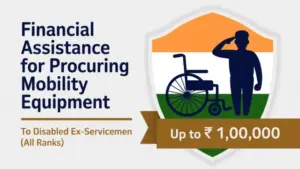
Estimate of the Items/Machines to be Procured for the Proposed Activity.
Ownership Proof of Workplace i.e. Electricity Bill/Water Bill/Telephone Bill (MTNL) or Any Other Document of Property.
Rent Agreement and ID Proof of the Owner of the Workplace in Case the Workplace is on Rent.
Affidavit of No Objection Certificate for Workplace, if the Workplace is Owned by Any of the Relatives (Blood Relation).
Affidavit of Personal Guarantee.
ECS (Electronic Clearing Service) Mandate in the Prescribed Format, Towards Repayment of Loan, Along with 05 Blank CTS (Cheque Truncation System) Post-Dated Cheques in Favour of DSFDC (Delhi SC/ST/OBC/Minority/Handicapped Financial and Development Corporation) and One Blank Cancelled Cheque for Making Payment Through RTGS (Real Time Gross Settlement).
Five Blank Post-Dated Cheques of the Guarantor are Also Required if the Loan Amount is Above ₹2,00,000/-.
Affidavit of Legal Heir of Applicant.
ID Proof of Legal Heir with Passport-Size Photo.
Copy of Insurance Receipt under Prime Minister Suraksha Bima Yojna (PMSBY) and Prime Minister Jiwan Jyoti Bima Yojna (PMJJBY).
The Applicant is Required to Bring Two Witnesses Along with Their ID Proof.
Group Photograph Showing Applicant, Guarantor, Two Witnesses, Branch In-Charge & Dealing Assistant.
Demand Draft of ₹350/- in Favour of DSFDC Towards Processing Fee.
Guarantor’s Documents

Original Pay Slip of Guarantor.
Copy of Office Identity Card of Guarantor.
Aadhaar Card of Guarantor as Proof of Residence.
Affidavit of Guarantor & Undertaking in the Prescribed Format.
Date of Birth Proof of Guarantor.
Five Passport-Size Photographs of the Guarantor.

In Case of a Loan Above ₹2,00,000/-, Five Blank Cheques from Guarantors OR (in Case of Collateral Security) Original Property Document, in Case of Immovable Property and NOC (No Objection Certificate) from the Owner of the Property with Complete Chain Documents. OR Original Collateral Security in the Shape of NSC (National Savings Certificates)/KVP (Kisan Vikas Patra)/FDR (Fixed Deposit Receipt) and Letter of Lien in Favour of DSFDC. In the Case of Loan Up to ₹50,000/-, No Guarantor or Collateral Security is Required. However, the Same Shall be Discretionary. But the Applicant Shall Have to Produce Two References/Names of Prominent Persons, Who are Permanent Residents of Delhi and Reside in the Area Where the Applicant Resides.

Bus Traveling Facility For Visually Impaired/Bus Concession

Details

The scheme “Bus Traveling Facility for Visually Impaired/Bus Concession” was started by Delhi Social Welfare Department for persons with disabilities. Under the scheme, Delhi Transport Corporation provides facility of free traveling in DTC Buses to the persons with vision impairment. Facility of concession to the escort is given to those who have not less than 100% blindness. Before applying to the concerned depot, applicant needs to get card from Sub Divisional Magistrate (SDM).


Benefits

Delhi Transport Corporation provides the facility of free traveling in DTC Buses to persons with vision impairment. The applicant having 100% disability will get a 50% concession for their escort/attendant.


Eligibility

The applicant must be a resident of Delhi.
The applicant should have 40% and above disability.
Before applying to the concerned depot, the applicant needs to get the card from Sub Divisional Magistrate (SDM).


Note: Facility of concession to the escort is given to those who have not less than 100% blindness.


Application Process

LINK- https://discomm.delhi.gov.in/discomm/schemes-and-facilities-persons-disabilities


Step 01: The eligible applicant can obtain the application form from the respective depot by paying only rupees one.
Step 02: Filled form with all documents can be submitted at the same depot.
Step 03: After successful verification, the bus pass will be issued to the applicant.


Note: Before applying to the concerned depot, the applicant needs to get the card from Sub Divisional Magistrate (SDM).


Documents Required
Identity card i.e. Aadhaar card etc.
Card issued by SDM
Residential proof
Passport-size photograph
Copy of the disability certificate

Big Loan Scheme

Details

“Big Loan Scheme” by the Delhi Scheduled Castes/Other Backward Classes/Minorities & Handicapped Finance and Development Corporation Limited (DSFDC), Government of National Capital Territory (GNCT) of Delhi, aims to provide term loans up to ₹5,00,000/- for setting up income-generating activities under permissible non-polluting trades in Delhi. The scheme targets marginalized groups, including Scheduled Castes, Other Backward Classes, Minorities, Safai Karamcharis, and Persons with Disabilities. The scheme is implemented by DSFDC in collaboration with National Apex Corporations.


Benefits

Term loan of up to ₹5,00,000/- as a part of the total project cost / loan demanded by the aspirant applicants/beneficiaries on case to case basis.
*Repay the loan in 60 monthly installments over five years with a six-month moratorium period.
*For Persons with Disabilities, the maximum repayment period is ten years with a three-month moratorium period.


Eligibility

The applicant should be a permanent resident of Delhi.
The applicant’s age should be between 18 and 50 years.
The applicant should be from one of the following target groups – Scheduled Castes, Other Backward Classes, Minorities, Safai Karamcharis, and Persons with Disabilities.
The annual family income of the applicant under Scheduled Castes, Other Backward Classes, and Minority categories should not exceed ₹1,20,000/- per annum.
For the creamy layer of the Minority category, the maximum income ceiling is ₹6,00,000/- per annum. There is no income limit under Persons with Disabilities and Safai Karamchari categories. The applicant should not have been declared a defaulter under any scheme of DSFDC, Nationalized Bank, Financial Institution, or Co-operative Bank. The applicant should possess knowledge and experience as per the requirement of the scheme. The applicant must have valid permissions like SSI Certificate, Pollution Control Certificate, or any other required permissions for setting up the Business/Industry (Manufacturing Unit) if required on a case-to-case basis. The loan is provided for setting up of Income Generating Activities under the permissible non-polluting trades approved in Delhi. However for manufacturing units, the work place should be in approved industrial area.


Application Process

LINK- https://dsfdc.delhi.gov.in/dsfdc/loan-schemes-and-application-forms?utm_source=chatgpt.com


Step 1: Obtain the prescribed format of the application form from the DSFDC Head Office (Rohini) or Branch Offices (Rajpur Road, Nand Nagari, and Mangol Puri) or download the prescribed format of the application form from the official website.
Step 2: Take print of the form. Fill in all the mandatory fields completely and accurately, paste the passport-sized photograph, and attach copies of all the mandatory documents (self-attest, if required).
Step 3: Submit the duly filled and signed application form along with the documents to the nearest DSFDC office. Pay the processing fee of ₹350/-.
Review, Approval and Loan Sanction
Once your application is reviewed and approved, DSFDC will issue a Letter of Intent, and the loan will be disbursed subject to the completion of all formalities. You will be required to submit post-sanction documents, including guarantor details, photographs, and other required affidavits and proofs. After all formalities are completed, the loan amount will be disbursed to your account.


Documents Required
Pre-Sanction/With Application
5 Passport Size Photographs.
Copy of Scheduled Castes/Scheduled Tribes/Other Backward Classes/Persons with Disabilities Certificate (In Case of Minority, an Affidavit Declaring the Applicant Belongs to a Particular Minority Community).
Copy of Aadhaar Card as Proof of Identity and Residence.
Copy of Age Proof.
Income Certificate Issued by Sub-Divisional Magistrate (SDM) of the Concerned Area (For Scheduled Castes, Other Backward Classes, and Minorities).
Affidavit Declaring Not Availed Any Loan from Any Bank/Financial Institution.
No Objection Certificate/Rent Agreement in Respect of Working Place with Ownership Proof (The Workplace Should Be in a Conforming Area/Industrial Area).
Proof of Technical Knowledge and Experience for the Project.
Project Report and Five-Year Projections of Estimated Profit-Loss Statement Duly Attested by a Chartered Accountant. Industrial License Issued by the Government of Delhi (In Case of Industrial Unit). Small Scale Industry (SSI) Registration Certificate (In Case of Manufacturing Unit). Pollution Under Control (PUC) Certificate (In Case of Manufacturing Unit).
Proforma Invoice/Quotations of the Machinery and Equipment to Be Installed.
Photographs of the Workplace (Along with the Applicant) from Different Angles Showing Its Location and Area. Processing Fee of ₹350/- in Favour of DSFDC.
Affidavit for Personal Guarantee.
Affidavit for Legal Heir of the Applicant.
Copy of Legal Heir’s ID and One Passport Size Latest Photograph.
Bonafide Disability Certificate Issued by a Government Hospital (For Availing Loan Under Persons with Disabilities Category, the Disability Should Not Be Less Than 40%). For Safai Karamchari Category, the Following Persons Are Considered Eligible: Scavengers/Safai Karamcharis and Their Dependents Duly Identified Under the National Scheme for Liberation and Rehabilitation of Scavengers (NSLRS) Through a Survey. Registered Co-operative Societies of Safai Karamcharis. Legally Constituted Association/Firm Promoted by the Target Groups. Persons Who Produce a Certificate from Local Revenue Officer/Local Municipal Officer/Cantonment Executive Officer/Railway Officer, Head of the Government Departments (i.e., Schools, Colleges, Forest, Health, Education, Animal Husbandry) Having Rank Not Less Than Gazetted Officer, Elected Members of Municipal Body, Pradhan of Gram Panchayats, and Regional Managers of Regional Rural Banks (RRBs)/Nationalized Banks.


Post-Sanction

Guarantor(s) Passport Size Photographs (04).
Guarantor(s) Undertaking/Details.
Latest Pay Slip.
Copy of Office ID Card.
Copy of Ration Card/Voter ID/Aadhaar Card.
Copy of Guarantor(s) Age Proof.
Guarantor(s) Affidavit.
05 Post-Dated Cheques (PDCs) of Guarantor(s).
Electronic Clearing Service (ECS) Mandate Form in the Prescribed Format.
ID Proof of Two Local Witnesses Along with Their Physical Presence at the Time of Signing of Deeds.
Copies of Pradhan Mantri Jeevan Jyoti Bima Yojana (PMJJBY) and Pradhan Mantri Suraksha Bima Yojana (PMSBY) to Be Submitted by the Applicant.
Group Photographs with Applicant, Guarantor(s), and Witnesses Along with the Scheme In-Charge and Dealing Assistant.

Artisan Promotion

Details

The scheme “Artisan Promotion” by the Delhi Scheduled Castes, Scheduled Tribes, Other Backward Classes, Minorities, and Safai Karamchari Finance and Development Corporation (DSFDC), Government of Delhi, aims to provide artisans with opportunities to showcase their talents by participating in various national fairs and exhibitions (Shilpotsav, IITF, East Himalaya Expo, International Surajkund Mela) organized by the different National Apex Corporations. The scheme offers financial support for participation fees, lodging, boarding, and stipends, enabling artisans to gain exposure, recognition, and financial benefits. The scheme is implemented by the DSFDC in collaboration with various National Apex Corporations.


Benefits

The Corporation provides opportunities for artisans to participate in fairs and melas organized by different National Apex Corporations. Stipend for Beneficiaries from Scheduled Castes Category

Daily Allowance (DA) for Participant: ₹150/- per day
DA for Attendant/Spouse: ₹100/- per day
Travel Allowance (TA): Actual train fare by sleeper class or bus fare (on production of original tickets)
Hotel Accommodation: ₹200/- per day (Male), ₹300/- per day (Female)
Luggage/Transportation: ₹500/-
Stipend for Beneficiaries from Minority Category DA for Participant: ₹1200/- per day (maximum for boarding & lodging for one person only)


TA: Actual train fare by sleeper 2nd class or bus fare (on production of original tickets) one side. Other Backward Class Category: Reimbursement of to and fro 2nd Class journey by train/bus fare against the original tickets to participant and one helper. ₹150/- per day as daily allowance to the participant. Maximum ₹500/- towards freight charges for the luggage.Stipend for Beneficiaries from Safai Karamcharis Category To and Fro 2nd Class train ticket fare/bus for the shortest route & reasonable coolie charges. DA: ₹150/- per day per member.Lodging facility will be provided by the NSKFDC or ₹250/- per day, per member. Local conveyance: ₹100/- per day per member or transport provided by NSKFDC. Stipend for Beneficiaries from Persons with Disabilities (PwDs) Category ₹500/- per day (including attendant). To & Fro 2nd Class fare of Train or Bus and maximum ₹6000/-. Boarding & Lodging: ₹500/- per day.


Eligibility

The applicant should be an Artisan. The applicant should be from one of the following target groups – Scheduled Castes, Other Backward Classes, Minority, Safai Karamchari, and Persons with Disabilities. The applicant should be a beneficiary of the Delhi Scheduled Castes, Scheduled Tribes, Other Backward Classes, Minorities, and Safai Karamchari Finance and Development Corporation (DSFDC).
The applicant should have availed a loan from DSFDC.
The applicant should be a resident of Delhi.
The applicant should be registered online under Micro, Small, and Medium Enterprises (MSME) at the website www.udyogaadhar.gov.in.


Application Process

LINK- https://dsfdc.delhi.gov.in/dsfdc/loan-schemes-and-application-forms utm_source=chatgpt.com


Step 1: The interested applicant should visit the designated office of the DSFDC, and request the hard copy of the prescribed format of the application form from the concerned staff. Alternatively, the interested applicant can also download the prescribed format of the application form and take a print of the same.
Step 2: In the application form, fill in all the mandatory fields, paste the passport-sized photograph, and attach copies of all the mandatory documents (self-attest, if required).
Step 3: Submit the duly filled and signed application form along with the documents, to the Branch In-Charge / Section In-Charge of the DSFDC. Post-Selection Procedure After the selection of the candidate allotment letter is given to the selected candidate for participation in the scheduled fair/exhibition. As per the norms/guidelines of the National Apex Corporation concerned the selected candidate has to carry original ID proof along with 03 passport-size colour photographs. The selected candidate has to carry a bill book preferably a digital sale machine in the fair under the Minorities category.


Documents Required
Two Passport Size Photographs of the Beneficiary/Artisan.
Copy of Aadhaar Card.
Copy of Loan Disbursement Letter.
Copy of Registration Certificate with MSME.
Affidavit in the Prescribed Format on a Non-Judicial Stamp Paper of Appropriate Value (Under the Minority Category).
Caste Certificate/affidavit, Required if the Applicant Belongs to a Minority Community.

Accidental Death Assistance for the Construction Workers

Details

The “Accidental Death Assistance for the Construction Workers” by the Delhi Building and Other Construction Workers Welfare Board, Labour Department, Delhi, is a welfare scheme for the registered workers of the board. Through this scheme, financial assistance of ₹2,00,000/- is provided to the nominees/dependents of the members in case the death is due to an accident, during the course of employment.


Benefits

Financial assistance of ₹2,00,000/- is provided to the nominees/dependents of the members in case the death is due to an accident, during the course of employment.


Eligibility

For Registration The applicant should be a resident of Delhi. The applicant should be a Building/Construction Worker. The applicant should be between 18 and 60 years. The applicant should have served the Board for at least 90 days in a given year. For Application The nominees/dependents who have lost any registered member/worker of the due to an accidental death.


Application Process

Registration

LINK- https://dbocwwb.delhi.gov.in/


Step 1: Visit the DBoCWWB website and click “Register Now”.
Step 2: Enter the following mandatory details: Aadhaar Card Number, Name as on Aadhar Card, Mobile Number, Date of Birth (as on Aadhar Card), Gender, etc. Create a password and confirm it. Click “Register”. You will be redirected to the registration page.
Step 3: On the registration page, fill in the mandatory details (Father Name, Mother Name, Photograph, Applicant’s Video, etc) and upload the mandatory documents in the specified filetype and filesize. Click “Save & Next”.
Step 4: On the next page, enter the mandatory details regarding your work/workplace (Previous/Current Employer Details, Proof of 90 Days Employment, etc) and upload the mandatory documents in the specified filetype and filesize. Click “Save & Next”.
Step 5: Click on “Add Family Members” to avail the benefits of various schemes.
Step 6: In the next window, add your Bank Account details.
Step 7: In the next window, upload your Aadhaar Card, Address Proof, Birth Proof, Employment Proof, Bank Account details etc.
Step 8: In the next window, the “Affidavit of the Applicant” will be displayed. Verify all the details, and click on the checkbox.
Step 9: Proceed for the online registration fee of ₹25/- through a Debit Card/ Internet Banking/ UPI.
Step 10: Enter the OTP received on your registered mobile number to apply. Note down the Application Number for future reference. Download the acknowledgement receipt. Track Your Application Visit the homepage of the website regularly and click on “Track Your Application” to check the status of your application.


Application

Step 1: Visit the DBoCWWB website and click “Apply for Scheme”.
Step 2: Log in through Aadhaar Number/ Registration Card/ OTP.
Step 3: Apply for the “Death Assistance” scheme.


Helpline Number (24×1) : 011-41236600

DBOCWWB Department

Number (office hours: 9:30AM – 6:00PM) : 011-23813846


Documents Required
Original Death certificate (duly issued by any Municipal/Government Authority).
Photocopy of Aadhar card of the Nominee. Photocopy of First page of Bank passbook/copy of cancelled Cheque of the Nominee. Copy of the First Information Report (FIR)/Medico-Legal Cases (MLC) Report.

The “Accidental Death Assistance for the Construction Workers” by the Delhi Building and Other Construction Workers Welfare Board, Labour Department, Delhi, is a welfare scheme for the registered workers of the board. Through this scheme, financial assistance of ₹2,00,000/- is provided to the nominees/dependents of the members in case the death is due to an accident, during the course of employment.

Yatra Pass in DTC non AC Buses for the Construction Workers

Details
The “Yatra Pass in DTC non AC Buses for the Construction Workers” by the Delhi Building and Other Construction Workers Welfare Board, Labor Department, Delhi, is a welfare scheme that provides a pass of ₹ 2400/- per three months for non AC DTC bus to the registered workers for purchasing. All types of bus passes i.e. Conventional Bus Pass as well as e-Bus Pass can be made online.


Benefits
A pass of 2400/- per three months for non AC DTC bus is provided.


Eligibility For Registration
The applicant should be a resident of Delhi.
The applicant should be a Building/Construction Worker.
The applicant should be between 18 and 60 years.
The applicant should have served the Board for at least 90 days in a given year.
For Application The applicant should be above 5 years of age.


Application Process

LINK- https://dbocwwb.delhi.gov.in/


Registration
Step 1: Visit the DBoCWWB website and click “Register Now”.
Step 2: Enter the following mandatory details: Aadhaar Card Number, Name as on Aadhar Card, Mobile Number, Date of Birth (as on Aadhar Card), Gender, etc. Create a password and confirm it. Click “Register”. You will be redirected to the registration page.
Step 3: On the registration page, fill in the mandatory details (Father Name, Mother Name, Photograph, Applicant’s Video, etc) and upload the mandatory documents in the specified filetype and filesize. Click “Save & Next”.
Step 4: On the next page, enter the mandatory details regarding your work/workplace (Previous/Current Employer Details, Proof of 90 Days Employment, etc) and upload the mandatory documents in the specified filetype and filesize. Click “Save & Next”.
Step 5: Click on “Add Family Members” to avail the benefits of various schemes.
Step 6: In the next window, add your Bank Account details.
Step 7: In the next window, upload your Aadhaar Card, Address Proof, Birth Proof, Employment Proof, Bank Account details etc.
Step 8: In the next window, the “Affidavit of the Applicant” will be displayed. Verify all the details, and click on the checkbox.
Step 9: Proceed for the online registration fee of ₹25/- through a Debit Card/ Internet Banking/ UPI.
Step 10: Enter the OTP received on your registered mobile number to apply. Note down the Application Number for future reference. Download the acknowledgement receipt.


Track Your Application
Visit the homepage of the website regularly and click on “Track Your Application” to check the status of your application.


Application for Yatra Pass in DTC:
Step 01: Go to the DTC Website and fill up the application form selecting the appropriate type and duration of bus pass, and upload soft copy of the required document in case of Concessional Bus Pass.
Step 02: Make the payment online.
Step 03: Conventional Bus pass shall be delivered at Applicant residential address within 5 working days and e-Bus Pass shall be sent through SMS via a link on Applicant Mobile Number within one working day.

Helpline: DBOCWWB Department, Delhi
Helpline Number (24×1) : 011-41236600 Number (office hours: 9:30AM – 6:00PM) : 011-23813846

Address & Helpline: Delhi Transport Corporation Pass Section,
Delhi Transport Corporation, Scindia House, KG Marg
Connaught Place, New Delhi 110 001.
Phones: 011-23752769 – 75,Ext.226.
Mobile: 08744073213


Documents Required
Labour card.
Any other documents as directed by the department.

Widow Daughter Marriage Scheme

Details
Department of WCD, Delhi Government is implementing various Financial Assistance Schemes for the benefit of different sections of the society through Financial Assistance Cell. Department of Women and Child Development is running Widow’s Daughter Marriage(WDM) Scheme for the benefit of widows/women in distress.


AIMS AND OBJECTIVE
To provide financial assistance to the poor widows for performing the marriage of their daughters(up to two daughters).
To provide financial assistance to the guardians including Homes/Institutions or foster parents of an orphan girl for her marriage.
This is a one-time grant.


Benefits
The Quantum of assistance for this scheme is ₹30,000/- only.


Eligibility
The financial assistance can be granted for performing marriage up to two daughters only.
Residence of a minimum of 5 years in Delhi before the date of application.
The income of the applicant should be less than Rs 1,00,000/-Per year from all sources (including rent, interest/dividends on savings & investments, earnings from the farm, property sale proceeds, etc.) of the applicant. Applicant should have an Aadhar number. The Applicant should have a single-operated Aadhaar-linked account with any bank in the National Capital Territory (NCT) of Delhi only. The applicant should not be in receipt of any assistance from the discretionary fund of the Lt. Governor or the Chief Minister of Delhi for the same purpose. The girl for whose marriage the Financial Assistance is sought, should be major on the date of marriage i.e., above 18 years of age. The application must be submitted within a period of sixty days, before or after the date of marriage being solemnized. The applicant should not be receiving any pension from Central Govt./State Govt./MCD and/or NDMC or any other source for this purpose.


Application Process
LINK- https://edistrict.delhigovt.nic.in/
LINK- https://wcd.delhi.gov.in/
Log on to the Official Website https://edistrict.delhigovt.nic.in/Account/Login.
A citizen may first register on this website.
After registration, Click on Registered User Login.
Enter given login ID and Password.
Enter Captcha and Click on Login.
Go to Main Page (Main Page) will open click on apply online.
Drop Box apply for services will open – click.
List of Departments providing online services shall open.
Select on Department of Women & Child Development.
Two Financial Assistance Schemes will be shown. Choose and Click on Apply.
Check the basic/personal details form and click on Continue.
Form will open fill up all required fields & uploads all required documents as per requirement of scheme selected.
Then click next and upload photograph.
Then click on finish. One OTP will be received on registered mobile number. Enter OTP and Submit.
Acknowledgement of successful submission shall be generated.


Documents Required
Widow as an applicant want to apply for marriage of her girl under the scheme, then Aadhaar card of widow as applicant is mandatory and Aadhaar card of girl whose marriage is being performed is optional. Orphan Girl as applicant want to apply for her marriage under the scheme then Aadhaar card of orphan girl as applicant is mandatory. Proof of Identify (anyone of the following):-
Voter ID card.
Pan card.
Driving License.
Aadhar Card.
Passport.
Insurance Policy Documents.
Electricity Bill/ Water Bill/ Telephone Bill/ Gas Connection receipt.
Bank passbook.
Caste Certificate issued in Delhi.
Service identify card of public/private sector company/established concerned.
Property Document.
Any other document which clearly shows at least 5 years of residence in Delhi.

Viksit Delhi CM Internship Programme

Details
The “Viksit Delhi CM Internship Programme” is a scheme of the Delhi Government to engage young interns pursuing graduation/post-graduation from various fields. The programme aims to harness the energy and innovative ideas of the youth pursuing graduation and post-graduation in India, which will be implemented in policy and decision-making, to make Delhi a smart, clean, caring and prosperous metropolis. The summary of the scheme is as


following:-
This internship scheme is for 89 days (3 months approx.) referred to as “Term”.
The time period of this scheme starts on 30 Jun, 2025 and ends on 28 September, 2025.
Initially screened candidates are required to bring original certificates and their candidature/selection is subject to verification of certificate. Reservation for SC, ST, OBC, EWS & PHYSICALLY DISABLED applicable as per Delhi and Central Government rules.


Boot Camp:
300 candidates shall be selected through prelim/online screening test. These 300 candidates shall be allowed to attend boot camp wherein 150 candidates shall be shortlisted based on performance in essay writing during boot camp. Boot camp shall be held on 23rd July 2025. Candidates screened through online exam mode will be given a topic for essay writing. 150 interns shall be finalized on the basis of performance in essay writing. Candidates are required to bring their original documents for verification.


Note: The venue and timing of boot camp will be announced shortly on the website. It is advised to check the website frequently for details.


Benefits
Interns will be eligible for 5 days’ leave during the entire duration of the internship.
Each intern shall be paid an amount of ₹20,000/- per month, i.e. ₹60,000/- for a complete term, subject to attendance.
At the end of the internship, interns will submit their report to the HODs of the concerned department.
Interns who successfully complete the programme will receive a certificate signed by the concerned Head of the Department/Authorised signatory.


Eligibility
The applicant must be pursuing a graduation or post-graduation course.
The applicant must be enrolled in the electoral roll of Delhi or have any residential proof in Delhi.
The applicant must have scored 70% or above marks in the Class 12th examination.
The applicant must be between 18 and 30 years of age as on the date of application.
Reservation/Relaxation:
Reservation for Scheduled Caste (SC), Scheduled Tribe (ST), Other Backward Class (OBC), Economically Weaker Section (EWS), and Physically Disabled candidates is applicable as per Delhi and Central Government rules.


Application Process

Online

EMAIL- https://delhi.gov.in/


Registration Process:
Step 1: Visit to official website of Viksit Delhi Yuva.
Step 2: On the top-right corner of the page, click on ‘Registration’.
Step 3: A new registration form page will appear
Step 4: Begin by clicking on the ‘Take Your Selfie’ option and uploading your photograph.
Step 5: Fill in the required personal details, i.e., Your Full Name, Email ID, Password & Confirm Password, Building/House Number, Locality, District Name, Pincode, and Aadhaar Number.
Step 6: Upload the following documents: Aadhaar Card, Address Proof, Category Certificate (if applicable), Proof of Date of Birth, and 12th Class Certificate.
Step 7: Enter your 12th Class Percentage and Date of Birth.
Step 8: Provide your Mobile Number, click Send OTP, and enter the OTP received for verification.
Step 9: Tick the declaration box confirming the correctness of the details and uploaded documents.
Step 10: Click the Submit button to complete your application.


After Registration: 300 candidates shall be selected through preliminary/online screening test. These 300 candidates shall be allowed to attend boot camp, wherein 150 candidates shall be shortlisted based on performance in essay writing during boot camp. Initially screened candidates are required to bring original certificates, and their candidature/selection is subject to verification of certificates. The venue and timing of boot camp will be announced shortly on the website. It is advised to check the website frequently for details. Selected interns will start joining on August 01, 2025. They will be given a 3-day time frame to join the office.


Documents Required
Student ID Card
Residence Proof
12th Marks Certificate
Aadhaar Card
Address Proof
Qualification Certificates
Certificate of Proof DOB
Caste Certificate (if applicable)
Disability Certificate (if applicable)
Original Certificates (to be brought for verification during the boot camp)

Vice Chancellor Internship Scheme

Details
The “Vice Chancellor Internship Scheme (VCIS)” by the University of Delhi aims to provide students with experiential learning opportunities, integrating academic knowledge with practical work experience. This initiative aligns with the objectives of “Samagra Shiksha” (holistic education) as outlined in the NEP 2020. The VCIS allows students to work in various departments, centers, and institutes within the university, offering a unique platform to broaden their skills and gain real-world experience.


Objectives of VCIS, University of Delhi:
Internship schemes allow young students to be associated with the university’s work for mutual benefit.
It will expose university students to the several departments/centres/ institutes existing within the University of Delhi.
It will infuse in interns a sense of belongingness with the University system.
It will connect students of the University of Delhi to their local community and give them realworld experiences.
It will train students in collecting/streamlining documents and collating available data/resources.
It will inculcate professional aptitude, strengthen personal character, and provide a more significant opportunity for students to broaden their mental horizons.
It will give students the broadest spectrum of opportunities when seeking and applying for a job after college.
It will be beneficial for the University of Delhi as the involvement of interns with the institution will inculcate a sense of responsibility and strengthen bonding with the University. Young students with innovative ideas, abilities and skills for resolving problems will be instrumental in bringing systemic and holistic changes to the University system.


Kinds of Internships under VCIS:
Internship
Summer Internship


Duration of the Internship:
Summer internships are 8 weeks long with 15-20 flexible hours per week.
Regular internships during the academic session are 8-10 hours per week, with a maximum duration of six months.


Benefits
Stipend:
₹5,000/- per month for interns
₹10,500/- per month for summer interns.
NOTE: Stipend will be enhanced by 5% each financial year.


Certificate:
Receive a certificate of experience from the Dean of Students’ Welfare.


Eligibility
The applicant should be a student.
The students pursuing Final year/ Final Semester are not eligible.
All bonafide full-time regular students of the University of Delhi, studying in any course or stream at the undergraduate and postgraduate levels, are eligible.

Exclusion
Those students who have already availed VCIS (Summer/ Part-time) are not eligible for the VCIS.


Application Process

Online

LINK- https://highereducation.delhi.gov.in/


Apply Procedure:
Step-01: The interested applicant visits the official website.
Step-02: The applicant needs to fill out a Google Form to apply for the internship.
Step-03: Fill in the required information and upload all the essential documents.

Note: List of selected candidates for the Vice Chancellor Internship Scheme show on the official website.


Selection Procedure:
Based on assessment and interaction with the selection committee, comprising members nominated by the Vice-Chancellor.


Documents Required
Letter of Recommendation (issue from the Head of the Departments/Institution/College/ Centres).
Joining Letter.
Any other document if required.

Transport Loan Scheme

Details
“Transport Loan Scheme” by the Delhi Scheduled Castes, Scheduled Tribes, Other Backward Classes, Minorities & Safai Karamchari Finance and Development Corporation (DSFDC), Government of NCT of Delhi, aims to promote self-employment among beneficiaries of the target groups by providing term loans for the purchase of Light Motor Vehicles (LMVs). The scheme offers financial assistance up to ₹5,00,000/- to eligible applicants. The target groups include Scheduled Castes, Other Backward Classes, Minorities, and Safai Karamcharis.


Benefits
The scheme provides term loans up to ₹5,00,000/- for the purchase of Light Motor Vehicles (LMVs).
*The loan is recovered in 60 monthly installments over a period of five years, with six months as a moratorium period.
*Loans are disbursed subject to the completion of pre and post-sanction formalities.


Eligibility
The applicant should be from one of the following target groups – Scheduled Castes, Other Backward Classes, Minorities, and Safai Karamcharis. The applicant should be a permanent resident of Delhi. The applicant’s age should be between 18 to 45 years. The annual family income of the applicants (under Scheduled Caste, Other Backward Classes & Minority category) from all sources should not exceed ₹1,20,000/- per annum. For the creamy layer of the Minority category, the maximum income ceiling is ₹6,00,000/- per annum. There is no income limit prescribed under the Safai Karamchari category. Bonafide valid commercial driving licence & badge required (Light Motor Vehicle). The applicant should have not been declared as a defaulter under any scheme of DSFDC, Nationalized Bank, Financial Institution, or Co-operative Bank etc.


Application Process

Offline

LINK- https://dsfdc.delhi.gov.in/


Step 1: The interested applicant should visit the DSFDC branch offices (Rajpur Road, Mangolpuri, Nand Nagri) or headquarters at Rohini to collect the loan application form for the scheme. Alternatively, take print of the prescribed format of the application form from the official website of DSFDC.
Step 2: In the application form, fill in all the mandatory fields, paste the passport-sized photograph, and attach copies of all the mandatory documents (self-attest, if required).
Step 3: Submit the duly filled and signed application form along with the documents at the nearest DSFDC branch office or headquarters. Pay the processing fee of ₹350/- via demand draft in favor of DSFDC.
Step 4: The DSFDC will review your application and documents. If approved, you will receive a loan sanction letter. After loan sanction, submit additional documents as required, including guarantor details, post-dated cheques (if applicable), and group photographs. Once all formalities are completed, the loan amount will be disbursed to your account.
*For any further queries, applicants can visit the DSFDC website or contact their nearest DSFDC office.


Documents Required
(A) Pre-Sanction/With Application
5 Passport Size Photographs of the applicant.
Copy of Voter ID/Aadhaar Card/Ration Card.
Copy of Age Proof (age should be 18 to 45 years).
Copy of the Commercial Licence and Badge (Light Motor Vehicle).
Income Certificate issued by Sub-Divisional Magistrate (SDM) of the area concerned in respect of Scheduled Caste/Other Backward Classes & Minorities.
Affidavit declaring not availed any loan from any Bank/Financial Institute etc.
Quotation of the Vehicle.
Processing Fee of ₹350/- in favour of DSFDC.
Affidavit for Personal Guarantee.
Affidavit of Legal Heir of the applicant.
Copy of Legal Heir’s ID and one passport size latest photograph.
Caste Certificate is required to be submitted for Scheduled Caste/Other Backward Classes category issued by the concerned area Sub-Divisional Magistrate (SDM). For Minority category, an affidavit indicating the caste/religion is required. However, for Safai Karamchari category, the following persons are considered eligible for availing financial assistance under the various schemes of National Safai Karamcharis Finance and Development Corporation (NSKFDC): Scavengers/Safai Karamcharis and their dependants duly identified under the National Scheme for Liberation and Rehabilitation of Scavengers (NSLRS) through a survey.
Registered co-operative societies of Safai Karamcharis. Legally constituted association/firm promoted by the target groups. Persons who produce a certificate from local Revenue Officer/local Municipal Officer/Cantonment Executive Officer/Railway Officer, Head of the Government Departments (i.e., Schools, Colleges, Forest, Health, Education, Animal Husbandry) having rank not less than Gazetted Officer, Elected Members of Municipal Body, Pradhan of Gram Panchayats, and Regional Managers of Regional Rural Banks (RRBs)/Nationalized Banks. However, under the Manual Scavengers Act, 2013, a person identified as a Manual Scavenger in a survey need not provide any certificate once his/her name appears in the final list of Manual Scavengers prepared by State Government/Union Territory Administration (www.mssurvey.nic.in).
Forms are available in the Head Quarter (Rohini) as well as Branch Offices (Raj Pur Road, Nand Nagari & Mangol Puri) of the Corporation. However, the same can be downloaded from the official website of the Corporation i.e. (http://delhi.gov.in/wps/wcm/connect/doit_dsfdc/DSFDC/Home/).


(B) Post-Sanction of Loan
Guarantor(s) Passport Size Photo (04).
Guarantor(s) Undertaking/Details.
Latest Pay Slip of Guarantor(s).
Copy of Office ID Card.
Copy of Ration Card/Voter ID/Aadhaar Card of Guarantor(s).
Copy of Guarantor(s) Age Proof.
Guarantor(s) Affidavit.
5 Post-Dated Cheques (PDCs) of Guarantor(s) (in case of loan above ₹2,00,000/-).
Electronic Clearing Service (ECS) Mandate Form duly filled in the prescribed format.
ID Proofs of two local witnesses along with their physical presence at the time of signing of Deeds.
Copies of Pradhan Mantri Jeevan Jyoti Bima Yojana (PMJJBY) and Pradhan Mantri Suraksha Bima Yojana (PMSBY) to be submitted by the applicant.
Group Photographs with applicant, guarantor(s), Witnesses, and Scheme In-charge & Dealing Assistant.

Subsidy for School Uniforms to the Students

Details
The scheme “Subsidy for School Uniforms to the Students” by the Department of Education (DoE), Government of National Capital Territory (GNCT) of Delhi, aims to provide financial assistance to students for purchasing school uniforms, ensuring equitable access to education. Under this scheme, a cash subsidy is provided annually to students from Nursery to Class XII, irrespective of gender or income, to alleviate the financial burden on families. The scheme covers students enrolled in government and aided schools, with varying amounts allocated based on class levels. The subsidy amounts range from ₹1,100/- to ₹1,500/- per annum, depending on the class. Eligibility is universal for students in the specified classes, with no income or gender-based restrictions. The scheme is implemented by the Department of Education, GNCT of Delhi.


Benefits
Cash Subsidy Amounts
Nursery to Class 5th: ₹1,100/- per annum.
Class 6th to 8th: ₹1,400/- per annum.
Class 9th to 12th: ₹1,500/- per annum.


Disbursement
Mode: Direct cash subsidy, disbursed annually to students or their guardians.
Validity: Applicable for the academic year in which the subsidy is disbursed.


Eligibility
The applicant should be a student enrolled in a government or aided school in Delhi.
The applicant should be studying in any class from Nursery to 12th Standard.


Application Process

Offline

LINK- https://edistrict.delhigovt.nic.in/


The scheme “Subsidy for School Uniforms to the Students” does not require any formal application from students, as the process is managed by the school authorities. The school verifies the students’ enrollment and class details, compiles a list of eligible students, and submits it to the Department of Education.


Documents Required
School Admission/Enrollment Proof (Fee Receipt or School ID Card)
Class-wise Enrollment Details
Bank Account Details

Scholarship/Merit Scholarship Schools SC/ST/OBC/Min (Studying in College/Technical/ Professional Institutions)

Details
Launched by the Department for the Welfare of SC/ST/OBC, Government of NCT of Delhi, the scheme “Merit Scholarship to SC/ST/OBC/Minority students studying in recognised Colleges/Professional/Technical Institutions” aims to provide financial assistance to students from marginalized communities pursuing higher education in recognized institutions. The scheme offers monthly scholarships to hostellers and day scholars based on their course of study, with amounts ranging from ₹420/- to ₹1,860/- per month. Eligible students must have secured at least 60% marks in the previous academic year. Family income limits apply only to OBC and Minority students. The scheme is implemented by the Department for the Welfare of SC/ST/OBC, Government of NCT of Delhi.


Benefits
Course of Study Group-A Degree courses in medical/engineering/B.Sc. (Agri)/Veterinary Science/Forensic Science/Higher Technical and professional studies, and degree-level courses in Indian medicine (B.A.M.S. and comparable courses in Ayurvedic, Unani/Tibbia, and Homeopathy systems of Medicine): Hostellers: ₹1,620/- per month for 12 months; Day Scholars: ₹900/- per month for 12 months. For Postgraduate courses in the above fields and other technical/professional courses: Hostellers: ₹1,860/- per month for 12 months; Day Scholars: ₹960/- per month for 12 months.
Course of Study Group-B Diploma-level courses in Indian medicine, engineering, technology, architecture, and other vocational courses, as well as postgraduate courses in science subjects: Hostellers: ₹1,110/- per month for 12 months; Day Scholars: ₹720/- per month for 12 months.
Course of Study Group-C Certificate courses in engineering, technology, architecture, medicine, and other vocational courses (minimum duration of one year): Hostellers: ₹930/- per month for 12 months; Day Scholars: ₹630/- per month for 12 months.
Course of Study Group-D General courses up to graduate level: Hostellers: ₹804/- per month for 12 months; Day Scholars: ₹420/- per month for 12 months.
Postgraduate studies in Arts, Commerce, and other subjects: Hostellers: ₹930/- per month for 12 months; Day Scholars: ₹630/- per month for 12 months.
Conditions for Disbursement. The scholarship amount will be reduced to 50% if a student fails the annual examination but continues studies, except in cases of medical grounds or natural calamities.


Eligibility
The applicant should be a resident of Delhi.
The applicant should belong to the SC/ST/OBC/Minority category.
The applicant should be enrolled in a recognized school, college, or institution in India.
The applicant should be a student.
The applicant should have secured a 60% or above marks in the previous examination.
If the applicant is from OBC/Minority Community, his/her annual family income should not exceed ₹2,00,000/-.


Application Process

Online

LINK- https://edistrict.delhigovt.nic.in/


Registration
Step 1: Visit the e-District Portal of the Govt. of NCT of Delhi.
Step 2: On the top right corner of the homepage, click “Login/Register”, then click “Register”. You will be taken to the “Citizen Registration Form”. Carefully read the “Guidelines for Online Registration” provided at the bottom of the page.
Step 3: In the Citizen Registration Form, select “Aadhaar Card” as the Document Type, and provide the Aadhaar Number. Fill in the captcha code and click “Continue”.
Step 4: On the next page, fill in all the mandatory fields. If required, verify your Email ID and Mobile Number via OTP. Enter the Captcha code and click “Continue to Register”. You will receive your Login ID and Password on the Mobile Number/Email Address provided during the registration.


Application
Step 1: Visit the e-District Portal of the Govt. of NCT of Delhi.
Step 2: On the top right corner of the homepage, click “Login/Register”, you will be taken to the “Citizen Login Form”
Step 3: Provide your Login ID and Password, enter the Captcha code and click “Login”.
Step 4: Go to the home page and click “Apply Service”. Navigate to the scheme that you intend to apply for. Click on the name of the scheme. You will be taken to the scheme’s online application form.
Step 5: In the application form, fill in all the mandatory fields and upload all the mandatory documents in the specified format and size. Carefully review all the information provided and the documents uploaded. Make any necessary corrections. Acknowledge and agree to the terms and conditions and/or declaration (if any), then click “Finish”.
Step 6: An OTP will be received on the registered mobile number. Provide the OTP and click “Submit”. An acknowledgement of successful submission shall be sent over Email/SMS/Both.


Track Application Status
Step 1: Visit the “Track Your Application” page.
Step 2: Fill in all the mandatory fields. Enter the Captcha Code, and click “Submit”. Your current application status will be displayed.


Documents Required
Common Documents Income Certificate issued by competent authorities of GNCTD (for OBC and Minority students).
Affidavit, in the case of a gap in education up to 3 years. Only for SC/ST/OBC Students
Caste Certificate issued by SDM/Deputy Commissioner (Revenue), GNCTD, in the name of the student or father.
Domicile Certificate of Delhi (if the caste certificate is not issued by GNCTD).
Only for Minority Students Proof of residency in Delhi for the past three years (e.g., EPIC card, Aadhaar Number, Ration Card, MTNL landline bill, Driving License, or Domicile Certificate). Declaration by parent/guardian affirming the student’s minority community status.

Scheme for Celebration of Birth/death Anniversary of Eminent Personalities

Details
The “Scheme for Celebration of Birth/Death Anniversary of Eminent Personalities” was launched by the Department for the Welfare of SC / ST / OBC / Minorities, Government of NCT of Delhi. The scheme aims to assist in the organization of events for the Birth/Death anniversaries of prominent figures who have significantly contributed to social justice and the upliftment of weaker sections of society.

The programs that may be organized to celebrate the Birth/Death Anniversary of Dr. B.R. Ambedkar, Sant Ravidas, and Maharishi Balmiki are indicated below as an illustration:
Appropriate Cultural Programmed. A conference or symposium on themes like Life & Work of the Great Saint. Contribution of eminent personality to Social Justice. Road map for building a society based on the principles of social justice, equity, equality of opportunity, etc. Other related subjects. A quiz/debate/essay competition etc. on the life and work of Dr. Bhimrao Ambedkar for the promotion of social justice, for its students. The winners to be given cash prize along with a book(s) on Dr. Bhimrao Ambedkar.


Benefits
Assistance for the arrangements of celebrations up to a maximum of ₹50,000/- per occasion, for a maximum of two occasions in one year.
Note: Assistance for the celebration of Birth/Death Anniversaries of Dr. B.R. Ambedkar, Sant Ravidas, and Maharishi Balmiki will be provided through empaneled agencies.


Eligibility
The NGOs should be registered under the Societies Registration Act.
The registered NGOs should have audited accounts.


Application Process

Offline

https://edistrict.delhigovt.nic.in/


Step 1: The interested applicant should visit (during office hours) the Department for the Welfare of SC/ST/OBC and request a hard copy of the prescribed format of the application form from the staff exclusively entrusted to issue and collect filled-in applications.
Step 2: In the application form, fill in all the mandatory fields, and attach copies of all the mandatory documents (self-attest, if required).
Step 3: Submit the duly filled and signed application form along with the documents to the Department for the Welfare of SC/ST/OBC.
Step 4: Request a receipt or acknowledgment from the concerned authority to whom the application has been submitted. Ensure that the receipt contains essential details such as the date and time of submission, and a unique identification number (if applicable).

Note-1: The application is submitted at least 15 days in advance.
Note-2: The recommendation letter is not mandatory during the enforcement of the Model Code of Conduct during elections.


Documents Required
Audited Accounts of the NGO.
Recommendation Letter (from the area MLA or the Minister in charge).
Details of Previous Celebrations/Activities.
Invitation Card, Backdrop, Banner, Posters .
Event Photographs.

Reimbursement of Tution Fee for SC/ST/OBC/Min students in Public Schools in Class I to XII

Details
The scheme “Reimbursement of Tuition Fees for SC/ST/OBC Categories Students Studying in Class I to XII” by the Department for the Welfare of SC/ST/OBC/Minorities, Government of NCT of Delhi aims to provide financial assistance by reimbursing tuition and other compulsory fees for eligible students from SC/ST/OBC categories studying in recognized public schools in Delhi. The scheme ensures that students with a family income below ₹3,00,000/- per annum receive reimbursement for tuition, lab, and library fees, subject to academic performance and attendance criteria. Eligible students must be enrolled in classes 1st to 12th in schools recognized by the Department of Education, Govt. of NCT of Delhi, or municipal local bodies of Delhi.


Benefits
Reimbursement Amount: Maximum reimbursement of ₹48,000/- or actual paid fees (whichever is less) covering tuition, lab, and library fees.
Conditions for Disbursement
Student must score 50% and above marks in the preceding year.
Student must have at least 70% attendance in the preceding year.
Mode of Disbursement: Direct transfer to the student’s bank account (joint account with parent/guardian allowed).


Eligibility
The applicant should be a Student.
The applicant should be studying in Class 1st to 12th.
The applicant should be enrolled in a school recognized/affiliated with the Dept. of Education, GNCTD or Municipal Local Bodies of Delhi.
The applicant should have scored 50% or above in the previous academic year.
The applicant should have at least 80% attendance in the preceding year.
The applicant should not be repeating the same class.
The annual income of the family of the applicant should not exceed ₹2,00,000/-.


Application Process

Offline

LINK- https://edistrict.delhigovt.nic.in/

Registration
Step 1: Visit the e-District Portal of the Govt. of NCT of Delhi.
Step 2: On the top right corner of the homepage, click “Login/Register”, then click “Register”. You will be taken to the “Citizen Registration Form”. Carefully read the “Guidelines for Online Registration” provided at the bottom of the page.
Step 3: In the Citizen Registration Form, select “Aadhaar Card” as the Document Type, and provide the Aadhaar Number. Fill in the captcha code and click “Continue”.
Step 4: On the next page, fill in all the mandatory fields. If required, verify your Email ID and Mobile Number via OTP. Enter the Captcha code and click “Continue to Register”. You will receive your Login ID and Password on the Mobile Number/Email Address provided during the registration.


Application
Step 1: Visit the e-District Portal of the Govt. of NCT of Delhi.
Step 2: On the top right corner of the homepage, click “Login/Register”, you will be taken to the “Citizen Login Form”
Step 3: Provide your Login ID and Password, enter the Captcha code and click “Login”.
Step 4: Go to the home page and click “Apply Service”. Navigate to the scheme that you intend to apply for. Click on the name of the scheme. You will be taken to the scheme’s online application form.
Step 5: In the application form, fill in all the mandatory fields and upload all the mandatory documents in the specified format and size. Carefully review all the information provided and the documents uploaded. Make any necessary corrections. Acknowledge and agree to the terms and conditions and/or declaration (if any), then click “Finish”.
Step 6: An OTP will be received on the registered mobile number. Provide the OTP and click “Submit”. An acknowledgement of successful submission shall be sent over Email/SMS/Both.


Track Application Status
Step 1: Visit the “Track Your Application” page.
Step 2: Fill in all the mandatory fields. Enter the Captcha Code, and click “Submit”. Your current application status will be displayed.


Documents Required
Marksheets of the Previous Year.
Attendance Record of the Previous Year.
Income Certificate (issued by a competent authority of Delhi).
Caste Certificate, issued in the student’s name or father’s name by SDM/Deputy Commissioner (Revenue), GNCTD.
Domicile Certificate.
Original Fee Receipt for the current academic session.
Bank Account Details (student’s name/joint account with parent/guardian, Aadhaar-seeded).

Rajiv Gandhi Swavlamban Rojgar Yojna

Details
“Rajiv Gandhi Swavlamban Rozgar Yojna” has been designed, developed, and promoted by the Delhi Khadi & Village Industries Board, with the help of the Government of NCT of Delhi, to provide employment opportunities to the unemployed youths, artisans, trained professionals, skilled technocrats and entrepreneurs by promotion/expansion of permissible industries, professions, tertiary and service sector in the NCT of Delhi. Jurisdiction, Purpose and Quantum of Assistance: Financial aid as a loan under these rules may be granted to the eligible projects pertaining to any of the following groups/


sectors:-Secondary Sector (Tiny/Cottage Industries) Tertiary Sector (Trade, Transportation, Hostels, Restaurants without Liquor and Meat, etc.)


Services Sector: (Under the ambit of various Terms & Conditions, provisions of local bodies, and Delhi Master Plan.)


Tenure of loans and Repayment:
Every loan with interest thereon shall be repaid in full within 5 years in equal quarterly installments. The recovery of the loan may be started after a gap of 12 months from the date of release of the loan amount. However, interest on the released amount will be recoverable from the first quarter, from the date of release of the loan amount. To ensure timely recovery, the borrower shall provide equal nos. of post-dated cheques for quarterly installments of the Principal amount including interest due as on the date of installment fixed by the Board. The Borrower shall ensure for timely encashment of each and every cheque. In case of any default, Delhi Khadi & Village Industries (DKVI) Board will be entitled to take action against him/her and/or sureties as prescribed under the law.


Rate of interest:
The loan granted under this scheme shall bear interest as prescribed by the Govt. of NCT of Delhi from time to time. The interest on the loan will accrue from the date of its disbursement and where the loan is disbursed in installments, interest shall run on each installment from the date of disbursement of such installment. No interest subsidy.


Utilization of Loan: The borrower shall utilize the loan for the specific purpose for which it is advanced within three months. However, the Managing Director of the DKVI Board will be competent to grant a maximum of three months’ grace for the utilization of the amount released by the DKVI Board. After six months, no further concession will be allowed and in case of non-utilization of funds within the maximum permissible period, the loan amount will be treated as mis-utilized and DKVI Board will be liable to make the recovery of the entire amount along with 18% interest, prescribed from time to time by Delhi Government.
If the borrower utilizes the financial assistance received from the DKVI Board in violation of the provisions of these loan rules or instructions of the DKVI Board, the amount of the loan shall be treated as mis-utilized and shall invite interest @18% along with the principal amount may be recovered. Security of Loan: Applicant shall furnish a surety/security of one Govt. Servant. The Government Servant may be either an employee of the Government of National Capital Territory of Delhi (GNCTD) or of its autonomous bodies or Central Govt. employees, working in Delhi.


Area of Implementation: Under the scheme. “Rajiv Gandhi Swavlamban Yojna” industrial/professional unit can be set up in any area and comes under the preview of Govt. of NCT of Delhi. In residential / non-confirming areas loans for only those professional/industrial activities will be provided which are permitted under the Master Plan of Delhi for those areas. To set up a unit in non-confirming areas, the applicant will also submit a No Objection Certificate of the High Power Committee constituted by the Industries Department, Govt. of Delhi, and Municipal Corporation License (MCL), for the respective industry. In the case of professional/commercial activities, the applicant should also submit Registration Certificate from MCD for the concerned trade.
Since the scheme envisages the conversion of the energy of school dropouts or those who have not gone beyond school education as well as of college dropouts, the emphasis would be on skill formation/enhancement of the selected candidates selected by the Board. The primary purpose of imparting skills to the candidates is for enabling them to take up self-employment. The focus, therefore, will be on skill formation and entrepreneur development, the basic component of which would be: –
Skill formation
Elements of bookkeeping.
Simple knowledge of marketing.
Acquaintance with product costing.
Familiarization with project financing by banks and other financial institutions.

Marketing Support: Under this scheme, the following arrangements are proposed for extending marketing support to the beneficiaries who avail of financial assistance under this Scheme.
Display of their products in Delhi Emporium as per availability of space.
DSIIDC/ Cooperative Stores can get the products manufactured by the selected entrepreneurs and market the same in their own brand name.
Allowing such entrepreneurs to participate in trade fairs particularly in Delhi Pavilion and in the exhibitions organized by Board or any other Govt. Organization. Issue of certificate to the beneficiary unit to get recognition in the market/society.
 

Benefits
The quantum of loan granted under this scheme, to proposed and functioning units, shall be up to ₹3,00,000/-.
Govt. of Delhi would provide a subsidy @ 15% of the project cost subject to the ceiling of ₹7,500/- per entrepreneur.

Note 01: The concerned entrepreneur shall make at least a 10% contribution of the amount demanded as a loan from the DKVIB.
Note 02: In the case of weaker sections i.e. SC/ST/OBC/Ph. H./Women/Ex. Servicemen, only 5% contribution of an entrepreneur is required.
Note 03: In case of more than one entrepreneur joining together and setting up a project under the partnership, the subsidy would be calculated for each partner separately, @15% of his share in the project cost, limited to ₹7,500/- for each partner.
Note 04: The subsidy component would be adjusted to the borrower’s loan account after a period of two years from the date of disbursement of the loan.
Note 05: The subsidy component would be recovered from the borrower along with 18 % penal interest in cases where the loan amount has been found not utilized for the purpose for which it was released.


Eligibility
1. Any one of the following can avail loan under the scheme:
School/College dropouts Individual entrepreneur Trade Professionals Artisan Passed out candidates from any technical/professional institute recognized by the Government and its authorized undertaking bodies, without further training. Small-Scale Industrial units with a total investment in plant, machinery, and equipment, not exceeding the ceiling prescribed for small-scale units by the Central Government from time to time and must be located within the N. C. T. of Delhi, are also eligible for financial aid/ loan.


2. The age of the applicant should be between 18 years to 50 years.
Exclusion The loan shall not be sanctioned to such parties who have already been advanced any loan for the same or similar purpose by the Government or any Government controlled financial institutions and has not been repaid in full with interest or has been mis-utilized and/or misapplied.


Application Process

LINK- https://dsfdc.delhi.gov.in/

Online

Step 01: The applicant may apply through offline mode by submitting the application form along with all the relevant documents directly in the office of the Board.
Step 02: The loan application form can also be downloaded from the official website of the Board.
Step 03: Fill in all the mandatory details in the application form and submit it along with all essential documents in the office of the Board.
Step 04: After successful verification, the applicant will be eligible to get the benefits of the scheme.

Note 01: ADO/Nodal Officer of RGSRY will be available daily for inquiries about the scheme in the Board office.
Note 02: Applications received under the scheme will be dealt on First Come First Serve basis.


Documents Required
Copy of Electoral Card/ Valid Passport/Aadhar Card as Identity proof
Two passport-size attested photographs
Education Proof
Worksite detail viz. Proof of Ownership/Possession, Rent Agreement, No Objection Certificate from the Owner, Electricity Bill, etc.
Declaration in the prescribed format (Proforma attached).
Consent Letter of the Surety/Guarantor
Proof of equity/Self Contribution
Electricity Bill (Residence)
For Shop/ Business/Professions: Registration Certificate from MCD
Industrial unit in non-confirming: NOC of HPC & MCL.


Note: In the case of online applications, the above documents can be uploaded on the portal in JPEG, JPG, PNG, GIF, or PDF format. File size should not be more than 2 MB.

Purchase/Construction of House for the Construction Workers

Details
The “Purchase/Construction of House for the Construction Workers” by the Delhi Building and Other Construction Workers Welfare Board, Labour Department, Delhi, is a welfare scheme for the registered workers of the board. Through this scheme, an advance amount of ₹3,00,000/- to ₹5,00,000/- is provided to the registered workers for purchasing or construction of houses. The amount sanctioned as advance shall be recovered in equal instalments as may be fixed by the Board. The house constructed will be under hypothecation to the Board till the last instalment of advance is paid by the


Benefits
₹3,00,000/- to the workers who have 10 years left to complete 60 years of age.
₹5,00,000/- to the workers who have 15 years left to complete 60 years of age.


Eligibility
For Registration
The applicant should be a resident of Delhi.
The applicant should be a Building/Construction Worker.
The applicant should be between 18 and 60 years.
The applicant should have served the Board for at least 90 days in a given year.
For Application
The applicant should have a minimum of 10 years to 15 years of service for superannuation.

The applicant should have been registered with the Board for not less than three years.


Application Process

Online

LINK- https://dbocwwb.delhi.gov.in/


Registration
Step 1: Visit the DBoCWWB website and click “Register Now”.
Step 2: Enter the following mandatory details: Aadhaar Card Number, Name as on Aadhar Card, Mobile Number, Date of Birth (as on Aadhar Card), Gender, etc. Create a password and confirm it. Click “Register”. You will be redirected to the registration page.
Step 3: On the registration page, fill in the mandatory details (Father Name, Mother Name, Photograph, Applicant’s Video, etc) and upload the mandatory documents in the specified filetype and filesize. Click “Save & Next”.
Step 4: On the next page, enter the mandatory details regarding your work/workplace (Previous/Current Employer Details, Proof of 90 Days Employment, etc) and upload the mandatory documents in the specified filetype and filesize. Click “Save & Next”.
Step 5: Click on “Add Family Members” to avail the benefits of various schemes.
Step 6: In the next window, add your Bank Account details.
Step 7: In the next window, upload your Aadhaar Card, Address Proof, Birth Proof, Employment Proof, Bank Account details etc.
Step 8: In the next window, the “Affidavit of the Applicant” will be displayed. Verify all the details, and click on the checkbox.
Step 9: Proceed for the online registration fee of ₹25/- through a Debit Card/ Internet Banking/ UPI.
Step 10: Enter the OTP received on your registered mobile number to apply. Note down the Application Number for future reference. Download the acknowledgement receipt.


Track Your Application
Visit the homepage of the website regularly and click on “Track Your Application” to check the status of your application.

 

Application
Step 1: Visit the DBoCWWB website and click “Apply for Scheme”.
Step 2: Log in through Aadhaar Number/ Registration Card/ OTP.
Step 3: Apply for the “Ex-gratia payment” scheme.


Helpline Number (24×1) : 011-41236600
DBOCWWB Department Number (office hours: 9:30AM – 6:00PM) : 011-23813846


Documents Required
For the Purchase of the House
Encumbrance certificate of 14 years
Land Tax receipt.
Ownership of the Building.
Title Clearance certificate.
Sale Agreement.
Undertaking (in affidavit) for repaying the amount sanctioned as an advance in equal instalments as may be fixed by the Board.
Undertaking (in affidavit) form Surety(s).
For Construction of House
Approved Plan and estimate for the construction.

Undertaking (in affidavit) for repaying the amount sanctioned as advance in equal instalments as may be fixed by the Board.

Post Matric Scholarship for SC students (Delhi)

Details
The scheme “Post Matric Scholarship for SC Students” by the Department for the Welfare of SC/ST/OBC, Government of NCT of Delhi, aims to provide financial assistance to SC students pursuing post-matriculation or post-secondary education in recognized institutions within India. The scheme covers maintenance allowance, tuition fees, and additional allowances for specific needs. Two significant benefits include the reimbursement of compulsory non-refundable fees and monthly maintenance allowances ranging from ₹230 to ₹1,200, depending on the course group. Eligibility criteria include an annual family income limit of ₹2,50,000/- and enrollment in a recognized institution. The scheme is implemented by the Department for the Welfare of SC/ST/OBC, Government of NCT of Delhi.

 

Benefits
Maintenance Allowance (per month)
Group 1 (e.g., Medicine, Engineering): Hostellers ₹1,200/-, Day Scholars ₹550/-
Group 2 (e.g., Pharmacy, Nursing): Hostellers ₹820/-, Day Scholars ₹530/-
Group 3 (e.g., BA/BSc): Hostellers ₹570/, Day Scholars ₹300/-
Group 4 (e.g., ITI, Polytechnic): Hostellers ₹380/-, Day Scholars ₹230/-
Other Benefits
Reimbursement of Compulsory Non-refundable Fees.
Study Tour Charges.
Thesis Typing/Printing Charges for Research Scholars.
Book Allowance for Correspondence Courses.
Book Bank Facility for Specified Courses.
Additional Allowance for Students With Disabilities.


Conditions
Benefits are for the complete duration of the course.
Hostel rent is provided as per scheme guidelines.


Eligibility
The applicant should be a Student.
The applicant should be from a Scheduled Caste.
The annual income of the family of the applicant should not exceed ₹2,50,000/-.
The applicant should be enrolled in a recognized post-matriculation/post-secondary course in India.
The applicant should not be availing of any other scholarship for the same course from any other source.
Exclusion
Students availing other scholarships/stipends (e.g., merit scholarships).
Students repeating the same stage of education (e.g., B.Com after B.A).
Students pursuing two professional courses (exceptions apply post-1980).


Application Process

Online

LINK- https://edistrict.delhigovt.nic.in/


Registration
Step 1: Visit the e-District Portal of the Govt. of NCT of Delhi.
Step 2: On the top right corner of the homepage, click “Login/Register”, then click “Register”. You will be taken to the “Citizen Registration Form”. Carefully read the “Guidelines for Online Registration” provided at the bottom of the page.
Step 3: In the Citizen Registration Form, select “Aadhaar Card” as the Document Type, and provide the Aadhaar Number. Fill in the captcha code and click “Continue”.
Step 4: On the next page, fill in all the mandatory fields. If required, verify your Email ID and Mobile Number via OTP. Enter the Captcha code and click “Continue to Register”. You will receive your Login ID and Password on the Mobile Number/Email Address provided during the registration.

 

Application
Step 1: Visit the e-District Portal of the Govt. of NCT of Delhi.

Step 2: On the top right corner of the homepage, click “Login/Register”, you will be taken to the “Citizen Login Form”
Step 3: Provide your Login ID and Password, enter the Captcha code and click “Login”.
Step 4: Go to the home page and click “Apply Service”. Navigate to the scheme that you intend to apply for. Click on the name of the scheme. You will be taken to the scheme’s online application form.
Step 5: In the application form, fill in all the mandatory fields and upload all the mandatory documents in the specified format and size. Carefully review all the information provided and the documents uploaded. Make any necessary corrections. Acknowledge and agree to the terms and conditions and/or declaration (if any), then click “Finish”.
Step 6: An OTP will be received on the registered mobile number. Provide the OTP and click “Submit”. An acknowledgement of successful submission shall be sent over Email/SMS/Both.


Track Application Status
Step 1: Visit the “Track Your Application” page.
Step 2: Fill in all the mandatory fields. Enter the Captcha Code, and click “Submit”.
Your current application status will be displayed.


Documents Required
Aadhaar Card
Bank Account Details (Aadhaar-seeded)
Previous Year Mark Sheet
Original Fee Receipts
Fee Structure (on institute letterhead with stamp/signature)
Income Certificate (issued by SDM, Delhi)
Caste Certificate (issued by Govt. of NCT of Delhi)
Institution Certificate (confirming no other scholarship availed)
Admission/Completion Date Proof
Degree/Diploma Certificates (for all prior qualifications)
Institute Verification Page (for institutions outside Delhi)

Pension Benefit for the Construction Workers

Details
The “Pension Benefit for the Construction Workers” by the Delhi Building and Other Construction Workers Welfare Board, Labour Department, Delhi, is a welfare scheme for the registered workers of the board. Through this scheme, the registered workers of the board are provided with a pension benefit of ₹3000/- per month after completion of 60 years. An increase of ₹300/- shall be given for every completed year of membership beyond 5 years.


Benefits
₹3000/- per month after completion of 60 years.
An increase of ₹300/- shall be given for every completed year of membership beyond five years.


Eligibility For Registration
The applicant should be a resident of Delhi.
The applicant should be a Building/Construction Worker.
The applicant should be between 18 and 60 years.
The applicant should have served the Board for at least 90 days in a given year.
For Application
The applicant should be working as a building worker for not less than one year.
The applicant should have completed 60 years of age.


Application Process

Online

LINK- https://dbocwwb.delhi.gov.in/


Registration
Step 1: Visit the DBoCWWB website and click “Register Now”.
Step 2: Enter the following mandatory details: Adhaar Card Number, Name as on Aadhar Card, Mobile Number, Date of Birth (as on Aadhar Card), Gender, etc. Create a password and confirm it. Click “Register”. You will be redirected to the registration page.
Step 3: On the registration page, fill in the mandatory details (Father Name, Mother Name, Photograph, Applicant’s Video, etc) and upload the mandatory documents in the specified filetype and filesize. Click “Save & Next”.
Step 4: On the next page, enter the mandatory details regarding your work/workplace (Previous/Current Employer Details, Proof of 90 Days Employment, etc) and upload the mandatory documents in the specified filetype and filesize. Click “Save & Next”.
Step 5: Click on “Add Family Members” to avail the benefits of various schemes.
Step 6: In the next window, add your Bank Account details.
Step 7: In the next window, upload your Aadhaar Card, Address Proof, Birth Proof, Employment Proof, Bank Account details etc.
Step 8: In the next window, the “Affidavit of the Applicant” will be displayed. Verify all the details, and click on the checkbox.
Step 9: Proceed for the online registration fee of ₹25/- through a Debit Card/ Internet Banking/ UPI.
Step 10: Enter the OTP received on your registered mobile number to apply. Note down the Application Number for future reference. Download the acknowledgement receipt. Track Your Application Visit the homepage of the website regularly and click on “Track Your Application” to check the status of your application.


Application
Step 1: Visit the DBoCWWB website and click “Apply for Scheme”.
Step 2: Log in through Aadhaar Number/ Registration Card/ OTP.
Step 3: Apply for the “Pension Benefit” scheme.


Helpline Number (24×1) : 011-41236600
DBOCWWB DepartmentNumber (office hours: 9:30AM – 6:00PM) : 011-23813846


Documents Required
Date of Birth Proof.

Old Age Assistance

Details
The Delhi government has launched an Old Age Pension Program, which aims to provide financial assistance to eligible senior citizens in the form of periodic pensions. Under this scheme, candidates aged 60-69 years receive monthly financial assistance.
The Financial Assistance Scheme is only available to Delhi residents who meet the eligibility criteria established by the Government of National Capital Territory of Delhi (GNCTD) for annual income and residency within the city, as mandated by the government directive. However, the scheme also includes provisions for individuals who do not have proof of residence to submit.


Benefits
Eligible candidates in the 60–69 age range financial assistance of Rs. 2,000/- per month.
The government also gives SC/ST/Minority group members an extra Rs. 500/- month.
Rs. 2,500/- per month will be given to people over 70 years.


Eligibility
Applicants must be 60 years or older. They must have resided in Delhi for a minimum of five years before the date of application. The applicant’s annual family income from all sources, including rent, interest/dividends on savings and investments, earnings from farming, property sale proceeds, etc., should be less than Rs. 1,00,000. The applicant must have an Aadhaar number. The applicant must have a singly-operated account in any bank within the National Capital Territory of Delhi only for receiving payment through the Public Financial Management System (PFMS).
The applicant must not be receiving any pension/financial assistance from the Central Government/State Government/other governmental local bodies or any other source for this purpose.


Application Process

Online

LINK- https://edistrict.delhigovt.nic.in/
Applicants have to visit https://edistrict.delhigovt.nic.in/


Under Citizen Corner click on New User
Click on select the document – Aadhar or Voter ID
Enter your Aadhar Card Number/Voter ID Card Number
Type the Captcha in the box shown

Citizen Registration Form will Open for registration
Fill up all fields including details of the Present Residential Address
Enter Captcha, and Click on Continue.
Login ID and Password will be received on the given mobile number/e-mail address.
Now Registration on the e-district portal is complete


Registration for Financial Assistance Services
Click on Registered User Login
Enter the given login ID and Password
Enter Captcha and Click on Login
Go to Main Page (Main Page) will open click on apply online.
Drop Box apply for services will open – click
List of Departments providing online services shall open –
Select Department of Social Welfare and click on scheme name
The form will open fill up all required fields & upload all required documents as per the requirement of the scheme selected.
Then click next and upload a photograph
Then click on finish.
One OTP will be received on the registered mobile number.
Enter OTP and Submit.
Acknowledgment of successful submission shall be generated.


Documents Required
Age proof.
Residence proof.
Bank account number (Single account).
In the case of SC/ST applicants in the age bracket 60-69 years, a caste certificate in the name of the applicant issued by the Competent Authority has to be submitted.
In the case of Minority applicants within 60-69 years, self-declaration of the religion of the applicant duly verified by the religious institution has to be submitted.
One passport-size photo of the applicant.
Income self-declaration in the format given on the portal itself.

Natural Death Assistance for the Construction Workers

Details
The “Natural Death Assistance for the Construction Workers” by the Delhi Building and Other Construction Workers Welfare Board, Labour Department, Delhi, is a welfare scheme for the registered workers of the board. Through this scheme, financial assistance of ₹1,00,000/- is provided to the nominees/dependents of the members in case of natural death of the worker. This assistance is available for all construction workers working on the construction site.


Benefits
Financial assistance of ₹1,00,000/- is provided to the nominees/dependents of the members in case of natural death of the worker.


Eligibility For Registration
The applicant should be a resident of Delhi.
The applicant should be a Building/Construction Worker.
The applicant should be between 18 and 60 years.
The applicant should have served the Board for at least 90 days in a given year.
For Application
The nominees/dependents who has lost any registered member/worker of the due to natural death.


Application Process

Online

LINK- https://dbocwwb.delhi.gov.in/


Registration
Step 1: Visit the DBoCWWB website and click “Register Now”.
Step 2: Enter the following mandatory details: Aadhaar Card Number, Name as on Aadhar Card, Mobile Number, Date of Birth (as on Aadhar Card), Gender, etc. Create a password and confirm it. Click “Register”. You will be redirected to the registration page.
Step 3: On the registration page, fill in the mandatory details (Father Name, Mother Name, Photograph, Applicant’s Video, etc) and upload the mandatory documents in the specified filetype and filesize. Click “Save & Next”.
Step 4: On the next page, enter the mandatory details regarding your work/workplace (Previous/Current Employer Details, Proof of 90 Days Employment, etc) and upload the mandatory documents in the specified filetype and filesize. Click “Save & Next”.
Step 5: Click on “Add Family Members” to avail the benefits of various schemes.
Step 6: In the next window, add your Bank Account details.
Step 7: In the next window, upload your Aadhaar Card, Address Proof, Birth Proof, Employment Proof, Bank Account details etc.
Step 8: In the next window, the “Affidavit of the Applicant” will be displayed. Verify all the details, and click on the checkbox.
Step 9: Proceed for the online registration fee of ₹25/- through a Debit Card/ Internet Banking/ UPI.
Step 10: Enter the OTP received on your registered mobile number to apply. Note down the Application Number for future reference. Download the acknowledgement receipt. Track Your Application Visit the homepage of the website regularly and click on “Track Your Application” to check the status of your application.


Application
Step 1: Visit the DBoCWWB website and click “Apply for Scheme”.
Step 2: Log in through Aadhaar Number/ Registration Card/ OTP.
Step 3: Apply for the “Death Assistance” scheme.


Helpline Number (24×1) : 011-41236600
DBOCWWB Department Number (office hours: 9:30AM – 6:00PM) : 011-23813846


Documents Required
Original Death certificate (duly issued by any Municipal/Government Authority).
Photocopy of Aadhar card of the Nominee.
Photocopy of First page of Bank passbook/copy of cancelled Cheque of the Nominee.

Mukhyamantri Vidyarthi Pratibha Yojna

Details
The objective of the scheme is to provide scholarships to the students studying in class 9th to 12th for enabling them to bear the expenses required for their studies,SC/ST/OBC students of class IX to XII of all Government/Aided/Recognized public schools affiliated to Directorate of Education/Kendriya Vidyalaya Sangathan/National Open School/Schools affiliated to NDMC/Delhi Cantonment Board, East Delhi Municipal Corporation, North Delhi Municipal Corporation and South Delhi Municipal Corporation.


Benefits
Amount of Assistance:
IX to X Class : Rs. 5,000/- Per annum
XI to XII Class : Rs.10,000/- Per annum.


Eligibility
The applicant should be a resident of GNCT of Delhi.
There is a Minimum of 50% marks required for IX to X and 60% marks required for XI to XII Classes. Annual Income Limit – Criteria for annual family income Rs 8 Lacs at par annum with the EWS income limit, subject to exclusions notified by the Government of India. If the student scores 75% and above marks in the previous class, no income limit is applicable for SC/ST/OBC category. The applicant should upload a Caste Certificate (SC/ST/OBC) issued in the name of the student or his father’s name issued by the SDM/Deputy Commissioner (Revenue), GNCTD. However, the Domicile Certificate of Delhi from the Revenue Deptt. Will be entertained for the SC beneficiary only, if the caste certificate is issued by the outside state authority instead of the competent authority of Govt. of NCT of Delhi. Repeaters in a particular class will not be eligible for this scheme. Bank Account should be in the name of the student (a Joint Bank Account with parent/Guardian is also permissible), active and seeded with the Aadhaar no of the student.


Application Process

Online

LINK- https://edistrict.delhigovt.nic.in/
Applicants have to visit https://edistrict.delhigovt.nic.in/


Under Citizen Corner click on New User
Click on select the document – Aadhar or Voter ID
Enter your Aadhar Card Number/Voter ID Card Number
Type the Captcha in the box shown

Citizen Registration Form will Open for registration
Fill up all fields including details of the Present Residential Address
Enter Captcha, and Click on Continue.
Login ID and Password will be received on the given mobile number/e-mail address.
Now Registration on the e-district portal is complete


Registration for Financial Assistance Services
Click on Registered User Login
Enter the given login ID and Password
Enter Captcha and Click on Login
Go to Main Page (Main Page) will open click on apply online.
Drop Box apply for services will open – click
A list of Departments providing online services shall open –
Select Department of Social Welfare.
Click on the scheme name to Apply.
Check the BASIC/PERSONAL DETAILS FORM and click on Continue.
The form will open fill up all required fields & upload all required documents as per the requirement of the scheme selected.
Then click next and upload a photograph
Then click on finish.
One OTP will be received on the registered mobile number.
Enter OTP and Submit.
Acknowledgement of successful submission shall be generated.


Documents Required
For SC/ST/OBC students, a Caste certificate is issued by the concerned office of the District Magistrate of Revenue Department, GNCT of Delhi.
Annual family income certificate issued by the Revenue Department, GNCT of Delhi.
Proof of studying in classes 9th to 12th in the schools in Delhi.
Mark sheet of the previous year.

Mukhyamantri Tirth Yatra Yojana – Delhi

Details

Any resident of the national capital aged 60 or above can avail of the scheme after acquiring a certificate from a local MLA, stating that he lives in the legislator’s constituency. One attendant aged 21 or more can accompany each traveller. The government bears the expenses for the attendant too. The pilgrimage scheme had been halted due to COVID-19, but now it will be resuming. The “Mukhyamantri Tirth Yatra Yojna” was approved by the Delhi Cabinet on January 9, 2018. All expenses related to travel, food and accommodation are borne by the Delhi government. A total of 1,100 residents per assembly constituency can avail this facility in a year subject to the cap of total 77,000 residents per year. Since its formal launch, 38,000 beneficiaries (senior citizens) have travelled under the scheme, the statement added. Delhi Govt Tirth Yatra Online Registration form can be filled through e-district portal and anyone must not submit any manual application. For Delhi Govt Tirth Yatra Yojna, counters of SDM office, office of Tirth Vikas Samiti and MLA offices would serve as facilitation counters. Interested candidates can now apply online for Mukhyamantri Tirth Yatra Yojana 2023 at the official website for 1st trip to pilgrims.


Benefits
Free travel for senior citizens who cannot bear to travel alone.
Delhi Govt sent senior citizens living in Delhi’s old age homes on a trip.
In case of travelling with a spouse, the facility of only one attendant will be available.
The Delhi government bears all the expenses on the pilgrimage, including the travel, food and accommodation charges.
Facilities like paramedical staff and attendants are also provided during the journey.


Eligibility
The applicant/spouse must be a resident of the territorial jurisdiction of the NCT of Delhi.
The applicant must have completed 60 years of age (As of 1st January of the year in which the Application for availing the Yojana is submitted).
The applicant/spouse must NOT be employed with Central/State Government or Local/Autonomous bodies.
The applicant/spouse must NOT have ever availed of the scheme in the past.
The age of the attendant must be more than 21 years(In case opting for attendant).


Application Process

Online

LINK- https://edistrict.delhigovt.nic.in/


Firstly visit the official website edistrict.delhigovt.nic.in
At the homepage, candidates have to click on the “New User” link under the ‘Citizen’s Corner’ section
Afterwards, the Mukhyamantri Tirth Yatra Yojana Online Registration Form will appear
Candidates need to enter the details like ID proof and document proof to open the Free Tirth Yatra Scheme Delhi and complete the registration form.
Here candidates can fill in the complete details accurately to complete the Senior Citizen Free Teerth Yatra Yojana registration process.


Documents Required
List of the required documents
Application in the prescribed Form along with Self Declaration.
Self-Attested copy of medical certificate mentioning the applicant/Spouse is mentally/physically fit to undertake the proposed journey.
Self-Attested Copies of Delhi Voter ID Card (For Applicant/Spouse).
Self Declaration.
Copy of Certificate from MLA for the residence of his/her constituency or any Minister from GNCT of Delhi or Chairman , Tirath Yaatra Vikas Samiti GNCT of Delhi.

Merit Cum Means Linked Financial Assistance Scheme

Details

Delhi Government wants to enhance access to high-quality higher education for meritorious economically disadvantaged sections of society. Many meritorious students from this section find it hard to bear the full tuition fee, though the better off sections of society do not face this difficulty. To ease the burden on such meritorious students, the Delhi Govt. proposes a Merit cum Means Linked Financial Assistance Scheme for providing tuition fee reimbursement under the aegis of Delhi Higher Education Aid Trust, with the aim to enhance greater access to high-quality higher education for meritorious Students from econ0mically disadvantaged sections of the society. Many students from this section who find it hard to bear the full tuition fee will benefit immensely from the Scheme. The Scheme is to extend financial assistance to the meritorious and needy students pursuing higher education in the NCT of Delhi. Under this Scheme the Delhi Higher Education Trust through the Directorate of Higher Education (DHE), GNCTD will fully or partially reimburse the tuition fee paid by the students.

The extent of reimbursement will be
(i)100% tuition fee of the meritorious students belonging to economically weaker section i.e. wards of parent/s who are beneficiaries and possess relevant cards issued under the National Food Security Security Scheme.
(ii) 50%of the tuition fee to meritorious students having annual family income up to Rs.2.50 Lakh and not covered under the National Food Security Scheme.
(iii) 25% reimbursement of tuition fee to meritorious students having annual income above Rs.2.50 Lakh but below Rs.6 Lakh. It is anticipated that the Scheme will lead to the participation of meritorious economically weaker sections of society in gaining access to quality higher education of which they were deprived till now due to financial constraints. It will also help attract meritorious students to Delhi State Universities.


Benefits
The extent of reimbursement will be
100% tuition fee of the meritorious students belonging to economically weaker section i.e. wards of parent/s who are beneficiaries and possess relevant cards issued under the National Food Security Scheme
50% of the tuition fee to meritorious students having annual family income.


Eligibility
The eligibility criteria for applying under this scheme shall be as follows:
(1) The student should have been enrolled on an undergraduate programme in any of the Delhi State Public Universities or colleges/ institutes affiliated with Delhi State Public Universities.
(2) The student should fulfil the income/ economic and academic performance criteria as specified for each category mentioned below

Eligibility (Gross Annual Family Income of Student from all Sources)
Qualifying Aggregate Percentage (Marks in All Subjects)
Percentage of Financial Assistance
Category 1: Beneficiary under National Food Security Scheme & possess the Card issued under the Scheme
60%
100%
Category 2: Not covered under category 1 but whose family income is up to Rs.2.50 Lakh p.a.
60%
50%
Category 3: Family income above Rs.2.50 Lakh p.a.but not exceeding Rs.6 Lakh p.a
60%
25%

A relaxation of 5% in the qualifying aggregate percentage of marks will be allowed to SC/ST Category students.


Application Process

Online

LINK- https://edistrict.delhigovt.nic.in/


Eligible Students want to Apply Online through official website
Students go through CITIZEN’S CORNER Registration at e-District Delhi New User Registered and Users Login.
The student has to register himself/herself at the link above Link.
The hard copy of the Application (filled online) along with uploaded documents is required to be submitted in the concerned College/Institute/University.


Documents Required
A student shall submit an application for each year of the Course / Program as per the prescribed format of the concerned institution with the following self­certified documents:
For All Categories of Students

Copy of Mark sheet / Certificate of having passed class XII or qualifying examination.
Certificate related to SC/ST Category issued by the competent authority
Copy of Pass­Book / E­Statement of the student bank account which should be Aadhaar seeded.
All previous mark sheets/certificates from the concerned University/institution of the current programme.
A declaration, as per Format at Annexure­“A”, by the student affirming that no financial support has been availed/is being availed from any other Scheme for meeting the cost of education for the course/program

Additional Documents for Students Requesting Financial Assistance of 100%: Copy of valid card issued under the National Food Security Scheme
Additional Documents for Students Requesting Financial Assistance of 50% : Copy of valid annual family income certificate issued by the SDM/competent authority.
Additional Documents for Students Requesting Financial Assistance of 25%: Copy of the full Income Tax Return (including the acknowledgement page) for both parents filed with Income Tax Department for the previous financial year. In the case of a non­working parent, an affidavit affirming non­ employment certified by the office of SDM/competent authority and family income certificate issued by the SDM/competent authority.


Medical Assistance for the Construction Workers

Details
The “Medical Assistance for the Construction Workers” by the Delhi Building and Other Construction Workers Welfare Board, Labour Department, Delhi, is a welfare scheme for the registered workers of the board. Through this scheme, the eligible workers of the board are provided with medical assistance upto ₹ 10,000/- in case of being hospitalized for 05 or more days due to an accident or any disease.


Benefits
₹2,000/- for the first five days.
₹200/- each for remaining days, upto a maximum of ₹10,000/-, available from the date of registration.


Eligibility For Registration
The applicant should be a resident of Delhi.
The applicant should be a Building/Construction Worker.
The applicant should be between 18 and 60 years.
The applicant should have served the Board for at least 90 days in a given year.


For Application
The applicant should be registered with the “Delhi Building and Other Construction Workers Welfare Board”.
The applicant should have been hospitalized for 05 or more days.
The cause of hospitalization should be an accident or any disease.


Application Process

LINK- https://dbocwwb.delhi.gov.in/


Registration
Step 1: Visit the DBoCWWB website and click “Register Now”.
Step 2: Enter the following mandatory details: Adhaar Card Number, Name as on Aadhar Card, Mobile Number, Date of Birth (as on Aadhar Card), Gender, etc. Create a password and confirm it. Click “Register”. You will be redirected to the registration page.
Step 3: On the registration page, fill in the mandatory details (Father Name, Mother Name, Photograph, Applicant’s Video, etc) and upload the mandatory documents in the specified filetype and filesize. Click “Save & Next”.
Step 4: On the next page, enter the mandatory details regarding your work/workplace (Previous/Current Employer Details, Proof of 90 Days Employment, etc) and upload the mandatory documents in the specified filetype and filesize. Click “Save & Next”.
Step 5: Click on “Add Family Members” to avail the benefits of various schemes.
Step 6: In the next window, add your Bank Account details.
Step 7: In the next window, upload your Aadhaar Card, Address Proof, Birth Proof, Employment Proof, Bank Account details etc.
Step 8: In the next window, the “Affidavit of the Applicant” will be displayed. Verify all the details, and click on the checkbox.
Step 9: Proceed for the online registration fee of ₹25/- through a Debit Card/ Internet Banking/ UPI.
Step 10: Enter the OTP received on your registered mobile number to apply. Note down the Application Number for future reference. Download the acknowledgement receipt. Track Your Application Visit the homepage of the website regularly and click on “Track Your Application” to check the status of your application.


Application
Step 1: Visit the DBoCWWB website and click “Apply for Scheme”.
Step 2: Log in through Aadhaar Number/ Registration Card/ OTP.
Step 3: Apply for the “Medical Assistance” scheme.


Helpline Number (24×1) : 011-41236600
DBOCWWB Department Number (office hours: 9:30AM – 6:00PM) : 011-23813846


Documents Required
Discharge Certificate of the Hospital.
Bill for Purchase of Medicine.

Maternity Assistance for the Construction Workers

Details
The “Maternity Assistance for the Construction Workers” by the Delhi Building and Other Construction Workers Welfare Board, Labour Department, Delhi, is a welfare scheme for the registered workers of the board. Through this scheme, maternity benefits of ₹ 30,000/- is provided to the registered women members and wives of male members for upto 2 children from the date of joining membership of the fund.


Benefits
₹30,000/- is provided to the registered women members and wives of male members for upto 2 children from the date of joining membership of the fund.


Eligibility For Registration
The applicant should be a resident of Delhi.
The applicant should be a Building/Construction Worker.
The applicant should be between 18 and 60 years.
The applicant should have served the Board for at least 90 days in a given year.
For Application

Registered women member Under the Delhi Building and Other Construction Workers Welfare Board .
Or,
Wives of registered male members Under the Delhi Building and Other Construction Workers Welfare Board.
The applicant shall be eligible to avail the benefits only for their first 2 children.


Application Process

Online

LINK- https://dbocwwb.delhi.gov.in/


Registration
Step 1: Visit the DBoCWWB website and click “Register Now”.
Step 2: Enter the following mandatory details: Aadhaar Card Number, Name as on Aadhar Card, Mobile Number, Date of Birth (as on Aadhar Card), Gender, etc. Create a password and confirm it. Click “Register”. You will be redirected to the registration page.
Step 3: On the registration page, fill in the mandatory details (Father Name, Mother Name, Photograph, Applicant’s Video, etc) and upload the mandatory documents in the specified filetype and filesize. Click “Save & Next”.
Step 4: On the next page, enter the mandatory details regarding your work/workplace (Previous/Current Employer Details, Proof of 90 Days Employment, etc) and upload the mandatory documents in the specified filetype and filesize. Click “Save & Next”.
Step 5: Click on “Add Family Members” to avail the benefits of various schemes.
Step 6: In the next window, add your Bank Account details.
Step 7: In the next window, upload your Aadhaar Card, Address Proof, Birth Proof, Employment Proof, Bank Account details etc.
Step 8: In the next window, the “Affidavit of the Applicant” will be displayed. Verify all the details, and click on the checkbox.
Step 9: Proceed for the online registration fee of ₹25/- through a Debit Card/ Internet Banking/ UPI.
Step 10: Enter the OTP received on your registered mobile number to apply. Note down the Application Number for future reference. Download the acknowledgement receipt. Track Your Application Visit the homepage of the website regularly and click on “Track Your Application” to check the status of your application.


Application

Step 1: Visit the DBoCWWB website and click “Apply for Scheme”.
Step 2: Log in through Aadhaar Number/ Registration Card/ OTP.
Step 3: Apply for the “Maternity Assistance” scheme.

Helpline Number (24×1) : 011-41236600
DBOCWWB Department
Number (office hours: 9:30AM – 6:00PM) : 011-23813846


Documents Required
In case of Delivery at Hospital:
Birth certificate of the Child (duly issued by any Municipal/Govt. Authority),
Discharge summary/Medical Certificate (to be obtained from medical officer not below the rank of an Assistant Surgeon).
In case of Emergency Delivery at Home:
Birth certificate of the Child (duly issued by any Municipal/Govt. Authority),
Proof of visiting a Hospital/Nursing Home in connection with the pregnancy in the pregnancy period,
Photocopy of any ID proof of Aaya/Dai.

Loan for the Purchase of Work Tool for the Construction Workers

Details
The “Loan for the Purchase of Work Tool for the Construction Workers” by the Delhi Building and Other Construction Workers Welfare Board, Labour Department, Delhi, is a welfare scheme for the registered workers of the board. Through this scheme, an amount not exceeding ₹20,000/- may be sanctioned as loan to the members of the fund, for the purchase of work related tools.


Benefits
An amount not exceeding ₹20,000/- may be sanctioned as loan to the members of the fund, for the purchase of work related tools.
Note: The loan amount shall be recovered in not more than sixty installments.


Eligibility For Registration:
The applicant should be a resident of Delhi.
The applicant should be a Building/Construction Worker.
The applicant should be between 18 and 65 years.
The applicant should have served the Board for at least 90 days in a given year.


For Application:
The applicant should be registered under the Delhi Building and Other Construction Workers Welfare Board for not less than one year.
The applicant should remit their contribution regularly.
The applicant should not exceed 55 years of age.


Application Process

Online

LINK- https://dbocwwb.delhi.gov.in/


Registration
Step 1: Visit the DBoCWWB website and click “Register Now”.
Step 2: Enter the following mandatory details: Aadhaar Card Number, Name as on Aadhar Card, Mobile Number, Date of Birth (as on Aadhar Card), Gender, etc. Create a password and confirm it. Click “Register”. You will be redirected to the registration page.
Step 3: On the registration page, fill in the mandatory details (Father Name, Mother Name, Photograph, Applicant’s Video, etc) and upload the mandatory documents in the specified filetype and filesize. Click “Save & Next”.
Step 4: On the next page, enter the mandatory details regarding your work/workplace (Previous/Current Employer Details, Proof of 90 Days Employment, etc) and upload the mandatory documents in the specified filetype and filesize. Click “Save & Next”.
Step 5: Click on “Add Family Members” to avail the benefits of various schemes.
Step 6: In the next window, add your Bank Account details.
Step 7: In the next window, upload your Aadhaar Card, Address Proof, Birth Proof, Employment Proof, Bank Account details etc.
Step 8: In the next window, the “Affidavit of the Applicant” will be displayed. Verify all the details, and click on the checkbox.
Step 9: Proceed for the online registration fee of ₹25/- through a Debit Card/ Internet Banking/ UPI.
Step 10: Enter the OTP received on your registered mobile number to apply. Note down the Application Number for future reference. Download the acknowledgement receipt. Track Your Application Visit the homepage of the website regularly and click on “Track Your Application” to check the status of your application.


Application
Step 1: Visit the DBoCWWB website and click “Apply for Scheme”.
Step 2: Log in through Aadhaar Number/ Registration Card/ OTP.
Step 3: Apply for the “Loan for the purchase of work Tool” scheme.


Helpline Number (24×1) : 011-41236600
DBOCWWB Department Number (office hours: 9:30AM – 6:00PM) : 011-23813846.


Documents Required
Quotation for Cost of the Tools to be purchased,
Undertaking from the applicant for paying the dues in the time (in affidavit),
Undertaking from the Surety (in affidavit),
Photo copy of first page of Bank Passbook or Original Cancelled cheque of Surety.

Jai Bhim Mukhyamantri Pratibha Vikas Yojana

Details
The scheme “Jai Bhim Mukhyamantri Pratibha Vikas Yojana” was launched by the Department for the Welfare of SC/ST/OBC/Minorities, Government of NCT of Delhi vide Cabinet Decision No.2526 Dated 12-12-2017.


Objective:
The objective of the scheme is to provide quality coaching for economically disadvantaged Scheduled Castes (SCs) candidates to enable them to compete in Competitive examinations and succeed in obtaining an appropriate job in the Public/Private sector.
The courses for which the Coaching will be imparted shall be as follows:
Group A and B examinations are conducted by the Union Public Service Commission (UPSC), the Staff Selection Commission (SSC), various Railway Recruitment Boards (RRBs), and Judicial Services Examination.
Group A and B examinations conducted by the State Public Service Commission;
Officers’ Grade examinations conducted by Banks, Insurance Companies, and Public Sector Undertakings (PSUs)
Premier Entrance Examinations for admission in (a) engineering (e.g. IIT-JEE & AIEEE), (b) Medical (e.g. AIPMT), (c) professional courses like Management (e.g. CAT) and Law (e.g. CLAT) and (d) such other disciplines, Government may decide from time to time.
Quantum of Fee: The admissible coaching fee in respect of various courses would be as under:-
Sl. No.   Name of course for which coaching to be provided  Duration of Coaching  Maximum ceiling of Coaching fee paid to institution (inclusive of both govt. as well as student share) per candidate (in ₹)
1 Civil Service (Preliminary)/State Civil Services (Preliminary) Minimum 5 Months 40,000
2 Civil Service (Mains)/State Civil Services (Mains) Minimum 4 Months 40,000
3 Entrance examinations for Engineering, Medical, MBA, and other professional courses
Minimum 4 Months 40,000
4 Other Group A&B examinations conducted by UPSC, State Public Service Commissioners (SPSCs), Group B Examinations conducted by SSC and (SPSCs) Minimum 4 Months 30,000
5 Officers Grade examinations for recruitment in the Banks, LIC, GICs, PSUs Minimum 4 Months 30,000


The ratio of the Candidates:
The ratio of students who have completed their studies from Govt. and Private Schools to be coached under the Scheme will be 75:25.


Benefits
A monthly stipend of ₹2500/- per student will be paid for local students for attending the coaching classes.
Under the scheme, 75% of the admissible coaching fee amount is to be provided by the Government and the remaining 25% is to be borne by the students.
In case of students having a total family income of up to ₹2.00 lacs, a full admissible coaching fee is to be provided by the Govt.

Note 01: The institute would have to pay a stipend to each student on a monthly basis through PFMS/ ECS or cheque. Cash payment would not be allowed.
Note 02: Benefits under the scheme can be availed by a particular student not more than twice, irrespective of the number of chances; he/she may be entitled to in a particular competitive examination. However, only 50 % of the admissible coaching fee is to be provided by the Govt. for students who avail of 2nd time coaching facility under the scheme. The coaching institution will also be required to take an undertaking from the students that they have not taken benefit more than twice under the scheme.


Eligibility criteria for students:
Only students belonging to the Scheduled Caste category residing in Delhi & who have passed 10th and 12th class (or studying in class XII) from the schools in Delhi, having a total family income of not more than ₹6.00 lakh per annum will be eligible under the scheme.
The students must have secured a prescribed percentage of marks in the qualifying examinations for which free coaching is proposed to be imparted under the scheme.

Note 01: Sponsoring Department may also nominate some needy students for coaching under the selected institutions.
Note 02: Income and Caste Certificates issued by the office of the concerned District Magistrate should be obtained from the Students by the selected institutes.
Note 03: Where examination is conducted in two stages viz. Preliminary and Main, the candidates will be entitled to free coaching for both examinations. They will be entitled to free coaching for both Preliminary and Main examinations at their convenience. However, there will be no restriction on the number of chances for coaching for interview, if the candidate is selected for interview.
Note 04: The selected students shall have to attend all classes. In the event of any student remaining absent for more than 15 days, without any valid reason, the benefits of free coaching to him/her shall be discontinued and another student shall be taken in his/her place.
Eligibility criteria for applying for Empanelment of Coaching Institutions:
The institute should be a registered body or run by any organization registered under the Societies Registration Act, 1860/ Companies Act, 2013, or any other relevant Act of the State/Union Territory.
The institute should have experience of at least 3 years as of the date of notification inviting applications from institutions for empanelment by the Department.
The institute should have been fully functional for a minimum period of 3 years at the time of applying under this scheme and having a minimum enrolment of 100 students in the courses each year for at least two years, immediately prior to the year in which selected for empanelment.
The institute must have the proper infrastructure to meet the entire requirement for providing quality coaching in the courses applied.


Application Process

LINK- https://edistrict.delhigovt.nic.in/
LINK Department for Welfare of SC/ST/OBC, Delhi- https://scstwelfare.delhi.gov.in/


Step 01: The applicant needs to visit the concerned coaching institute (Reputed institutions/centers run by registered private institutions /NGOs.)
Step 02: Now, the interested students will have to collect the registration form from the respective coaching institutes.
Step 03: Fill in all the mandatory details and attach all the necessary documents with the application form.
Step 04: Submit the filled application form to the respective coaching institute.
Step 05: After successful verification, the students can avail the benefits of the scheme.

Note 01: The students should be selected by the coaching institution based on academic criteria/eligibility tests prescribed by the institution itself. However, institutions may relax these criteria for SC candidates suitably. In the absence of any criteria fixed up by the institution, students should be selected based on merit prepared on the basis of marks obtained by them in the qualifying examinations for appearing in the relevant competitive examinations for which coaching is to be imparted.
Note 02: Sponsoring Department may also nominate some needy students for coaching under the selected institutions.
Note 03: With a view to giving the scheme wider publicity, the coaching institute will issue advertisements in the local newspapers and invite applications from eligible SC candidates as per the provisions of the scheme.


Documents Required
Aadhaar Card of the applicant
Educational Certificate (10th & 12th mark sheet)
Residence proof
Caste certificate
Ration card
Passport size photo
Bank account details

Internship Scheme

Details
The scheme “Internship” is implemented by the Department of Forest and Wildlife, Government of National Capital Territory of Delhi (GNCTD) provides internship training to students studying at recognized schools, institutions, and universities. The aim of this scheme is to allow short-term exposure to youth working in the different sections of the Department of Forests and Wildlife, GNCTD as ‘Interns’. Interested students from Forestry, Technology, Wildlife, Social Sciences, Science, Economics, Law, Management, and Finance can apply for internships.


Period of Internship:
Duration of the internship will be decided by the Department based on the domain selected by the candidate and shall not exceed more than 90 days in normal circumstances. Only in cases wherein a significant work has been done by an intern and can be taken to a logical conclusion, PCCF may give the extension of a maximum of one month


Benefits
Experience Certificate:
At the end of the successful completion of the internship, the interns will be awarded a “Certificate” along with a grading based on the performance of the intern.


Logistics & Support:
Facilities like transportation to the work site, printing of study material, etc. required for successful completion of the internship shall be provided by the Department.


Stipend:
No stipend shall be paid.


Eligibility
The internship training is open only to students who are studying at recognized schools, institutions, and universities.
Preference will be given to those with a clear Statement of Purpose of internship.
The student should have attained 18 years of age.

Educational Qualifications: Students with the following qualifications will be considered on a merit basis:


1. Pursuing Science, Forestry, Ecology, Computer Science, Electronic Engineering And Related Courses:
Second year and above of Bachelor’s Degree and Integrated 5-year Course in Science, Forestry, Ecology and Related Courses.
Higher Secondary in Science Stream.


2. Pursuing Commerce, Economics And Management Courses as Under:
BA/B. Sc /MA/M. Sc. (Eco.) Students of 5 Years Integrated Degree Programme in Economics.
MBA


3. Pursuing Law as under:
Second and third year of Bachelor’s Degree in Law or
Second year and above of the Integrated Five-Year Course in Law.
LLM


4. Higher Secondary:
Higher Secondary in Science and Commerce Stream.

Note 1: Interns must clearly indicate the area of interest.
Note 2: The interns shall have the option to apply in a maximum 3 (three) disciplines only.
Note 3: Applicants are required to submit a Statement of purpose (SoP) for applying for an internship in not more than 1000 words. The SoP should broadly cover reasons for interest in the field, the relevance of their skill set in the selected domain, and expected contribution in the domain selected by them.
Note 4: The final topic of internship and domain shall be decided as per requirement of the Department by Research Advisory Committee.
Note 5: The applicant shall be required to submit the supporting document of qualification and/or enrolment in Educational institutes. They may also submit document to support additional skill sets for supporting their application.


Terms and Conditions of Selection:
The interns shall be required to write a paper/detailed account of work done on management of natural resources related themes/issues and of the relevance of their work to the Department. The interns if required may be asked to participate in related activities like training and research in the Department. The intern will submit a draft report of the assignment to the designated officer (Guide) before the conclusion of the internship. The intern may be required to make a presentation before the Department at the end of the internship, after clearance by the respective Guide. The intern shall work within the premises of the Department and move outside only after due permission from the Guide during working hours. The Department shall provide all support to the intern as the case may be for the successful completion of the internship.
The final product of the internship shall be the intellectual property of the Department and the intern shall not use it without prior approval of the Department. Interns shall be under the discipline of the Department during the period of internship. It may be strictly observed that the conduct of the interns and their access to data shall be the sole responsibility of the concerned Guide only. Prior permission is required from the Guide before accessing any information from the Department. The internship may be discontinued at any time if the performance of the intern is not found satisfactory. The students will not have any claim for a job in the Department of Forests and Wildlife, GNCTD.


Application Process

Online

LINK- https://edistrict.delhigovt.nic.in/


Registration Process for the Scheme:
Step 1: Interested applicants shall apply online only on the website of the Department of Forests and Wildlife, GNCTD for the internship: https://internship.eforest.delhi.gov.in/
Step 2: On the home page, click on the “Login” option. If you are a new user, click on “Sign Up.”
Step 3: Fill in your details, including Applicant’s Category, Applicant’s Details, User Credentials, and upload a recent photograph.
Step 4: Read all the Terms and Conditions carefully, and click “Submit” to complete the registration process.


Login to Apply for the Scheme:
Step 1: To apply under the scheme, the applicant needs to visit the website of the Department of Forests and Wildlife.
Step 2: Click on “Login”.
Step 3: Enter your Username, Password, and Captcha, then click on ‘Login’.
Step 4: After a successful login, click on ‘Apply for Internship Scheme’.
Step 5: Fill in all the details asked in the online application form and submit the application form.

Note 1: The application should be made preferably 3 months in advance of the desired time period, clearly mentioning the period for which the internship is being applied.
Note 2: At the time of joining on selection, applicants shall be required to produce a letter from their Supervisor/Head of Department/Principal, if applicable, indicating their status in the Institution and “No Objection” for allowing their student to undergo Internship programme for the period for which he or she is selected.
Note 3: The applications found incomplete or not fulfilling the criteria laid down above will be summarily rejected.
Note 4: Applications from the applicants who have already completed the internship scheme in this Department shall not be entertained.


Documents Required
Applicant’s Passport-size photograph
Proof of Age
Proof of Identity
Statement of Purpose
Proof of Enrollment
Letter of Recommendation
Educational Qualification Documents
Additional Skill Set Documents
Proof of Residence
Any other document as required

Incentive for Inter-Caste Marriage Scheme

Details
The scheme “Incentive for Inter Caste Marriage” by the Department for the Welfare of SC/ST/OBC/Minorities, Government of NCT of Delhi, aims to promote marriages between non-SCs and SCs as an effective instrument to combat casteism. Under the scheme, an incentive of ₹50,000/- is provided to couples where one spouse belongs to the SC community and the other to a non-SC community. The scheme mandates marriage registration and requires applicants to apply within two years of marriage. The Secretary (DSCST) is the competent authority to authorize the concerned DC to disburse the incentive.


Benefits
Financial Incentive: One-time payment of ₹50,000/- per eligible couple. Mode of Disbursement: Through the concerned Deputy Commissioner (DC) as authorized by the Secretary (DSCST). Conditions for Disbursement: The couple should provide proof of living together at the time of disbursement of benefits.


Eligibility
The couple should have married legally.
The couple should have had their marriage registered at the Office of the Registrar, Marriages.
The marriage should have been between a Scheduled Caste (SC) and a Non-SC spouse.
At least one of the spouses should be a permanent resident of NCT of Delhi.
If the non-SC spouse belongs to another state, their parents must have resided in NCT of Delhi for at least five years.
The non-SC spouse should provide proof that their caste is not listed under untouchability in their home state and that they follow the Hindu religion.
After marriage, the couple should be residing in the NCT of Delhi.
The couple should provide proof of living together at the time of fund disbursement.
*A widow of up to 35 years of age with no children can avail of the incentive upon inter-caste remarriage.


Application Process

Offline

LINK- https://edistrict.delhigovt.nic.in/


Step 1: The interested applicant should visit the Office of the Area SDM, and request the hard copy of the prescribed format of the application form from the authorised staff.
Step 2: In the application form, fill in all the mandatory fields, paste the passport-sized photograph (signed across, if required), and attach copies of all the mandatory documents (self-attest, if required).
Step 3: Get attested the the duly filled and signed application form along with the documents by the Gazetted Officer to the Area SDM.
Step 4: Submit the duly filled and signed application form along with the documents, within the prescribed period (if any), to the authorised staff.
Step 5: Request a receipt or acknowledgement from the staff to whom the application has been submitted. Ensure that the receipt contains essential details such as the date of submission.
* The application must be submitted within two years of the marriage.


Documents Required
Marriage Registration Certificate, issued by the Registrar of Marriages.
Caste Certificate, issued by the Deputy Commissioner’s Office.
Residence Proof.
Age Proof of Groom.
Age Proof of Bride.
Income Certificate.
ID Proof of Both Spouses.
Joint Photograph.
Bank Details.

Higher Education And Skill Development Guarantee Scheme

Details

The Higher Education and Skill Development Guarantee Scheme outlined below aims at providing financial support from the banking system to meritorious students for pursuing higher education in Delhi and pursuing recognized degree or diploma level courses or skill development courses from Central /State Govt. Universities /Institutions located outside Delhi, (within India). The main emphasis is that a meritorious student is provided with an opportunity to pursue higher education with the financial support from the banking system with reasonable and affordable terms and conditions. bank loans upto Rs.10 lakhs taken by the students will be provided guarantee through a Higher Education and Skill Development Credit Guarantee Fund created by the Government for providing guarantee to the banks in case of default. Students will not be required to furnish any collateral or margin money and the scheme will be universal in nature regardless of the student’s background.


Benefits
The maximum amount of education loan guaranteed under this scheme is up to Rs. 10 Lakhs Only.


Eligibility
Students who wish to pursue a diploma or degree or specified skill development courses in Delhi and have done their Class-X and Class–XII from Delhi are eligible under this Scheme. For courses for which the qualifying examination is Class-X, students who have done Class-X in Delhi would be eligible under this Scheme. Students who are children of employees of Govt. of NCT of Delhi or Officials/government servants who are posted with the Govt..of NCT of Delhi are also eligible under this scheme.
The student should have secured admission to a higher education course or specified Skill development courses (diploma or degree including bachelor, Master and Doctoral Degrees) in recognized institutions in Delhi through the Entrance Test/ Merit Based Selection process after completion of the Secondary Examination/Senior Secondary Examination/required qualifying examination.
The guarantee would be available for loans for all recognized diploma/degree courses from Government Institutions /Universities and constituent colleges of the University of Delhi. It would also be available for Private/ Self-financed Institutions located in Delhi having NAAC/NBA/SFRC grading. The department will persuade all the Private Institutions to get accreditation from NAAC/NBA. Till such time, grading as given by the Third State Fee Regulatory Committee (SFRC) set up by the Directorate of Higher Education and Directorate of Training & Technical Education may be used for Private Institutions, since this grading is based on the infrastructure, faculty and academic standards of the institutions as also the costs being incurred by it.
It would also be available for Institutions of Technical/Training Skill Development such as courses by World Class Skill Centre or any other technical training/skill development institutions specified by the Government of NCT of Delhi. Courses Eligible for Studies in Delhi
Approved courses leading to graduate/ post-graduate degrees and PG diplomas conducted by recognized colleges/ universities recognized by UGC/ Government/ AICTE/ AIBMS/ ICMR etc
Courses like ICWA, CA, CFA etc
Courses conducted by IIT, NIFT, NLU, IIFT etc
Regular Degree/Diploma courses like aeronautical, pilot training, shipping, including those run by Polytechnics etc., degree/diploma in nursing, physiotherapy or any other discipline approved by the Director General of Civil Aviation/Shipping/Indian Nursing Council or any other regulatory body as the case may be if the course is pursued in Delhi.
Skill Development Courses as may be specified by Govt. of NCT of Delhi.


Application Process

Online

LINK- https://hedgs.delhi.gov.in/


Students need to visit the official site.
At bottom of the page, click on Apply now or access the official site of edistrict.
Students have to register himself/herself at the same site.
Only online applications will be accepted and hard copy of the application filled online along with uploaded documents is required to be submitted to the concerned Bank/Branch.
The list of approved member banks of Delhi is available on website of the student loan.
Documents Required
List of the required documents
Aadhaar Card (Student)
Pan Card (Student)
10th certificate (Passed from Delhi), For courses for which the qualifying examination is class X.
12th certificate (Passed from Delhi), For courses for which the qualifying examination is class XII.
Employer’s Certificate (Students who are children of employees of Govt. of NCT of Delhi or Officials/government servants who are posted with the Govt. of NCT of Delhi are also eligible under this scheme.) Declaration (With Photo & Signature with Date)
Photograph.


Certificate
Only the Central /State Govt. Universities /Institutions located outside Delhi, and within India, are covered under this scheme.
Certificate: is mandatory at the time of application/sanction of education loan only for the meritorious students for pursuing a recognized degree or diploma level courses or skill development courses from Central /State Govt. Universities /Institutions located outside Delhi, within India.


Note
PAN No: is not mandatory at the time of application/sanction of education loan however, students shall have to furnish details of PAN before releasing the second instalment.

Grant for the Purchase of Work Related Tools for the Construction Workers

Details
The “Grant for the Purchase of Work-Related Tools for the Construction Workers” by the Delhi Building and Other Construction Workers Welfare Board, Labour Department, Delhi, aims to provide financial assistance to registered construction workers for purchasing work-related tools. Through this scheme, a grant of ₹5,000 is provided to the members of the Fund. The scheme is implemented by the Delhi Building and Other Construction Workers Welfare Board.


Benefits
An amount of ₹5,000/- as a grant to the members of the Fund, for the purchase of work-related tools once in 5 years.
Validity: The benefit can be applied for after three years from the date of registration.


Eligibility For Registration:
The applicant should be a resident of Delhi.
The applicant should be a Building/Construction Worker.
The applicant should be between 18 and 55 years.
The applicant should have served the Board for at least 90 days in a given year.


For Application:
The applicant should be registered under the Delhi Building and Other Construction Workers Welfare Board for not less than 3 years.
The applicant should remit their contribution regularly.
The applicant should not exceed 55 years of age.
The applicant must be a registered construction worker.


Application Process

Online

LINK- https://dbocwwb.delhi.gov.in/


Registration:
Step 1: Visit the DBoCWWB website and click “Register Now”.
Step 2: Enter the following mandatory details: Aadhaar Card Number, Name as on Aadhaar Card, Mobile Number, Date of Birth (as on Aadhaar Card), Gender, etc. Create a password and confirm it. Click “Register”. You will be redirected to the registration page.
Step 3: On the registration page, fill in the mandatory details (Father Name, Mother Name, Photograph, Applicant’s Video, etc) and upload the mandatory documents in the specified file type and file size. Click “Save & Next”.
Step 4: On the next page, enter the mandatory details regarding your work/workplace (Previous/Current Employer Details, Proof of 90 Days Employment, etc) and upload the mandatory documents in the specified file type and file size. Click “Save & Next”.
Step 5: Click on “Add Family Members” to avail the benefits of various schemes.
Step 6: In the next window, add your Bank Account details.
Step 7: In the next window, upload your Aadhaar Card, Address Proof, Birth Proof, Employment Proof, Bank Account details etc.
Step 8: In the next window, the “Affidavit of the Applicant” will be displayed. Verify all the details, and click on the checkbox.
Step 9: Proceed for the online registration fee of ₹25/- through a Debit Card/ Internet Banking/ UPI.
Step 10: Enter the OTP received on your registered mobile number to apply. Note down the Application Number for future reference. Download the acknowledgement receipt.


Track Your Application:
Visit the homepage of the website regularly and click on “Track Your Application” to check the status of your application.


Application:
Step 1: Visit the DBoCWWB website and click “Apply for Scheme”.
Step 2: Log in through Aadhaar Number/ Registration Card/ OTP.
Step 3: Apply for the “Grant for the purchase of work related Tools” scheme.


Helpline Number (24×1) : 011-41236600
DBOCWWB Department Number (office hours: 9:30AM – 6:00PM) : 011-23813846


Documents Required For Registration:
Aadhaar Card
Contact Number For Application:
Invoice/Bill for equipment charges.
Application in Form Number XL(i) (to be devised).
Residential Address.
Registration Number.
Aadhaar Card.
Name & address of supplier/dealer.
Application Form XL.
Salary Certificate From The Employer.
Employment Certificate.


Frequently Asked Questions
Which Department of the NCT of Delhi administers this scheme?
Where can I find the URL of the Delhi Building and Other Construction Workers Welfare Board?
What is the URL for the registration of this scheme?
In case of change, how does the worker update their registered Mobile number on the website?
What is a Construction Certificate/Labour Card?
I am from another state but working as a construction worker in Delhi, can | get registered?
Can members in my family also register if they are all registered construction workers?
Is there a specific age requirement for construction workers to be eligible for registration?
What is the duration of engagement required for construction workers to qualify for registration?
What is the Registration/Renewal fee?
How can one track the status of my Application on the Website?
What consequences a worker may face if he/she does not renew the card?

Funeral Assistance for the Construction Workers

Details
The “Funeral Assistance for the Construction Workers” by the Delhi Building and Other Construction Workers Welfare Board, Labour Department, Delhi, is a welfare scheme for the registered workers of the board. Through this scheme, funeral assistance of ₹10,000/- is provided to the nominees/dependents of the member in case of his/her death from the date of joining membership of the fund.


Benefits
Assistance of ₹10,000/- is provided to the nominees/dependents of the member in case of his/her death from the date of joining membership of the fund.


Eligibility For Registration
The applicant should be a resident of Delhi.
The applicant should be a Building/Construction Worker.
The applicant should be between 18 and 60 years.
The applicant should have served the Board for at least 90 days in a given year.


For Application
The nominees/dependents who have lost any registered member/worker of the due to death.

Application Process

Online

LINK- https://dbocwwb.delhi.gov.in/


Registration
Step 1: Visit the DBoCWWB website and click “Register Now”.
Step 2: Enter the following mandatory details: Aadhaar Card Number, Name as on Aadhar Card, Mobile Number, Date of Birth (as on Aadhar Card), Gender, etc. Create a password and confirm it. Click “Register”. You will be redirected to the registration page.
Step 3: On the registration page, fill in the mandatory details (Father Name, Mother Name, Photograph, Applicant’s Video, etc) and upload the mandatory documents in the specified filetype and filesize. Click “Save & Next”.
Step 4: On the next page, enter the mandatory details regarding your work/workplace (Previous/Current Employer Details, Proof of 90 Days Employment, etc) and upload the mandatory documents in the specified filetype and filesize. Click “Save & Next”.
Step 5: Click on “Add Family Members” to avail the benefits of various schemes.
Step 6: In the next window, add your Bank Account details.
Step 7: In the next window, upload your Aadhaar Card, Address Proof, Birth Proof, Employment Proof, Bank Account details etc.
Step 8: In the next window, the “Affidavit of the Applicant” will be displayed. Verify all the details, and click on the checkbox.
Step 9: Proceed for the online registration fee of ₹25/- through a Debit Card/ Internet Banking/ UPI.
Step 10: Enter the OTP received on your registered mobile number to apply. Note down the Application Number for future reference. Download the acknowledgement receipt. Track Your Application Visit the homepage of the website regularly and click on “Track Your Application” to check the status of your application.


Application
Step 1: Visit the DBoCWWB website and click “Apply for Scheme”.
Step 2: Log in through Aadhaar Number/ Registration Card/ OTP.
Step 3: Apply for the “Funeral Assistance” scheme.


Helpline Number (24×1) : 011-41236600
DBOCWWB Department Number (office hours: 9:30AM – 6:00PM) : 011-23813846
Documents Required Proof of the Funeral.


Frequently Asked Questions
Which Department of the NCT of Delhi administers this scheme?
Where can I find the URL of the Delhi Building and Other Construction Workers Welfare Board?
Is self-attestation required for attaching documents with the application?
What is the URL for the registration of this scheme?
In case of change, how does the worker update their registered Mobile number on the website?
What is a Construction Certificate/Labour Card?
I am from another state but working as a construction worker in Delhi, can | get registered?
Can members in my family also register if they are all registered construction workers?
Is there a specific age requirement for construction workers to be eligible for registration?
What is the duration of engagement required for construction workers to qualify for registration?
What is the Registration/Renewal fee?
How can one track the status of my Application on the Website?
What consequences a worker may face if he/she does not renew the card?

Free Supply of Text Books

Details
The scheme “Free Supply of Text Book” by the Department of Education (DoE), Government of NCT of Delhi, aims to provide textbooks or cash in lieu of textbooks and writing material to students of Government and Aided Schools, ensuring equitable access to educational resources. The scheme offers financial assistance for purchasing textbooks and geometry boxes, with varying amounts based on class levels. Eligible beneficiaries include all students from Nursery to XII in Government and Aided Schools, irrespective of gender or income. The scheme is implemented by the Department of Education, GNCT of Delhi.


Benefits
Cash Subsidy for Textbooks and Writing Materials
Class 1st to 5th: ₹550/- per annum.
Class 6th, 7th, 11th, and 12th (Without Math): ₹800/- per annum.
Class 8th, 11th, and 12th (With Math): ₹830/- per annum.
Class 5th: ₹630/- per annum. Class 10th: ₹730/- per annum.


Additional Support
Cash subsidy of ₹30/- per student for classes VIII, IX, and X, and for students of classes XI and XII who opt for Mathematics, for purchasing a Geometry Box.
Mode of Disbursement
For Cash Subsidies: The amount is transferred directly to the student’s/parent’s bank account.
For Textbooks: The school distributes the books to eligible students.


Eligibility
The applicant should be a resident of Delhi.
The applicant should be a student from Nursery to Class 12th.
The applicant should be enrolled in a Government or Aided School in Delhi.
The applicant should be attending classes regularly according to school norms.


Exclusion
Students of private unaided schools are not eligible.


Application Process

LINK- https://edistrict.delhigovt.nic.in/


The scheme “Free Supply of Textbooks” does not require any formal application from students, as the process is managed by the school authorities. The school verifies the students’ enrollment and class details, compiles a list of eligible students, and submits it to the Department of Education.


Documents Required
Admission Proof (Fee Receipt or School ID Card)
Class-wise Enrollment Details
Bank Account Details
Frequently Asked Questions
Do students in private unaided schools qualify for this financial support?
Is there any income limit for families to avail this benefit?
Are students from all classes covered under this financial assistance program?
How much financial assistance is provided to students in Classes 1st to 5th?
What is the cash subsidy amount for students in Classes 6th and 7th without Mathematics?
How much support is given to students in Classes 11th and 12th who study Mathematics?
What additional benefit is provided to students in Classes VIII, IX, and X?
Is there any separate financial assistance for students in Class 5th?
What is the subsidy amount for students in Class 10th?
Do students need to apply separately to avail this financial assistance?
How is the financial assistance disbursed to eligible students?
Are there any documents required from students to receive the benefits?
Is the Geometry Box subsidy available for all students in Classes VIII to XII?
Does the scheme cover both textbooks and writing materials?
Can students from Aided Schools avail the same benefits as Government School students?
Is there any gender-based restriction for availing this financial assistance?
How frequently is the financial assistance provided under this scheme?
Is the Geometry Box subsidy provided in cash or as a physical item?
Do students in Class XII without Mathematics receive the same subsidy as those with Mathematics?

Financial Assistance to SC Students for Pursuing Higher Studies Abroad

Details

Launched in 2020, the scheme “Financial Assistance To SC Students For Pursuing Higher Studies Abroad” by the Department for the Welfare of SC/ST/OBC/Minorities, Government of NCT of Delhi aims to provide financial support to 100 selected Scheduled Caste (SC) students for pursuing Masters and Ph.D. programs abroad in specified fields such as Engineering, Pure Sciences, and Humanities. The scheme offers up to ₹20,00,000/- for Ph.D. and ₹10,00,000/- for Masters, disbursed in installments. Eligible candidates must be below 30 years, have a family income under ₹8,00,000 annually, and be bonafide residents of Delhi for at least five years. The scheme is implemented by the Department for the Welfare of SC/ST/OBC, Government of NCT of Delhi.


Benefits

Financial assistance of ₹5,00,000/- per annum, up to a maximum of ₹20,00,000/- for Ph.D. (4 years) and ₹10,00,000/- for Masters (2 years).
Funds are Disbursed in Installments
First installment after admission confirmation.
Subsequent installments every six months/one year based on progress reports.
Covers tuition and living expenses at accredited foreign universities.
Conditions
Recipients must return to India after completion and stay for at least 5 years.
Violations may require refund of the entire amount with 15% compound interest.


Eligibility

The applicant should be a citizen of India.
The applicant should be a domicile of Delhi or a bonafide resident of Delhi for at least 5 years.
The applicant should be the only child eligible under this scheme.
Employed applicant should submit their application through their employer with a No Objection Certificate (NOC).
The applicant should not have already completed the same level of education (Master’s/Ph.D.) in India or abroad.
Applicants for the Ph.D. Course should have secured at least 55% marks or equivalent grade in relevant Master’s Degree.
Applicants for the Master’s Degree Course should have secured at least 55% marks or an equivalent grade in a relevant Bachelor’s Degree.
The applicant should be below 30 years old as of the cutoff date.
The applicant’s total family income should not exceed ₹8,00,000/- per annum.
Exclusion
Candidates already studying abroad before the advertisement date.
Those who have already acquired the same qualification (Masters/Ph.D.) in India or abroad.


Application Process

LINK- https://scstwelfare.delhi.gov.in/scstwelfare/financial-assistance-sc-students-pursuing-higher-studies-abroad-guidelines-and


Step 1: The interested applicant should take print of the prescribed format of the application form.
Step 2: In the application form, fill in all the mandatory fields in English/Hindi (block letters). Paste the passport-sized photograph (signed across, if required) and attach copies of all the mandatory documents (self-attest, if required).
Step 3: Send the hard copy of the duly filled and signed application form along with the copies of the required documents to the Department for Welfare of SC/ST/OBC, Vikas Bhavan, New Delhi.


Post-Application Processes
Step 1: The applications received within the deadline will be reviewed for eligibility and placed before the Selection Committee. The shortlisted candidates may be called for a personal interview. In case of a tie, preference will be given to the older candidate (as per the date of birth in the Secondary School Certificate).
Step 2: Upon selection, the first installment is released after admission confirmation. Subsequent installments require progress reports.


Documents Required
Matriculation Certificate.
Degree/Diploma Mark Sheets and Certificates.
Income Certificate.
Caste Certificate.
Offer Letter From Accredited Foreign University.
Admission Details (University, Course, Expenses).
Aadhaar Card.
Undertaking/Self-Declaration (Annexure-I).


For Employed Candidates:

No Objection Certificate (NOC) from Employer.
Frequently Asked Questions
What is the maximum age limit for applicants to be eligible for the financial assistance?
What is the minimum qualification required for a candidate applying for a Master’s degree?
What is the minimum qualification required for a candidate applying for a Ph.D. program?
What is the maximum annual family income allowed for eligibility under this scheme?
What is the citizenship requirement for applicants under this scheme?
What are the residency requirements for applicants from Delhi?
How many children from the same parents or guardians are eligible for this financial assistance?
What is required from employed candidates applying for this financial assistance?
Can a candidate apply for financial assistance for a course they have already completed?
What happens if a candidate discontinues their studies after receiving financial assistance?
Can a candidate change their university or course after receiving the financial assistance?
What is the requirement for candidates after completing their studies abroad?
How long must a candidate stay in India after returning from studies abroad?
What is the financial assistance amount provided for a Ph.D. program?
What is the financial assistance amount provided for a Master’s degree?
What documents are required to confirm admission before receiving financial assistance?
Is an Aadhaar card mandatory for applying under this scheme?
How are ties between candidates resolved during the selection process?
What happens if a candidate violates the terms of the scheme?
What is the consequence of submitting false information or documents?
How is the financial assistance disbursed to the selected candidates?
What is the duration of financial assistance for a Ph.D. program?

Financial Assistance for Miscarriage for the Construction Workers

Details
The “Financial Assistance for Miscarriage for the Construction Workers” by the Delhi Building and Other Construction Workers Welfare Board, Labour Department, Delhi, is a welfare scheme for the registered workers of the board. Through this scheme, the female member or wife of a male member of the fund may be given ₹3,000/- as financial assistance in case of miscarriage. The said benefit shall be available for above beneficiaries from the date of their becoming members of the Fund.


Benefits
An amount of ₹3,000/- as financial assistance in case of miscarriage to the female member or wife of a male member of the fund.


Eligibility For Registration:
The applicant should be a resident of Delhi.
The applicant should be a Building/Construction Worker.
The applicant should be between 18 and 60 years.
The applicant should have served the Board for at least 90 days in a given year.


For Application:

The applicant should be a registered women member Under the Delhi Building and Other Construction Workers Welfare Board.
Or, The applicant should be a wife of registered male member Under the Delhi Building and Other Construction Workers Welfare Board.
The applicant should have suffered a miscarriage during the delivery.


Application Process

Online

LINK- https://dbocwwb.delhi.gov.in/


Registration:
Step 1: Visit the DBoCWWB website and click “Register Now”.
Step 2: Enter the following mandatory details: Aadhaar Card Number, Name as on Aadhar Card, Mobile Number, Date of Birth (as on Aadhar Card), Gender, etc. Create a password and confirm it. Click “Register”. You will be redirected to the registration page.
Step 3: On the registration page, fill in the mandatory details (Father Name, Mother Name, Photograph, Applicant’s Video, etc) and upload the mandatory documents in the specified filetype and filesize. Click “Save & Next”.
Step 4: On the next page, enter the mandatory details regarding your work/workplace (Previous/Current Employer Details, Proof of 90 Days Employment, etc) and upload the mandatory documents in the specified filetype and filesize. Click “Save & Next”.
Step 5: Click on “Add Family Members” to avail the benefits of various schemes.
Step 6: In the next window, add your Bank Account details.
Step 7: In the next window, upload your Aadhaar Card, Address Proof, Birth Proof, Employment Proof, Bank Account details etc.
Step 8: In the next window, the “Affidavit of the Applicant” will be displayed. Verify all the details, and click on the checkbox.
Step 9: Proceed for the online registration fee of ₹25/- through a Debit Card/ Internet Banking/ UPI.
Step 10: Enter the OTP received on your registered mobile number to apply. Note down the Application Number for future reference. Download the acknowledgement receipt.


Track Your Application:
Visit the homepage of the website regularly and click on “Track Your Application” to check the status of your application.


Application:
Step 1: Visit the DBoCWWB website and click “Apply for Scheme”.
Step 2: Log in through Aadhaar Number/ Registration Card/ OTP.
Step 3: Apply for the “Miscarriage Assistance” scheme.Helpline Number (24×1) : 011-41236600 DBOCWWB Department Number (office hours: 9:30AM – 6:00PM) : 011-23813846


Documents Required
In case in Hospital:
Miscarriage certificate (issued by medical Authority).
In case at Home:
Proof of visiting a Hospital/ Nursing Home in connection with the pregnancy in the pregnancy period.


Frequently Asked Questions
Which Department of the NCT of Delhi administers this scheme?
Where can I find the URL of the Delhi Building and Other Construction Workers Welfare Board?
Is self-attestation required for attaching documents with the application?
What is the URL for the registration of this scheme?
In case of change, how does the worker update their registered Mobile number on the website?
What is a Construction Certificate/Labour Card?
I am from another state but working as a construction worker in Delhi, can | get registered?
Can members in my family also register if they are all registered construction workers?
Is there a specific age requirement for construction workers to be eligible for registration?
What is the duration of engagement required for construction workers to qualify for registration?
What is the Registration/Renewal fee?
How can one track the status of my Application on the Website?
What consequences a worker may face if he/she does not renew the card?

Financial Assistance for Marriage for the Construction Workers

Details
The “Financial Assistance for Marriage for the Construction Workers” by the Delhi Building and Other Construction Workers Welfare Board, Labour Department, Delhi, is a welfare scheme for the registered workers of the board. Through this scheme, financial assistance for marriage is provided to self and for upto 2 children. the building workers having continuous membership of 03 years shall be eligible.


Benefits
Marriage of female registered member: ₹51,000/-.
Marriage of male registered member: ₹35,000/-.
Marriage of daughter of registered members: ₹51,000/-.
Marriage of son of registered members : ₹35,000/-.


Eligibility For Registration
The applicant should be a resident of Delhi.
The applicant should be a Building/Construction Worker.
The applicant should be between 18 and 60 years.
The applicant should have served the Board for at least 90 days in a given year.


For Application
Registered women member Under the Delhi Building and Other Construction Workers Welfare Board.
Or,
Wives of registered male members Under the Delhi Building and Other Construction Workers Welfare Board.


Application Process

Online

LINK- https://dbocwwb.delhi.gov.in/


Registration
Step 1: Visit the DBoCWWB website and click “Register Now”.
Step 2: Enter the following mandatory details: Aadhaar Card Number, Name as on Aadhar Card, Mobile Number, Date of Birth (as on Aadhar Card), Gender, etc. Create a password and confirm it. Click “Register”. You will be redirected to the registration page.
Step 3: On the registration page, fill in the mandatory details (Father Name, Mother Name, Photograph, Applicant’s Video, etc) and upload the mandatory documents in the specified filetype and filesize. Click “Save & Next”.
Step 4: On the next page, enter the mandatory details regarding your work/workplace (Previous/Current Employer Details, Proof of 90 Days Employment, etc) and upload the mandatory documents in the specified filetype and filesize. Click “Save & Next”.
Step 5: Click on “Add Family Members” to avail the benefits of various schemes.
Step 6: In the next window, add your Bank Account details.
Step 7: In the next window, upload your Aadhaar Card, Address Proof, Birth Proof, Employment Proof, Bank Account details etc.
Step 8: In the next window, the “Affidavit of the Applicant” will be displayed. Verify all the details, and click on the checkbox.
Step 9: Proceed for the online registration fee of ₹25/- through a Debit Card/ Internet Banking/ UPI.
Step 10: Enter the OTP received on your registered mobile number to apply. Note down the Application Number for future reference. Download the acknowledgement receipt.


Track Your Application
Visit the homepage of the website regularly and click on “Track Your Application” to check the status of your application.


Application
Step 1: Visit the DBoCWWB website and click “Apply for Scheme”.
Step 2: Log in through Aadhaar Number/ Registration Card/ OTP.
Step 3: Apply for the “Marriage Assistance” scheme. Helpline Number (24×1) : 011-41236600


DBOCWWB Department Number (office hours: 9:30AM – 6:00PM) : 011-23813846


Documents Required
Age Proof of Groom,
Age Proof of Bride,
Marriage Card (Original),
Marriage Photograph of Applicant with Spouse/Bride and Groom,
Marriage Certificate.

Financial Assistance For The Marriage Of Daughters Of Poor Widows And Orphan Girls

Details
The scheme of “Financial Assistance for the Marriage of Daughters of Poor Widows and Orphan Girls” is the welfare scheme by the Government of National Capital Territory of Delhi to provide financial assistance to poor widows for performing the marriage of their daughters (up to two daughters) and to provide financial assistance to the guardians including Homes/Institutions or foster parents of an orphan girl or an orphan girl for her marriage.


Note: This scheme was been transferred from the Department for the Welfare of SC/ST/OBC/Min. to Social Welfare Department from the financial year 2006-07.


Benefits
The quantum of Assistance is one-time ₹ 30,000/- up to two daughters only.


Eligibility
Financial assistance can be granted for performing marriage up to two daughters only.
Residence of a minimum of 5 years in Delhi before the date of application.
The income of the applicant should be less than ₹ 1,00,000/-per year from all sources (including rent, interest/dividends on savings & investments, earnings from the farm, property sale proceeds, etc.) of the applicant.
Applicant should have an Aadhar number
The Applicant should have a single-operated Aadhaar-linked account with any bank in the NCT of Delhi only.
The applicant should not be in receipt of any assistance from the discretionary fund of the Lt. Governor or the Chief Minister of Delhi for the same purpose.
The girl whose marriage is to be solemnized should be major on the date of marriage i.e. above 18 years of age.
The application must be submitted within a period of sixty days, before or after the date of the marriage being solemnized.
Exclusion
NA


Application Process

LINK- https://edistrict.delhigovt.nic.in/

Offline

The application is to be made online on the e-District portal (Delhi) Link: https://edistrict.delhigovt.nic.in/


Steps to register on the e-district portal of GNCTD –
Step 1: Log on to https://edistrict.delhigovt.nic.in/
Step 2: Under Citizen Corner click on “New User”
Step 3: Click on select the document – Aadhar or Voter ID
Step 4: Enter your Aadhar Card Number/Voter ID Card Number
Step 5: Type the Captcha in the box shown. The “Citizen Registration Form” will Open.
Step 6: Fill up all fields including details of the Present Residential Address
Step 7: Enter Captcha, and Click on Continue.
Step 8: Login ID and Password will be received on the given mobile number/e-mail address.
Step 9: Now Registration on the e-district portal is complete


Steps to register for the scheme –

Step 1: Click on Registered User Login. Enter the given login ID and Password. Enter Captcha and Click on Login.
Step 2: Go to Main Page (Main Page) will open click on apply online. Drop Box applies for services will open – click on the link.
Step 3: A list of Departments providing online services shall open – Select the Department of Women & Child Development.
Step 4: Three Financial Assistance Schemes will be shown. Choose the relevant scheme and Click on Apply.
Step 5: Check the BASIC/PERSONAL DETAILS FORM and click on Continue. The form will open fill up all required fields & upload all required documents as per the requirement of the scheme selected.
Step 6: Then click next and upload the photograph. Then click on finish. One OTP will be received on the registered mobile number. Enter OTP and Submit.
Step 7: Acknowledgment of successful submission shall be generated.


Documents Required
The application shall contain the recommendation from the Member of the Legislative Assembly of the National Capital Territory of Delhi or the Member of Parliament of the area concerned.
The following self-attested documents shall be scanned and uploaded/attached with the application:-
In the case of the Widow applicant a copy of the death certificate of her husband issued by the Registrar- Births & Deaths;
A copy of the Ration card or voter identity card or any proof of residence;
A self-declaration with regard to the income of the applicant
Age proof of the girl in the form of a school leaving certificate or date of birth certificate issued by the Registrar of Births & Deaths
In the case of an orphan girl growing up on her own, an affidavit on stamp paper duly attested by a Metropolitan or Executive Magistrate or a Notary or a certificate from a Gazetted Officer to the effect that she is an orphan.
In the case of a girl brought up by a guardian or foster parent or relative, such persons or guardians should submit the affidavits to the effect that the girl is an orphan and he/they have brought her up.
A marriage invitation card for the marriage for which financial assistance is sought.
Self-declaration to the effect that no financial assistance has been received by the applicant from any other Govt. organization, Non-Govt. organization, Municipal Corporation of Delhi or New Delhi Municipal Corporation, or any other statutory or non-statutory agency for this purpose.
Aadhar Card
Residence proof of last 5-year residence in Delhi.
Bank account details (Single –operated Aadhar linked) in Delhi only.
Bank passbook/statement for the last year.
In the case of SC/ST applicants, a caste certificate in the name of the applicant issued by a competent authority, and in the case of minority applicants self-declaration of the religion of the applicant duly verified by the religious institution has to be submitted.
One passport-size photo of the applicant.
One photograph of the Marriage Ceremony.

Financial Assistance For Purchase Of Stationery To SC/ST/OBC/Minorities Students

Details

The aim of the scheme is to help the poor students by providing them financial assistance for purchase of stationery so that their parents do not feel any burden in sending their children to schools. Under this scheme, financial assistance for purchase of stationery is given to those SC/ST/OBC/Minorities students, who are studying in Central Govt. / Govt. of Delhi / Aided / Recognized Local Bodies Schools etc. through the principal of the respective school and whose parental income does not exceed Rs. 2.00 Lakh per annum and attendance should not be less than 70% in the preceding year.


Benefits
The amount of financial assistance is as followed:
I to VIII class – Rs. 1000/- P.A.
IX to XII class – Rs. 2000/- P.A.


Eligibility
Applicant should belong to SC/ST/OBC/Minorities and in support thereof they are required to upload SC/ST/OBC/Minorities certificate issued by concerned district office Delhi.
Application should be resident of Delhi and in support thereof he/she is required to upload a supporting document (Domicile).
The applicant should be studying in Class 1 to 12 in a government/aided/recognized public school.
Student may not opt any centrally sponsored scholarship scheme with the state funded scheme.
Have an annual family income not exceeding INR 2 lakh.


Application Process

LINK- https://edistrict.delhigovt.nic.in/
Application Process
Log on https://edistrict.delhigovt.nic.in/


Under Citizen Corner click on New User.
Click on select the document – Aadhar or Voter ID.
Enter your Aadhar Card Number/Voter ID Card Number.
Type the Captcha in the box shown.
Citizen Registration Form will Open for registration
Fill up all fields including details of Present Residential Address.
Enter Captcha, Click on Continue.
Login ID and Password will be received on given mobile number/e-mail address.
Now Registration on e-district portal is complete.
Financial Assistance Services Process
Click on Registered User Login.
Enter given login ID and Password.
Enter Captcha and Click on Login.
Go to Main Page (Main Page) will open click on apply online.
Drop Box apply for services will open – click.
List of Departments providing online services shall open.
Go to DEPARTMENT OF WELFARE OF SC/ST.
Select “Financial Assistance for purchase of Stationery and Merit Scholarship to SC/ST/OBC/Minority” and Click on Apply.
Check the BASIC/PERSONAL DETAILS FORM and click on Continue.
Form will open fill up all required fields & uploads all required documents as per requirement of scheme selected.
Then click next and upload photograph.
Then click on finish.
One OTP will be received on registered mobile number.
Enter OTP and Submit.
Acknowledgement of successful submission shall be generated.


Documents Required
List of the required documents
Aadhaar Card.
Caste Certificate.
Residence Proof.
Income Certificate.
Previous class mark sheet.
Verification letter (for outside Delhi application).
One passport size photo of applicant.

Financial Assistance For Persons With Special Needs

Details

Delhi Social Welfare Department is implementing a disability pension which is fusion of State as well Central Government contribution. The scheme is known as Subsistence Allowance/Financial Allowance to person with special need. The grant is Rs 2500/- per month. These are the below mention disability consider under the scheme.
Blindness
Low vision
Leprosy-cured person
Deaf
Locomotor Disability
Cerebral Palsy
Autism Spectrum Disorder
Intellectual Disability (Mental Retardation)
Mental Illness
Dwarfism
Muscular Dystrophy
Acid Attack Victims
Hard of hearing
Speech and language disability
Specific Learning Disabilities
Multiple Sclerosis
Parkinson’s Disease
Hemophilia
Thalassemia
Sickle Cell Disease
Multiple Disabilities


Benefits
The applicants get financial assistance of Rs 2500/- per month till the age of 60.


Eligibility
The age of Disabled persons should not be more than 60 years (0 to 60 years).
Family income should not be more than Rs. 75,000/- p.a. from all sources.
A resident of the National Capital Territory of Delhi for at least 5 years preceding the date of submission of application. The disability of the applicant should not be less than 40% The Medical Board of Govt. The hospital should issue the disability certificate. Should have a ‘single-operated’ account in any Bank or Post Office for receiving the payment through an electronic clearing system. This provision may be relaxed in the case of minors, mentally challenged applicants or those who come under the purview of Legal Guardianship as per the rules of the National Trust.


Application Process

link- https://edistrict.delhigovt.nic.in/
Application Process
Log on https://edistrict.delhigovt.nic.in/


Under Citizen Corner click on New User Click on select the document – Aadhar or Voter ID
Enter your Aadhar Card Number/Voter I Card Number
Type the Captcha in the box shown Citizen Registration Form will Open
Fill up all fields including details of Present Residential Address & Click on Continue.
Login ID and Password will be received on the given mobile number/e-mail address.
Now Registration on the e-district portal is complete Registration for Financial Assistance Services.
Click on Registered User Login.
Enter the given login ID and Password and Click on Login
Go to Main Page (Main Page) will open click on apply online.
Drop Box apply for services will open – click
A list of Departments providing online services shall open – Select Department of Social Welfare.
Three Financial Assistance Schemes will be shown. Choose Disability Pension Scheme and Click on Apply.
Check the BASIC/PERSONAL DETAILS FORM and click on Continue.
The form will open fill up all required fields & upload all required documents as per the requirement of the scheme selected.
Then click next and upload a photograph
Then click on finish.
One OTP will be received on the registered mobile number.
Enter OTP and Submit.
Acknowledgement of successful submission shall be generated.


Documents Required
List of the required documents
For applying, self-attested documentary proof for the following needs to be scanned and uploaded.
Age proof (any document as listed for Old Age Pension).
Residence proof.
Bank a/c number (Single a/c). This provision may be relaxed in the case of minors who can have a bank account under guardianship.
Disability Certificate issued by a Government Hospital as per norms.
One passport-size photo of the applicant.
Income self-declaration (format given on the portal can be used).

Family Pension (DBOCWWB)

Details

The “Family Pension” scheme was launched by the Delhi Building and Other Construction Workers Welfare Board, Labour Department, Delhi. In this scheme, upon the death of the pensioner, the surviving spouse is provided 50% of the pension amount or ₹1,500/-, whichever is higher.


Benefits
50% of the pension or ₹1,500/-, whichever is higher.


Eligibility
The deceased should have been a pensioner of the Board.
The applicant should be a family member or a dependent of the deceased.
Application Process


Offline

Step 1: The interested applicant should take a print of the prescribed format of the application form.
Step 2: In the application form, fill in all the mandatory fields, paste the passport-sized photograph (signed across, if required), and attach copies of all the mandatory documents (self-attest, if required).
Step 3: Submit the duly filled and signed application form along with the documents, within the prescribed period (if any), to the Labour Incharge of the Board.
Helpline Number (24×7): 011-41236600 DBOCWWB Department Number (Office Hours: 9:30AM – 6:00PM) : 011-23813846


Documents Required
Copy of Aadhaar Card of Spouse.
Address Proof of the Spouse.
Copy of First Page of Bank Passbook/ Cancelled Cheque of the Spouse.
Original Death Certificate of the Pensioner (duly issued by a Municipal/ Government Authority).

Ex-gratia Payment for the Construction Workers

Details
The “Ex-gratia Payment for the Construction Workers” by the Delhi Building and Other Construction Workers Welfare Board, Labour Department, Delhi, is a welfare scheme for the registered workers of the board. Through this scheme, an ex-gratia amount of ₹1,00,000/- is provided to the registered workers of the board in case of permanent disability.


Benefits
Ex-gratia payment of ₹1,00,000/- in case of permanent disability.


Eligibility For Registration
The applicant should be a resident of Delhi.
The applicant should be a Building/Construction Worker.
The applicant should be between 18 and 60 years.
The applicant should have served the Board for at least 90 days in a given year.


For Application
The applicant should be permanently disabled.


Application Process

link- https://dbocwwb.delhi.gov.in/


Registration
Step 1: Visit the DBoCWWB website and click “Register Now”.
Step 2: Enter the following mandatory details: Aadhaar Card Number, Name as on Aadhar Card, Mobile Number, Date of Birth (as on Aadhar Card), Gender, etc. Create a password and confirm it. Click “Register”. You will be redirected to the registration page.
Step 3: On the registration page, fill in the mandatory details (Father Name, Mother Name, Photograph, Applicant’s Video, etc) and upload the mandatory documents in the specified filetype and filesize. Click “Save & Next”.
Step 4: On the next page, enter the mandatory details regarding your work/workplace (Previous/Current Employer Details, Proof of 90 Days Employment, etc) and upload the mandatory documents in the specified filetype and filesize. Click “Save & Next”.
Step 5: Click on “Add Family Members” to avail the benefits of various schemes.
Step 6: In the next window, add your Bank Account details.
Step 7: In the next window, upload your Aadhaar Card, Address Proof, Birth Proof, Employment Proof, Bank Account details etc.
Step 8: In the next window, the “Affidavit of the Applicant” will be displayed. Verify all the details, and click on the checkbox.
Step 9: Proceed for the online registration fee of ₹25/- through a Debit Card/ Internet Banking/ UPI.
Step 10: Enter the OTP received on your registered mobile number to apply. Note down the Application Number for future reference. Download the acknowledgement receipt. Track Your Application Visit the homepage of the website regularly and click on “Track Your Application” to check the status of your application.


Application
Step 1: Visit the DBoCWWB website and click “Apply for Scheme”.
Step 2: Log in through Aadhaar Number/ Registration Card/ OTP.
Step 3: Apply for the “Ex-gratia payment” scheme.
Helpline Number (24×1) : 011-41236600 DBOCWWB Department Number (office hours: 9:30AM – 6:00PM) : 011-23813846


Documents Required

Permanent Disability certificate issued by Govt. Doctor (medical Certificate by committee.

Education Loan Scheme – Delhi

Details
“Education Loan Scheme” by the Delhi SC/ST/OBC/Minorities and Handicapped Financial Development Corporation Ltd., Government of Delhi, aims to provide financial assistance to students belonging to Scheduled Castes (SC), Scheduled Tribes (ST), Other Backward Classes (OBC), Minorities, and Persons with Disabilities (PwD) for pursuing professional and technical courses in recognized institutions in India and abroad. The scheme offers need-based loans with a maximum limit of ₹7,50,000/- for studies in India and ₹15,00,000/- for studies abroad. To be eligible the applicant must be a permanent resident of Delhi, with an annual family income below ₹5,00,000/-


Benefits
Need-based finance with a ceiling of ₹7,50,000/- for studies in India.
Need-based finance with a ceiling of ₹15,00,000/- for studies abroad.
*No promoter’s contribution required for loans up to ₹4,00,000/-.
*For loans above ₹4,00,000/-, 5% contribution is required for studies in India and 15% for studies abroad.
*Loan repayment period is up to 10 years after the commencement of repayment or until the date of employment, whichever is earlier.
*The applicant has the option to repay the loan earlier if desired.


Eligibility
The applicant must be a permanent resident of Delhi.
The applicant should be from one of the following target groups – Scheduled Caste, Scheduled Tribe, Other Backward Class, Minority, Persons with Disability.
The annual income of parents/guardian should be below ₹5,00,000/-.
The applicant must have secured admission in a recognized/Government/Technical Institution in India or abroad.
The College/Institute should have been offering the course for the last three years.
The College/Institute should be recognized by the Central/State Government or by appropriate authorities such as UGC (University Grants Commission), AICTE (All India Council for Technical Education), etc.
The duration of the course should not exceed 5 years.
Post Sanction Eligibility for the Borrower

The borrower must not participate in any unlawful activity that would debar them from pursuing studies and must follow all rules and regulations laid down by the educational institution. The borrower must not enter into any pecuniary obligation or financial liability during the currency of the loan. The borrower must strive to secure suitable employment after completing the course and furnish full particulars of such employment, including income details, to DSFDC.


Application Process

Offline


Step 1: The application form for the Education Loan Scheme is available free of cost at the following branches:
2-Battery Lane, Rajpur Road, Delhi-54.
A-33-38, B-Block, Lal Building, Opposite Police Station, Mangol Puri, Delhi.
A-Block, 1st Floor, Bunker Vihar, Deputy Commissioner’s Office (North East), Opposite Gagan Cinema, Nand Nagri, Delhi.
Alternatively, the prescribed format of the application form can be downloaded from the official website of DSFDC.
Step 2: Carefully fill out the application form in black ink using a ball pen. Ensure all required details are accurately provided, including personal information, course details, and financial information. Fill in all the mandatory fields, paste the passport-sized photograph, and attach copies of all the mandatory documents (self-attest, if required).
Step 3: Submit the duly filled application form along with the required documents to – The Deputy Manager (Education Loan) in Room No. 208, 2nd Floor, Ambedkar Bhawan, Sector-16, Rohini, Delhi-89.
*Bring the original documents for verification at the time of submission.


Application Review

link Delhi Higher Education & Skill Development Guarantee Scheme https://hed.delhi.gov.in
link Delhi SC/ST/OBC/Minorities Financial & Development Corporation- https://dscst.delhi.gov.in

Once the application is approved by DSFDC, the applicant will receive a sanction-cum agreement letter. The applicant must sign the agreement and complete any additional formalities, such as executing a guarantee deed or hypothecation deed.
*For any further information or inquiries, please contact DSFDC at: Phone No.: 011-27574521 & 27574377.


Documents Required
Pre-Sanction/With Application
Copy of Aadhaar Card of Borrower (Applicant), Co-Borrower (Parents/Guardian), and Guarantor.
Copy of Income Certificate issued by the Office of the SDM Concerned or Copy of Form No. 16 of Co-Borrower.
Copy of Mark Sheet of the Last Examination on the Basis of Which the Applicant Has Obtained Admission in the Present/Particular Course.
Four Passport Size Photographs of the Borrower, Co-Borrower, and Guarantor, and One Full-Size Photograph of the Borrower (In Case the Applicant Belongs to PwD Category).
Copy of Birth Certificate/Age Proof.
Copy of Caste Certificate for SC/ST/OBC Issued by the Concerned Area SDM/DC and Affidavit in Case of Minority Category. For PwD Category, a Disability Certificate (40% or More) Issued by the Medical Board of a Government Hospital, Delhi, is Required.
Affidavit Stating That No Loan Has Been Availed from Any Government Agency for the Same Purpose.
Copies of Letter Confirming Scholarship, Freeship, Studentship, If Any.
Proof of Admission to the Recognized Course/Institute.
Copy of Schedule of Payment for the Courses or Demand Notice from the Institution/University.
Copies of Foreign Expenses Permit (If Applicable).
Statement of Bank Account for the Last Six Months of the Borrower and Co-Borrower.
Signature Identification of Borrower and Co-Borrower from the Bank.
Statement of Assets and Liabilities of Borrower/Co-Borrower.
Post-Sanction

Copy of Acceptance of Sanction-Cum Agreement Letter.
Execution of Guarantee Deed.
Execution of Hypothecation Deed.
Affidavit of Legal Heir.
Affidavit of Personal Guarantee by Borrower and Co-Borrower.
ECS (Electronic Clearing Service)/Post-Dated Cheques.
Processing Fee of ₹350/-.
Two Witnesses Along with Copy of ID Proof.
Copy of Last Year Result of Student.
Undertaking for Non-Closing of Bank Account Till the Completion of Repayment.
Documents Required in Respect of the Guarantor:
Copy of Aadhaar Card/Election Card/Passport.
Copy of Identity Card from Employer.
Original Latest Pay Slip and Form 16.
Copy of Age Proof of Guarantor(s).
4 Passport Size Photographs.
Affidavit of Guarantor(s).
5 Post-Dated Cheques (PDC) from the Guarantor(s) in Case the Loan is Above ₹2,00,000/-.
Copy of Guarantor(s) Undertaking to Stand as Guarantor/Surety.

OR Original Collateral Security in the Shape of NSC (National Savings Certificate)/KVP (Kisan Vikas Patra)/FDR (Fixed Deposit Receipt) and Letter of Lien in Favour of DSFDC.
OR Original Documents of Property for Mortgage, in Case the Applicant Wishes to Give Collateral Security of Property, with Complete Chain of Documents.

Eucation Assistance for the Construction Workersd

Details

The “Education Assistance for the Construction Workers” by the Delhi Building and Other Construction Workers Welfare Board, Labour Department, Delhi, is a welfare scheme for the registered workers of the board. The objective of the scheme is to provide scholarships to the students studying in various classes for enabling them to bear the expenses required for their studies,


Benefits

Sl. No Class/Level Quantum of Assistance (Per Month)
1 Class 1 to 8 ₹ 500/-
2 Class 9 to 10 ₹ 700/-
3 Class 11 to 12 ₹ 1,000/-
4 Graduation level ₹ 3,000/-
5 ITI Course ₹ 4,000/-
6 L.LB. Course (5 Years) ₹ 4,000/-
7 L.LB Course (3 years) ₹ 3,000/-
8 Polytechnic Diploma ₹ 5,000/-
9 Technical Course such as Engineering, Medical, MBA ₹ 10,000/-

10 Distance education/ open learning school/ College/ private study and obtains certificate from recognized School /College /institution 75% of the grant allowed for regular study. Financial assistance will be provided only one time for any graduation level course.


Note: Scholarships are provided upto 2 nominated children of Registered and Live Member of the Board, after the completion of year of study. Financial assistance for 1, 2 and 3 above shall be available to members from the date of their registration with the Board. Financial assistance for 4 to 10 above shall be available to members who have membership for more than one year. In case a Beneficiary dies his/her children will be still given financial assistance upto Class-VIII. In case a beneficiary dies, and she has been a member for more than five years, then his/her children will get financial education for completing their schooling. In case a beneficiary dies, and she/he has been a member for more than five years, then his/her children will get financial education for completing their schooling. In case a beneficiary dies and his/ her children are already getting financial assistance for any course (accepted by the Board), then the assistance will continue for the normal duration of that course subject to normal conditions like attendance etc.


Eligibility For Registration
The applicant should be a resident of Delhi.
The applicant should be a Building/Construction Worker.
The applicant should be between 18 and 60 years.
The applicant should have served the Board for at least 90 days in a given year.
For Application The applicant should be a children of the construction worker. The applicant should be studying in any of the following classes: Class 1 to 8/ Class 9 to 10/ Class 11 to 12/ Graduation level/ ITI Course/ L.LB. Course/ Polytechnic Diploma/ Technical Course such as Engineering, Medical, MBA/ Open learning/ Distant learning.


Application Process

link- https://dbocwwb.delhi.gov.in/index.html?utm_source=chatgpt.com
Registration

Step 1: Visit the DBoCWWB website and click “Register Now”.
Step 2: Enter the following mandatory details: Aadhaar Card Number, Name as on Aadhar Card, Mobile Number, Date of Birth (as on Aadhar Card), Gender, etc. Create a password and confirm it. Click “Register”. You will be redirected to the registration page.
Step 3: On the registration page, fill in the mandatory details (Father Name, Mother Name, Photograph, Applicant’s Video, etc) and upload the mandatory documents in the specified filetype and filesize. Click “Save & Next”.
Step 4: On the next page, enter the mandatory details regarding your work/workplace (Previous/Current Employer Details, Proof of 90 Days Employment, etc) and upload the mandatory documents in the specified filetype and filesize. Click “Save & Next”.
Step 5: Click on “Add Family Members” to avail the benefits of various schemes.
Step 6: In the next window, add your Bank Account details.
Step 7: In the next window, upload your Aadhaar Card, Address Proof, Birth Proof, Employment Proof, Bank Account details etc.
Step 8: In the next window, the “Affidavit of the Applicant” will be displayed. Verify all the details, and click on the checkbox.
Step 9: Proceed for the online registration fee of ₹25/- through a Debit Card/ Internet Banking/ UPI.
Step 10: Enter the OTP received on your registered mobile number to apply. Note down the Application Number for future reference. Download the acknowledgement receipt. Track Your Application Visit the homepage of the website regularly and click on “Track Your Application” to check the status of your application.


Application
Step 1: Visit the DBOCWWB website and click “Apply for Scheme”.
Step 2: Log in through Aadhaar Number/ Registration Card/ OTP.
Step 3: Apply for the “Education Assistance” scheme. Helpline Number: 011-41236600 DBOCWWB Department Number (office hours: 9:30AM – 6:00PM) : 011-23813846


Documents Required
Institutional Identity Card of the Student.
Bank Passbook Copy/ Copy of Cancelled Cheque.
Aadhar Card of the child.

Dr. B. R. Ambedkar State Award To SC/ST/OBC/Minorities Students

Details

Department for the Welfare of SC/ST/OBC, Government of NCT of Delhi invites applications for Dr B.R. Ambedkar State Award to SC/ST/OBC/Minorities Students, Delhi 2021 from students pursuing graduation from recognized colleges/institutions. This scholarship aims to award the eligible meritorious students. Selected toppers in each discipline at graduation level will receive an award of INR 25,000.


Benefits

INR 25,000 to students who top among the SC/ST/OBC/Minorities in each discipline of the professional/technical degree course.


Eligibility

The student must have passed his/her 10th and 12th class from Delhi.
The award is given to a student, who tops among the SC/ST/OBC in each discipline of the professional/Technical degree course. In support thereof must produce SC/ST/OBC caste certificate issued by the competent authority of Delhi. The topper student is awarded only once after passing out of the final examination of the course. The award is conferred among the toppers of all professional/technical courses. Being a merit-based award, no family income limit has been laid down.


Application Process

link- https://edistrict.delhigovt.nic.in/Public/Services?q=vQKcfCrmnFmHuZmfSzmtIw==&utm_source=chatgpt.com
link- https://scstwelfare.delhi.gov.in/scstwelfare/services-schemes?utm_source=chatgpt.com

Open the e-district portal. Login using existing credentials or register as a new user.Provide all the relevant details and follow the instructions.Select the scholarship scheme and upload the required documents.Submit the application.


Documents Required
Application Process
Bank account details.
Aadhaar number.
Passport Size Photograph.
Caste Certificate for SC/ST/OBC/Minorities.
Educational Documents/Certificate.

Disability Pension for the Construction Workers

Details
The “Disability Pension for the Construction Workers” by the Delhi Building and Other Construction Workers Welfare Board, Labour Department, Delhi, is a welfare scheme for the registered workers of the board. Through this scheme, disability pension of ₹3000/- per month is provided to the permanently disabled members due to paralysis, leprosy, T.B and accidents etc.


Benefits

₹3,000/- per month as disability pension to permanently disabled due to paralysis, leprosy, T.B., accident etc. available from the date of registration.


Eligibility For Registration
The applicant should be a resident of Delhi.
The applicant should be a Building/Construction Worker.
The applicant should be between 18 and 60 years.
The applicant should have served the Board for at least 90 days in a given year. For Application The applicant should be permanently disabled due to paralysis, leprosy, T.B., accident etc.


Application Process

link- https://edistrict.delhigovt.nic.in/?utm_source=chatgpt.com
link- https://bocw.delhi.gov.in/bocw/welfare-schemes?utm_source=chatgpt.com


Registration
Step 1: Visit the DBOCWWB website and click “Register Now”.
Step 2: Enter the following mandatory details: Aadhaar Card Number, Name as on Aadhar Card, Mobile Number, Date of Birth (as on Aadhar Card), Gender, etc. Create a password and confirm it. Click “Register”. You will be redirected to the registration page.
Step 3: On the registration page, fill in the mandatory details (Father Name, Mother Name, Photograph, Applicant’s Video, etc) and upload the mandatory documents in the specified filetype and filesize. Click “Save & Next”.
Step 4: On the next page, enter the mandatory details regarding your work/workplace (Previous/Current Employer Details, Proof of 90 Days Employment, etc) and upload the mandatory documents in the specified filetype and filesize. Click “Save & Next”.
Step 5: Click on “Add Family Members” to avail the benefits of various schemes.
Step 6: In the next window, add your Bank Account details.
Step 7: In the next window, upload your Aadhaar Card, Address Proof, Birth Proof, Employment Proof, Bank Account details etc.
Step 8: In the next window, the “Affidavit of the Applicant” will be displayed. Verify all the details, and click on the checkbox.
Step 9: Proceed for the online registration fee of ₹25/- through a Debit Card/ Internet Banking/ UPI.
Step 10: Enter the OTP received on your registered mobile number to apply. Note down the Application Number for future reference. Download the acknowledgement receipt. Track Your Application Visit the homepage of the website regularly and click on “Track Your Application” to check the status of your application.


Application
Step 1: Visit the DBOCWWB website and click “Apply for Scheme”.
Step 2: Log in through Aadhaar Number/ Registration Card/ OTP.
Step 3: Apply for the “Disability Pension” scheme. Helpline Number (24×1) : 011-41236600 DBOCWWB Department Number (office hours: 9:30AM – 6:00PM) : 011-23813846


Documents Required
Permanent Disability certificate issued by Govt. Doctor (medical Certificate by committee).

Dilli Swarojgar Yojna

Details
The scheme “Dilli Swarojgar Yojna” by the Delhi Scheduled Castes, Scheduled Tribes, Other Backward Classes, and Minorities Financial and Development Corporation (DSFDC), Government of National Capital Territory (NCT) of Delhi, aims to provide need-based loans up to ₹5,00,000/- at an interest rate of 6% per annum for various income-generating activities. The scheme targets individuals from Scheduled Castes (SC), Scheduled Tribes (ST), Other Backward Classes (OBC), and Minority communities, enabling them to start or expand small businesses. Eligible applicants must be residents of Delhi for the last five years, aged between 18 to 50 years, and have an annual family income not exceeding ₹2,00,000/-. The loans are disbursed for activities such as vegetable/fruit/flower shops, dairy products, tailoring shops, and other permissible non-polluting manufacturing activities.


Benefits
Need-based loans up to ₹5,00,000/- at an interest rate of 6% per annum to support an income-generating activity mentioned in the scheme guidelines.


Eligibility
The applicant should be from one of the following target groups – Scheduled Caste, Scheduled Tribe, Other Backward Class, Minority.
The applicant must be a resident of Delhi for the last five years.
The applicant’s age should be between 18 to 50 years.
The annual family income of the applicant, from all sources, should not exceed ₹2,00,000/-.
The applicant should be willing to pursue one of the income-generating activities given in the scheme guidelines –
The applicant must have a proper workplace for starting the proposed activity, either owned by the applicant or their relative or rented.
The applicant should not have been declared a defaulter under any of the schemes being implemented by the DSFDC.
The applicant should have passed a minimum 8th standard.
The applicant should have technical qualifications for the proposed activity. However, this will not apply to traditional artisans or entrepreneurs already engaged in the activity for which the loan is applied, for the past three years at least.


Application Process

Link- https://dsfdc.delhi.gov.in/dsfdc/loan-schemes-and-application-forms?utm_source=chatgpt.com


Step 1: The interested applicant should visit the DSFDC branch offices (Rajpur Road, Mangolpuri, Nand Nagri) or headquarters at Rohini to collect the loan application form for the scheme. Pay the form fee of ₹100/-. Alternatively, take print of the prescribed format of the application form from the official website of DSFDC.
Step 2: In the application form, fill in all the mandatory fields, paste the passport-sized photograph, and attach copies of all the mandatory documents (self-attest, if required).
Step 3: Submit the duly filled and signed application form along with the documents at the nearest DSFDC branch office or headquarters. Pay the processing fee of ₹500/- via demand draft in favor of DSFDC.
Step 4: Request a receipt or acknowledgement.

*Once the application is approved, the applicant will receive a loan sanction letter. The applicant must sign the loan agreement and provide post-sanction documents as listed. After completing all formalities, the loan amount will be disbursed to the applicant’s bank account. *The applicant must repay the loan as per the agreed terms and conditions. Ensure timely repayment through the Electronic Clearing Service (ECS) or post-dated cheques provided during the application process.


Documents Required

Pre-Sanction/With Application Duly filled loan application form of Dilli Swarojgar Yojna, available at branch offices (Rajpur Road, Mangolpuri, Nand Nagri) and headquarters at Rohini. It can also be downloaded from the official website. The cost of the form is ₹100/-.
Copy of Aadhaar Card of the applicant as proof of identity and residence.
Caste Certificate issued by the Government of Delhi. In case of minority, an affidavit declaring that the applicant belongs to a notified minority community.
Age Proof in the form of Birth Certificate, School Leaving Certificate, or Affidavit declaring date of birth/age.
Education Qualification Proof.
Technical Qualification Proof or Valid Driving Licence (Light Motor Vehicle) & Badge (in case of loan for a commercial vehicle).
Income Certificate of the applicant issued by the concerned Sub-Divisional Magistrate (SDM) or an affidavit declaring income in the prescribed format.
Five passport-size photographs of the applicant.
Affidavit regarding non-availing of a loan from any financial institution or government organization in the prescribed format.
Ownership Proof of the workplace (Electricity Bill, Water Bill, or Telephone Bill (landline of MTNL)).
ID Proof of the owner of the workplace.
Rent Agreement or No Objection Certificate (in case the workplace is owned by a close relative) on a non-judicial stamp paper of ₹10/-.
Detailed Project Report indicating the profitability of the next five years.
Guarantor Undertaking or copy of the document of immovable property with a complete chain or collateral security in the shape of Fixed Deposit Receipt (FDR), National Savings Certificate (NSC), or Kisan Vikas Patra (KVP), etc.
Demand Draft of ₹500/- towards the processing fee in favor of DSFDC.
Copy of insurance under Prime Minister Suraksha Bima Yojna and Pradhan Mantri Jeevan Jyoti Bima Yojna.
Post-Sanction Electronic Clearing Service (ECS) Mandate in the prescribed format towards repayment of the loan, along with five blank Cheque Truncation System (CTS) post-dated cheques in favor of DSFDC and one blank cancelled cheque for making payment through Real Time Gross Settlement (RTGS).
Five blank post-dated cheques of the guarantor (if the loan amount is above ₹2,00,000/-).
Guarantee of one regular government/Public Sector Undertaking (PSU)/Autonomous Bodies/Local Bodies employee posted in Delhi or the National Capital Region (NCR), who has at least six years remaining length of service to meet the Equated Monthly Installment (EMI) in case of default by the applicant. In case of collateral security, the original documents of immovable property with a complete chain of documents or FDR/NSC/KVP, as the case may be, having a minimum face value of 75% of the loan amount. In case of FDR/NSC/KVP, the lien letter of the appropriate authority is also required.
Original Pay Slip of the guarantor.
Copy of Identity Card of the guarantor.
Aadhaar Card of the guarantor as proof of residence.
Date of Birth Proof of the guarantor.
Affidavit of Guarantor in the prescribed format.
Five photographs of the guarantor.
Affidavit of Personal Guarantee as per the specimen.
Affidavit of Legal Heir of the applicant, as per the specimen, along with ID proof of the legal heir and one photograph of the legal heir.
The applicant is required to bring two eye witnesses along with their residence proof (Aadhaar Card).
Acceptance of Loan Agreement/Sanction Letter.
Group Photograph of the applicant, guarantor, Branch Incharge, Dealing Assistant, and two witnesses.

Delhi Pension Scheme To Women In Distress (Widow Pension)

Details
Delhi Pension Scheme to Women in Distress (Widow Pension) is a welfare scheme of the Government of the National Capital Territory (NCT) of Delhi to provide social security by way of financial assistance to widows, divorced, separated, abandoned, deserted or destitute women in the age group of 18 years to lifelong who do not have adequate means of subsistence and are poor, needy and vulnerable.


Benefits
The quantum of financial assistance under this scheme is ₹ 2,500/- per month.


Eligibility
A woman who is a widow, divorced, separated, abandoned, deserted, or destitute woman above the age of 18 years of lifelong. Residence of a minimum of 5 years in Delhi before the date of application. The annual income of the applicant should be less than ₹ 1,00,000/-per annum from all sources (including rent, interest/dividends on savings & investments, earnings from the farm, property sale proceeds, etc.) of the applicant.
Applicant should have the Aadhar number
The Applicant should have a single-operated Aadhar-linked account with any bank in the NCT of Delhi only.Must not be receiving any pension/ financial assistance from Central Govt./ State Govt./MCD or NDMC and other Governmental/local bodies or any other source for this purpose.
Exclusion
NA


Application Process
LINK- https://edistrict.delhigovt.nic.in
LINK- https://wcd.delhi.gov.in/hi/node/47338?utm_source=chatgpt.com


Offline

The application is to be made online on the e-District portal (Delhi) Link: https://edistrict.delhigovt.nic.in/

Steps to register on the e-district portal of GNCTD –
Step 1: Log on to https://edistrict.delhigovt.nic.in/
Step 2: Under Citizen Corner click on “New User”
Step 3: Click on select the document – Aadhar or Voter ID
Step 4: Enter your Aadhar Card Number/Voter ID Card Number
Step 5: Type the Captcha in the box shown. The “Citizen Registration Form” will Open.
Step 6: Fill up all fields including details of the Present Residential Address
Step 7: Enter Captcha, and Click on Continue.
Step 8: Login ID and Password will be received on the given mobile number/e-mail address.
Step 9: Now Registration on the e-district portal is complete


Steps to register for the scheme –

Step 1: Click on Registered User Login. Enter the given login ID and Password. Enter Captcha and Click on Login.
Step 2: Go to Main Page (Main Page) will open click on apply online. Drop Box applies for services will open – click on the link.
Step 3: A list of Departments providing online services shall open – Select the Department of Women & Child Development.
Step 4: Three Financial Assistance Schemes will be shown. Choose the relevant scheme and Click on Apply.
Step 5: Check the BASIC/PERSONAL DETAILS FORM and click on Continue. The form will open fill up all required fields & upload all required documents as per the requirement of the scheme selected.
Step 6: Then click next and upload the photograph. Then click on finish. One OTP will be received on the registered mobile number. Enter OTP and Submit.
Step 7: Acknowledgment of successful submission shall be generated.


Documents Required
Aadhar Card
Self-attested documentary proof for the following needs to be scanned and uploaded.
Age proof
Proof of Death of Husband/ Divorce decree/ Separation paper/ Divorce proceedings/ any other document which establishes abandoned/separation.
Residence proof of last 5-year residence in Delhi.
Bank account number (Single –operated) in Delhi only. Which is linked with Aadhar.
Bank passbook/statement for the last year.
In the case of an SC/ST applicant, a certificate in the name of the applicant issued by a competent authority has to be submitted. In the case of minority applicants self-declaration of the religion of the applicant duly verified by the religious institution has to be submitted.
One passport-size photo of the applicant.
Income self-declaration (Format given on the portal can be used)

Delhi Family Benefit Scheme

Details

The scheme provides for one-time assistance to the family members of the deceased primary breadwinner (male/female) of a household.


Objectives
To provide social assistance to needy families in the case of the Death of the primary breadwinner of the household. The beneficiaries’ home must be a BPL cardholder.
The applicant’s home must have a singly operated account in any Bank or Post Office for receiving the payment through cheque. The above condition may be relaxed in the case of minors, mentally challenged applicants, or those who come under the responsibility of Legal Guardianship as per the rules of the National Trust. To strengthen the social security of the benefited families.


Benefits
One Time assistance of Rs 20,000/- is remitted to the bank account of the beneficiary as per the Aadhaar number/ account number of the beneficiary through PFMS portal.


Eligibility
The age of the deceased should be between 18 to 60 years, i.e. death of the “bread earner” occurred while he/she was in the age group 18-60 years. “Bread earner” is defined as the member of the household whose earnings contributed the largest proportion to the total household income. Resident of Delhi for more than 5 years before the date of application
The family income of the applicant should not be more than Rs 1,00,000/ per annum.
The applicant should have an Aadhaar number
The applicant should have a ‘singly-operated’ account in any Bank in the National Capital Territory of Delhi only for receiving the payment through Public Financial Management System (PFMS).


LINK- https://www.statusin.in/72900.html?utm_source=chatgpt.com

LINK- https://socialwelfare.delhi.gov.in/our-services/online-services-social-welfare-department-gnctd?utm_source=chatgpt.com


Application process
Application to be made online on the e-District portal www.edistrict.delhigovt.nic.in by registering through citizen log-in or by approaching the concerned District Social Welfare Office. An Aadhaar number is mandatory for filling up the application- without Aadhaar, the application portal will not work.
Self-attested documentary.


Documents Required
List of required documents
Age proof.
Residence proof.
Bank a/c number (Single a/c). This provision may be relaxed in the case of minors who can have a bank account under guardianship.
Death certificate of the bread earner.
One passport-size photo of the applicant.
Income self-declaration in the format given on the portal itself.

Delhi Arogya Nidhi

Details

The “Delhi Arogya Nidhi (DAN)” is a scheme implemented by the Directorate General of Health Services to provide financial assistance of up to ₹1.5 lacs to needy patients who have National Food Security Cards for treatment of diseases in Government hospitals only.


Benefits
Under the scheme, financial assistance of up to ₹1.5 lacs will be provided to needy patients who have National Food Security Cards for treatment of diseases in Government hospitals only.


Eligibility
Patients should have a National Food Security Card. The patient must be a resident of Delhi and has to furnish domicile proof of residing in Delhi continuously for the last 3 years (prior to the date of submission of the application). Treatment should be from the Government Hospital in Delhi.


LINK- https://dgehs.delhi.gov.in/dghs/delhi-arogya-nidhi?utm_source=chatgpt.com


Application Process

Step 01: Visit the official website to download the Application Form for Financial Aid.
Step 02: Fill out the form with all requisites details.
Step 03: The photocopies of all documents are to be attached with the application and the original is to be brought at the time of submission of same for verification.
Step 04: Applicant has to submit an undertaking for his signature verification as given in the application form.
Step 05: Application to be submitted in Patient Welfare Cell, Directorate of Health Services, 6th Floor, F-17, Karkardooma, (Near Karkardooma Court), Delhi-110032.


Documents Required
1. Proof of continuous residence in Delhi for the last 3years through any one of the following documents:
• National Food Security Card
• Electoral Voter’s Photo Identity Card
• Birth certificate (In case the patient is a minor)
• Extract from the electoral roll
• Aadhaar Card
2. Original Estimate Certificate duly signed by Consultant/ Medical Superintendent/ Chief Medical Officer of the Hospital
3. Two photographs of the patient, duly attested by the treating doctor.
4. A copy of the National Food Security Card.
5. Photocopies of the treatment record
Note: Applicant has to submit an undertaking for his signature verification as given in the application form.

Delhi Arogya Kosh

Details

The Governing Body of Delhi Arogya Kosh in its 13th meeting held on 28.02.2017 resolved that financial assistance shall be provided for Ultrasound, Doppler Studies, Mammography, EEG, EMG, TMT & ECHO from both non-NABH & NABH ACCREDITED DGEHS EMPANELLED STANDALONE DIAGNOSTIC centres to any eligible patient who is a bonafide resident of Delhi, identified on the basis of Voter ID card; Aadhaar Card; Passport; Driving License; Ration Card; Extract from the electoral roll and Birth Certificate along with identity proof of either parent (for children below five years of age), undergoing treatment in any of the 25 Hospitals owned by Government of National Capital Territory of Delhi (GNCTD) or in any of the 23 polyclinics attached to these hospitals or in any of the 05 hospitals run under autonomous mode by GNCTD


Benefits

Provides financial assistance of Rs. 5 lacs to needy eligible patients for treatment of any illness /disease in a Government hospital run by Delhi Government or Central Government or Local Bodies or Autonomous Hospitals under State Government


Eligibility

Patients with annual family income up to Rs 3 lacs are eligible. The patient should be a bonafide resident of Delhi for the last 3 years ( prior to the date of submission of the application). The patient requiring treatment for any illness/ treatment/ intervention in a Government Hospital run by Delhi Govt. /Central Govt. /AIIMS /Autonomous Institutes of the State Govt. /Local Bodies.


LINK- https://dgehs.delhi.gov.in/dghs/delhi-arogya-kosh


Application Process

Download the application form. Check the List Of Dak Empanelled Hospitals For Free Surgery Scheme. A Complete application form along with all the requisite documents is processed by the concerned hospital and sent to the Director of General Health Services through e-office for his approval. Thereafter, the application needs approval from the Finance Department, GNCTD and is thence forwarded to Chairman, DAK for their approval, respectively. Financial Assistance up to Rs. 25,000/- is sanctioned at the level of Directorate General Of Health Services (DGHS), up to Rs. 1.5 lakh is sanctioned at the level of DGHS after approval of the finance department. Financial Assistance above Rs. 1.5 lakh upto Rs. 5 lakhs is sanctioned at the level of Chairman, DAK After the due approvals from the competent authority on rotation, the application comes back to Patient Welfare Cell and the sanctioned amount is issued in favour of the concerned Government Hospital through the ECS facility. The concerned hospital is informed regarding the patient and the sanctioned amount for further necessary action at the level of the hospital. The applicant, too, is informed through a letter sent by Speed-post and, if a contact number is available, telephonically


Documents Required
Requisite documents for verification of INCOME (any one of the following):
National Food Security Card for income less than Rs. 1 lakh per annum.
Income Certificate issued from area SDM (or any other officer authorized on this behalf by the Revenue Department) for income up to Rs. 3 lakhs per annum.
Requisite document for verification of DOMICILE for the last 03 years (any one of the following):
Domicile Certificate issued from area SDM.
Ration card.
EPIC (Voter ID).
Driving License.
Passport.
Extract from the Electoral Roll.
Aadhar Card.

Note: In case the patient is a minor, Birth Certificate of the patient and the domicile proof of either of the parent (any one of the aforementioned documents).

Composite Loan Scheme

Details

The “Composite Loan Scheme” is managed by the Delhi SC/ST/OBC/Minorities/Handicapped Financial & Development Corporation, Government of NCT of Delhi. The scheme aims to provide need-based financial support to individuals from Scheduled Castes, Scheduled Tribes, Other Backward Classes, Minorities, and Persons with Disabilities to help them pursue various income-generating activities. The scheme encourages self-employment and entrepreneurship, promoting economic independence and social inclusion for the targeted groups.


Benefits
Maximum Permissible Loan Amount
For the SC category, the need-based loan is up to ₹3,00,000/-.
For OBC, Minority and PwD categories, the need-based loan amount is up to ₹1,00,000/-.


Eligibility
The applicant should be from one of the following target groups – Scheduled Caste, Scheduled Tribe, Other Backward Class, Minority, Persons with Disability.
The applicant should be a resident of Delhi.
The applicant’s age should be between 18 to 50 years.
The annual family income of the applicant (from all sources) should not exceed ₹1,20,000/-.
The applicant should be willing to pursue one of the income-generating activities given in the scheme guidelines.
The applicant must have a proper workplace, for starting the proposed activity, either owned or rented.
The applicant should not have been declared a defaulter under any of the schemes being implemented by DSFDC.


LINK- https://dsfdc.delhi.gov.in/dsfdc/loan-schemes-and-application-forms?utm_source=chatgpt.com

Application Process


Step 1: The interested applicant should take print of the prescribed format of the application form.
Step 2: In the application form, fill in all the mandatory fields, paste the passport-sized photograph, and attach copies of all the mandatory documents (self-attest, if required).
Step 3: Submit the duly filled and signed application form along with the documents, to the Branch In-Charge / Section In-Charge of the Delhi SC/ST/OBC/Minorities/Handicapped Financial & Development Corporation, Government of NCT of Delhi.
Step 4: Request a receipt or acknowledgement.


Documents Required
Aadhaar Card as Proof of Identity and Residence.
Caste Certificate Issued by the Government of Delhi or Affidavit, in Case the Applicant Belongs to Any of the Minority Community.
PWD Certificate Issued by Govt. Hospital Showing Minimum 40% Disability, is Required if the Person Belongs to the PwD Category.
Age Proof in the Form of Birth Certificate / School Leaving Certificate / Affidavit.
Income Certificate in the Form of Affidavit.
Affidavit about Non-Availing of Loan from Any Financial Institution/Govt. Organization.

Estimate of the Items/Machines to be Procured for the Proposed Activity.
Ownership Proof of Workplace i.e. Electricity Bill/Water Bill/Telephone Bill (MTNL) or Any Other Document of Property.
Rent Agreement and ID Proof of the Owner of the Workplace in Case the Workplace is on Rent.
Affidavit of No Objection Certificate for Workplace, if the Workplace is Owned by Any of the Relatives (Blood Relation).
Affidavit of Personal Guarantee.
ECS (Electronic Clearing Service) Mandate in the Prescribed Format, Towards Repayment of Loan, Along with 05 Blank CTS (Cheque Truncation System) Post-Dated Cheques in Favour of DSFDC (Delhi SC/ST/OBC/Minority/Handicapped Financial and Development Corporation) and One Blank Cancelled Cheque for Making Payment Through RTGS (Real Time Gross Settlement).
Five Blank Post-Dated Cheques of the Guarantor are Also Required if the Loan Amount is Above ₹2,00,000/-.
Affidavit of Legal Heir of Applicant.
ID Proof of Legal Heir with Passport-Size Photo.
Copy of Insurance Receipt under Prime Minister Suraksha Bima Yojna (PMSBY) and Prime Minister Jiwan Jyoti Bima Yojna (PMJJBY).
The Applicant is Required to Bring Two Witnesses Along with Their ID Proof.
Group Photograph Showing Applicant, Guarantor, Two Witnesses, Branch In-Charge & Dealing Assistant.
Demand Draft of ₹350/- in Favour of DSFDC Towards Processing Fee.
Guarantor’s Documents

Original Pay Slip of Guarantor.
Copy of Office Identity Card of Guarantor.
Aadhaar Card of Guarantor as Proof of Residence.
Affidavit of Guarantor & Undertaking in the Prescribed Format.
Date of Birth Proof of Guarantor.
Five Passport-Size Photographs of the Guarantor.

In Case of a Loan Above ₹2,00,000/-, Five Blank Cheques from Guarantors OR (in Case of Collateral Security) Original Property Document, in Case of Immovable Property and NOC (No Objection Certificate) from the Owner of the Property with Complete Chain Documents. OR Original Collateral Security in the Shape of NSC (National Savings Certificates)/KVP (Kisan Vikas Patra)/FDR (Fixed Deposit Receipt) and Letter of Lien in Favour of DSFDC. In the Case of Loan Up to ₹50,000/-, No Guarantor or Collateral Security is Required. However, the Same Shall be Discretionary. But the Applicant Shall Have to Produce Two References/Names of Prominent Persons, Who are Permanent Residents of Delhi and Reside in the Area Where the Applicant Resides.

Bus Traveling Facility For Visually Impaired/Bus Concession

Details

The scheme “Bus Traveling Facility for Visually Impaired/Bus Concession” was started by Delhi Social Welfare Department for persons with disabilities. Under the scheme, Delhi Transport Corporation provides facility of free traveling in DTC Buses to the persons with vision impairment. Facility of concession to the escort is given to those who have not less than 100% blindness. Before applying to the concerned depot, applicant needs to get card from Sub Divisional Magistrate (SDM).


Benefits

Delhi Transport Corporation provides the facility of free traveling in DTC Buses to persons with vision impairment. The applicant having 100% disability will get a 50% concession for their escort/attendant.


Eligibility

The applicant must be a resident of Delhi.
The applicant should have 40% and above disability.
Before applying to the concerned depot, the applicant needs to get the card from Sub Divisional Magistrate (SDM).


Note: Facility of concession to the escort is given to those who have not less than 100% blindness.


Application Process

LINK- https://discomm.delhi.gov.in/discomm/schemes-and-facilities-persons-disabilities


Step 01: The eligible applicant can obtain the application form from the respective depot by paying only rupees one.
Step 02: Filled form with all documents can be submitted at the same depot.
Step 03: After successful verification, the bus pass will be issued to the applicant.


Note: Before applying to the concerned depot, the applicant needs to get the card from Sub Divisional Magistrate (SDM).


Documents Required
Identity card i.e. Aadhaar card etc.
Card issued by SDM
Residential proof
Passport-size photograph
Copy of the disability certificate

Big Loan Scheme

Details

“Big Loan Scheme” by the Delhi Scheduled Castes/Other Backward Classes/Minorities & Handicapped Finance and Development Corporation Limited (DSFDC), Government of National Capital Territory (GNCT) of Delhi, aims to provide term loans up to ₹5,00,000/- for setting up income-generating activities under permissible non-polluting trades in Delhi. The scheme targets marginalized groups, including Scheduled Castes, Other Backward Classes, Minorities, Safai Karamcharis, and Persons with Disabilities. The scheme is implemented by DSFDC in collaboration with National Apex Corporations.


Benefits

Term loan of up to ₹5,00,000/- as a part of the total project cost / loan demanded by the aspirant applicants/beneficiaries on case to case basis.
*Repay the loan in 60 monthly installments over five years with a six-month moratorium period.
*For Persons with Disabilities, the maximum repayment period is ten years with a three-month moratorium period.


Eligibility

The applicant should be a permanent resident of Delhi.
The applicant’s age should be between 18 and 50 years.
The applicant should be from one of the following target groups – Scheduled Castes, Other Backward Classes, Minorities, Safai Karamcharis, and Persons with Disabilities.
The annual family income of the applicant under Scheduled Castes, Other Backward Classes, and Minority categories should not exceed ₹1,20,000/- per annum.
For the creamy layer of the Minority category, the maximum income ceiling is ₹6,00,000/- per annum. There is no income limit under Persons with Disabilities and Safai Karamchari categories. The applicant should not have been declared a defaulter under any scheme of DSFDC, Nationalized Bank, Financial Institution, or Co-operative Bank. The applicant should possess knowledge and experience as per the requirement of the scheme. The applicant must have valid permissions like SSI Certificate, Pollution Control Certificate, or any other required permissions for setting up the Business/Industry (Manufacturing Unit) if required on a case-to-case basis. The loan is provided for setting up of Income Generating Activities under the permissible non-polluting trades approved in Delhi. However for manufacturing units, the work place should be in approved industrial area.


Application Process

LINK- https://dsfdc.delhi.gov.in/dsfdc/loan-schemes-and-application-forms?utm_source=chatgpt.com


Step 1: Obtain the prescribed format of the application form from the DSFDC Head Office (Rohini) or Branch Offices (Rajpur Road, Nand Nagari, and Mangol Puri) or download the prescribed format of the application form from the official website.
Step 2: Take print of the form. Fill in all the mandatory fields completely and accurately, paste the passport-sized photograph, and attach copies of all the mandatory documents (self-attest, if required).
Step 3: Submit the duly filled and signed application form along with the documents to the nearest DSFDC office. Pay the processing fee of ₹350/-.
Review, Approval and Loan Sanction
Once your application is reviewed and approved, DSFDC will issue a Letter of Intent, and the loan will be disbursed subject to the completion of all formalities. You will be required to submit post-sanction documents, including guarantor details, photographs, and other required affidavits and proofs. After all formalities are completed, the loan amount will be disbursed to your account.


Documents Required
Pre-Sanction/With Application
5 Passport Size Photographs.
Copy of Scheduled Castes/Scheduled Tribes/Other Backward Classes/Persons with Disabilities Certificate (In Case of Minority, an Affidavit Declaring the Applicant Belongs to a Particular Minority Community).
Copy of Aadhaar Card as Proof of Identity and Residence.
Copy of Age Proof.
Income Certificate Issued by Sub-Divisional Magistrate (SDM) of the Concerned Area (For Scheduled Castes, Other Backward Classes, and Minorities).
Affidavit Declaring Not Availed Any Loan from Any Bank/Financial Institution.
No Objection Certificate/Rent Agreement in Respect of Working Place with Ownership Proof (The Workplace Should Be in a Conforming Area/Industrial Area).
Proof of Technical Knowledge and Experience for the Project.
Project Report and Five-Year Projections of Estimated Profit-Loss Statement Duly Attested by a Chartered Accountant. Industrial License Issued by the Government of Delhi (In Case of Industrial Unit). Small Scale Industry (SSI) Registration Certificate (In Case of Manufacturing Unit). Pollution Under Control (PUC) Certificate (In Case of Manufacturing Unit).
Proforma Invoice/Quotations of the Machinery and Equipment to Be Installed.
Photographs of the Workplace (Along with the Applicant) from Different Angles Showing Its Location and Area. Processing Fee of ₹350/- in Favour of DSFDC.
Affidavit for Personal Guarantee.
Affidavit for Legal Heir of the Applicant.
Copy of Legal Heir’s ID and One Passport Size Latest Photograph.
Bonafide Disability Certificate Issued by a Government Hospital (For Availing Loan Under Persons with Disabilities Category, the Disability Should Not Be Less Than 40%). For Safai Karamchari Category, the Following Persons Are Considered Eligible: Scavengers/Safai Karamcharis and Their Dependents Duly Identified Under the National Scheme for Liberation and Rehabilitation of Scavengers (NSLRS) Through a Survey. Registered Co-operative Societies of Safai Karamcharis. Legally Constituted Association/Firm Promoted by the Target Groups. Persons Who Produce a Certificate from Local Revenue Officer/Local Municipal Officer/Cantonment Executive Officer/Railway Officer, Head of the Government Departments (i.e., Schools, Colleges, Forest, Health, Education, Animal Husbandry) Having Rank Not Less Than Gazetted Officer, Elected Members of Municipal Body, Pradhan of Gram Panchayats, and Regional Managers of Regional Rural Banks (RRBs)/Nationalized Banks.


Post-Sanction

Guarantor(s) Passport Size Photographs (04).
Guarantor(s) Undertaking/Details.
Latest Pay Slip.
Copy of Office ID Card.
Copy of Ration Card/Voter ID/Aadhaar Card.
Copy of Guarantor(s) Age Proof.
Guarantor(s) Affidavit.
05 Post-Dated Cheques (PDCs) of Guarantor(s).
Electronic Clearing Service (ECS) Mandate Form in the Prescribed Format.
ID Proof of Two Local Witnesses Along with Their Physical Presence at the Time of Signing of Deeds.
Copies of Pradhan Mantri Jeevan Jyoti Bima Yojana (PMJJBY) and Pradhan Mantri Suraksha Bima Yojana (PMSBY) to Be Submitted by the Applicant.
Group Photographs with Applicant, Guarantor(s), and Witnesses Along with the Scheme In-Charge and Dealing Assistant.

Artisan Promotion

Details

The scheme “Artisan Promotion” by the Delhi Scheduled Castes, Scheduled Tribes, Other Backward Classes, Minorities, and Safai Karamchari Finance and Development Corporation (DSFDC), Government of Delhi, aims to provide artisans with opportunities to showcase their talents by participating in various national fairs and exhibitions (Shilpotsav, IITF, East Himalaya Expo, International Surajkund Mela) organized by the different National Apex Corporations. The scheme offers financial support for participation fees, lodging, boarding, and stipends, enabling artisans to gain exposure, recognition, and financial benefits. The scheme is implemented by the DSFDC in collaboration with various National Apex Corporations.


Benefits

The Corporation provides opportunities for artisans to participate in fairs and melas organized by different National Apex Corporations. Stipend for Beneficiaries from Scheduled Castes Category

Daily Allowance (DA) for Participant: ₹150/- per day
DA for Attendant/Spouse: ₹100/- per day
Travel Allowance (TA): Actual train fare by sleeper class or bus fare (on production of original tickets)
Hotel Accommodation: ₹200/- per day (Male), ₹300/- per day (Female)
Luggage/Transportation: ₹500/-
Stipend for Beneficiaries from Minority Category DA for Participant: ₹1200/- per day (maximum for boarding & lodging for one person only)


TA: Actual train fare by sleeper 2nd class or bus fare (on production of original tickets) one side. Other Backward Class Category: Reimbursement of to and fro 2nd Class journey by train/bus fare against the original tickets to participant and one helper. ₹150/- per day as daily allowance to the participant. Maximum ₹500/- towards freight charges for the luggage.Stipend for Beneficiaries from Safai Karamcharis Category To and Fro 2nd Class train ticket fare/bus for the shortest route & reasonable coolie charges. DA: ₹150/- per day per member.Lodging facility will be provided by the NSKFDC or ₹250/- per day, per member. Local conveyance: ₹100/- per day per member or transport provided by NSKFDC. Stipend for Beneficiaries from Persons with Disabilities (PwDs) Category ₹500/- per day (including attendant). To & Fro 2nd Class fare of Train or Bus and maximum ₹6000/-. Boarding & Lodging: ₹500/- per day.


Eligibility

The applicant should be an Artisan. The applicant should be from one of the following target groups – Scheduled Castes, Other Backward Classes, Minority, Safai Karamchari, and Persons with Disabilities. The applicant should be a beneficiary of the Delhi Scheduled Castes, Scheduled Tribes, Other Backward Classes, Minorities, and Safai Karamchari Finance and Development Corporation (DSFDC).
The applicant should have availed a loan from DSFDC.
The applicant should be a resident of Delhi.
The applicant should be registered online under Micro, Small, and Medium Enterprises (MSME) at the website www.udyogaadhar.gov.in.


Application Process

LINK- https://dsfdc.delhi.gov.in/dsfdc/loan-schemes-and-application-forms utm_source=chatgpt.com


Step 1: The interested applicant should visit the designated office of the DSFDC, and request the hard copy of the prescribed format of the application form from the concerned staff. Alternatively, the interested applicant can also download the prescribed format of the application form and take a print of the same.
Step 2: In the application form, fill in all the mandatory fields, paste the passport-sized photograph, and attach copies of all the mandatory documents (self-attest, if required).
Step 3: Submit the duly filled and signed application form along with the documents, to the Branch In-Charge / Section In-Charge of the DSFDC. Post-Selection Procedure After the selection of the candidate allotment letter is given to the selected candidate for participation in the scheduled fair/exhibition. As per the norms/guidelines of the National Apex Corporation concerned the selected candidate has to carry original ID proof along with 03 passport-size colour photographs. The selected candidate has to carry a bill book preferably a digital sale machine in the fair under the Minorities category.


Documents Required
Two Passport Size Photographs of the Beneficiary/Artisan.
Copy of Aadhaar Card.
Copy of Loan Disbursement Letter.
Copy of Registration Certificate with MSME.
Affidavit in the Prescribed Format on a Non-Judicial Stamp Paper of Appropriate Value (Under the Minority Category).
Caste Certificate/affidavit, Required if the Applicant Belongs to a Minority Community.

Accidental Death Assistance for the Construction Workers

Details

The “Accidental Death Assistance for the Construction Workers” by the Delhi Building and Other Construction Workers Welfare Board, Labour Department, Delhi, is a welfare scheme for the registered workers of the board. Through this scheme, financial assistance of ₹2,00,000/- is provided to the nominees/dependents of the members in case the death is due to an accident, during the course of employment.


Benefits

Financial assistance of ₹2,00,000/- is provided to the nominees/dependents of the members in case the death is due to an accident, during the course of employment.


Eligibility

For Registration The applicant should be a resident of Delhi. The applicant should be a Building/Construction Worker. The applicant should be between 18 and 60 years. The applicant should have served the Board for at least 90 days in a given year. For Application The nominees/dependents who have lost any registered member/worker of the due to an accidental death.


Application Process

Registration

LINK- https://dbocwwb.delhi.gov.in/


Step 1: Visit the DBoCWWB website and click “Register Now”.
Step 2: Enter the following mandatory details: Aadhaar Card Number, Name as on Aadhar Card, Mobile Number, Date of Birth (as on Aadhar Card), Gender, etc. Create a password and confirm it. Click “Register”. You will be redirected to the registration page.
Step 3: On the registration page, fill in the mandatory details (Father Name, Mother Name, Photograph, Applicant’s Video, etc) and upload the mandatory documents in the specified filetype and filesize. Click “Save & Next”.
Step 4: On the next page, enter the mandatory details regarding your work/workplace (Previous/Current Employer Details, Proof of 90 Days Employment, etc) and upload the mandatory documents in the specified filetype and filesize. Click “Save & Next”.
Step 5: Click on “Add Family Members” to avail the benefits of various schemes.
Step 6: In the next window, add your Bank Account details.
Step 7: In the next window, upload your Aadhaar Card, Address Proof, Birth Proof, Employment Proof, Bank Account details etc.
Step 8: In the next window, the “Affidavit of the Applicant” will be displayed. Verify all the details, and click on the checkbox.
Step 9: Proceed for the online registration fee of ₹25/- through a Debit Card/ Internet Banking/ UPI.
Step 10: Enter the OTP received on your registered mobile number to apply. Note down the Application Number for future reference. Download the acknowledgement receipt. Track Your Application Visit the homepage of the website regularly and click on “Track Your Application” to check the status of your application.

 

Application

Step 1: Visit the DBoCWWB website and click “Apply for Scheme”.
Step 2: Log in through Aadhaar Number/ Registration Card/ OTP.
Step 3: Apply for the “Death Assistance” scheme.


Helpline Number (24×1) : 011-41236600

DBOCWWB Department

Number (office hours: 9:30AM – 6:00PM) : 011-23813846


Documents Required
Original Death certificate (duly issued by any Municipal/Government Authority).
Photocopy of Aadhar card of the Nominee. Photocopy of First page of Bank passbook/copy of cancelled Cheque of the Nominee. Copy of the First Information Report (FIR)/Medico-Legal Cases (MLC) Report.

The “Accidental Death Assistance for the Construction Workers” by the Delhi Building and Other Construction Workers Welfare Board, Labour Department, Delhi, is a welfare scheme for the registered workers of the board. Through this scheme, financial assistance of ₹2,00,000/- is provided to the nominees/dependents of the members in case the death is due to an accident, during the course of employment.