


Türkiye’de canlı bahis kategorisi son beş yılda iki kat büyümüştür, bettilt giriş bu kategoride güçlü içerik sunar.
Details
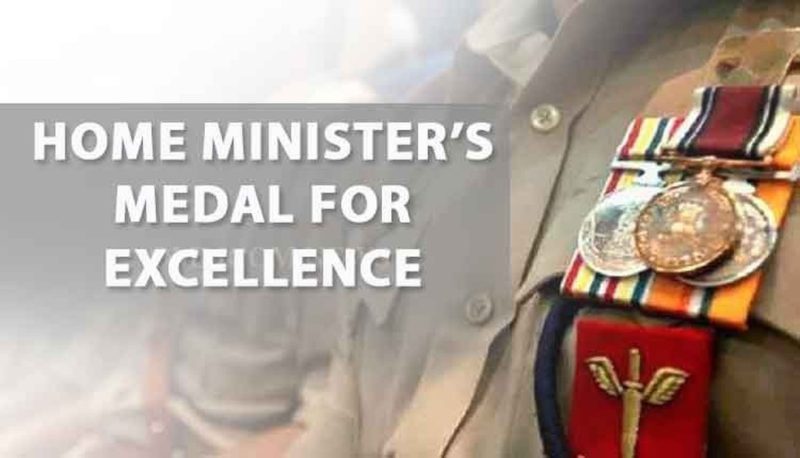
The scheme “Union Home Minister’s Medal for Excellence in Police Training” was launched by the Ministry of Home Affairs, Government of India. The scheme aims to recognize the importance of training and the trainers in police organizations and make training a respectable assignment, in addition to promoting the quality of training in police training institutes in the country. The scheme provides recognition through the award of a Medal, a Certificate (Scroll) signed by the Union Home Minister, and a one-time cash award of ₹25,000/-. The applications for this scheme are accepted via nominations called by the Bureau of Police Research & Development from States, Union Territories, Central Police Organizations, and Central Armed Police Forces.
Benefits
The Medal, named the “Union Home Minister’s Medal for Excellence in Police Training”.
A Certificate (Scroll) signed by the Union Home Minister.
A one-time cash award of ₹25,000/- will be awarded to each winner along with the medal.
The names of such medal Awardees shall also be published in the Gazette of India.
Tally and Categories of Medals
A total of 167 medals will be awarded under various categories (based on sanctioned strength as on 01.01.2013).
The number of Medals will be reviewed after every 3 years or whenever there is a major change in the strength of the force.
Medals are divided into three categories to ensure representation of everyone involved in police training:
Indoor Trainers: This covers all trainers who impart classroom training, including practical classes (e.g., Law, Investigation, Forensic Science).
Outdoor Trainers: This covers trainers who impart field training (e.g., Physical Training, Drill, Weapons, Field Craft).
Others: This covers all those assisting in the process of successful running of the training programmes, such as supervisors, planners, ministerial staff, and other support staff (e.g., help in practical classes, manning of training cell, hostel, mess).
The quota of Medals for States, Union Territories, and Central Police Organizations under each category is: Indoor—40%, Outdoor—40%, and Others—20%.
The quota of Medals for Central Armed Police Forces under each category is: Indoor—30%, Outdoor—50%, and Others—20%.
The number of Gazetted Officers (GOs) to be awarded Medals will not be more than 50% of the total number of Medals awarded over a 10 year block commencing from the year 2014-2015.
Wherever only indoor training is being provided, the quota for outdoor medals will be merged with indoor Medals.
Conditions
1. The Union Home Minister is competent to withdraw the medal if the holder is found guilty of disloyalty.
2. The Union Home Minister is competent to withdraw the medal if the holder brings the force to disrepute, such as removal, major penalty, or criminal offence.
3. The Union Home Minister is competent to withdraw the medal if the holder exhibits any conduct found unbecoming in the opinion of the Government of the State or the Union.
Eligibility
The nominee must have completed a minimum of five years of service in the police department.
The officer must have completed a minimum of two years of service in the training institute continuously as on the 1st of April of the year of consideration.
The total length of service in training institutes (same or more number of institutes) must not be less than three years.
No Judicial Proceedings must have been in pendency against the recommendee at the time of considering his/her name for the Medal.
No Departmental Enquiry must have been in pendency against the recommendee at the time of considering his/her name for the Medal.
The period of punishment must not be in currency against the recommendee at the time of considering his/her name for the Medal.
The recommendee must not have been given any major penalty in the last five years.
The recommendee must not have been given any minor penalty in the last five years.
The recommendee must not have been awarded the Home Minister’s Medal for Excellence in Training on previous occasions.
The Annual Confidential Report grading of the nominee should be ‘Outstanding’ or ‘Very Good’ in three years out of the last five years.
The Annual Confidential Report grading of the nominee should be ‘Good’ in the remaining two years.
There should not be any adverse entry in the last five years.
Withdrawal/Recalling Conditions
The Union Home Minister is competent to withdraw the medal if the holder is found guilty of disloyalty or brings the force to disrepute, such as removal, major penalty, or criminal offence.
The Union Home Minister is competent to withdraw the medal if the holder exhibits any conduct found unbecoming in the opinion of the Government of the State or the Union.
Application Process
https://www.myscheme.gov.in/schemes/uhmmept
Offline
*The scheme operates based on nominations and screening procedures rather than direct applications by the candidate.
Step 1: Invitation for Nominations by Bureau of Police Research & Development
The Bureau of Police Research & Development (BPR&D) calls for nominations from States, Union Territories (UTs), Central Police Organizations (CPOs), and Central Armed Police Forces (CAPFs) by the 31st of May of every year.
The Bureau of Police Research & Development ensures that nominations are invited according to the specified quota for Indoor (40% for States/UTs/CPOs, 30% for Central Armed Police Forces), Outdoor (40% for States/UTs/CPOs, 50% for Central Armed Police Forces), and Others (20% for all categories).
Step 2: Institutional Level Nomination and Screening
An Institution level committee, which must be a three-member committee headed by the head of the institution, is constituted to nominate candidates and recommend them to the headquarters level committee.
This committee strictly recommends only those candidates who fulfil the eligibility criteria, subject to a maximum of three candidates in each category (Indoor, Outdoor, and Others).
Candidates are assessed/evaluated as per the evaluation proforma, with each member giving separate marks, and the average being calculated for the total marks.
Step 3: Submission of Documents to Headquarters Level Committee
The Institution level committee forwards the required documents to the headquarters level committee, including the duly filled in Proforma for nomination (to be countersigned by the headquarters level committee), evaluation and marks sheets (if applicable), the citation, service verification certificates, photographs, and copies of the last five years’ Annual Confidential Reports.
The Integrity/Character & Antecedent Certificate is also prepared in the prescribed Proforma.
Step 4: Headquarters Level Assessment and Evaluation
The Headquarters level Committee, headed by the Director General/Additional Director General (Training) of the State, Union Territory, Central Police Organization, or Central Armed Police Force, assesses and evaluates all recommendations received from various institutions on the ground.
The committee utilizes the evaluation Proforma during this assessment.
Step 5: Submission of Final Recommendations to Bureau of Police Research & Development
The respective States, Central Police Organizations, or Central Armed Police Forces must send their nominations to the Director General, Bureau of Police Research & Development, by the 31st of August of every year, after completing all required formalities, including tests and screening by the State level committee.
The Headquarters committee recommends three times the number of candidates under each category as per its quota of medals to the Bureau of Police Research & Development.
Step 6: Central Screening by Ministry of Home Affairs/Bureau of Police Research & Development Committee
The Central Committee of the Bureau of Police Research & Development/Ministry of Home Affairs screens all the nominations and assesses the suitability of candidates based on their Annual Confidential Reports for the last five years, previous awards/commendations & decorations, total length of service, length of service in training institutes, citation, and clean record.
This committee finally selects the candidates to be recommended for the award of the Medal.
Step 7: Ministry of Home Affairs Declaration of Awards
The Central Committee recommends the list to the Ministry of Home Affairs by the 15th of November of every year.
The Ministry of Home Affairs will subsequently declare the award of Medals by the 31st of December of every year.
Step 8: Award Disbursal
The Medal will be awarded every year on Republic Day celebrations in the States/Union Territories and on the raising day or anniversary of the Central Armed Police Forces/Central Police Organizations.
Documents Required
1. Evaluation And Marks Sheets In Prescribed Proforma (Not Applicable For ‘Other Category’ Nominees).
2. Citation (Not Exceeding 500 Words) (If Head Of The Institution Is Being Recommended, The Citation Must Be Prepared By His Controlling Officer).
3. Certificate Regarding Pending Judicial Proceedings/Departmental Enquiry And Penalties (To Be Furnished By The Head Of State Police Or Central Armed Police Force.
4. Certificate Regarding Previous Award Of Home Minister’s Medal (To Be Furnished By The Head Of State Police Or Central Armed Police Force.
5. Service Records Verification Certificate (Verifying That Nominee Has Completed Minimum 5 Years Of Service In The Department And Working In The Training Institute From The Last Two Years Continuously).
6. Annual Confidential Report Grading For Last Five Years.
7. Copies Of Last 5 Years’ Annual Confidential Reports.
8. Integrity/Character And Antecedent Certificate.
9. Two Recent Passport Size Photographs Of The Nominee.
Disclaimer
Hamara Neta is an independent, private application developed and maintained by HANSA AI TECHNOLOGIES. This app does NOT represent any government entity and is NOT affiliated with, endorsed by, or connected to any government body. Official government services should be accessed directly through their respective government portals.